
Macroevolutionary patterns and the fossil record Diversity changes



- Slides: 38
Macroevolutionary patterns and the fossil record Diversity changes Rates of evolutionary change Patterns of lineage diversification
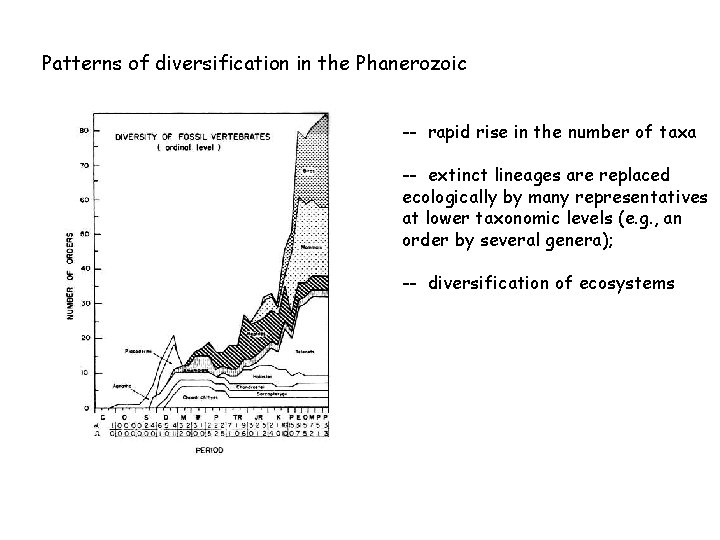
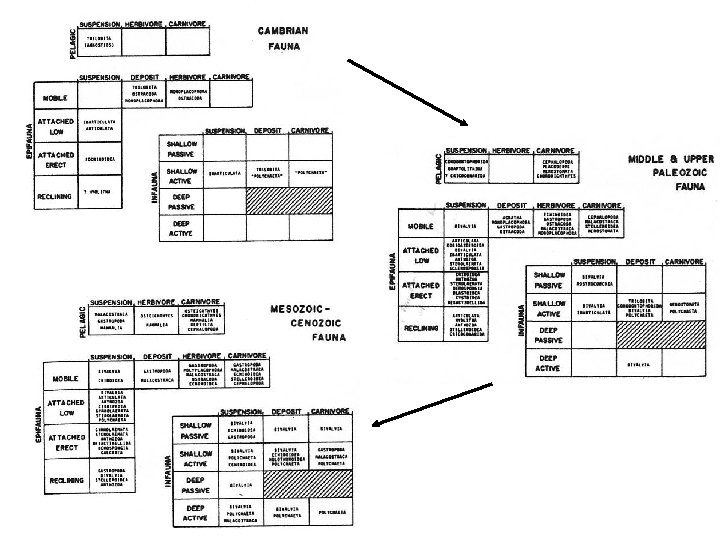
Patterns of diversification in the Phanerozoic -- rapid rise in the number of taxa -- extinct lineages are replaced ecologically by many representatives at lower taxonomic levels (e. g. , an order by several genera); -- diversification of ecosystems
Patterns of diversity in the Phanerozoic -- rapid rise in the number of taxa -- extinct lineages are replace ecologically by many representatives at lower taxonomic levels (e. g. , an order by several genera) -- diversification of ecosystems increased diversification of species/genera consequences of: - increased diversity of physical environment - continental drift - latitudinal temperature gradients - mountain building - increased biotic diversity - competition - predation - mutualism - parasitism Coevolution?
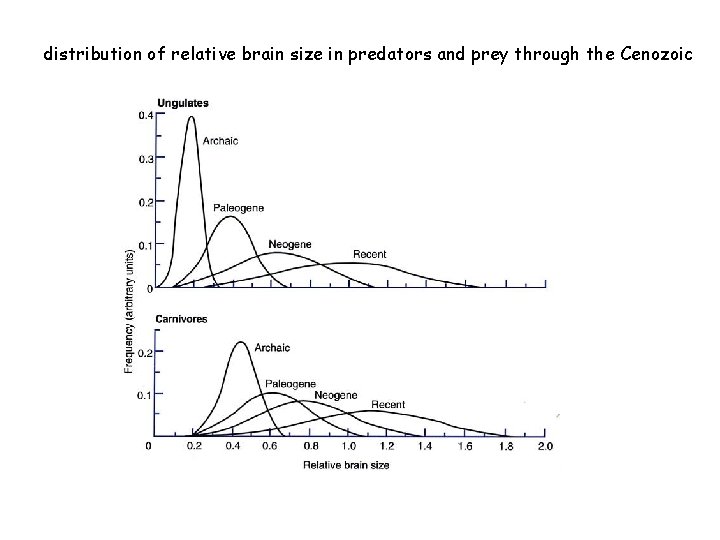
distribution of relative brain size in predators and prey through the Cenozoic
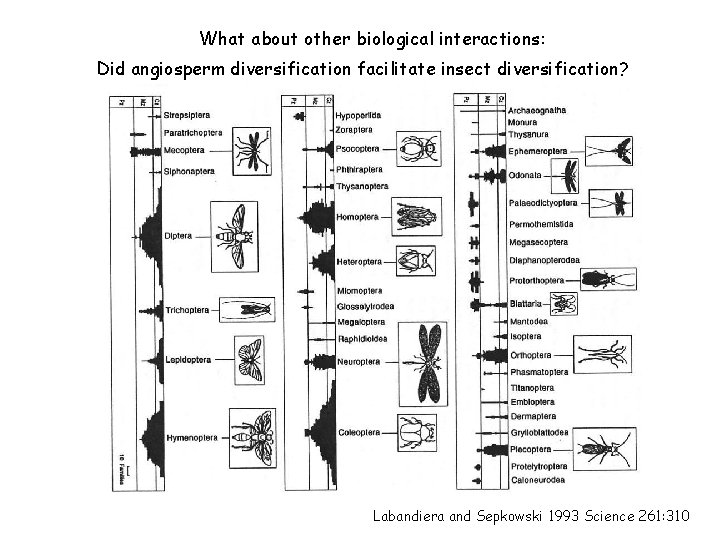
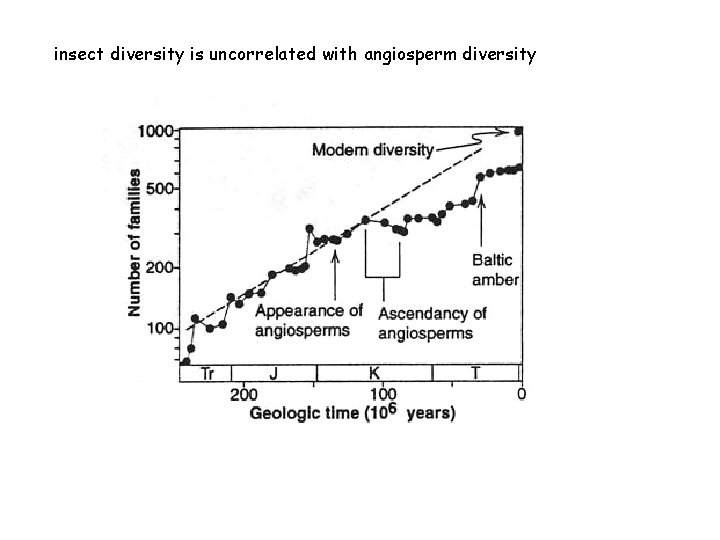
What about other biological interactions: Did angiosperm diversification facilitate insect diversification? Labandiera and Sepkowski 1993 Science 261: 310
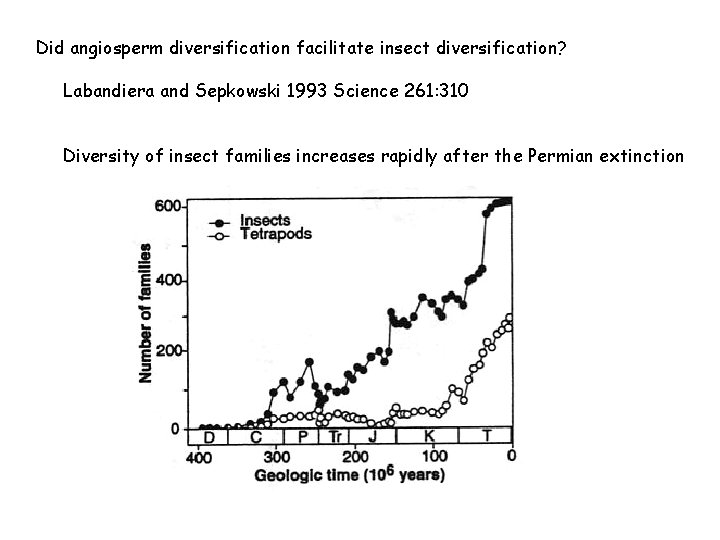
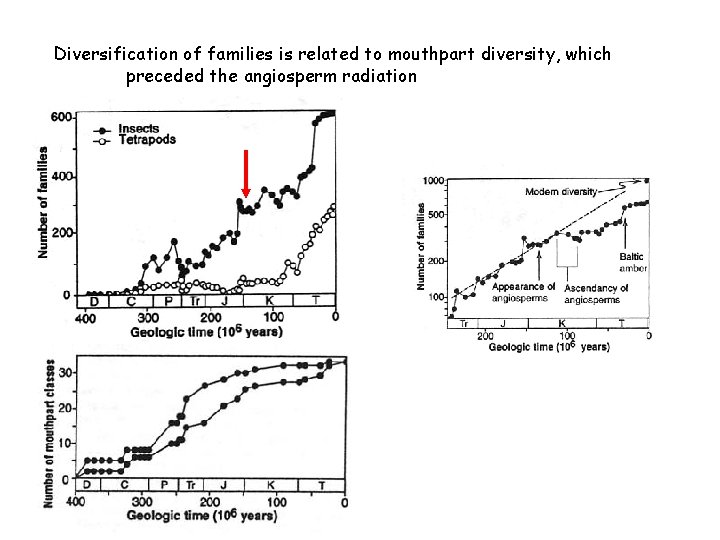
Did angiosperm diversification facilitate insect diversification? Labandiera and Sepkowski 1993 Science 261: 310 Diversity of insect families increases rapidly after the Permian extinction
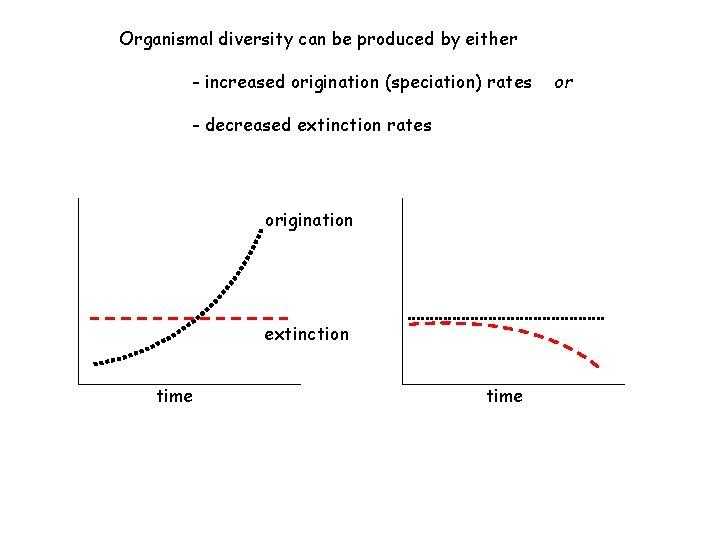
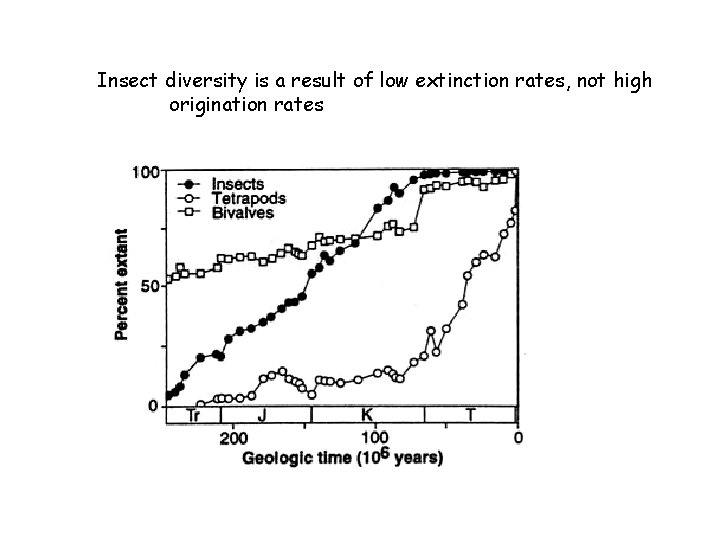
Organismal diversity can be produced by either - increased origination (speciation) rates - decreased extinction rates origination extinction time or
Insect diversity is a result of low extinction rates, not high origination rates
insect diversity is uncorrelated with angiosperm diversity
Diversification of families is related to mouthpart diversity, which preceded the angiosperm radiation
Diversity has ~generally increased As the number of species/taxa has increased what are the patterns of change? How does change occur? How fast does change occur? What is change associated with?
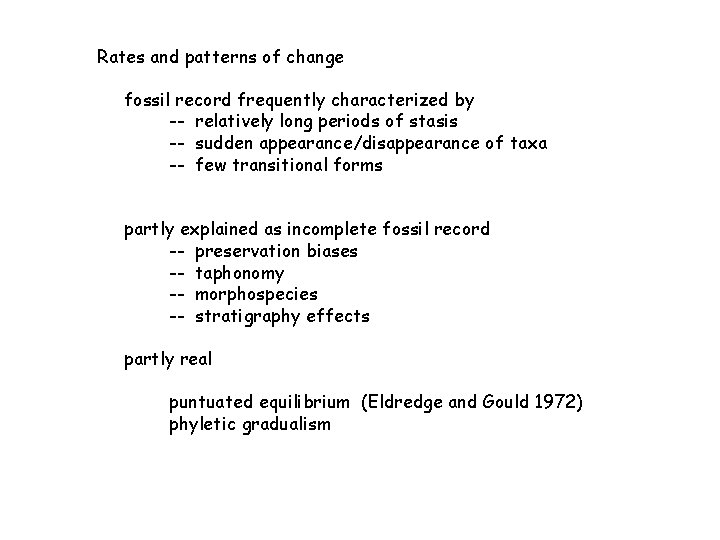
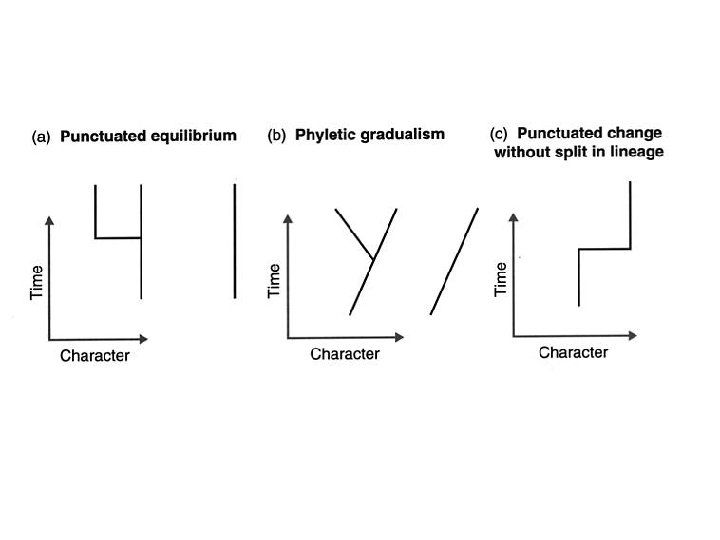
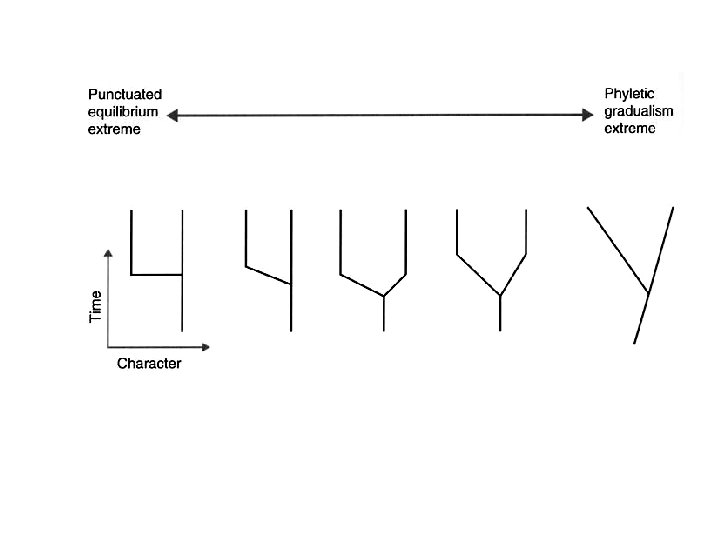
Rates and patterns of change fossil record frequently characterized by -- relatively long periods of stasis -- sudden appearance/disappearance of taxa -- few transitional forms partly explained as incomplete fossil record -- preservation biases -- taphonomy -- morphospecies -- stratigraphy effects partly real puntuated equilibrium (Eldredge and Gould 1972) phyletic gradualism
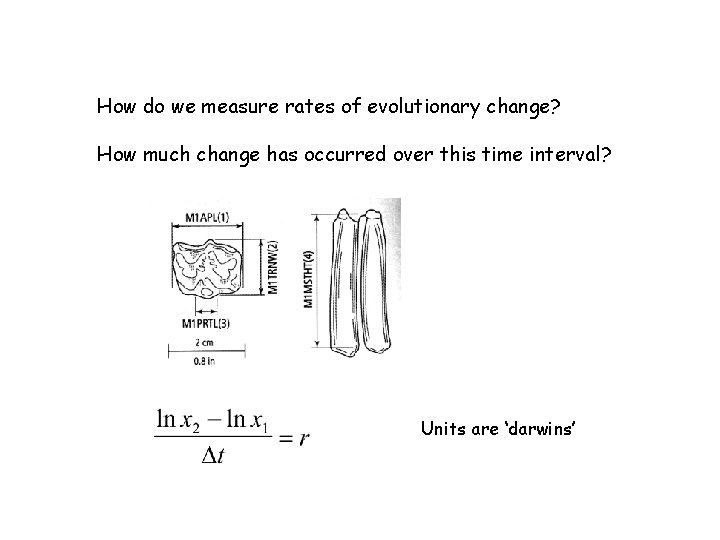
How do we measure rates of evolutionary change? How much change has occurred over this time interval? Units are ‘darwins’
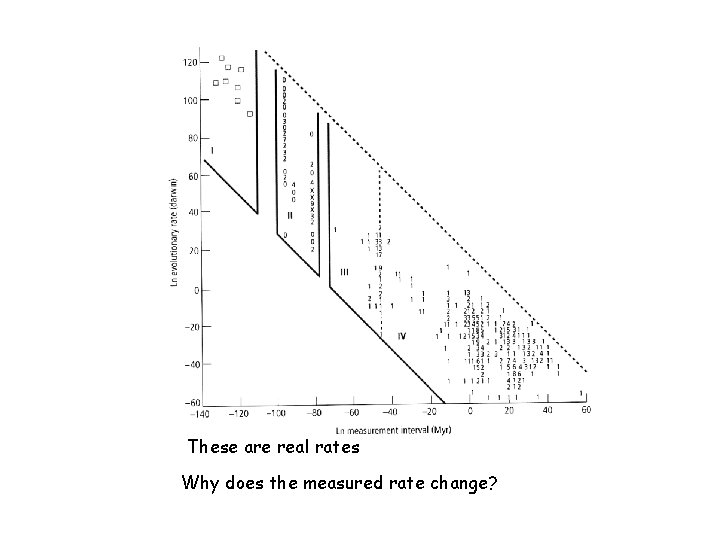
These are real rates Why does the measured rate change?
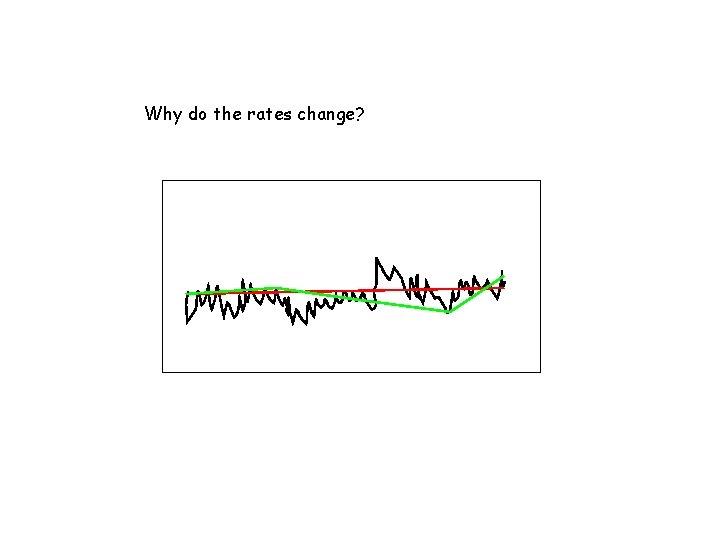
Why do the rates change?
This is the rate of change in a particular character between and ancestor and a descendant What about the rate of change in a group of organisms?
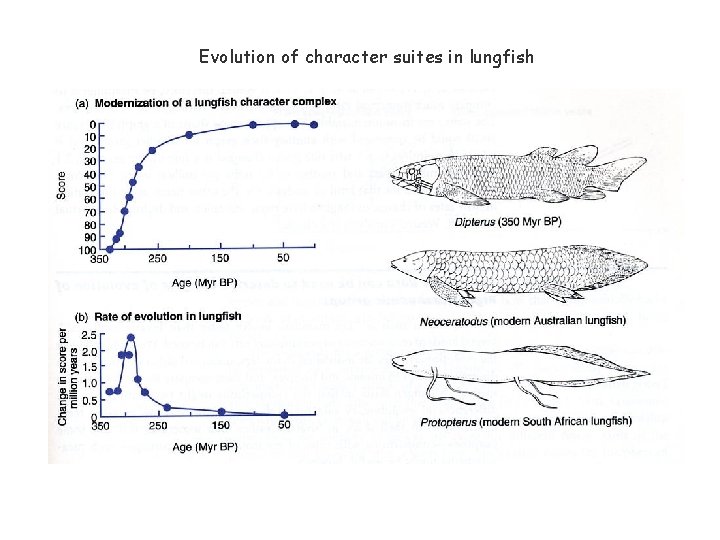
Evolution of character suites in lungfish
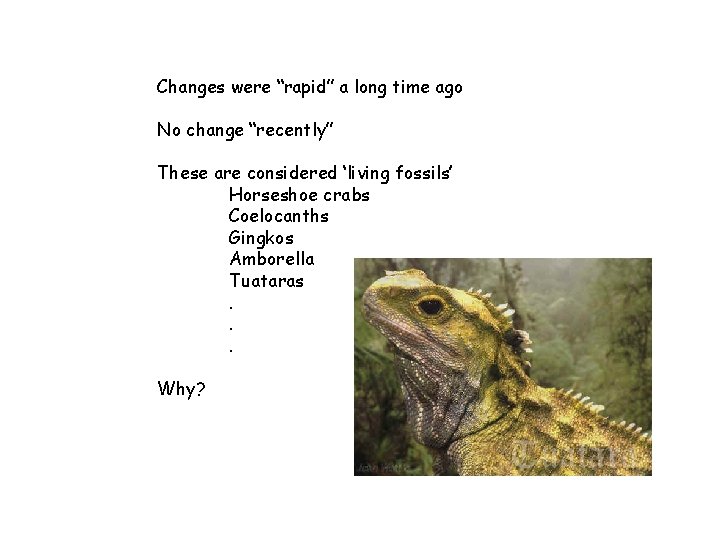
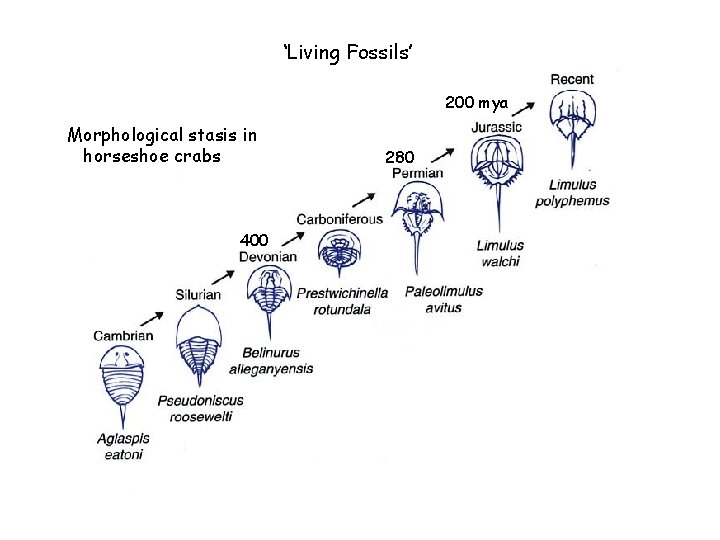
Changes were “rapid” a long time ago No change “recently” These are considered ‘living fossils’ Horseshoe crabs Coelocanths Gingkos Amborella Tuataras. . . Why?
Two patterns: Decrease in perceived evolutionary rate through time Existence of living fossils
Punctuated Equilibrium Niles Eldredge -- Stephen Jay Gould Extreme Version All morphological change occurs at speciation Thereafter there is no change
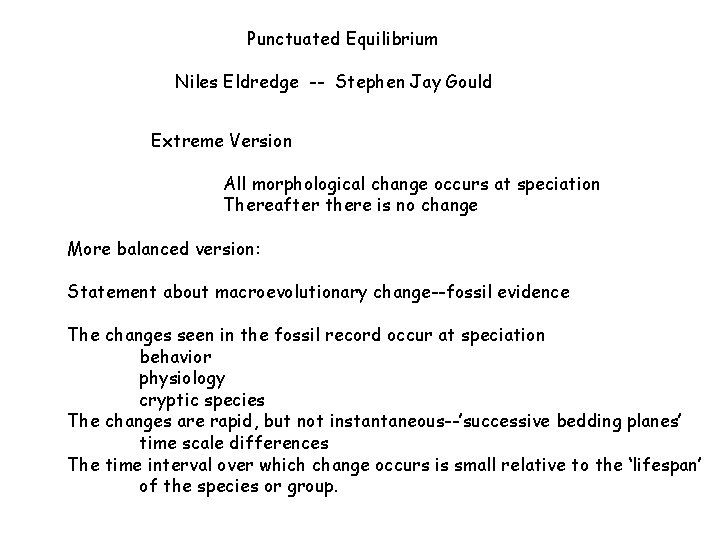
Punctuated Equilibrium Niles Eldredge -- Stephen Jay Gould Extreme Version All morphological change occurs at speciation Thereafter there is no change More balanced version: Statement about macroevolutionary change--fossil evidence The changes seen in the fossil record occur at speciation behavior physiology cryptic species The changes are rapid, but not instantaneous--’successive bedding planes’ time scale differences The time interval over which change occurs is small relative to the ‘lifespan’ of the species or group.
Darwin was not a phyletic gradualist !! “Many species once formed never undergo any further change…; and the periods during which species have undergone modification, though long as measured by years, have probably been short in comparison with the periods during which they retained the same form” --from On the Origin of Species Darwin and subsequent development has been gradualist about the evolution of adaptation (it proceeds gradually) not about the rate of evolution. The only requirement is that macroevolutionary rates not be faster than observed rates in experiments.
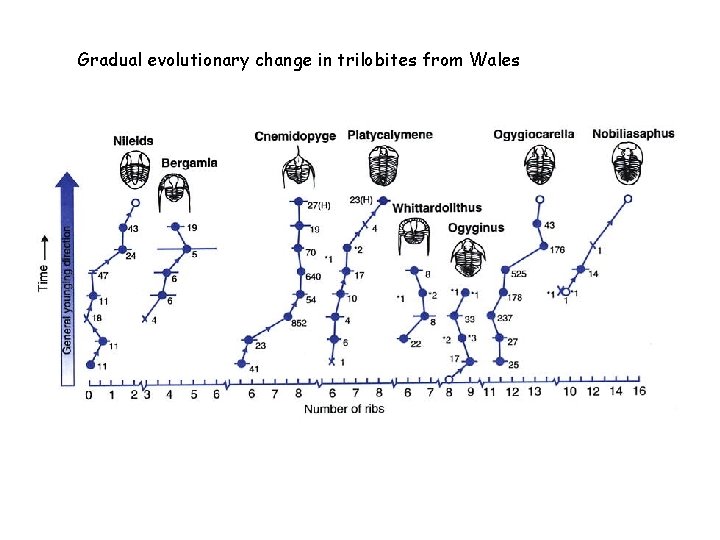
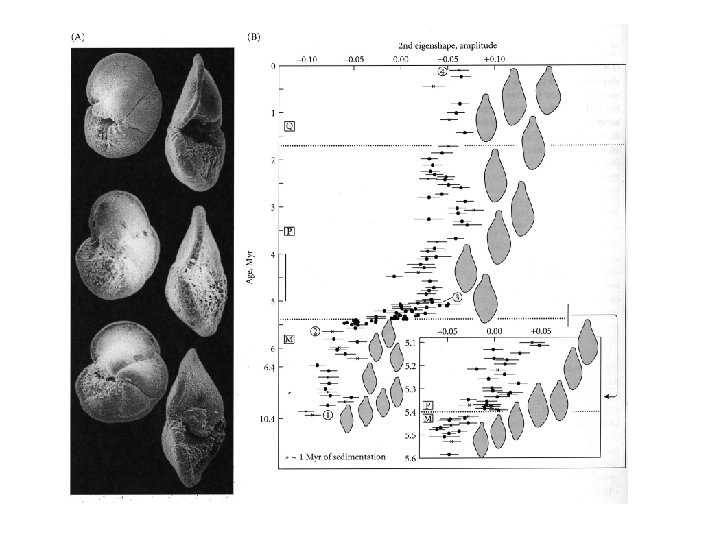
Gradual evolutionary change in trilobites from Wales
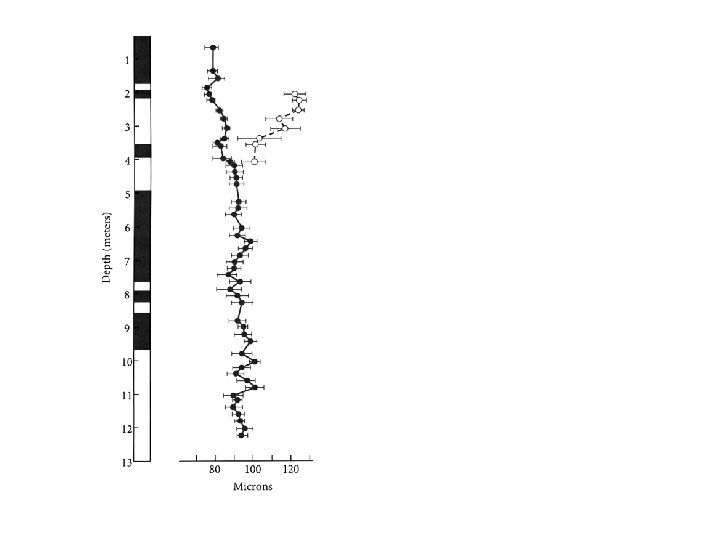
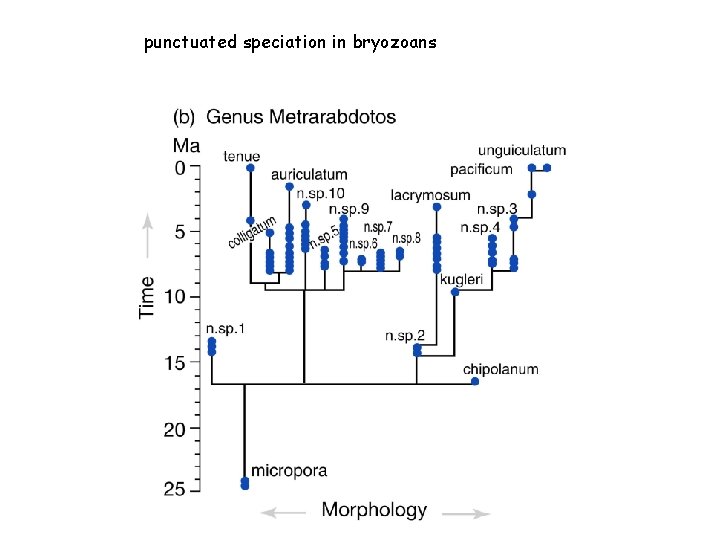
punctuated speciation in bryozoans
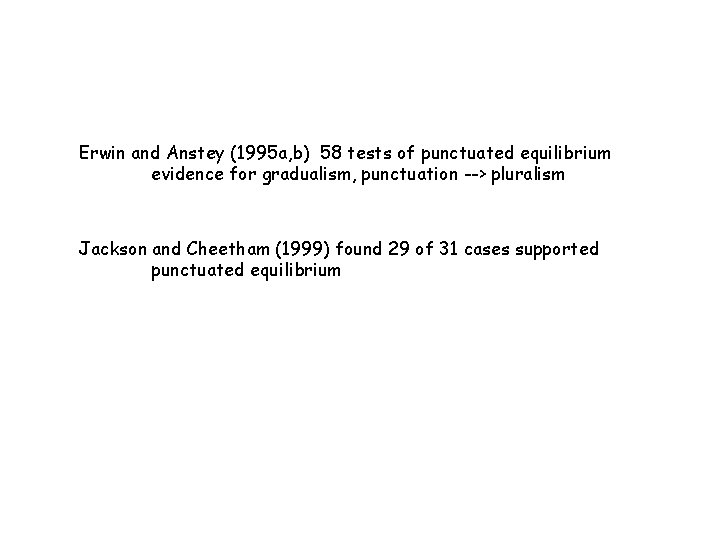
Erwin and Anstey (1995 a, b) 58 tests of punctuated equilibrium evidence for gradualism, punctuation --> pluralism Jackson and Cheetham (1999) found 29 of 31 cases supported punctuated equilibrium
‘Living Fossils’ 200 mya Morphological stasis in horseshoe crabs 400 280
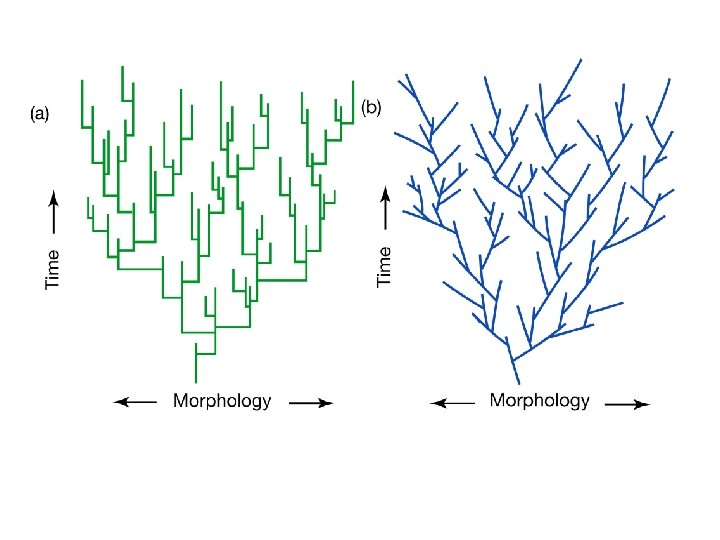
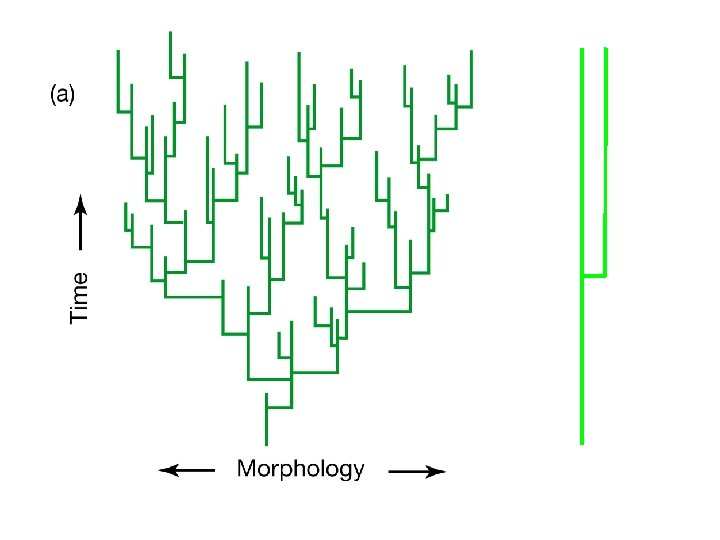
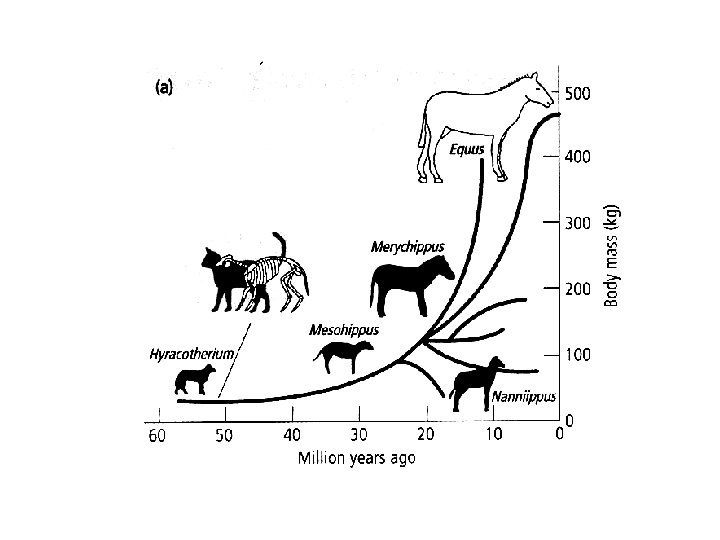
Punctuated equilibrium Nobody changes ‘Living fossils’ are just not diverse clams The more the diversity the more possibility for change in the clade. In some clades there is substantial change e. g. horses
Balance between origination and extinction
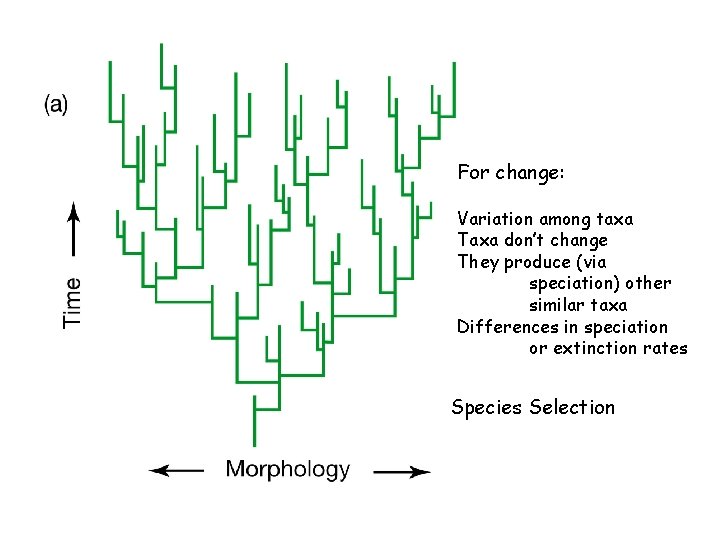
For change: Variation among taxa Taxa don’t change They produce (via speciation) other similar taxa Differences in speciation or extinction rates Species Selection