
Macroevolution Speciation What is macroevolution The origin of

- Slides: 26
Macroevolution Speciation
What is macroevolution? • The origin of new taxonomic groups, such as new species, new genera (more than one genus), new families, even new kingdoms. • Speciation is the key process for the formation of higher taxa
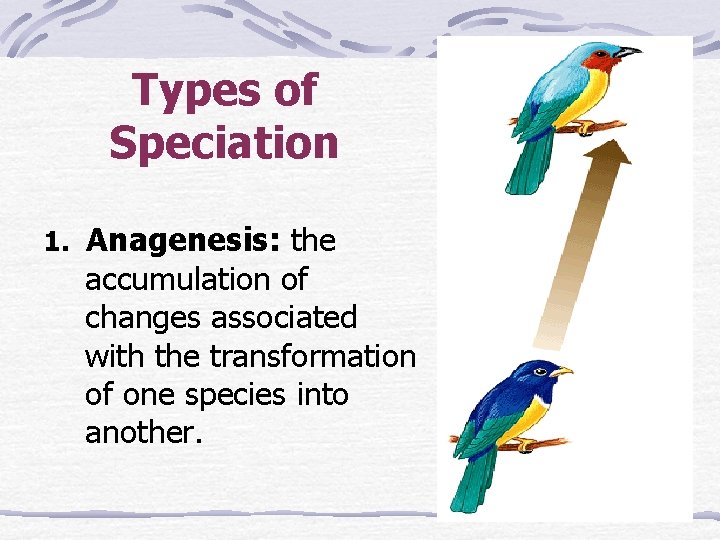
Types of Speciation 1. Anagenesis: the accumulation of changes associated with the transformation of one species into another.
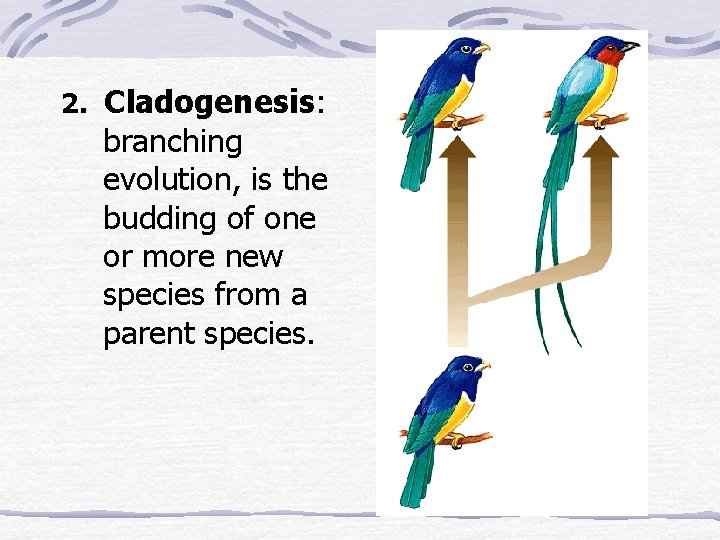
2. Cladogenesis: branching evolution, is the budding of one or more new species from a parent species.
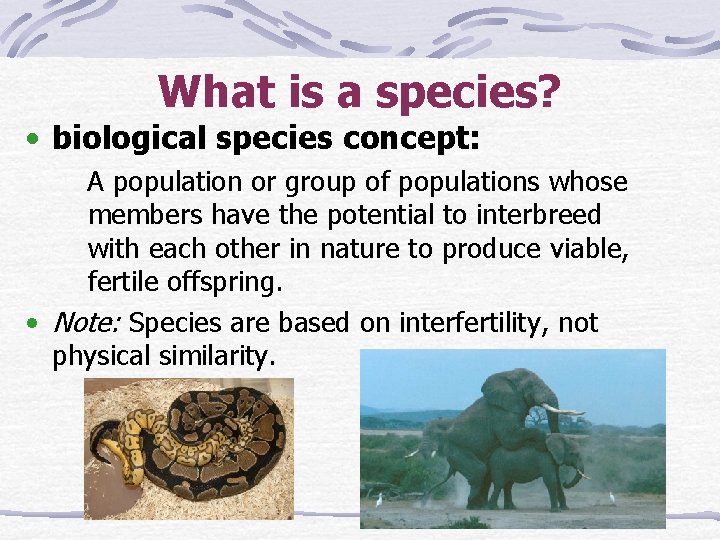
What is a species? • biological species concept: A population or group of populations whose members have the potential to interbreed with each other in nature to produce viable, fertile offspring. • Note: Species are based on interfertility, not physical similarity.
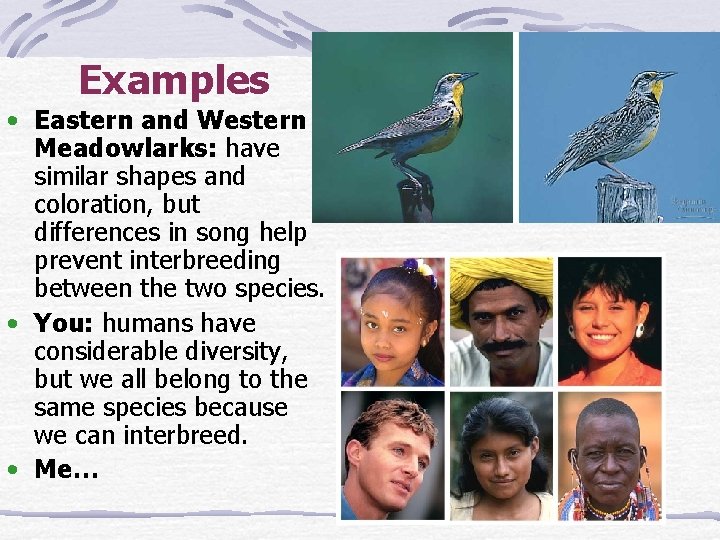
Examples • Eastern and Western Meadowlarks: have similar shapes and coloration, but differences in song help prevent interbreeding between the two species. • You: humans have considerable diversity, but we all belong to the same species because we can interbreed. • Me…
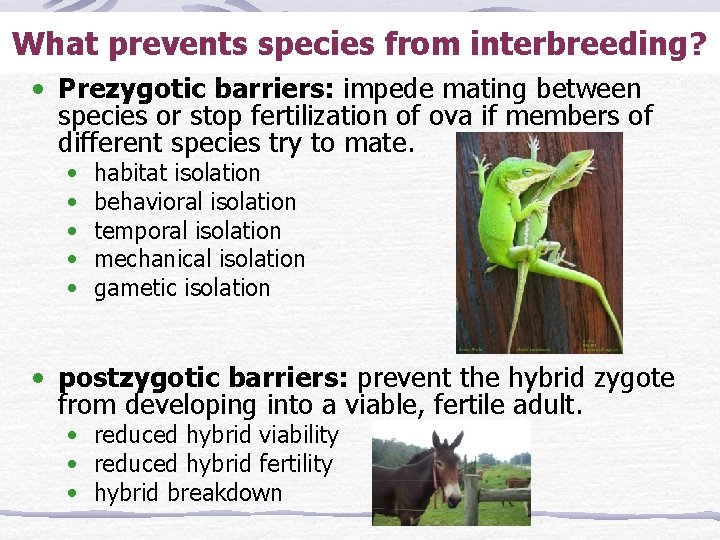
What prevents species from interbreeding? • Prezygotic barriers: impede mating between species or stop fertilization of ova if members of different species try to mate. • • • habitat isolation behavioral isolation temporal isolation mechanical isolation gametic isolation • postzygotic barriers: prevent the hybrid zygote from developing into a viable, fertile adult. • reduced hybrid viability • reduced hybrid fertility • hybrid breakdown
Habitat Isolation • Two organisms that use different habitats even in the same geographic area are unlikely to encounter each other to even attempt mating. • Example: garter snakes • occur in the same areas but because one lives mainly in water and the other is primarily terrestrial, they rarely encounter each other.
Behavioral Isolation • Many species use elaborate behaviors unique to a species to attract mates. • For example: female fireflies • only flash back and attract males who first signaled to them with a species-specific rhythm of light signals.
Temporal isolation • Two species that breed during different times of day, different seasons, or different years cannot mix gametes. • For example: western spotted skunk and the eastern spotted skunk • Do not interbreed because the former mates in late summer and the latter in late winter.
Mechanical Isolation • Closely related species may attempt to mate but fail because they are anatomically incompatible and transfer of sperm is not possible. • Example: insects • the male and female copulatory organs of closely related species do not fit together, preventing sperm transfer.
Gametic isolation • When gametes of two species do not form a zygote because of incompatibilities preventing fusion • Internal fertilization: Sperm may not survive in the environment of the female reproductive tract • External fertilization: specific molecules on the egg’s coat may not recognize sperm.
Reduced hybrid viability • Genetic incompatibility between the two species may abort the development of the hybrid at some embryonic stage or produce frail offspring.
Reduced hybrid fertility • The hybrids may be infertile and the hybrid cannot backbreed with either parental species. • May be due to problems in meiosis because of differences in chromosome number or structure. • Example: horse x donkey = mule (infertile)
Hybrid breakdown • In some cases, first generation hybrids are viable and fertile. • However, when they mate with either parent species or with each other, the next generation is feeble or sterile.
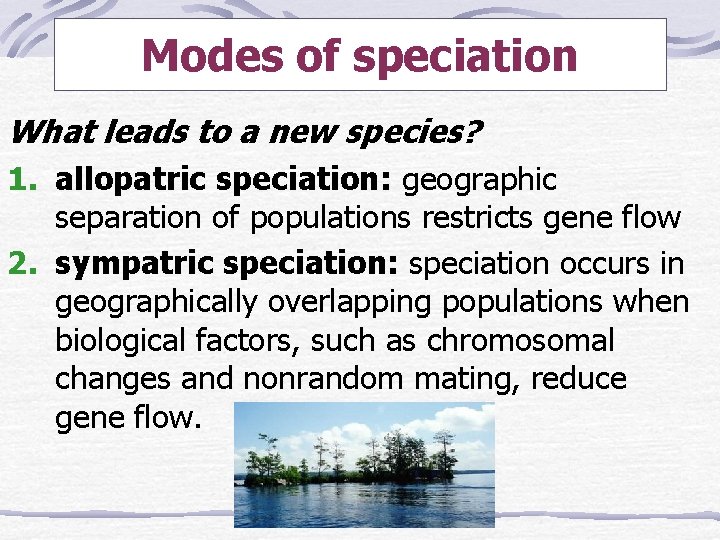
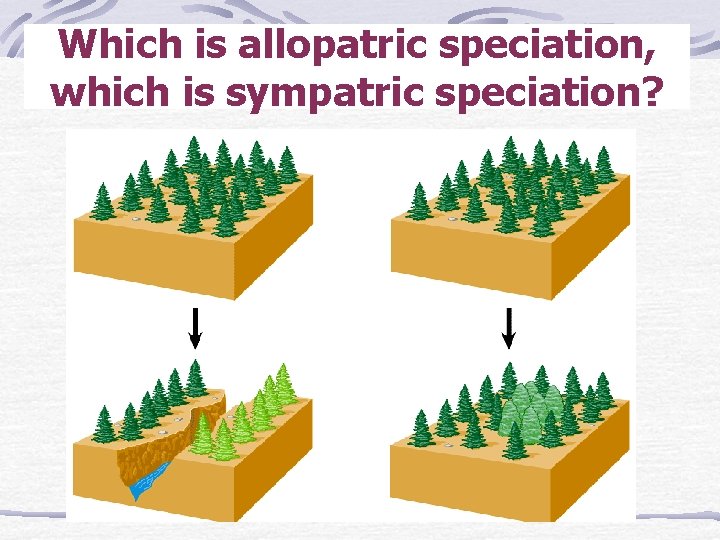
Modes of speciation What leads to a new species? 1. allopatric speciation: geographic separation of populations restricts gene flow 2. sympatric speciation: speciation occurs in geographically overlapping populations when biological factors, such as chromosomal changes and nonrandom mating, reduce gene flow.
Which is allopatric speciation, which is sympatric speciation?
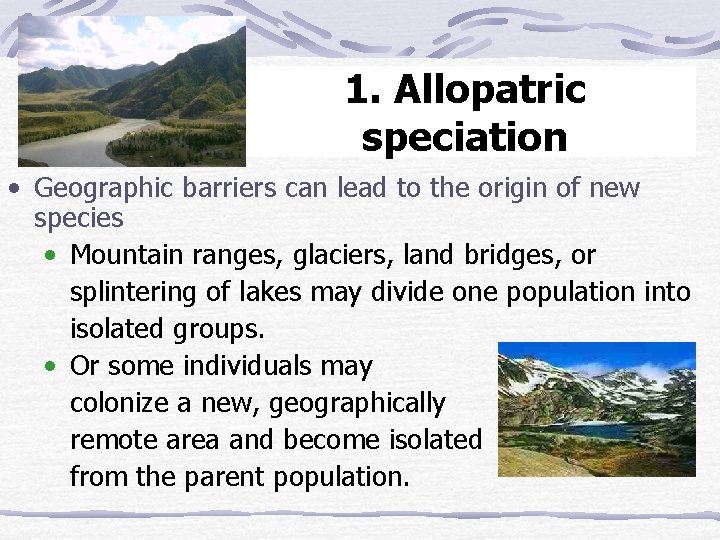
1. Allopatric speciation • Geographic barriers can lead to the origin of new species • Mountain ranges, glaciers, land bridges, or splintering of lakes may divide one population into isolated groups. • Or some individuals may colonize a new, geographically remote area and become isolated from the parent population.
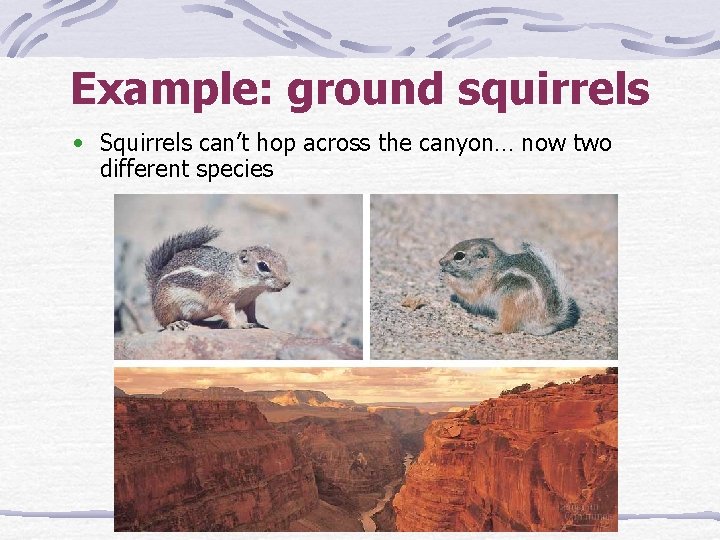
Example: ground squirrels • Squirrels can’t hop across the canyon… now two different species
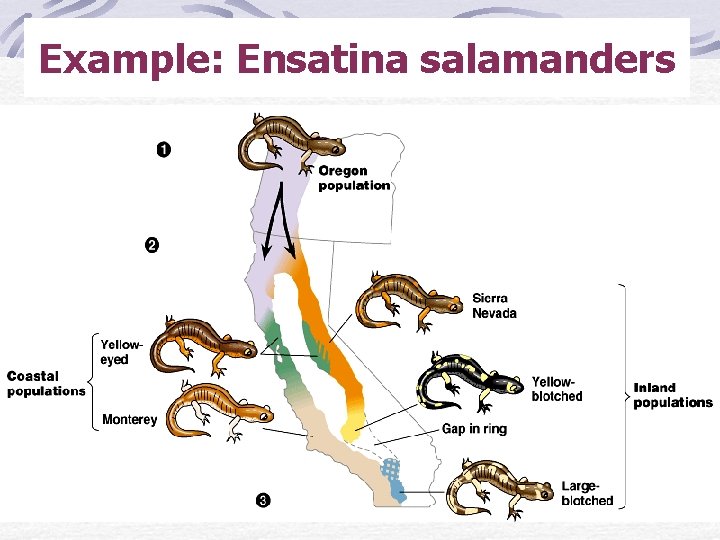
Example: Ensatina salamanders
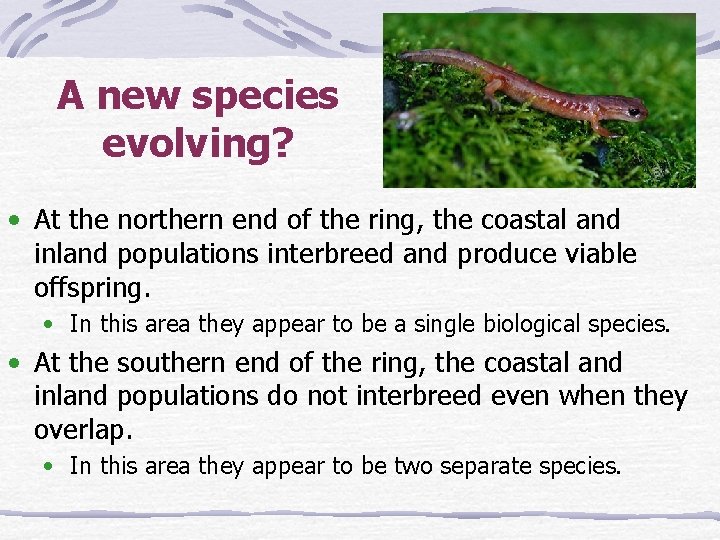
A new species evolving? • At the northern end of the ring, the coastal and inland populations interbreed and produce viable offspring. • In this area they appear to be a single biological species. • At the southern end of the ring, the coastal and inland populations do not interbreed even when they overlap. • In this area they appear to be two separate species.
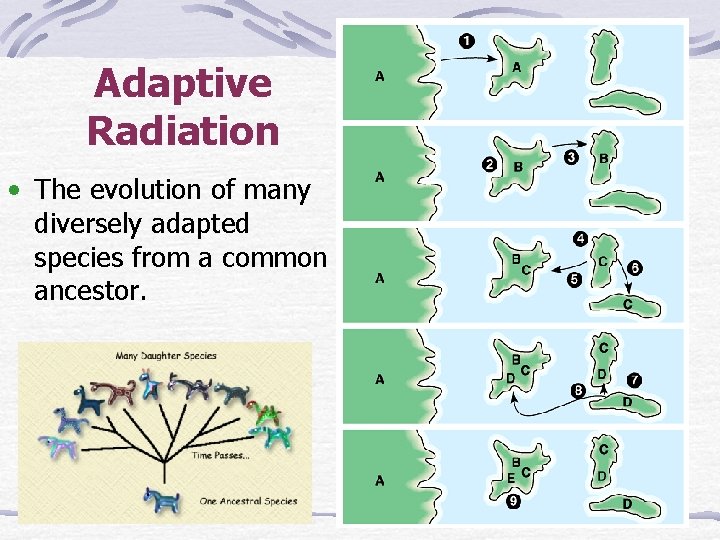
Adaptive Radiation • The evolution of many diversely adapted species from a common ancestor.
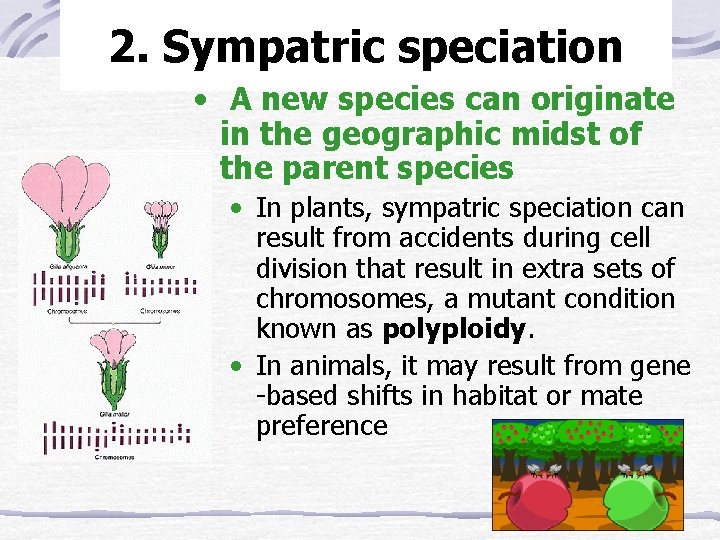
2. Sympatric speciation • A new species can originate in the geographic midst of the parent species • In plants, sympatric speciation can result from accidents during cell division that result in extra sets of chromosomes, a mutant condition known as polyploidy. • In animals, it may result from gene -based shifts in habitat or mate preference
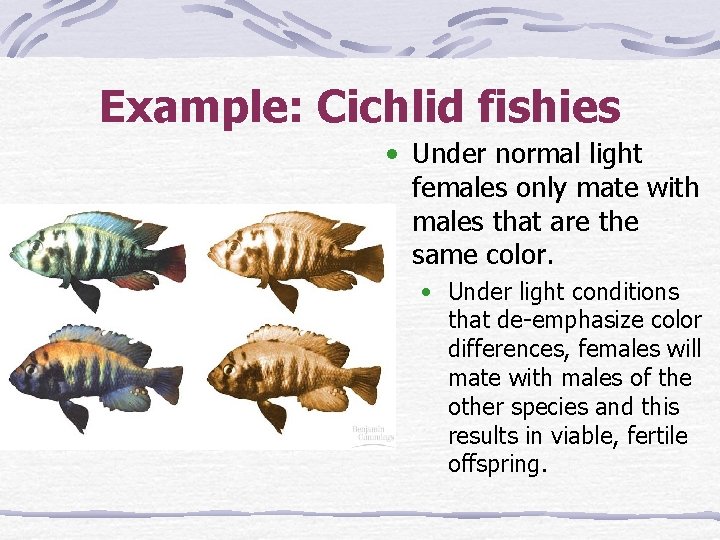
Example: Cichlid fishies • Under normal light females only mate with males that are the same color. • Under light conditions that de-emphasize color differences, females will mate with males of the other species and this results in viable, fertile offspring.