
Macroevolution Speciation Biology Honors Essential Question How can
Macroevolution & Speciation Biology Honors
Essential Question How can microevolution lead to the emergence of new species over time?
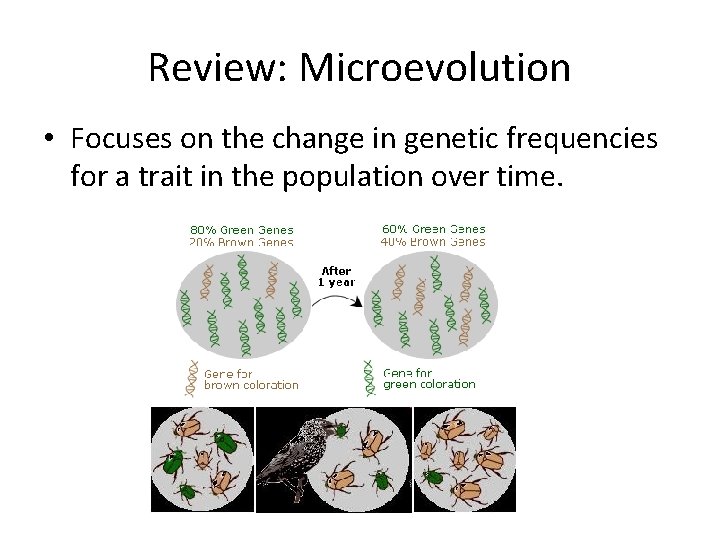
Review: Microevolution • Focuses on the change in genetic frequencies for a trait in the population over time.

Macroevolution • Accumulation of small genetic changes over time leads to speciation – Formation of a new species – No longer able to breed with each other
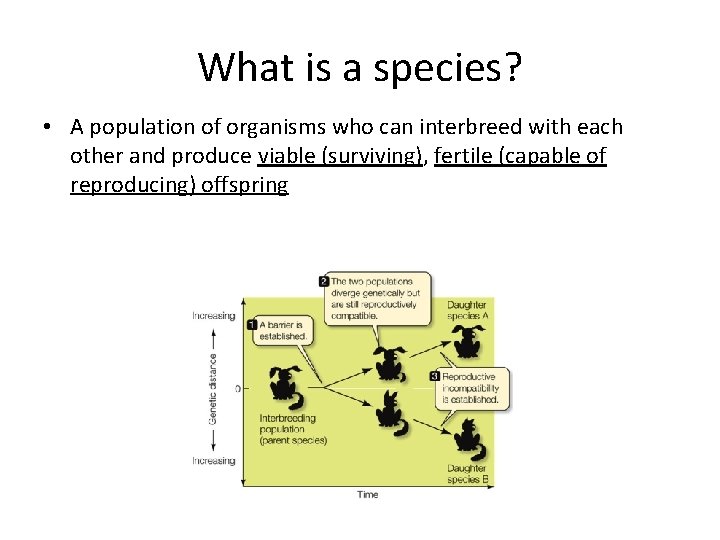
What is a species? • A population of organisms who can interbreed with each other and produce viable (surviving), fertile (capable of reproducing) offspring
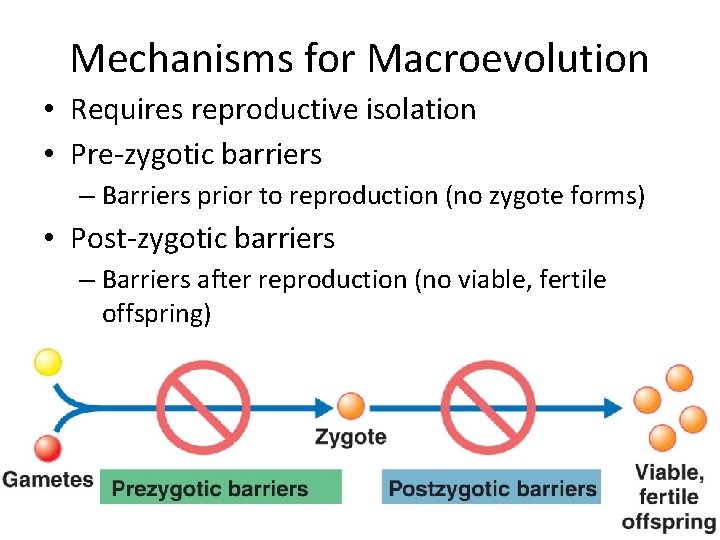
Mechanisms for Macroevolution • Requires reproductive isolation • Pre-zygotic barriers – Barriers prior to reproduction (no zygote forms) • Post-zygotic barriers – Barriers after reproduction (no viable, fertile offspring)
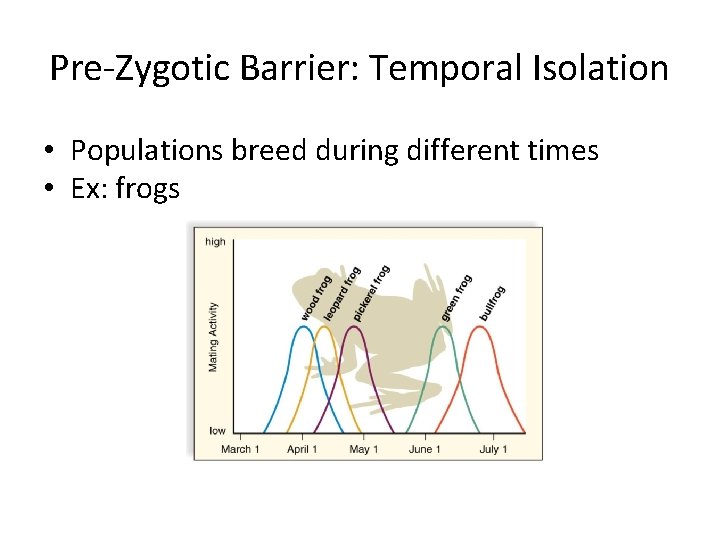
Pre-Zygotic Barrier: Temporal Isolation • Populations breed during different times • Ex: frogs
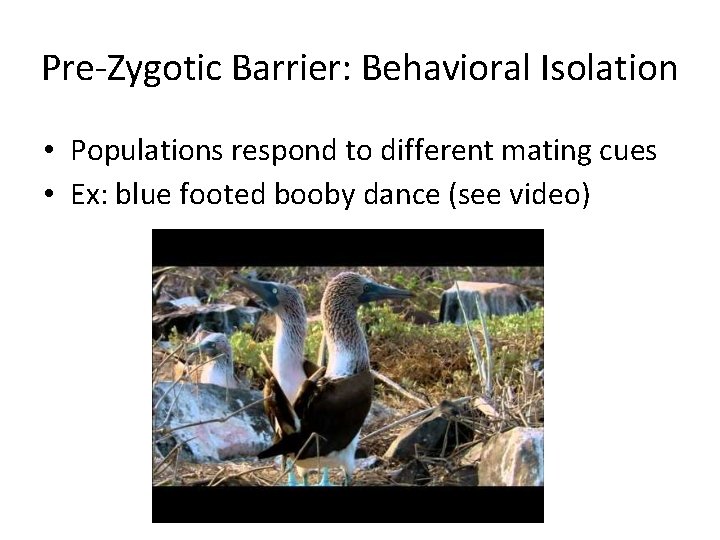
Pre-Zygotic Barrier: Behavioral Isolation • Populations respond to different mating cues • Ex: blue footed booby dance (see video)
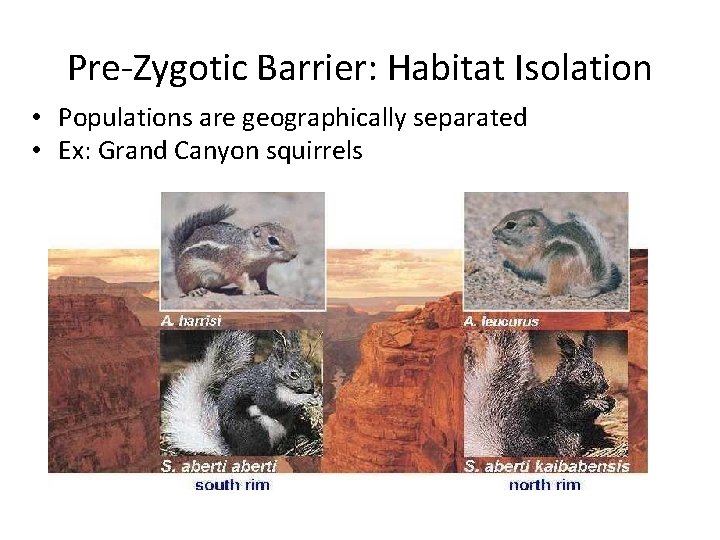
Pre-Zygotic Barrier: Habitat Isolation • Populations are geographically separated • Ex: Grand Canyon squirrels
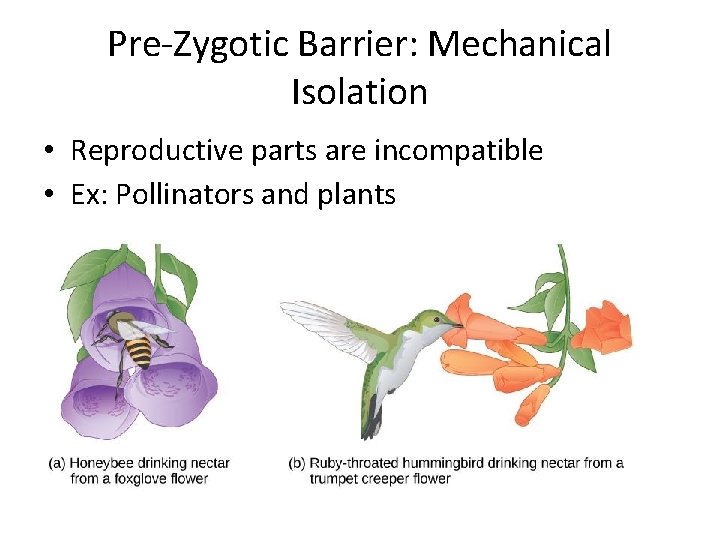
Pre-Zygotic Barrier: Mechanical Isolation • Reproductive parts are incompatible • Ex: Pollinators and plants
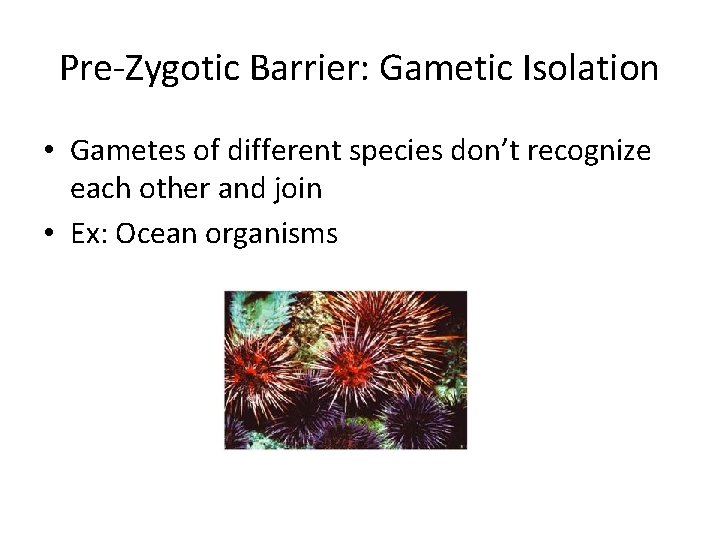
Pre-Zygotic Barrier: Gametic Isolation • Gametes of different species don’t recognize each other and join • Ex: Ocean organisms
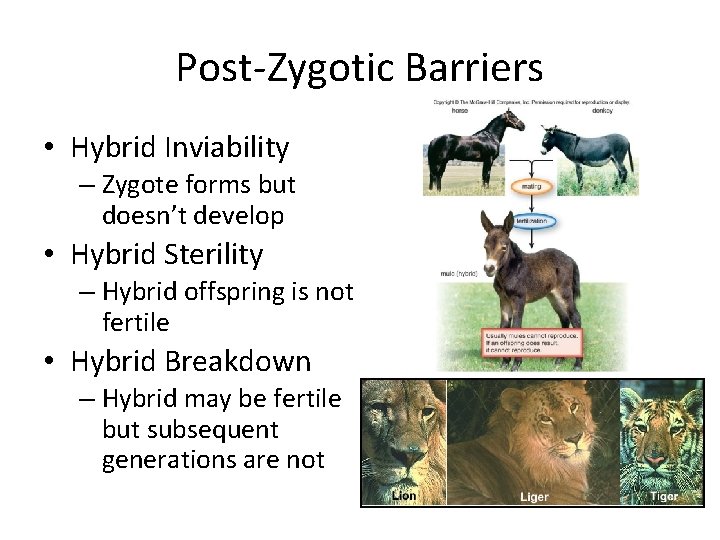
Post-Zygotic Barriers • Hybrid Inviability – Zygote forms but doesn’t develop • Hybrid Sterility – Hybrid offspring is not fertile • Hybrid Breakdown – Hybrid may be fertile but subsequent generations are not

Extra help? • Crash Course – Speciation
- Slides: 13