
macroeconomics National Income a Simple Equilibrium Model 1
macroeconomics National Income – a Simple Equilibrium Model 1
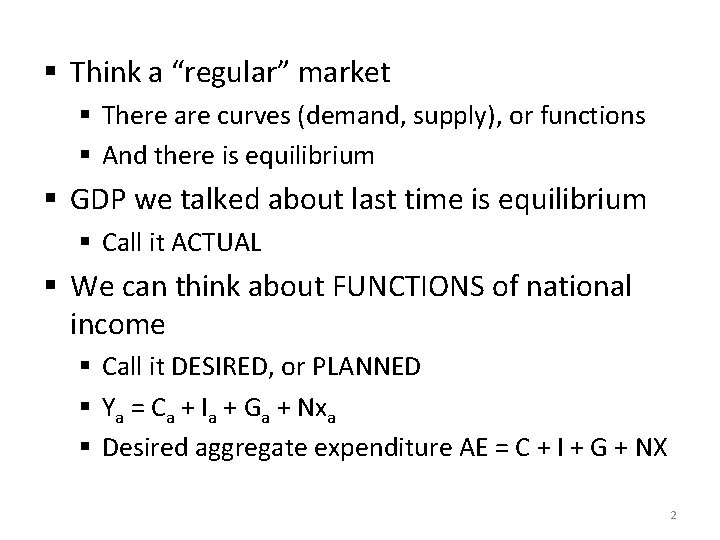
§ Think a “regular” market § There are curves (demand, supply), or functions § And there is equilibrium § GDP we talked about last time is equilibrium § Call it ACTUAL § We can think about FUNCTIONS of national income § Call it DESIRED, or PLANNED § Ya = Ca + Ia + Ga + Nxa § Desired aggregate expenditure AE = C + I + G + NX 2
§ We are going to split all expenditures into two parts § Autonomous, E = f(Y) § Induced § Assume very simple economy § No trade § No government § AE = C + I 3
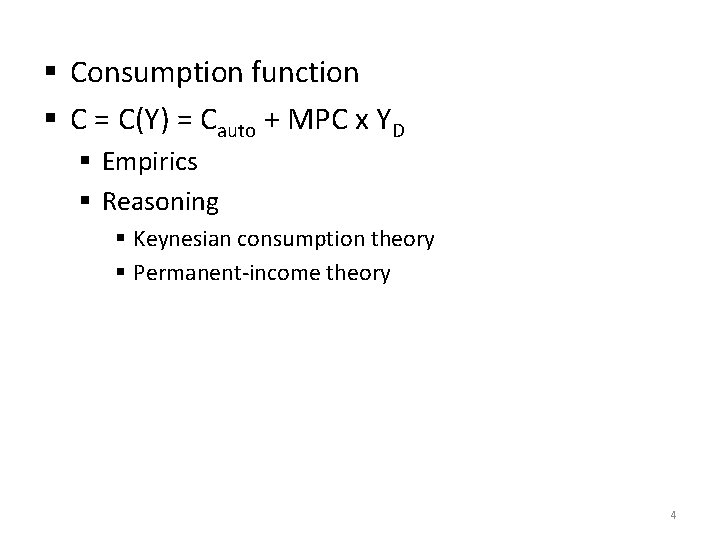
§ Consumption function § C = C(Y) = Cauto + MPC x YD § Empirics § Reasoning § Keynesian consumption theory § Permanent-income theory 4
§ § Average propensity to consume APC = C/YD Marginal propensity to consume MPC = ΔC/ΔYD § ΔC = MPC x ΔYD § But then, what we do not consume we save § Macro definition of savings, S = Y - C § § Average propensity to save APS = S/YD Marginal propensity to save MPS = ΔS/ΔYD § APC + APS = 1 § MPC + MPS = 1 5
§ Shifts in AE function: § § Household wealth Interest rates Expectations Other stuff 6
§ Shifts in C function: § § Household wealth Interest rates Expectations Other stuff § They are also shifts in AE function!!! 7
§ Equilibrium: § AE = Ya § Keynesian Cross 8
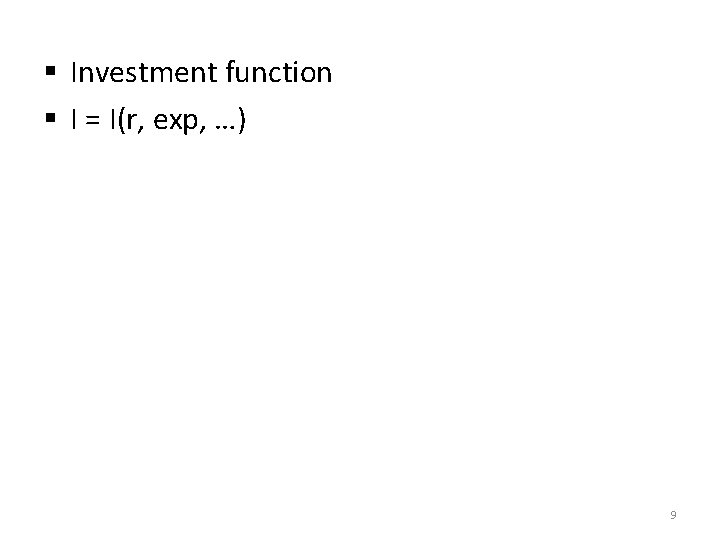
§ Investment function § I = I(r, exp, …) 9
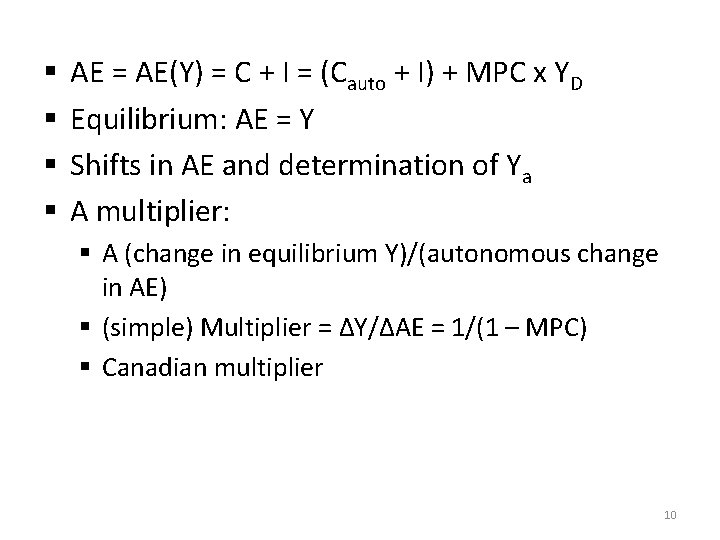
§ § AE = AE(Y) = C + I = (Cauto + I) + MPC x YD Equilibrium: AE = Y Shifts in AE and determination of Ya A multiplier: § A (change in equilibrium Y)/(autonomous change in AE) § (simple) Multiplier = ΔY/ΔAE = 1/(1 – MPC) § Canadian multiplier 10
- Slides: 10