
Macroeconomics Minicourse Professor Pierre Yared Questions What is


- Slides: 25
Macroeconomics Mini-course Professor Pierre Yared
Questions • What is GDP? • What drives economic growth? • What drives investment? • What drives inflation and exchange rates? 2
Questions What is GDP? 3
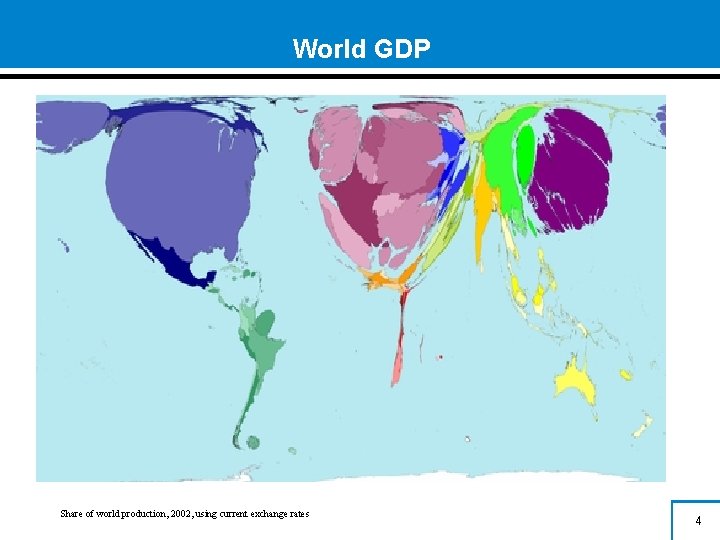
World GDP Share of world production, 2002, using current exchange rates 4
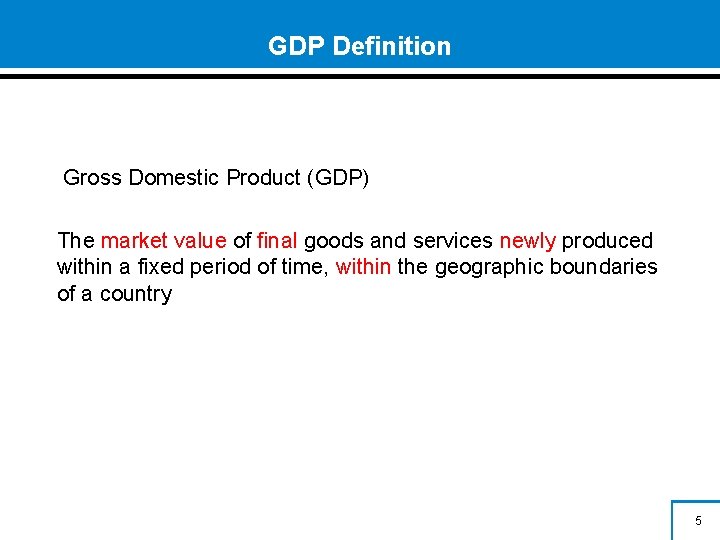
GDP Definition Gross Domestic Product (GDP) The market value of final goods and services newly produced within a fixed period of time, within the geographic boundaries of a country 5
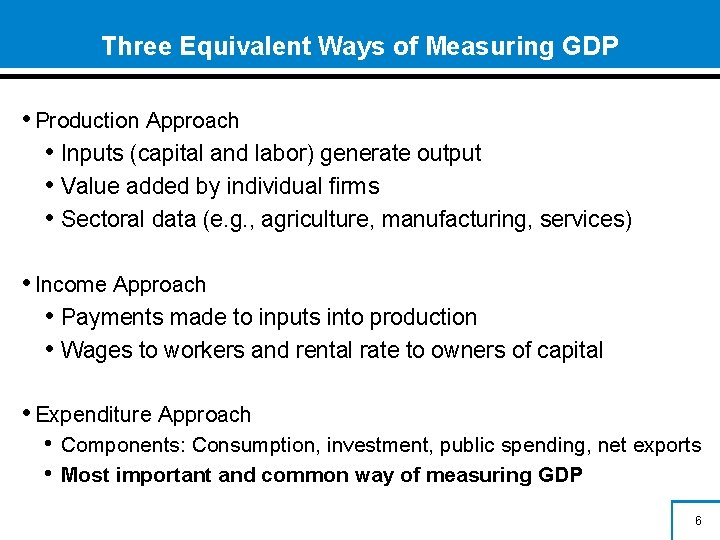
Three Equivalent Ways of Measuring GDP • Production Approach • Inputs (capital and labor) generate output • Value added by individual firms • Sectoral data (e. g. , agriculture, manufacturing, services) • Income Approach • Payments made to inputs into production • Wages to workers and rental rate to owners of capital • Expenditure Approach • Components: Consumption, investment, public spending, net exports • Most important and common way of measuring GDP 6
GDP by Expenditure: International Comparisons, 2007 China US Brazil Sweden 7
Questions What drives economic growth? 8
US Growth Experience 9
How Do We Make Sense of Different Growth Experiences? 10
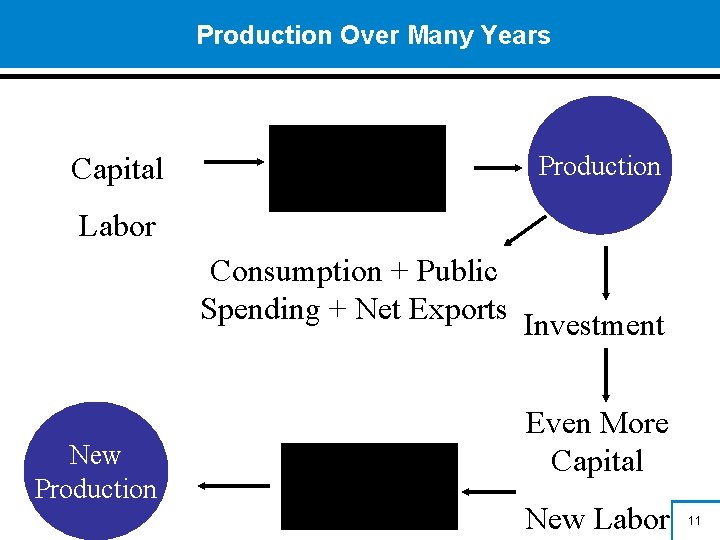
Production Over Many Years Capital Production Labor Consumption + Public Spending + Net Exports Investment New Production Even More Capital New Labor 11
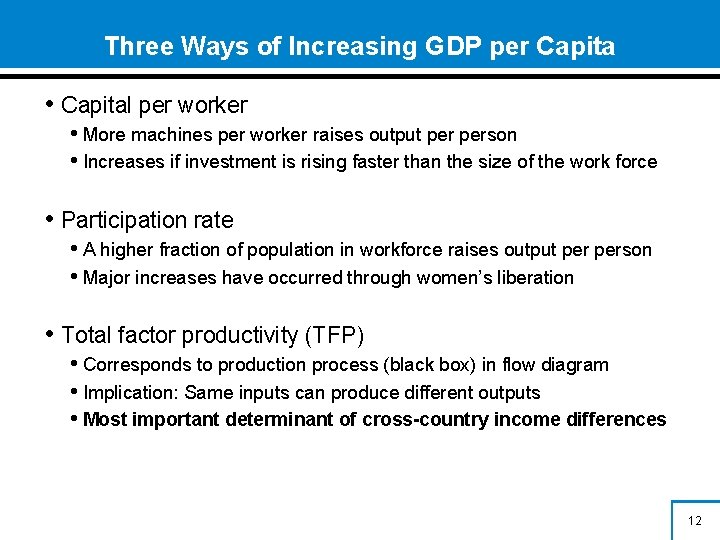
Three Ways of Increasing GDP per Capita • Capital per worker • More machines per worker raises output person • Increases if investment is rising faster than the size of the work force • Participation rate • A higher fraction of population in workforce raises output person • Major increases have occurred through women’s liberation • Total factor productivity (TFP) • Corresponds to production process (black box) in flow diagram • Implication: Same inputs can produce different outputs • Most important determinant of cross-country income differences 12
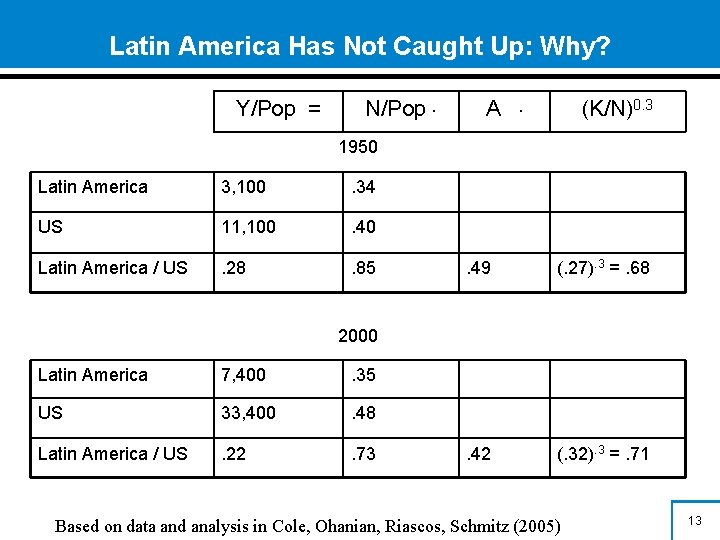
Latin America Has Not Caught Up: Why? Y/Pop = N/Pop A (K/N)0. 3 1950 Latin America 3, 100 . 34 US 11, 100 . 40 Latin America / US . 28 . 85 . 49 (. 27). 3 =. 68 . 42 (. 32). 3 =. 71 2000 Latin America 7, 400 . 35 US 33, 400 . 48 Latin America / US . 22 . 73 Based on data and analysis in Cole, Ohanian, Riascos, Schmitz (2005) 13
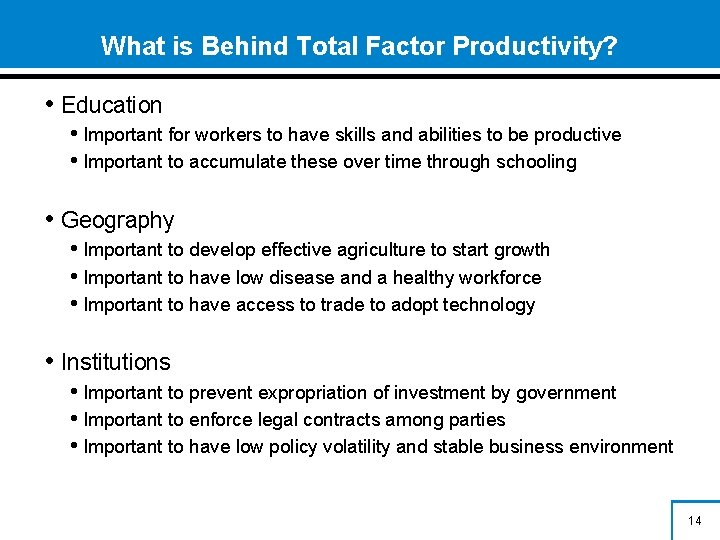
What is Behind Total Factor Productivity? • Education • Important for workers to have skills and abilities to be productive • Important to accumulate these over time through schooling • Geography • Important to develop effective agriculture to start growth • Important to have low disease and a healthy workforce • Important to have access to trade to adopt technology • Institutions • Important to prevent expropriation of investment by government • Important to enforce legal contracts among parties • Important to have low policy volatility and stable business environment 14
Questions What drives investment? 15
Investment is Financed by Savings Private Savings + Public Savings + International Savings = Investment 16
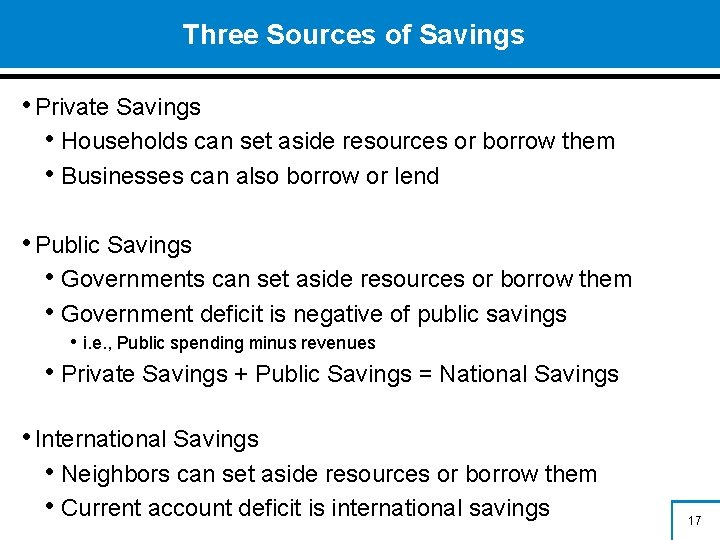
Three Sources of Savings • Private Savings • Households can set aside resources or borrow them • Businesses can also borrow or lend • Public Savings • Governments can set aside resources or borrow them • Government deficit is negative of public savings • i. e. , Public spending minus revenues • Private Savings + Public Savings = National Savings • International Savings • Neighbors can set aside resources or borrow them • Current account deficit is international savings 17
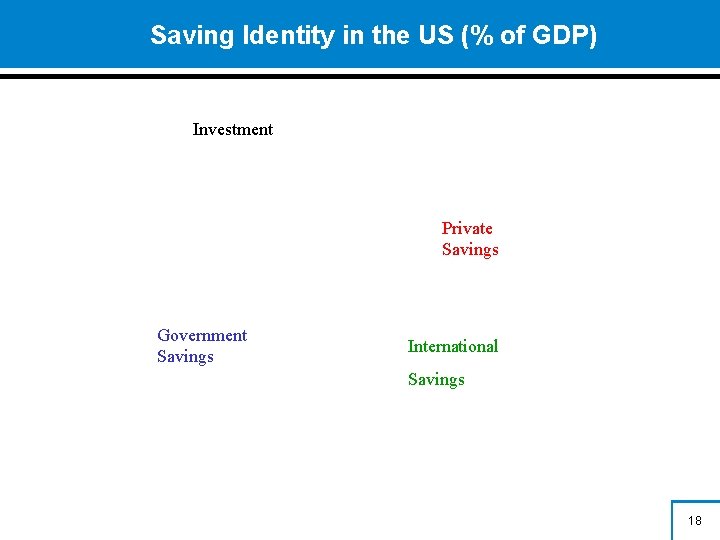
Saving Identity in the US (% of GDP) Investment Private Savings Government Savings International Savings 18
Questions What drives inflation and exchange rates? 19
US Inflation 20
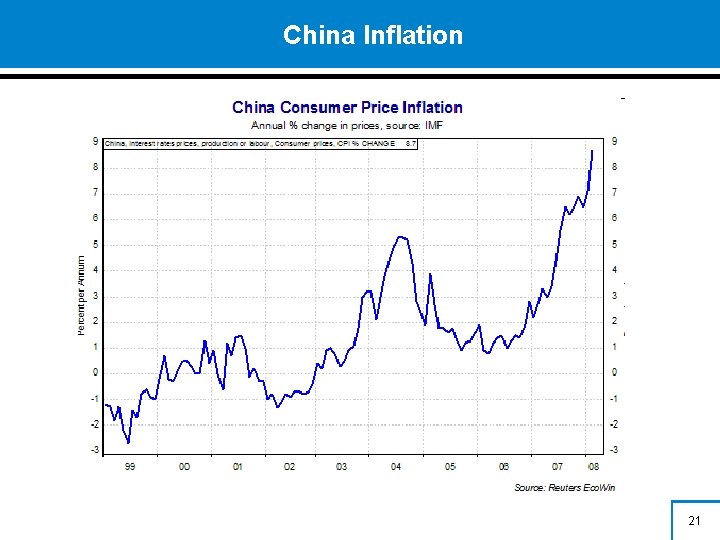
China Inflation 21
Argentina Hyperinflation 22
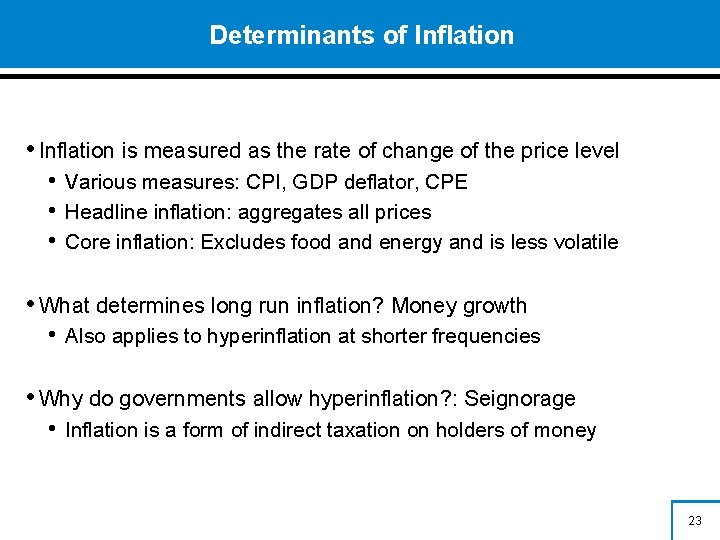
Determinants of Inflation • Inflation is measured as the rate of change of the price level • Various measures: CPI, GDP deflator, CPE • Headline inflation: aggregates all prices • Core inflation: Excludes food and energy and is less volatile • What determines long run inflation? Money growth • Also applies to hyperinflation at shorter frequencies • Why do governments allow hyperinflation? : Seignorage • Inflation is a form of indirect taxation on holders of money 23
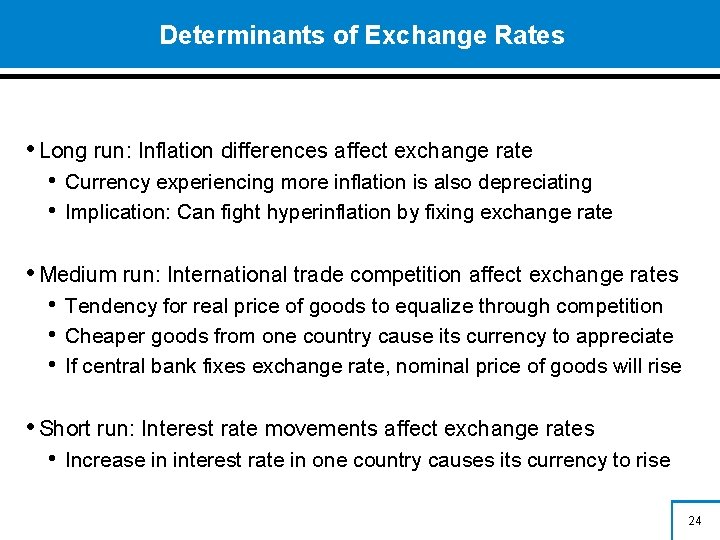
Determinants of Exchange Rates • Long run: Inflation differences affect exchange rate • Currency experiencing more inflation is also depreciating • Implication: Can fight hyperinflation by fixing exchange rate • Medium run: International trade competition affect exchange rates • Tendency for real price of goods to equalize through competition • Cheaper goods from one country cause its currency to appreciate • If central bank fixes exchange rate, nominal price of goods will rise • Short run: Interest rate movements affect exchange rates • Increase in interest rate in one country causes its currency to rise 24
Summary of Questions Answered • What is GDP? • What drives economic growth? • What drives investment? • What drives inflation and exchange rates? 25