
Macroecological questions What patterns exist and how are



- Slides: 26
Macroecological questions. • • What patterns exist, and how are they determined by environment vs. history? How are ecosystems structured, and how is this structure shaped by evolution? What is the relationship between structure and function? What are the robustness and resilience properties of ecosystems and how are they shaped by evolution?
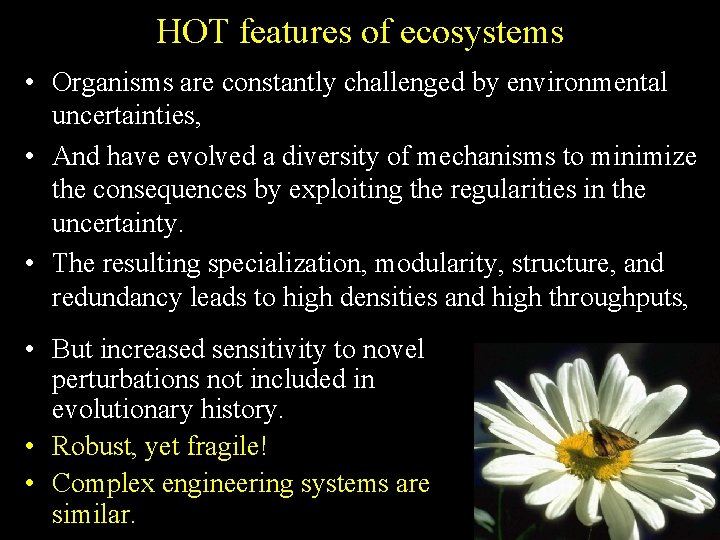
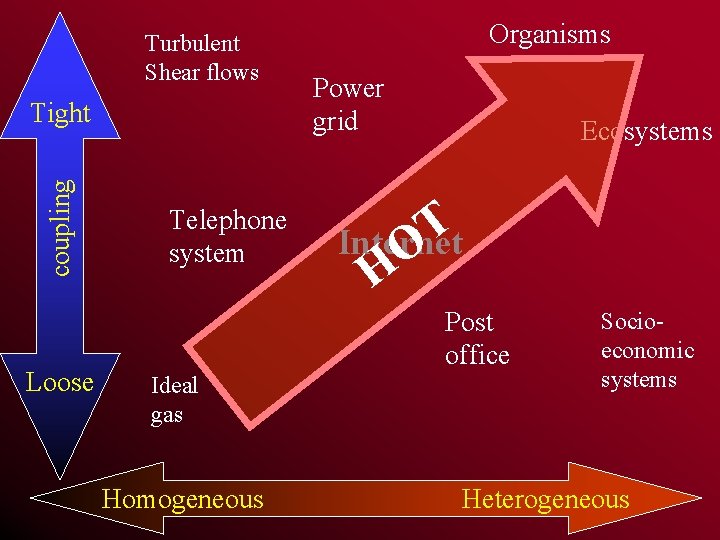
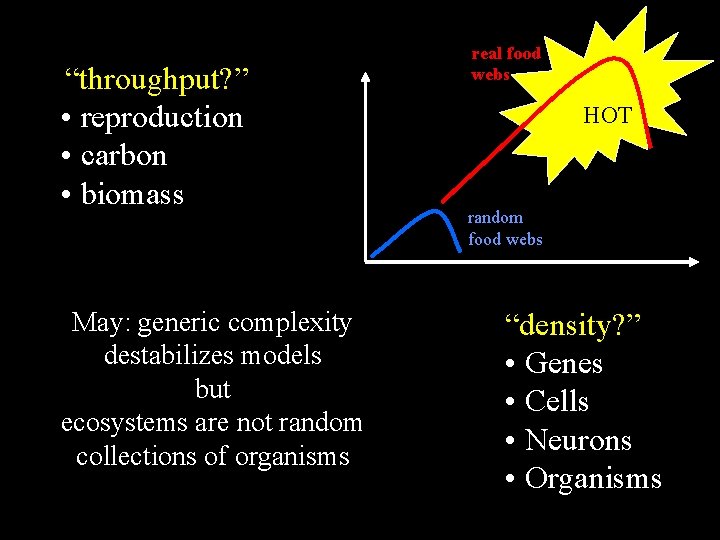
HOT features of ecosystems • Organisms are constantly challenged by environmental uncertainties, • And have evolved a diversity of mechanisms to minimize the consequences by exploiting the regularities in the uncertainty. • The resulting specialization, modularity, structure, and redundancy leads to high densities and high throughputs, • But increased sensitivity to novel perturbations not included in evolutionary history. • Robust, yet fragile! • Complex engineering systems are similar.
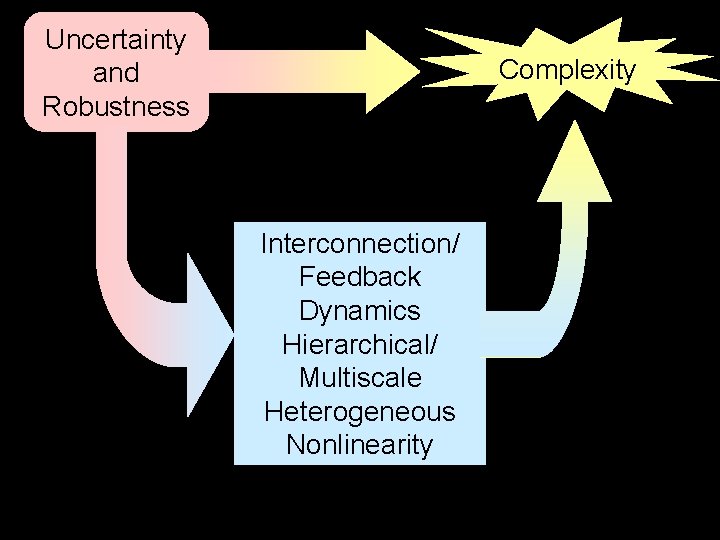
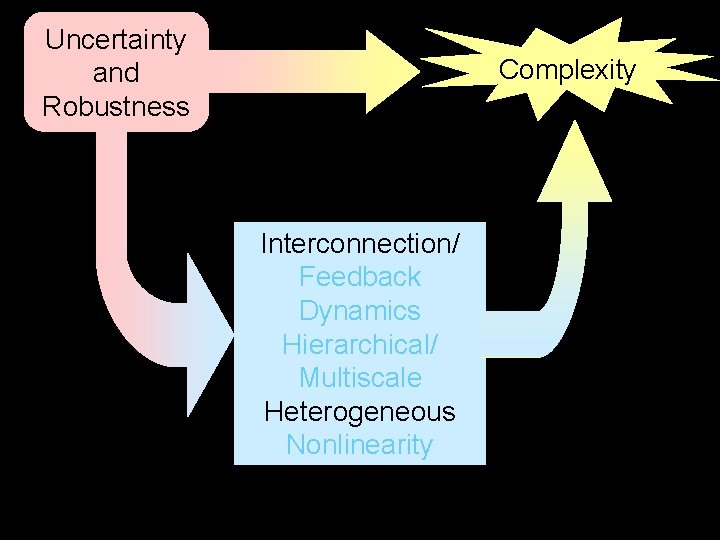
Uncertainty and Robustness Complexity Interconnection/ Feedback Dynamics Hierarchical/ Multiscale Heterogeneous Nonlinearity
Uncertainty and Robustness Complexity Interconnection/ Feedback Dynamics Hierarchical/ Multiscale Heterogeneous Nonlinearity
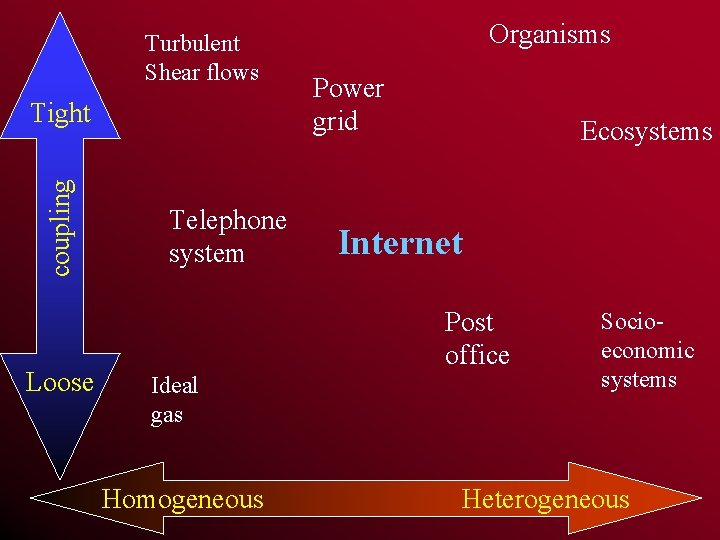
Turbulent Shear flows coupling Tight Loose Telephone system Organisms Power grid Ecosystems Internet Post office Ideal gas Homogeneous Socioeconomic systems Heterogeneous
Turbulent Shear flows coupling Tight Loose Telephone system Organisms Power grid Ecosystems T Internet O H Post office Ideal gas Homogeneous Socioeconomic systems Heterogeneous
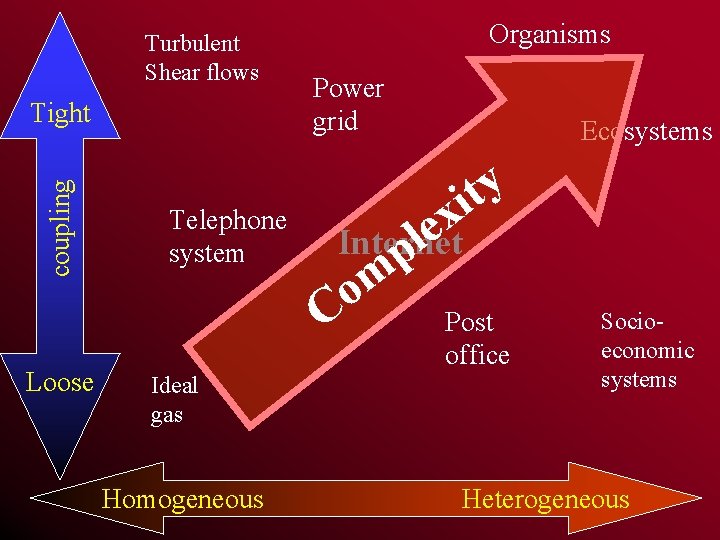
Turbulent Shear flows coupling Tight Loose Telephone system Ideal gas Homogeneous Organisms Power grid Ecosystems y t xi e l Internet p m o C Post office Socioeconomic systems Heterogeneous
Tu Sh rbule ear nt flo ws Te lep sys ho tem ne Ide gas al Po we gri r d Or ga Int eprnlexity Com et Po s off t ice So c eco iosy nom nis ms Ec osy ste ms
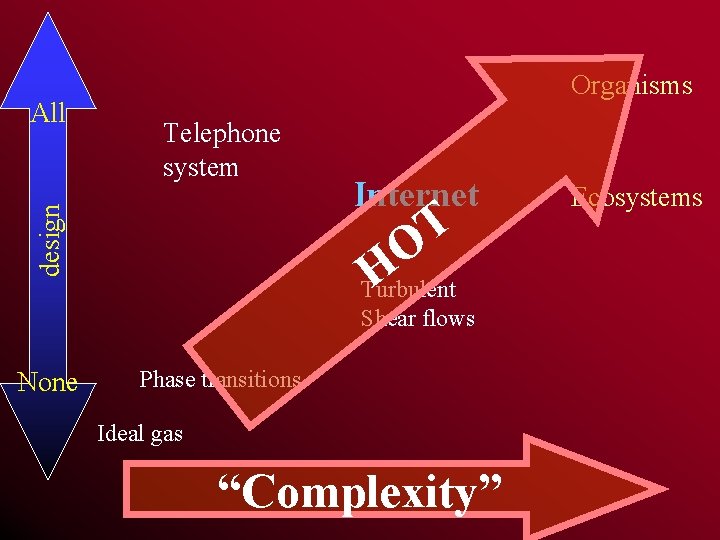
Telephone system None Internet T O H design All Organisms Turbulent Shear flows Phase transitions Ideal gas “Complexity” Ecosystems
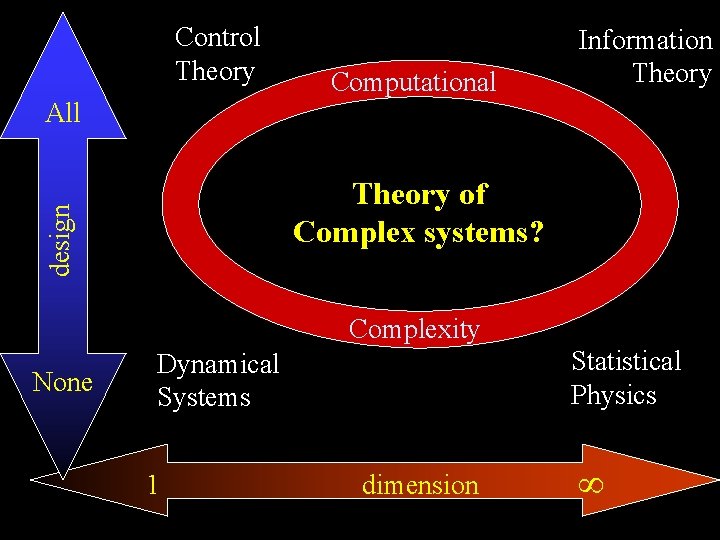
Control Theory Computational Information Theory All design Theory of Complex systems? Complexity None Statistical Physics Dynamical Systems 1 dimension
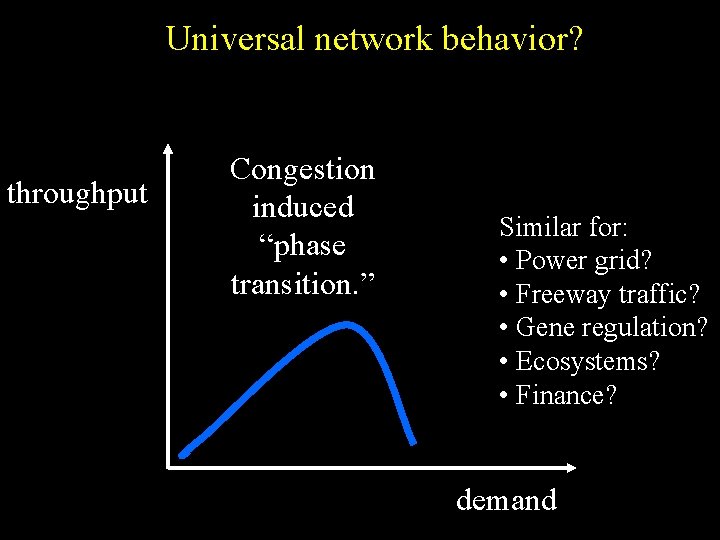
Universal network behavior? throughput Congestion induced “phase transition. ” Similar for: • Power grid? • Freeway traffic? • Gene regulation? • Ecosystems? • Finance? demand
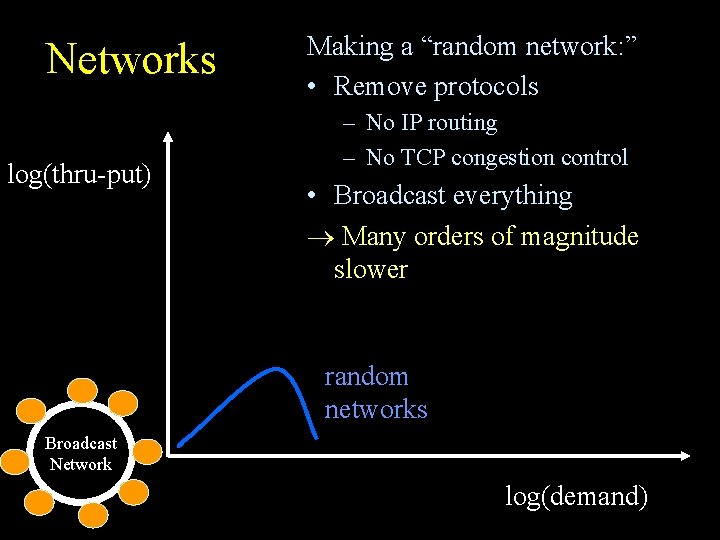
Networks log(thru-put) Making a “random network: ” • Remove protocols – No IP routing – No TCP congestion control • Broadcast everything Many orders of magnitude slower random networks Broadcast Network log(demand)
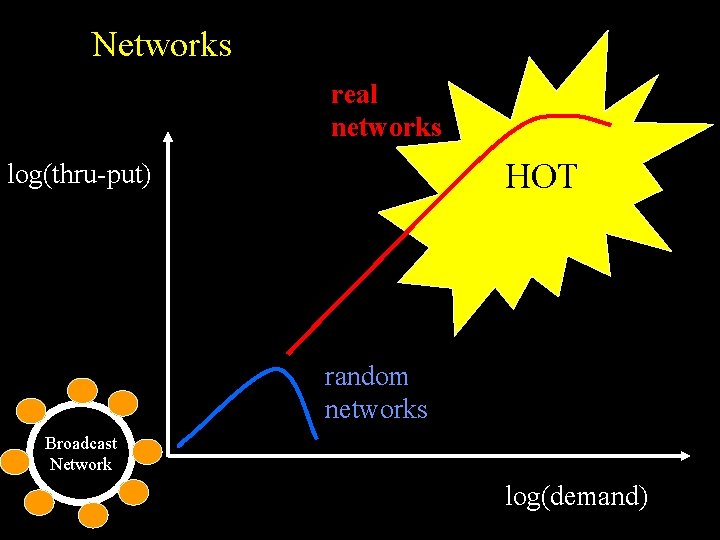
Networks real networks HOT log(thru-put) random networks Broadcast Network log(demand)
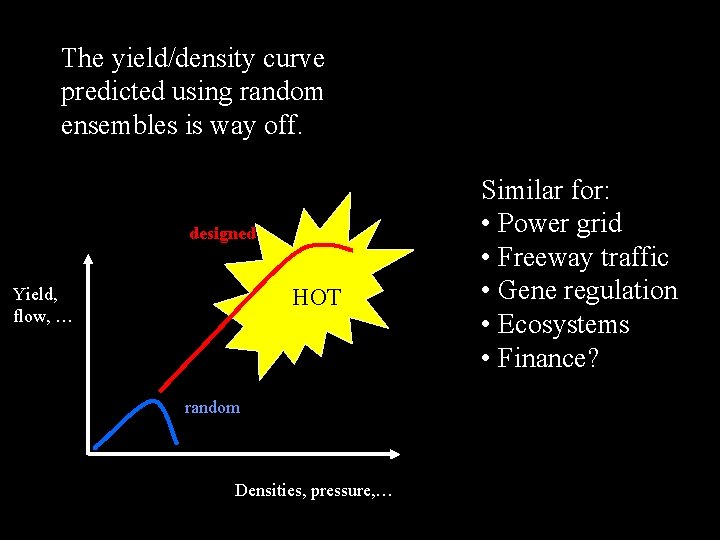
The yield/density curve predicted using random ensembles is way off. designed HOT Yield, flow, … random Densities, pressure, … Similar for: • Power grid • Freeway traffic • Gene regulation • Ecosystems • Finance?
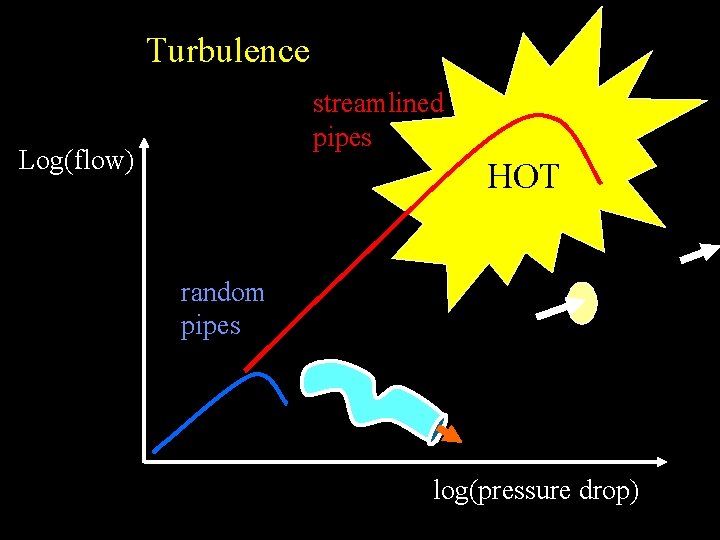
Turbulence streamlined pipes Log(flow) HOT random pipes log(pressure drop)
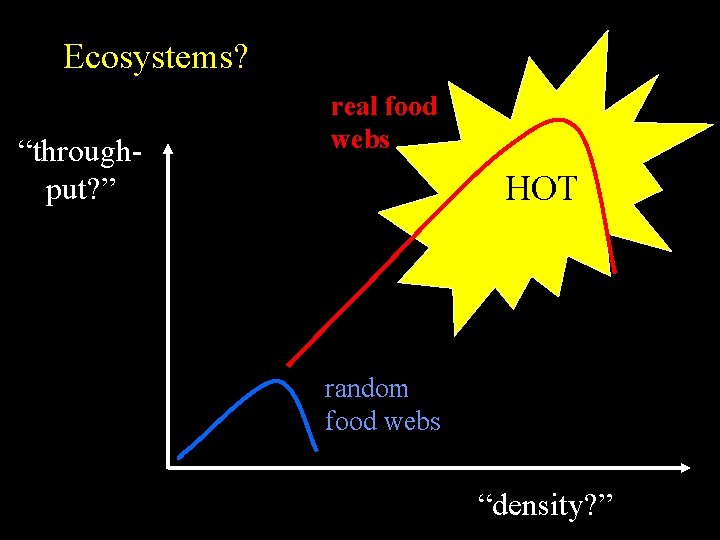
Ecosystems? “throughput? ” real food webs HOT random food webs “density? ”
“throughput? ” • reproduction • carbon • biomass May: generic complexity destabilizes models but ecosystems are not random collections of organisms real food webs HOT random food webs “density? ” • Genes • Cells • Neurons • Organisms
HOT features of ecosystems • Organisms are constantly challenged by environmental uncertainties, • And have evolved a diversity of mechanisms to minimize the consequences by exploiting the regularities in the uncertainty. • The resulting specialization, modularity, structure, and redundancy leads to high densities and high throughputs, • But increased sensitivity to novel perturbations not included in evolutionary history. • Robust, yet fragile!
Ecosystems and extinction Observations • 99. 9% of all species which have ever existed are now extinct • Extinction events have heavy tails. • 5 major extinction events and numerous smaller ones. • Currently in the sixth major extinction with the rate increasing orders of magnitude in the last 10, 000 years.
Ecosystems and extinction • There is an ongoing debate about the cause of these extinctions. • Biologists generally agree that they are due to catastrophic external events – meteor impacts – large scale geophysical phenomena. • Advocates of SOC/EOC argue instead that they are due to SOC/EOC “co-evolutionary biological phenomena. ” • But while extinctions may be triggered by exogenous events, the distribution of extinctions for a given disturbance is a fairly structured, deterministic, and even predictable process.
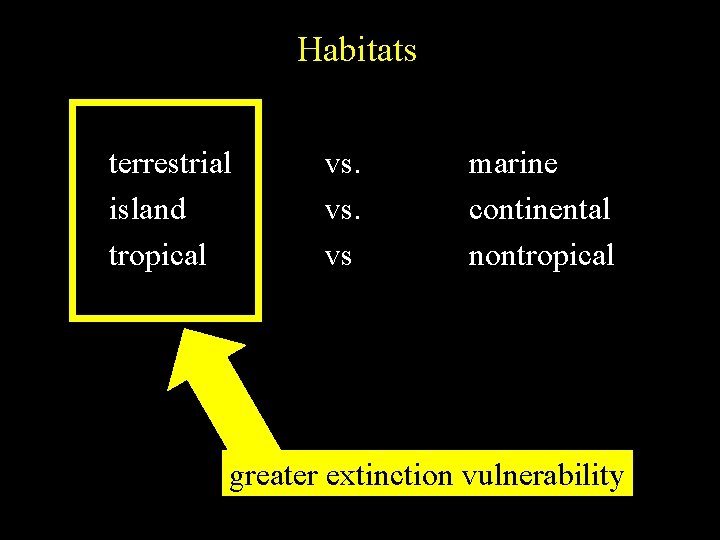
Habitats terrestrial island tropical vs. vs marine continental nontropical greater extinction vulnerability
Specialization • Within a habitat, specialization offers short-term benefits. • Evolution necessarily ignores events that don’t actually happen, even if they are catastrophic. (So do we. ) • Thus tails may be extra heavy. • Specialization consistently correlates with extinction risk in large extinctions. • For example, body size increases over time on average (both within and across species).
Specialization • Large body size has been a risk factor in all major extinctions (although not always in marine animals). • However, in the smaller late Eocene extinctions, largebodied mammal species were not selected against. • This highlights the role of external causes and the highly structured form of the response, because. . . • The late Eocene extinctions were generally related to global cooling, which tends to favor large body size.
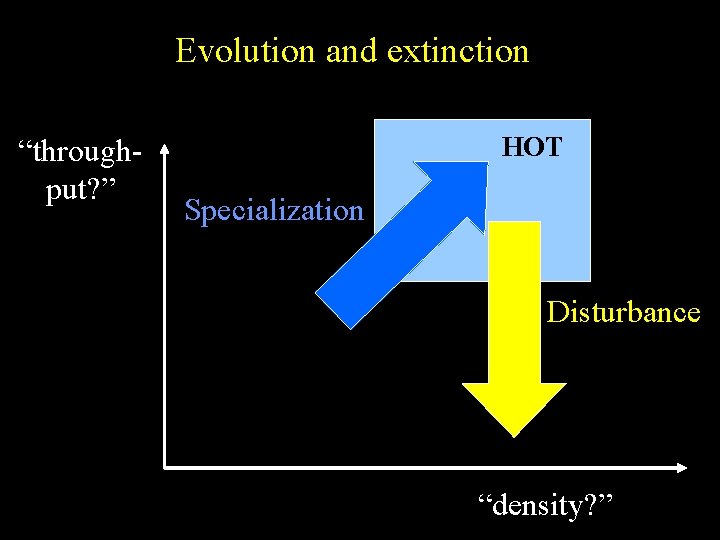
Evolution and extinction “throughput? ” HOT Specialization Disturbance “density? ”
Ecosystems and extinction • There is an ongoing debate about the cause of the large extinctions that are known from the fossil record. • Biologists generally agree that they are due to catastrophic external events – meteor impacts – large scale geophysical phenomena. • Advocates of SOC/EOC argue instead that they are due to SOC/EOC “co-evolutionary biological phenomena. ” • But while extinctions may be triggered by exogenous events, the distribution of extinctions for a given disturbance is a fairly structured, deterministic, and even predictable process.
What’s at stake? If ecosystems are: • EOC/SOC: Specie extinction, global warming, etc. are random fluctuations. Not to worry, nothing to do. Details don’t matter. • HOT: Robust, but fragile. Details do matter. HOT SOC/EOC