
Macro Risks and the Term Structure of Interest
- Slides: 41
Macro Risks and the Term Structure of Interest Rates Geert Bekaert 1 Eric Engstrom 2 Andrey Ermolov 3 2017 The views expressed herein do not necessarily reflect those of the Federal Reserve System, its Board of Governors, or staff. 1 Columbia 2 Federal 2 Gabelli University and NBER Reserve Board of Governors School of Business, Fordham University Geert Bekaert, Eric Engstrom, Andrey Ermolov 1
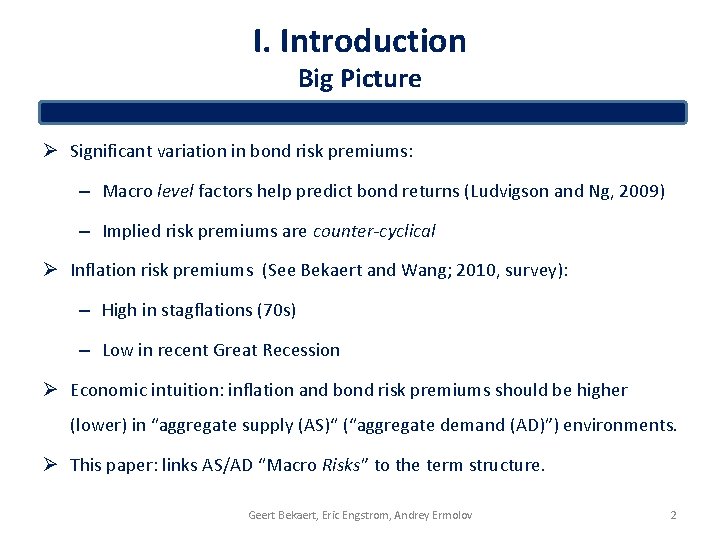
I. Introduction Big Picture Ø Significant variation in bond risk premiums: – Macro level factors help predict bond returns (Ludvigson and Ng, 2009) – Implied risk premiums are counter-cyclical Ø Inflation risk premiums (See Bekaert and Wang; 2010, survey): – High in stagflations (70 s) – Low in recent Great Recession Ø Economic intuition: inflation and bond risk premiums should be higher (lower) in “aggregate supply (AS)“ (“aggregate demand (AD)”) environments. Ø This paper: links AS/AD “Macro Risks” to the term structure. Geert Bekaert, Eric Engstrom, Andrey Ermolov 2
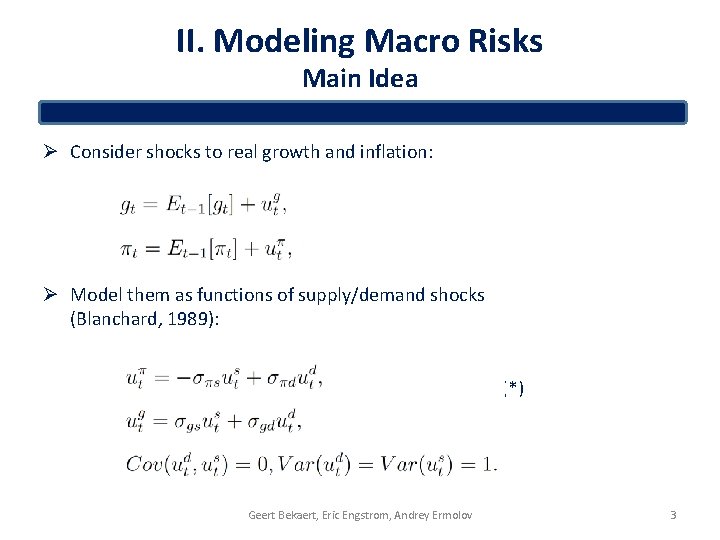
II. Modeling Macro Risks Main Idea Ø Consider shocks to real growth and inflation: Ø Model them as functions of supply/demand shocks (Blanchard, 1989): (*) Geert Bekaert, Eric Engstrom, Andrey Ermolov 3
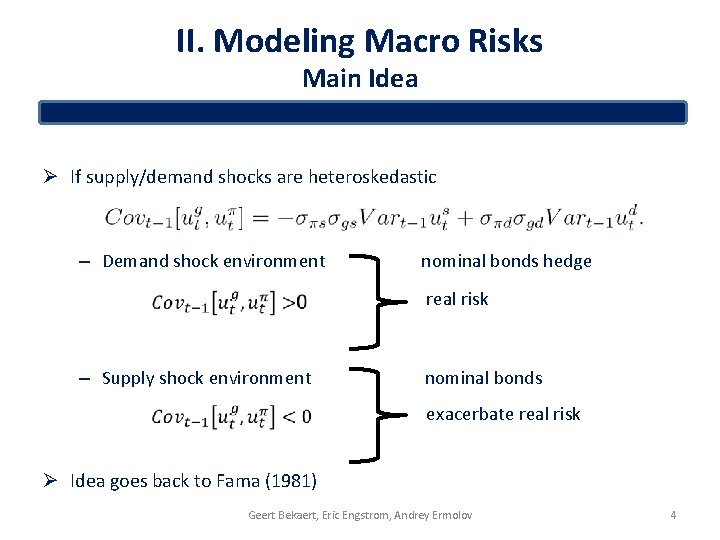
II. Modeling Macro Risks Main Idea Ø If supply/demand shocks are heteroskedastic – Demand shock environment nominal bonds hedge real risk – Supply shock environment nominal bonds exacerbate real risk Ø Idea goes back to Fama (1981) Geert Bekaert, Eric Engstrom, Andrey Ermolov 4
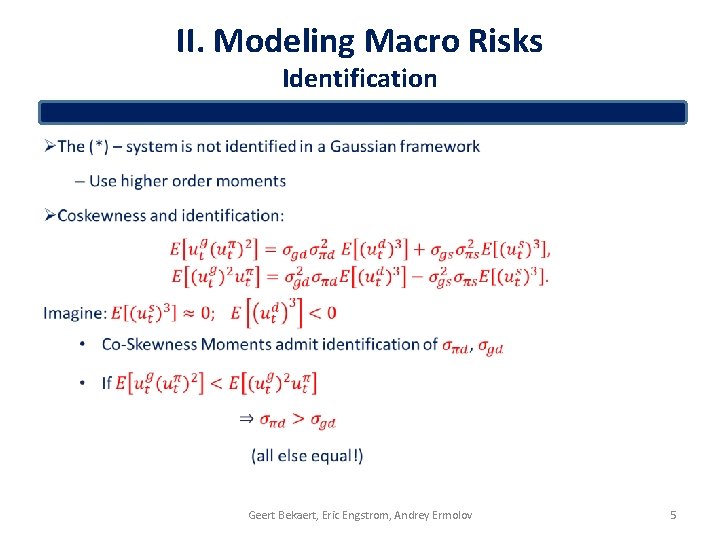
II. Modeling Macro Risks Identification Ø Geert Bekaert, Eric Engstrom, Andrey Ermolov 5
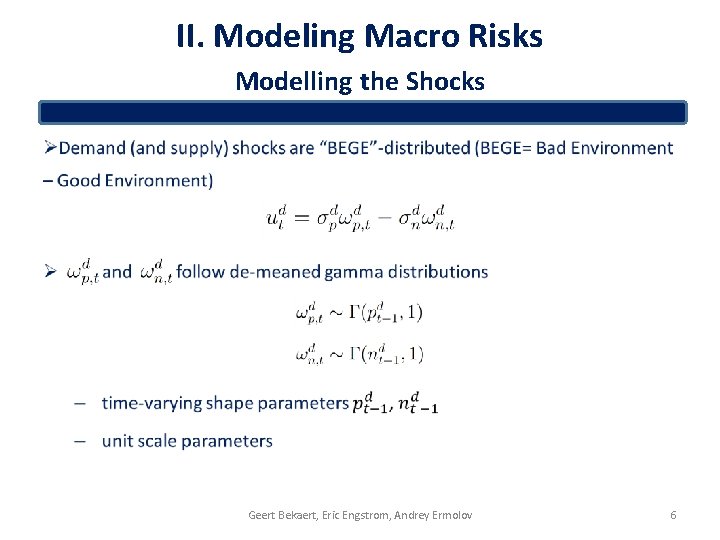
II. Modeling Macro Risks Modelling the Shocks Ø Geert Bekaert, Eric Engstrom, Andrey Ermolov 6
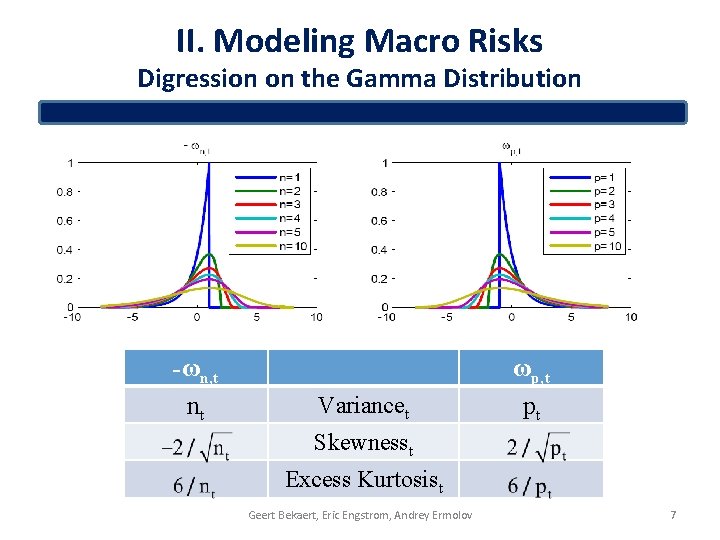
II. Modeling Macro Risks Digression on the Gamma Distribution -ωn, t nt Variancet ωp, t pt Skewnesst Excess Kurtosist Geert Bekaert, Eric Engstrom, Andrey Ermolov 7
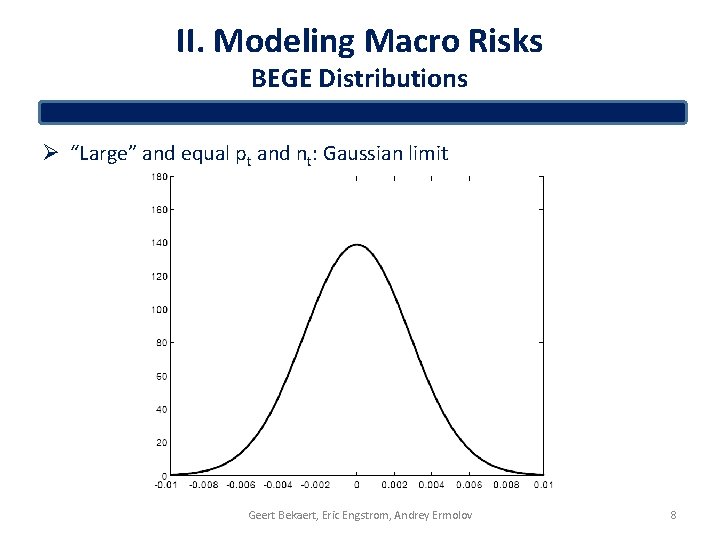
II. Modeling Macro Risks BEGE Distributions Ø “Large” and equal pt and nt: Gaussian limit Geert Bekaert, Eric Engstrom, Andrey Ermolov 8
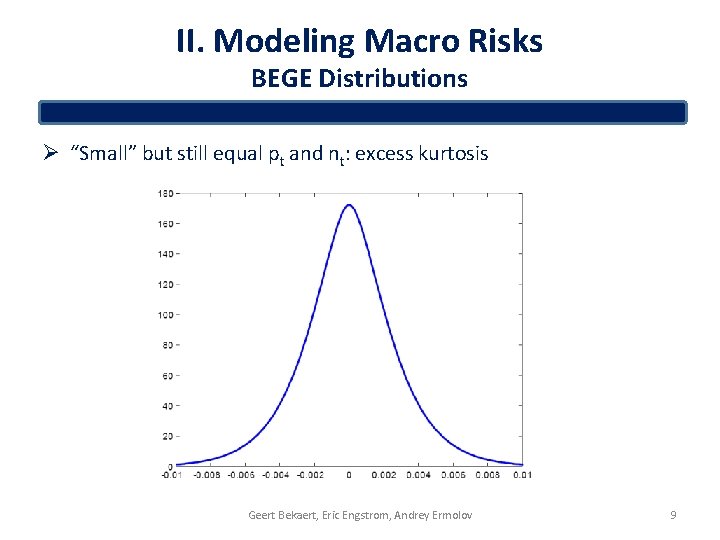
II. Modeling Macro Risks BEGE Distributions Ø “Small” but still equal pt and nt: excess kurtosis Geert Bekaert, Eric Engstrom, Andrey Ermolov 9
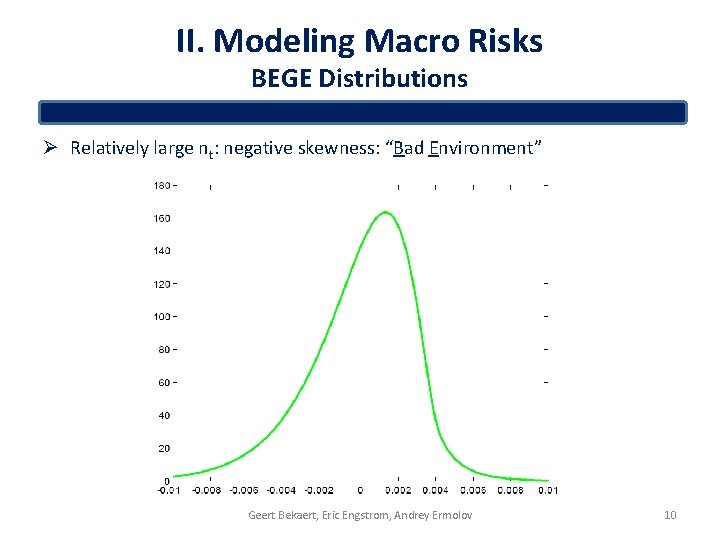
II. Modeling Macro Risks BEGE Distributions Ø Relatively large nt: negative skewness: “Bad Environment” Geert Bekaert, Eric Engstrom, Andrey Ermolov 10
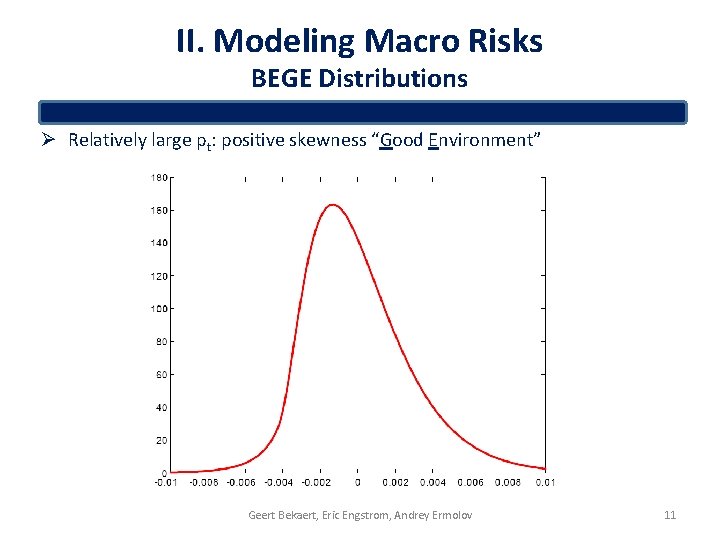
II. Modeling Macro Risks BEGE Distributions Ø Relatively large pt: positive skewness “Good Environment” Geert Bekaert, Eric Engstrom, Andrey Ermolov 11
II. Modeling Macro Risks BEGE Distributions Ø The BEGE distribution has some advantages… – Realistic • Fits some financial and macro economic data well: – Bekaert and Engstrom (2017, JPE, Consumption Growth and the VIX) – Bekaert, Engstrom and Ermolov (2015, JEc; Stock Returns) – Ermolov (2017, Stock & Bond Return Correlations) – Bekaert, Engstrom, Xu (2017, Time-varying risk appetite model) – Tractable • Fits in the affine class of asset pricing models Ø Also: B(ekaert) E(ngstrom) G(eert) E(ric) Geert Bekaert, Eric Engstrom, Andrey Ermolov 12
II. Modeling Macro Risks BEGE Distributions …. but we have no affiliation with the Bee Gees Ø … and some disadvantages Ø We have no affiliation with the Bee Gees! Geert Bekaert, Eric Engstrom, Andrey Ermolov 13
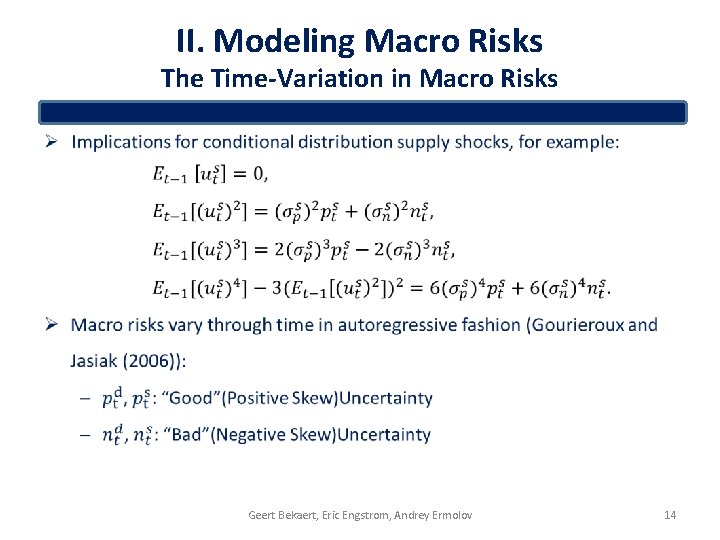
II. Modeling Macro Risks The Time-Variation in Macro Risks Ø Geert Bekaert, Eric Engstrom, Andrey Ermolov 14
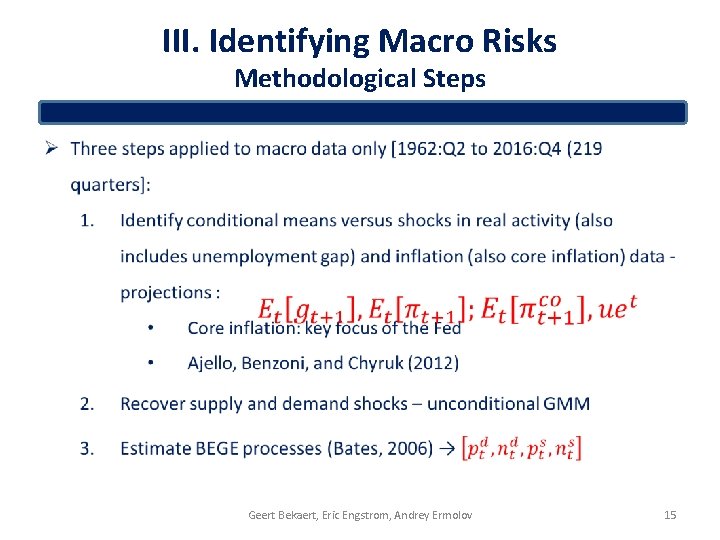
III. Identifying Macro Risks Methodological Steps Ø Geert Bekaert, Eric Engstrom, Andrey Ermolov 15
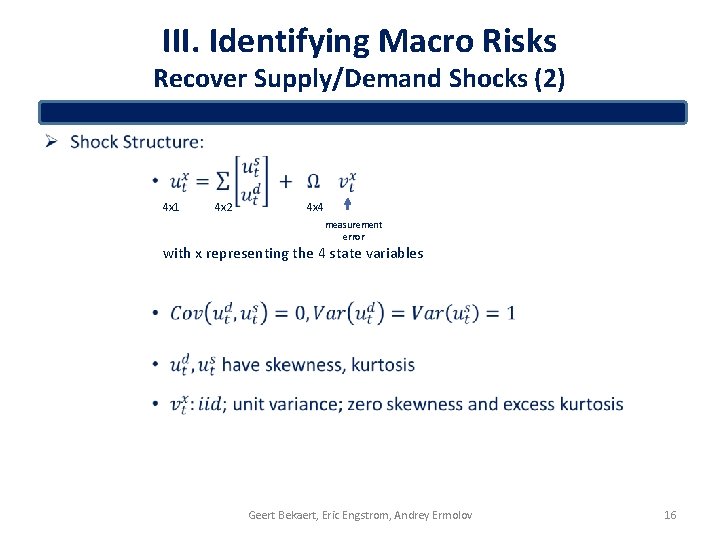
III. Identifying Macro Risks Recover Supply/Demand Shocks (2) Ø 4 x 1 4 x 2 4 x 4 measurement error with x representing the 4 state variables Geert Bekaert, Eric Engstrom, Andrey Ermolov 16
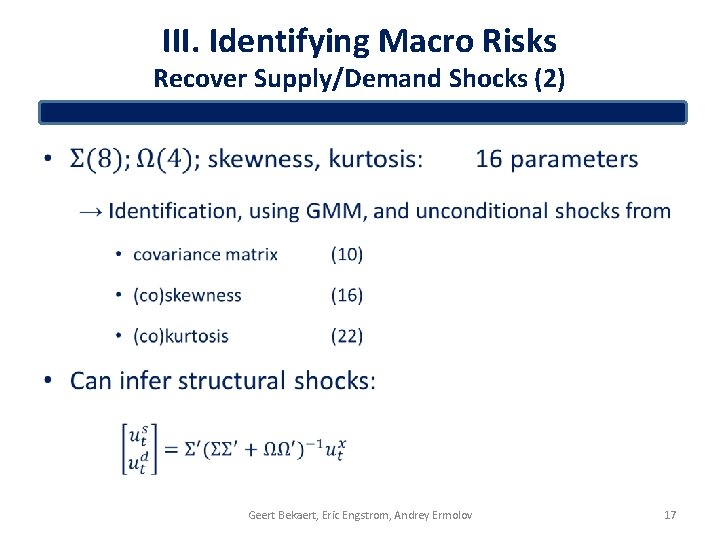
III. Identifying Macro Risks Recover Supply/Demand Shocks (2) Ø Geert Bekaert, Eric Engstrom, Andrey Ermolov 17
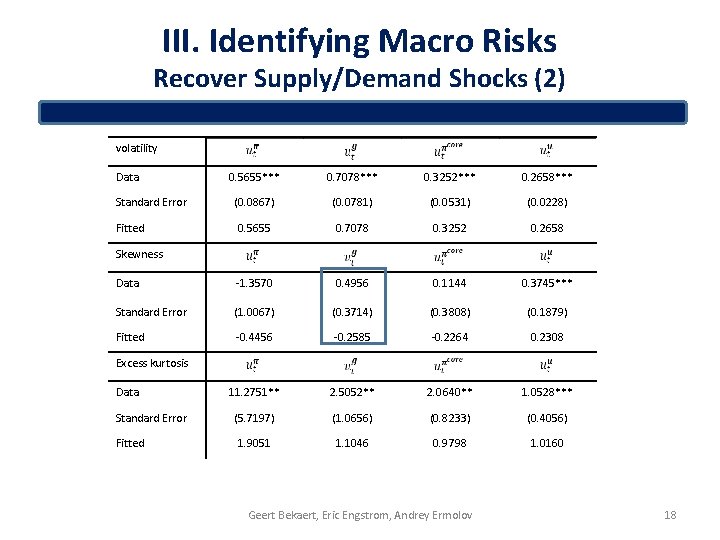
III. Identifying Macro Risks Recover Supply/Demand Shocks (2) volatility Data 0. 5655*** 0. 7078*** 0. 3252*** 0. 2658*** (0. 0867) (0. 0781) (0. 0531) (0. 0228) 0. 5655 0. 7078 0. 3252 0. 2658 Data -1. 3570 0. 4956 0. 1144 0. 3745*** Standard Error (1. 0067) (0. 3714) (0. 3808) (0. 1879) Fitted -0. 4456 -0. 2585 -0. 2264 0. 2308 11. 2751** 2. 5052** 2. 0640** 1. 0528*** (5. 7197) (1. 0656) (0. 8233) (0. 4056) 1. 9051 1. 1046 0. 9798 1. 0160 Standard Error Fitted Skewness Excess kurtosis Data Standard Error Fitted Geert Bekaert, Eric Engstrom, Andrey Ermolov 18
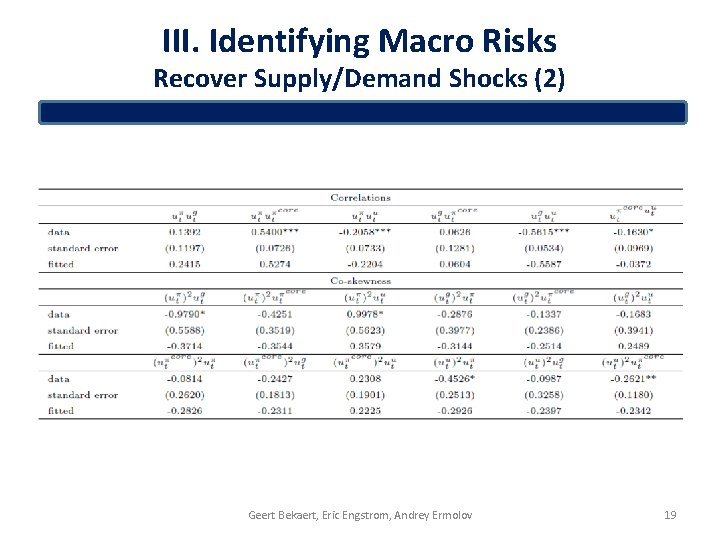
III. Identifying Macro Risks Recover Supply/Demand Shocks (2) Geert Bekaert, Eric Engstrom, Andrey Ermolov 19
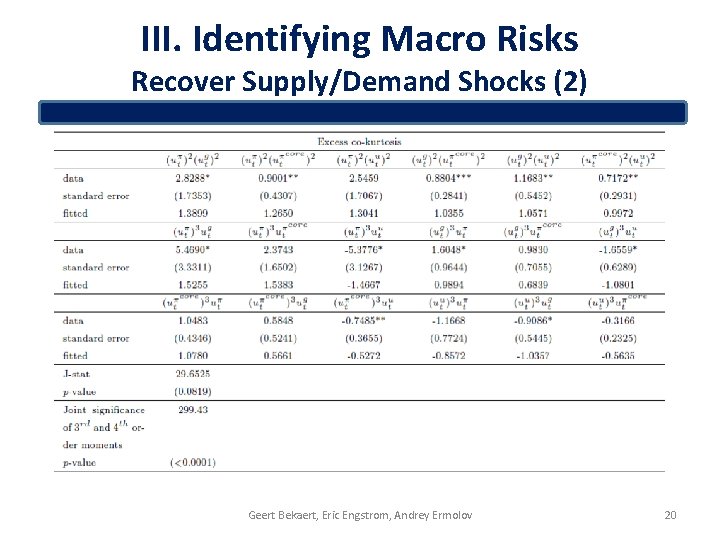
III. Identifying Macro Risks Recover Supply/Demand Shocks (2) Geert Bekaert, Eric Engstrom, Andrey Ermolov 20
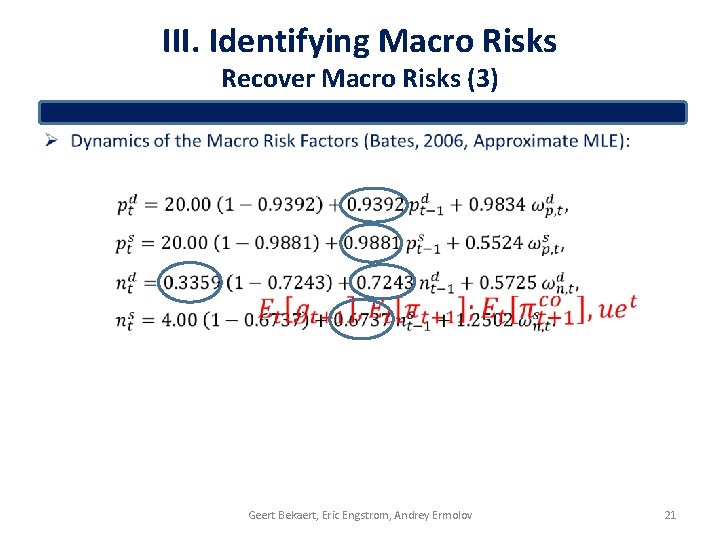
III. Identifying Macro Risks Recover Macro Risks (3) Ø Geert Bekaert, Eric Engstrom, Andrey Ermolov 21
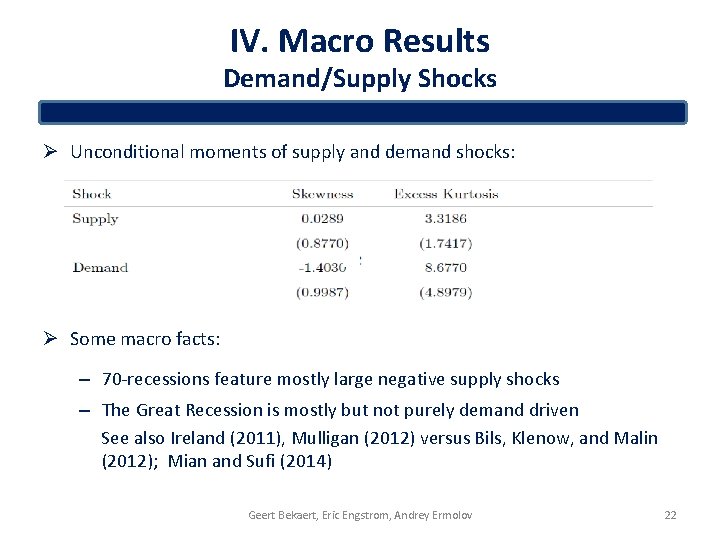
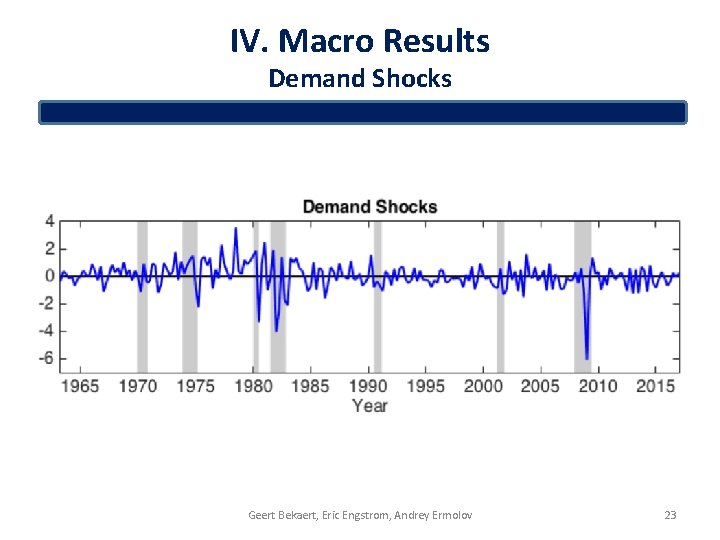
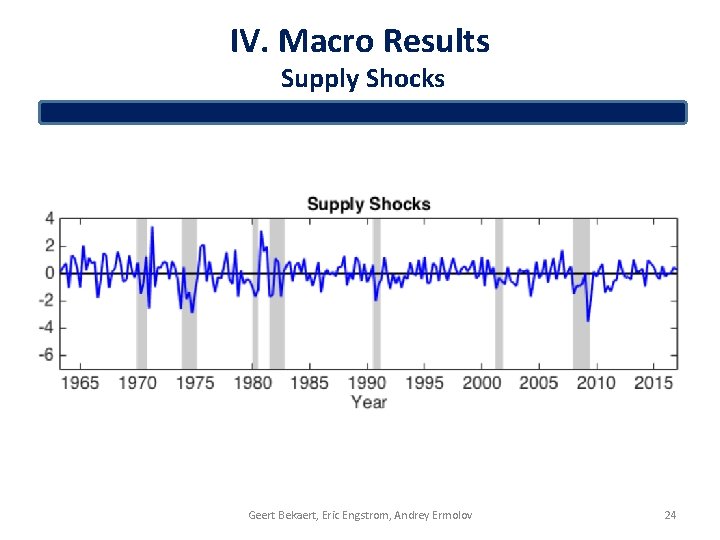
IV. Macro Results Demand/Supply Shocks Ø Unconditional moments of supply and demand shocks: Ø Some macro facts: – 70 -recessions feature mostly large negative supply shocks – The Great Recession is mostly but not purely demand driven See also Ireland (2011), Mulligan (2012) versus Bils, Klenow, and Malin (2012); Mian and Sufi (2014) Geert Bekaert, Eric Engstrom, Andrey Ermolov 22
IV. Macro Results Demand Shocks Geert Bekaert, Eric Engstrom, Andrey Ermolov 23
IV. Macro Results Supply Shocks Geert Bekaert, Eric Engstrom, Andrey Ermolov 24
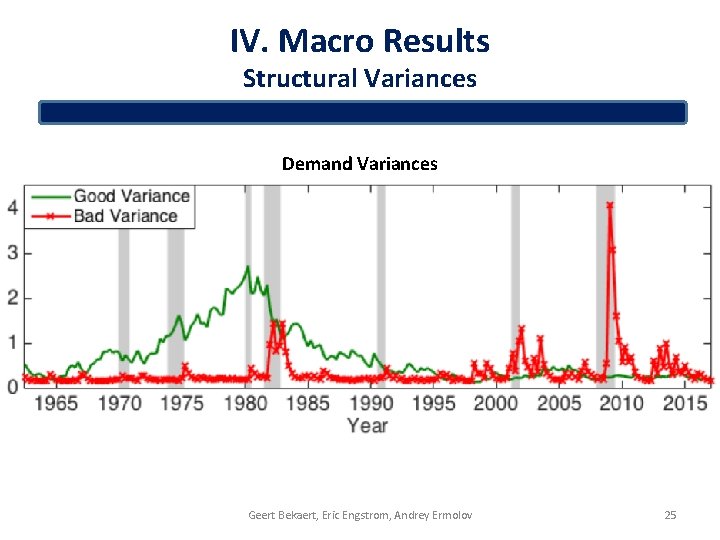
IV. Macro Results Structural Variances Demand Variances Geert Bekaert, Eric Engstrom, Andrey Ermolov 25
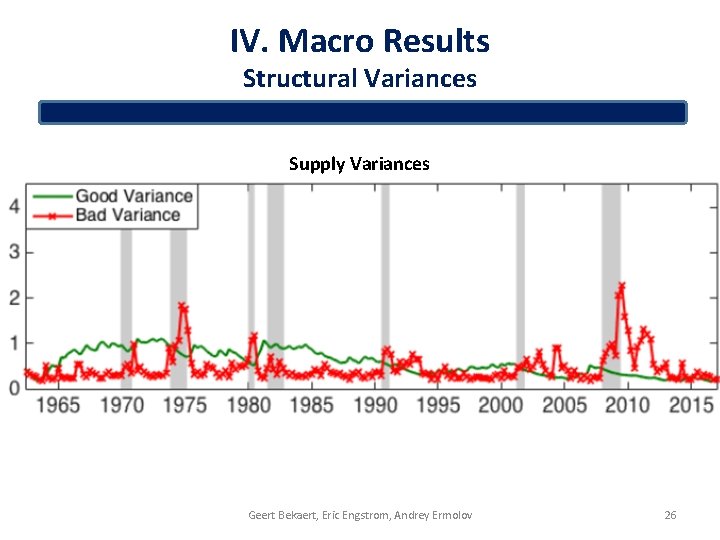
IV. Macro Results Structural Variances Supply Variances Geert Bekaert, Eric Engstrom, Andrey Ermolov 26
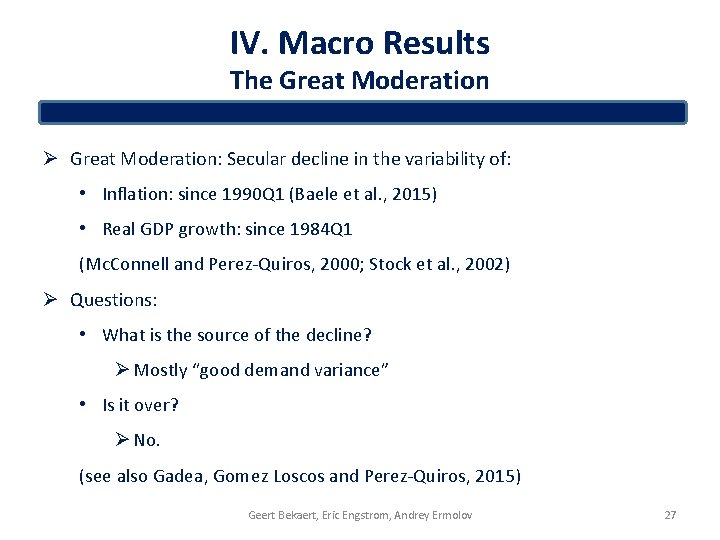
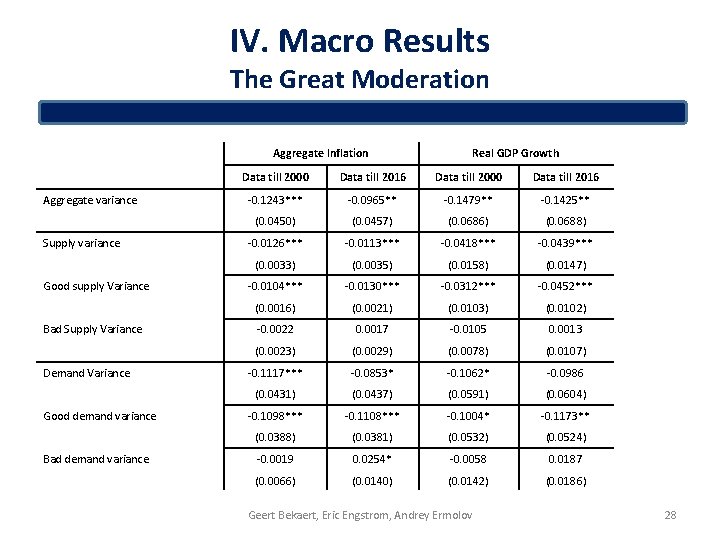
IV. Macro Results The Great Moderation Ø Great Moderation: Secular decline in the variability of: • Inflation: since 1990 Q 1 (Baele et al. , 2015) • Real GDP growth: since 1984 Q 1 (Mc. Connell and Perez-Quiros, 2000; Stock et al. , 2002) Ø Questions: • What is the source of the decline? Ø Mostly “good demand variance” • Is it over? Ø No. (see also Gadea, Gomez Loscos and Perez-Quiros, 2015) Geert Bekaert, Eric Engstrom, Andrey Ermolov 27
IV. Macro Results The Great Moderation Aggregate Inflation Aggregate variance Supply variance Good supply Variance Bad Supply Variance Demand Variance Good demand variance Bad demand variance Real GDP Growth Data till 2000 Data till 2016 -0. 1243*** -0. 0965** -0. 1479** -0. 1425** (0. 0450) (0. 0457) (0. 0686) (0. 0688) -0. 0126*** -0. 0113*** -0. 0418*** -0. 0439*** (0. 0033) (0. 0035) (0. 0158) (0. 0147) -0. 0104*** -0. 0130*** -0. 0312*** -0. 0452*** (0. 0016) (0. 0021) (0. 0103) (0. 0102) -0. 0022 0. 0017 -0. 0105 0. 0013 (0. 0023) (0. 0029) (0. 0078) (0. 0107) -0. 1117*** -0. 0853* -0. 1062* -0. 0986 (0. 0431) (0. 0437) (0. 0591) (0. 0604) -0. 1098*** -0. 1108*** -0. 1004* -0. 1173** (0. 0388) (0. 0381) (0. 0532) (0. 0524) -0. 0019 0. 0254* -0. 0058 0. 0187 (0. 0066) (0. 0140) (0. 0142) (0. 0186) Geert Bekaert, Eric Engstrom, Andrey Ermolov 28
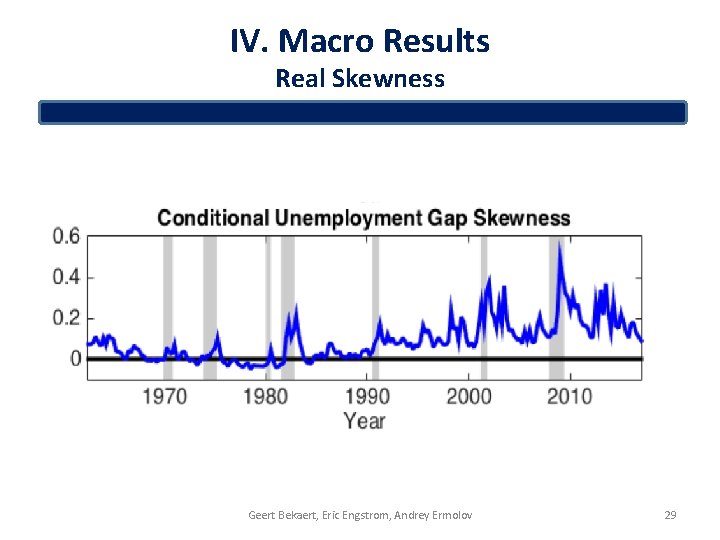
IV. Macro Results Real Skewness Geert Bekaert, Eric Engstrom, Andrey Ermolov 29
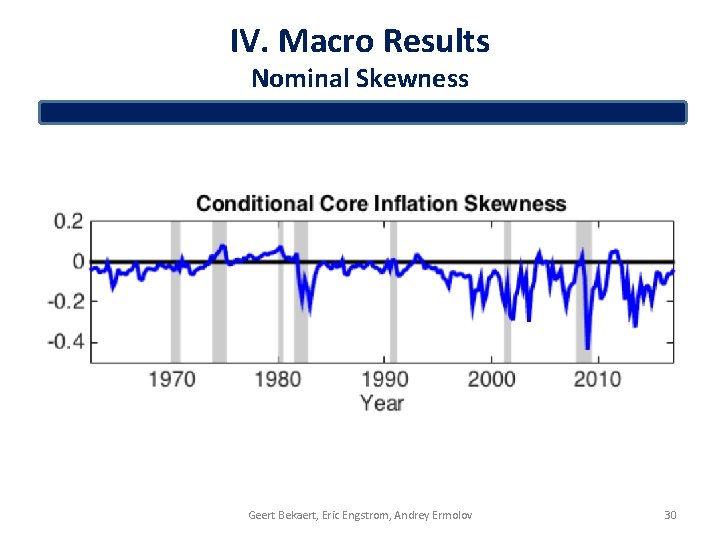
IV. Macro Results Nominal Skewness Geert Bekaert, Eric Engstrom, Andrey Ermolov 30
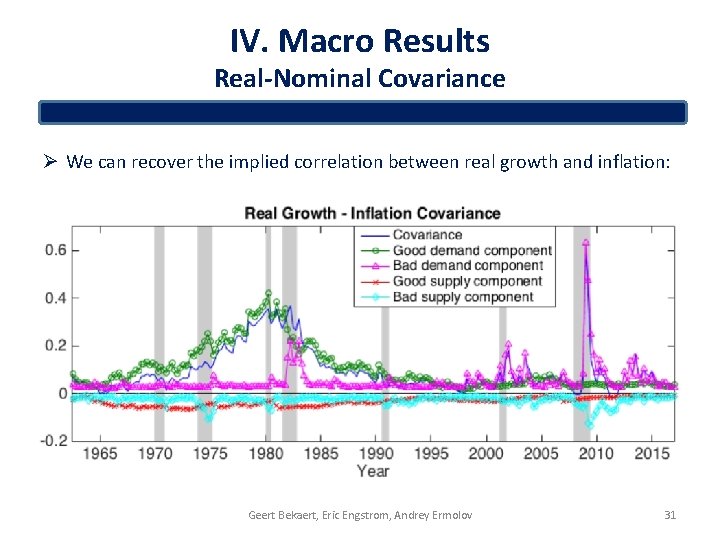
IV. Macro Results Real-Nominal Covariance Ø We can recover the implied correlation between real growth and inflation: Geert Bekaert, Eric Engstrom, Andrey Ermolov 31
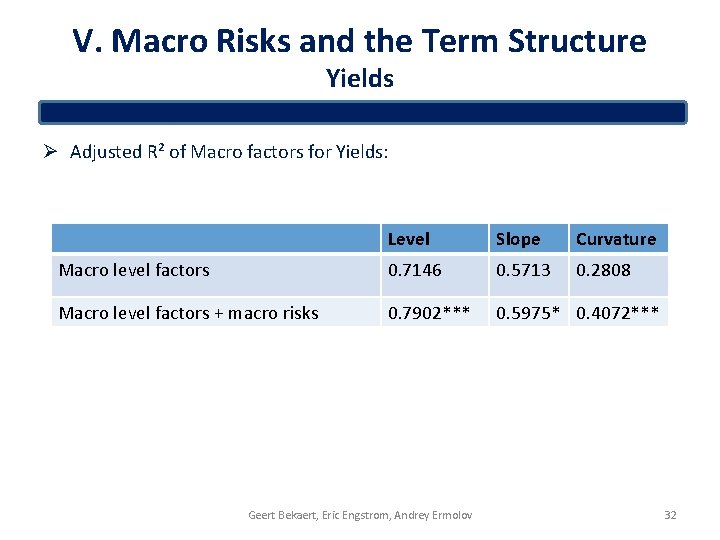
V. Macro Risks and the Term Structure Yields Ø Adjusted R² of Macro factors for Yields: Level Slope Curvature Macro level factors 0. 7146 0. 5713 0. 2808 Macro level factors + macro risks 0. 7902*** 0. 5975* 0. 4072*** Geert Bekaert, Eric Engstrom, Andrey Ermolov 32
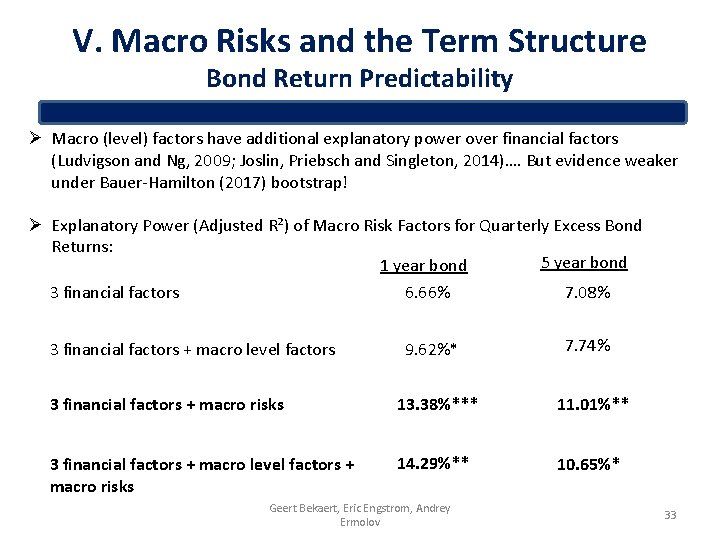
V. Macro Risks and the Term Structure Bond Return Predictability Ø Macro (level) factors have additional explanatory power over financial factors (Ludvigson and Ng, 2009; Joslin, Priebsch and Singleton, 2014)…. But evidence weaker under Bauer-Hamilton (2017) bootstrap! Ø Explanatory Power (Adjusted R²) of Macro Risk Factors for Quarterly Excess Bond Returns: 5 year bond 1 year bond 3 financial factors 6. 66% 7. 08% 3 financial factors + macro level factors 9. 62%* 7. 74% 3 financial factors + macro risks 13. 38%*** 11. 01%** 3 financial factors + macro level factors + macro risks 14. 29%** 10. 65%* Geert Bekaert, Eric Engstrom, Andrey Ermolov 33
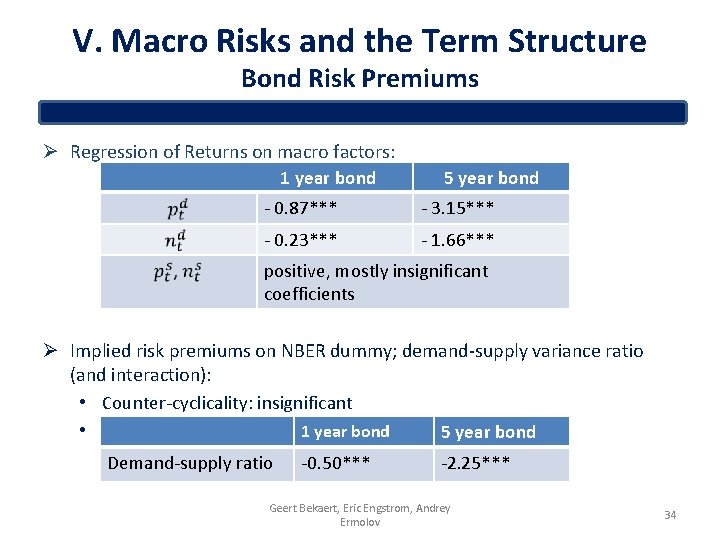
V. Macro Risks and the Term Structure Bond Risk Premiums Ø Regression of Returns on macro factors: 1 year bond - 0. 87*** - 0. 23*** 5 year bond - 3. 15*** - 1. 66*** positive, mostly insignificant coefficients Ø Implied risk premiums on NBER dummy; demand-supply variance ratio (and interaction): • Counter-cyclicality: insignificant 1 year bond • 5 year bond Demand-supply ratio -0. 50*** -2. 25*** Geert Bekaert, Eric Engstrom, Andrey Ermolov 34
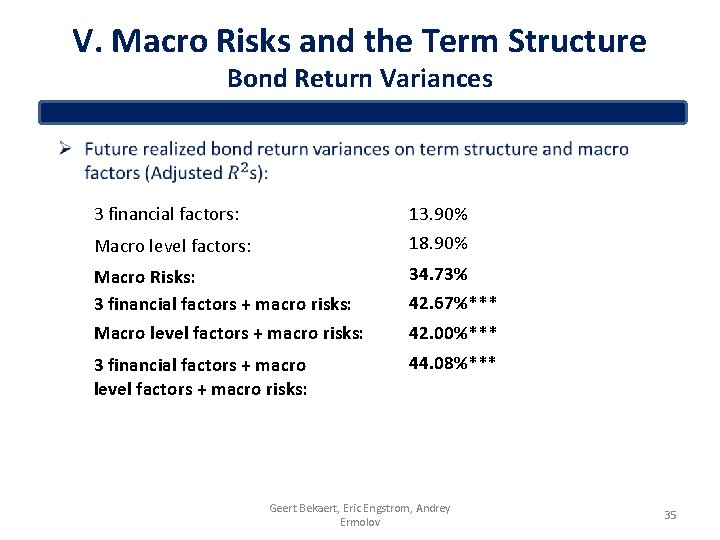
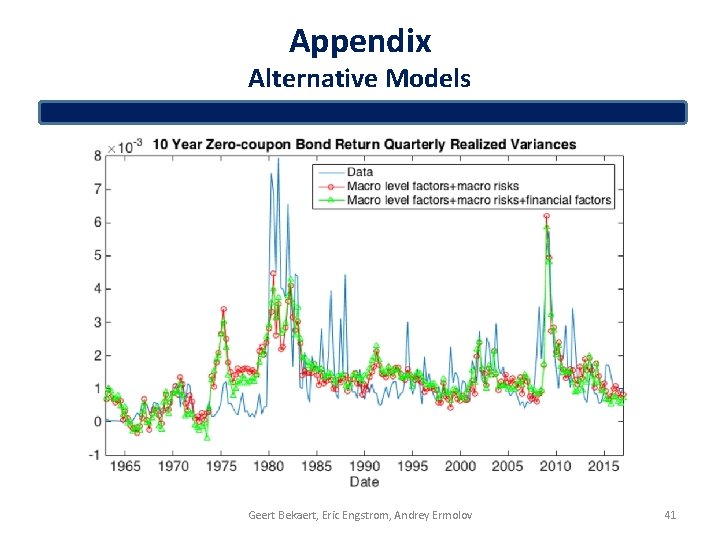
V. Macro Risks and the Term Structure Bond Return Variances Ø 3 financial factors: 13. 90% 18. 90% Macro level factors: Macro Risks: 3 financial factors + macro risks: Macro level factors + macro risks: 34. 73% 42. 67%*** 3 financial factors + macro level factors + macro risks: 44. 08%*** 42. 00%*** Geert Bekaert, Eric Engstrom, Andrey Ermolov 35
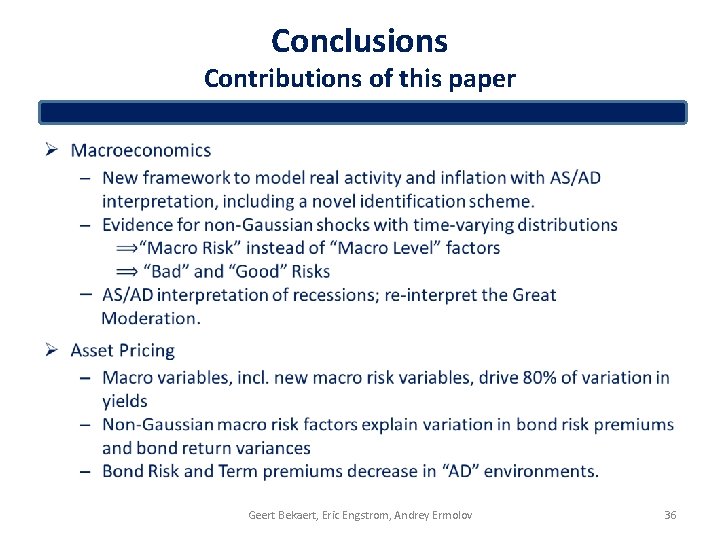
Conclusions Contributions of this paper Ø Geert Bekaert, Eric Engstrom, Andrey Ermolov 36
Conclusions On the Agenda Ø A new TS model: � Macro factors with intuitive macro-economic interpretation (AS/AD macro risks) � Accommodates non-Gaussianities, but yields are affine in the state variables � Intuitive decomposition of (time variation in) inflation risk premiums Geert Bekaert, Eric Engstrom, Andrey Ermolov 37
Conclusions On the Agenda Ø Affine models – Latent variables – Macro variables (Ang and Piazzesi (2003); Joslin, Priebsch and Singleton (2014); Chernov and Mueller (2012), …) – Less focus on economics; “Fits” data Ø DSGE models – Optimizing agents – Complex equations – Lots of economics; tightly parameterized Ø Many models are still (conditionally) Gaussian Geert Bekaert, Eric Engstrom, Andrey Ermolov 38
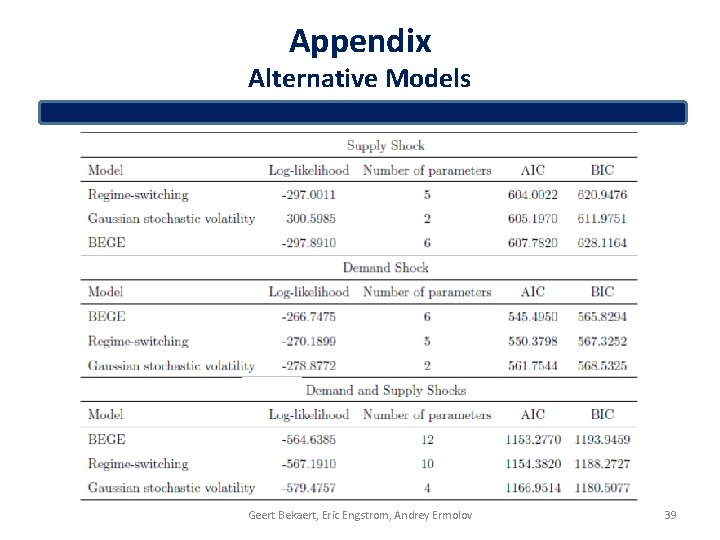
Appendix Alternative Models Geert Bekaert, Eric Engstrom, Andrey Ermolov 39
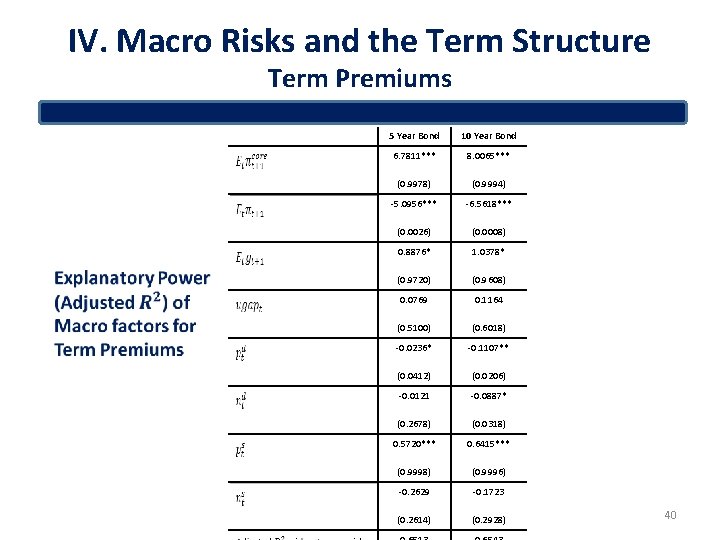
IV. Macro Risks and the Term Structure Term Premiums Ø 5 Year Bond 10 Year Bond 6. 7811*** 8. 0065*** (0. 9978) (0. 9994) -5. 0956*** -6. 5618*** (0. 0026) (0. 0008) 0. 8876* 1. 0378* (0. 9720) (0. 9608) 0. 0769 0. 1164 (0. 5100) (0. 6018) -0. 0236* -0. 1107** (0. 0412) (0. 0206) -0. 0121 -0. 0887* (0. 2678) (0. 0318) 0. 5720*** 0. 6415*** (0. 9998) (0. 9996) -0. 2629 -0. 1723 Geert Bekaert, Eric Engstrom, Andrey (0. 2614) Ermolov(0. 2928) 40
Appendix Alternative Models Geert Bekaert, Eric Engstrom, Andrey Ermolov 41