
Macro Microdontia By Angela Mancuso Section D 219
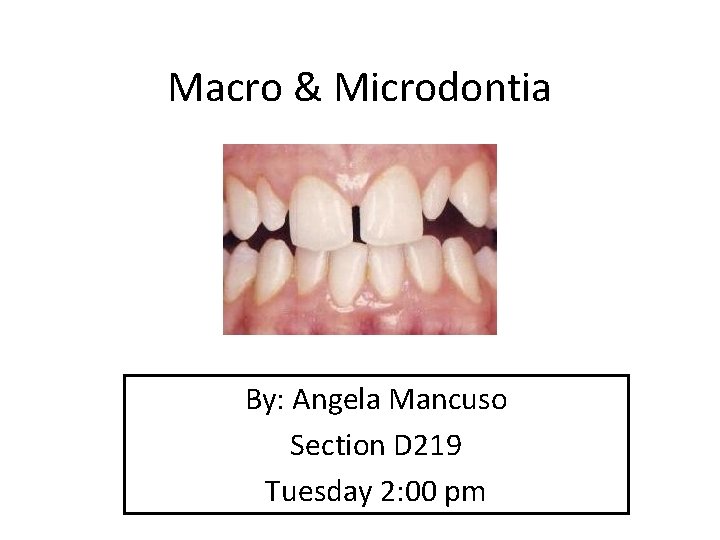
Macro & Microdontia By: Angela Mancuso Section D 219 Tuesday 2: 00 pm
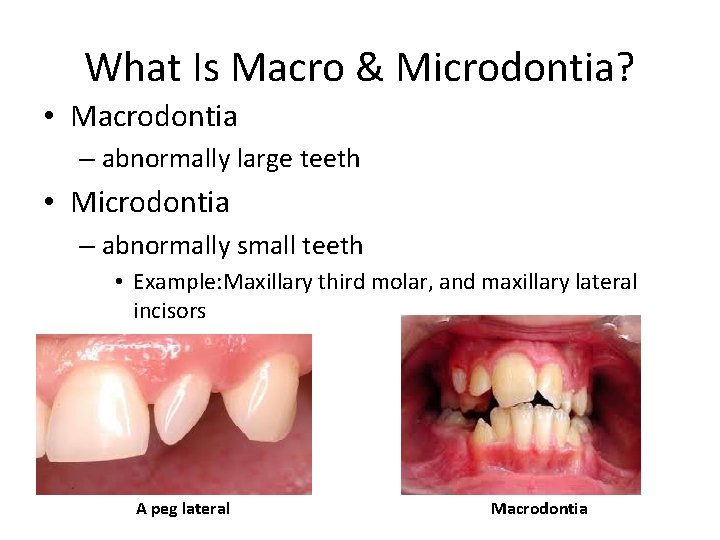
What Is Macro & Microdontia? • Macrodontia – abnormally large teeth • Microdontia – abnormally small teeth • Example: Maxillary third molar, and maxillary lateral incisors A peg lateral Macrodontia

How Does This Occur? • Microdontia is associated with hypopituitarism or Down syndrome – Hypopituitarism is diminished hormone secretion by the pituitary gland, causing dwarfism in children and premature aging in adults • Macrodontia is associated with childhood hyperpituitarism – Hyperpituitarism is excessive production of growth hormones by the pituitary gland
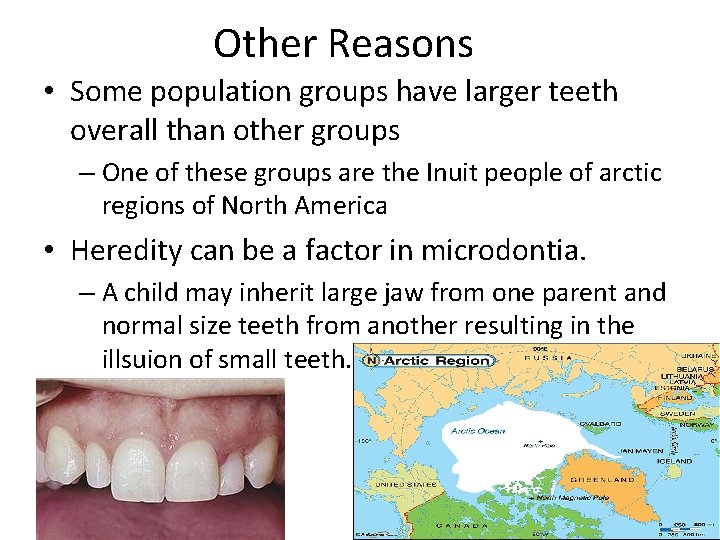
Other Reasons • Some population groups have larger teeth overall than other groups – One of these groups are the Inuit people of arctic regions of North America • Heredity can be a factor in microdontia. – A child may inherit large jaw from one parent and normal size teeth from another resulting in the illsuion of small teeth.
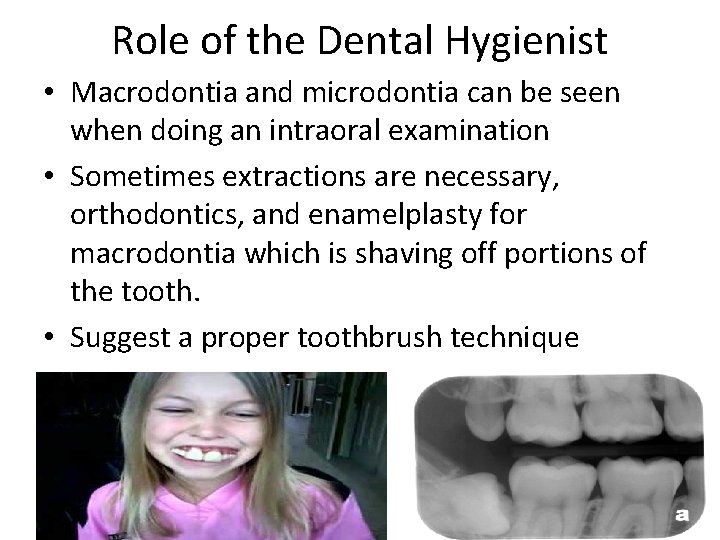
Role of the Dental Hygienist • Macrodontia and microdontia can be seen when doing an intraoral examination • Sometimes extractions are necessary, orthodontics, and enamelplasty for macrodontia which is shaving off portions of the tooth. • Suggest a proper toothbrush technique
Resources • Dental embryology, histology and anatomy Fehrenbachand Popowics 4 th edition • http: //www. merriamwebster. com/dictionary/hyperpituitarism • http: //www. intelligentdental. com/2011/12/0 9/abnormalities-in-size-of-tooth-teeth/
- Slides: 7