
Mackinac BacktoBack Voltage Source Converter HVDC Interaction with
Mackinac Back-to-Back Voltage Source Converter HVDC Interaction with Power Line Carrier and Automatic Meter Reading Communications Michael B. Marz CIGRE Grid of the Future October 12, 2015 atcllc. com
Presentation Outline • Mackinac Back-to-Back VSC HVDC Project – Need: Flow Control in a Weak System (2013 CIGRE GOTF) – Design: Hardware and Control (2014 CIGRE GOTF) • Power Line Carrier Issue – PLC Equipment Failure – High Frequency Resonance Investigation – Resolution • Automatic Meter Reading Issue – HVDC and AMR Interharmonic Interaction – AMR Sensitivity to and HVDC Generation of Interharmonics – Possible Resolutions Being Considered • Conclusions 2
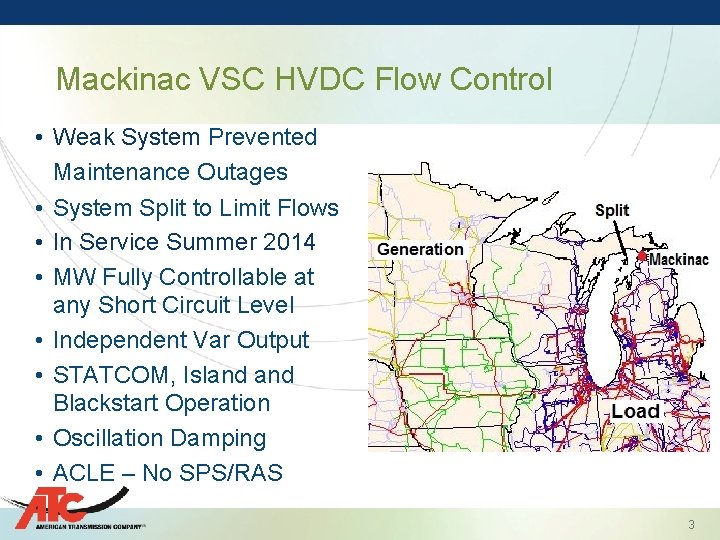
Mackinac VSC HVDC Flow Control • Weak System Prevented Maintenance Outages • System Split to Limit Flows • In Service Summer 2014 • MW Fully Controllable at any Short Circuit Level • Independent Var Output • STATCOM, Island Blackstart Operation • Oscillation Damping • ACLE – No SPS/RAS 3
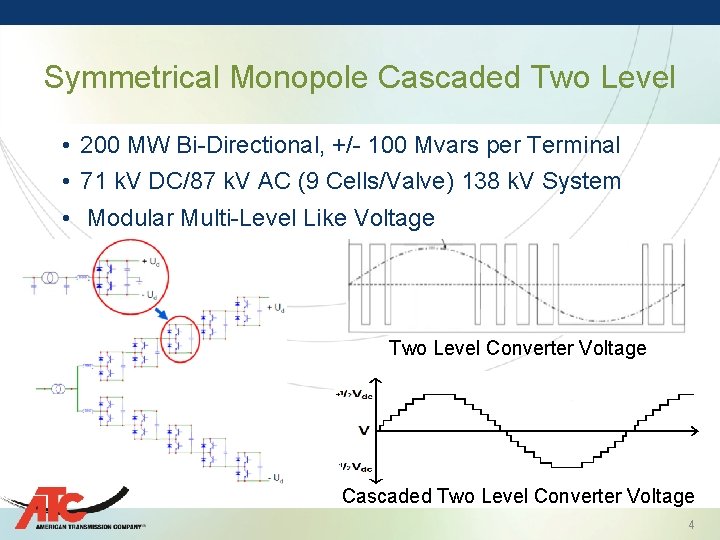
Symmetrical Monopole Cascaded Two Level • 200 MW Bi-Directional, +/- 100 Mvars per Terminal • 71 k. V DC/87 k. V AC (9 Cells/Valve) 138 k. V System • Modular Multi-Level Like Voltage Two Level Converter Voltage Cascaded Two Level Converter Voltage 4
VSC HVDC Distortion and Filtering • Two Level – Significant Distortion and Filtering • Cascaded Two Level – Less Distortion and Filtering • Modular Multilevel Converter – Smaller Voltage Steps so Very Little Harmonic Distortion and No Filters Needed • IGBTs (Insulated Gate Bipolar Transistors) Allow High Speed Controls Necessary for VSC Stability Benefits, but Produce Interharmonics for all Three Designs • Mackinac (Cascaded Two Level): – Non-Integer Pulse Number to Prevent DC Cap Damage – Low Level Interharmonics Not Harmful to Power System Equipment, but Can Affect Communications on Power Lines 5
Local Power Line Carrier Issue • High Voltages in PLC Equipment due to High Frequency Resonance • Local PLC Failed Soon After HVDC Energization • Nearby PLC Equipment Eventually Failed • Source Wide Band High Frequency (k. Hz) Signals – IGBT Switching Transients (Also Exists for Thyristors) – Normally Attenuated by Transformer or Distance – Nothing (but PLC) at Transmission Voltages to Resonate • High Frequency PSCAD Model of System and PLC – Power System Looks Very Different at k. Hz Frequencies – Models Approximate, but Phenomena Modeled • Resonance Involved PLC Line Trap, CVT Capacitance, and PLC Drain Coil, Appearing on PLC Amplifier 6
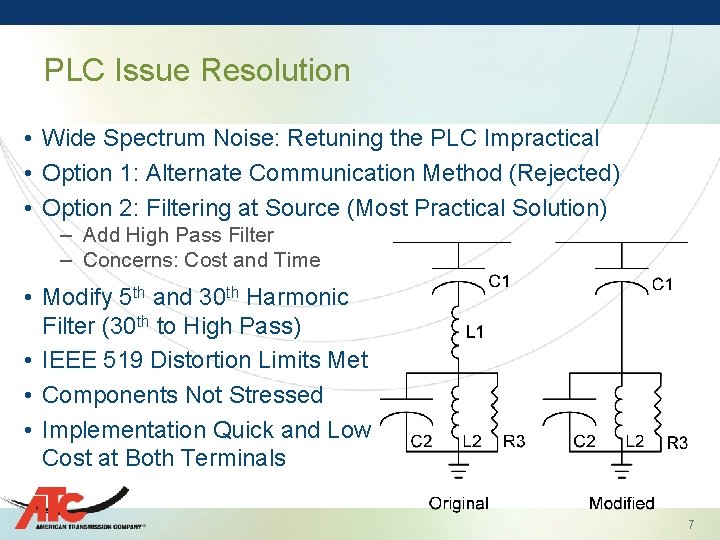
PLC Issue Resolution • Wide Spectrum Noise: Retuning the PLC Impractical • Option 1: Alternate Communication Method (Rejected) • Option 2: Filtering at Source (Most Practical Solution) – Add High Pass Filter – Concerns: Cost and Time • Modify 5 th and 30 th Harmonic Filter (30 th to High Pass) • IEEE 519 Distortion Limits Met • Components Not Stressed • Implementation Quick and Low Cost at Both Terminals 7
Mackinac and AMR Interharmonics • Interharmonics: Any Non-Integer Multiple of Fundamental, i. e. Measures Non-Periodic (at 60 Hz) Distortion • VSC HVDC Interharmonics Due to IGBT Switching – Benefits Previously Discussed – Thyristors (LCC) HVDC Does Not Produce Interharmonics • AMR Systems Using Power Line Communications – – – Used on Both Sides of Mackinac (more intensely on one side) “Smart” Meters Report Energy Usage and Track Outages Distort Voltage and/or Current for Two-Way Communication Signal Processing Algorithms Extract Non-Periodic Signals Error Checking and Multiple Attempts increase Reliability • AMR Issues have Been Seen Near Other Interharmonic Sources (Arc Furnaces, Type 4 Wind Turbines, etc. ) 8
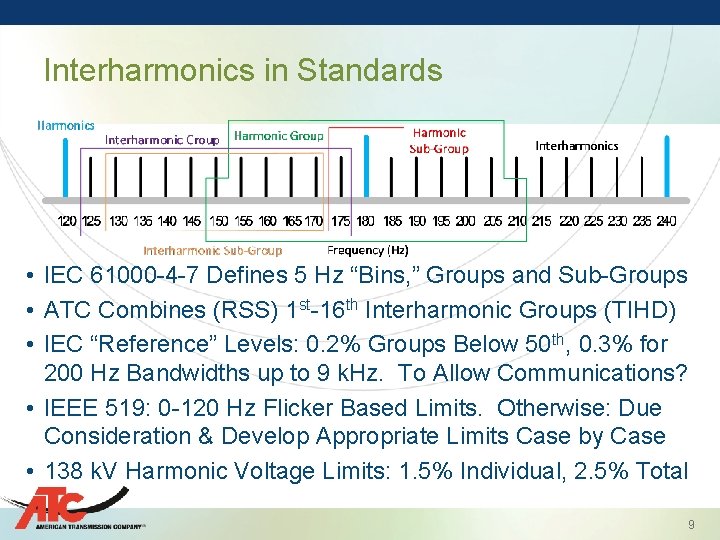
Interharmonics in Standards • IEC 61000 -4 -7 Defines 5 Hz “Bins, ” Groups and Sub-Groups • ATC Combines (RSS) 1 st-16 th Interharmonic Groups (TIHD) • IEC “Reference” Levels: 0. 2% Groups Below 50 th, 0. 3% for 200 Hz Bandwidths up to 9 k. Hz. To Allow Communications? • IEEE 519: 0 -120 Hz Flicker Based Limits. Otherwise: Due Consideration & Develop Appropriate Limits Case by Case • 138 k. V Harmonic Voltage Limits: 1. 5% Individual, 2. 5% Total 9
AMR Issues Near Mackinac • Intermittent Communication Issues with a Minority, but Operationally Significant Number of Meters – Issues at Both Terminals (More if Meters Used “Intensely”) – Communication May Need to Wait for Reduced Distortion • Issues Concentrated at Specific Stations and Meters – – Not Always Stations Closest to Mackinac Meter Age/Design (Technology) Feeder Voltage and Length Feeder Grounding • No Other Interharmonic Issues (Light Flicker, Mechanical System Oscillation, Heating, CT Saturation, etc. ) • Levels Measured Not a Concern for Power Equipment 10
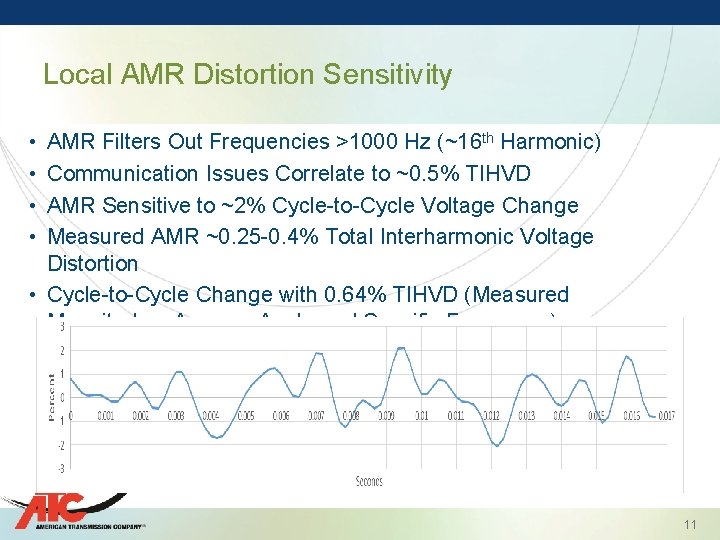
Local AMR Distortion Sensitivity • • AMR Filters Out Frequencies >1000 Hz (~16 th Harmonic) Communication Issues Correlate to ~0. 5% TIHVD AMR Sensitive to ~2% Cycle-to-Cycle Voltage Change Measured AMR ~0. 25 -0. 4% Total Interharmonic Voltage Distortion • Cycle-to-Cycle Change with 0. 64% TIHVD (Measured Magnitudes, Assume Angle and Specific Frequency) 11
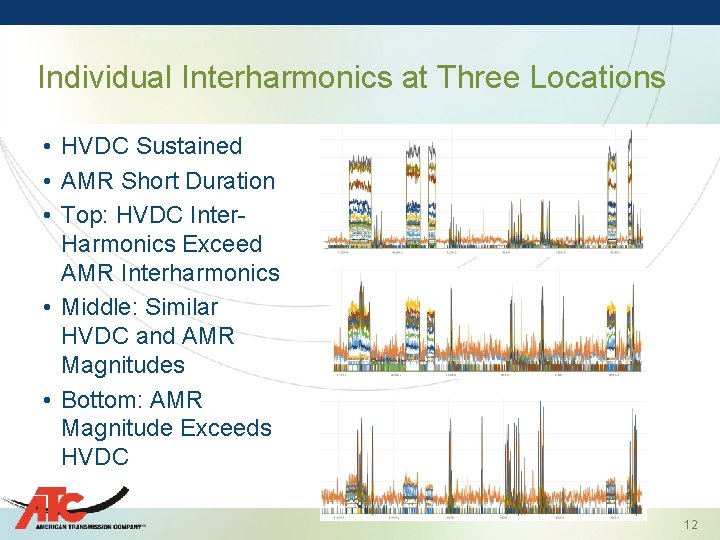
Individual Interharmonics at Three Locations • HVDC Sustained • AMR Short Duration • Top: HVDC Inter. Harmonics Exceed AMR Interharmonics • Middle: Similar HVDC and AMR Magnitudes • Bottom: AMR Magnitude Exceeds HVDC 12
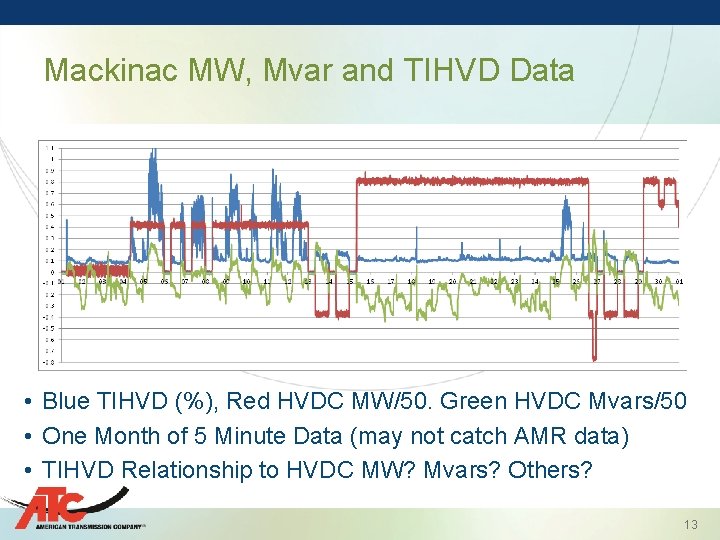
Mackinac MW, Mvar and TIHVD Data • Blue TIHVD (%), Red HVDC MW/50. Green HVDC Mvars/50 • One Month of 5 Minute Data (may not catch AMR data) • TIHVD Relationship to HVDC MW? Mvars? Others? 13
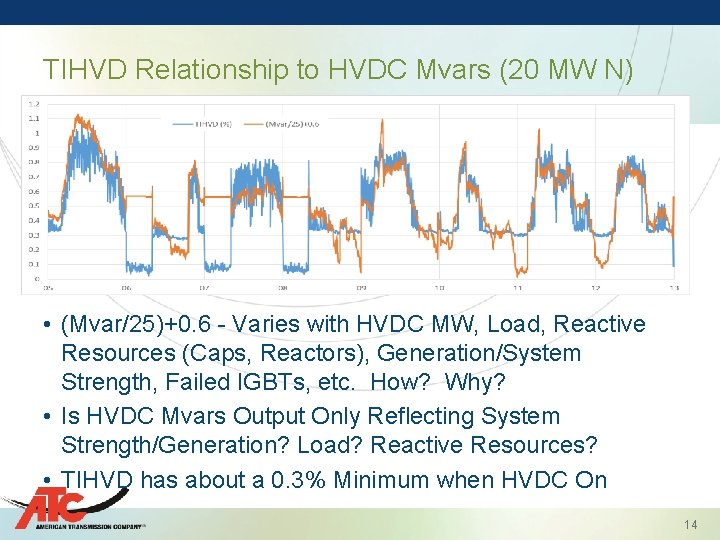
TIHVD Relationship to HVDC Mvars (20 MW N) • (Mvar/25)+0. 6 - Varies with HVDC MW, Load, Reactive Resources (Caps, Reactors), Generation/System Strength, Failed IGBTs, etc. How? Why? • Is HVDC Mvars Output Only Reflecting System Strength/Generation? Load? Reactive Resources? • TIHVD has about a 0. 3% Minimum when HVDC On 14
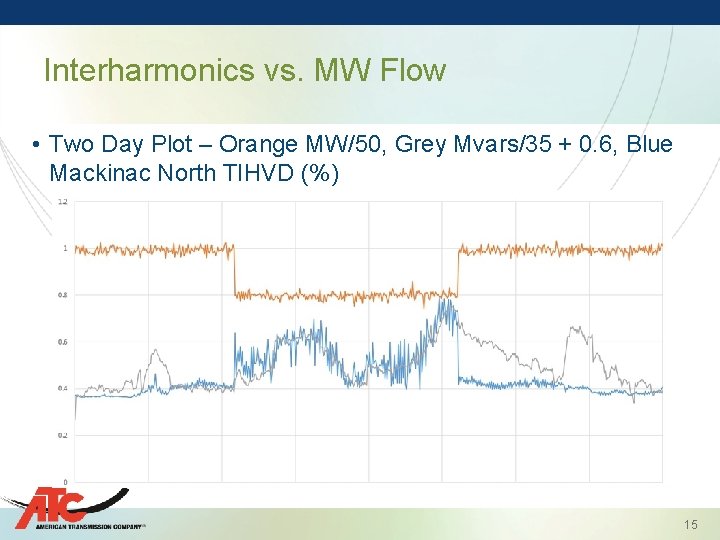
Interharmonics vs. MW Flow • Two Day Plot – Orange MW/50, Grey Mvars/35 + 0. 6, Blue Mackinac North TIHVD (%) 15
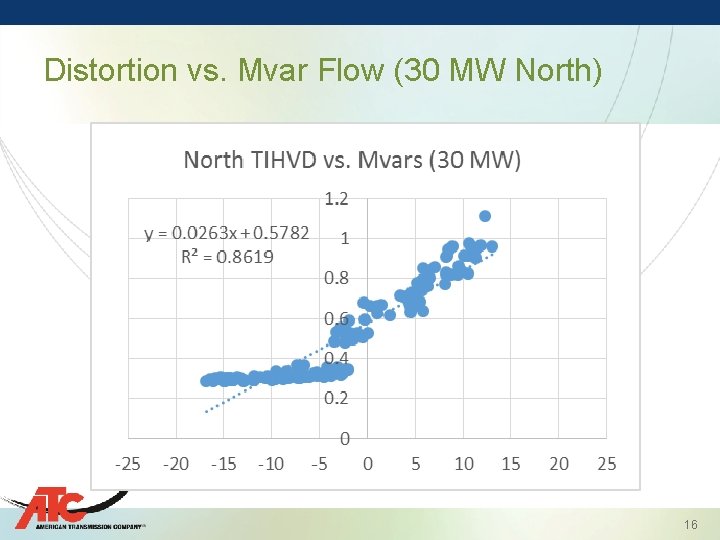
Distortion vs. Mvar Flow (30 MW North) 16
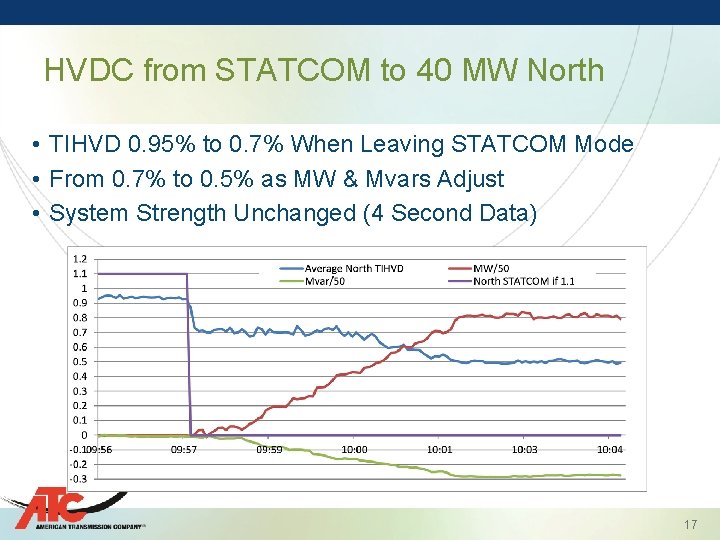
HVDC from STATCOM to 40 MW North • TIHVD 0. 95% to 0. 7% When Leaving STATCOM Mode • From 0. 7% to 0. 5% as MW & Mvars Adjust • System Strength Unchanged (4 Second Data) 17
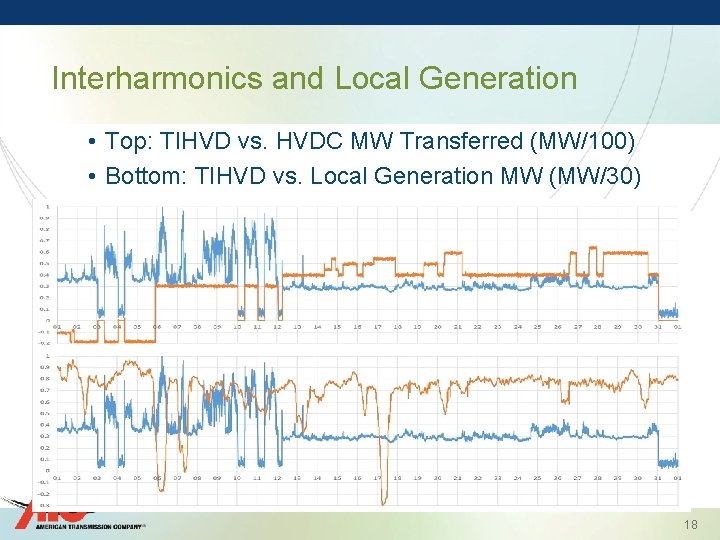
Interharmonics and Local Generation • Top: TIHVD vs. HVDC MW Transferred (MW/100) • Bottom: TIHVD vs. Local Generation MW (MW/30) 18
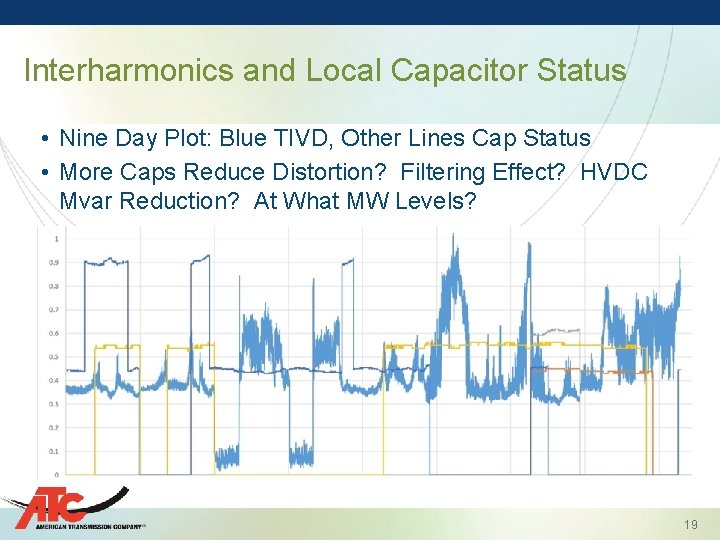
Interharmonics and Local Capacitor Status • Nine Day Plot: Blue TIVD, Other Lines Cap Status • More Caps Reduce Distortion? Filtering Effect? HVDC Mvar Reduction? At What MW Levels? 19
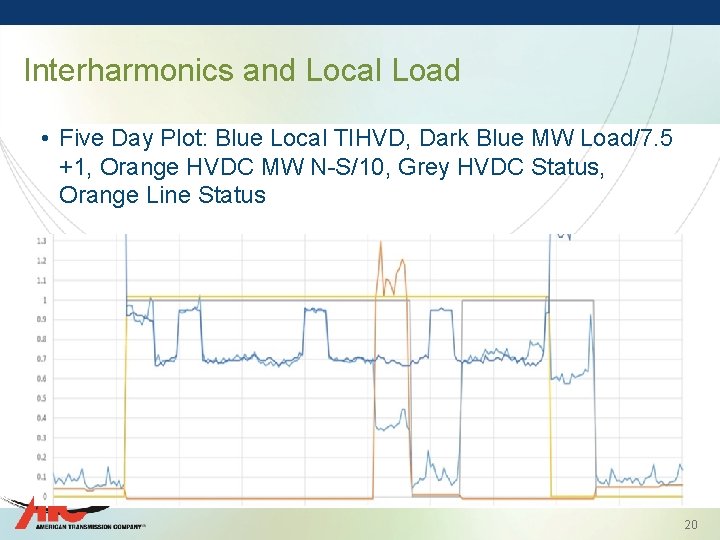
Interharmonics and Local Load • Five Day Plot: Blue Local TIHVD, Dark Blue MW Load/7. 5 +1, Orange HVDC MW N-S/10, Grey HVDC Status, Orange Line Status 20
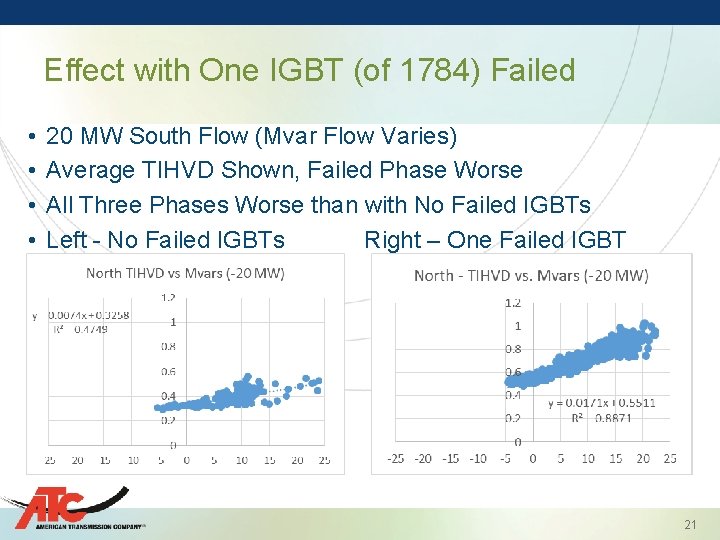
Effect with One IGBT (of 1784) Failed • • 20 MW South Flow (Mvar Flow Varies) Average TIHVD Shown, Failed Phase Worse All Three Phases Worse than with No Failed IGBTs Left - No Failed IGBTs Right – One Failed IGBT Pack 21
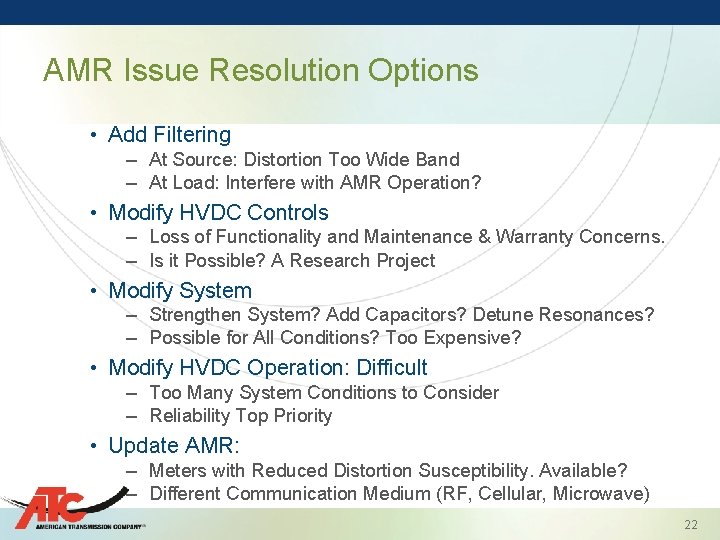
AMR Issue Resolution Options • Add Filtering – At Source: Distortion Too Wide Band – At Load: Interfere with AMR Operation? • Modify HVDC Controls – Loss of Functionality and Maintenance & Warranty Concerns. – Is it Possible? A Research Project • Modify System – Strengthen System? Add Capacitors? Detune Resonances? – Possible for All Conditions? Too Expensive? • Modify HVDC Operation: Difficult – Too Many System Conditions to Consider – Reliability Top Priority • Update AMR: – Meters with Reduced Distortion Susceptibility. Available? – Different Communication Medium (RF, Cellular, Microwave) 22
Conclusions Mackinac: • Serving Its Purpose – Facilitating Maintenance Outages • Occasionally Turned Off to Facilitate Meter Reading • Long Term AMR Resolution Still Being Investigated Lessons Learned: • Study High Frequency Issues – Especially if Power Line Carrier Installed Locally (High Pass Filter) • Potential for VSC HVDC Interharmonics to Interfere with Power Line Communications – The Same Problem Could Exist with Type 4 Wind Turbines Controls, Any IGBT Converter, Arc Furnaces, CFLs, etc. Industry Issue: Power Line Use for Communications 23
Questions? 24
- Slides: 24