
Machining Mechanics Instructional Design Document STAM Interactive Solutions









- Slides: 21
Machining Mechanics Instructional Design Document STAM Interactive Solutions
Demo Outline (For reference)
Change Log (as per the minutes pdf)
Note to the reviewer: The visuals shown on each slide will be graphically enhanced to make explanation easier to follow.
Advanced Manufacturing Process I & II Machining Mechanics In the process of workpiece machining, as the depth of cut and the cutting speed increase, cutting forces rise and so does the temperature of the tool and the power consumed by the machining process. This demo outlines these aspects of orthogonal cutting. It also explores the influence of machining mechanics on tool selection and machine sizing.
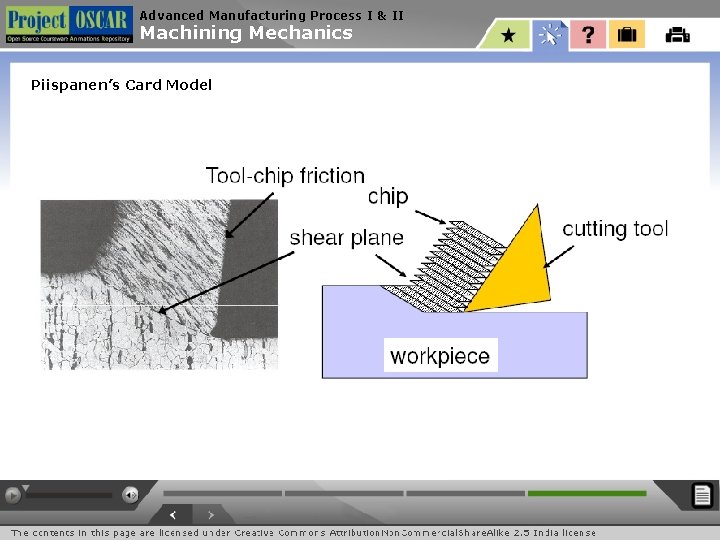
Advanced Manufacturing Process I & II Machining Mechanics Piispanen’s Card Model
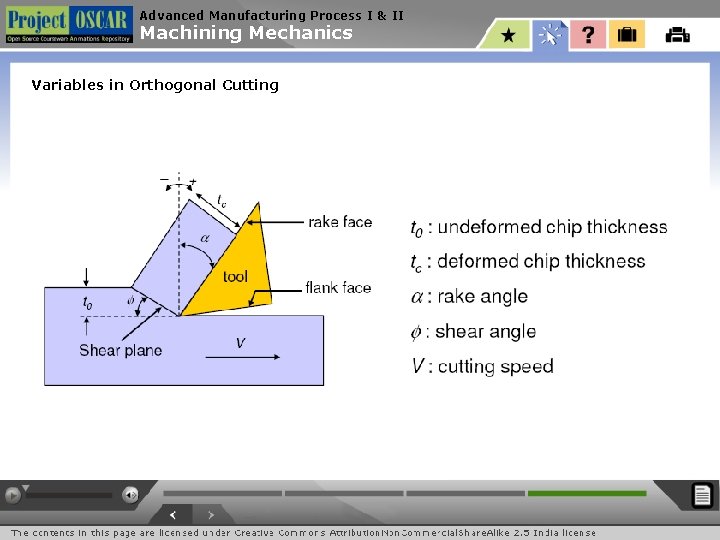
Advanced Manufacturing Process I & II Machining Mechanics Variables in Orthogonal Cutting
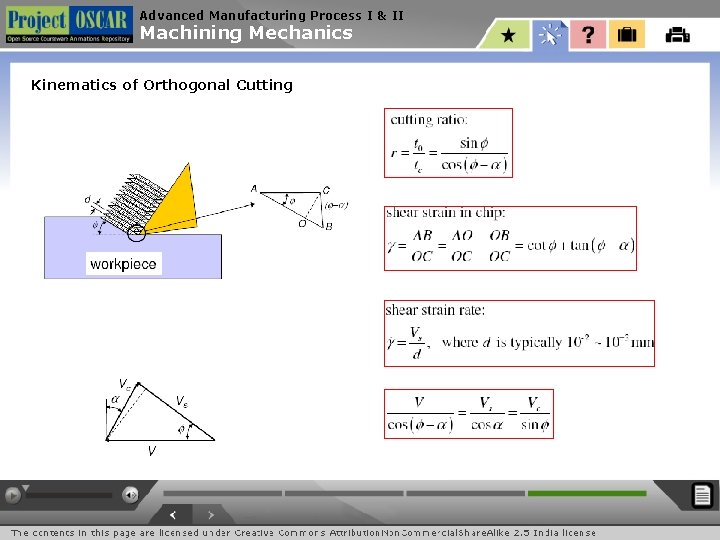
Advanced Manufacturing Process I & II Machining Mechanics Kinematics of Orthogonal Cutting
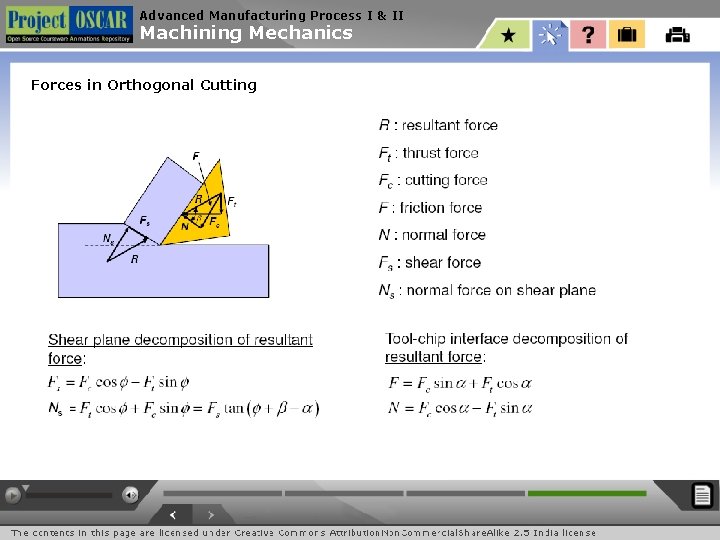
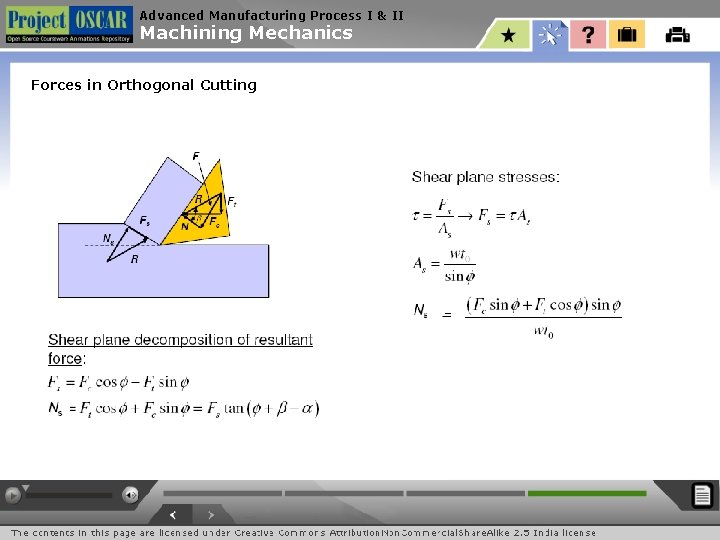
Advanced Manufacturing Process I & II Machining Mechanics Forces in Orthogonal Cutting
Advanced Manufacturing Process I & II Machining Mechanics Forces in Orthogonal Cutting
Advanced Manufacturing Process I & II Machining Mechanics Merchant’s Force Circle
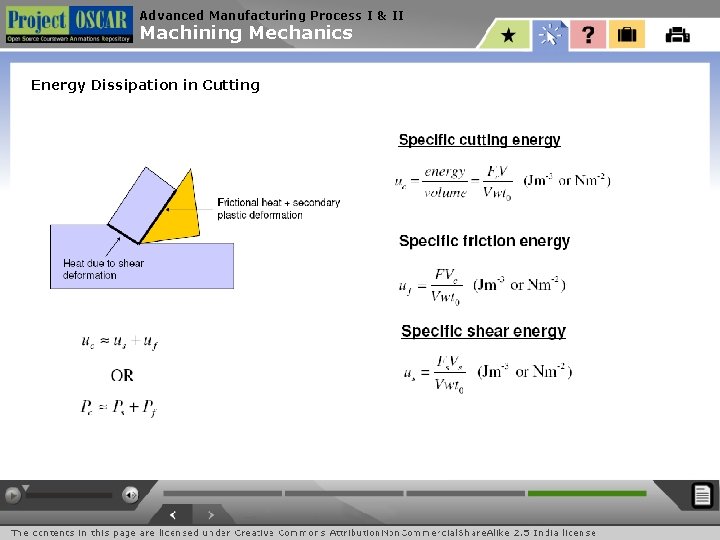
Advanced Manufacturing Process I & II Machining Mechanics Energy Dissipation in Cutting
Advanced Manufacturing Process I & II Machining Mechanics Energy Dissipation in Cutting Power: Shear Zone Power: Friction Zone Power:
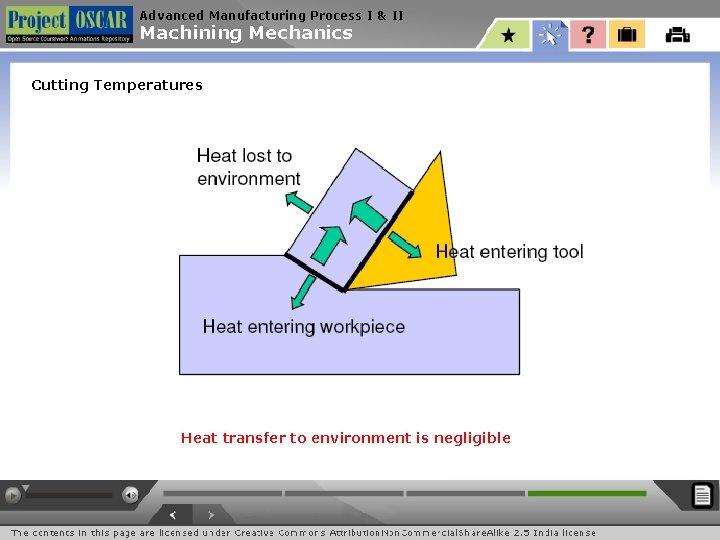
Advanced Manufacturing Process I & II Machining Mechanics Cutting Temperatures Heat transfer to environment is negligible
Advanced Manufacturing Process I & II Machining Mechanics Cutting Power Meter (%) Simulation 100 (Range = 0. 1 to 4) Cutting Speed (V): Rake Angle (α): 90 (Constant) Undeformed Chip Thickness (to): Width of Cut/Pass: 80 (Constant) 70 (Constant) 60 (Constant) Deformed Chip Thickness (tc): 50 Cutting Force (Fc): (Constant) 40 Thrust Force (Ft): (Constant) 30 20 10 0 Vary the cutting speed. Cutting Power (Pc): W Shear Zone Power (Pc): W
Advanced Manufacturing Process I & II Machining Mechanics Resources Books: • Serope Kalpakjian & Steven R. Schmid, “Manufacturing Process for Engineering Materials”, Section 6. 3 – Rolling Process • Ghosh & Malik, “Manufacturing Science”
Advanced Manufacturing Process I & II Machining Mechanics Identify the type of cutting process for each of the following:
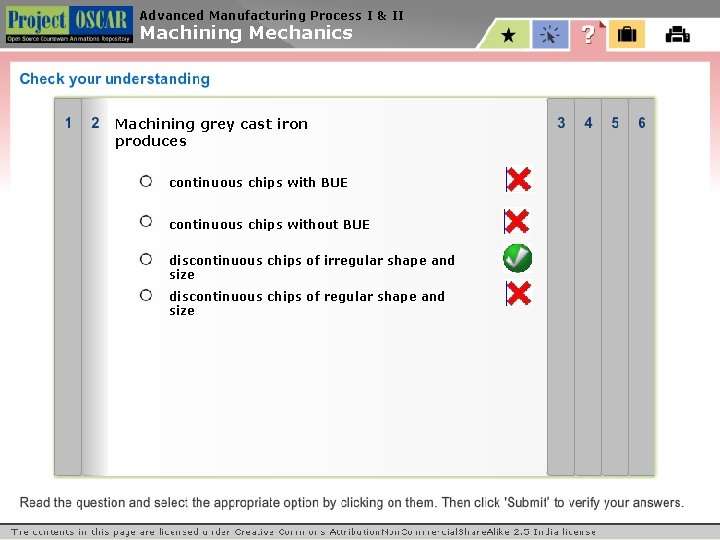
Advanced Manufacturing Process I & II Machining Mechanics Machining grey cast iron produces continuous chips with BUE continuous chips without BUE discontinuous chips of irregular shape and size discontinuous chips of regular shape and size
Advanced Manufacturing Process I & II Machining Mechanics A low rake angle is desirable because it reduces the power consumed not desirable because it weakens the tool desirable because it reduces BUE not desirable at all
Advanced Manufacturing Process I & II Machining Mechanics The thickness of the chip is independent of cutting speed depth of cut tool material rake angle
Advanced Manufacturing Process I & II Machining Mechanics The cutting forces affect the power required the design of the machine tool the accuracy of the machined workpiece depends on the process parameters