
MACHINE TRANSLATION PAPER 1 Daniel Montalvo Chrysanthia CheungLau

- Slides: 19
MACHINE TRANSLATION PAPER 1 Daniel Montalvo, Chrysanthia Cheung-Lau, Jonny Wang CS 159 Spring 2011
Paper Intersecting multilingual data for faster and better statistical translations. Association for Computational Linguistics, June 2009. Yu Chen Martin Kay Andreas Eisele
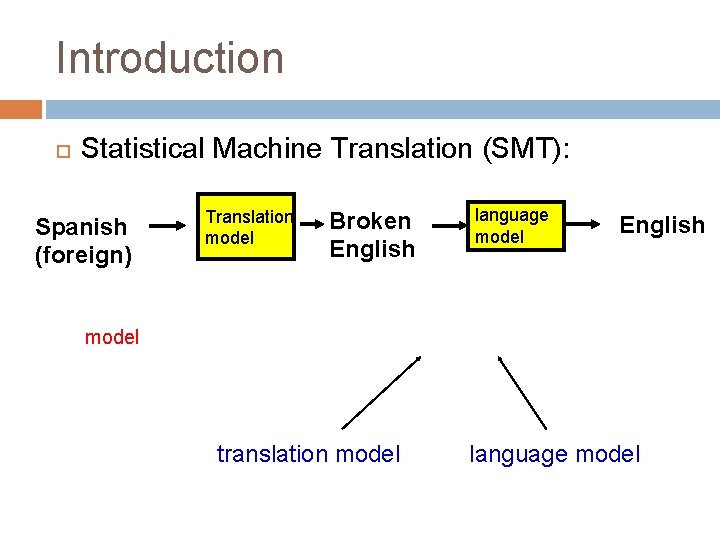
Introduction Statistical Machine Translation (SMT): Spanish (foreign) Translation model Broken English language model English model translation model language model
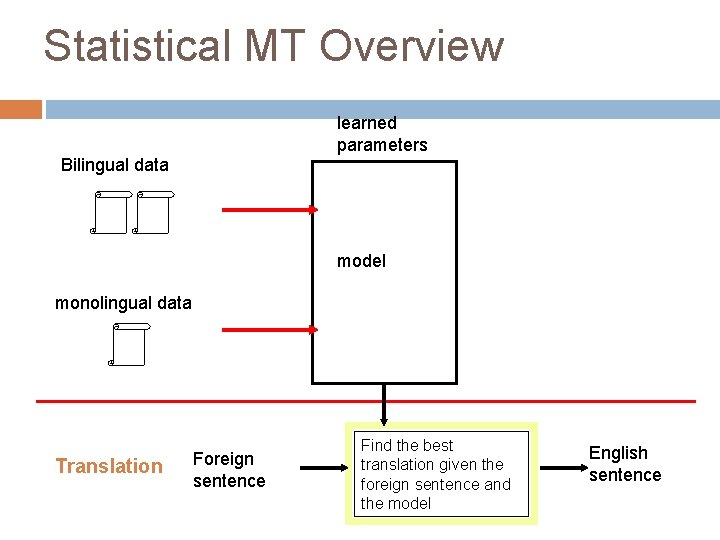
Statistical MT Overview learned parameters Bilingual data model monolingual data Translation Foreign sentence Find the best translation given the foreign sentence and the model English sentence
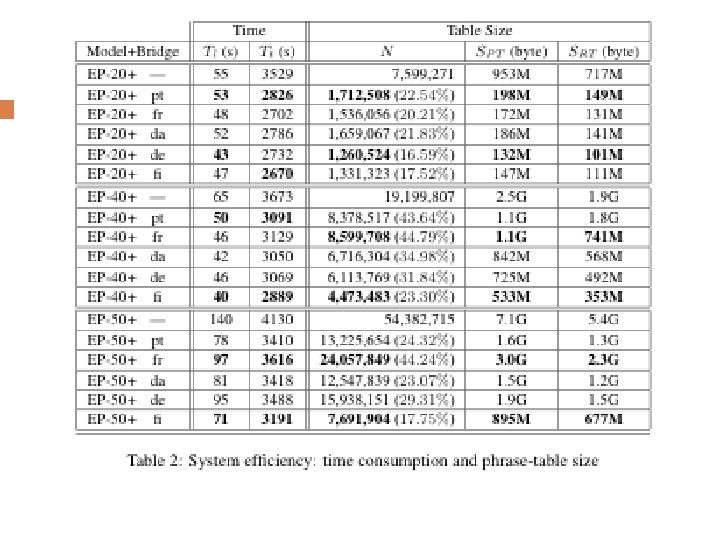
Problems Noise from word/phrase alignment Efficiency: time and space
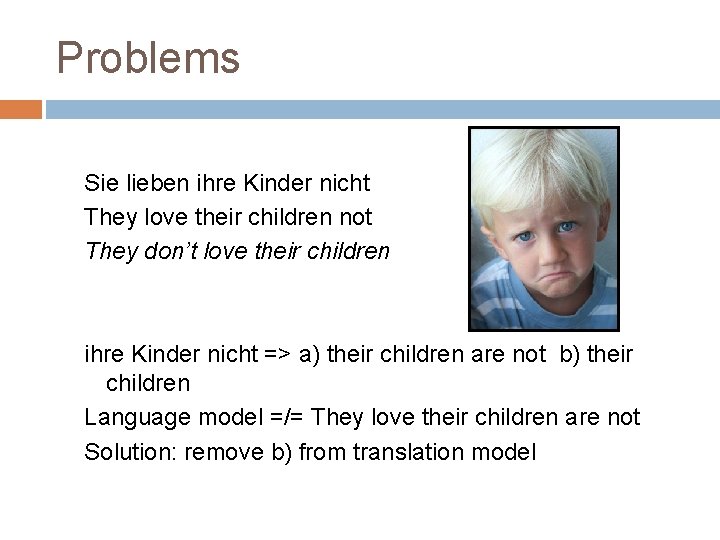
Problems Sie lieben ihre Kinder nicht They love their children not They don’t love their children ihre Kinder nicht => a) their children are not b) their children Language model =/= They love their children are not Solution: remove b) from translation model
� http: //www. translationparty. com/#9144687 � http: //www. translationparty. com/#9144706 � http: //www. translationparty. com/#9144869 � http: //www. translationparty. com/#9144872 � http: //www. translationparty. com/#9144881
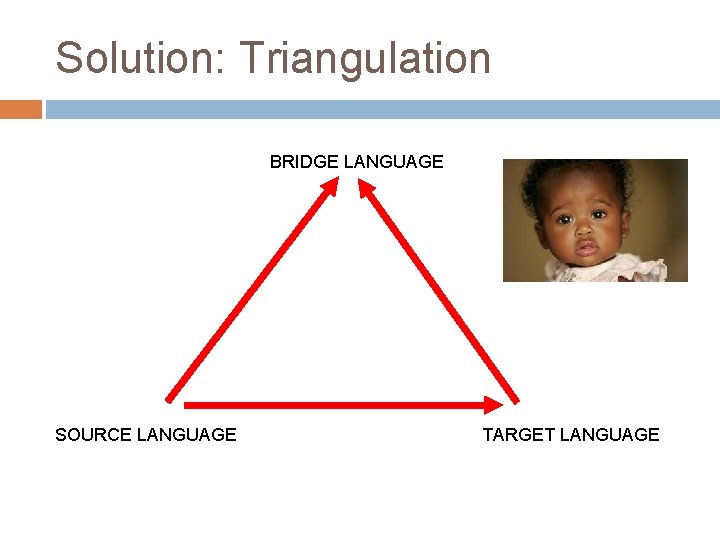
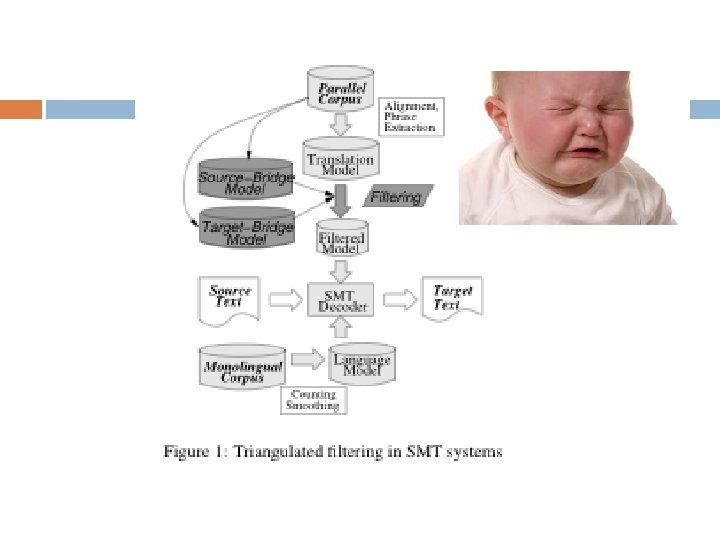
Solution: Triangulation BRIDGE LANGUAGE SOURCE LANGUAGE TARGET LANGUAGE
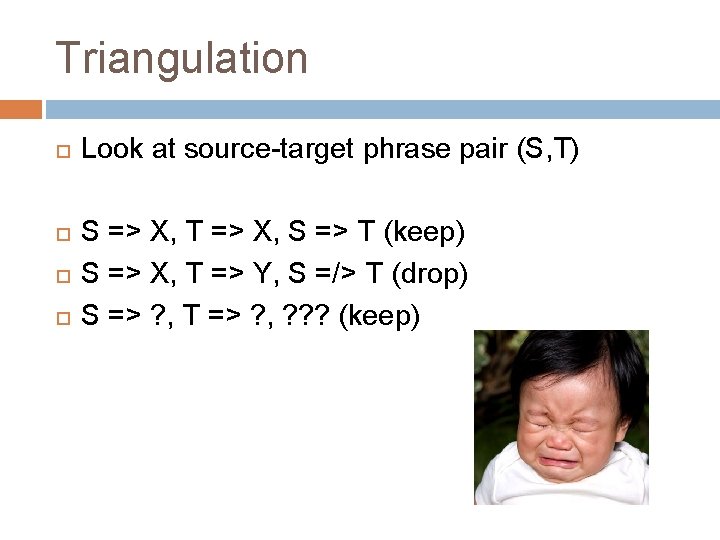
Triangulation Look at source-target phrase pair (S, T) S => X, T => X, S => T (keep) S => X, T => Y, S =/> T (drop) S => ? , T => ? , ? ? ? (keep)
Experimental Design Database: Europarl (1. 3 million) Divided by maximal sentence length Spanish => English; bridges: French, Portuguese, Danish, German, Finnish Models from Moses toolkit Train, develop, test
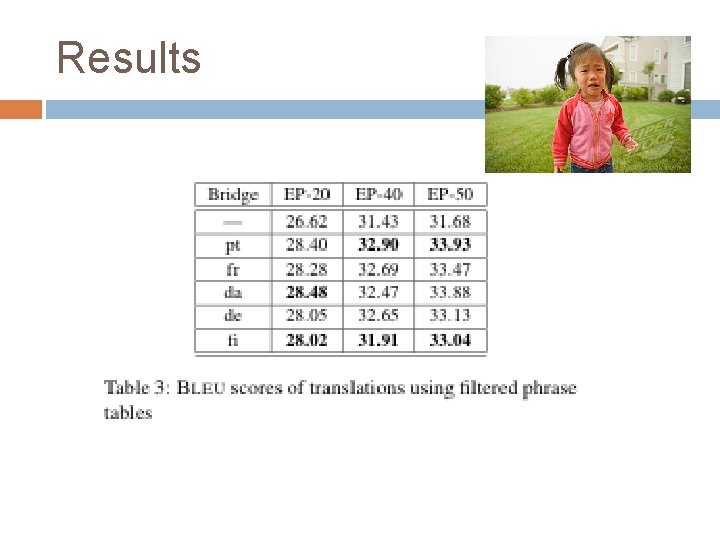
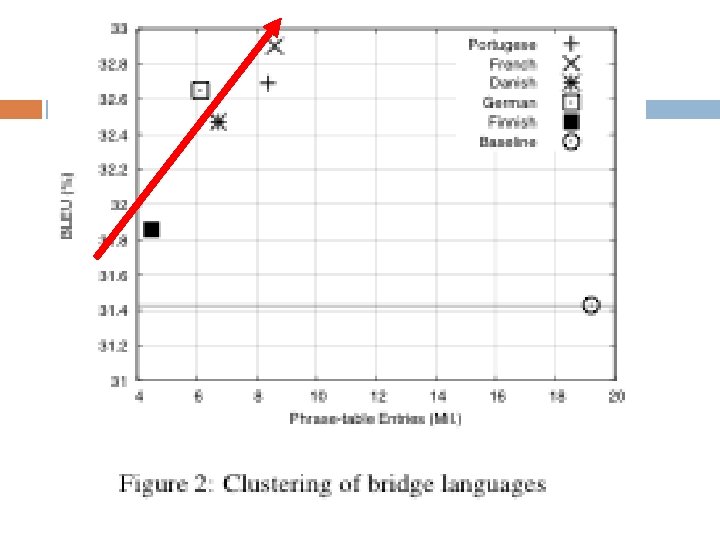
Results
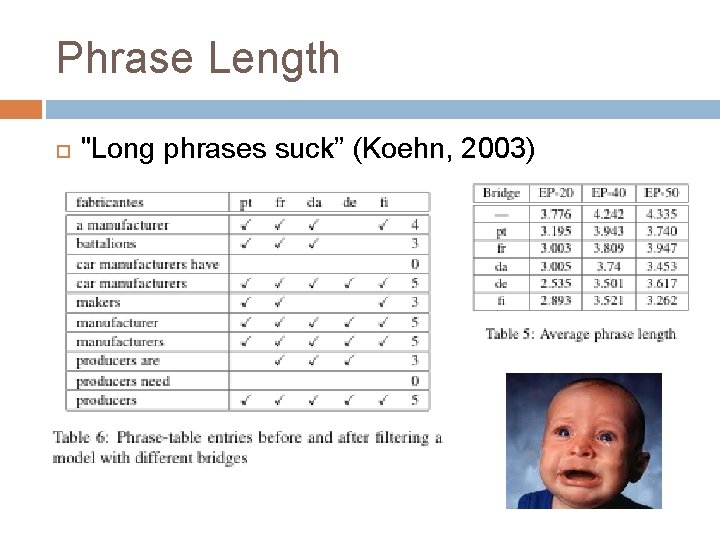
Phrase Length "Long phrases suck” (Koehn, 2003)
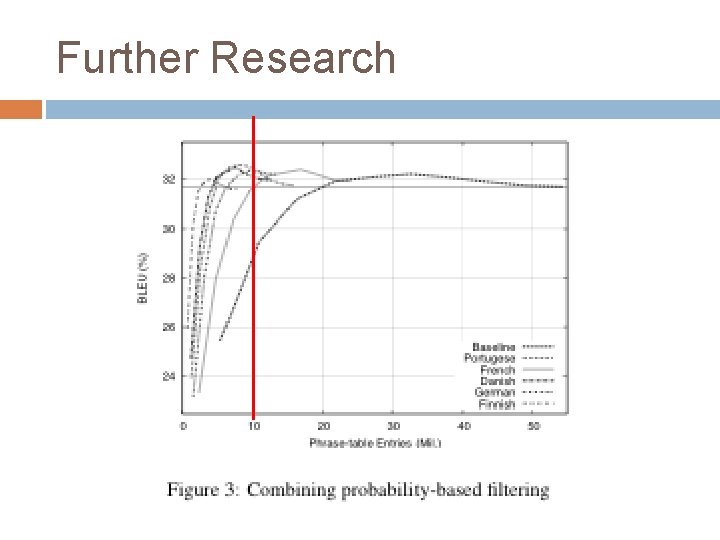
Further Research
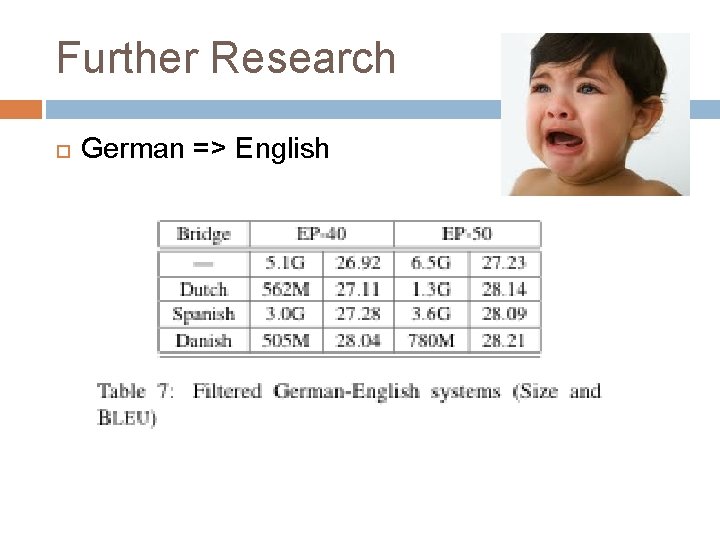
Further Research German => English
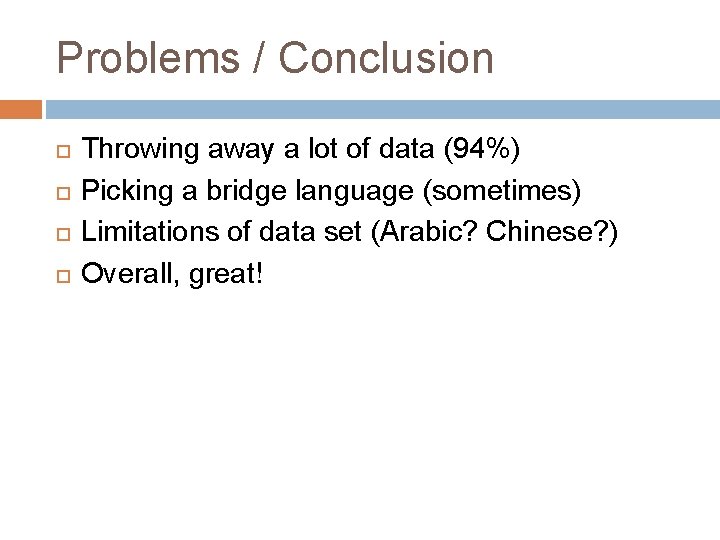
Problems / Conclusion Throwing away a lot of data (94%) Picking a bridge language (sometimes) Limitations of data set (Arabic? Chinese? ) Overall, great!
Thanks!