
Machine Tools Dr N K Singh Associate Professor


- Slides: 51
Machine Tools Dr. N. K. Singh Associate Professor (Workshop) Indian School of Mines Dhanbad
Manufacturing Processes • Material Removal Processes (Machining) • Joining Processes (Welding, Brazing, Soldering) • Casting Processes • Forming Processes 2
Material Removal Processes (Machining) • Cutting tools • Machine Tools • Lathe turning • Drilling • Milling • Grinding • Broaching, sawing, filing • Nontraditional machining process (EDM) 3
Cutting Tool n n In the context of metalworking, a cutting tool, is any tool that is used to remove metal from the workpiece in form of chips. It frequently refers to a tool bit. Tool material should be harder than the material which is to be cut They must be able to withstand the heat generated in the metal cutting process. They also must have a specific geometry, designed so that the cutting edge can contact the workpiece without the rest of the tool dragging on its surface. The angle of the cutting face is also important. 4
Classification of Cutting tools n n single point cutting tool multiple point cutting tool. 5
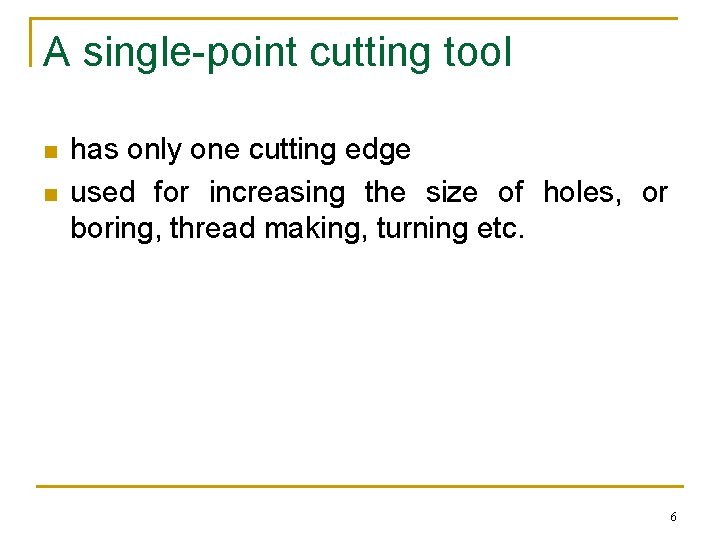
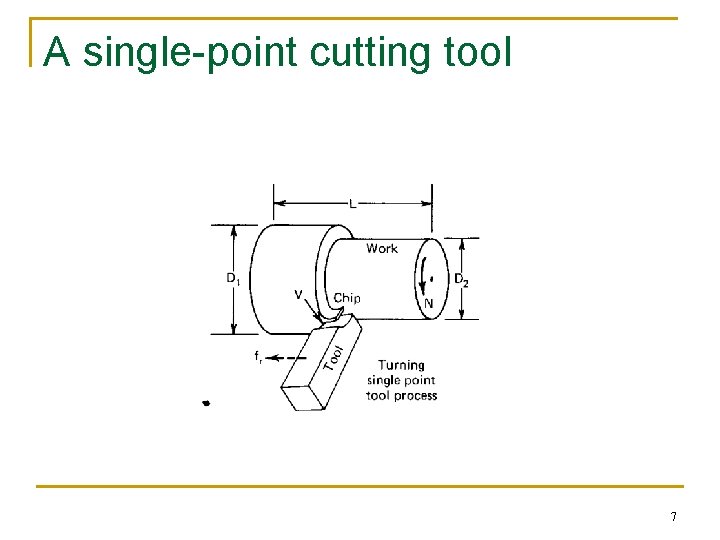
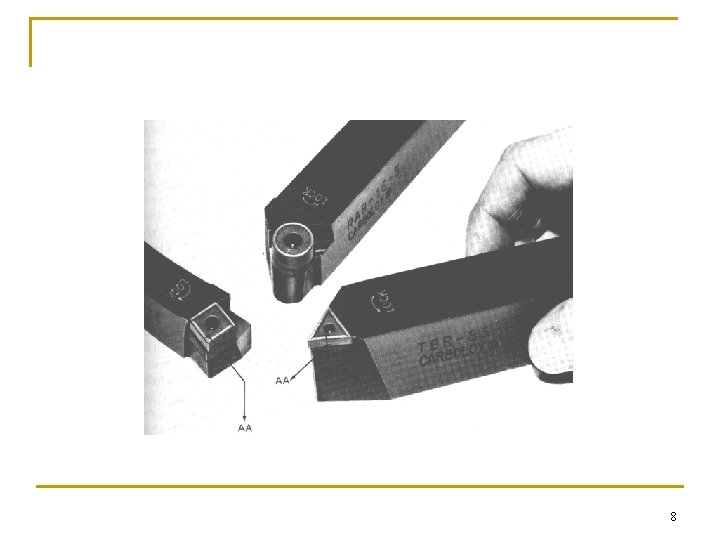
A single-point cutting tool n n has only one cutting edge used for increasing the size of holes, or boring, thread making, turning etc. 6
A single-point cutting tool 7
8
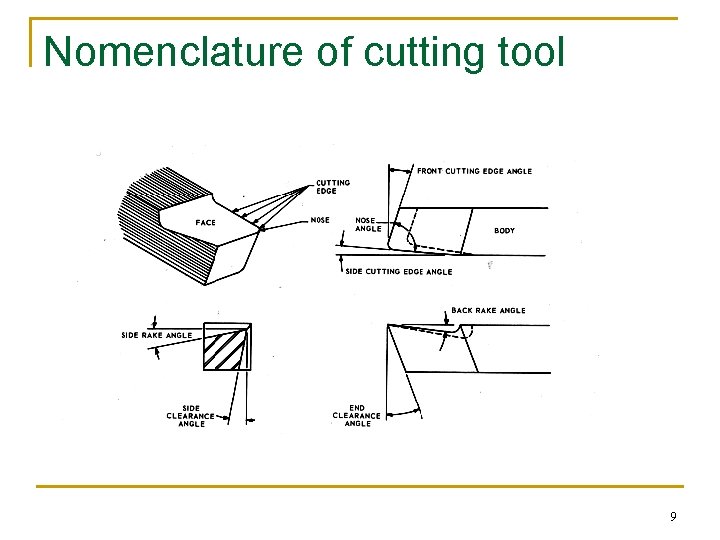
Nomenclature of cutting tool 9
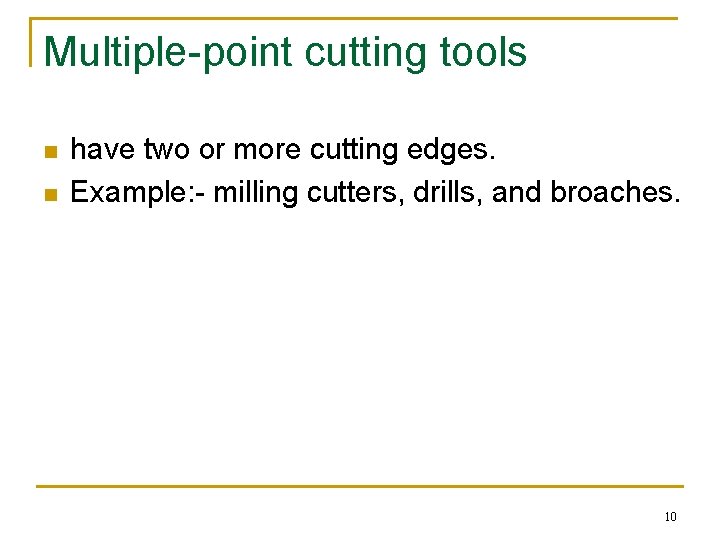
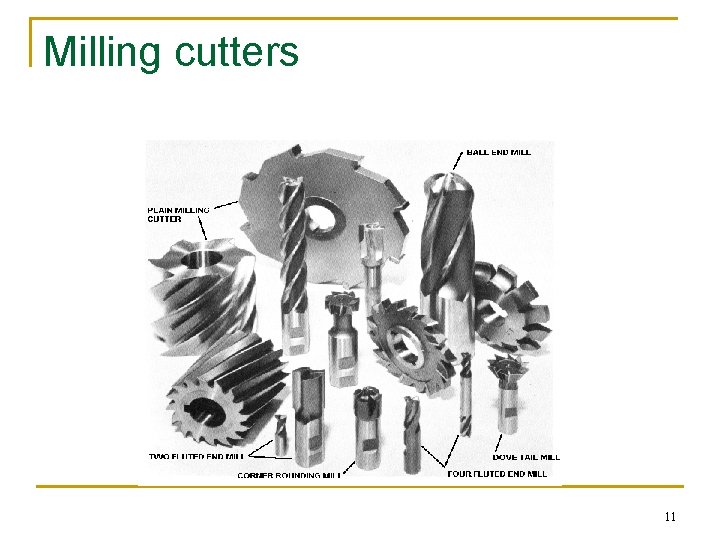
Multiple-point cutting tools n n have two or more cutting edges. Example: - milling cutters, drills, and broaches. 10
Milling cutters 11
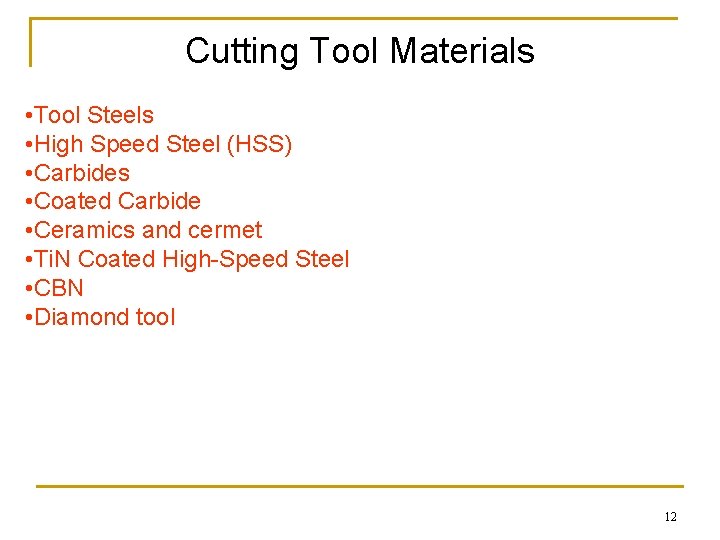
Cutting Tool Materials • Tool Steels • High Speed Steel (HSS) • Carbides • Coated Carbide • Ceramics and cermet • Ti. N Coated High-Speed Steel • CBN • Diamond tool 12
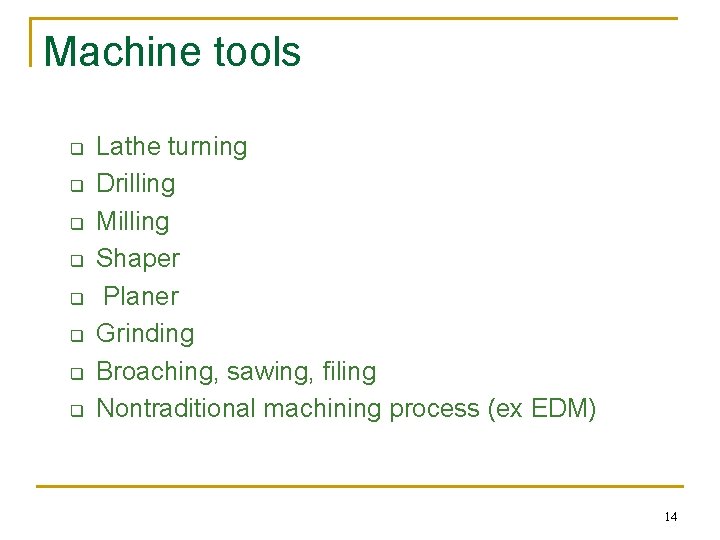
Machine Tool 13
Machine tools q q q q Lathe turning Drilling Milling Shaper Planer Grinding Broaching, sawing, filing Nontraditional machining process (ex EDM) 14
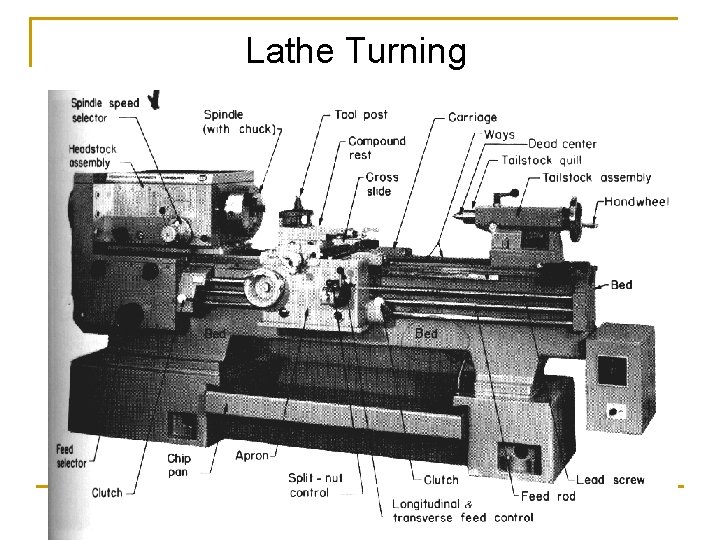
Lathe Turning 15
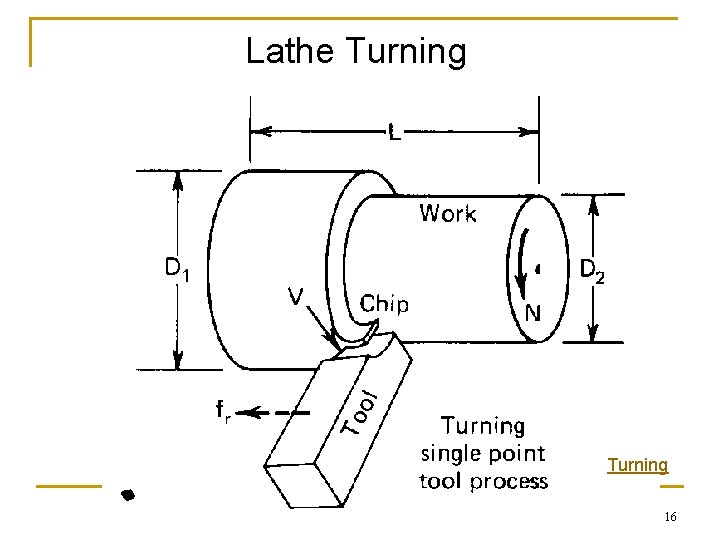
Lathe Turning 16
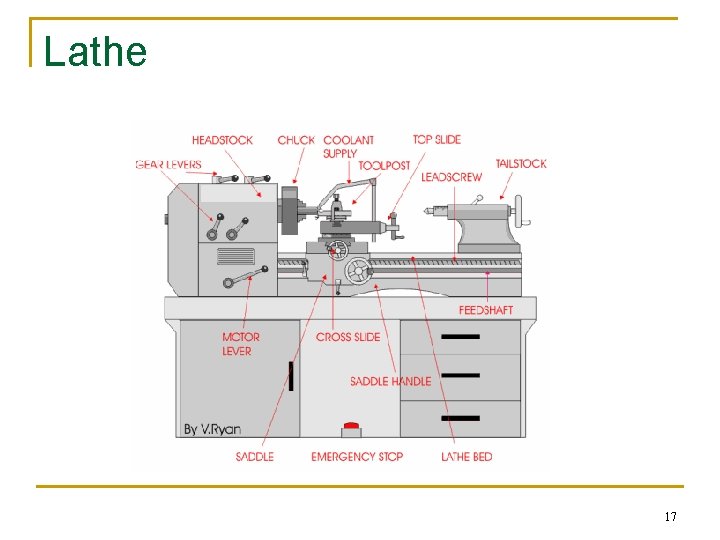
Lathe 17
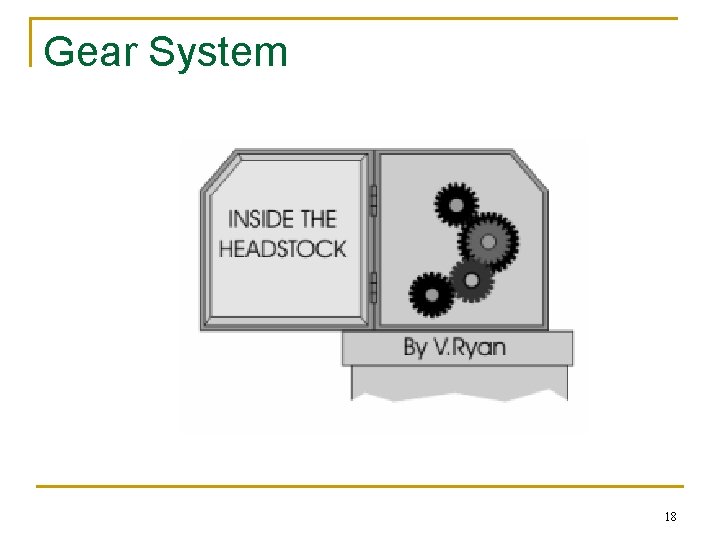
Gear System 18
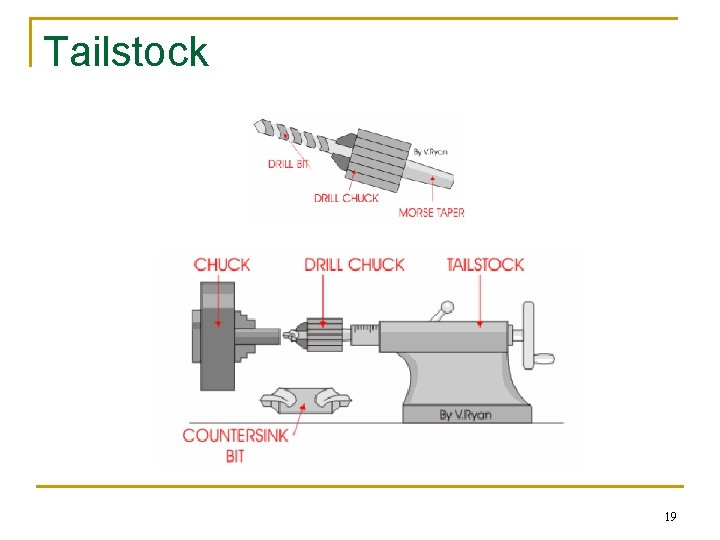
Tailstock 19
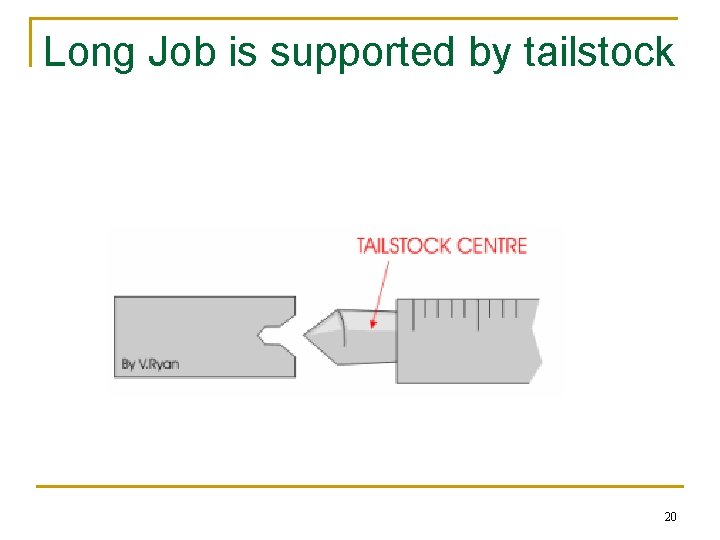
Long Job is supported by tailstock 20
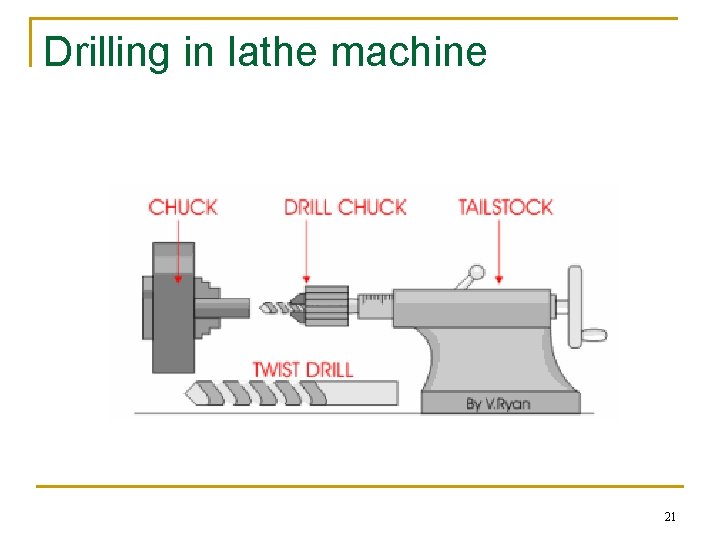
Drilling in lathe machine 21
Cutting parameters q q q Speed Cutting speed is defined as the speed at which the work moves with respect to the tool (usually measured in feet per minute). Feed rate is defined as the distance the tool travels during one revolution of the part. Depth of Cut 22
n n n Cutting speed and feed determines the surface finish, power requirements, and material removal rate. The primary factor in choosing feed and speed is the material to be cut. However, one should also consider material of the tool, rigidity of the workpiece, size and condition of the lathe, and depth of cut. 23
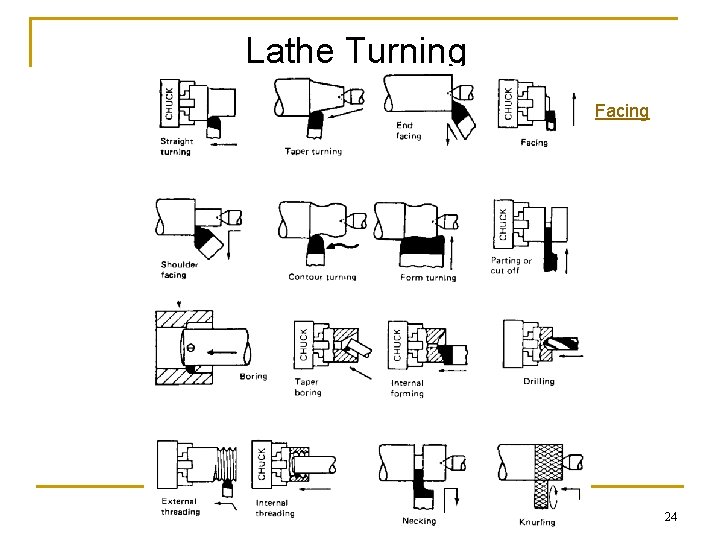
Lathe Turning Facing 24
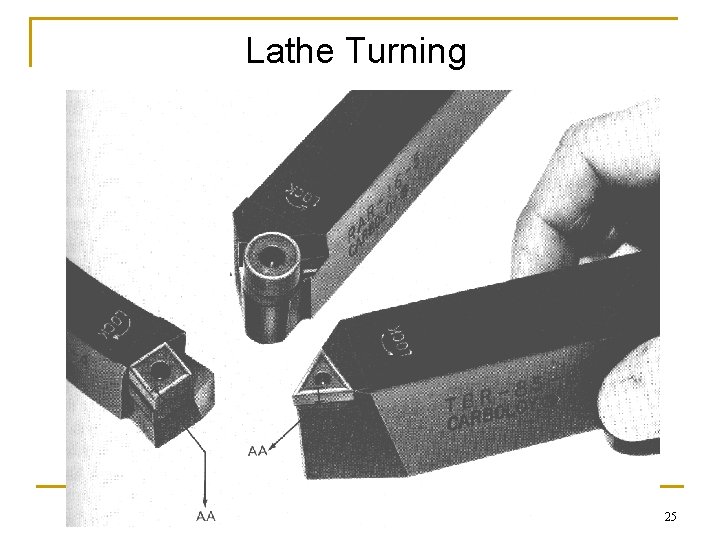
Lathe Turning 25
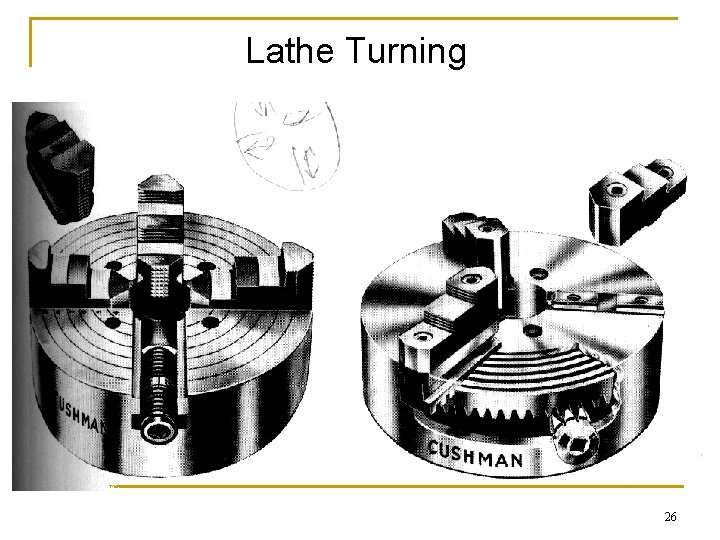
Lathe Turning 26
Specification of Lathe Machine 1. 2. 3. 4. 5. 6. 7. 8. 9. 10. 11. 12. Swing over bed Swing over carriage Distance between centers Hole through spindle Travel of cross-slide Taper of tailstock spindle Length overall Width overall Height overall Shipping weight Motor/Speed Control Spindle speed range 27
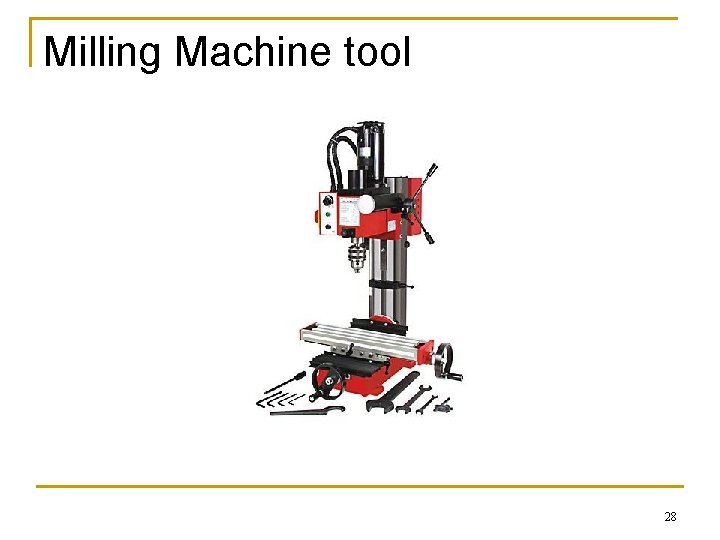
Milling Machine tool 28
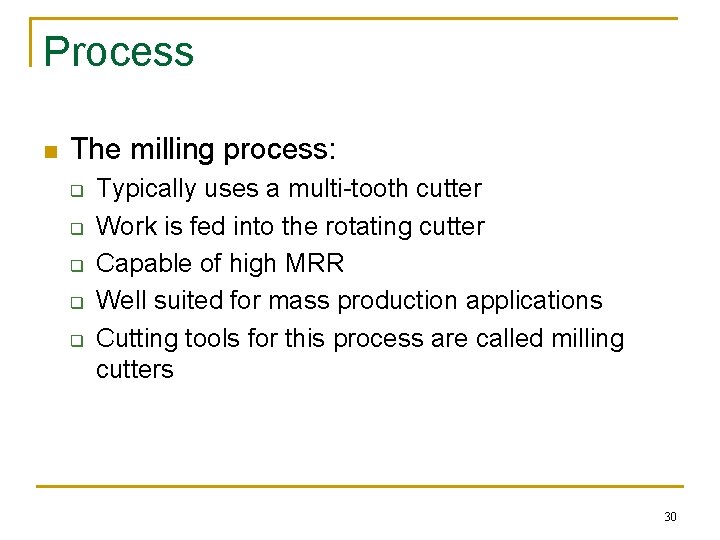
Milling Machine Tool n Milling is one of the basic machining processes. Milling is a very versatile process capable of producing simple two dimensional flat shapes to complex three dimensional interlaced surface configurations. 29
Process n The milling process: q q q Typically uses a multi-tooth cutter Work is fed into the rotating cutter Capable of high MRR Well suited for mass production applications Cutting tools for this process are called milling cutters 30
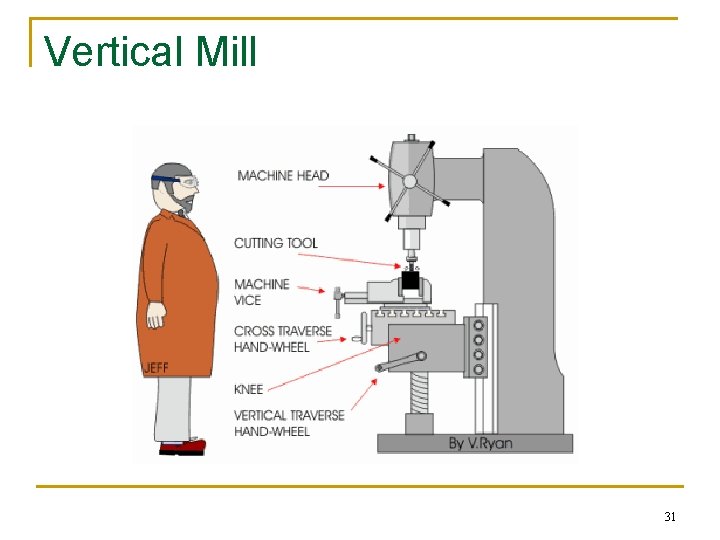
Vertical Mill 31
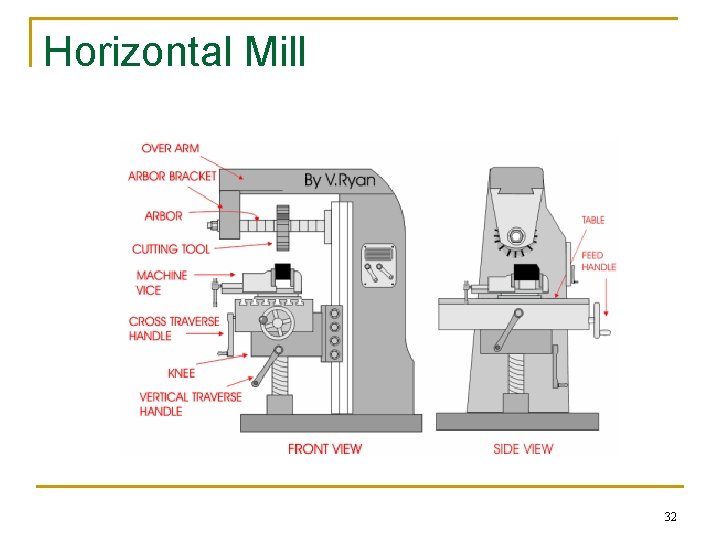
Horizontal Mill 32
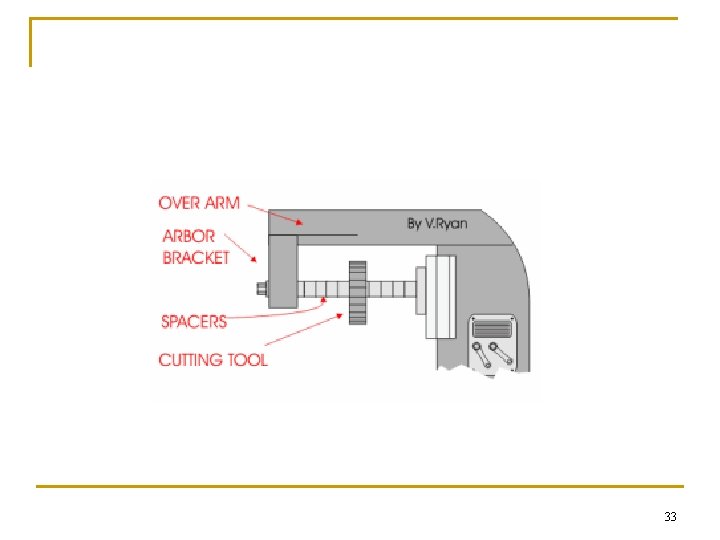
33
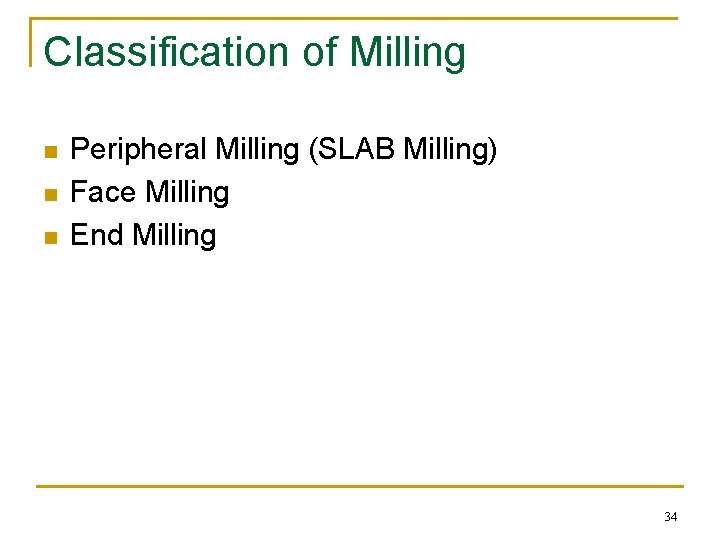
Classification of Milling n n n Peripheral Milling (SLAB Milling) Face Milling End Milling 34
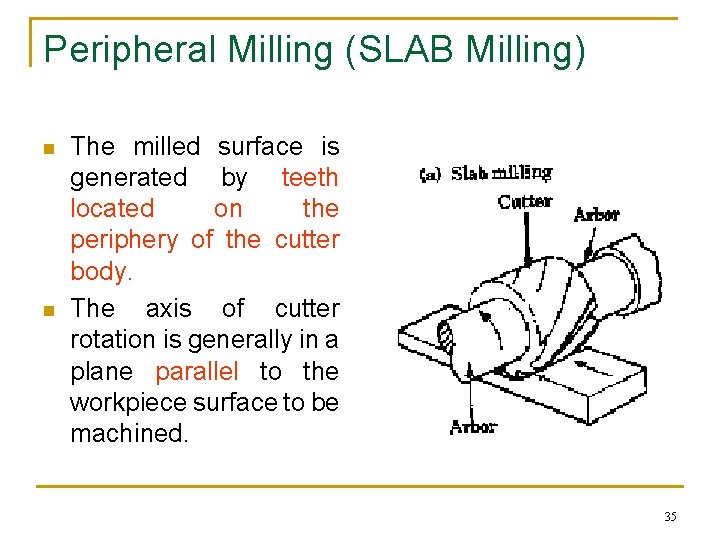
Peripheral Milling (SLAB Milling) n n The milled surface is generated by teeth located on the periphery of the cutter body. The axis of cutter rotation is generally in a plane parallel to the workpiece surface to be machined. 35
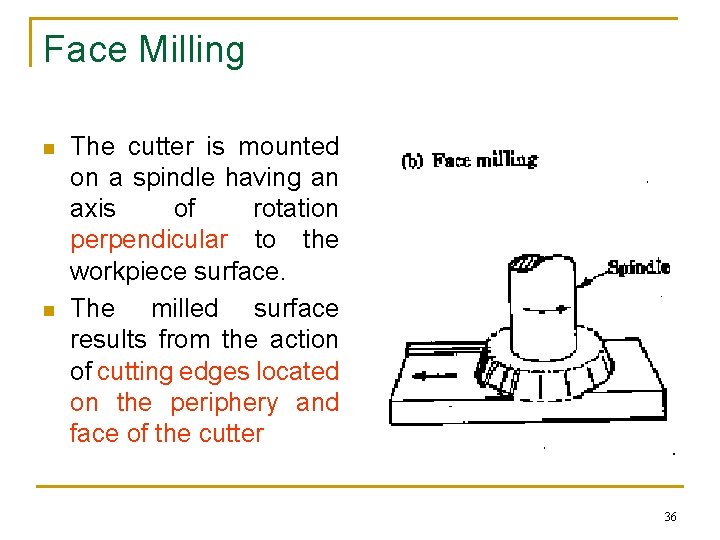
Face Milling n n The cutter is mounted on a spindle having an axis of rotation perpendicular to the workpiece surface. The milled surface results from the action of cutting edges located on the periphery and face of the cutter 36
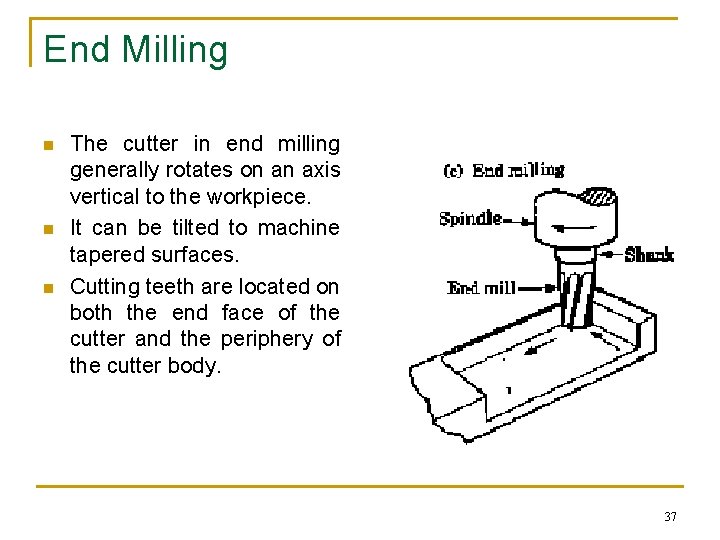
End Milling n n n The cutter in end milling generally rotates on an axis vertical to the workpiece. It can be tilted to machine tapered surfaces. Cutting teeth are located on both the end face of the cutter and the periphery of the cutter body. 37
METHODS OF MILLING n n Up Milling Down Milling 38
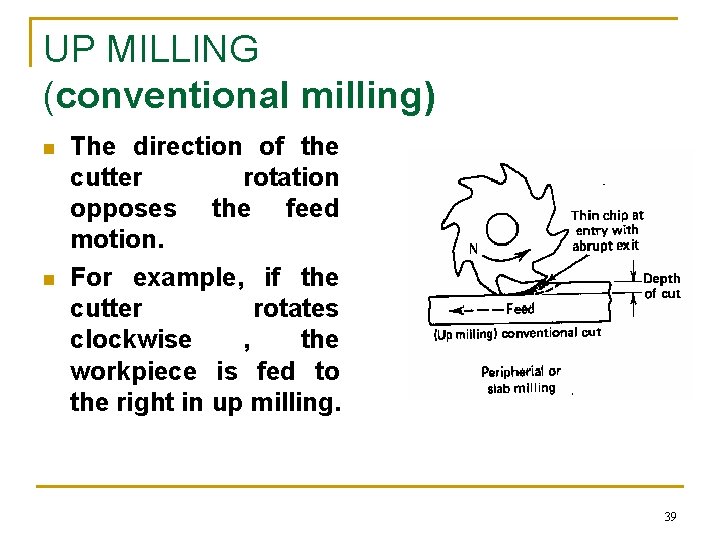
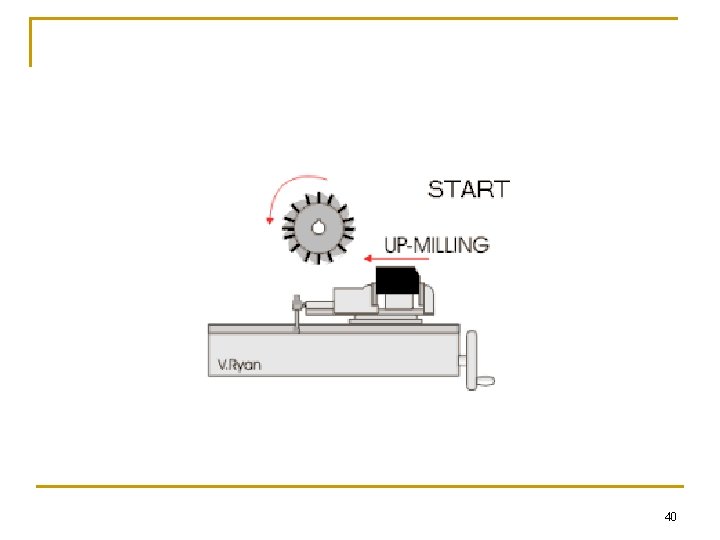
UP MILLING (conventional milling) n n The direction of the cutter rotation opposes the feed motion. For example, if the cutter rotates clockwise , the workpiece is fed to the right in up milling. 39
40
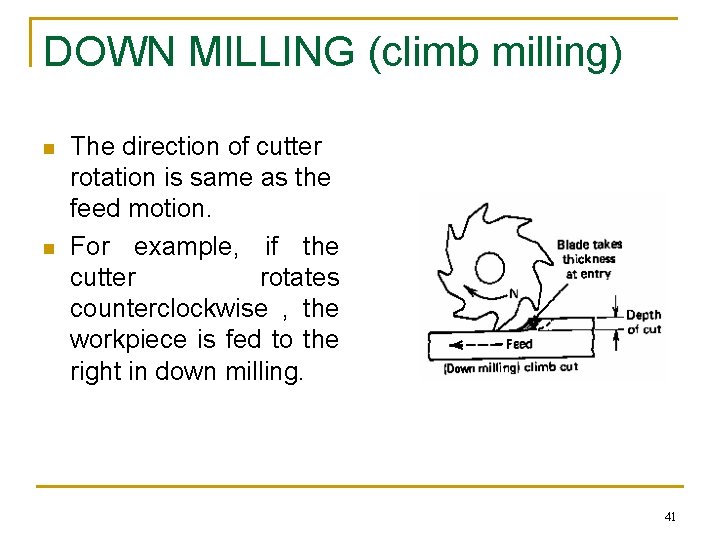
DOWN MILLING (climb milling) n n The direction of cutter rotation is same as the feed motion. For example, if the cutter rotates counterclockwise , the workpiece is fed to the right in down milling. 41
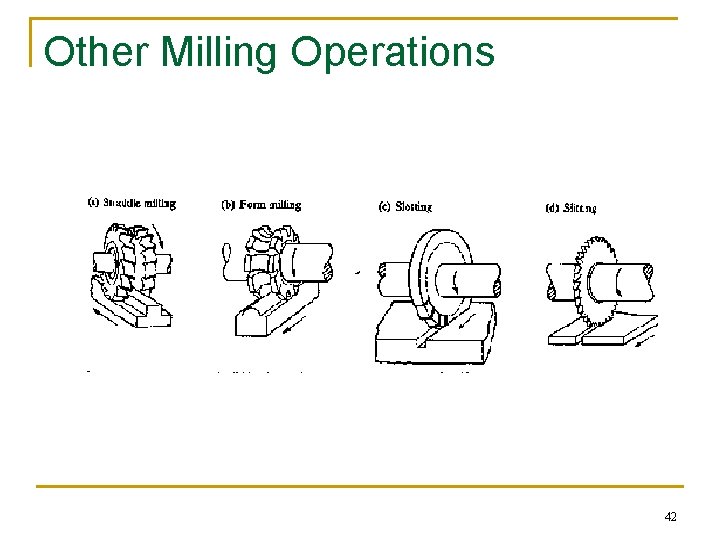
Other Milling Operations 42
Grinding Machine 43
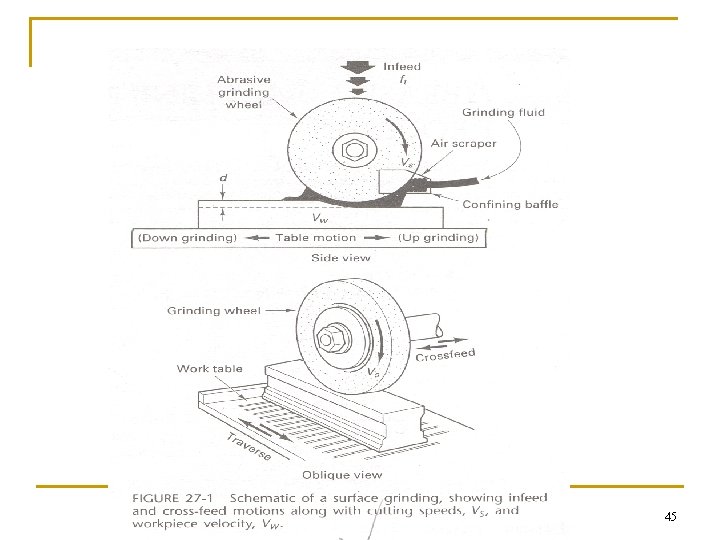
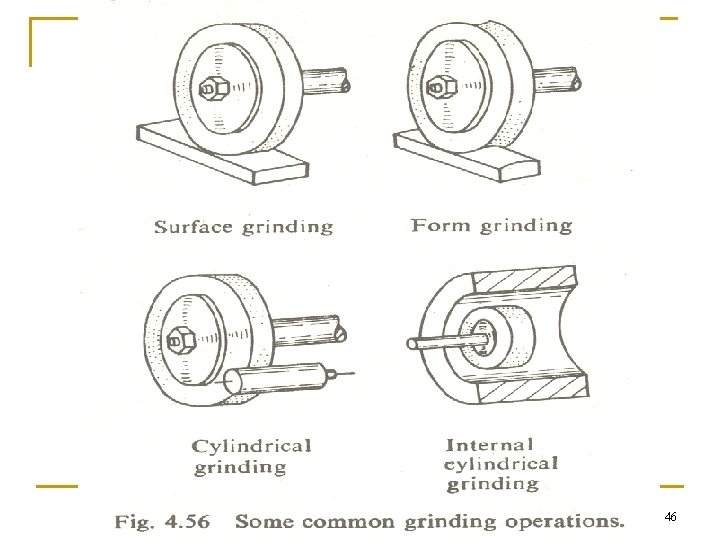
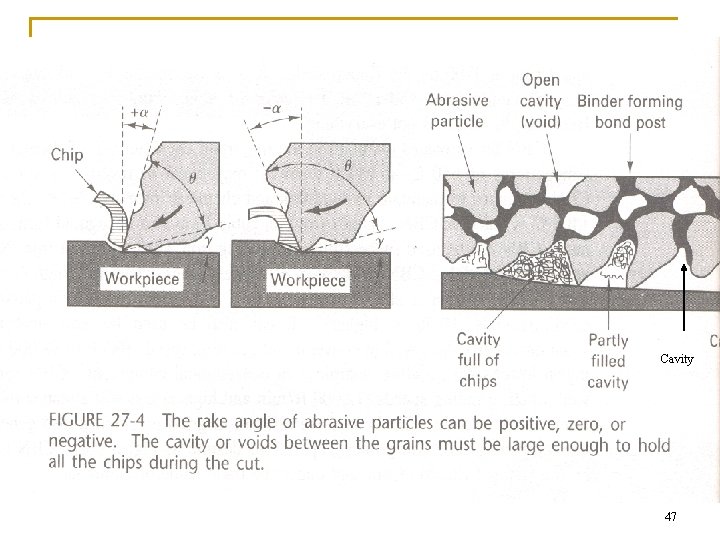
Grinding Machine n n The primary purpose of a grinding wheel is to sharpen tools (eg. drill bits). The hard abrasive of the wheel is made for removing very hard materials like high speed steel. q q Never grind on the side of the wheel. Never grind a soft material such as Aluminum. The material will coat the wheel and prevent the abrasive from working properly. (SHOW) 44
45
46
Cavity 47
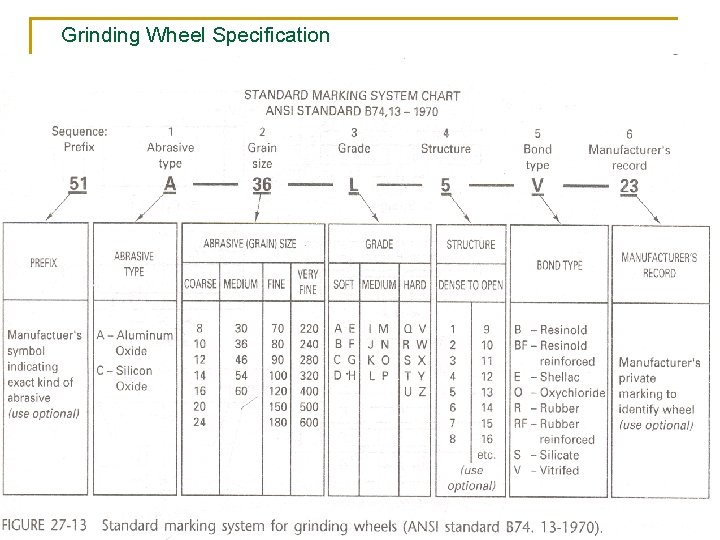
Grinding Wheel Specification 48
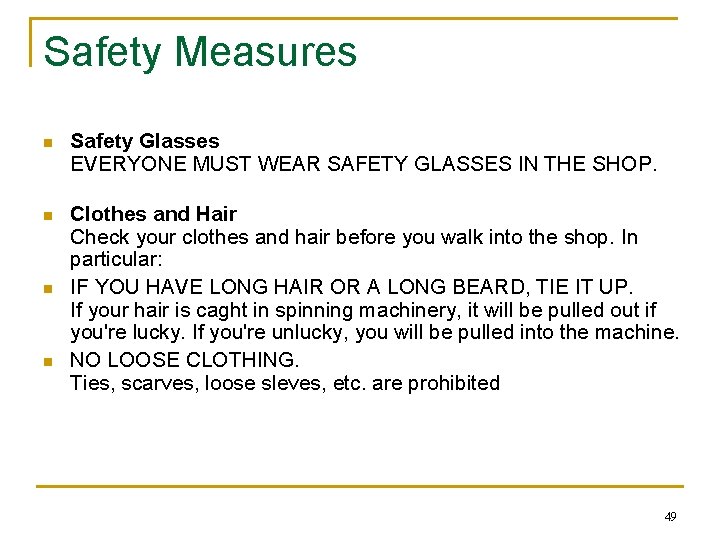
Safety Measures n Safety Glasses EVERYONE MUST WEAR SAFETY GLASSES IN THE SHOP. n Clothes and Hair Check your clothes and hair before you walk into the shop. In particular: IF YOU HAVE LONG HAIR OR A LONG BEARD, TIE IT UP. If your hair is caght in spinning machinery, it will be pulled out if you're lucky. If you're unlucky, you will be pulled into the machine. NO LOOSE CLOTHING. Ties, scarves, loose sleves, etc. are prohibited n n 49
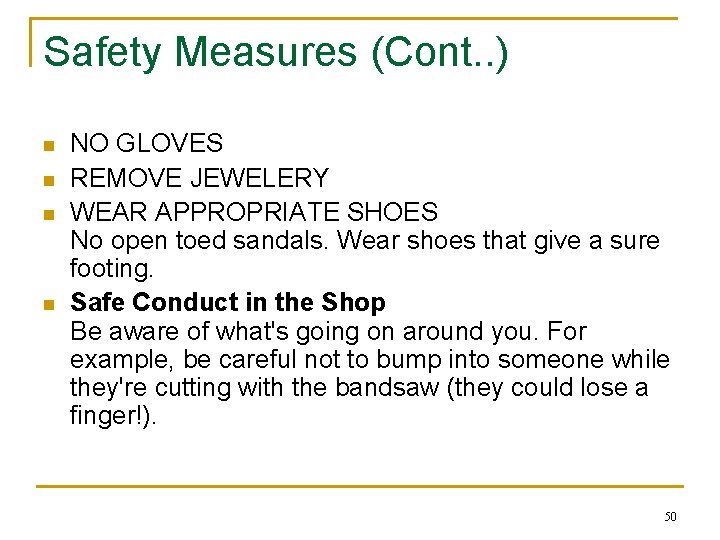
Safety Measures (Cont. . ) n n NO GLOVES REMOVE JEWELERY WEAR APPROPRIATE SHOES No open toed sandals. Wear shoes that give a sure footing. Safe Conduct in the Shop Be aware of what's going on around you. For example, be careful not to bump into someone while they're cutting with the bandsaw (they could lose a finger!). 50
Safety Measures (Cont. . ) n n n Machining IF YOU DON'T KNOW HOW TO DO SOMETHING, ASK! BEFORE YOU START THE MACHINE: Study the machine. Know which parts move, which are stationary, and which are sharp. Double check that your workpiece is securely held. Remove chuck keys and wrenches. DO NOT LEAVE MACHINES RUNNING UNATTENDED! CLEAN UP MACHINES AFTER YOU USE THEM! A dirty machine is unsafe and uncomfortable to work on. Do not use compressed air to blow machines clean. This endangers people's eyes and can force dirt into machine bearings 51