
Machine learning probabilistic modelling Stuart Russell Computer Science
Machine learning, probabilistic modelling Stuart Russell Computer Science Division, UC Berkeley 1
Outline § Some basic aspects of machine learning § Example: detecting artifacts in ICU data § Example: probabilistic data association § Multitarget tracking § Freeway traffic § Cite. Seer § Sibyl attacks on recommender systems 2
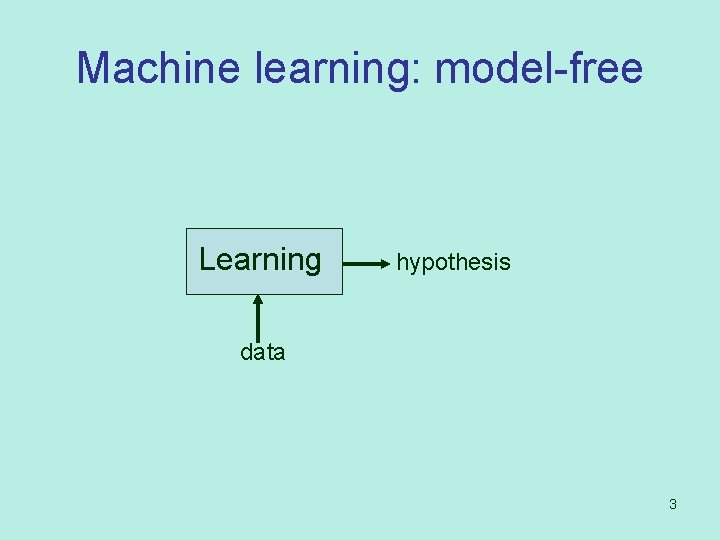
Machine learning: model-free Learning hypothesis data 3
Model-free learning contd. § Supervised learning § Input: x 1, f(x 1) … xn, f(xn) § (many possible input and label spaces) § Output: h f § E. g. , f classifies xi as earthquake/explosion § Unsupervised learning § Input: x 1, … xn § Output: clustering of inputs into categories 4
Model-free learning contd. § Application, form of data influence choice of hypothesis class for H § § Linear models, logistic regression Decision trees (classification or regression) Nonparametric (instance-based) Kernel methods § effectively linear separators in a transformed high- dimensional input space § Probabilistic grammars for strings § Etc. 5
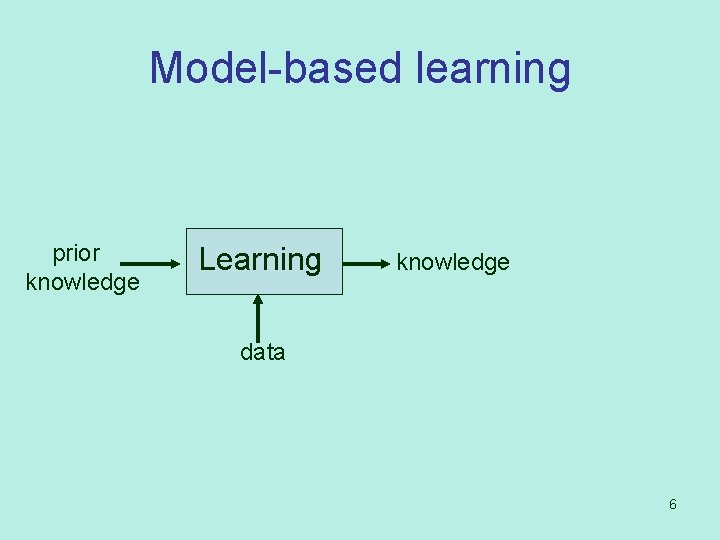
Model-based learning prior knowledge Learning knowledge data 6
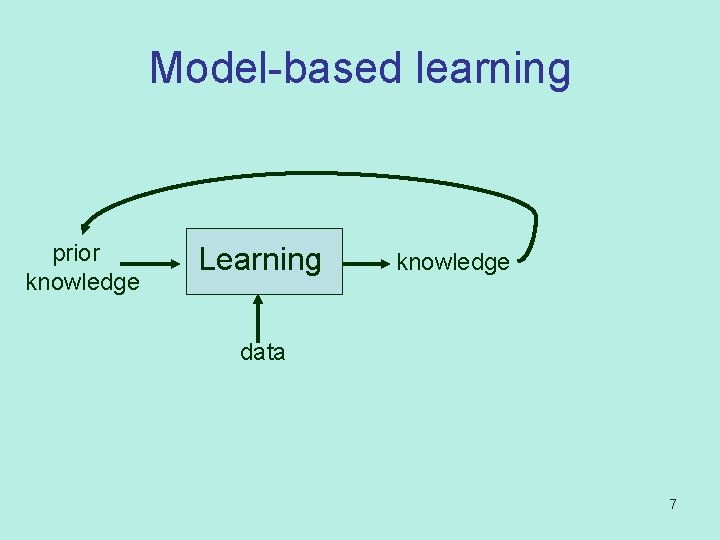
Model-based learning prior knowledge Learning knowledge data 7
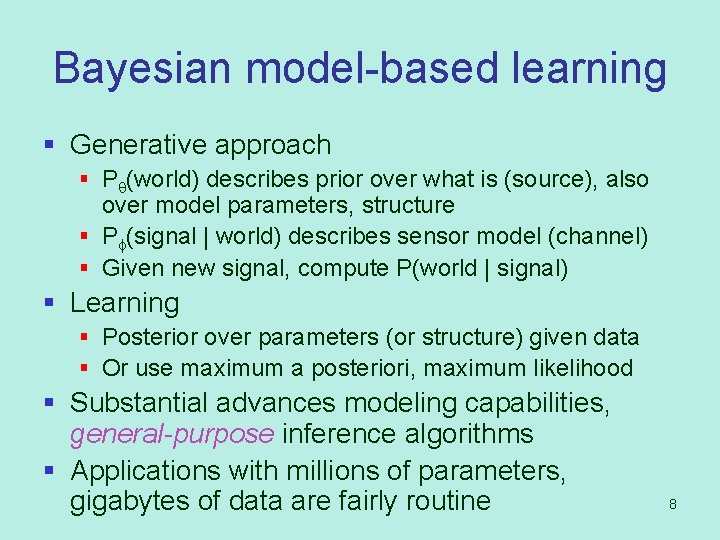
Bayesian model-based learning § Generative approach § P (world) describes prior over what is (source), also over model parameters, structure § P (signal | world) describes sensor model (channel) § Given new signal, compute P(world | signal) § Learning § Posterior over parameters (or structure) given data § Or use maximum a posteriori, maximum likelihood § Substantial advances modeling capabilities, general-purpose inference algorithms § Applications with millions of parameters, gigabytes of data are fairly routine 8
9
Artifact events ubiquitous 10
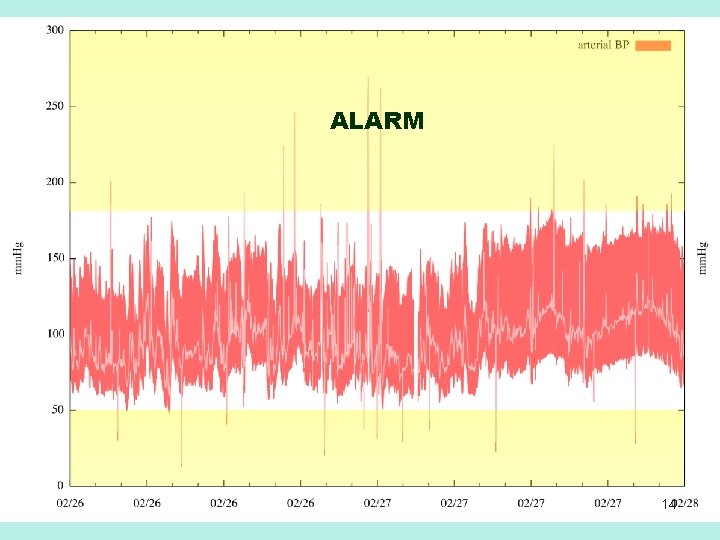
Blood pressure signals 11
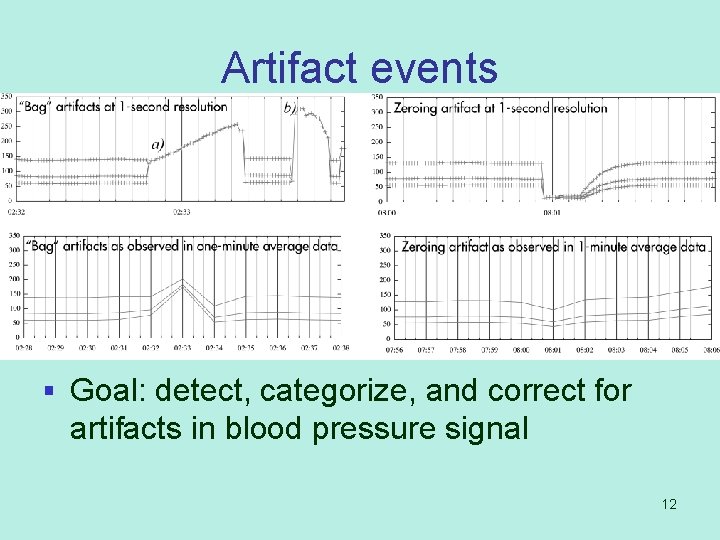
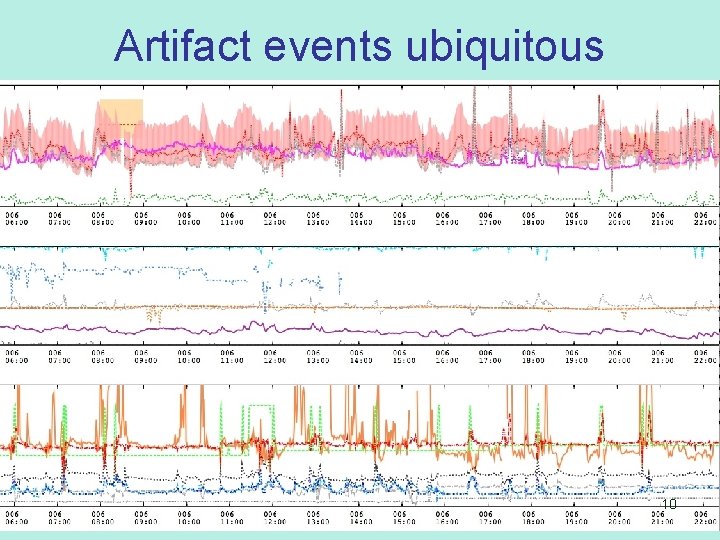
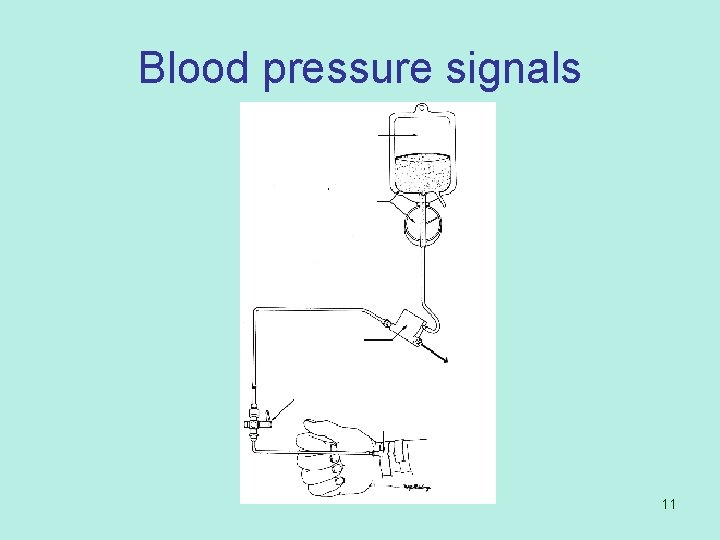
Artifact events § Goal: detect, categorize, and correct for artifacts in blood pressure signal 12
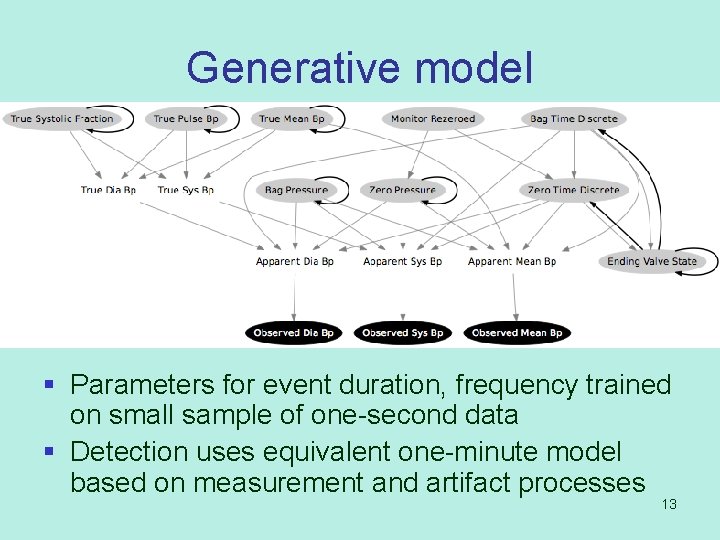
Generative model § Parameters for event duration, frequency trained on small sample of one-second data § Detection uses equivalent one-minute model based on measurement and artifact processes 13
ALARM 14
Example: classical data association 15
Example: classical data association 16
Example: classical data association 17
Example: classical data association 18
Example: classical data association 19
Example: classical data association 20
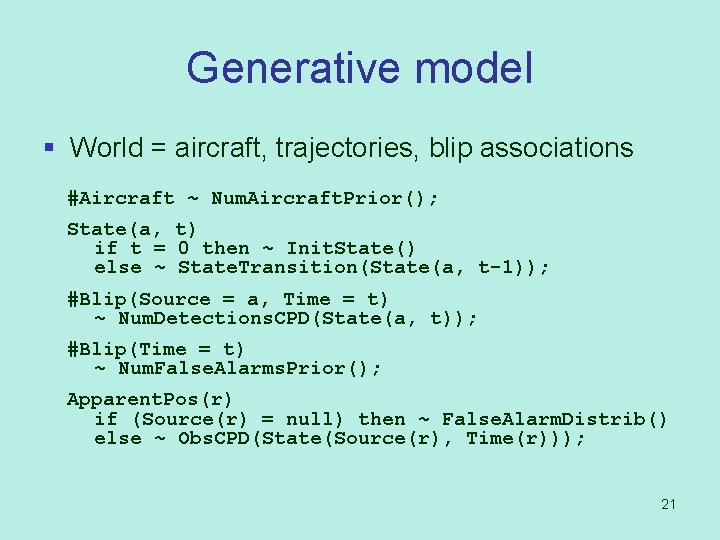
Generative model § World = aircraft, trajectories, blip associations #Aircraft ~ Num. Aircraft. Prior(); State(a, t) if t = 0 then ~ Init. State() else ~ State. Transition(State(a, t-1)); #Blip(Source = a, Time = t) ~ Num. Detections. CPD(State(a, t)); #Blip(Time = t) ~ Num. False. Alarms. Prior(); Apparent. Pos(r) if (Source(r) = null) then ~ False. Alarm. Distrib() else ~ Obs. CPD(State(Source(r), Time(r))); 21
![Aircraft Tracking Results [Oh et al. , CDC 2004] (simulated data) MCMC has smallest](http://slidetodoc.com/presentation_image_h2/7a920df72f0ce8152b286c208bf981c7/image-22.jpg "Aircraft Tracking Results [Oh et al. , CDC 2004] (simulated data) MCMC has smallest")
Aircraft Tracking Results [Oh et al. , CDC 2004] (simulated data) MCMC has smallest error, hardly degrades at all as tracks get dense [Figures by Songhwai Oh] MCMC is nearly as fast as greedy algorithm; much faster than MHT 22
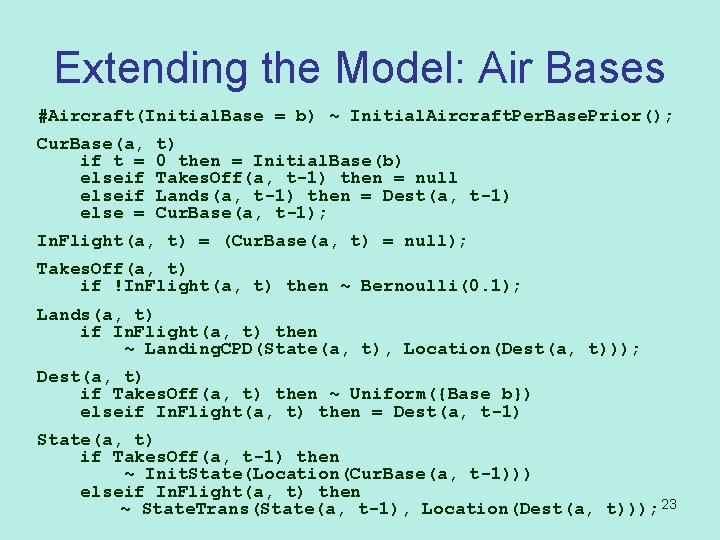
Extending the Model: Air Bases #Aircraft(Initial. Base = b) ~ Initial. Aircraft. Per. Base. Prior(); Cur. Base(a, if t = elseif else = t) 0 then = Initial. Base(b) Takes. Off(a, t-1) then = null Lands(a, t-1) then = Dest(a, t-1) Cur. Base(a, t-1); In. Flight(a, t) = (Cur. Base(a, t) = null); Takes. Off(a, t) if !In. Flight(a, t) then ~ Bernoulli(0. 1); Lands(a, t) if In. Flight(a, t) then ~ Landing. CPD(State(a, t), Location(Dest(a, t))); Dest(a, t) if Takes. Off(a, t) then ~ Uniform({Base b}) elseif In. Flight(a, t) then = Dest(a, t-1) State(a, t) if Takes. Off(a, t-1) then ~ Init. State(Location(Cur. Base(a, t-1))) elseif In. Flight(a, t) then ~ State. Trans(State(a, t-1), Location(Dest(a, t))); 23
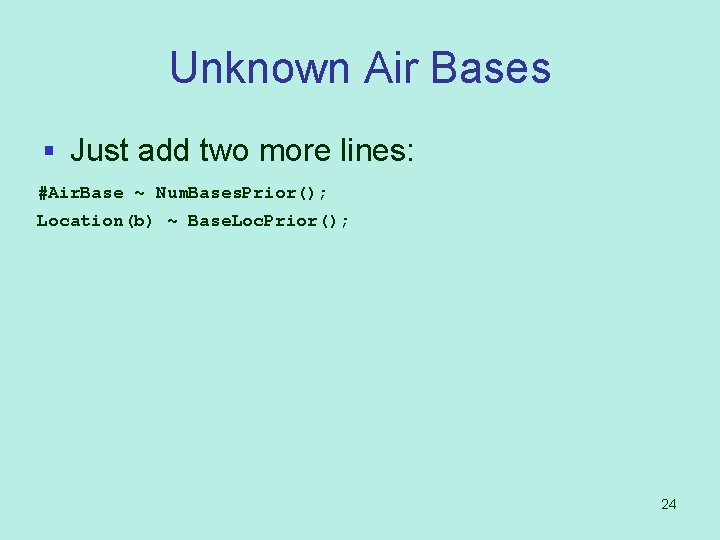
Unknown Air Bases § Just add two more lines: #Air. Base ~ Num. Bases. Prior(); Location(b) ~ Base. Loc. Prior(); 24
Example: traffic surveillance Multiple distributed sensors Uncertain, time-varying travel time Prediction error >>> object separation 25
![Example: Citation Matching [Lashkari et al 94] Collaborative Interface Agents, Yezdi Lashkari, Max Metral,](http://slidetodoc.com/presentation_image_h2/7a920df72f0ce8152b286c208bf981c7/image-26.jpg "Example: Citation Matching [Lashkari et al 94] Collaborative Interface Agents, Yezdi Lashkari, Max Metral,")
Example: Citation Matching [Lashkari et al 94] Collaborative Interface Agents, Yezdi Lashkari, Max Metral, and Pattie Maes, Proceedings of the Twelfth National Conference on Articial Intelligence, MIT Press, Cambridge, MA, 1994. Metral M. Lashkari, Y. and P. Maes. Collaborative interface agents. In Conference of the American Association for Artificial Intelligence, Seattle, WA, August 1994. Are these descriptions of the same object? Core task in Cite. Seer, Google Scholar 26
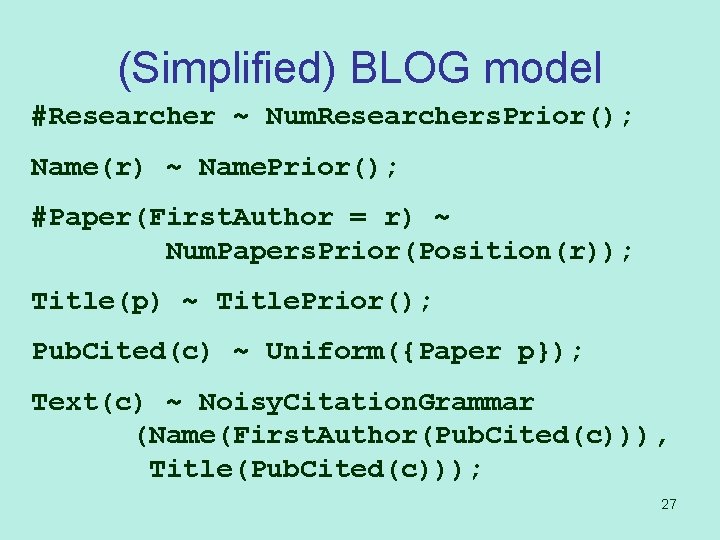
(Simplified) BLOG model #Researcher ~ Num. Researchers. Prior(); Name(r) ~ Name. Prior(); #Paper(First. Author = r) ~ Num. Papers. Prior(Position(r)); Title(p) ~ Title. Prior(); Pub. Cited(c) ~ Uniform({Paper p}); Text(c) ~ Noisy. Citation. Grammar (Name(First. Author(Pub. Cited(c))), Title(Pub. Cited(c))); 27
Citation Matching Results Four data sets of ~300 -500 citations, referring to ~150 -300 papers 28
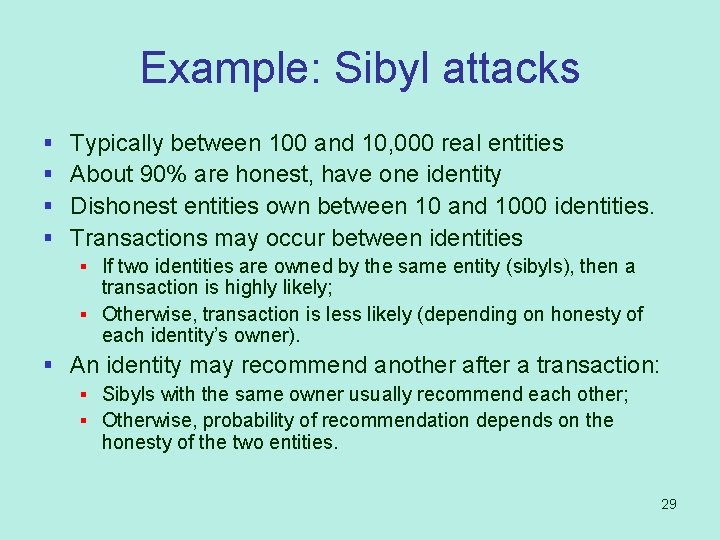
Example: Sibyl attacks § § Typically between 100 and 10, 000 real entities About 90% are honest, have one identity Dishonest entities own between 10 and 1000 identities. Transactions may occur between identities § If two identities are owned by the same entity (sibyls), then a transaction is highly likely; § Otherwise, transaction is less likely (depending on honesty of each identity’s owner). § An identity may recommend another after a transaction: § Sibyls with the same owner usually recommend each other; § Otherwise, probability of recommendation depends on the honesty of the two entities. 29
![#Entity ~ Log. Normal[6. 9, 2. 3](); Honest(x) ~ Boolean[0. 9](); #Identity(Owner = x)](http://slidetodoc.com/presentation_image_h2/7a920df72f0ce8152b286c208bf981c7/image-30.jpg "#Entity ~ Log. Normal[6. 9, 2. 3](); Honest(x) ~ Boolean[0. 9](); #Identity(Owner = x)")
#Entity ~ Log. Normal[6. 9, 2. 3](); Honest(x) ~ Boolean[0. 9](); #Identity(Owner = x) ~ if Honest(x) then 1 else Log. Normal[4. 6, 2. 3](); Transaction(x, y) ~ if Owner(x) = Owner(y) then Sibyl. Prior () else Transaction. Prior(Honest(Owner(x)), Honest(Owner(y))); Recommends(x, y) ~ if Transaction(x, y) then if Owner(x) = Owner(y) then Boolean[0. 99]() else Rec. Prior(Honest(Owner(x)), Honest(Owner(y))); Evidence: lots of transactions and recommendations, maybe some Honest(. ) assertions Query: Honest(x) 30
Summary § Generative approach to machine learning § Can accommodate § strong prior knowledge § heterogeneous data § noise, artifacts § Vertically integrated probability models (not pipeline) connect events, transmission, detection, association 31
- Slides: 31