
Machine Learning Introduction Nonparametric Classifiers Eric Xing Lecture















- Slides: 44
Machine Learning Introduction & Nonparametric Classifiers Eric Xing Lecture 1, August 12, 2010 Reading: © Eric Xing @ CMU, 2006 -2010
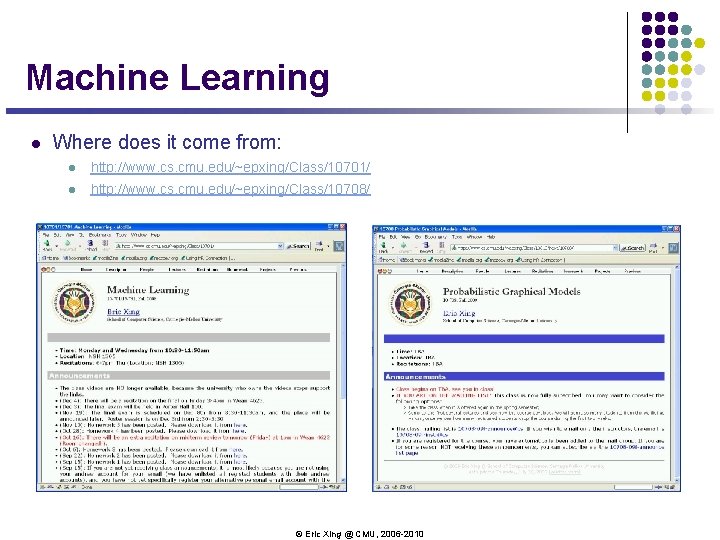
Machine Learning l Where does it come from: l http: //www. cs. cmu. edu/~epxing/Class/10701/ l http: //www. cs. cmu. edu/~epxing/Class/10708/ © Eric Xing @ CMU, 2006 -2010
Logistics l l Text book l Chris Bishop, Pattern Recognition and Machine Learning (required) l Tom Mitchell, Machine Learning l David Mackay, Information Theory, Inference, and Learning Algorithms l Daphnie Koller and Nir Friedman, Probabilistic Graphical Models Class resource l http: //www. cis. pku. edu. cn/faculty/vision/wangliwei/DS. html l http: //www. cs. cmu. edu/~epxing/Class/DS TA: l Dr. Jun Zhu l Gang Chen, Zheng Wang, Kun Gai, Jianwen Zhang, Shouchun Chen Host: l Liwei Wang, Peking University l Changshui Zhang, Tsinghua University © Eric Xing @ CMU, 2006 -2010
Logistics l Class mailing list l Adv. ml@gmail. com l Home work l Exam l Project © Eric Xing @ CMU, 2006 -2010
What is Learning is about seeking a predictive and/or executable understanding of natural/artificial subjects, phenomena, or activities from … Apoptosis + Medicine Grammatical rules Manufacturing procedures Natural laws … © Eric Xing @ CMU, 2006 -2010 Inference
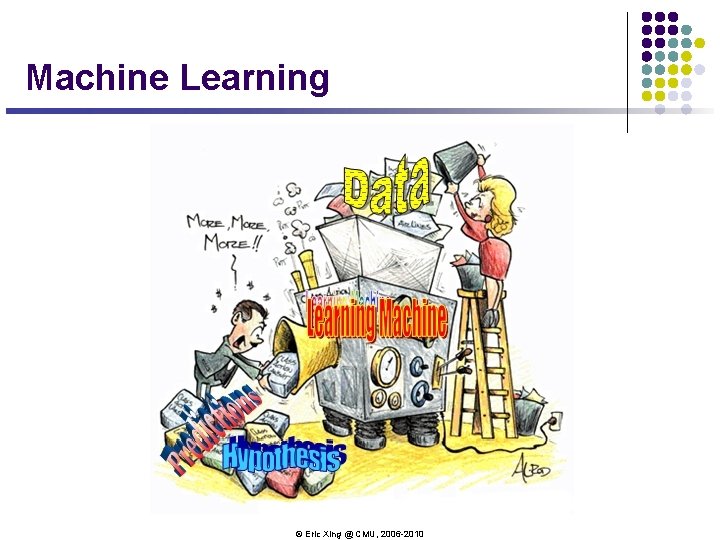
Machine Learning © Eric Xing @ CMU, 2006 -2010
Fetching a stapler from inside an office --- the Stanford STAIR robot © Eric Xing @ CMU, 2006 -2010
What is Machine Learning? Machine Learning seeks to develop theories and computer systems for l representing; l classifying, clustering and recognizing; l reasoning under uncertainty; l predicting; l and reacting to l … complex, real world data, based on the system's own experience with data, and (hopefully) under a unified model or mathematical framework, that l can be formally characterized analyzed l can take into account human prior knowledge l can generalize and adapt across data and domains l can operate automatically and autonomously l and can be interpreted and perceived by human. © Eric Xing @ CMU, 2006 -2010
Where Machine Learning is being used or can be useful? Information retrieval Speech recognition Computer vision Games Robotic control Pedigree Evolution © Eric Xing @ CMU, 2006 -2010 Planning
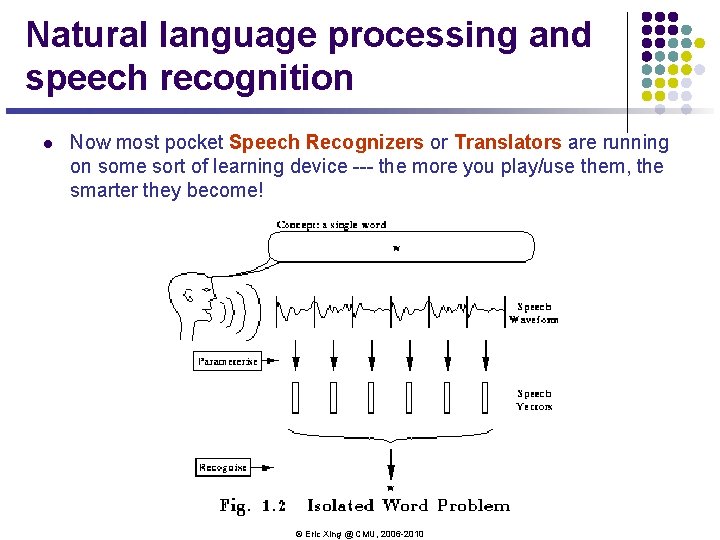
Natural language processing and speech recognition l Now most pocket Speech Recognizers or Translators are running on some sort of learning device --- the more you play/use them, the smarter they become! © Eric Xing @ CMU, 2006 -2010
Object Recognition l Behind a security camera, most likely there is a computer that is learning and/or checking! © Eric Xing @ CMU, 2006 -2010
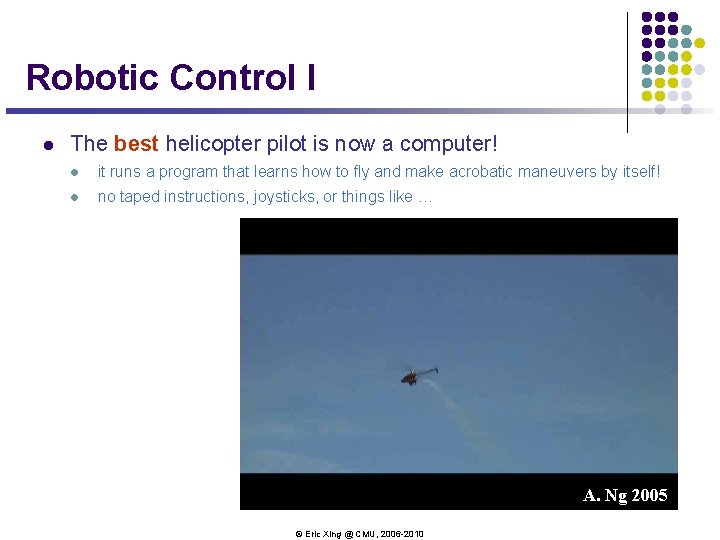
Robotic Control I l The best helicopter pilot is now a computer! l it runs a program that learns how to fly and make acrobatic maneuvers by itself! l no taped instructions, joysticks, or things like … A. Ng 2005 © Eric Xing @ CMU, 2006 -2010
Text Mining l l We want: Reading, digesting, and categorizing a vast text database is too much for human! © Eric Xing @ CMU, 2006 -2010
cacatcgctgcgtttcggcagctaattgccttttagaaattattttcccatttcgagaaactcgtgtgggatgccggatgcggctttcaatcacttctggcccgggatcggattgggtcacattgtctgcgggctctattgtctcgatccg ggcgcagttcgcgtgcttagcggtcagaaaggcagagattcggattgatgcgctggcagcagggcacaaagatctaatgactggcaaatcgctacaaattaaagtccggcggctaatgagcggactgaagccactttg attaaccaaaaaacagcagataaacaaaaacggcaaagaaaattgccacagagttgtcacgctttgttgcacaaacatttgtgcagaaaagtgaaaagcttttagccattattaagtttttcctcagctcgctggcagcacttgcgaatgt ctgatgttcctcataaatgaaaattaatgtttgctctacgctccaccgaactcgcttgtttgggggattggctaatcgcggctagatcccaggcggtataaccttttcgcttcatcagttgtgaaaccagatggctggtgttttggc cagcggactcccctcgaacgctctcgaaatcaagtggctttccagccggcccgctgggccgctcgcccactggaccggtattcccaggccacactgtaccgcataatcctcgccagactcggcgctgataaggcccaatgt actccgcaggcgtctatttatgccaaggaccgttcttcttcagctttcggctcgagtatttgttgtgccatgttggttacgatgccaatcgcggtacagttatgcaaatgagcagcgaataccgctcactgacaatgaacggcgtcttgtc tattcatgctgacattcattcctttggttttttgtcttcgacggactgaaaagtgcggagagaaacccaaaaacagaagcgcgcaaagcgccgttaatatgcgaactcattgaagttatcacaacaccatatccat catatcaatatcgctattattaacgatcatgctctgctgatcaagtattcagcgctagattcgacagattgaatcgagctcaatagactcaacagactccactcgacagatgcgcaatgccaaggacaattgcc tggagtaaacgaggcgtatgcgcaacctgcacctggcggacgcggcgtatgcgcaatgtgcaattcgcttaccttctcgttgcgggtcaggaactcccagatgggaatggccgatgacgagctgatctgaatgtggaaggcgcccagcagg aagattactttcgccgcagtcgtcatggtgtcgttgctgcttttatgttgcgtactccgcactacacggagagttcaggggattcgtgctccgtgatctgtgatccgtgttccgtgggtcaattgcacggttgtgtaaccttcgtg tctttttagggcccaataaaagcgcttttgtggcggcttgatagattatcacttggtttcggtggctagccaagtggctttcttctgtccgacgcacttaattgaattaaccaaacaacgagcgtggccaattcgtattatcgctgt tacgtgtgtctcagcttgaaacgcaaaagcttgtttcacacatcggtttctcggcaagatgggggagtcggtctagggagaggggcgcccaccagtcgatcacgaaaacggcgaattccaagcgaaacggagcacta agtactatgtcgaacaaccgatcgcggcgatgtcagtgagtcgtcttcggacagcgctggcgctccacacgtatttaagctctgagatcggctttgggagagcgcagagagcgccatcgcacggcagagcgaaagcggcagtgagcgaaag gagcggcagcgggtgggggatcgggagccccccgaaaaaaacagaggcgcacgtcgatgccatcggggaattggaacctcaatgtgtgggaatgtttaaatattctgtgttaggtagtttcatagactatagattctcatacagat gagtccttcgagccgattatacacgacagcaaaatatttcagtcgcgcttgggcaaaaggcttaagcacgactcccagtccccccttacatttgtcttcctaagcccctggagccactatcaaacttgttctacgcttgcactgaaaatag accaaagtaaacaatcaaaaagaccaaaaacaataacaaccagcaccgagtcgaacatcagtgaggcattgcaaaaatttcaaagtcaagtttgcgtcgtcatcgcgtctgagtccgatcaagccgggcttgtaattgaagttgttgatga ttactggattgtggcgaattctggtcagcatacttaacagcagcccgctaattaagcaaaataaacatatcaaattccagaatgcgacggcgccatcatcctgtttgggaattcgcgggcagatcgtttaattcaattaaaaggta aaaagggagcagaagaatgcgatcgctggaatttcctaacatcacggaccccataaatttgataagcccgagctcgctgcgttgagtcagccaccccacatccccaaatccccgccaaaagaagacagctgggttgttgactcgccagatt attgcagtggacctggtcaaagaagcaccgttaatgtgctgattccattcgattccatccgggaatgcgataaaggctctgatccaagcaactgcaatccggatttcgattttctctttccatttggttttgtatttacgta aagcattctaatgaagacttggagaagacttacgttatattcagaccatcgtgcgatagaggatgagtcatttccatatggccgaaatttattatgtttactatcgtttttagaggtgttttttggacttaccaaaagaggcatttgtttt ttcaactgaaaagatatttaaattttttcttggaccattttcaaggttccggatatatttgaaacacactagcagtgttggtaagttacatgtatttctataatgtcatattcctttgtccgtattcaaatcgaatactccacatct ttgtacttgaggaattggcgatcgtagcgatttcccccgccgtaaagttcctgatcctcgttgtttttgtacatcataaagtccggattctgctcgtcgccgaagatgggaacgaagctgccaaagctgagagtctgcttgaggtgctggt gtcccagctggataaccttgctgtacagatcggcatctgcctggagggcacgatcgaaatccttccagtggacgaacttcacctgctcgctgggaatagcgttgttgtcaagcagctcaaggagcgtattcgagttgacgggctgcaccac ctgctccttcgctggggattcccctgcgggtaagcgccgcttggactcgtttccaaatcccatagccacgccagcagaggagtaacagagctcwhereisthegenetgattaaaaatatcctttaagaaagcccatgggtataact actgcgtcctatgcgaggaatggtctttaggttctttatggcaaagttctcgcttgcccagccgcggtacgttcttggtgatctttaggaagaatcctggactactgtcgtctgcctggcttatggccacaagacccaccaagagc aggactgttatgattctcatgctgatgcgactgaagcttcacctgactcctgctccacaattggtggcctttatatagcgagatccacccgcatcttgcgtggaatagaaatgcgggtgactccaggaattagcattatcggaaagt ataaaactgaactaacctgacctaaatgcctggccataattaagtgcatacacattacttacatttgtataagaactaaattttatagtacataccacttgcgtatgtaaatgcttgtcttttctcttatatacgttttata cccagcatattttacgtaaaaacggtaatgcgaacataacttattggggcccggaccgcaaaccggccaaacgcgtttgcacccataaaaacataagggcaacaaaaaaattgttaagctgttgtttatttttgcaatcgaa cgctcaaatagctgcgatcactcgggagcagggtaaagtcgcctcgaaacaggaagctgaagcatcttctataaatacactcaaagcgatcattccgaggcgagtctggttagaaatttacatggactgcaaaaaggtatagccccacaaa cacatcgctgcgtttcggcagctaattgccttttagaaattattttcccatttcgagaaactcgtgtgggatgccggatgcggctttcaatcacttctggcccgggatcggattgggtcacattgtctgcgggctctattgtctcgatccg ggcgcagttcgcgtgcttagcggtcagaaaggcagagattcggattgatgcgctggcagcagggcacaaagatctaatgactggcaaatcgctacaaattaaagtccggcggctaatgagcggactgaagccactttg attaaccaaaaaacagcagataaacaaaaacggcaaagaaaattgccacagagttgtcacgctttgttgcacaaacatttgtgcagaaaagtgaaaagcttttagccattattaagtttttcctcagctcgctggcagcacttgcgaatgt ctgatgttcctcataaatgaaaattaatgtttgctctacgctccaccgaactcgcttgtttgggggattggctaatcgcggctagatcccaggcggtataaccttttcgcttcatcagttgtgaaaccagatggctggtgttttggc cagcggactcccctcgaacgctctcgaaatcaagtggctttccagccggcccgctgggccgctcgcccactggaccggtattcccaggccacactgtaccgcataatcctcgccagactcggcgctgataaggcccaatgt actccgcaggcgtctatttatgccaaggaccgttcttcttcagctttcggctcgagtatttgttgtgccatgttggttacgatgccaatcgcggtacagttatgcaaatgagcagcgaataccgctcactgacaatgaacggcgtcttgtc tattcatgctgacattcattcctttggttttttgtcttcgacggactgaaaagtgcggagagaaacccaaaaacagaagcgcgcaaagcgccgttaatatgcgaactcattgaagttatcacaacaccatatccat catatcaatatcgctattattaacgatcatgctctgctgatcaagtattcagcgctagattcgacagattgaatcgagctcaatagactcaacagactccactcgacagatgcgcaatgccaaggacaattgcc tggagtaaacgaggcgtatgcgcaacctgcacctggcggacgcggcgtatgcgcaatgtgcaattcgcttaccttctcgttgcgggtcaggaactcccagatgggaatggccgatgacgagctgatctgaatgtggaaggcgcccagcagg aagattactttcgccgcagtcgtcatggtgtcgttgctgcttttatgttgcgtactccgcactacacggagagttcaggggattcgtgctccgtgatctgtgatccgtgttccgtgggtcaattgcacggttgtgtaaccttcgtg tctttttagggcccaataaaagcgcttttgtggcggcttgatagattatcacttggtttcggtggctagccaagtggctttcttctgtccgacgcacttaattgaattaaccaaacaacgagcgtggccaattcgtattatcgctgt tacgtgtgtctcagcttgaaacgcaaaagcttgtttcacacatcggtttctcggcaagatgggggagtcggtctagggagaggggcgcccaccagtcgatcacgaaaacggcgaattccaagcgaaacggagcacta agtactatgtcgaacaaccgatcgcggcgatgtcagtgagtcgtcttcggacagcgctggcgctccacacgtatttaagctctgagatcggctttgggagagcgcagagagcgccatcgcacggcagagcgaaagcggcagtgagcgaaag gagcggcagcgggtgggggatcgggagccccccgaaaaaaacagaggcgcacgtcgatgccatcggggaattggaacctcaatgtgtgggaatgtttaaatattctgtgttaggtagtttcatagactatagattctcatacagat gagtccttcgagccgattatacacgacagcaaaatatttcagtcgcgcttgggcaaaaggcttaagcacgactcccagtccccccttacatttgtcttcctaagcccctggagccactatcaaacttgttctacgcttgcactgaaaatag accaaagtaaacaatcaaaaagaccaaaaacaataacaaccagcaccgagtcgaacatcagtgaggcattgcaaaaatttcaaagtcaagtttgcgtcgtcatcgcgtctgagtccgatcaagccgggcttgtaattgaagttgttgatga ttactggattgtggcgaattctggtcagcatacttaacagcagcccgctaattaagcaaaataaacatatcaaattccagaatgcgacggcgccatcatcctgtttgggaattcgcgggcagatcgtttaattcaattaaaaggta aaaagggagcagaagaatgcgatcgctggaatttcctaacatcacggaccccataaatttgataagcccgagctcgctgcgttgagtcagccaccccacatccccaaatccccgccaaaagaagacagctgggttgttgactcgccagatt attgcagtggacctggtcaaagaagcaccgttaatgtgctgattccattcgattccatccgggaatgcgataaaggctctgatccaagcaactgcaatccggatttcgattttctctttccatttggttttgtatttacgta aagcattctaatgaagacttggagaagacttacgttatattcagaccatcgtgcgatagaggatgagtcatttccatatggccgaaatttattatgtttactatcgtttttagaggtgttttttggacttaccaaaagaggcatttgtttt ttcaactgaaaagatatttaaattttttcttggaccattttcaaggttccggatatatttgaaacacactagcagtgttggtaagttacatgtatttctataatgtcatattcctttgtccgtattcaaatcgaatactccacatct ttgtacttgaggaattggcgatcgtagcgatttcccccgccgtaaagttcctgatcctcgttgtttttgtacatcataaagtccggattctgctcgtcgccgaagatgggaacgaagctgccaaagctgagagtctgcttgaggtgctggt gtcccagctggataaccttgctgtacagatcggcatctgcctggagggcacgatcgaaatccttccagtggacgaacttcacctgctcgctgggaatagcgttgttgtcaagcagctcaaggagcgtattcgagttgacgggctgcaccac ctgctccttcgctggggattcccctgcgggtaagcgccgcttggactcgtttccaaatcccatagccacgccagcagaggagtaacagagctctgaaaacagttcatggtttaaaaatatcctttaagaaagcccatgggtataact actgcgtcctatgcgaggaatggtctttaggttctttatggcaaagttctcgcttgcccagccgcggtacgttcttggtgatctttaggaagaatcctggactactgtcgtctgcctggcttatggccacaagacccaccaagagc aggactgttatgattctcatgctgatgcgactgaagcttcacctgactcctgctccacaattggtggcctttatatagcgagatccacccgcatcttgcgtggaatagaaatgcgggtgactccaggaattagcattatcggaaagt ataaaactgaactaacctgacctaaatgcctggccataattaagtgcatacacattacttacatttgtataagaactaaattttatagtacataccacttgcgtatgtaaatgcttgtcttttctcttatatacgttttata © Eric Xing @ CMU, 2006 -2010 Bioinformatics Where is the gene?
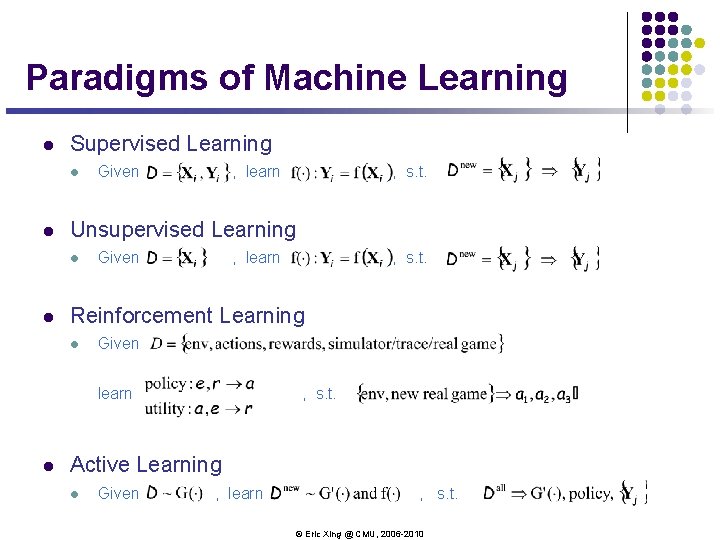
Paradigms of Machine Learning l Supervised Learning l l , learn Given , learn , s. t. Reinforcement Learning l Given learn l , s. t. Unsupervised Learning l l Given , s. t. Active Learning l Given , learn , s. t. © Eric Xing @ CMU, 2006 -2010
Elements of Learning l Here are some important elements to consider before you start: l Task: l l Data and other info: l l l l Exact inference? MCMC? Variational? Gradient? Greedy search? Online? Batch? Distributed? Evaluation: l l MLE? MCLE? Max margin? Log loss, hinge loss, square loss? … Tractability and exactness trade off: l l BN? MRF? Regression? SVM? Bayesian/Frequents ? Parametric/Nonparametric? Objective/Loss function: l l Input and output (e. g. , continuous, binary, counts, …) Supervised or unsupervised, of a blend of everything? Prior knowledge? Bias? Models and paradigms: l l Embedding? Classification? Clustering? Topic extraction? … Visualization? Human interpretability? Perperlexity? Predictive accuracy? It is better to consider one element at a time! © Eric Xing @ CMU, 2006 -2010
Theories of Learning For the learned F(; q ) l l l l l Consistency (value, pattern, …) Bias versus variance Sample complexity Learning rate Convergence Error bound Confidence Stability … © Eric Xing @ CMU, 2006 -2010
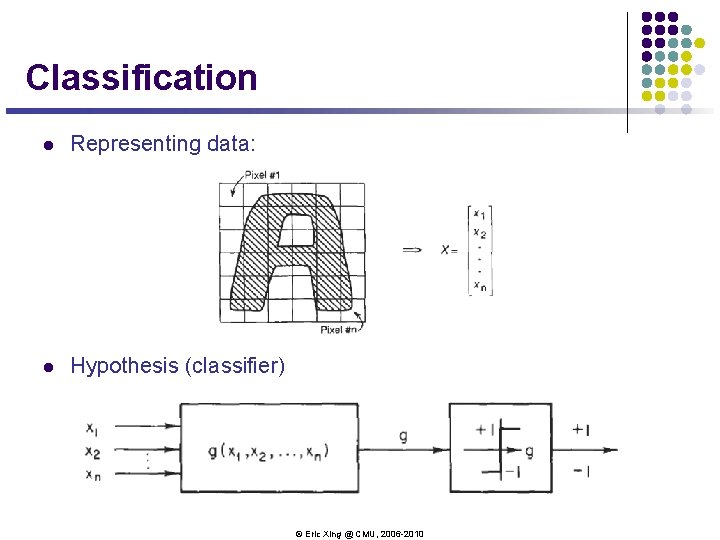
Classification l Representing data: l Hypothesis (classifier) © Eric Xing @ CMU, 2006 -2010
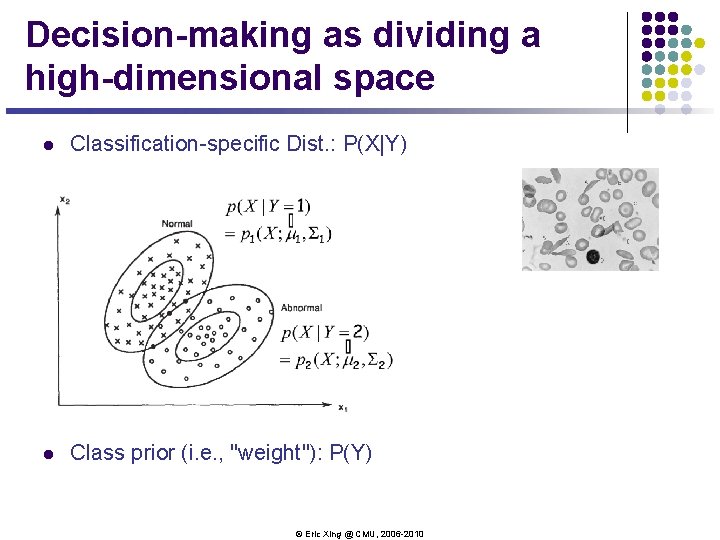
Decision-making as dividing a high-dimensional space l Classification-specific Dist. : P(X|Y) l Class prior (i. e. , "weight"): P(Y) © Eric Xing @ CMU, 2006 -2010
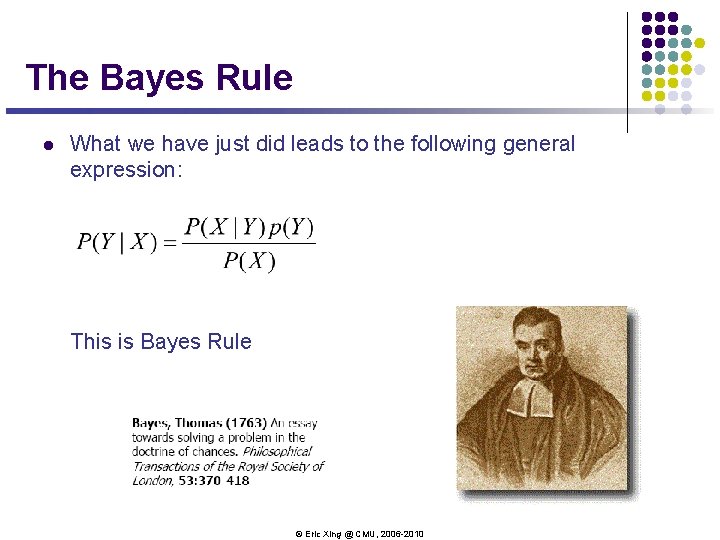
The Bayes Rule l What we have just did leads to the following general expression: This is Bayes Rule © Eric Xing @ CMU, 2006 -2010
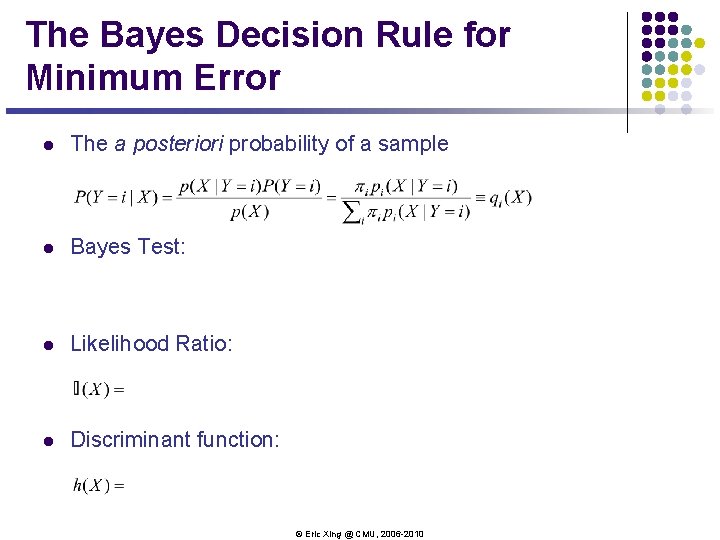
The Bayes Decision Rule for Minimum Error l The a posteriori probability of a sample l Bayes Test: l Likelihood Ratio: l Discriminant function: © Eric Xing @ CMU, 2006 -2010
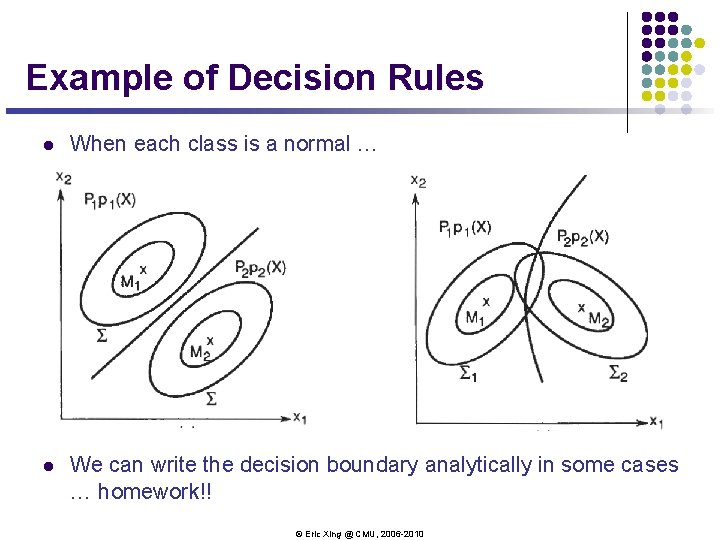
Example of Decision Rules l When each class is a normal … l We can write the decision boundary analytically in some cases … homework!! © Eric Xing @ CMU, 2006 -2010
Bayes Error l We must calculate the probability of error l the probability that a sample is assigned to the wrong class l Given a datum X, what is the risk? l The Bayes error (the expected risk): © Eric Xing @ CMU, 2006 -2010
More on Bayes Error l Bayes error is the lower bound of probability of classification error l Bayes classifier is theoretically best classifier that minimize probability of classification error l Computing Bayes error is in general a very complex problem. Why? l Density estimation: l Integrating density function: © Eric Xing @ CMU, 2006 -2010
Learning Classifier l The decision rule: l Learning strategies l Generative Learning l Discriminative Learning l Instance-based Learning (Store all past experience in memory) l A special case of nonparametric classifier © Eric Xing @ CMU, 2006 -2010
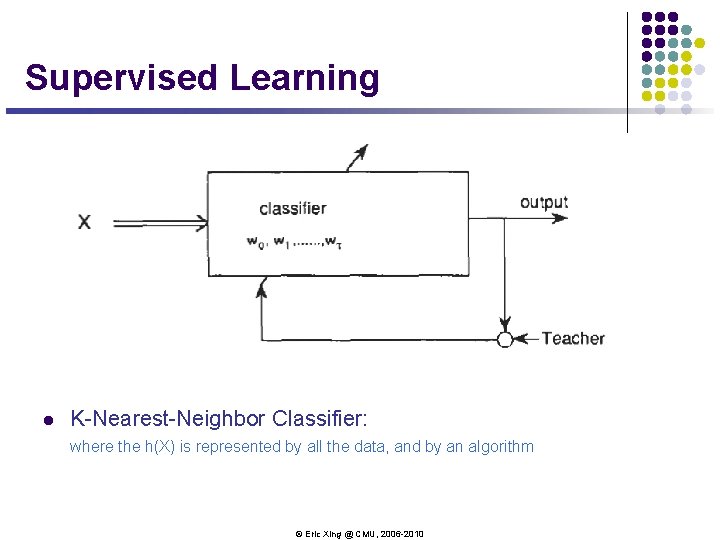
Supervised Learning l K-Nearest-Neighbor Classifier: where the h(X) is represented by all the data, and by an algorithm © Eric Xing @ CMU, 2006 -2010
Recall: Vector Space Representation l Each document is a vector, one component for each term (= word). Doc 1 Doc 2 Doc 3 . . . Word 1 3 0 0 . . . Word 2 0 8 1 . . . Word 3 12 1 10 . . . 0 1 3 . . . 0 0 0 . . . l Normalize to unit length. l High-dimensional vector space: l Terms are axes, 10, 000+ dimensions, or even 100, 000+ l Docs are vectors in this space © Eric Xing @ CMU, 2006 -2010
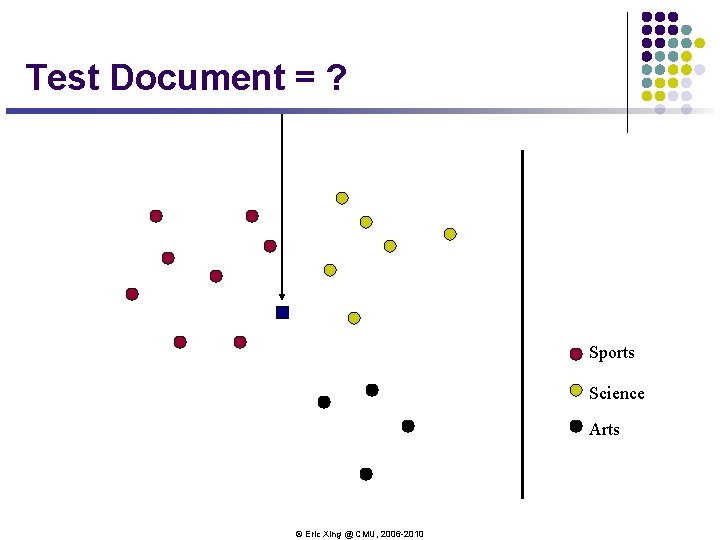
Test Document = ? Sports Science Arts © Eric Xing @ CMU, 2006 -2010
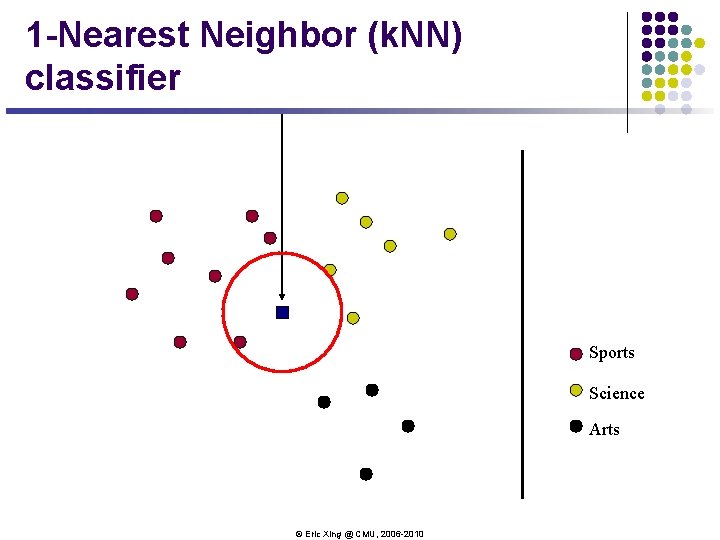
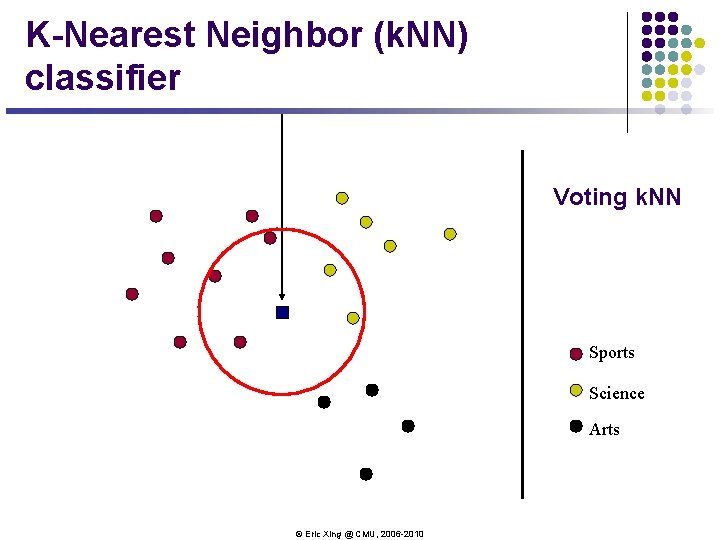
1 -Nearest Neighbor (k. NN) classifier Sports Science Arts © Eric Xing @ CMU, 2006 -2010
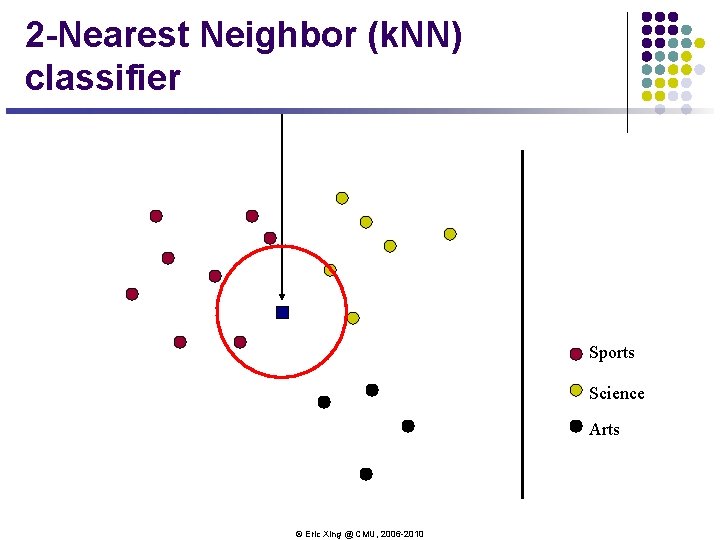
2 -Nearest Neighbor (k. NN) classifier Sports Science Arts © Eric Xing @ CMU, 2006 -2010
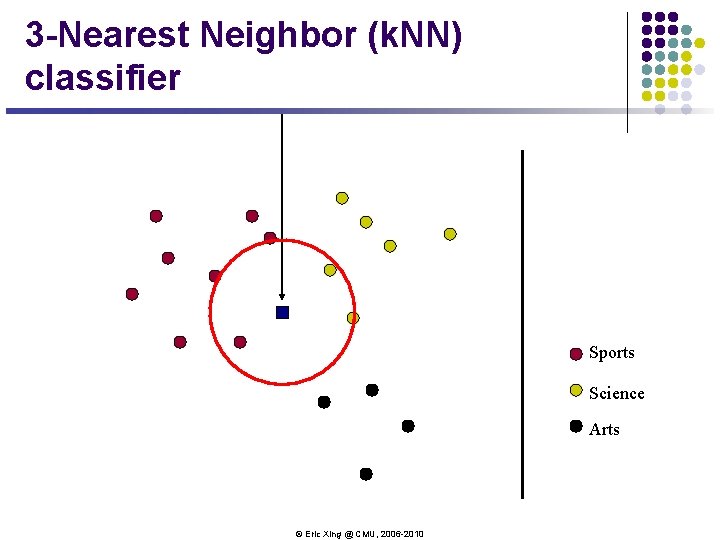
3 -Nearest Neighbor (k. NN) classifier Sports Science Arts © Eric Xing @ CMU, 2006 -2010
K-Nearest Neighbor (k. NN) classifier Voting k. NN Sports Science Arts © Eric Xing @ CMU, 2006 -2010
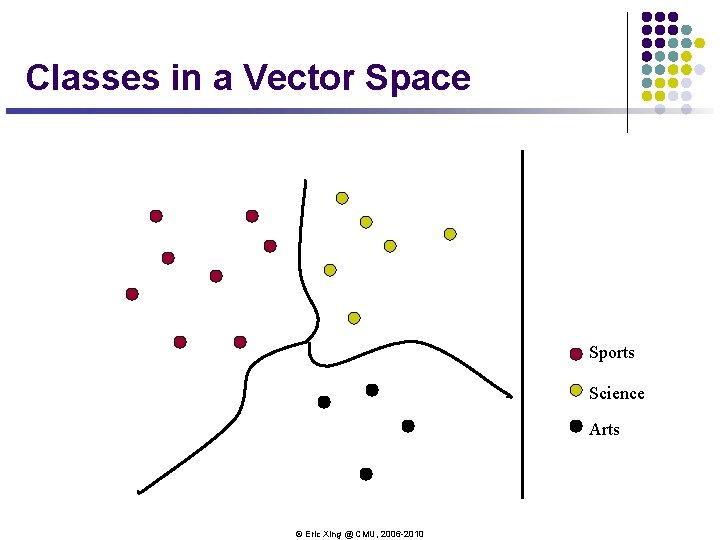
Classes in a Vector Space Sports Science Arts © Eric Xing @ CMU, 2006 -2010
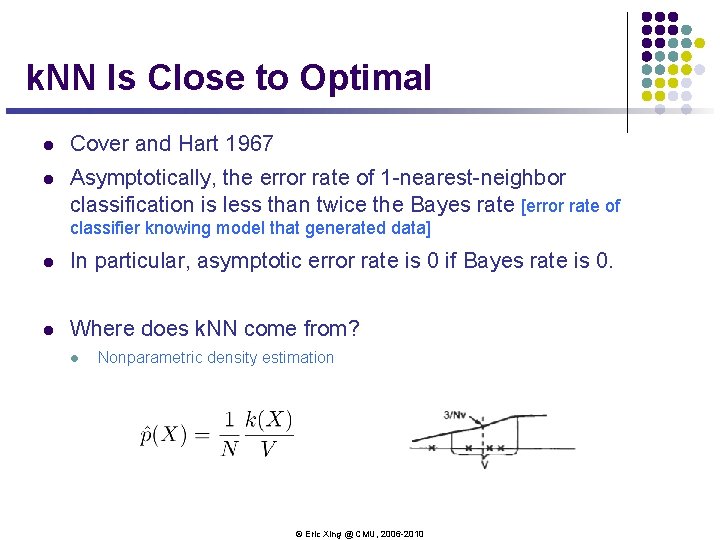
k. NN Is Close to Optimal l Cover and Hart 1967 l Asymptotically, the error rate of 1 -nearest-neighbor classification is less than twice the Bayes rate [error rate of classifier knowing model that generated data] l In particular, asymptotic error rate is 0 if Bayes rate is 0. l Where does k. NN come from? l Nonparametric density estimation © Eric Xing @ CMU, 2006 -2010
Nearest-Neighbor Learning Algorithm l Learning is just storing the representations of the training examples in D. l Testing instance x: l l Compute similarity between x and all examples in D. Assign x the category of the most similar example in D. l Does not explicitly compute a generalization or category prototypes. l Also called: l l l Case-based learning Memory-based learning Lazy learning © Eric Xing @ CMU, 2006 -2010
k. NN is an instance of Instance-Based Learning l What makes an Instance-Based Learner? l A distance metric l How many nearby neighbors to look at? l A weighting function (optional) l How to relate to the local points? © Eric Xing @ CMU, 2006 -2010
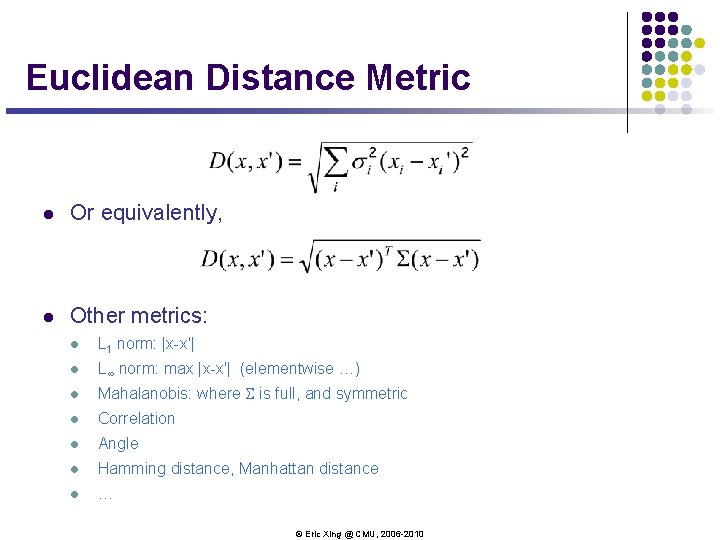
Euclidean Distance Metric l Or equivalently, l Other metrics: l L 1 norm: |x-x'| l L∞ norm: max |x-x'| (elementwise …) l Mahalanobis: where S is full, and symmetric l Correlation l Angle l Hamming distance, Manhattan distance l … © Eric Xing @ CMU, 2006 -2010
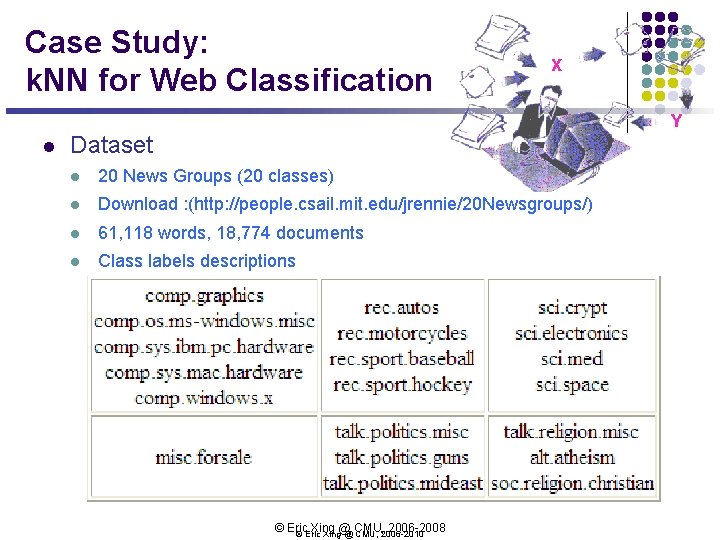
Case Study: k. NN for Web Classification l Dataset l 20 News Groups (20 classes) l Download : (http: //people. csail. mit. edu/jrennie/20 Newsgroups/) l 61, 118 words, 18, 774 documents l Class labels descriptions © Eric Xing 2006 -2008 © Eric Xing@ @ CMU, 2006 -2010
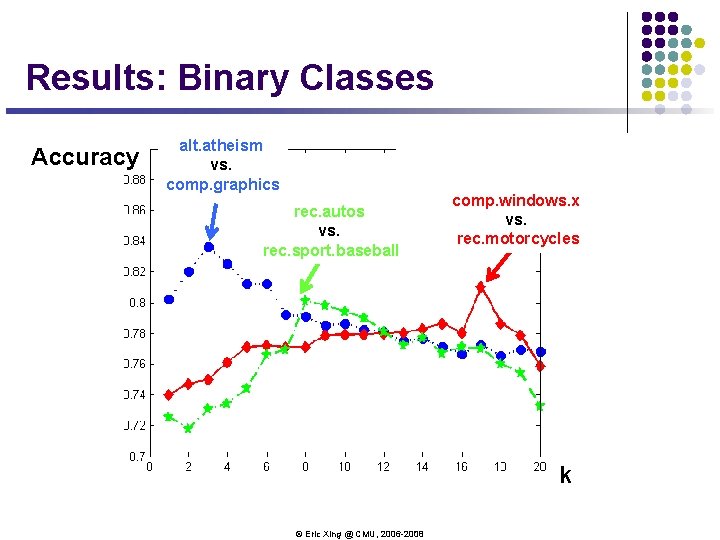
Results: Binary Classes Accuracy alt. atheism vs. comp. graphics rec. autos vs. rec. sport. baseball comp. windows. x vs. rec. motorcycles k © Eric Xing @ CMU, 2006 -2010 2006 -2008
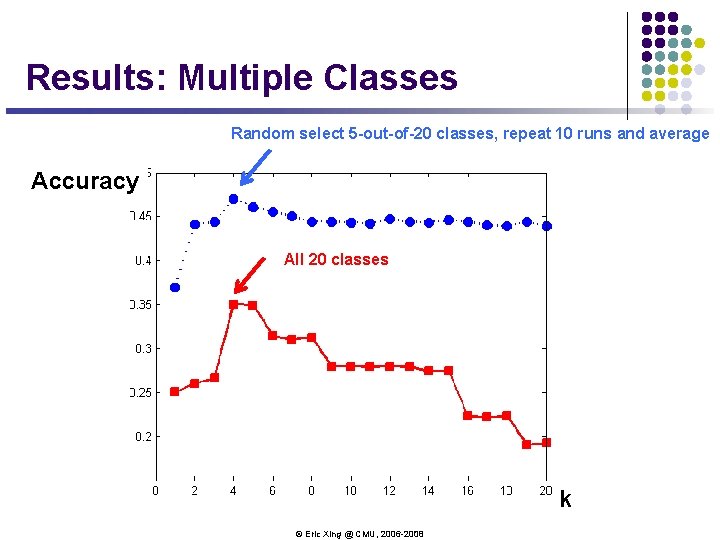
Results: Multiple Classes Random select 5 -out-of-20 classes, repeat 10 runs and average Accuracy All 20 classes k © Eric Xing @ CMU, 2006 -2010 2006 -2008
Is k. NN ideal? © Eric Xing @ CMU, 2006 -2010
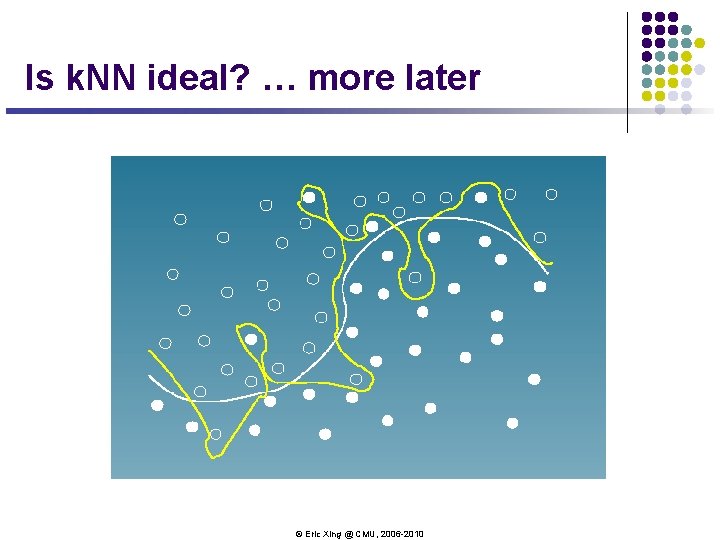
Is k. NN ideal? … more later © Eric Xing @ CMU, 2006 -2010
Effect of Parameters l Sample size l l l Dimensionality l l The relative scalings in the distance metric affect region shapes. Weight l l How smooth? Metric l l Curse of dimensionality Density l l The more the better Need efficient search algorithm for NN Spurious or less relevant points need to be downweighted K © Eric Xing @ CMU, 2006 -2010
Summary l l Machine Learning is Cool and Useful!! l Paradigms of Machine Learning. l Design elements learning l Theories on learning Fundamental theory of classification l Bayes optimal classifier l Instance-based learning: k. NN – a Nonparametric classifier l A nonparametric method does not rely on any assumption concerning the structure of the underlying density function. l l l Very little “learning” is involved in these methods Good news: l Simple and powerful methods; Flexible and easy to apply to many problems. l k. NN classifier asymptotically approaches the Bayes classifier, which is theoretically the best classifier that minimizes the probability of classification error. Bad news: l High memory requirements l Very dependant on the scale factor for a specific problem. © Eric Xing @ CMU, 2006 -2010