
Machine Learning Background I 1 Prediction Problems 2
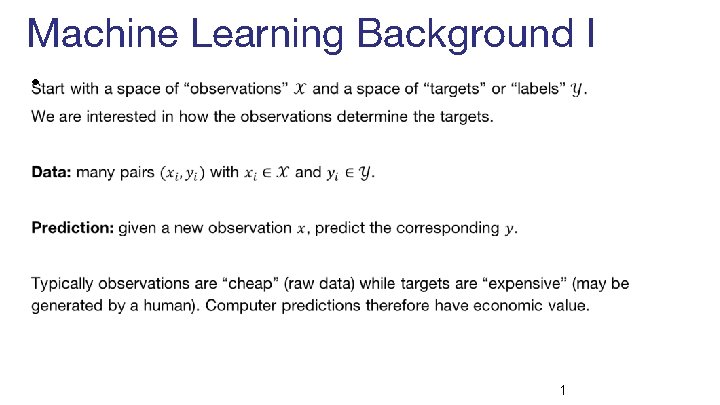
Machine Learning Background I • 1
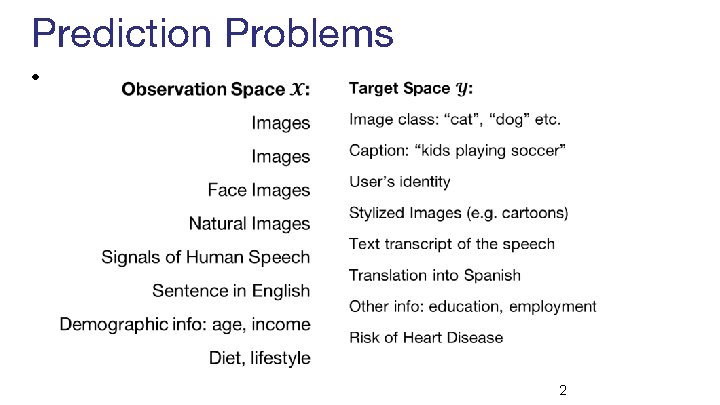
Prediction Problems • 2
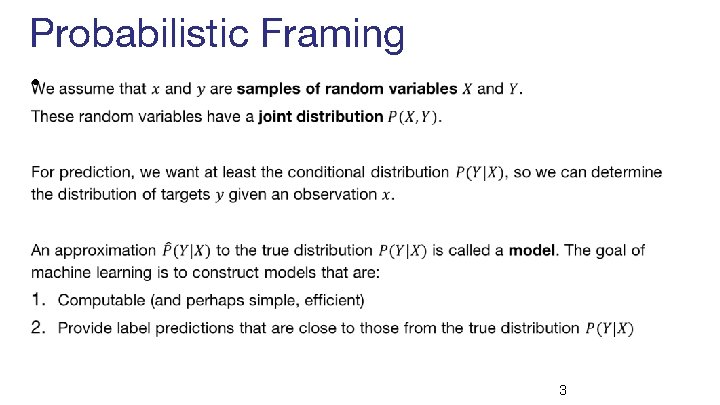
Probabilistic Framing • 3
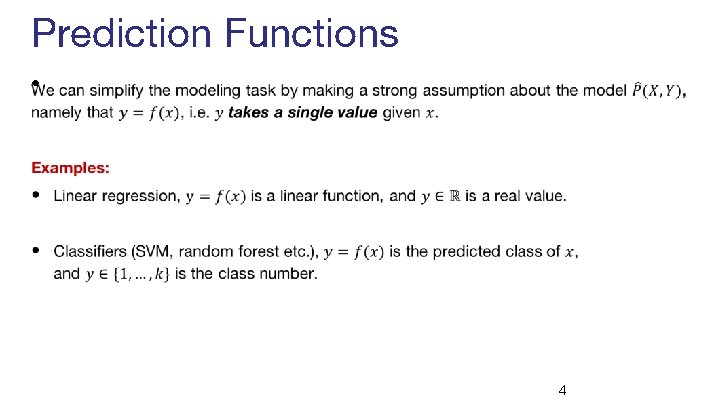
Prediction Functions • 4
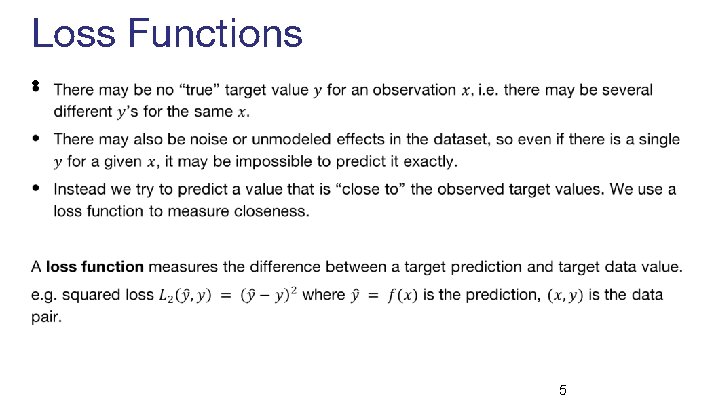
Loss Functions • 5
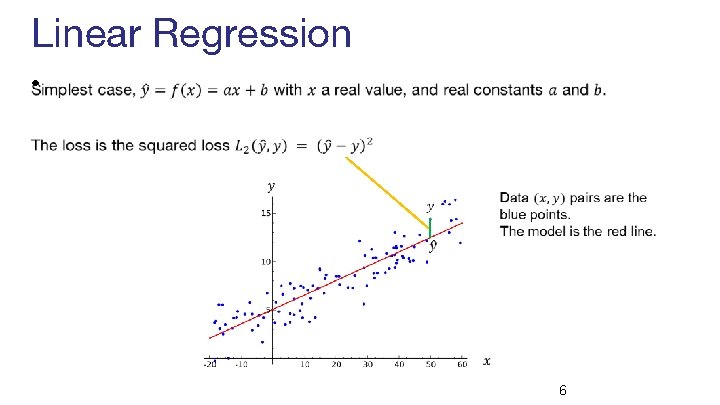
Linear Regression • 6
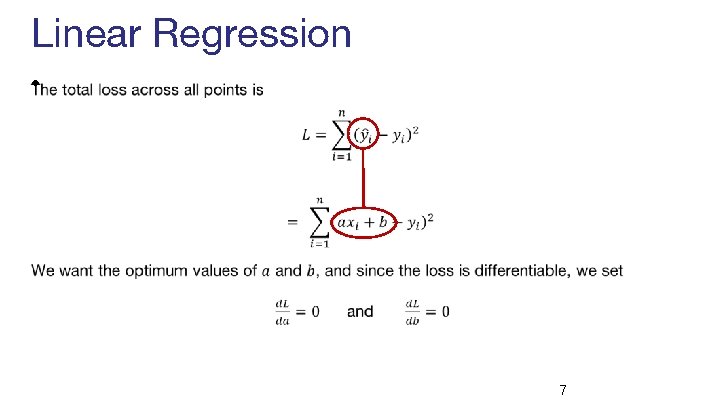
Linear Regression • 7
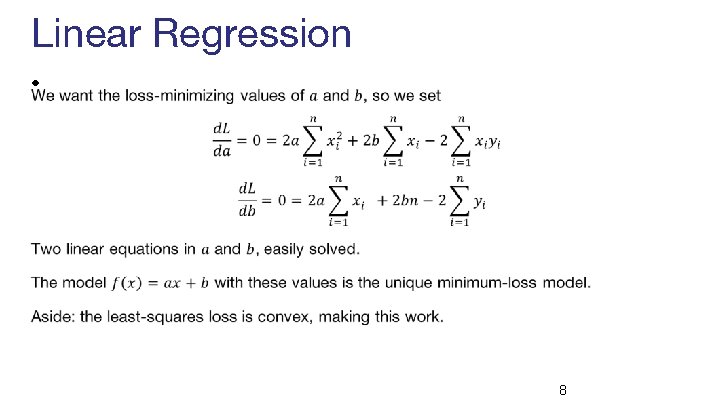
Linear Regression • 8
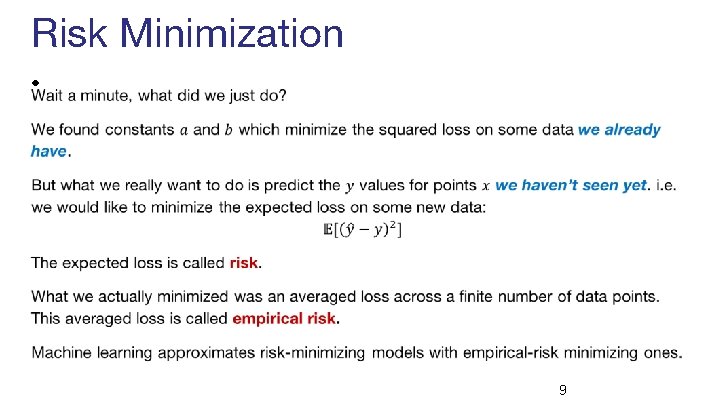
Risk Minimization • 9
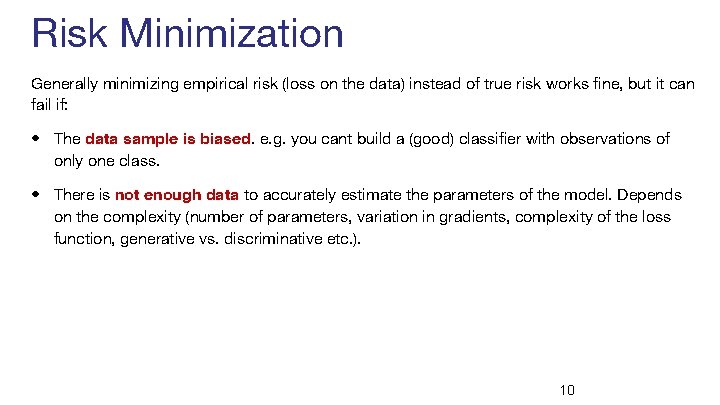
Risk Minimization Generally minimizing empirical risk (loss on the data) instead of true risk works fine, but it can fail if: • The data sample is biased. e. g. you cant build a (good) classifier with observations of only one class. • There is not enough data to accurately estimate the parameters of the model. Depends on the complexity (number of parameters, variation in gradients, complexity of the loss function, generative vs. discriminative etc. ). 10
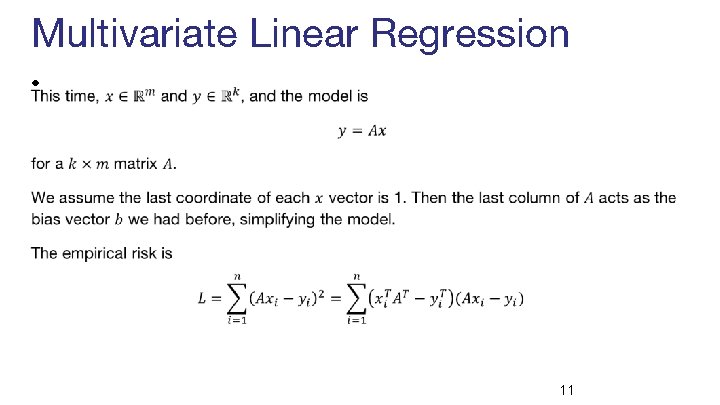
Multivariate Linear Regression • 11
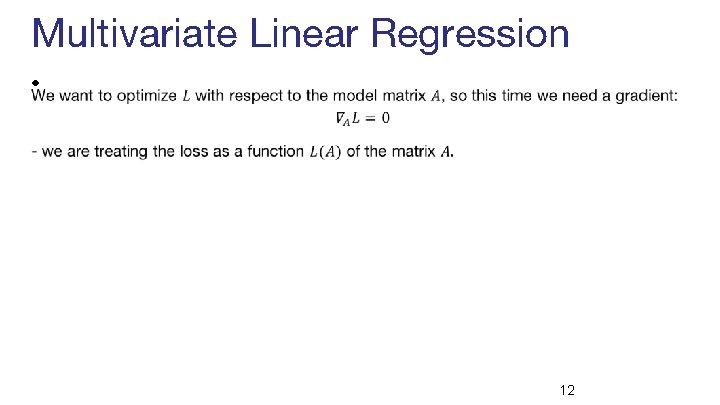
Multivariate Linear Regression • 12
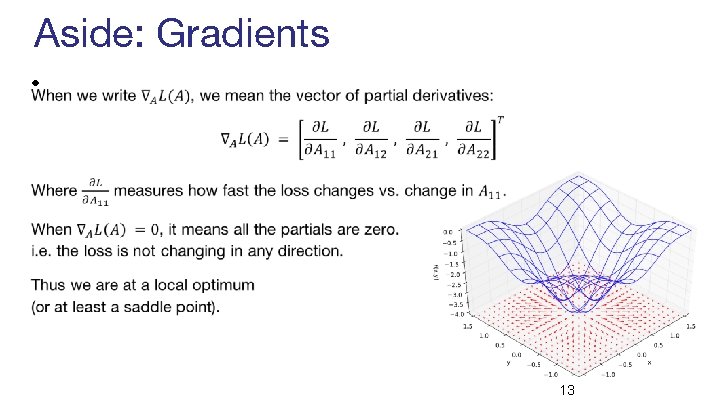
Aside: Gradients • 13
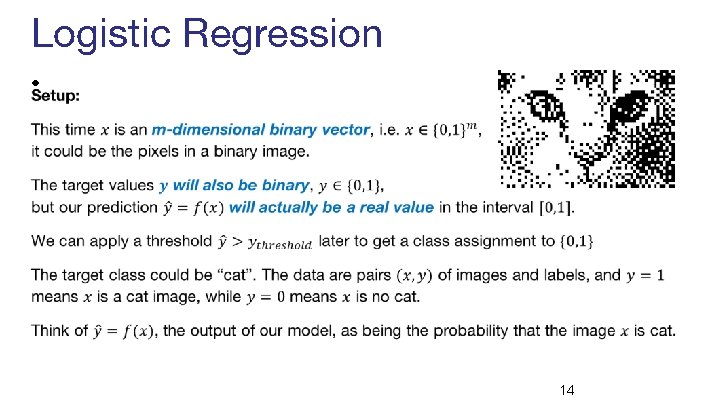
Logistic Regression • 14
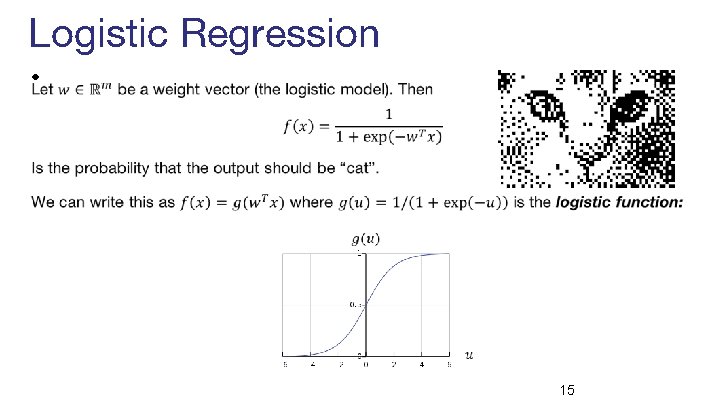
Logistic Regression • 15
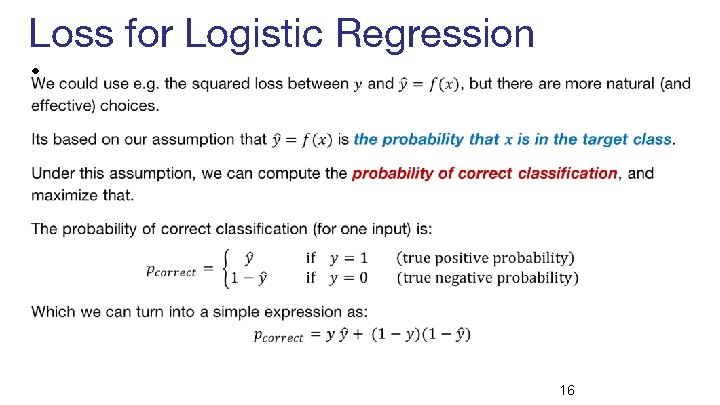
Loss for Logistic Regression • 16
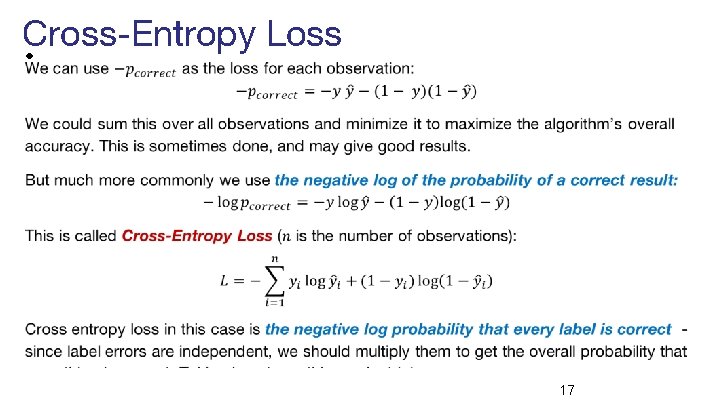
Cross-Entropy Loss • 17

Cross-Entropy Loss • 18
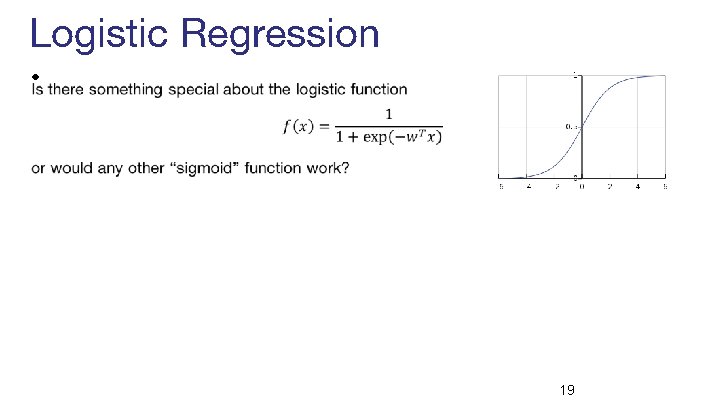
Logistic Regression • 19
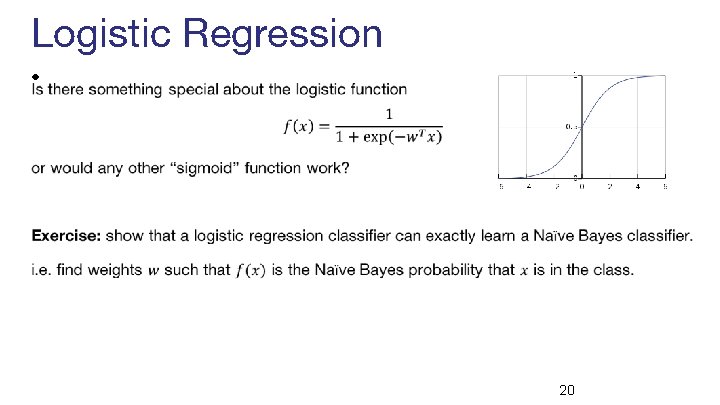
Logistic Regression • 20
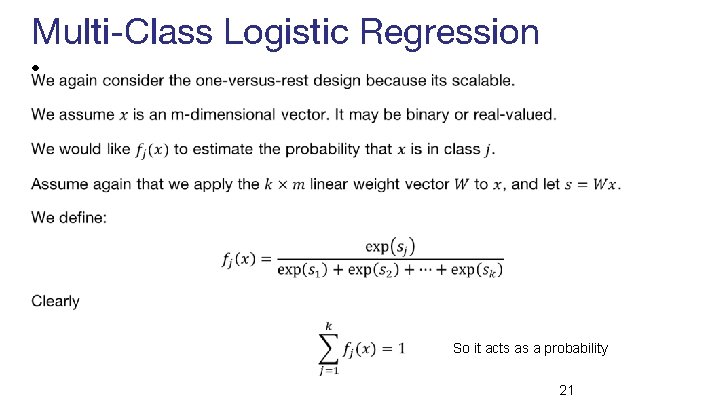
Multi-Class Logistic Regression • So it acts as a probability 21
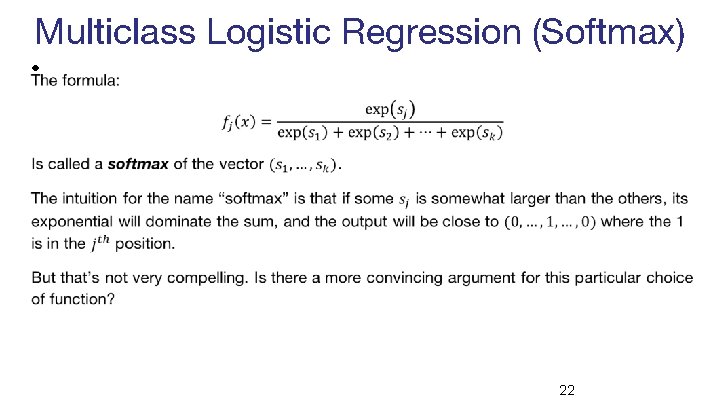
Multiclass Logistic Regression (Softmax) • 22
Optimization ● General story: how do we minimize the loss? 23
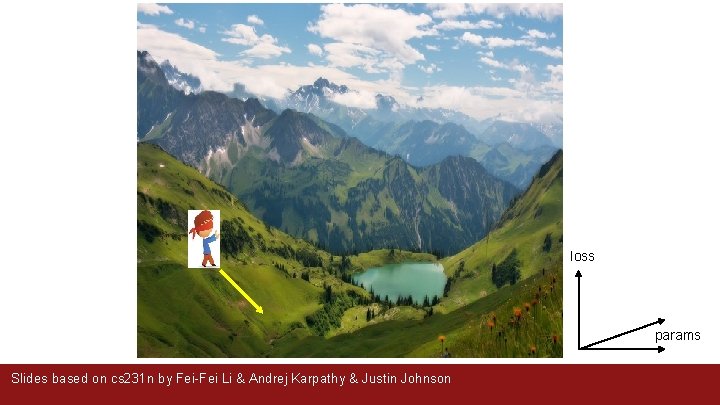
Method 1: Search Take several random steps and measure the altitude (loss). Then go to the lowest one. • Not totally crazy. This is one kind of “gradient-free” optimization. It makes sense if you can’t compute gradients for some reason (e. g. loss is not continuous or differentiable). • A slightly smarter version takes an average of the random points weighted by altitude (deeper points get higher weight). This in fact approximates the gradient. See: Salimans, Ho, Chen, Sidor and Sutskever “Evolution Strategies as a Scalable Alternative to Reinforcement Learning” ar. Xiv 1703. 03864, 2017. But it’s less efficient than gradient descent when gradients are available. 24
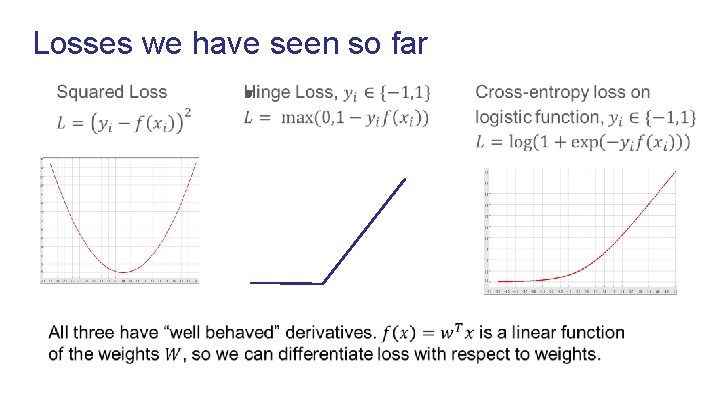
Losses we have seen so far ●
loss params Slides based on cs 231 n by Fei-Fei Li & Andrej Karpathy & Justin Johnson
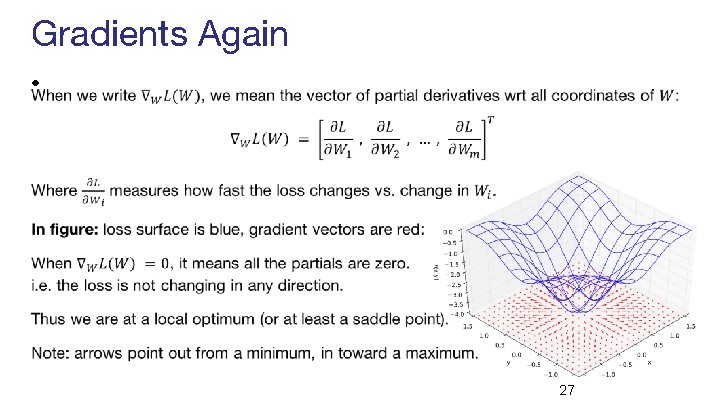
Gradients Again • 27
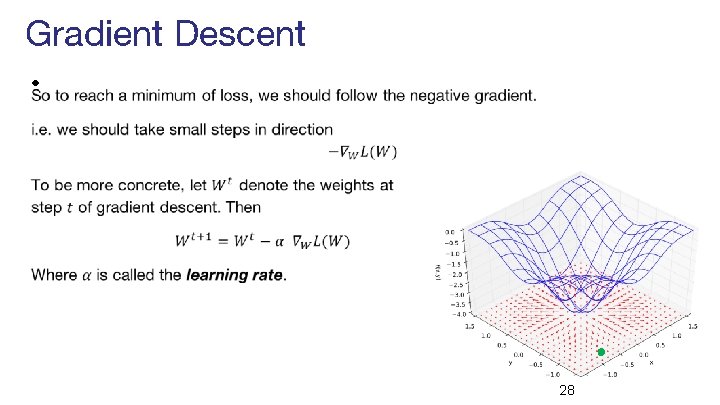
Gradient Descent • 28
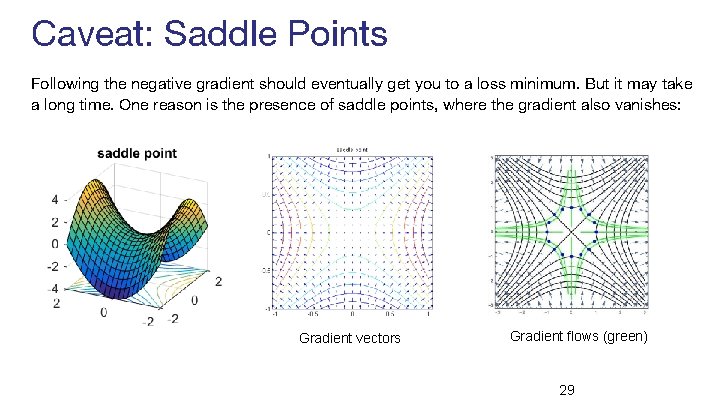
Caveat: Saddle Points Following the negative gradient should eventually get you to a loss minimum. But it may take a long time. One reason is the presence of saddle points, where the gradient also vanishes: Gradient vectors Gradient flows (green) 29
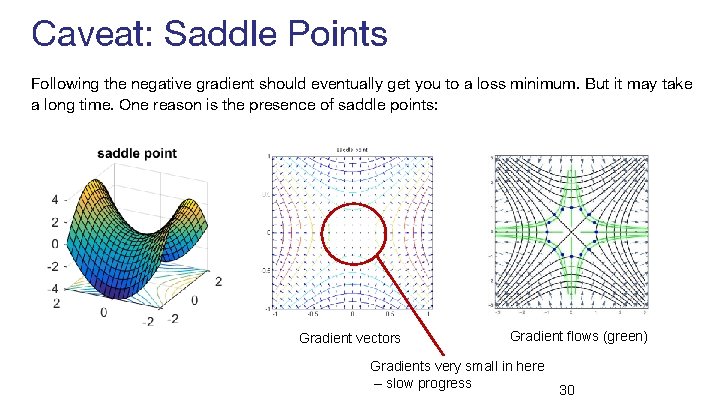
Caveat: Saddle Points Following the negative gradient should eventually get you to a loss minimum. But it may take a long time. One reason is the presence of saddle points: Gradient vectors Gradient flows (green) Gradients very small in here – slow progress 30
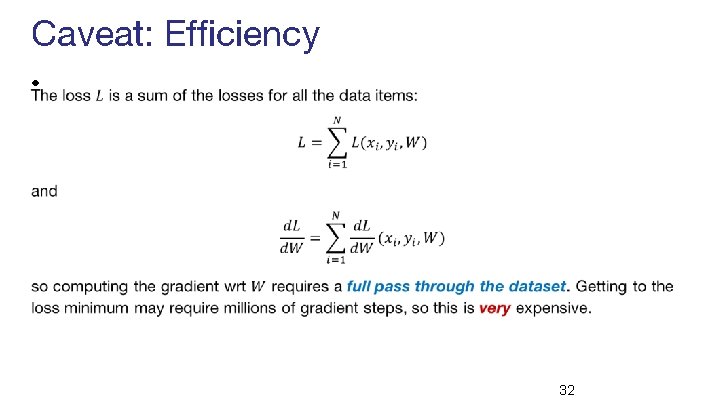
Caveat: Efficiency • 32
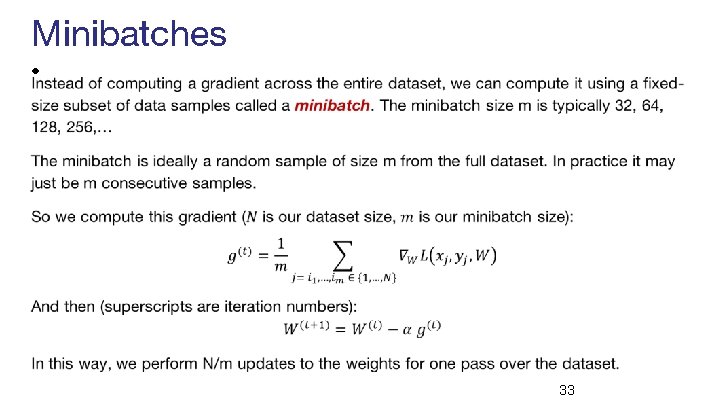
Minibatches • 33
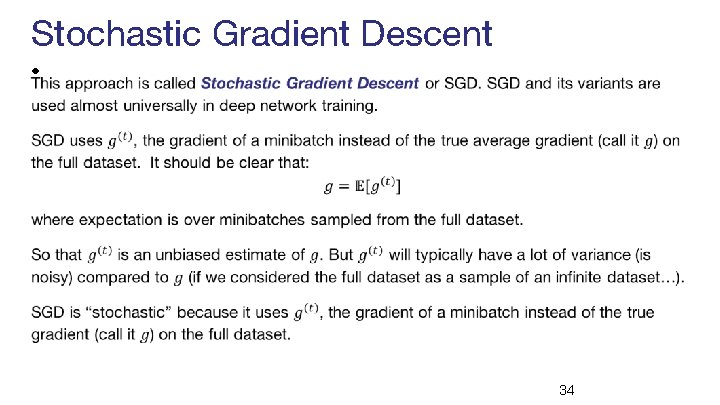
Stochastic Gradient Descent • 34
Other optimization algorithms • Simple Gradient Methods like SGD can make adequate progress to an optimum when used on minibatches of data. • Second-order methods (quasi-Newton) make much better progress toward a gradient zero, but are more expensive and unstable. They also can’t distinguish optima from saddle points, and get trapped in the latter. • Momentum: is another method to produce better effective gradients. • ADAGRAD, RMSprop: diagonally scale the gradient. ADAM diagonally scales and applies momentum. • Nesterov Momentum: can improve over vanilla SGD by gradient “look-ahead”
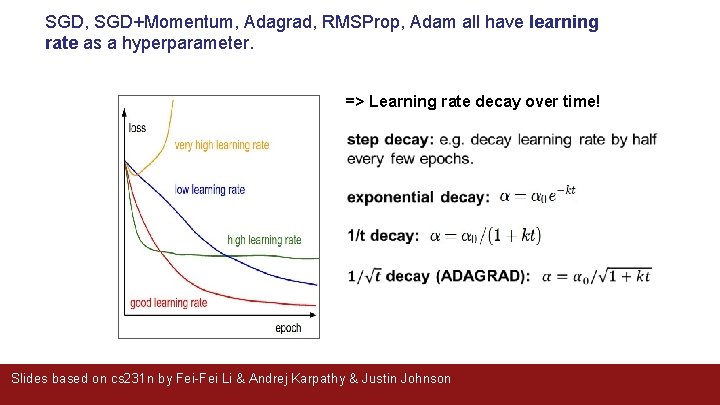
SGD, SGD+Momentum, Adagrad, RMSProp, Adam all have learning rate as a hyperparameter. => Learning rate decay over time! Slides based on cs 231 n by Fei-Fei Li & Andrej Karpathy & Justin Johnson
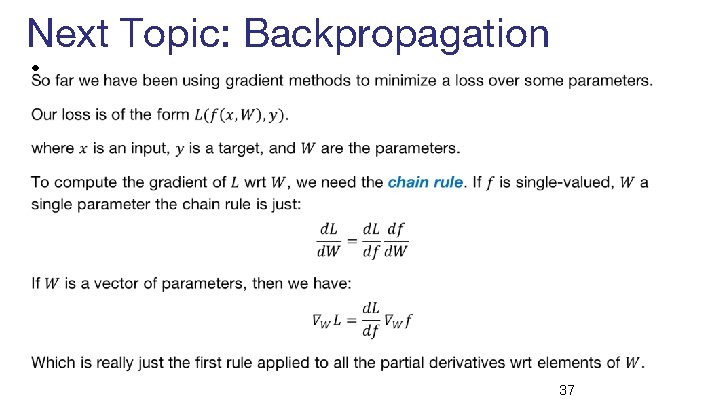
Next Topic: Backpropagation • 37
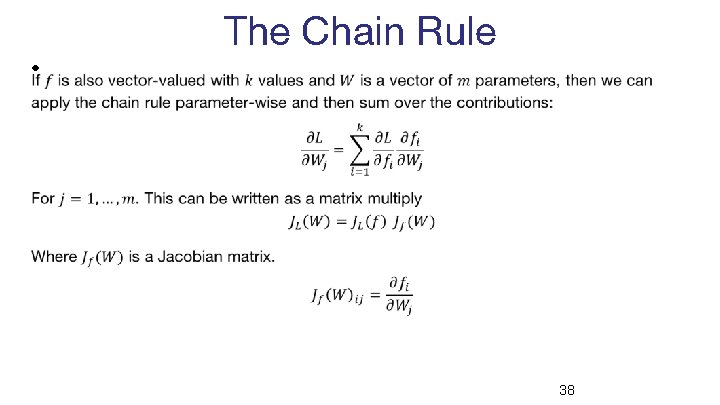
The Chain Rule • 38
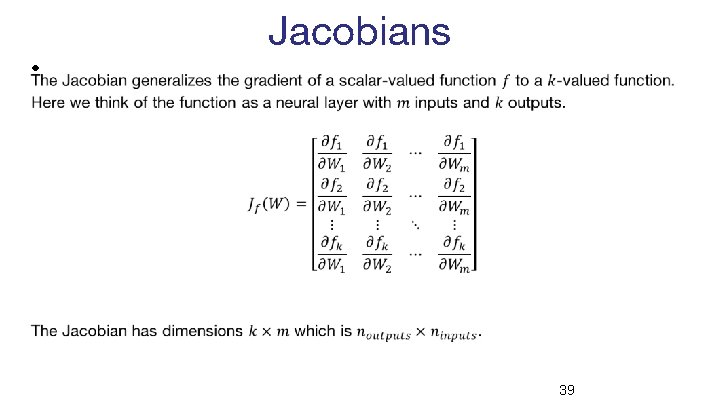
Jacobians • 39
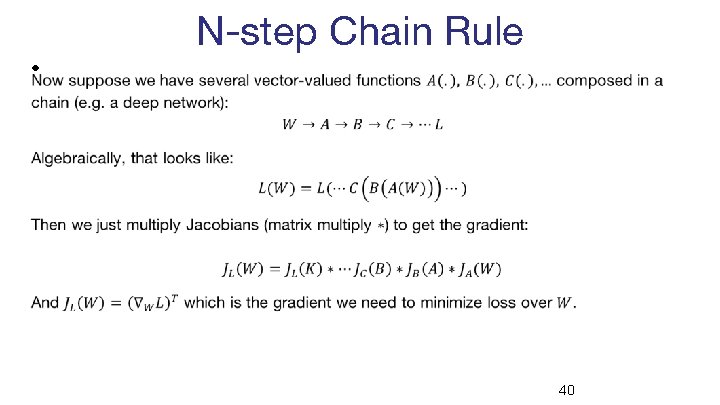
N-step Chain Rule • 40
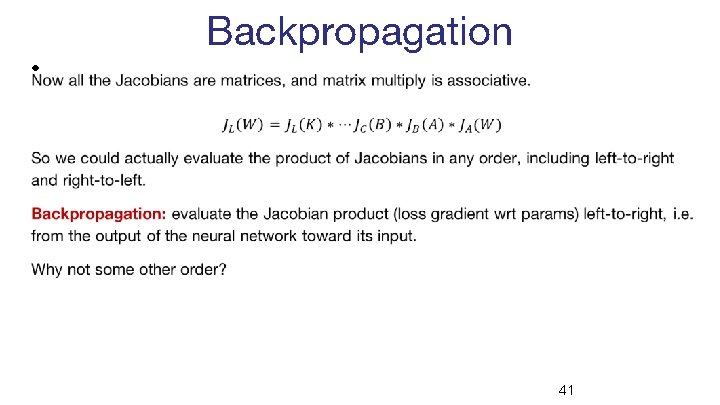
Backpropagation • 41
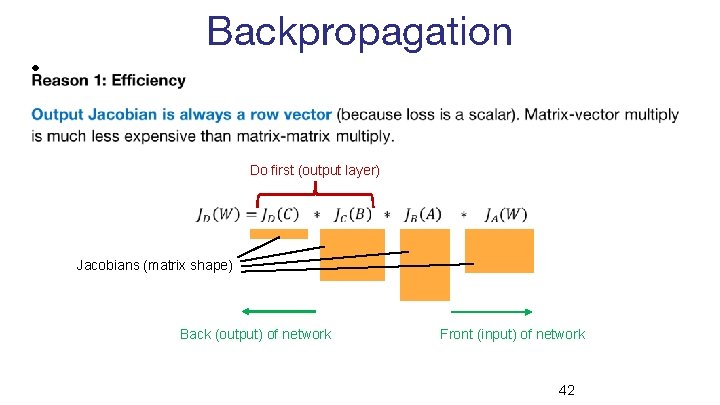
Backpropagation • Do first (output layer) Jacobians (matrix shape) Back (output) of network Front (input) of network 42
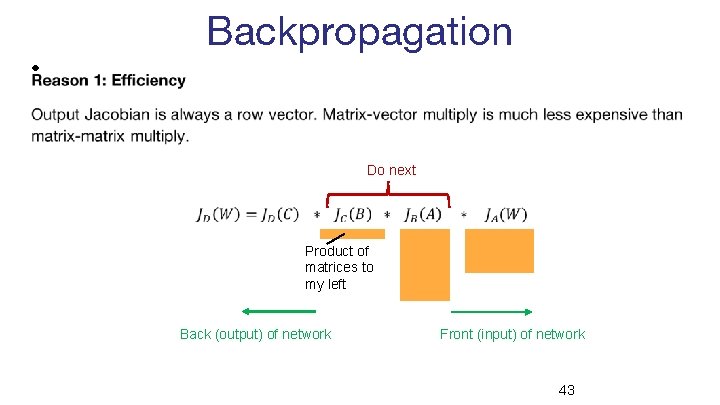
Backpropagation • Do next Product of matrices to my left Back (output) of network Front (input) of network 43
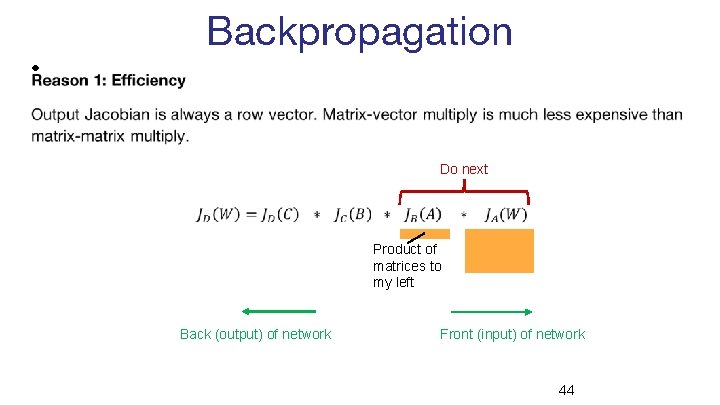
Backpropagation • Do next Product of matrices to my left Back (output) of network Front (input) of network 44
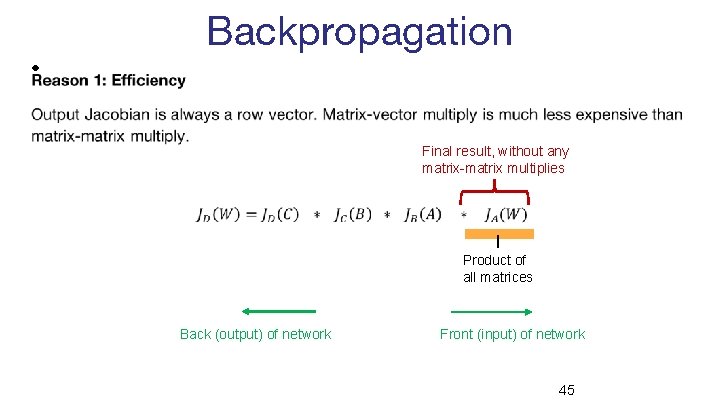
Backpropagation • Final result, without any matrix-matrix multiplies Product of all matrices Back (output) of network Front (input) of network 45
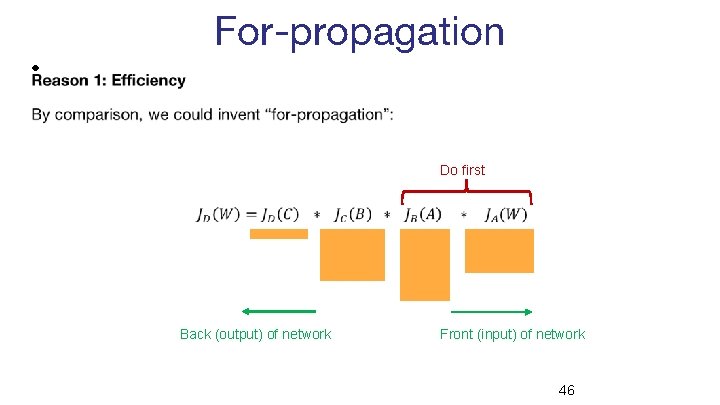
For-propagation • Do first Back (output) of network Front (input) of network 46
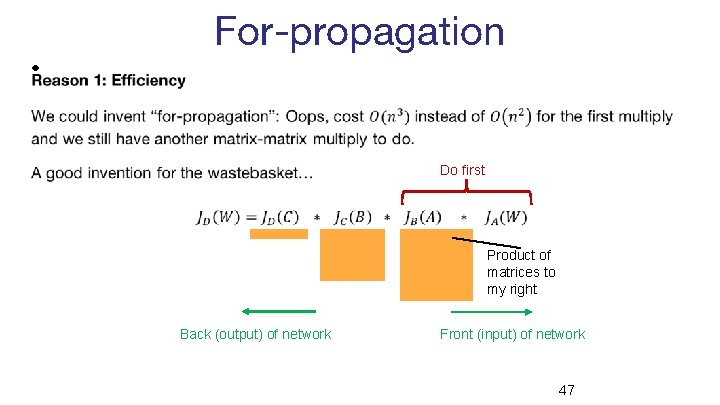
For-propagation • Do first Product of matrices to my right Back (output) of network Front (input) of network 47
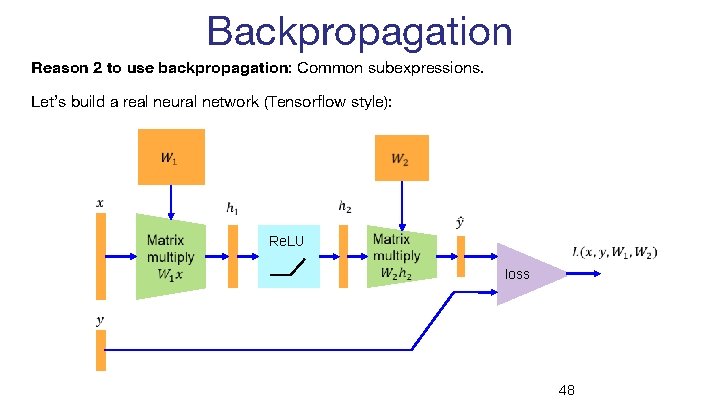
Backpropagation Reason 2 to use backpropagation: Common subexpressions. Let’s build a real neural network (Tensorflow style): Re. LU loss 48
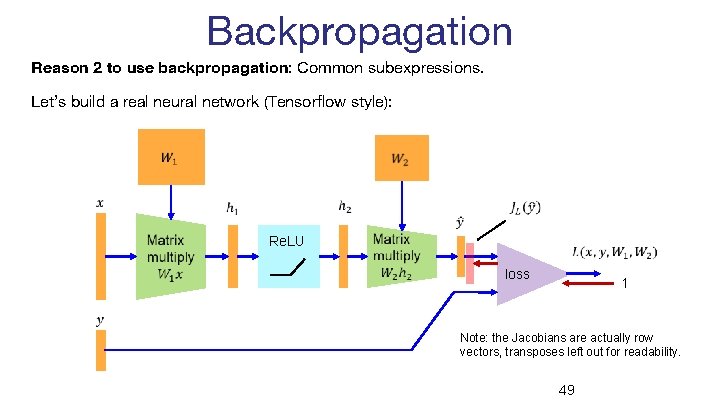
Backpropagation Reason 2 to use backpropagation: Common subexpressions. Let’s build a real neural network (Tensorflow style): Re. LU loss 1 Note: the Jacobians are actually row vectors, transposes left out for readability. 49
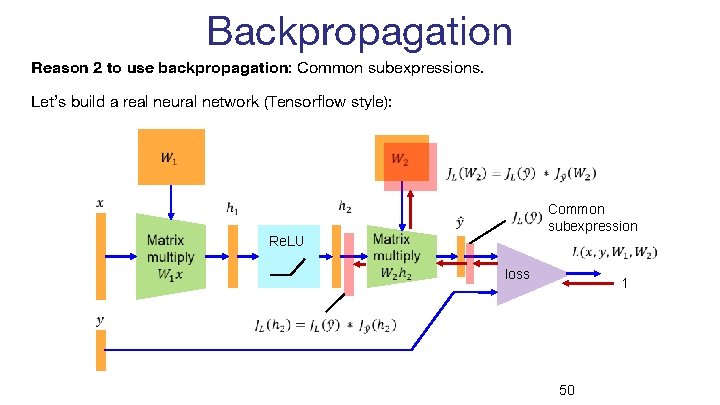
Backpropagation Reason 2 to use backpropagation: Common subexpressions. Let’s build a real neural network (Tensorflow style): Common subexpression Re. LU loss 1 50
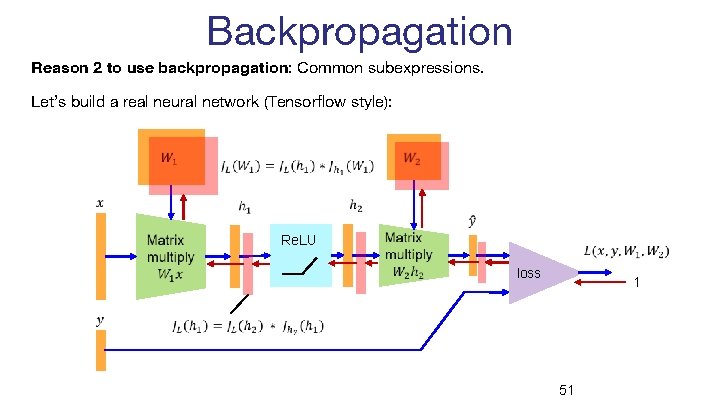
Backpropagation Reason 2 to use backpropagation: Common subexpressions. Let’s build a real neural network (Tensorflow style): Re. LU loss 1 51
Backpropagation • Compute function values (activations) from the first layer to the last. • Compute derivatives of the loss wrt other layers from the last layer to the first (backpropagation). • This only requires matrix-vector multiplies. • Paths from the loss layer to inner layers are re-used. 52
- Slides: 51