
Machine Learning and ATLAS Paolo Calafiura What is
- Slides: 22
Machine Learning and ATLAS Paolo Calafiura What is ML: data-driven statistical modeling of complex systems Why now: GPU/MIC/FPGA/Neuromorphic hardware evolution pushes us towards computing with many simple elements Applications: many! Today will focus on • Neuromorphic computing for low-power scalable tracking • Deep Neural Networks for data analysis, data movement 1 US ATLAS SCTPM
Motivating Example: Tracking During Run 4 we have to process ~60 M tracks/s (~20 x Run 2) I/O will likely constrain us to run full tracking on line, and to write only an x. AOD-like format Guesstimating x 86 cost & performance evolution, we should find x 2 -5 CPU offline, (much) more @ Point 1 Surely we can parallelize our way out of trouble? 2 US ATLAS SCTPM
Why is it so hard to do particle tracking in parallel? Algorithms: Iterative (propagation, fitting), irregular (combinatorial searches with lots of branch points) Data: sparse (hits), non-local access (B-field integration) Can ML allow us to train Neural Networks (NN) that use regular, trivial algorithms, and a naturally data parallel approach? 3 US ATLAS SCTPM
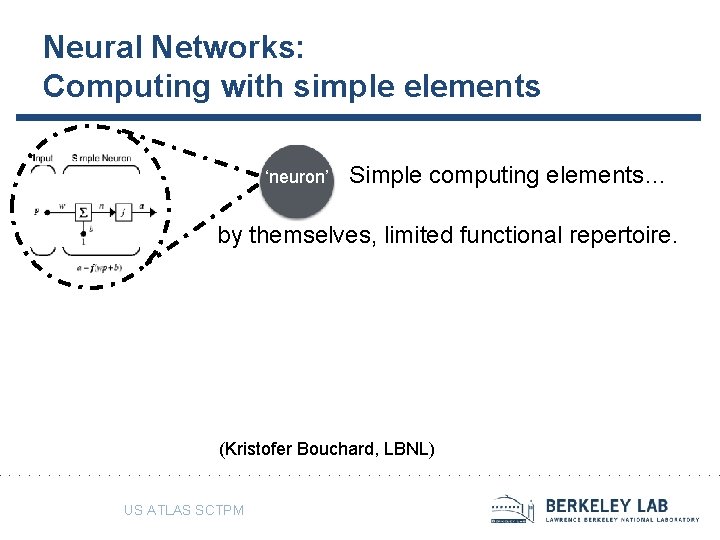
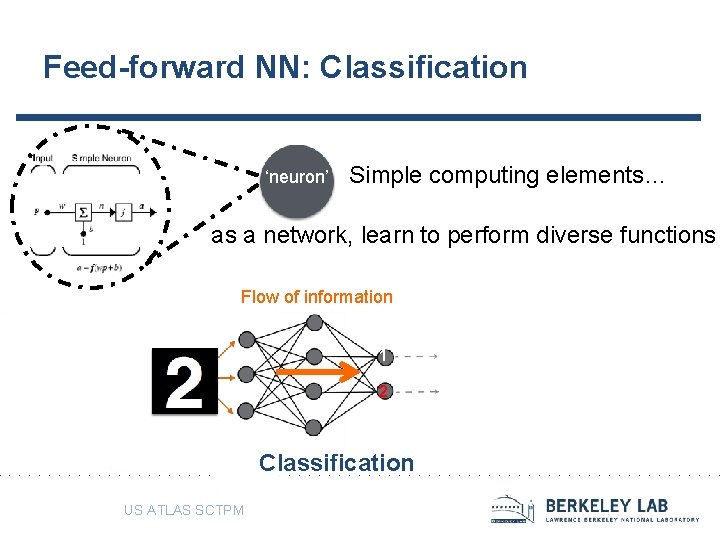
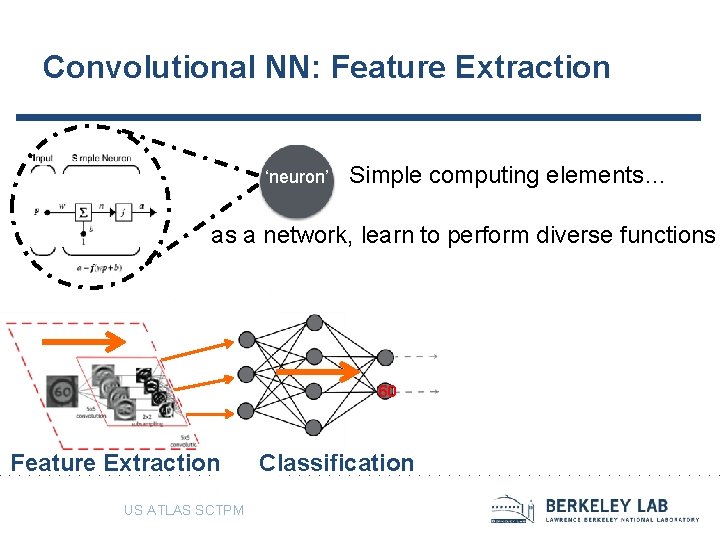
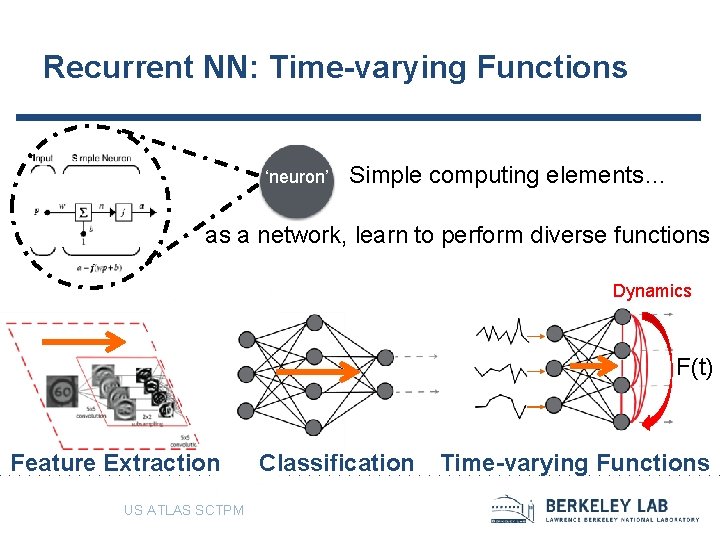
Neural Networks: Computing with simple elements ‘neuron’ Simple computing elements… by themselves, limited functional repertoire. (Kristofer Bouchard, LBNL) US ATLAS SCTPM
Feed-forward NN: Classification ‘neuron’ Simple computing elements… as a network, learn to perform diverse functions Flow of information 1 2 Classification US ATLAS SCTPM
Convolutional NN: Feature Extraction ‘neuron’ Simple computing elements… as a network, learn to perform diverse functions 60 Feature Extraction US ATLAS SCTPM Classification
Recurrent NN: Time-varying Functions ‘neuron’ Simple computing elements… as a network, learn to perform diverse functions Dynamics F(t) Feature Extraction US ATLAS SCTPM Classification Time-varying Functions
Tracking Kaggle Challenge Inspired by the very successful Higgs Challenge Competition among ML experts: • Problem: Given a list of space-points produce a list of track candidates • Figure of merit: efficiency for given fake rate and CPU budget (still under discussion) More next week during C&S plenary 8 US ATLAS SCTPM
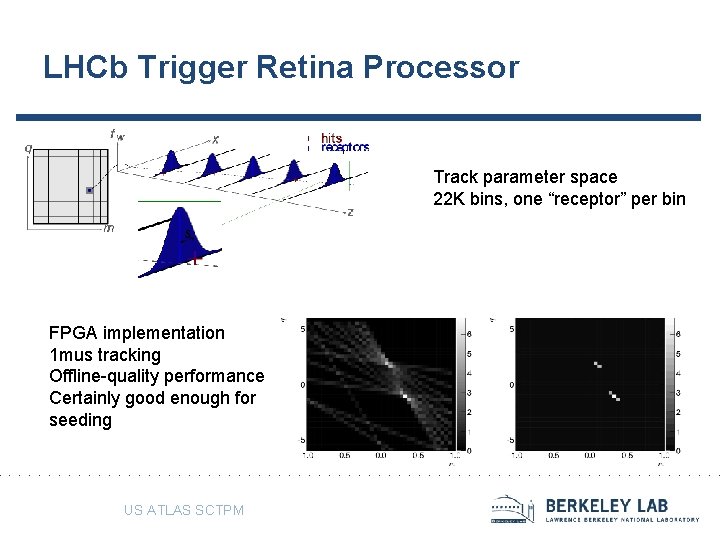
LHCb Trigger Retina Processor Track parameter space 22 K bins, one “receptor” per bin FPGA implementation 1 mus tracking Offline-quality performance Certainly good enough for seeding US ATLAS SCTPM
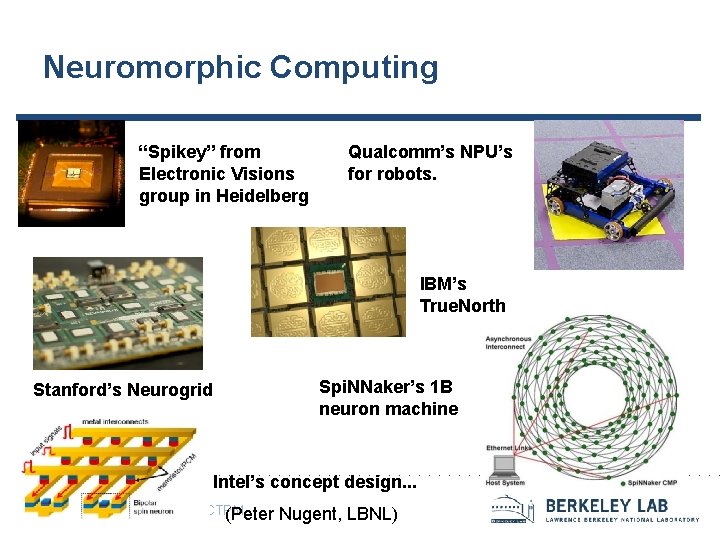
Neuromorphic Computing “Spikey” from Electronic Visions group in Heidelberg Qualcomm’s NPU’s for robots. IBM’s True. North Stanford’s Neurogrid Spi. NNaker’s 1 B neuron machine Intel’s concept design. . . US ATLAS SCTPM (Peter Nugent, LBNL)
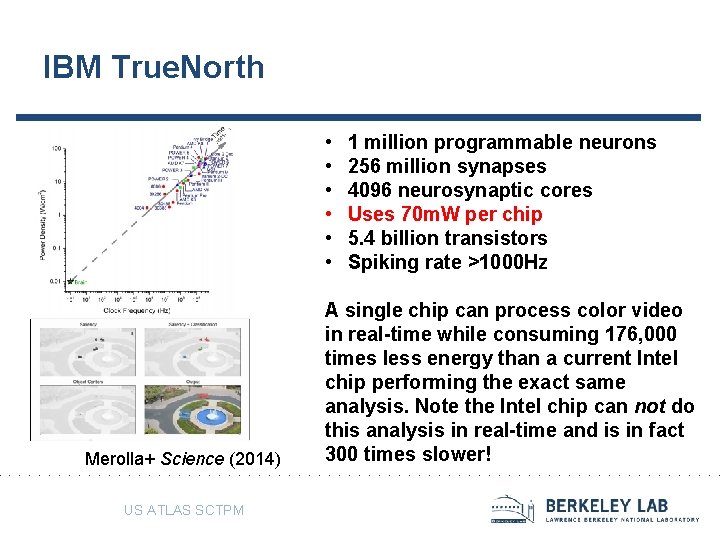
IBM True. North • • • Merolla+ Science (2014) US ATLAS SCTPM 1 million programmable neurons 256 million synapses 4096 neurosynaptic cores Uses 70 m. W per chip 5. 4 billion transistors Spiking rate >1000 Hz A single chip can process color video in real-time while consuming 176, 000 times less energy than a current Intel chip performing the exact same analysis. Note the Intel chip can not do this analysis in real-time and is in fact 300 times slower!
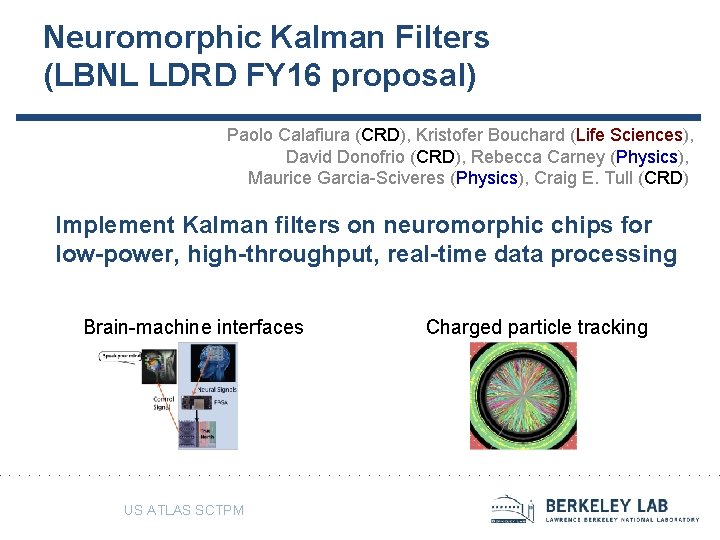
Neuromorphic Kalman Filters (LBNL LDRD FY 16 proposal) Paolo Calafiura (CRD), Kristofer Bouchard (Life Sciences), David Donofrio (CRD), Rebecca Carney (Physics), Maurice Garcia-Sciveres (Physics), Craig E. Tull (CRD) Implement Kalman filters on neuromorphic chips for low-power, high-throughput, real-time data processing Brain-machine interfaces US ATLAS SCTPM Charged particle tracking
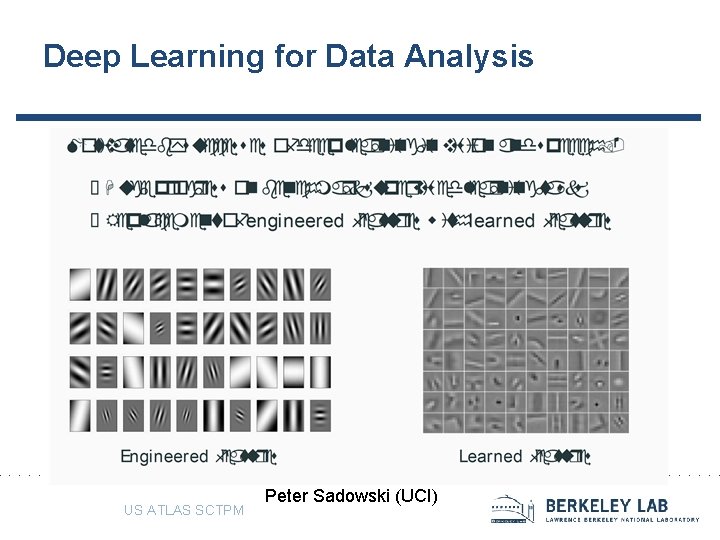
Deep Learning for Data Analysis US ATLAS SCTPM Peter Sadowski (UCI)
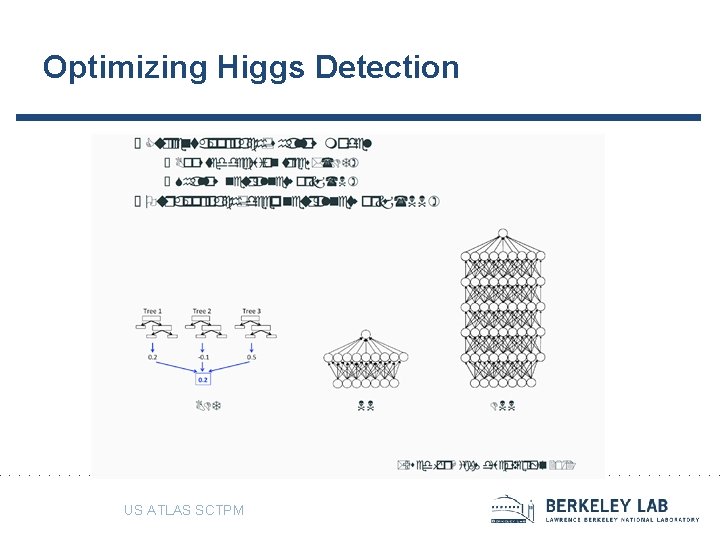
Optimizing Higgs Detection Peter Sadowski (UCI) US ATLAS SCTPM
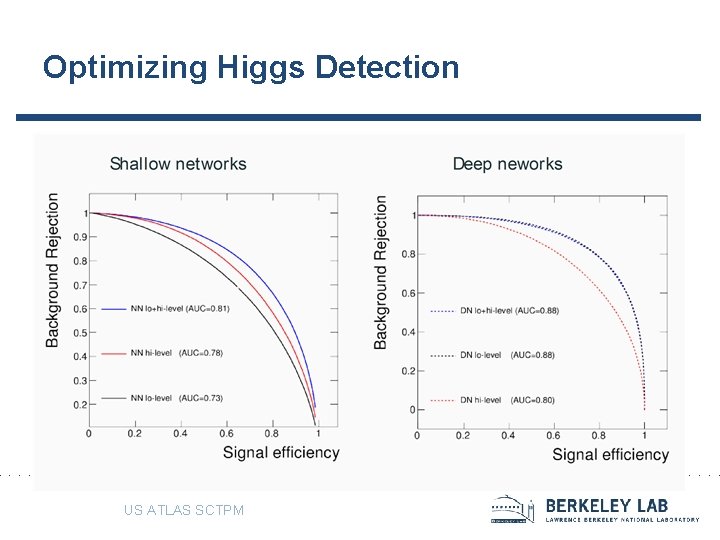
Optimizing Higgs Detection Peter Sadowski (UCI) US ATLAS SCTPM
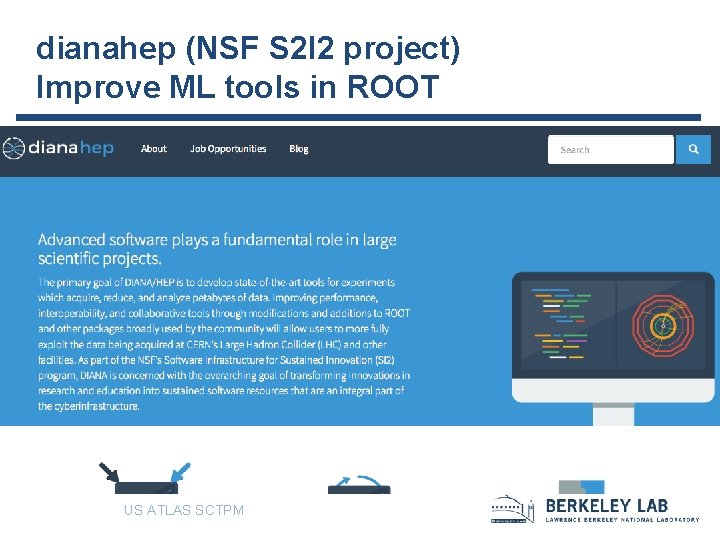
dianahep (NSF S 2 I 2 project) Improve ML tools in ROOT US ATLAS SCTPM
Machine Learning and Data Management Vast and growing amount of data on user access patterns. Combine engineered and learned features to: • Pre-fetch data and pre-allocate resources • Optimize data clustering and replication • Suggest related data sets 17 US ATLAS SCTPM
Conclusions • ML will be predominant in Run 4 analysis (wager #1) • Deep neural networks in tracking, jet reco, and clustering will allow us to exploit GPUs and FPGAs, and possible neuromorphic architectures (wager #2) • 2025 grad-students will wonder why we wrote all that C++ junk instead of training a few good networks (wager #3) ML learning experts are not formed overnight (and command high 6 -digits salaries, so tend to disappear fast) US ATLAS should start developing ML expertise by supporting pilot projects in all relevant areas, e. g. data analysis, reconstruction (tracking), and data/job management 18 US ATLAS SCTPM
Thanks • • Kristofer Bouchard David Clark Kyle Cranmer Maurice Garcia-Sciveres Peter Nugent Peter Sadowski Tracking Kaggle group … ] US ATLAS SCTPM
Backup US ATLAS SCTPM
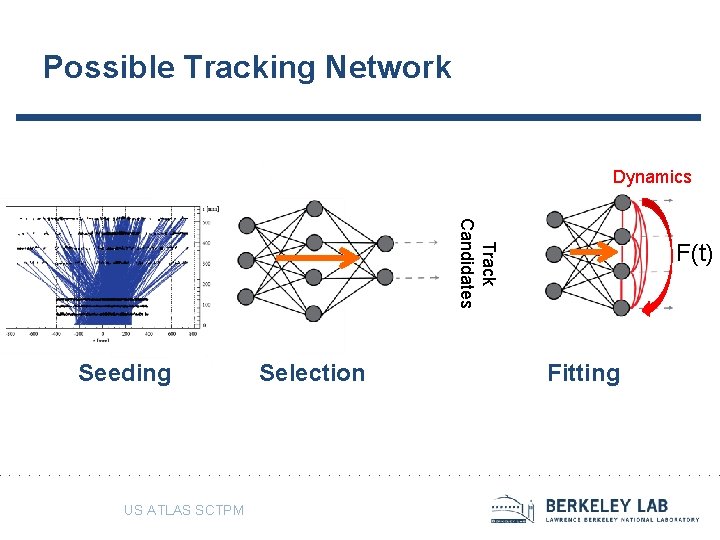
Possible Tracking Network Dynamics Track Candidates Seeding US ATLAS SCTPM Selection F(t) Fitting
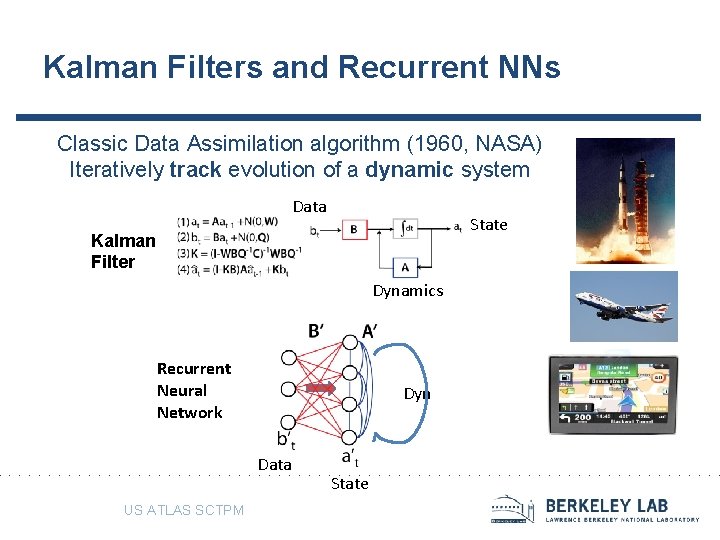
Kalman Filters and Recurrent NNs Classic Data Assimilation algorithm (1960, NASA) Iteratively track evolution of a dynamic system Data State Kalman Filter Dynamics Recurrent Neural Network Dyn Data US ATLAS SCTPM State