
Macbeth Background Slides 1 Through 21 Are needed
Macbeth Background Slides 1 Through 21 Are needed
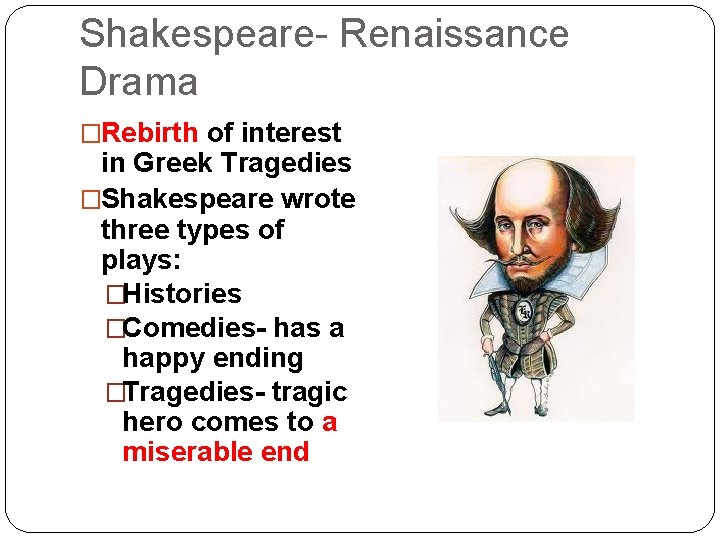
Shakespeare- Renaissance Drama �Rebirth of interest in Greek Tragedies �Shakespeare wrote three types of plays: �Histories �Comedies- has a happy ending �Tragedies- tragic hero comes to a miserable end
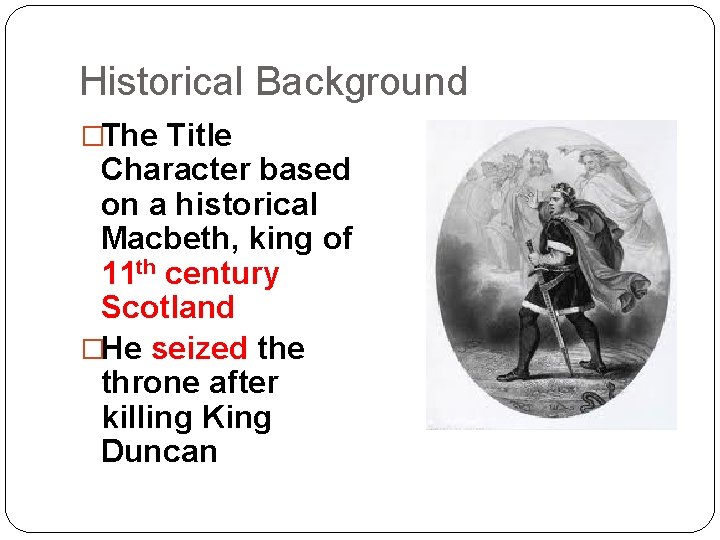
Historical Background �The Title Character based on a historical Macbeth, king of 11 th century Scotland �He seized the throne after killing King Duncan
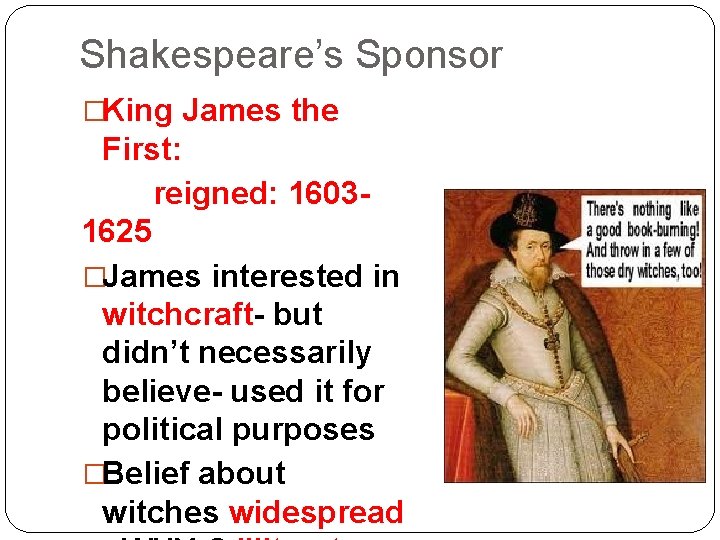
Shakespeare’s Sponsor �King James the First: reigned: 16031625 �James interested in witchcraft- but didn’t necessarily believe- used it for political purposes �Belief about witches widespread
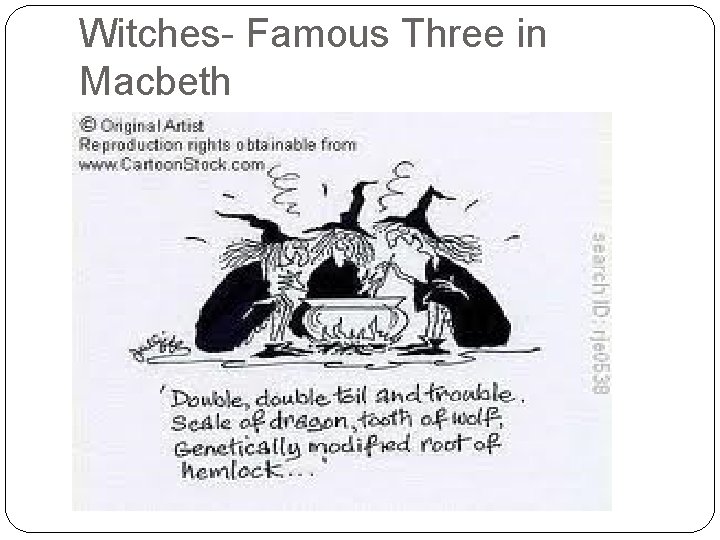
Witches- Famous Three in Macbeth
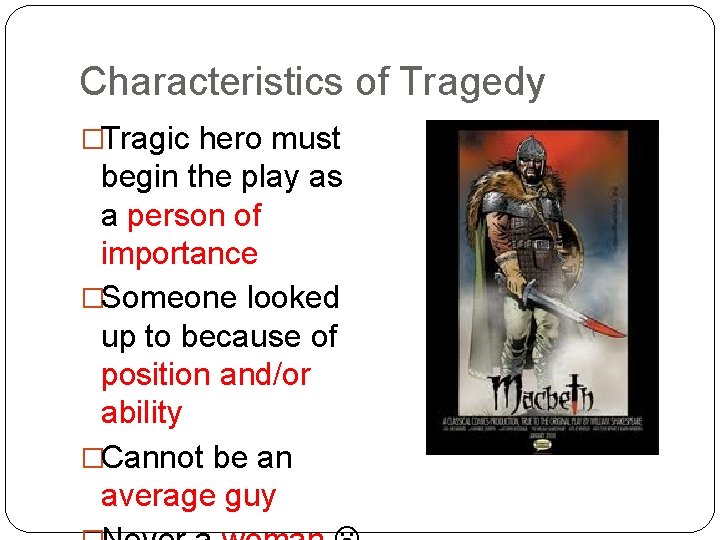
Characteristics of Tragedy �Tragic hero must begin the play as a person of importance �Someone looked up to because of position and/or ability �Cannot be an average guy
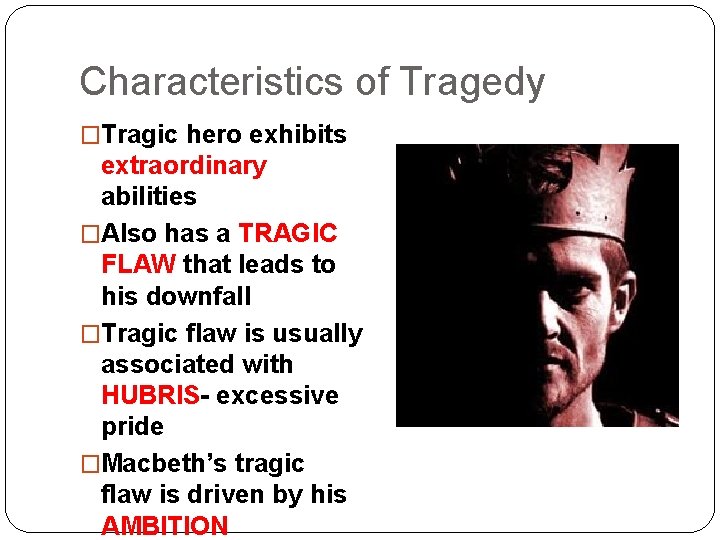
Characteristics of Tragedy �Tragic hero exhibits extraordinary abilities �Also has a TRAGIC FLAW that leads to his downfall �Tragic flaw is usually associated with HUBRIS- excessive pride �Macbeth’s tragic flaw is driven by his AMBITION
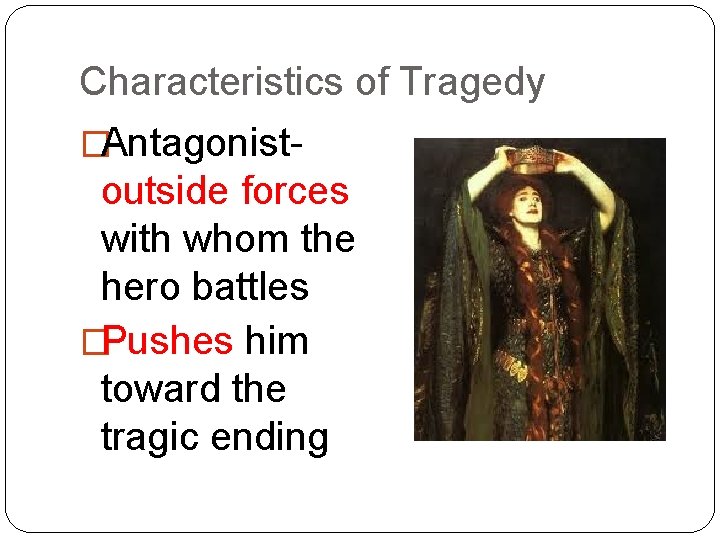
Characteristics of Tragedy �Antagonist- outside forces with whom the hero battles �Pushes him toward the tragic ending
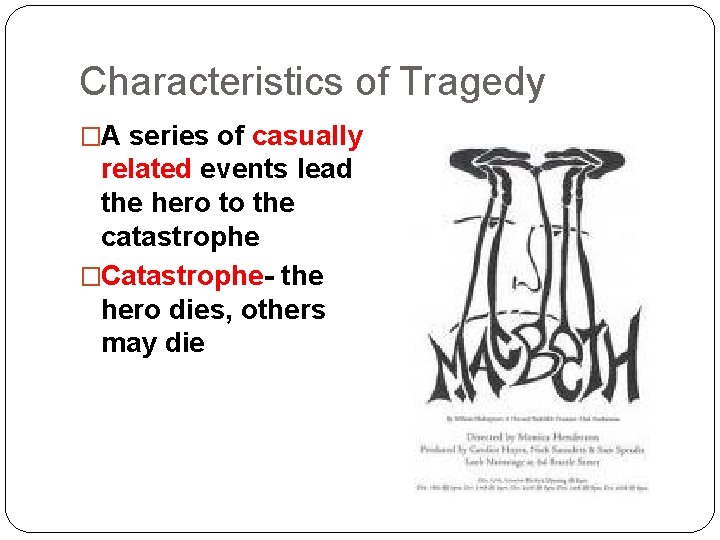
Characteristics of Tragedy �A series of casually related events lead the hero to the catastrophe �Catastrophe- the hero dies, others may die
Characteristics of Tragedy �Right before his death tragic hero must recognize his flaw – his OOPS moment �Gains the pity of the audience- they then feel fear- for if this can happen to a man so great, what does it mean for the common man.
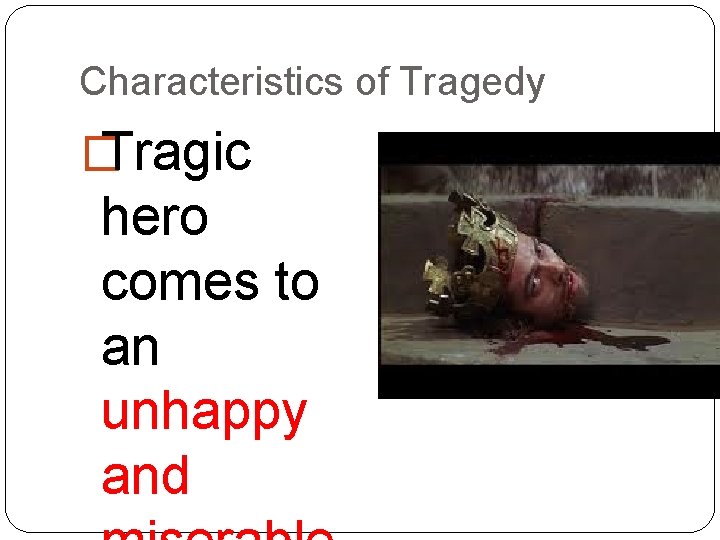
Characteristics of Tragedy � Tragic hero comes to an unhappy and
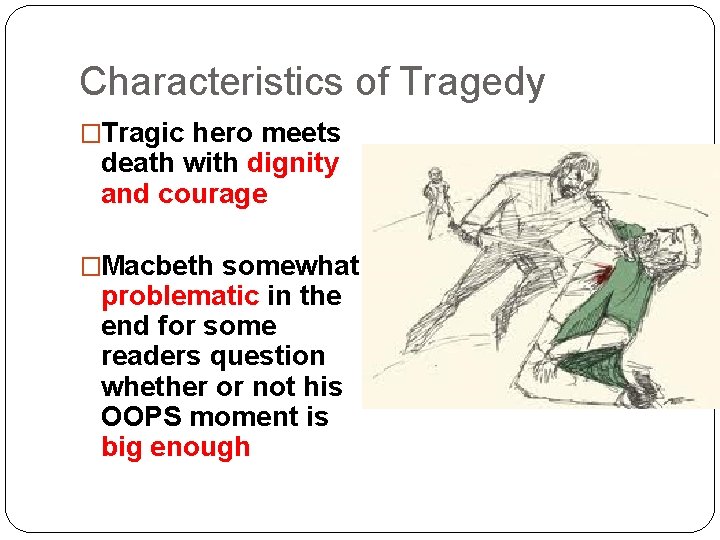
Characteristics of Tragedy �Tragic hero meets death with dignity and courage �Macbeth somewhat problematic in the end for some readers question whether or not his OOPS moment is big enough
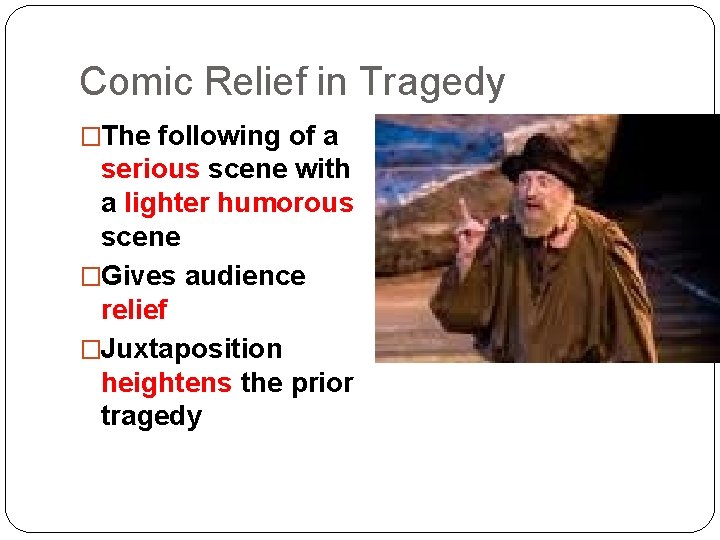
Comic Relief in Tragedy �The following of a serious scene with a lighter humorous scene �Gives audience relief �Juxtaposition heightens the prior tragedy
Terms to Remember/Review
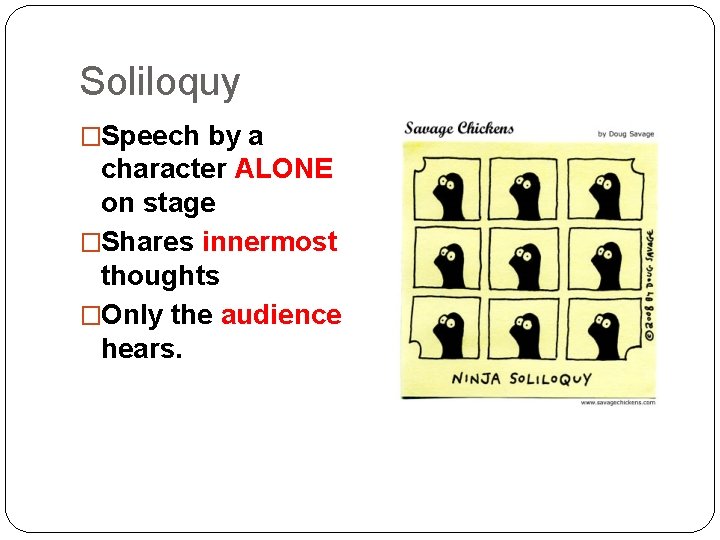
Soliloquy �Speech by a character ALONE on stage �Shares innermost thoughts �Only the audience hears.
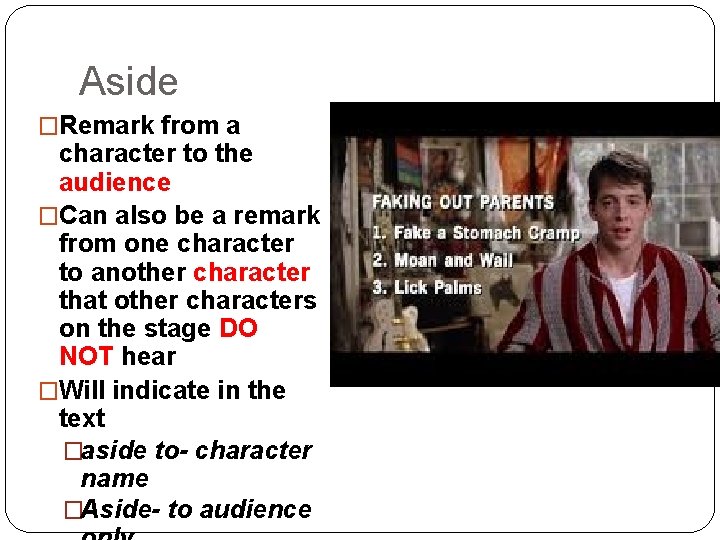
Aside �Remark from a character to the audience �Can also be a remark from one character to another character that other characters on the stage DO NOT hear �Will indicate in the text �aside to- character name �Aside- to audience
Verse Drama �Dialog consists mostly of poetry with a fixed rhyme or meter �Blank verse- unrhymed iambic pentameter �Shakespeare pulls characters out of verse to indicate something about his or her character
Motif: �a recurring object, concept, or structure in a work of literature �Blood �Sleep �Manhood �Water �Clothing �Weather �Birds �Light and Dark
Shakespeare’s Language �NOT OLD ENGLISH �Unfamiliar vocab: �Archaic word usage �Seeling=blinding �Grammatical Forms: �Choppy=chappe thou, thee, thy, thine, and thyself instead of you. �Outdated Verb forms: �Art for are �Cometh for comes d �Use the marginal notes in textbook to help with meaning. �He coined words-
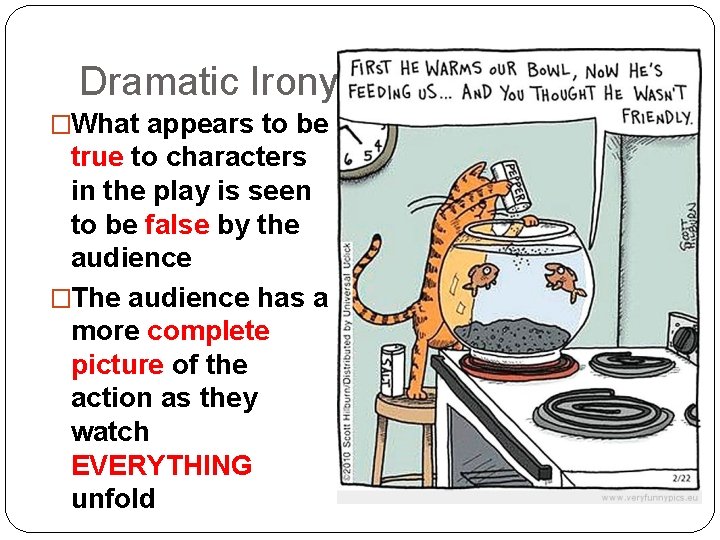
Dramatic Irony �What appears to be true to characters in the play is seen to be false by the audience �The audience has a more complete picture of the action as they watch EVERYTHING unfold
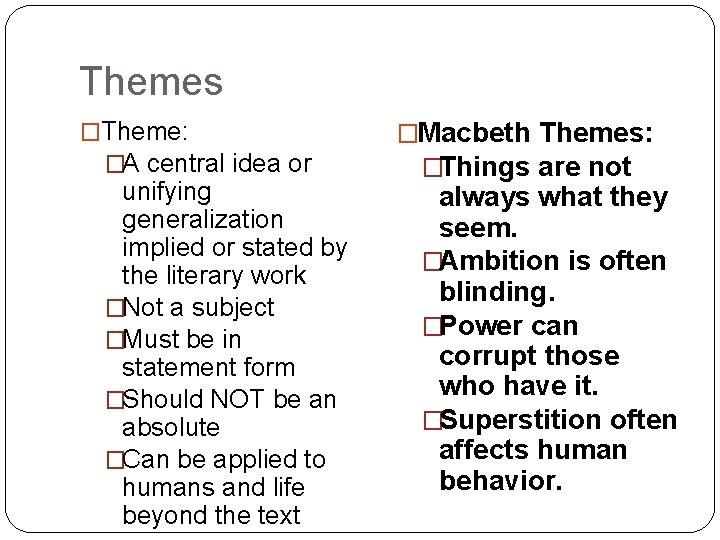
Themes �Theme: �A central idea or unifying generalization implied or stated by the literary work �Not a subject �Must be in statement form �Should NOT be an absolute �Can be applied to humans and life beyond the text �Macbeth Themes: �Things are not always what they seem. �Ambition is often blinding. �Power can corrupt those who have it. �Superstition often affects human behavior.
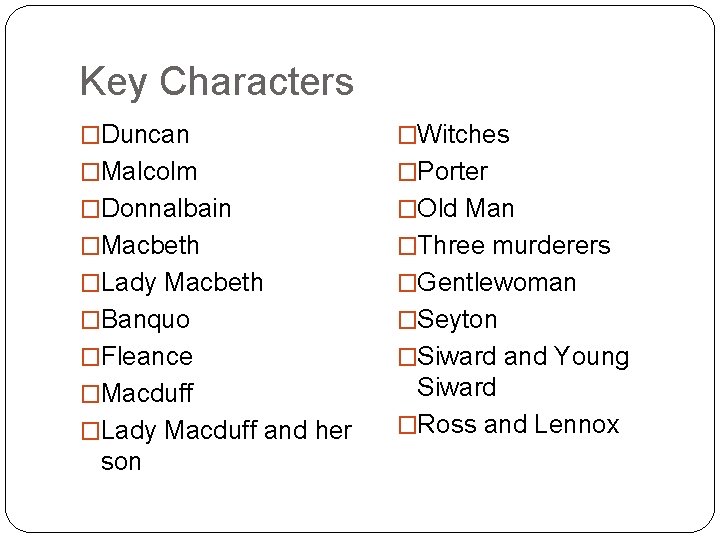
Key Characters �Duncan �Witches �Malcolm �Porter �Donnalbain �Old Man �Macbeth �Three murderers �Lady Macbeth �Gentlewoman �Banquo �Seyton �Fleance �Siward and Young �Macduff Siward �Ross and Lennox �Lady Macduff and her son
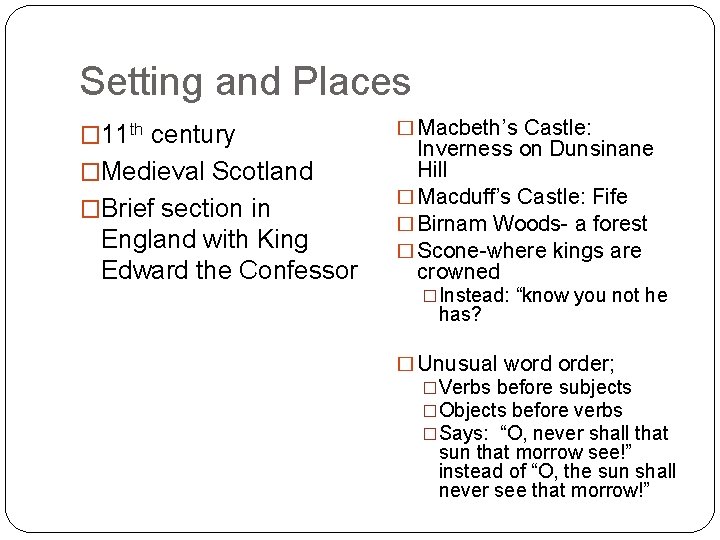
Setting and Places � 11 th century �Medieval Scotland �Brief section in England with King Edward the Confessor � Macbeth’s Castle: Inverness on Dunsinane Hill � Macduff’s Castle: Fife � Birnam Woods- a forest � Scone-where kings are crowned �Instead: “know you not he has? � Unusual word order; �Verbs before subjects �Objects before verbs �Says: “O, never shall that sun that morrow see!” instead of “O, the sun shall never see that morrow!”

- Slides: 24