
Macbeth Act 1 Scene 7 LO To analyse
Macbeth: Act 1, Scene 7 LO: To analyse the conflict between Macbeth and Lady Macbeth.
Act 1, Scene 7 � This scene is set just before the murder of King Duncan and Lady Macbeth convinces Macbeth to go through with the murder.
What is a soliloquy? �A soliloquy is when a character speaks their inner thoughts aloud. � The audience is aware of what they are saying but the other characters are not. � Why do you think this technique is used? � Do you think it is effective?
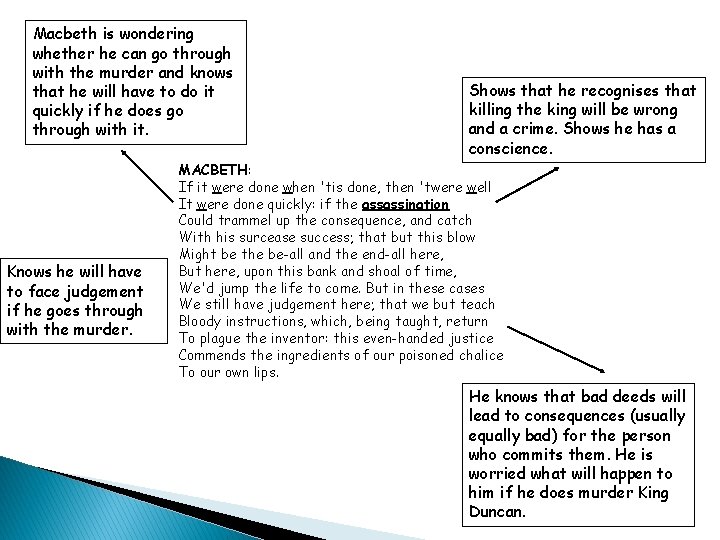
Macbeth is wondering whether he can go through with the murder and knows that he will have to do it quickly if he does go through with it. Knows he will have to face judgement if he goes through with the murder. Shows that he recognises that killing the king will be wrong and a crime. Shows he has a conscience. MACBETH: If it were done when 'tis done, then 'twere well It were done quickly: if the assassination Could trammel up the consequence, and catch With his surcease success; that but this blow Might be the be-all and the end-all here, But here, upon this bank and shoal of time, We'd jump the life to come. But in these cases We still have judgement here; that we but teach Bloody instructions, which, being taught, return To plague the inventor: this even-handed justice Commends the ingredients of our poisoned chalice To our own lips. He knows that bad deeds will lead to consequences (usually equally bad) for the person who commits them. He is worried what will happen to him if he does murder King Duncan.
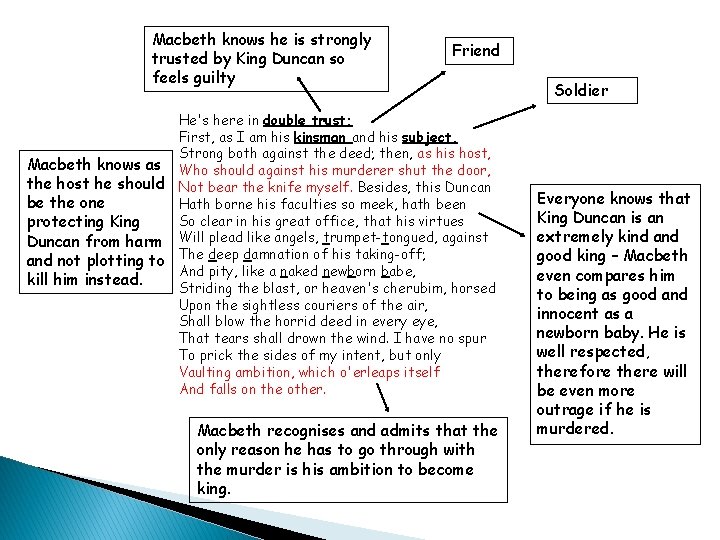
Macbeth knows he is strongly trusted by King Duncan so feels guilty Friend He's here in double trust; First, as I am his kinsman and his subject, Strong both against the deed; then, as his host, Macbeth knows as Who should against his murderer shut the door, the host he should Not bear the knife myself. Besides, this Duncan be the one Hath borne his faculties so meek, hath been So clear in his great office, that his virtues protecting King Duncan from harm Will plead like angels, trumpet-tongued, against and not plotting to The deep damnation of his taking-off; And pity, like a naked newborn babe, kill him instead. Striding the blast, or heaven's cherubim, horsed Upon the sightless couriers of the air, Shall blow the horrid deed in every eye, That tears shall drown the wind. I have no spur To prick the sides of my intent, but only Vaulting ambition, which o'erleaps itself And falls on the other. Macbeth recognises and admits that the only reason he has to go through with the murder is his ambition to become king. Soldier Everyone knows that King Duncan is an extremely kind and good king – Macbeth even compares him to being as good and innocent as a newborn baby. He is well respected, therefore there will be even more outrage if he is murdered.
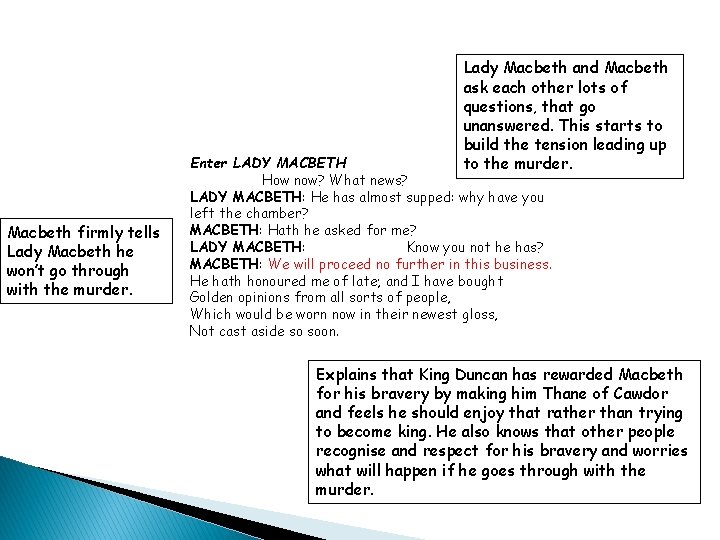
Lady Macbeth and Macbeth ask each other lots of questions, that go unanswered. This starts to build the tension leading up to the murder. Macbeth firmly tells Lady Macbeth he won’t go through with the murder. Enter LADY MACBETH How now? What news? LADY MACBETH: He has almost supped: why have you left the chamber? MACBETH: Hath he asked for me? LADY MACBETH: Know you not he has? MACBETH: We will proceed no further in this business. He hath honoured me of late; and I have bought Golden opinions from all sorts of people, Which would be worn now in their newest gloss, Not cast aside so soon. Explains that King Duncan has rewarded Macbeth for his bravery by making him Thane of Cawdor and feels he should enjoy that rather than trying to become king. He also knows that other people recognise and respect for his bravery and worries what will happen if he goes through with the murder.
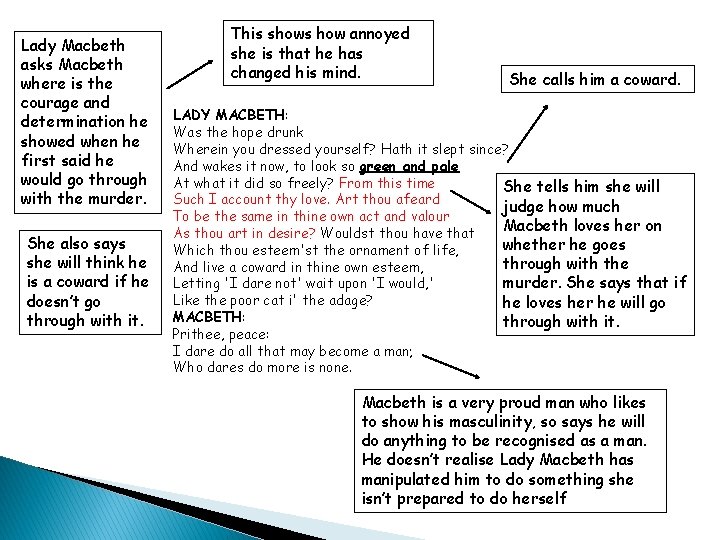
Lady Macbeth asks Macbeth where is the courage and determination he showed when he first said he would go through with the murder. She also says she will think he is a coward if he doesn’t go through with it. This shows how annoyed she is that he has changed his mind. She calls him a coward. LADY MACBETH: Was the hope drunk Wherein you dressed yourself? Hath it slept since? And wakes it now, to look so green and pale At what it did so freely? From this time She tells him she will Such I account thy love. Art thou afeard judge how much To be the same in thine own act and valour Macbeth loves her on As thou art in desire? Wouldst thou have that whether he goes Which thou esteem'st the ornament of life, through with the And live a coward in thine own esteem, Letting 'I dare not' wait upon 'I would, ' murder. She says that if Like the poor cat i' the adage? he loves her he will go MACBETH: through with it. Prithee, peace: I dare do all that may become a man; Who dares do more is none. Macbeth is a very proud man who likes to show his masculinity, so says he will do anything to be recognised as a man. He doesn’t realise Lady Macbeth has manipulated him to do something she isn’t prepared to do herself
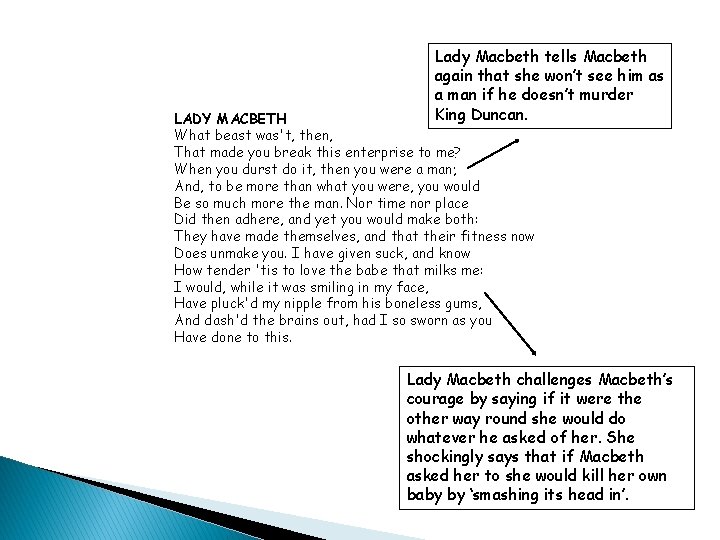
Lady Macbeth tells Macbeth again that she won’t see him as a man if he doesn’t murder King Duncan. LADY MACBETH What beast was't, then, That made you break this enterprise to me? When you durst do it, then you were a man; And, to be more than what you were, you would Be so much more the man. Nor time nor place Did then adhere, and yet you would make both: They have made themselves, and that their fitness now Does unmake you. I have given suck, and know How tender 'tis to love the babe that milks me: I would, while it was smiling in my face, Have pluck'd my nipple from his boneless gums, And dash'd the brains out, had I so sworn as you Have done to this. Lady Macbeth challenges Macbeth’s courage by saying if it were the other way round she would do whatever he asked of her. She shockingly says that if Macbeth asked her to she would kill her own baby by ‘smashing its head in’.
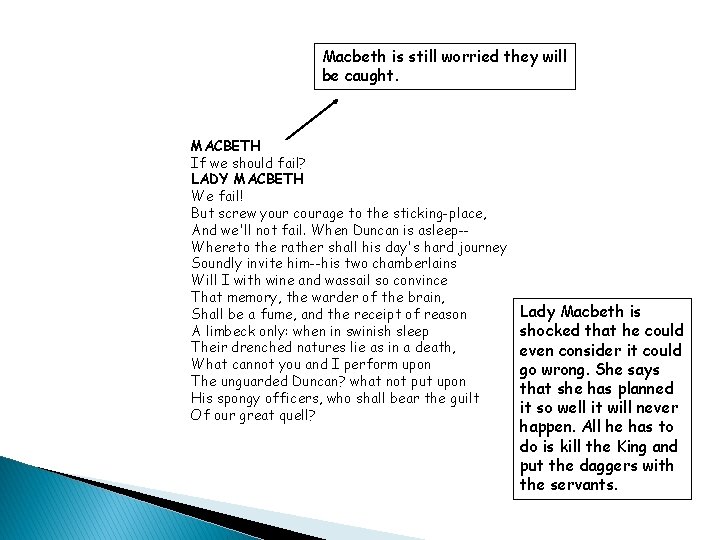
Macbeth is still worried they will be caught. MACBETH If we should fail? LADY MACBETH We fail! But screw your courage to the sticking-place, And we'll not fail. When Duncan is asleep-Whereto the rather shall his day's hard journey Soundly invite him--his two chamberlains Will I with wine and wassail so convince That memory, the warder of the brain, Shall be a fume, and the receipt of reason A limbeck only: when in swinish sleep Their drenched natures lie as in a death, What cannot you and I perform upon The unguarded Duncan? what not put upon His spongy officers, who shall bear the guilt Of our great quell? Lady Macbeth is shocked that he could even consider it could go wrong. She says that she has planned it so well it will never happen. All he has to do is kill the King and put the daggers with the servants.
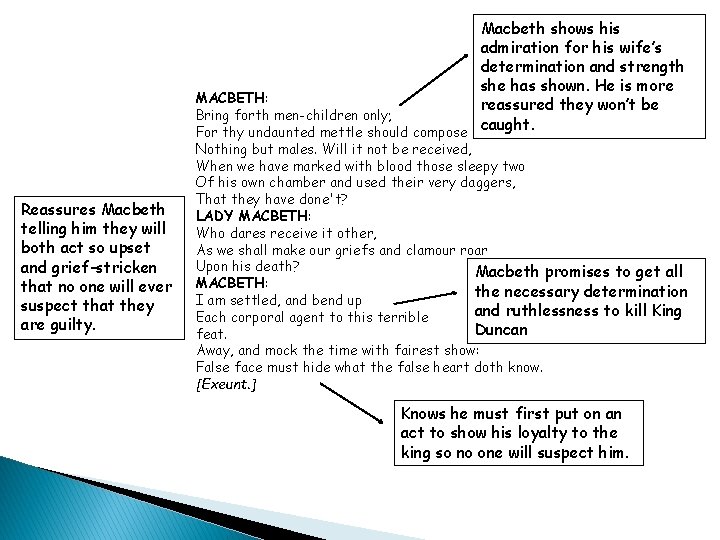
Macbeth shows his admiration for his wife’s determination and strength she has shown. He is more MACBETH: reassured they won’t be Bring forth men-children only; caught. For thy undaunted mettle should compose Reassures Macbeth telling him they will both act so upset and grief-stricken that no one will ever suspect that they are guilty. Nothing but males. Will it not be received, When we have marked with blood those sleepy two Of his own chamber and used their very daggers, That they have done't? LADY MACBETH: Who dares receive it other, As we shall make our griefs and clamour roar Upon his death? Macbeth promises to get all MACBETH: the necessary determination I am settled, and bend up and ruthlessness to kill King Each corporal agent to this terrible Duncan feat. Away, and mock the time with fairest show: False face must hide what the false heart doth know. [Exeunt. ] Knows he must first put on an act to show his loyalty to the king so no one will suspect him.

Macbeth
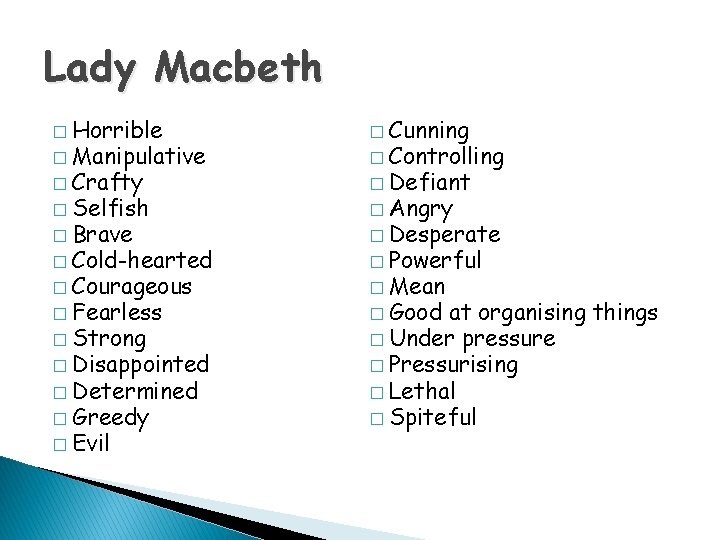
Lady Macbeth � Horrible � Cunning � Crafty � Defiant � Manipulative � Selfish � Brave � Cold-hearted � Courageous � Fearless � Strong � Disappointed � Determined � Greedy � Evil � Controlling � Angry � Desperate � Powerful � Mean � Good at organising things � Under pressure � Pressurising � Lethal � Spiteful
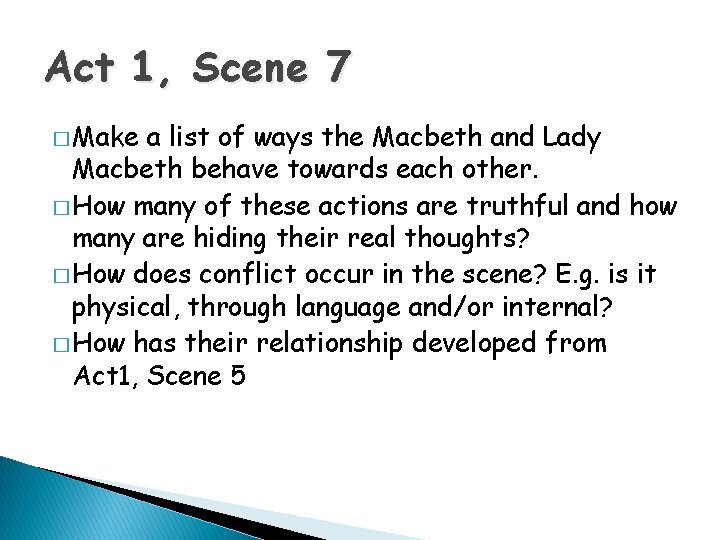
Act 1, Scene 7 � Make a list of ways the Macbeth and Lady Macbeth behave towards each other. � How many of these actions are truthful and how many are hiding their real thoughts? � How does conflict occur in the scene? E. g. is it physical, through language and/or internal? � How has their relationship developed from Act 1, Scene 5
Inner thoughts � We have heard Macbeth’s thoughts towards the murder before talking to Lady Macbeth. � Write a diary entry for each character revealing their inner thoughts after this scene.
- Slides: 14