
m a n a g e m e
- Slides: 39
m a n a g e m e n t 2 e Hitt/Black/Porter Chapter 7: Organizational Structure and Design Power. Point slides by Susan A. Peterson, Scottsdale Community College #
Learning Objectives After studying this chapter, you should be able to: Explain the concepts of organizational structure and design Explain the concepts of differentiation and integration and their role in organizational structure and design Describe the concepts of formalization, informalization, centralization, and decentralization and discuss their interrelationships © 2008 Prentice-Hall Business Publishing 2
Learning Objectives Identify the common structures used by organizations and describe their strengths and weaknesses of each of these structures Understand how network structures help firms manage their value chain activities and contribute to achieving a competitive advantage Describe how environmental factors and the organization’s strategy influence organizational structure Explain the types of organizational structure important for firms to use when operating in international markets © 2008 Prentice-Hall Business Publishing 3
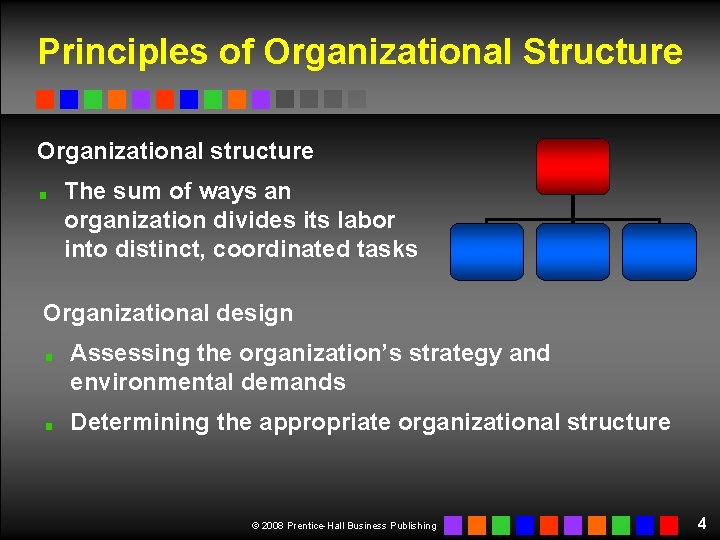
Principles of Organizational Structure Organizational structure The sum of ways an organization divides its labor into distinct, coordinated tasks Organizational design Assessing the organization’s strategy and environmental demands Determining the appropriate organizational structure © 2008 Prentice-Hall Business Publishing 4
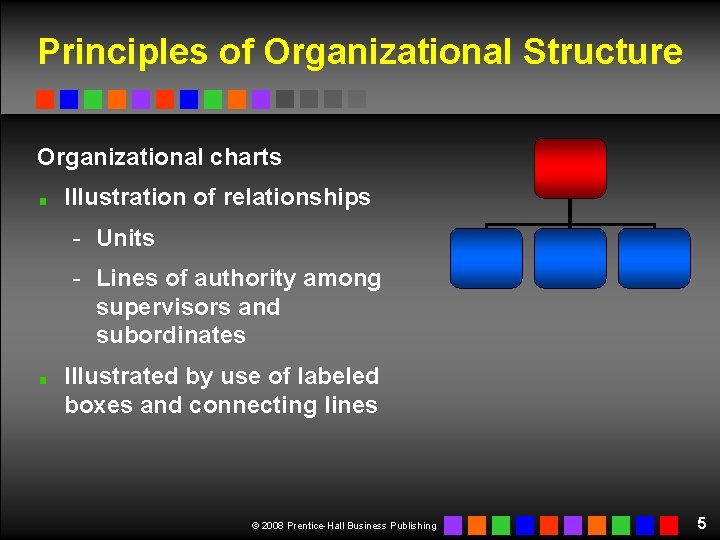
Principles of Organizational Structure Organizational charts Illustration of relationships - Units - Lines of authority among supervisors and subordinates Illustrated by use of labeled boxes and connecting lines © 2008 Prentice-Hall Business Publishing 5
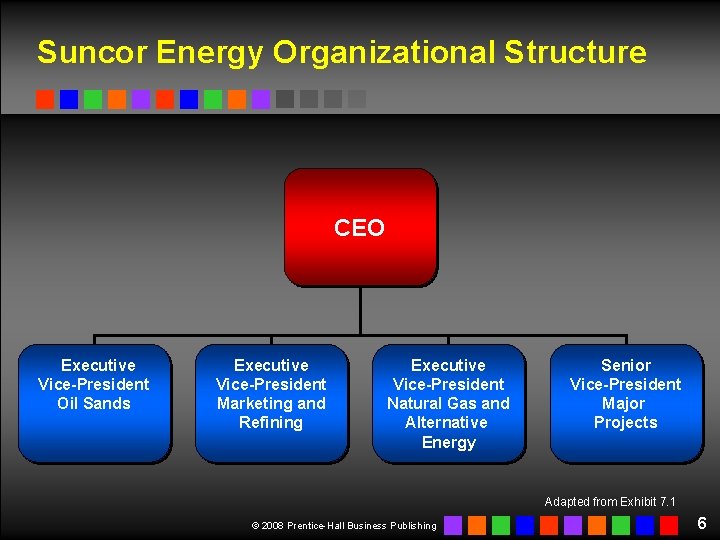
Suncor Energy Organizational Structure CEO Executive Vice-President Oil Sands Executive Vice-President Marketing and Refining Executive Vice-President Natural Gas and Alternative Energy Senior Vice-President Major Projects Adapted from Exhibit 7. 1 © 2008 Prentice-Hall Business Publishing 6
Differentiation Division of tasks into subtasks that are performed by individuals with specialized skills Two types of differentiation: - Task differentiation - Cognitive differentiation © 2008 Prentice-Hall Business Publishing 7
Integration The extent to which various parts of the organization interact, coordinate and cooperate with each other Driving forces of integration include: - Interdependence: degree to which each unit or each person depends on other units or people to accomplish a required task - Uncertainty: the extent to which future input, process, and output factors cannot be forecast accurately © 2008 Prentice-Hall Business Publishing 8
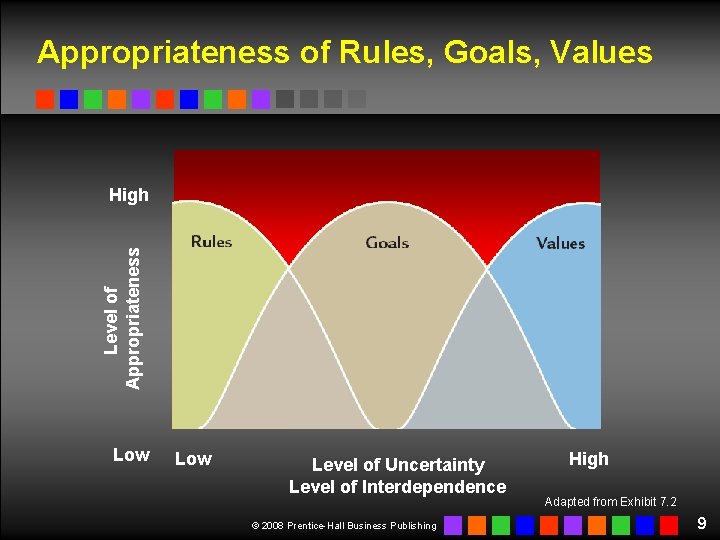
Appropriateness of Rules, Goals, Values Level of Appropriateness High Low Level of Uncertainty Level of Interdependence © 2008 Prentice-Hall Business Publishing High Adapted from Exhibit 7. 2 9
Formalization The official and defined structures and systems in decision making, communication, and control in an organization - Line of authority - Unity of command - Span of control © 2008 Prentice-Hall Business Publishing 10
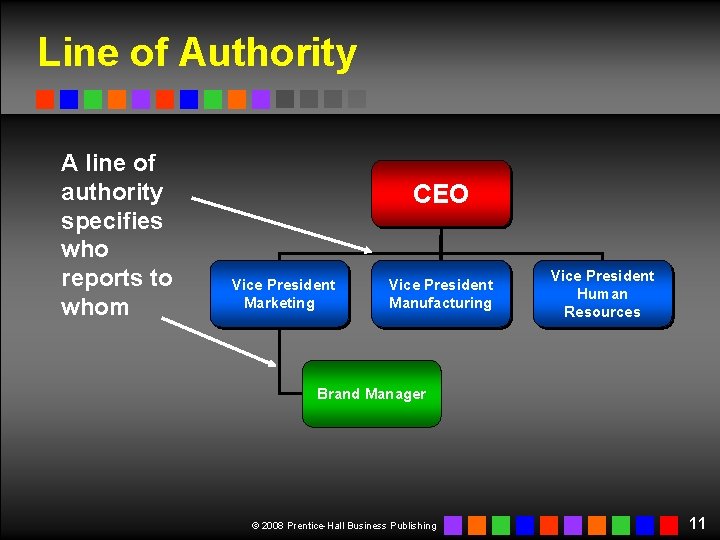
Line of Authority A line of authority specifies who reports to whom CEO Vice President Marketing Vice President Manufacturing Vice President Human Resources Brand Manager © 2008 Prentice-Hall Business Publishing 11
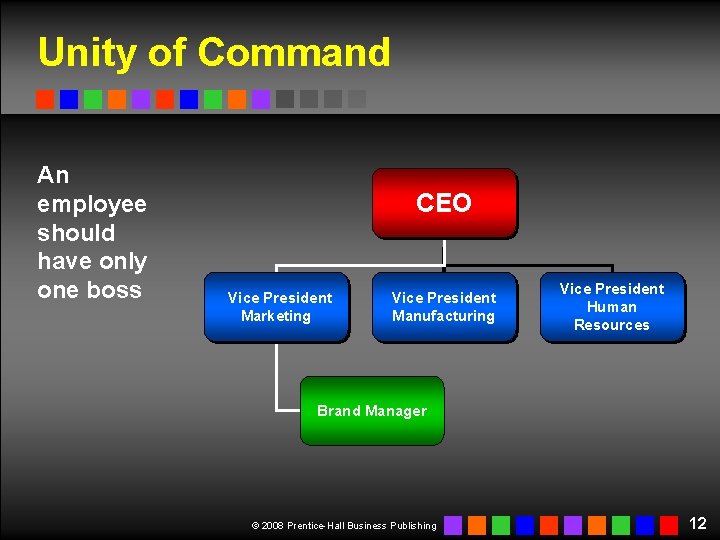
Unity of Command An employee should have only one boss CEO Vice President Marketing Vice President Manufacturing Vice President Human Resources Brand Manager © 2008 Prentice-Hall Business Publishing 12
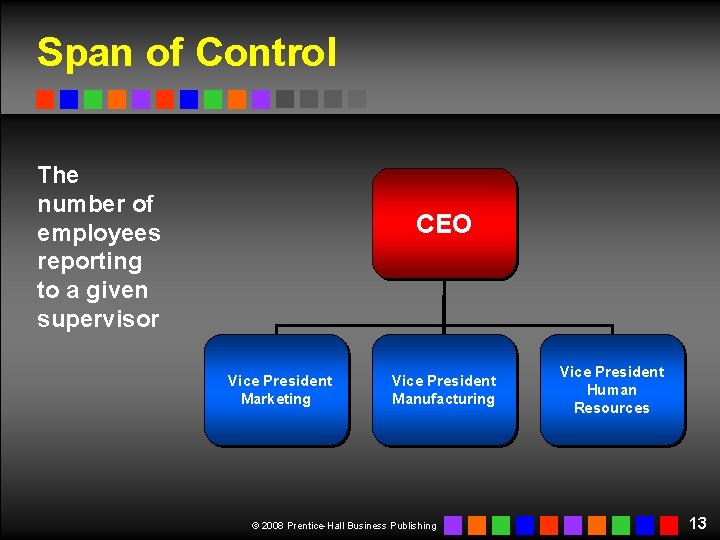
Span of Control The number of employees reporting to a given supervisor CEO Vice President Marketing Vice President Manufacturing © 2008 Prentice-Hall Business Publishing Vice President Human Resources 13
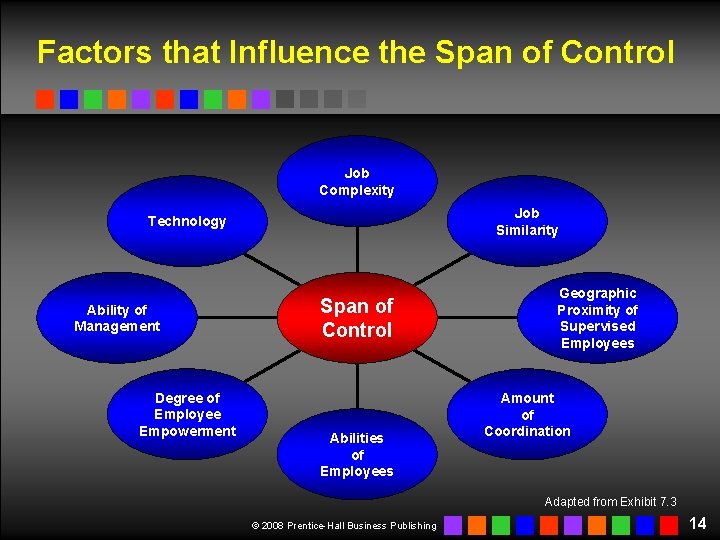
Factors that Influence the Span of Control Job Complexity Job Similarity Technology Ability of Management Degree of Employee Empowerment Span of Control Abilities of Employees Geographic Proximity of Supervised Employees Amount of Coordination Adapted from Exhibit 7. 3 © 2008 Prentice-Hall Business Publishing 14
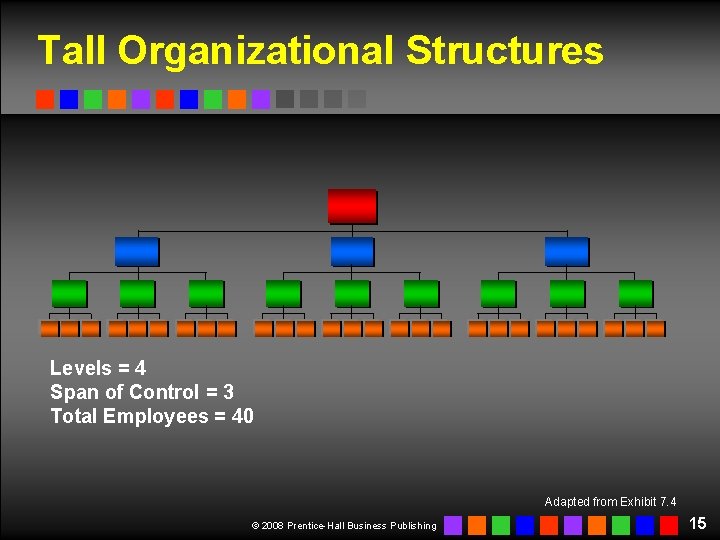
Tall Organizational Structures Levels = 4 Span of Control = 3 Total Employees = 40 Adapted from Exhibit 7. 4 © 2008 Prentice-Hall Business Publishing 15
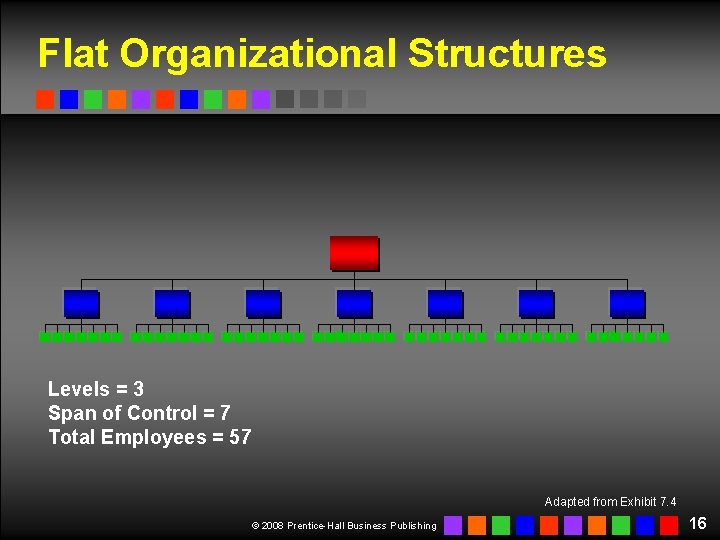
Flat Organizational Structures Levels = 3 Span of Control = 7 Total Employees = 57 Adapted from Exhibit 7. 4 © 2008 Prentice-Hall Business Publishing 16
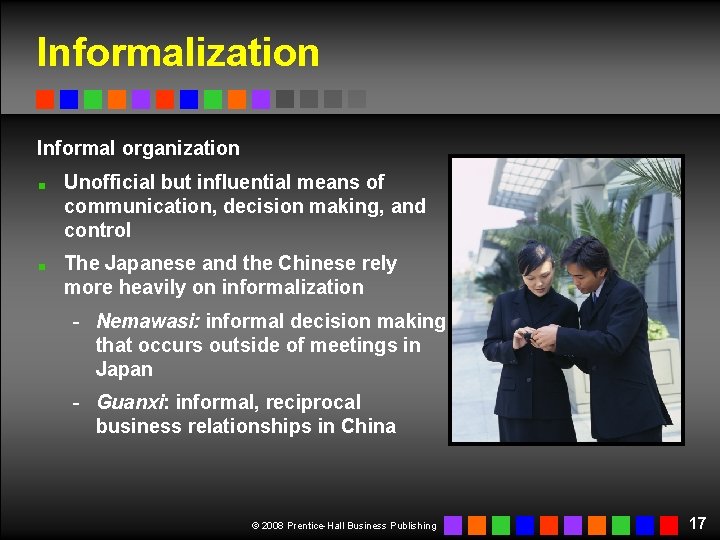
Informalization Informal organization Unofficial but influential means of communication, decision making, and control The Japanese and the Chinese rely more heavily on informalization - Nemawasi: informal decision making that occurs outside of meetings in Japan - Guanxi: informal, reciprocal business relationships in China © 2008 Prentice-Hall Business Publishing 17
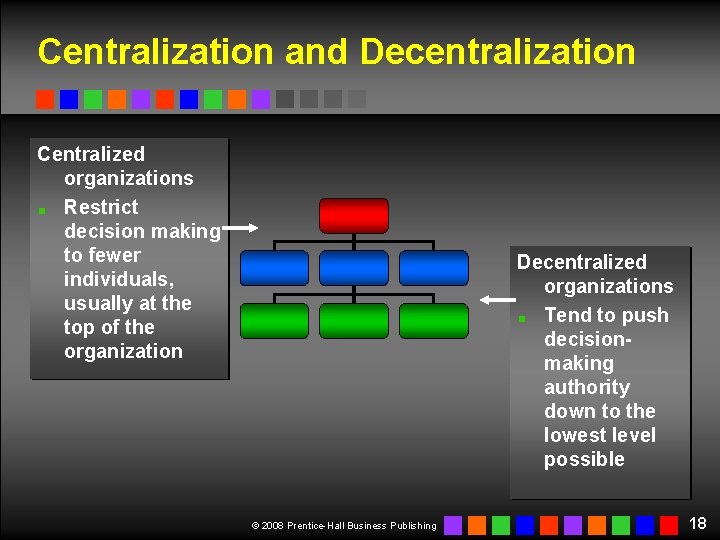
Centralization and Decentralization Centralized organizations Restrict decision making to fewer individuals, usually at the top of the organization Decentralized organizations Tend to push decisionmaking authority down to the lowest level possible © 2008 Prentice-Hall Business Publishing 18
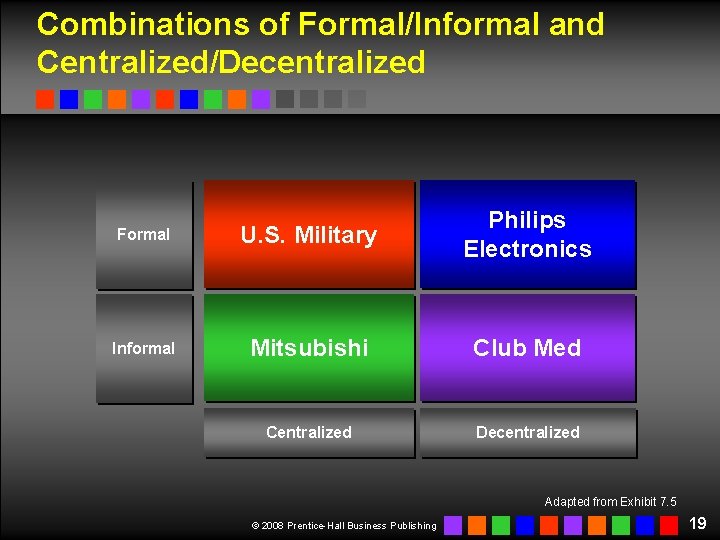
Combinations of Formal/Informal and Centralized/Decentralized Formal U. S. Military Philips Electronics Informal Mitsubishi Club Med Centralized Decentralized Adapted from Exhibit 7. 5 © 2008 Prentice-Hall Business Publishing 19
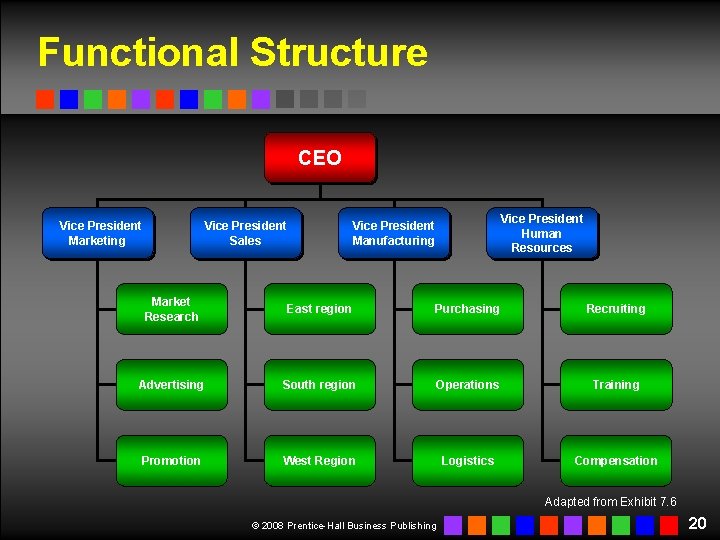
Functional Structure CEO Vice President Marketing Vice President Sales Vice President Human Resources Vice President Manufacturing Market Research East region Purchasing Recruiting Advertising South region Operations Training Promotion West Region Logistics Compensation Adapted from Exhibit 7. 6 © 2008 Prentice-Hall Business Publishing 20
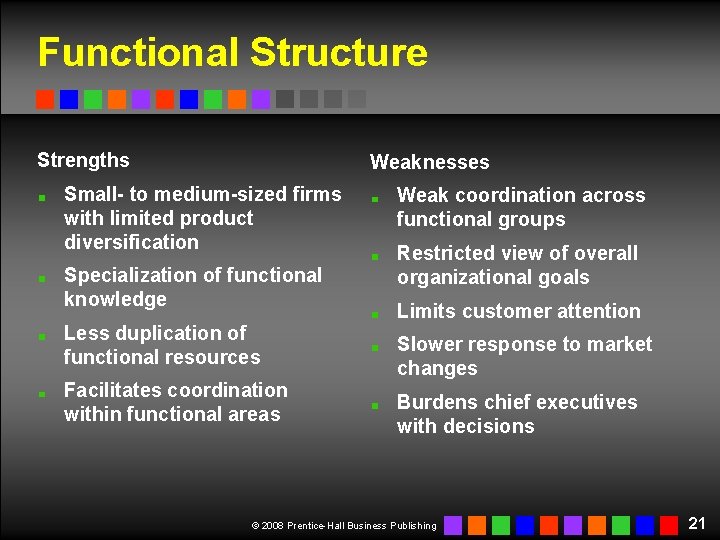
Functional Structure Strengths Weaknesses Small- to medium-sized firms with limited product diversification Specialization of functional knowledge Less duplication of functional resources Facilitates coordination within functional areas Weak coordination across functional groups Restricted view of overall organizational goals Limits customer attention Slower response to market changes Burdens chief executives with decisions © 2008 Prentice-Hall Business Publishing 21
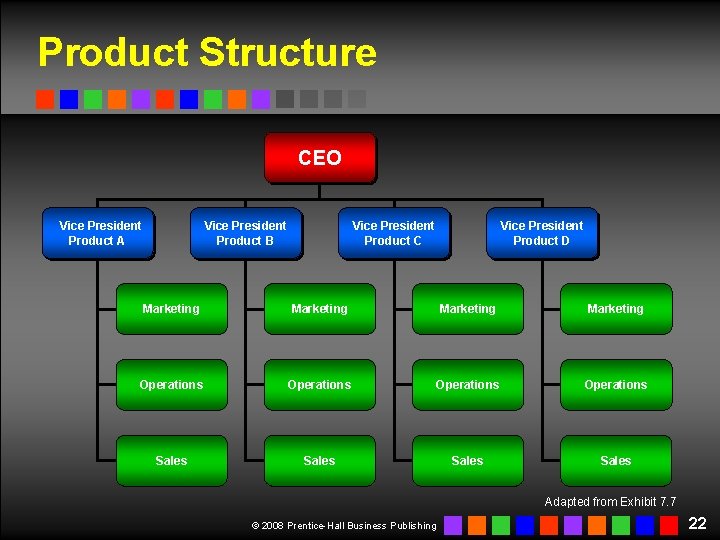
Product Structure CEO Vice President Product A Vice President Product B Vice President Product C Vice President Product D Marketing Operations Sales Adapted from Exhibit 7. 7 © 2008 Prentice-Hall Business Publishing 22
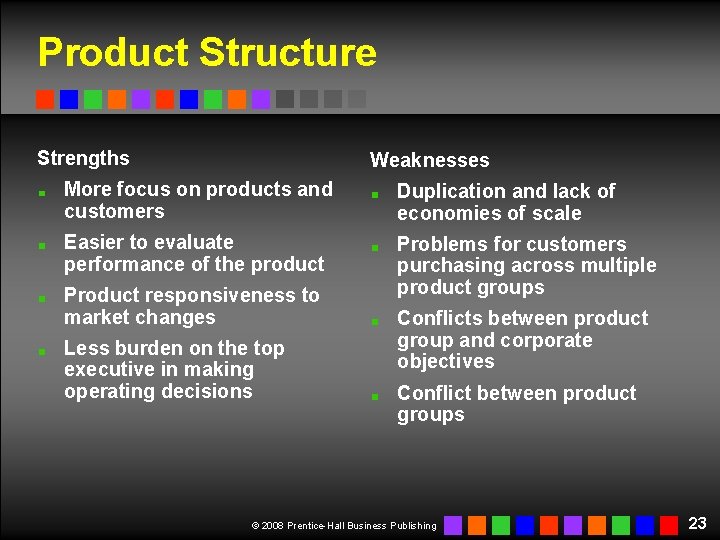
Product Structure Strengths Weaknesses More focus on products and customers Duplication and lack of economies of scale Easier to evaluate performance of the product Problems for customers purchasing across multiple product groups Product responsiveness to market changes Less burden on the top executive in making operating decisions Conflicts between product group and corporate objectives Conflict between product groups © 2008 Prentice-Hall Business Publishing 23
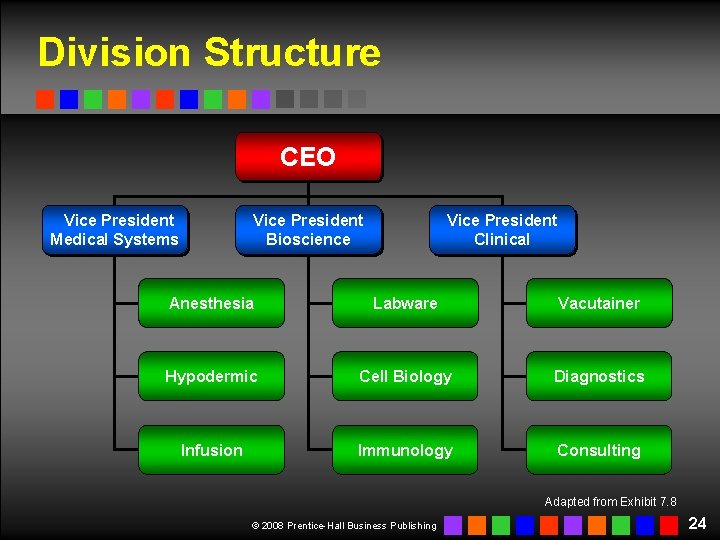
Division Structure CEO Vice President Medical Systems Vice President Bioscience Vice President Clinical Anesthesia Labware Vacutainer Hypodermic Cell Biology Diagnostics Infusion Immunology Consulting Adapted from Exhibit 7. 8 © 2008 Prentice-Hall Business Publishing 24
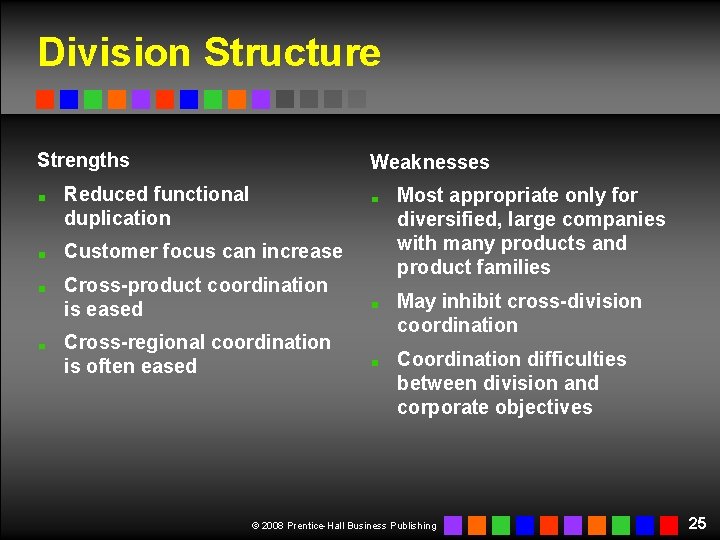
Division Structure Strengths Weaknesses Reduced functional duplication Customer focus can increase Cross-product coordination is eased Cross-regional coordination is often eased Most appropriate only for diversified, large companies with many products and product families May inhibit cross-division coordination Coordination difficulties between division and corporate objectives © 2008 Prentice-Hall Business Publishing 25
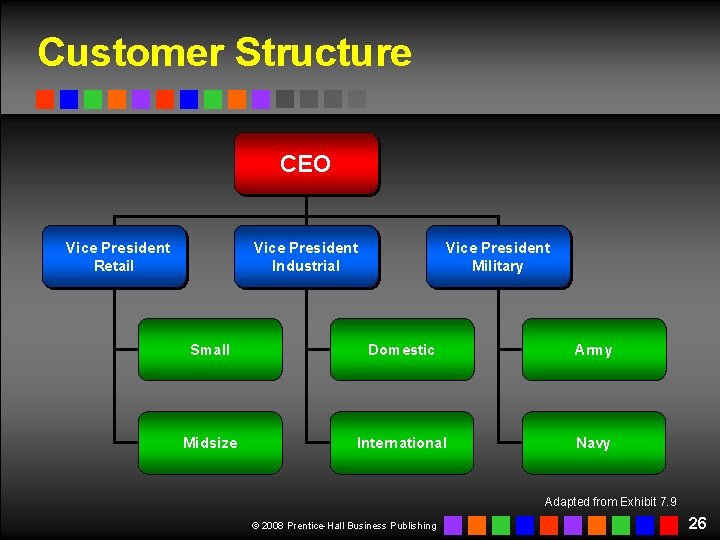
Customer Structure CEO Vice President Retail Vice President Industrial Vice President Military Small Domestic Army Midsize International Navy Adapted from Exhibit 7. 9 © 2008 Prentice-Hall Business Publishing 26
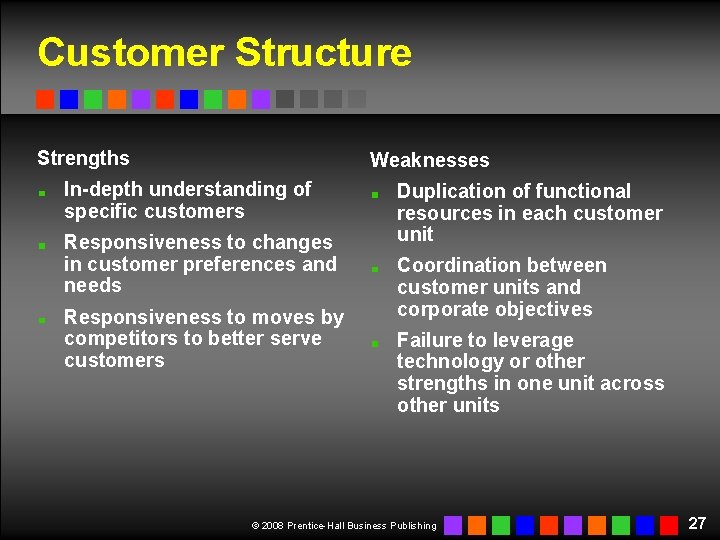
Customer Structure Strengths Weaknesses In-depth understanding of specific customers Responsiveness to changes in customer preferences and needs Responsiveness to moves by competitors to better serve customers Duplication of functional resources in each customer unit Coordination between customer units and corporate objectives Failure to leverage technology or other strengths in one unit across other units © 2008 Prentice-Hall Business Publishing 27
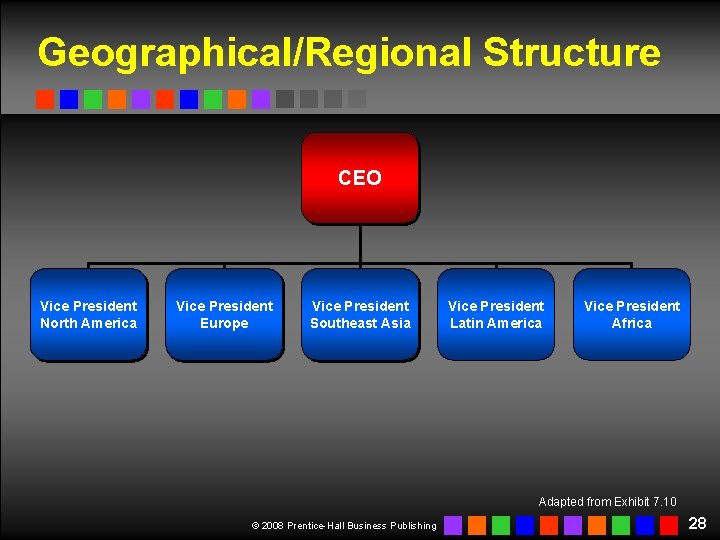
Geographical/Regional Structure CEO Vice President North America Vice President Europe Vice President Southeast Asia Vice President Latin America Vice President Africa Adapted from Exhibit 7. 10 © 2008 Prentice-Hall Business Publishing 28
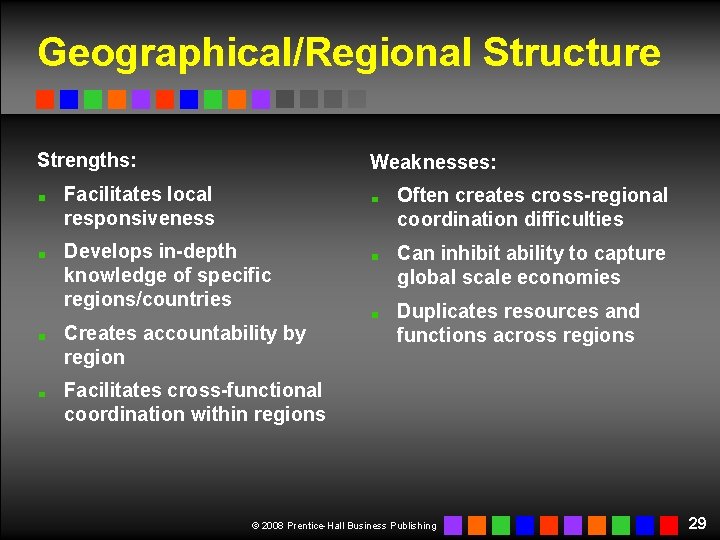
Geographical/Regional Structure Strengths: Weaknesses: Facilitates local responsiveness Often creates cross-regional coordination difficulties Develops in-depth knowledge of specific regions/countries Can inhibit ability to capture global scale economies Creates accountability by region Duplicates resources and functions across regions Facilitates cross-functional coordination within regions © 2008 Prentice-Hall Business Publishing 29
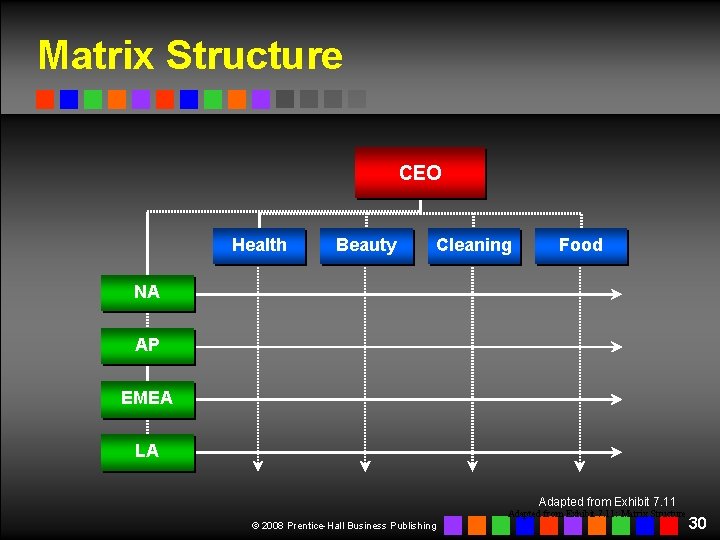
Matrix Structure CEO Health Beauty Cleaning Food NA AP EMEA LA Adapted from Exhibit 7. 11: Matrix Structure © 2008 Prentice-Hall Business Publishing 30
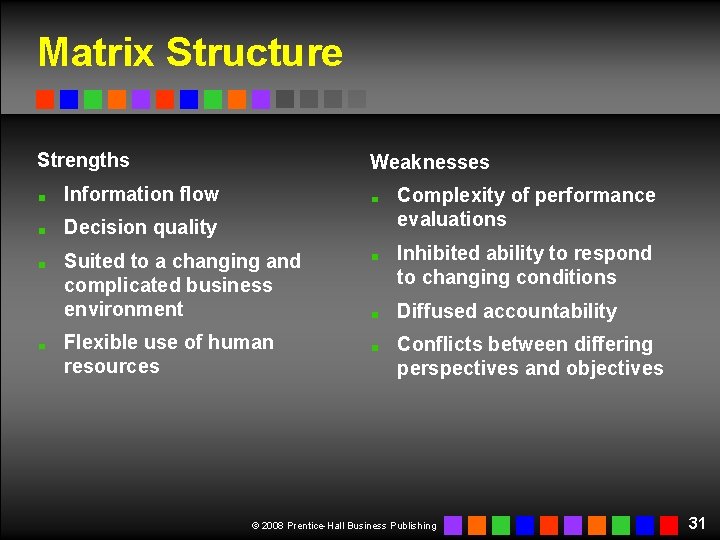
Matrix Structure Strengths Weaknesses Information flow Complexity of performance evaluations Decision quality Suited to a changing and complicated business environment Inhibited ability to respond to changing conditions Flexible use of human resources Conflicts between differing perspectives and objectives Diffused accountability © 2008 Prentice-Hall Business Publishing 31
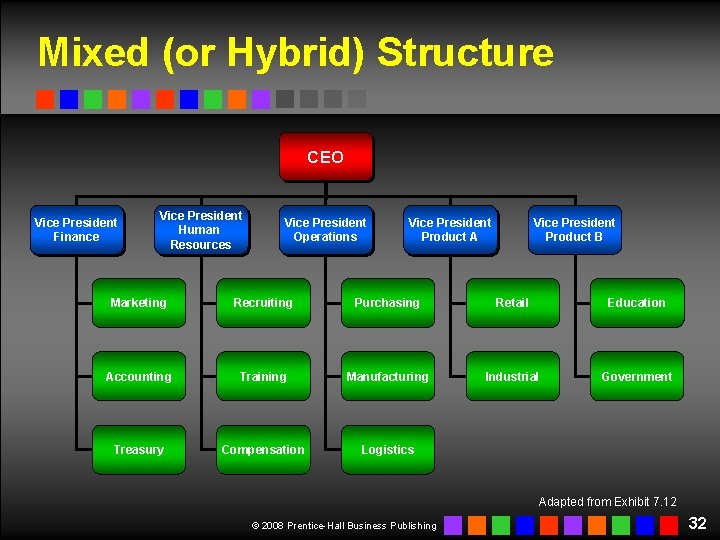
Mixed (or Hybrid) Structure CEO Vice President Finance Vice President Human Resources Vice President Operations Vice President Product A Vice President Product B Marketing Recruiting Purchasing Retail Education Accounting Training Manufacturing Industrial Government Treasury Compensation Logistics Adapted from Exhibit 7. 12 © 2008 Prentice-Hall Business Publishing 32
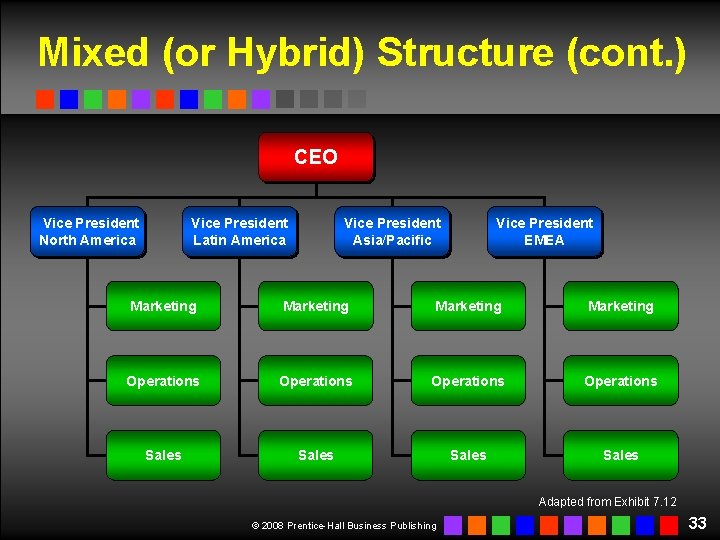
Mixed (or Hybrid) Structure (cont. ) CEO Vice President North America Vice President Latin America Vice President Asia/Pacific Vice President EMEA Marketing Operations Sales Adapted from Exhibit 7. 12 © 2008 Prentice-Hall Business Publishing 33
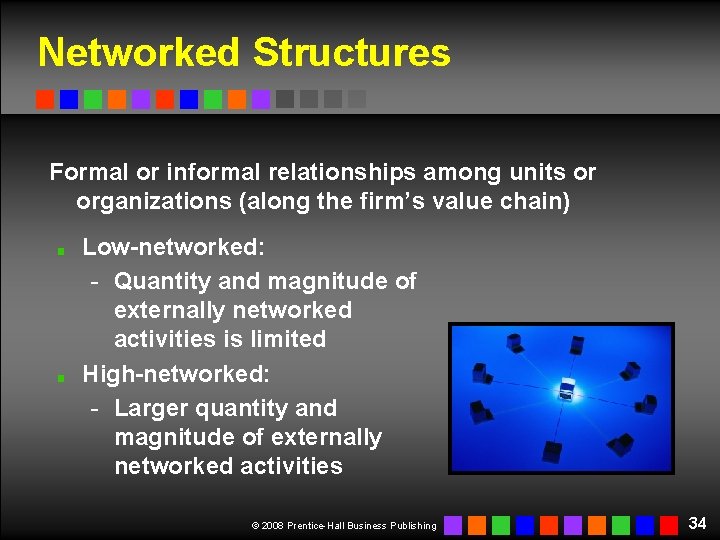
Networked Structures Formal or informal relationships among units or organizations (along the firm’s value chain) Low-networked: - Quantity and magnitude of externally networked activities is limited High-networked: - Larger quantity and magnitude of externally networked activities © 2008 Prentice-Hall Business Publishing 34
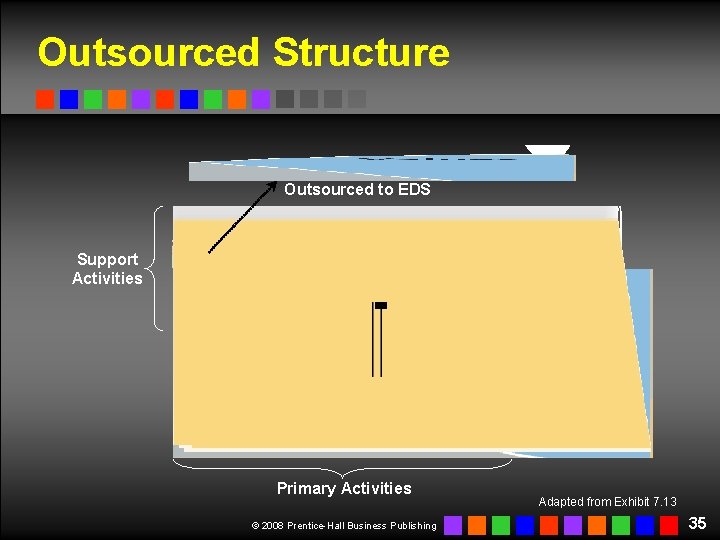
Outsourced Structure Outsourced to EDS Support Activities Primary Activities © 2008 Prentice-Hall Business Publishing Adapted from Exhibit 7. 13 35
Network Structure Adapted from Exhibit 7. 14: Network Structure © 2008 Prentice-Hall Business Publishing 36
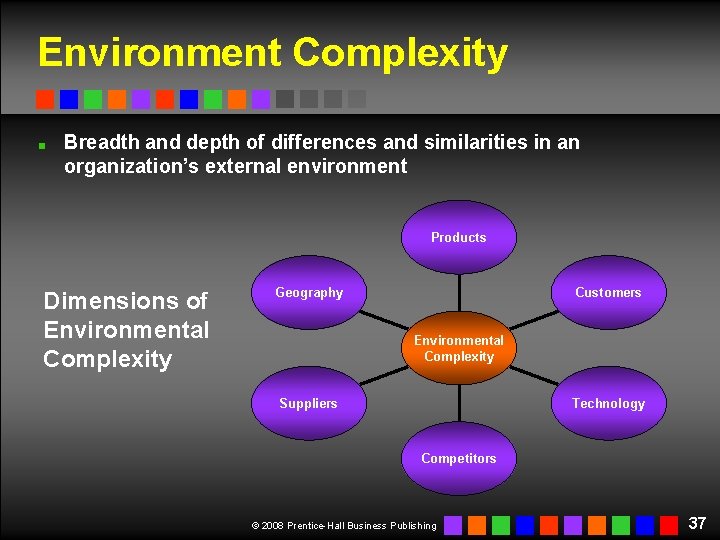
Environment Complexity Breadth and depth of differences and similarities in an organization’s external environment Products Dimensions of Environmental Complexity Geography Customers Environmental Complexity Suppliers Technology Competitors © 2008 Prentice-Hall Business Publishing 37
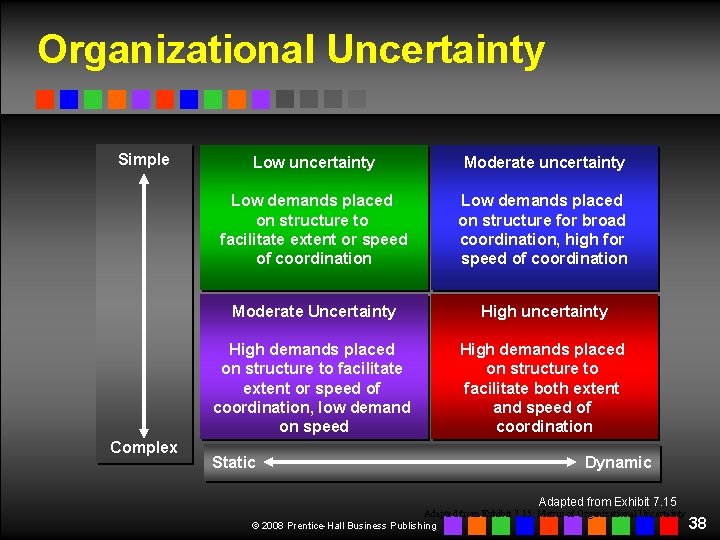
Organizational Uncertainty Simple Complex Low uncertainty Moderate uncertainty Low demands placed on structure to facilitate extent or speed of coordination Low demands placed on structure for broad coordination, high for speed of coordination Moderate Uncertainty High uncertainty High demands placed on structure to facilitate extent or speed of coordination, low demand on speed High demands placed on structure to facilitate both extent and speed of coordination Static Dynamic Adapted from Exhibit 7. 15: Matrix of Organizational Uncertainty © 2008 Prentice-Hall Business Publishing 38
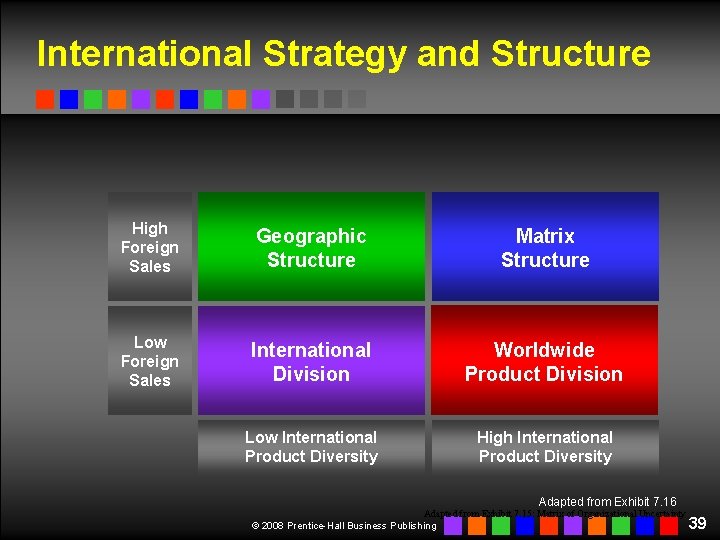
International Strategy and Structure High Foreign Sales Geographic Structure Matrix Structure Low Foreign Sales International Division Worldwide Product Division Low International Product Diversity High International Product Diversity Adapted from Exhibit 7. 16 Adapted from Exhibit 7. 15: Matrix of Organizational Uncertainty © 2008 Prentice-Hall Business Publishing 39