
LYU 0401 LocationBased Multimedia Mobile Service Clarence Fung
LYU 0401 Location-Based Multimedia Mobile Service Clarence Fung Tilen Ma Supervisor: Professor Michael Lyu Marker: Professor Alan Liew
Outline Introduction n Objective n Location-Based Service n Current Localization Methods n Experimental Study n Wi-Fi Location System n Future Work n Conclusion n
Introduction In this semester, we mainly focus on the problem of localization n We have chosen the 1 st floor of the Ho Sin. Hang Engineering Building to study the problem of localization n Our goal is to locate a person when he/she is walking around on the floor n
Objective To meet the need for Location-Based Service n To find out if Wireless LAN provide enough information for localization in 2 D space n Study on different localization algorithms n Develop an application in a mobile device n
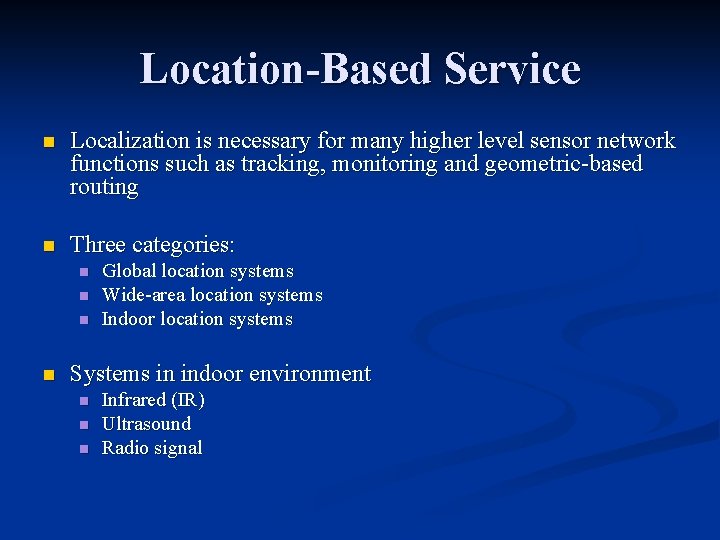
Location-Based Service n Localization is necessary for many higher level sensor network functions such as tracking, monitoring and geometric-based routing n Three categories: n n Global location systems Wide-area location systems Indoor location systems Systems in indoor environment n n n Infrared (IR) Ultrasound Radio signal
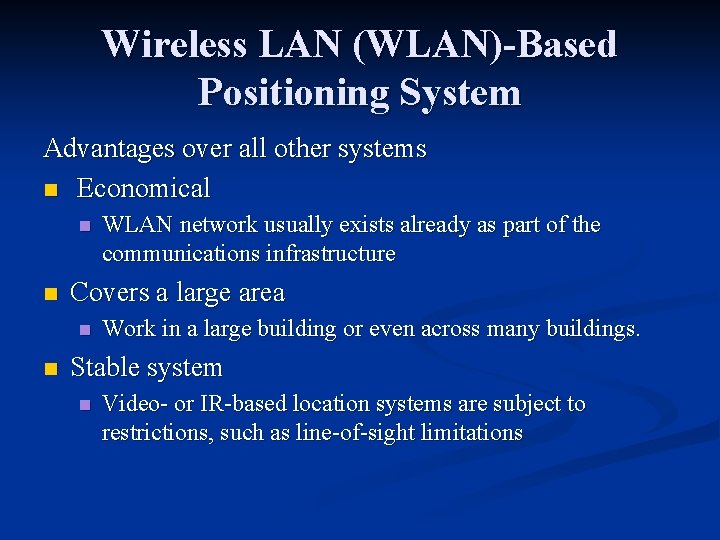
Wireless LAN (WLAN)-Based Positioning System Advantages over all other systems n Economical n n Covers a large area n n WLAN network usually exists already as part of the communications infrastructure Work in a large building or even across many buildings. Stable system n Video- or IR-based location systems are subject to restrictions, such as line-of-sight limitations
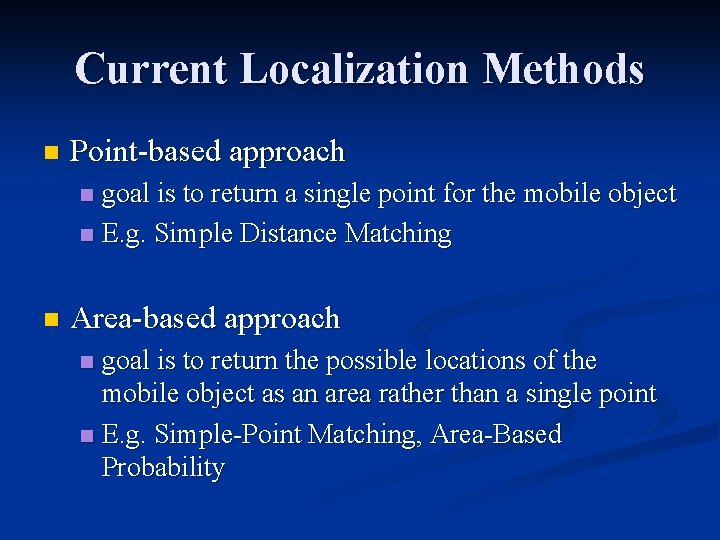
Current Localization Methods n Point-based approach goal is to return a single point for the mobile object n E. g. Simple Distance Matching n n Area-based approach goal is to return the possible locations of the mobile object as an area rather than a single point n E. g. Simple-Point Matching, Area-Based Probability n

Area-Based Probability (ABP) Advantages: n Presents the user an understanding of the system in a more natural and intuitive manner n High accuracy n More mathematical approach
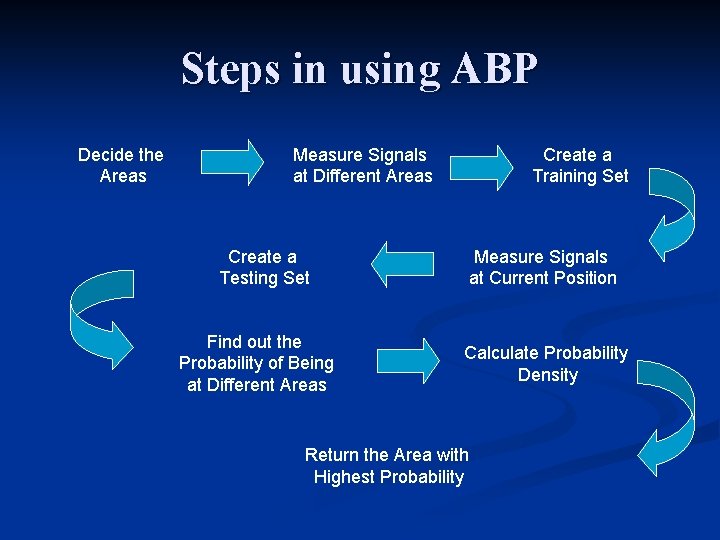
Steps in using ABP Decide the Areas Measure Signals at Different Areas Create a Testing Set Find out the Probability of Being at Different Areas Create a Training Set Measure Signals at Current Position Calculate Probability Density Return the Area with Highest Probability

Applying Area-based Approach
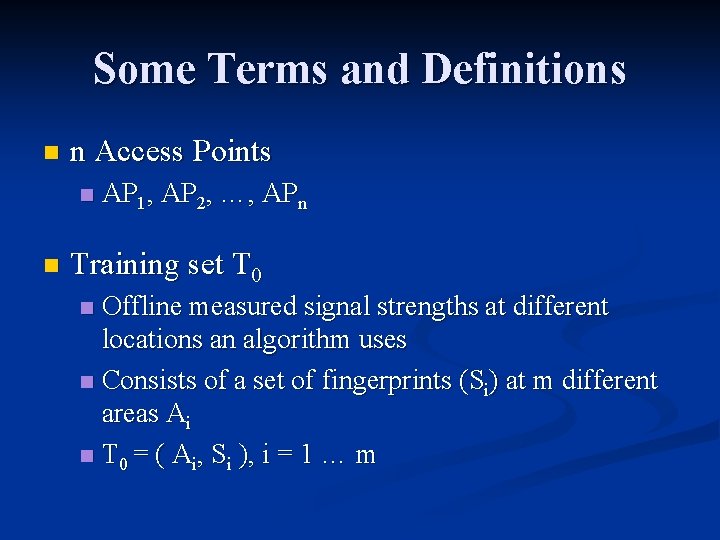
Some Terms and Definitions n n Access Points n n AP 1, AP 2, …, APn Training set T 0 Offline measured signal strengths at different locations an algorithm uses n Consists of a set of fingerprints (Si) at m different areas Ai n T 0 = ( Ai, Si ), i = 1 … m n

Some Terms and Definitions n Fingerprints Si Set of n signal strengths at Ai, one per each access point n Si = (si 1, …, sin), where sij is the expected average signal strength from APj n
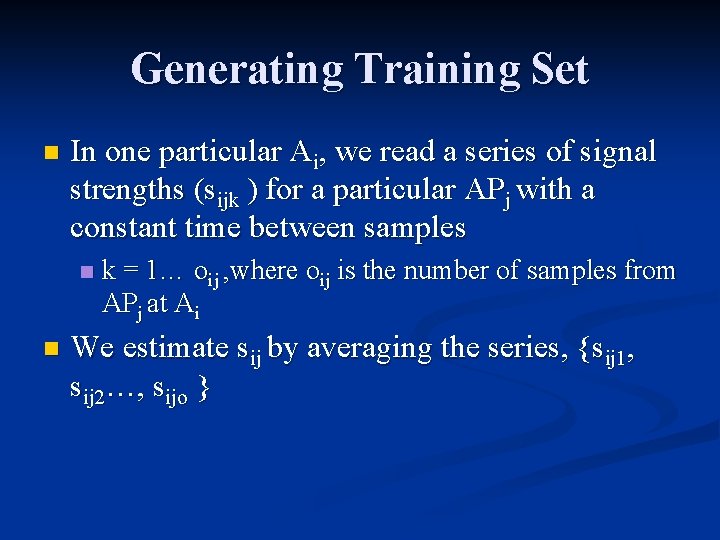
Generating Training Set n In one particular Ai, we read a series of signal strengths (sijk ) for a particular APj with a constant time between samples n n k = 1… oij , where oij is the number of samples from APj at Ai We estimate sij by averaging the series, {sij 1, sij 2…, sijo }
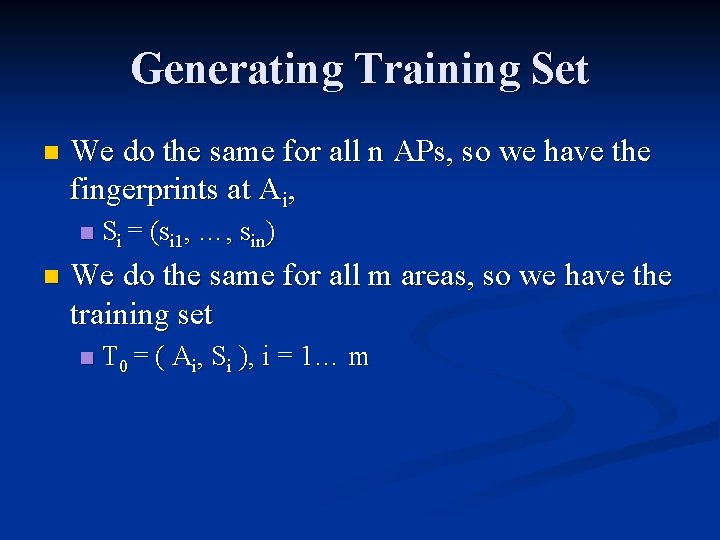
Generating Training Set n We do the same for all n APs, so we have the fingerprints at Ai, n n Si = (si 1, …, sin) We do the same for all m areas, so we have the training set n T 0 = ( Ai, Si ), i = 1… m
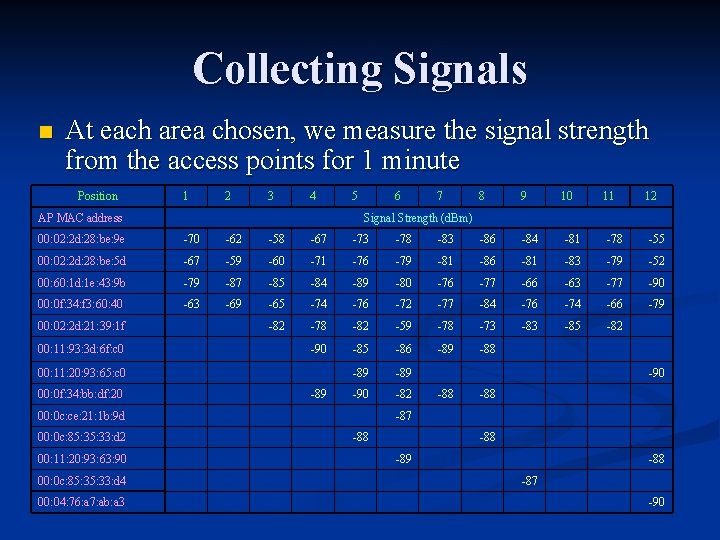
Collecting Signals n At each area chosen, we measure the signal strength from the access points for 1 minute Position 1 2 3 4 AP MAC address 5 6 7 8 9 10 11 12 Signal Strength (d. Bm) 00: 02: 2 d: 28: be: 9 e -70 -62 -58 -67 -73 -78 -83 -86 -84 -81 -78 -55 00: 02: 2 d: 28: be: 5 d -67 -59 -60 -71 -76 -79 -81 -86 -81 -83 -79 -52 00: 60: 1 d: 1 e: 43: 9 b -79 -87 -85 -84 -89 -80 -76 -77 -66 -63 -77 -90 00: 0 f: 34: f 3: 60: 40 -63 -69 -65 -74 -76 -72 -77 -84 -76 -74 -66 -79 -82 -78 -82 -59 -78 -73 -85 -82 -90 -85 -86 -89 -88 -89 -90 -82 00: 02: 2 d: 21: 39: 1 f 00: 11: 93: 3 d: 6 f: c 0 00: 11: 20: 93: 65: c 0 00: 0 f: 34: bb: df: 20 00: 0 c: ce: 21: 1 b: 9 d 00: 0 c: 85: 33: d 2 00: 11: 20: 93: 63: 90 00: 0 c: 85: 33: d 4 00: 04: 76: a 7: ab: a 3 -89 -90 -88 -87 -88 -89 -88 -87 -90
Data Processing n We have chosen 7 out of 13 access points least contribution to localization n shorten computation time n n For missing signal strengths, we input -92 d. Bm as entry
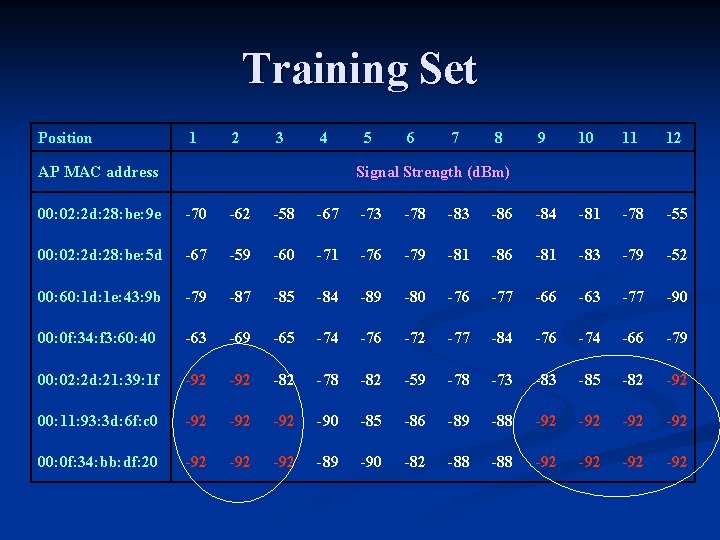
Training Set Position 1 2 3 4 AP MAC address 5 6 7 8 9 10 11 12 Signal Strength (d. Bm) 00: 02: 2 d: 28: be: 9 e -70 -62 -58 -67 -73 -78 -83 -86 -84 -81 -78 -55 00: 02: 2 d: 28: be: 5 d -67 -59 -60 -71 -76 -79 -81 -86 -81 -83 -79 -52 00: 60: 1 d: 1 e: 43: 9 b -79 -87 -85 -84 -89 -80 -76 -77 -66 -63 -77 -90 00: 0 f: 34: f 3: 60: 40 -63 -69 -65 -74 -76 -72 -77 -84 -76 -74 -66 -79 00: 02: 2 d: 21: 39: 1 f -92 -82 -78 -82 -59 -78 -73 -85 -82 -92 00: 11: 93: 3 d: 6 f: c 0 -92 -92 -90 -85 -86 -89 -88 -92 -92 00: 0 f: 34: bb: df: 20 -92 -92 -89 -90 -82 -88 -92 -92
Getting Testing Set The object to be localized collects a set of received signal strengths (RSS) when it is at certain location n A testing set (St) is created similar to the fingerprints in the training set n It is a set of average signal strengths from APs, St = (st 1, …, stn) n
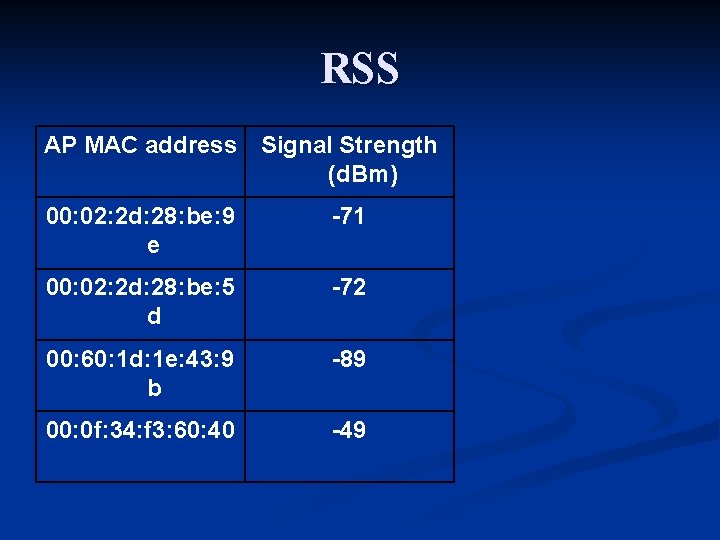
RSS AP MAC address Signal Strength (d. Bm) 00: 02: 2 d: 28: be: 9 e -71 00: 02: 2 d: 28: be: 5 d -72 00: 60: 1 d: 1 e: 43: 9 b -89 00: 0 f: 34: f 3: 60: 40 -49
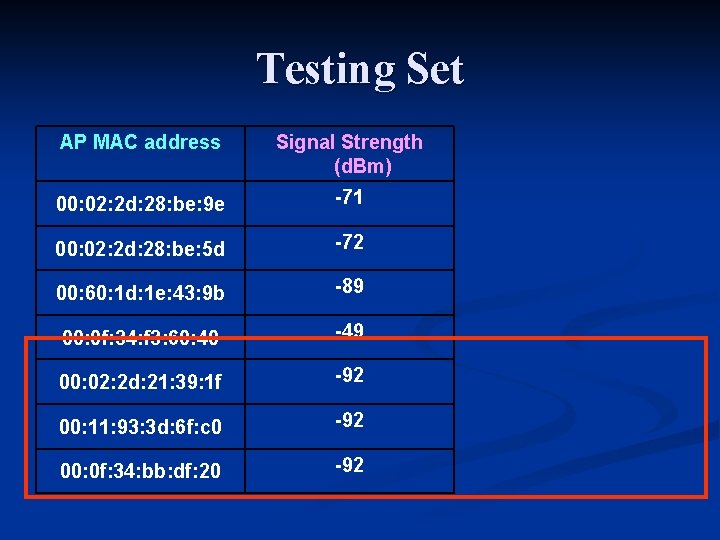
Testing Set AP MAC address Signal Strength (d. Bm) 00: 02: 2 d: 28: be: 9 e -71 00: 02: 2 d: 28: be: 5 d -72 00: 60: 1 d: 1 e: 43: 9 b -89 00: 0 f: 34: f 3: 60: 40 -49 00: 02: 2 d: 21: 39: 1 f -92 00: 11: 93: 3 d: 6 f: c 0 -92 00: 0 f: 34: bb: df: 20 -92
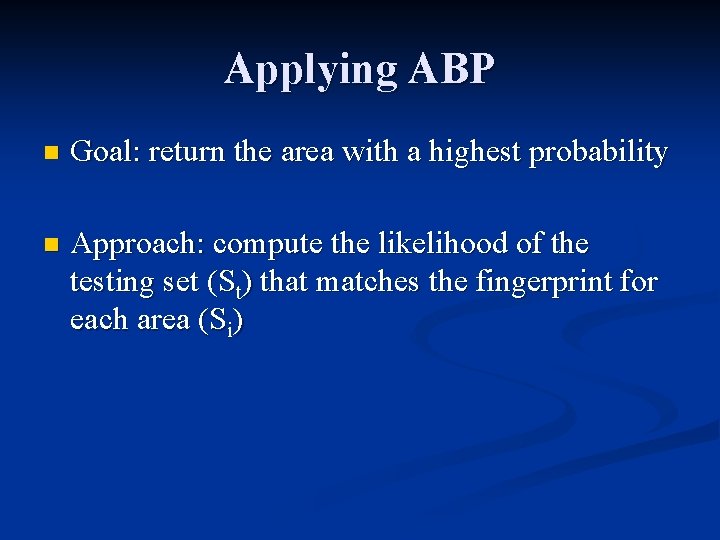
Applying ABP n Goal: return the area with a highest probability n Approach: compute the likelihood of the testing set (St) that matches the fingerprint for each area (Si)

Applying ABP Assumptions: n Signal received from different APs are independent n For each APj, j = 1…n, the sequence of RSS sijk, k = 1… oij, at each Ai in To is modeled as a Gaussian distribution
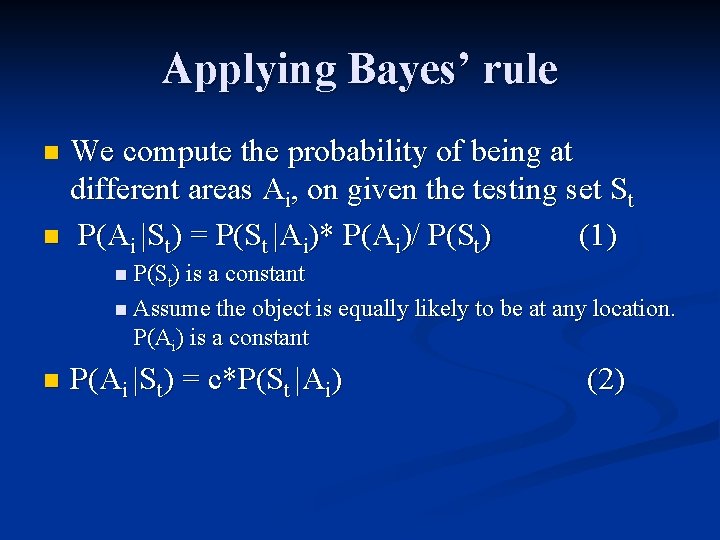
Applying Bayes’ rule We compute the probability of being at different areas Ai, on given the testing set St n P(Ai |St) = P(St |Ai)* P(Ai)/ P(St) (1) n n P(St) is a constant n Assume the object is equally likely to be at any location. P(Ai) is a constant n P(Ai |St) = c*P(St |Ai) (2)
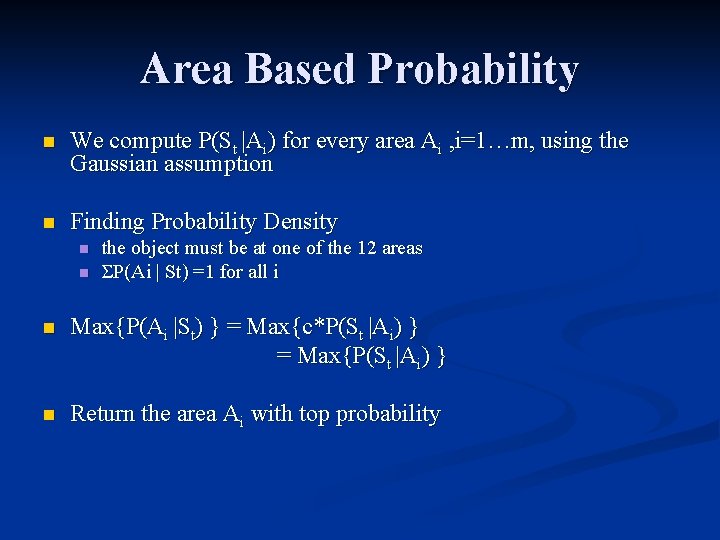
Area Based Probability n We compute P(St |Ai) for every area Ai , i=1…m, using the Gaussian assumption n Finding Probability Density n n the object must be at one of the 12 areas ΣP(Ai | St) =1 for all i n Max{P(Ai |St) } = Max{c*P(St |Ai) } = Max{P(St |Ai) } n Return the area Ai with top probability

Gaussian Distribution n In our application, we can take μ as the expected average signal strengths for the access point to be calculated n we take σ as 8. 5

Integral of Normal Function Find probability by integration n Take interval as 1 n
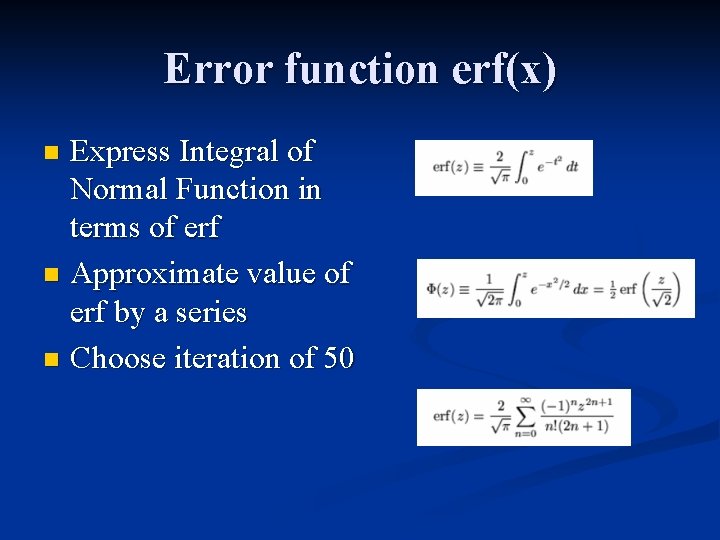
Error function erf(x) Express Integral of Normal Function in terms of erf n Approximate value of erf by a series n Choose iteration of 50 n
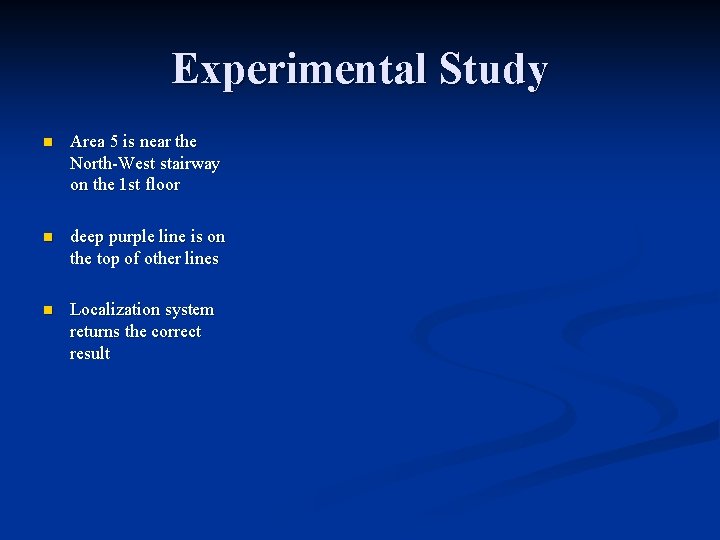
Experimental Study n Area 5 is near the North-West stairway on the 1 st floor n deep purple line is on the top of other lines n Localization system returns the correct result
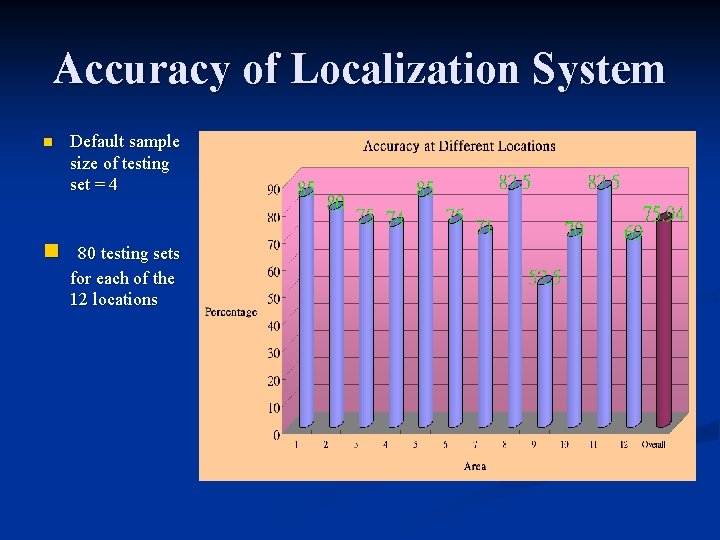
Accuracy of Localization System n Default sample size of testing set = 4 n 80 testing sets for each of the 12 locations
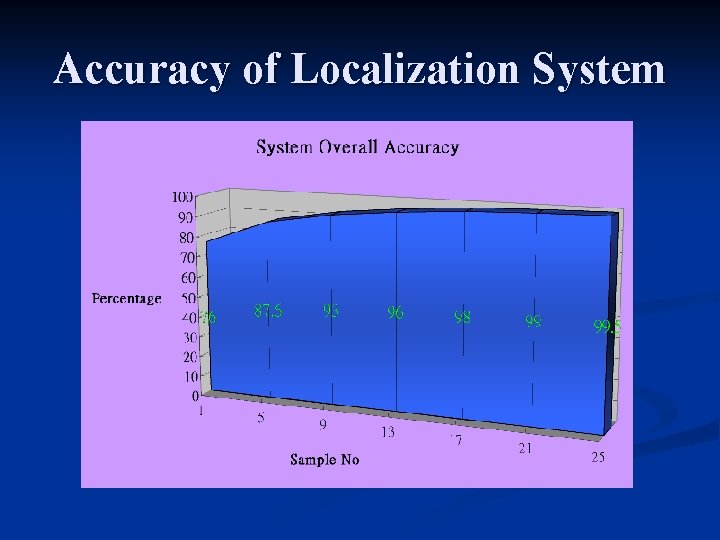
Accuracy of Localization System
Other Factors affecting Accuracy n Property of signals n n Hardware failure n n The strength of signals fluctuates access points fails to give out signals or give out signals at unusual strength Change in environment addition access points on the floor n opening the doors n n Orientation in collecting signal
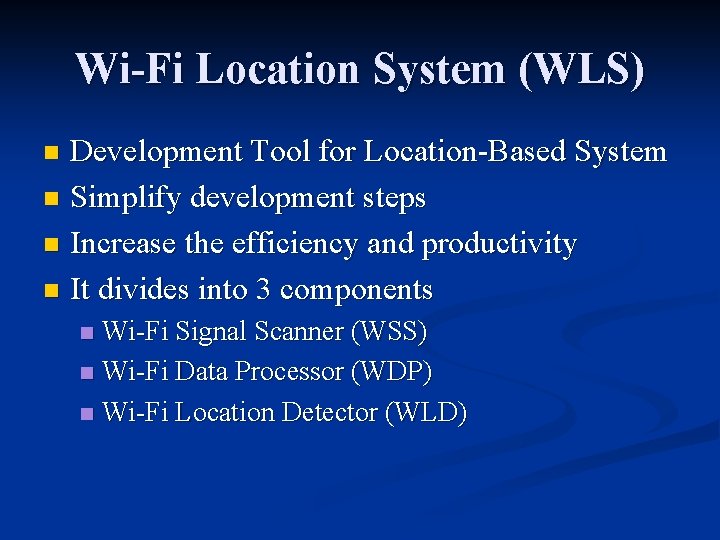
Wi-Fi Location System (WLS) Development Tool for Location-Based System n Simplify development steps n Increase the efficiency and productivity n It divides into 3 components n Wi-Fi Signal Scanner (WSS) n Wi-Fi Data Processor (WDP) n Wi-Fi Location Detector (WLD) n
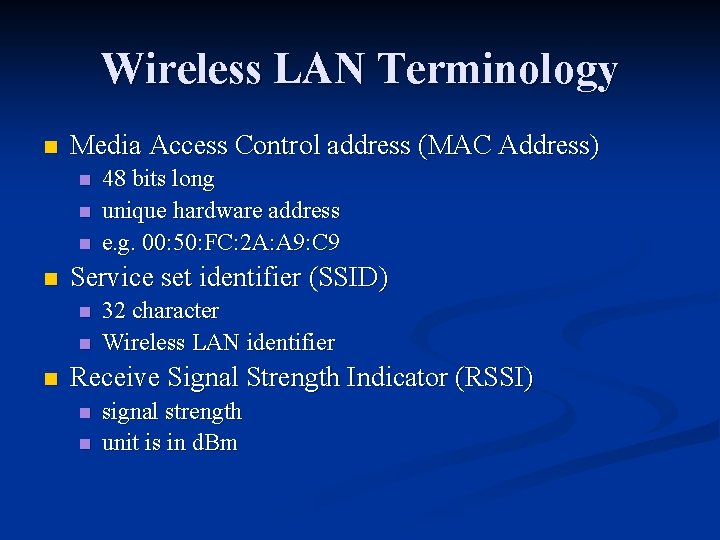
Wireless LAN Terminology n Media Access Control address (MAC Address) n n Service set identifier (SSID) n n n 48 bits long unique hardware address e. g. 00: 50: FC: 2 A: A 9: C 9 32 character Wireless LAN identifier Receive Signal Strength Indicator (RSSI) n n signal strength unit is in d. Bm

Overview n Platform: Window CE n Window XP, 2000 n n Technology: n n IEEE 802. 11 b Tools Embedded Visual C++ 4. 0 n Visual Studio. NET 2003 n
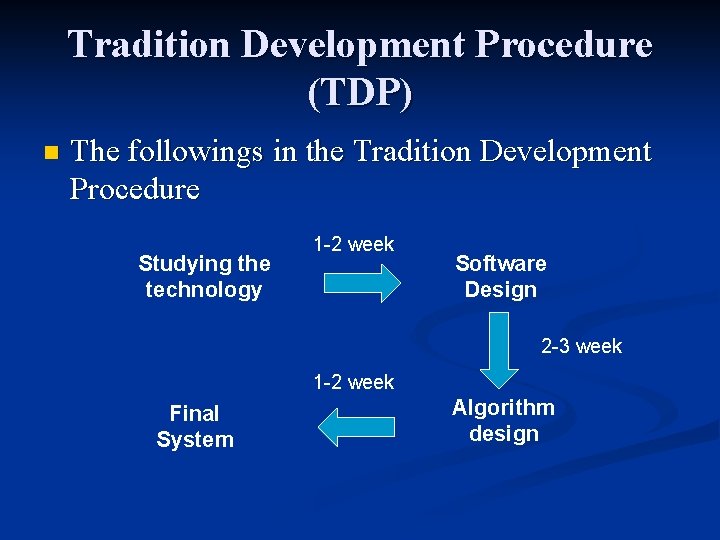
Tradition Development Procedure (TDP) n The followings in the Tradition Development Procedure Studying the technology 1 -2 week Software Design 2 -3 week 1 -2 week Final System Algorithm design

Wi-Fi Location System Development Procedure (WLP) Collecting Data Several hours Using Wi-Fi Signal Scanner Processing Data 1 day Using Wi-Fi Data Processor Deploying and Test System Several days Final System Using Wi-Fi Location Detector
Comparison between TDP and WLP Using WLP, we can develop Location-Based System in a short time. n This work can be done by non-professionals n It simplifies Development Steps n
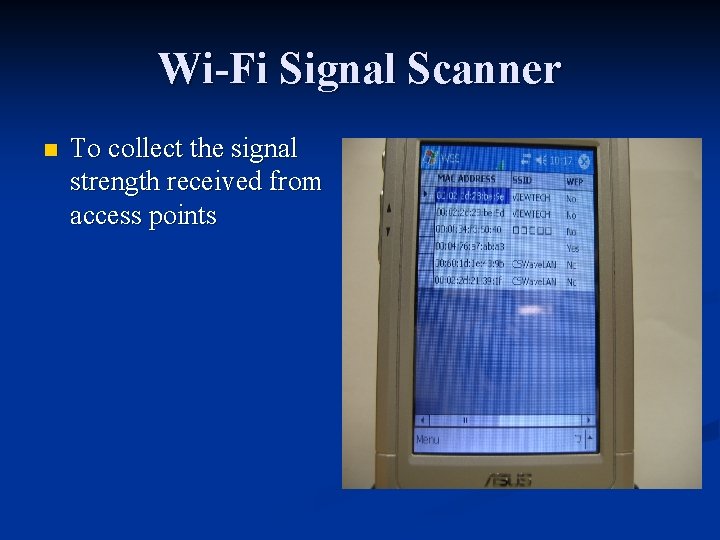
Wi-Fi Signal Scanner n To collect the signal strength received from access points
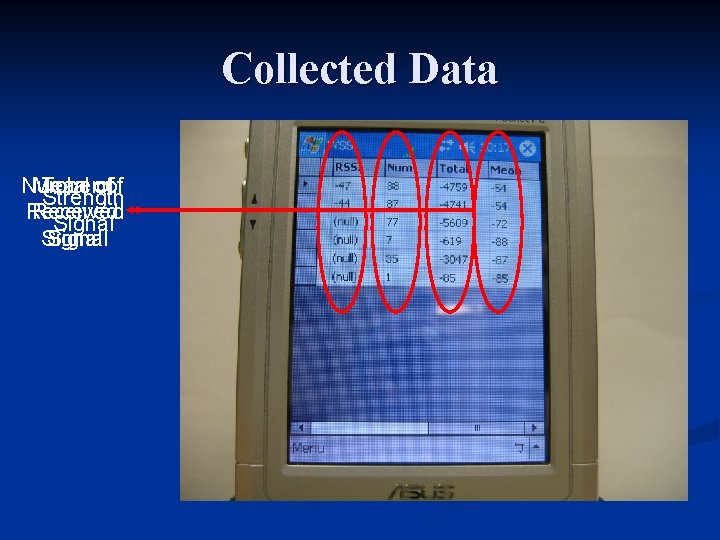
Collected Data Number Mean Total of ofof Strength Received Signal

Wi-Fi Data Processor n To process collected data Setting Access and Position Information Point Region
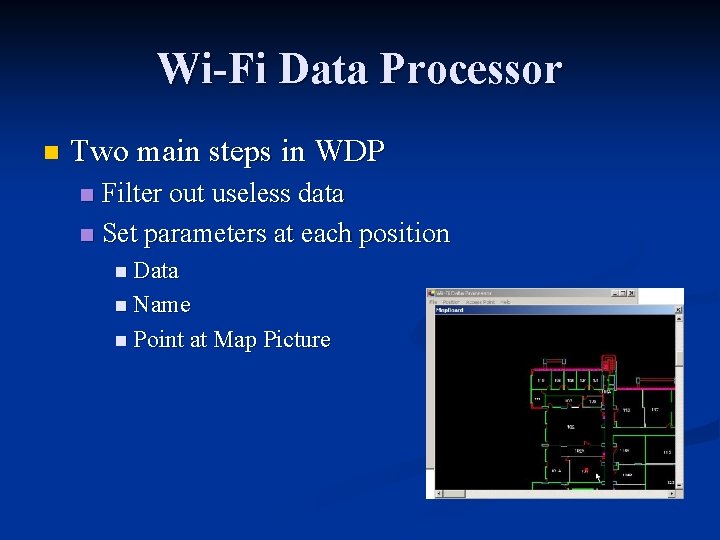
Wi-Fi Data Processor n Two main steps in WDP Filter out useless data n Set parameters at each position n n Data n Name n Point at Map Picture
Wi-Fi Location Detector n Three functions in WLD To detect the location in the target place n To show the detected position name and corresponding position at the Map Picture n To show calculated probability n n Three modes in WLD Data Mode n Map Mode n Probability Mode n
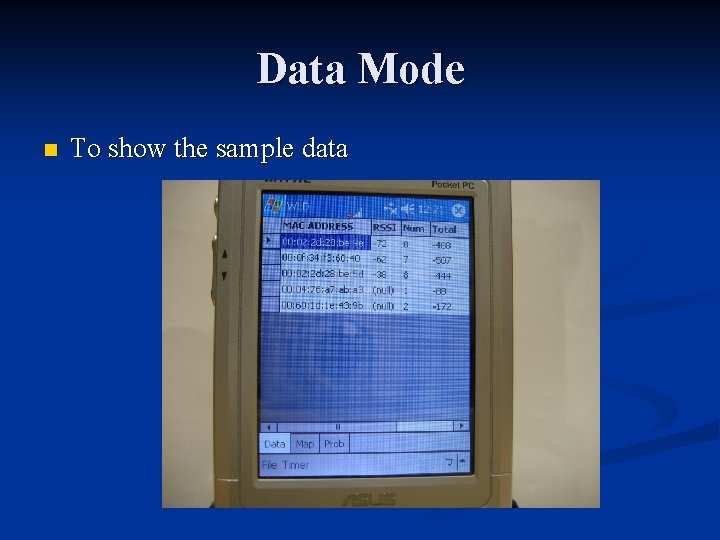
Data Mode n To show the sample data
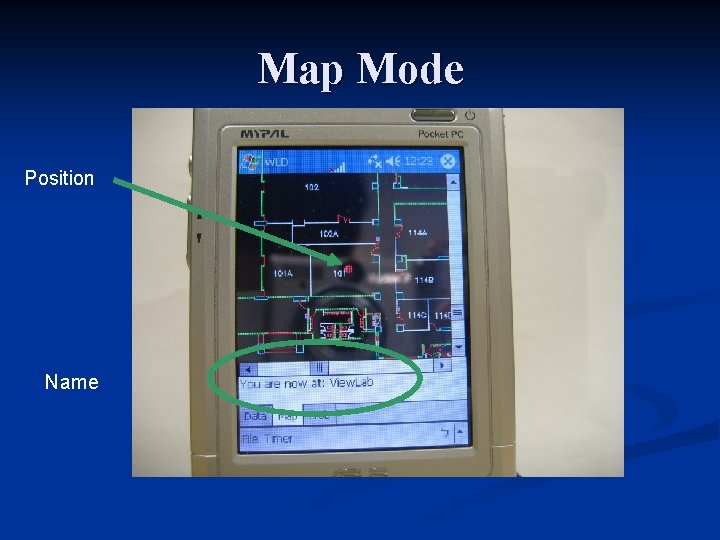
Map Mode Position Name
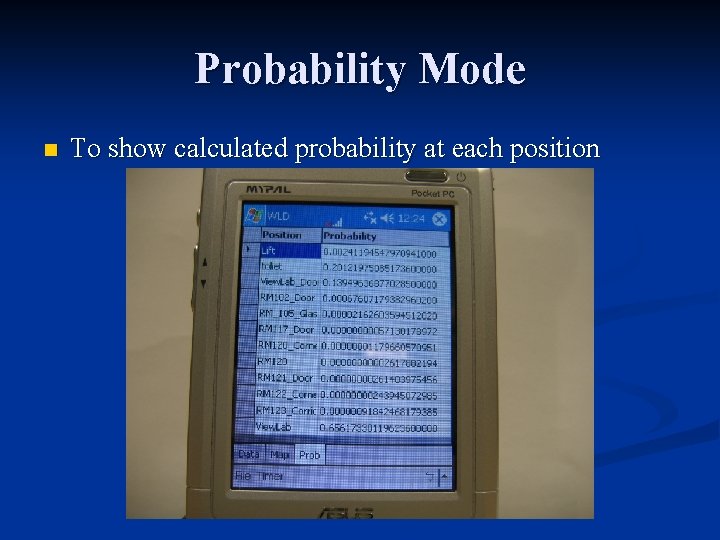
Probability Mode n To show calculated probability at each position
Conclusion We are success in applying Area-Based Probability n We have done experiments on accuracy of algorithm n We have implemented Location-Based Development Tool—Wi-Fi Location System n Based on our knowledge and developed tools in localization, we are able to further develop a location-based service n
Future Work Ho Sin-Hang Engineering Building Tour Guide Service n Multimedia Application with video streaming n Improvement in Localization Algorithm n Increase the Accuracy in Localization n Research on 3 D localization algorithm in an building n

Q&A

DEMO

THE END
- Slides: 50