
Lysosomes endocytosis hetero and autophagocytosis Biology I Faculty
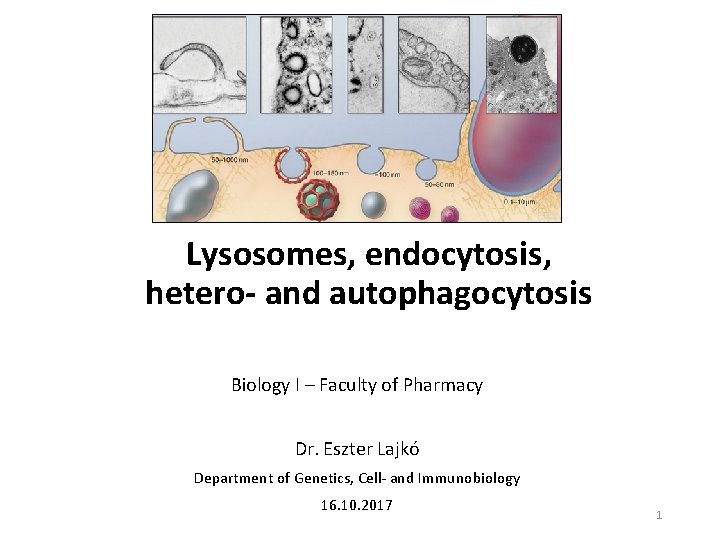
Lysosomes, endocytosis, hetero- and autophagocytosis Biology I – Faculty of Pharmacy Dr. Eszter Lajkó Department of Genetics, Cell and Immunobiology 16. 10. 2017 1
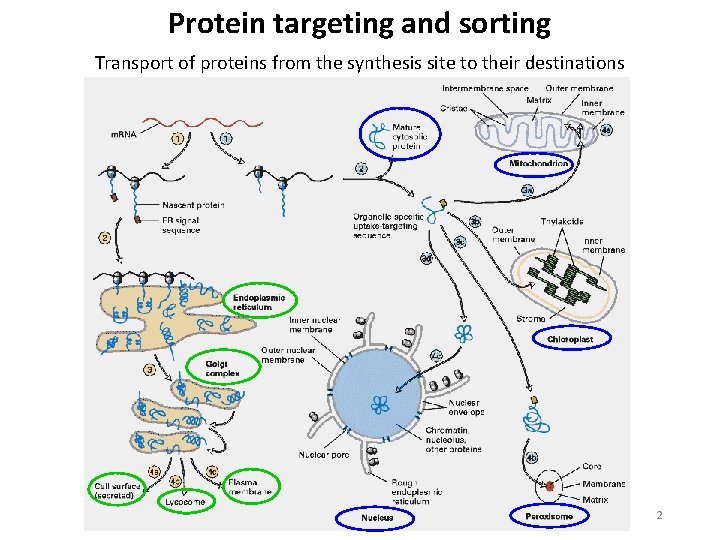
Protein targeting and sorting Transport of proteins from the synthesis site to their destinations 2
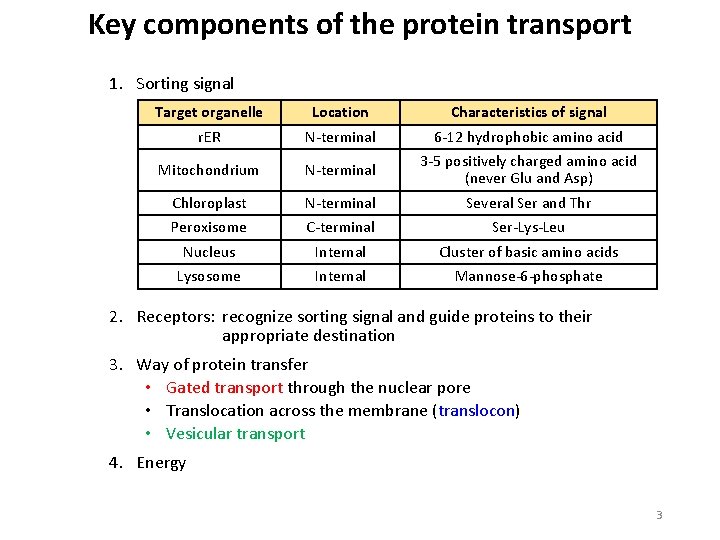
Key components of the protein transport 1. Sorting signal Target organelle Location Characteristics of signal r. ER N terminal 6 12 hydrophobic amino acid Mitochondrium N terminal 3 5 positively charged amino acid (never Glu and Asp) Chloroplast N terminal Several Ser and Thr Peroxisome C terminal Ser Lys Leu Nucleus Internal Cluster of basic amino acids Lysosome Internal Mannose 6 phosphate 2. Receptors: recognize sorting signal and guide proteins to their appropriate destination 3. Way of protein transfer • Gated transport through the nuclear pore • Translocation across the membrane (translocon) • Vesicular transport 4. Energy 3
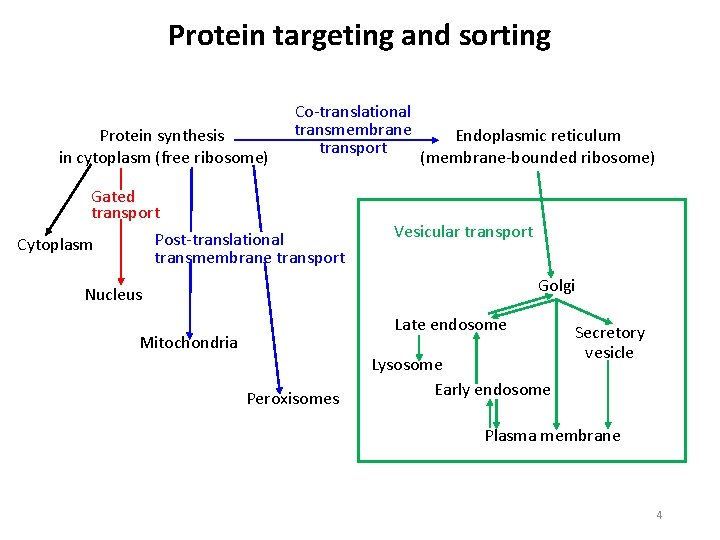
Protein targeting and sorting Protein synthesis in cytoplasm (free ribosome) Co translational transmembrane transport Gated transport Post translational transmembrane transport Cytoplasm Endoplasmic reticulum (membrane bounded ribosome) Vesicular transport Golgi Nucleus Late endosome Mitochondria Peroxisomes Lysosome Early endosome Secretory vesicle Plasma membrane 4

Vesicular transport • transport between membrane enclosed compartments • transport of macromolecules (soluble and membrane bound) from the donor compartment to the target compartment 2. Uncoating receptor Tethring proteins/complex 3. Translocation 4. Tethering 2. Budding 1. Sorting receptor 5. Docking Protein coat 6. Fusion Soluble cargo 5 Nature (2005) 438: 597 -604
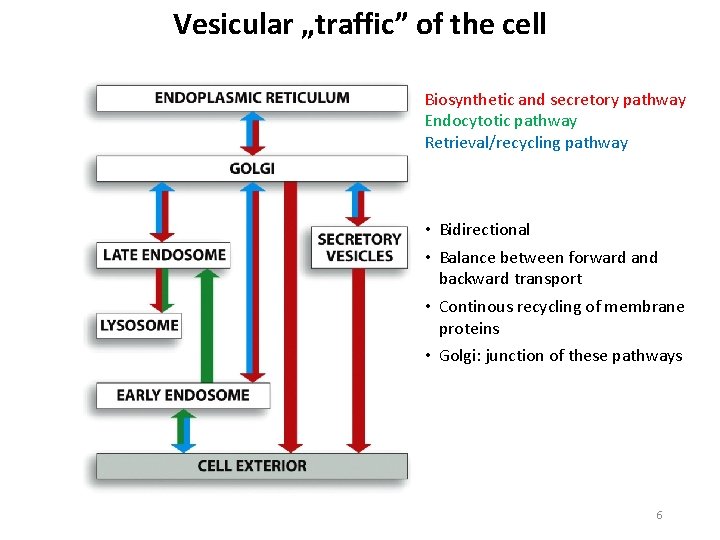
Vesicular „traffic” of the cell Biosynthetic and secretory pathway Endocytotic pathway Retrieval/recycling pathway • Bidirectional • Balance between forward and backward transport • Continous recycling of membrane proteins • Golgi: junction of these pathways 6
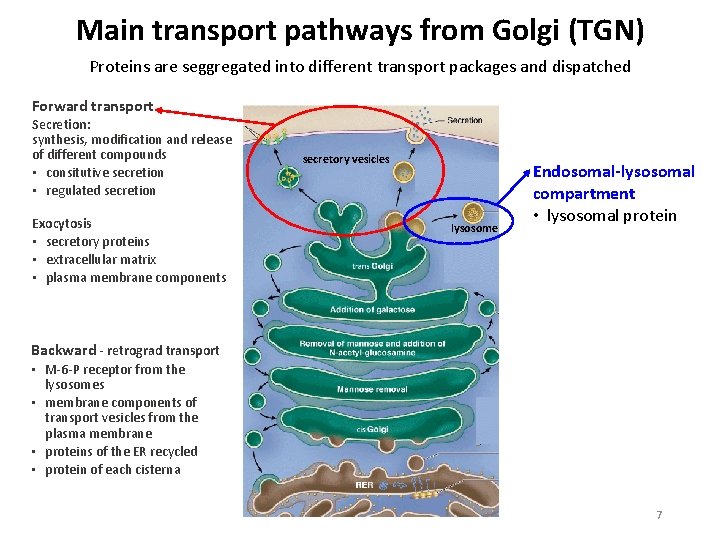
Main transport pathways from Golgi (TGN) Proteins are seggregated into different transport packages and dispatched Forward transport Secretion: synthesis, modification and release of different compounds • consitutive secretion • regulated secretion Exocytosis • secretory proteins • extracellular matrix • plasma membrane components secretory vesicles lysosome Endosomal-lysosomal compartment • lysosomal protein Backward - retrograd transport • M 6 P receptor from the lysosomes • membrane components of transport vesicles from the plasma membrane • proteins of the ER recycled • protein of each cisterna 7
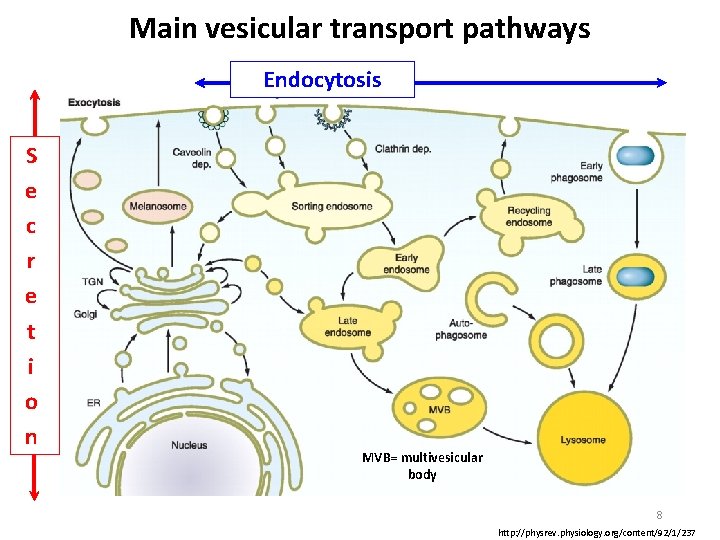
Main vesicular transport pathways Endocytosis S e c r e t i o n MVB= multivesicular body 8 http: //physrev. physiology. org/content/92/1/237
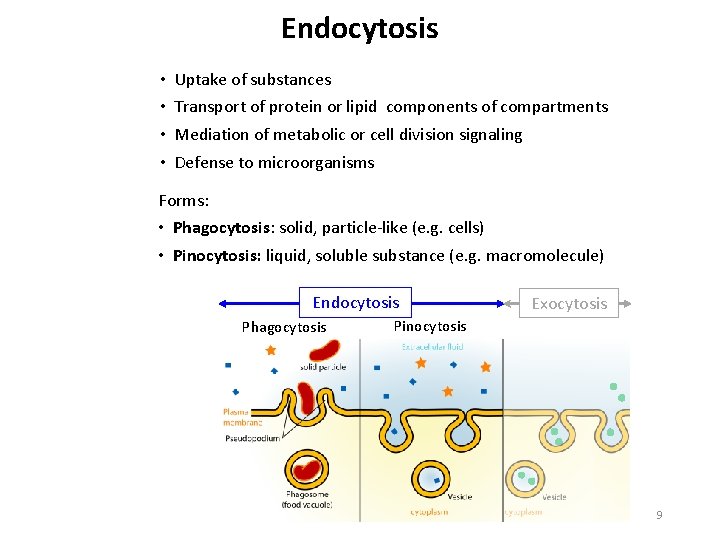
Endocytosis • • Uptake of substances Transport of protein or lipid components of compartments Mediation of metabolic or cell division signaling Defense to microorganisms Forms: • Phagocytosis: solid, particle like (e. g. cells) • Pinocytosis: liquid, soluble substance (e. g. macromolecule) Endocytosis Phagocytosis Exocytosis Pinocytosis 9
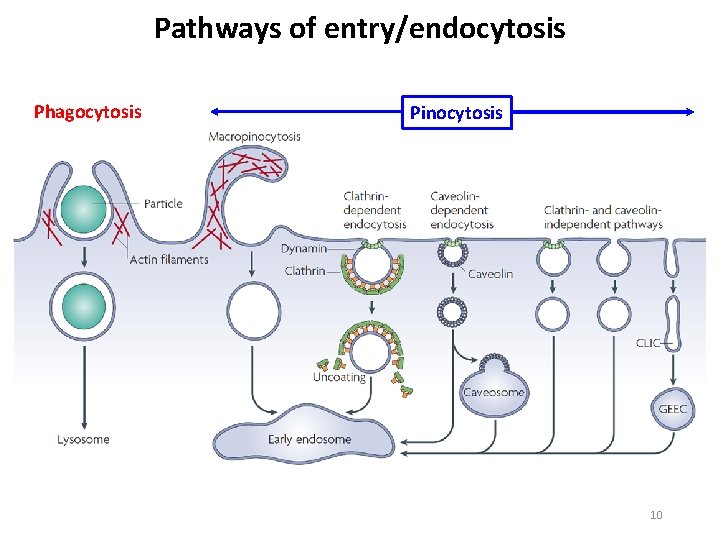
Pathways of entry/endocytosis Phagocytosis Pinocytosis 10
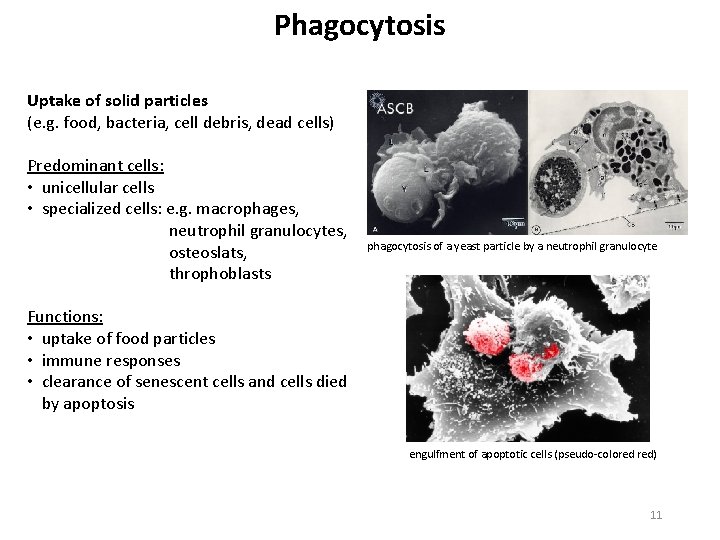
Phagocytosis Uptake of solid particles (e. g. food, bacteria, cell debris, dead cells) Predominant cells: • unicellular cells • specialized cells: e. g. macrophages, neutrophil granulocytes, osteoslats, throphoblasts phagocytosis of a yeast particle by a neutrophil granulocyte Functions: • uptake of food particles • immune responses • clearance of senescent cells and cells died by apoptosis engulfment of apoptotic cells (pseudo colored red) 11
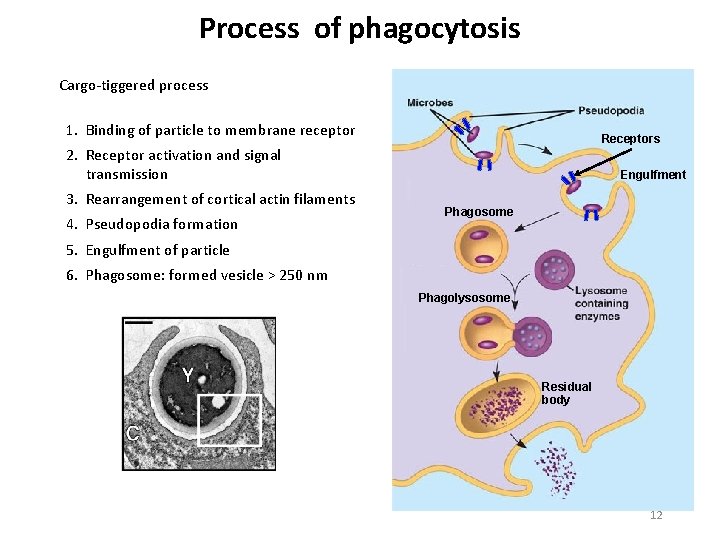
Process of phagocytosis Cargo tiggered process 1. Binding of particle to membrane receptor Receptors 2. Receptor activation and signal transmission 3. Rearrangement of cortical actin filaments 4. Pseudopodia formation Engulfment Phagosome 5. Engulfment of particle 6. Phagosome: formed vesicle > 250 nm Phagolysosome Residual body 12
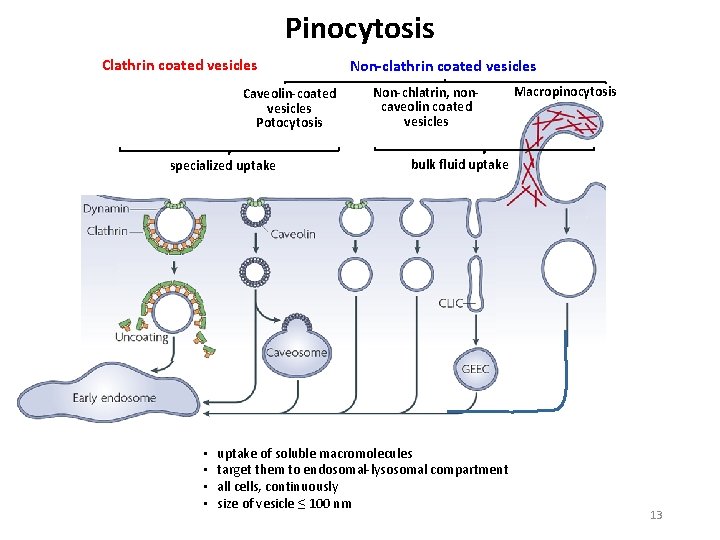
Pinocytosis Clathrin coated vesicles Caveolin-coated vesicles Potocytosis specialized uptake • • Non-clathrin coated vesicles Non-chlatrin, noncaveolin coated vesicles Macropinocytosis bulk fluid uptake of soluble macromolecules target them to endosomal lysosomal compartment all cells, continuously size of vesicle ≤ 100 nm 13
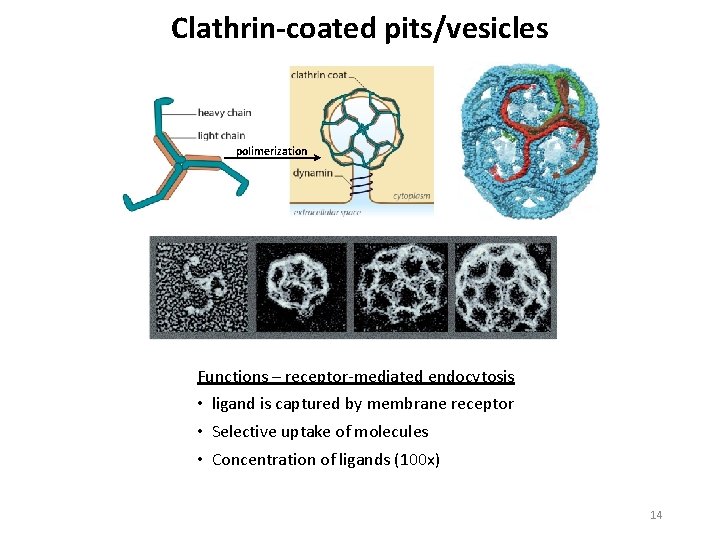
Clathrin-coated pits/vesicles polimerization Functions – receptor mediated endocytosis • ligand is captured by membrane receptor • Selective uptake of molecules • Concentration of ligands (100 x) 14
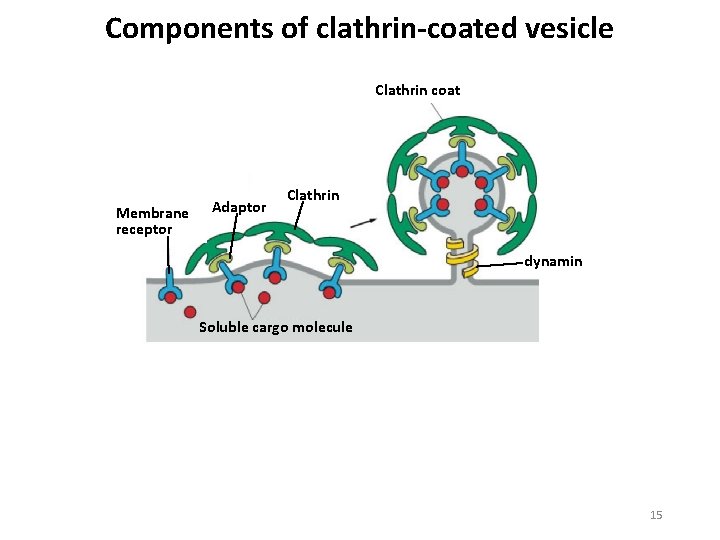
Components of clathrin-coated vesicle Clathrin coat Membrane receptor Adaptor Clathrin dynamin Soluble cargo molecule 15
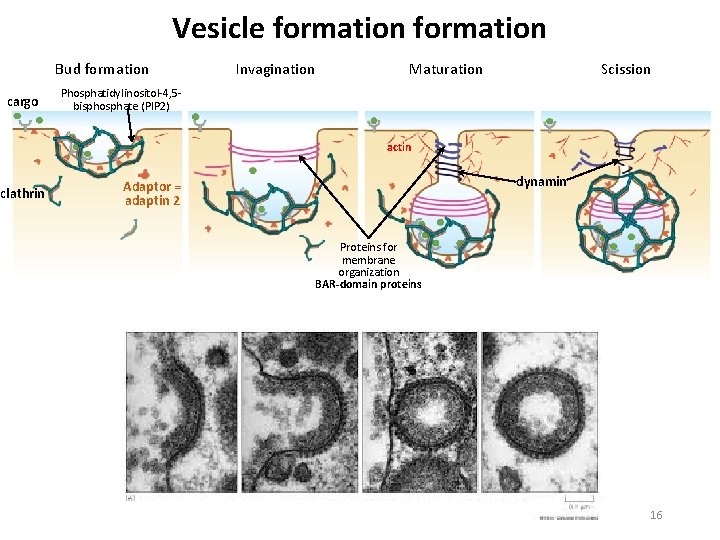
Vesicle formation Bud formation cargo Invagination Maturation Scission Phosphatidylinositol 4, 5 bisphosphate (PIP 2) actin clathrin dynamin Adaptor = adaptin 2 Proteins for membrane organization BAR-domain proteins 16
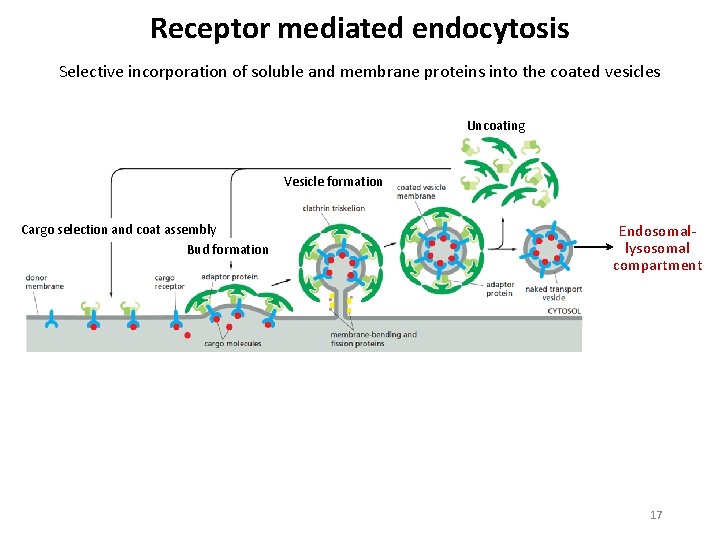
Receptor mediated endocytosis Selective incorporation of soluble and membrane proteins into the coated vesicles Uncoating Vesicle formation Cargo selection and coat assembly Bud formation Endosomal lysosomal compartment 17
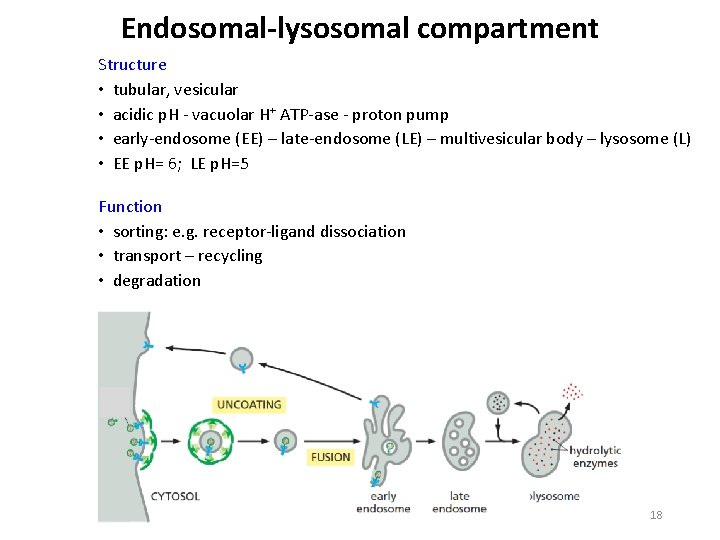
Endosomal-lysosomal compartment Structure • tubular, vesicular • acidic p. H vacuolar H+ ATP ase proton pump • early endosome (EE) – late endosome (LE) – multivesicular body – lysosome (L) • EE p. H= 6; LE p. H=5 Function • sorting: e. g. receptor ligand dissociation • transport – recycling • degradation 18
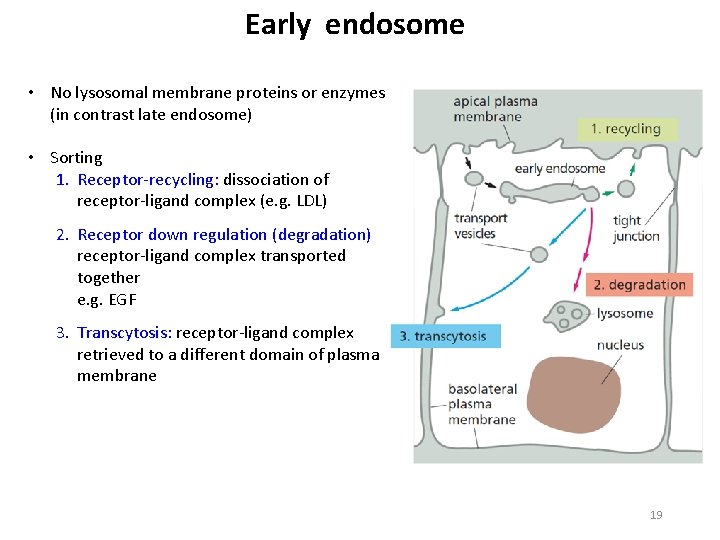
Early endosome • No lysosomal membrane proteins or enzymes (in contrast late endosome) • Sorting 1. Receptor recycling: dissociation of receptor ligand complex (e. g. LDL) 2. Receptor down regulation (degradation) receptor ligand complex transported together e. g. EGF 3. Transcytosis: receptor ligand complex retrieved to a different domain of plasma membrane 19
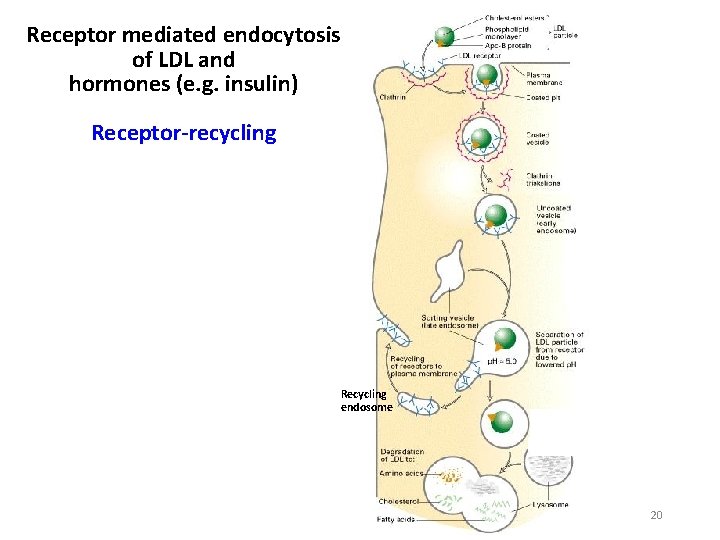
Receptor mediated endocytosis of LDL and hormones (e. g. insulin) Receptor-recycling Recycling endosome 20
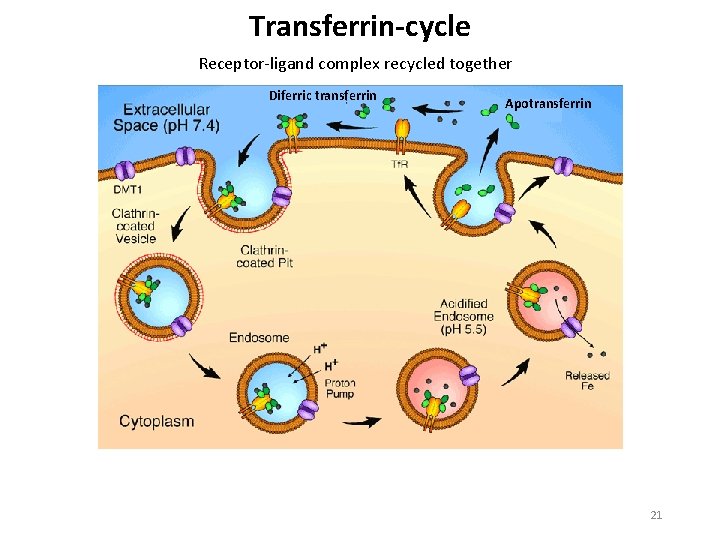
Transferrin-cycle Receptor ligand complex recycled together Diferric transferrin Apotransferrin 21
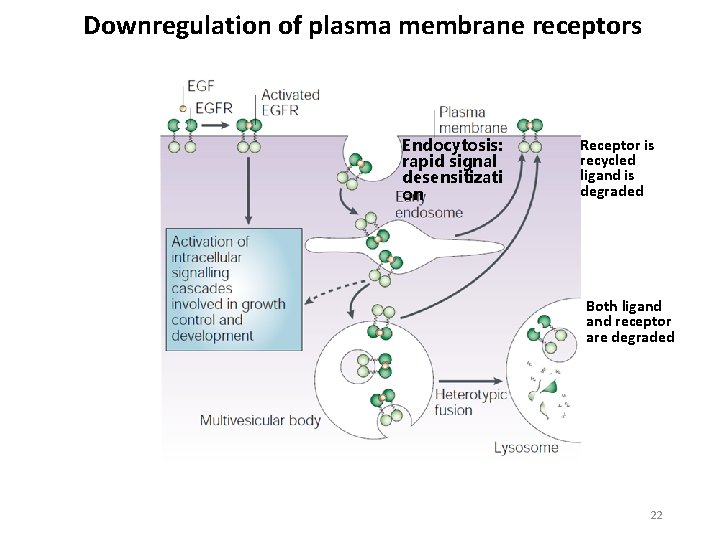
Downregulation of plasma membrane receptors Endocytosis: rapid signal desensitizati on Receptor is recycled ligand is degraded Both ligand receptor are degraded No down regulation of plasma membrane receptors (eg. growth factor) may result intensive proliferation of cells, it can be a cause of tumors. 22
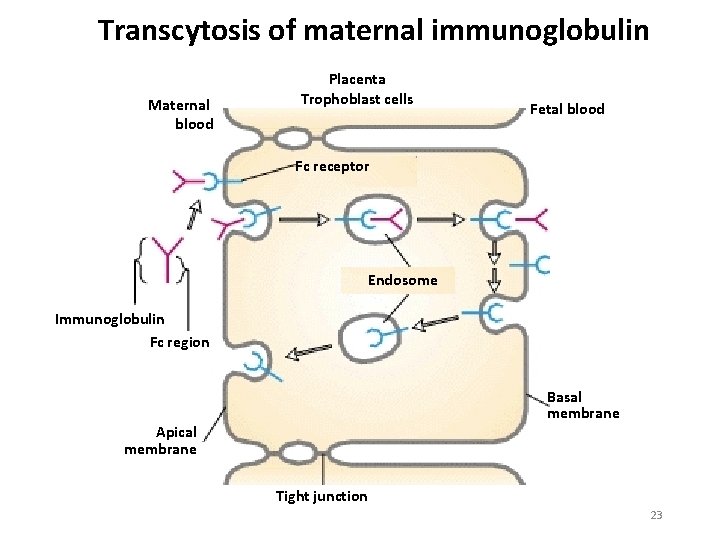
Transcytosis of maternal immunoglobulin Maternal blood Placenta Trophoblast cells Fetal blood Fc receptor Endosome Immunoglobulin Fc region Basal membrane Apical membrane Tight junction 23
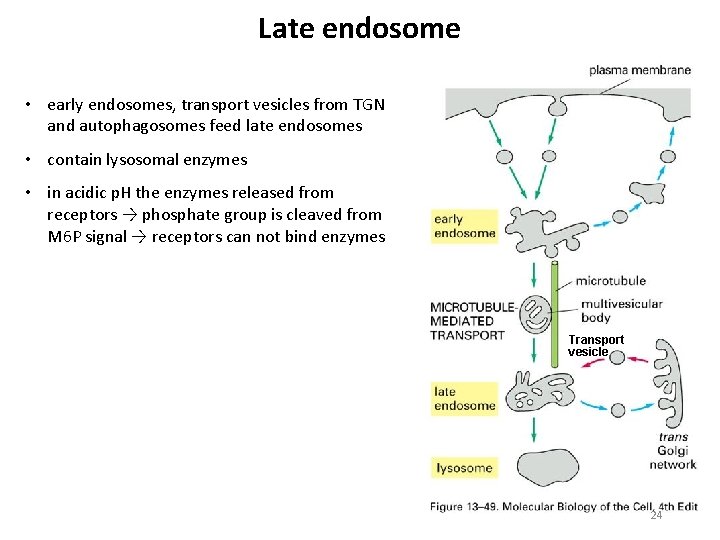
Late endosome • early endosomes, transport vesicles from TGN and autophagosomes feed late endosomes • contain lysosomal enzymes • in acidic p. H the enzymes released from receptors → phosphate group is cleaved from M 6 P signal → receptors can not bind enzymes Transport vesicle 24
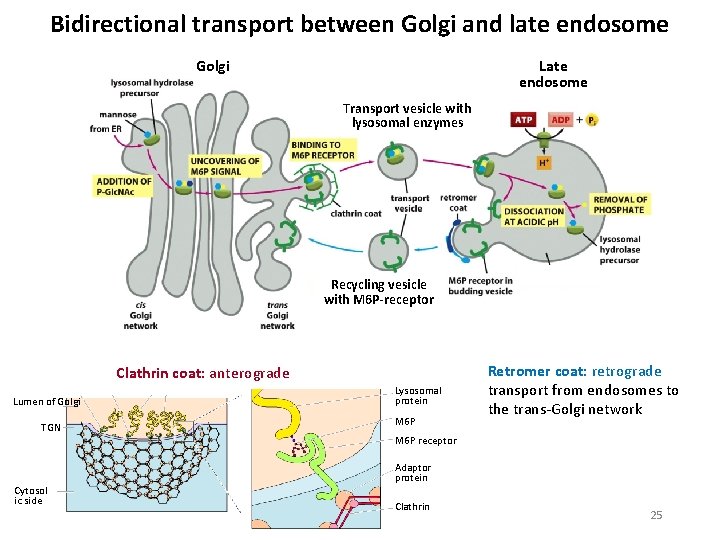
Bidirectional transport between Golgi and late endosome Late endosome Golgi Transport vesicle with lysosomal enzymes Recycling vesicle with M 6 P-receptor Clathrin coat: anterograde Lumen of Golgi TGN Lysosomal protein M 6 P Retromer coat: retrograde transport from endosomes to the trans Golgi network M 6 P receptor Adaptor protein Cytosol ic side Clathrin 25
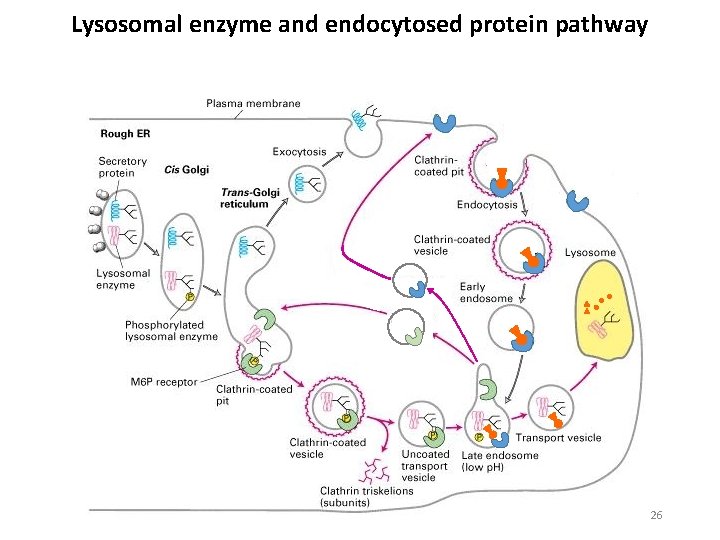
Lysosomal enzyme and endocytosed protein pathway 26
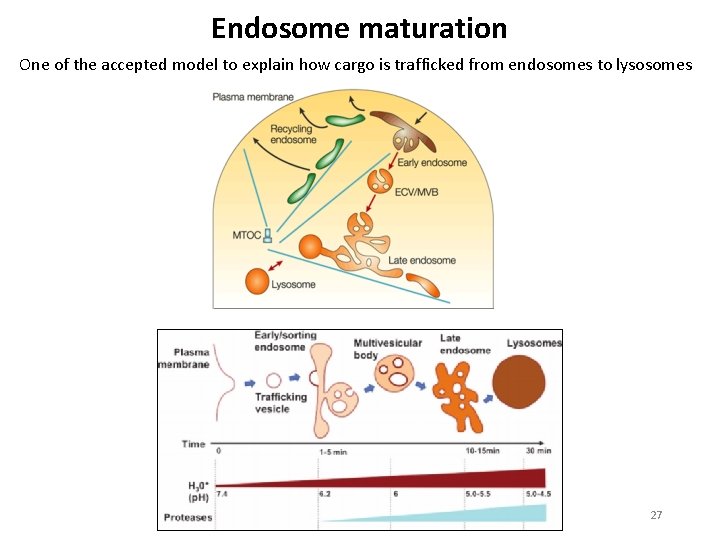
Endosome maturation One of the accepted model to explain how cargo is trafficked from endosomes to lysosomes 27
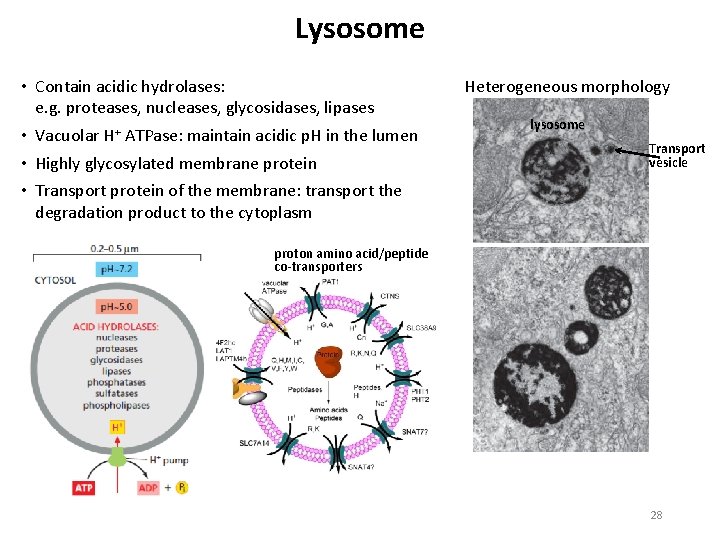
Lysosome • Contain acidic hydrolases: e. g. proteases, nucleases, glycosidases, lipases • Vacuolar H+ ATPase: maintain acidic p. H in the lumen • Highly glycosylated membrane protein • Transport protein of the membrane: transport the degradation product to the cytoplasm Heterogeneous morphology lysosome Transport vesicle proton amino acid/peptide co transporters 28
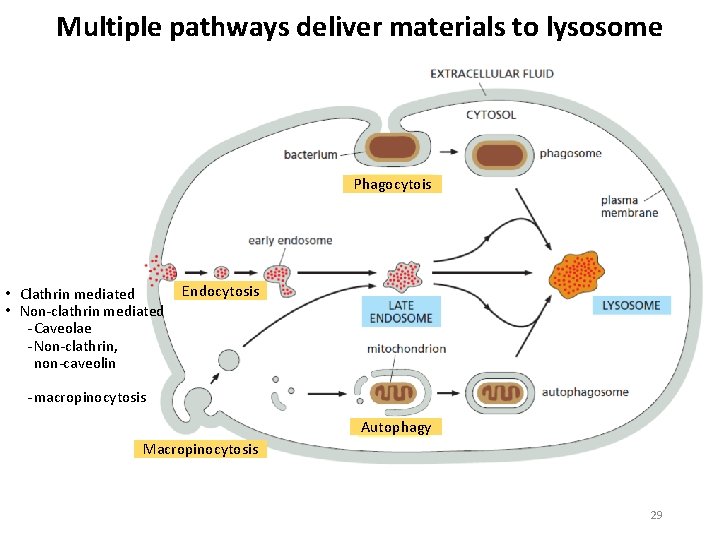
Multiple pathways deliver materials to lysosome Phagocytois • Clathrin mediated • Non clathrin mediated Caveolae Non clathrin, non caveolin Endocytosis macropinocytosis Autophagy Macropinocytosis 29
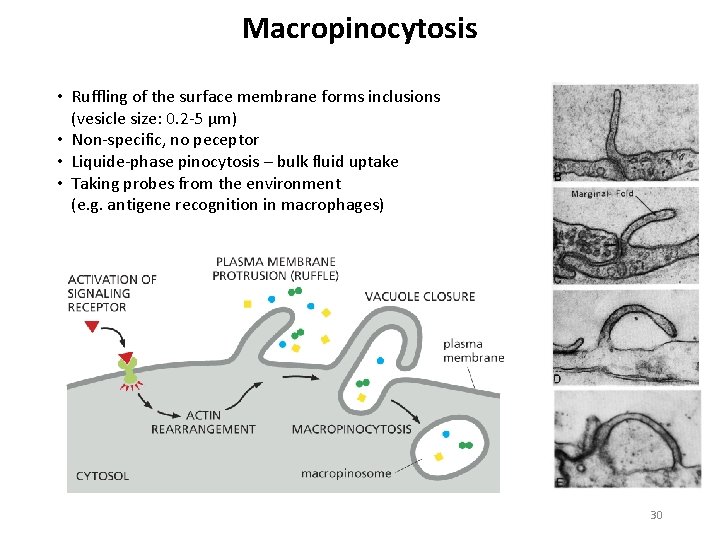
Macropinocytosis • Ruffling of the surface membrane forms inclusions (vesicle size: 0. 2 5 μm) • Non specific, no peceptor • Liquide phase pinocytosis – bulk fluid uptake • Taking probes from the environment (e. g. antigene recognition in macrophages) 30
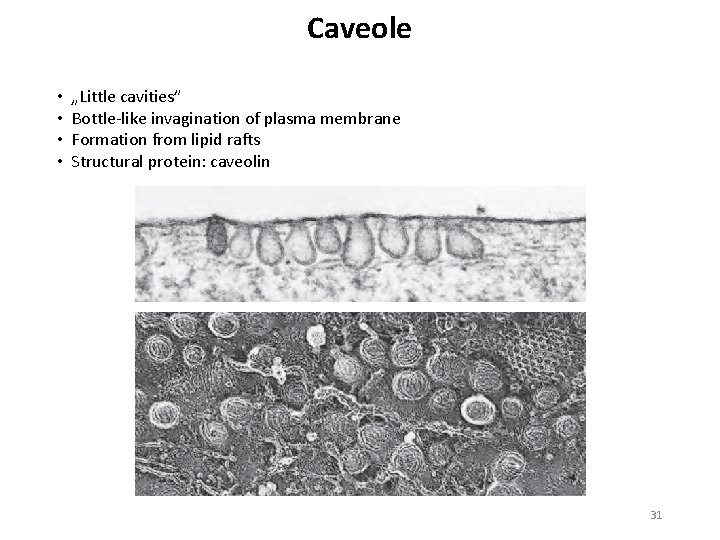
Caveole • • „Little cavities” Bottle like invagination of plasma membrane Formation from lipid rafts Structural protein: caveolin 31
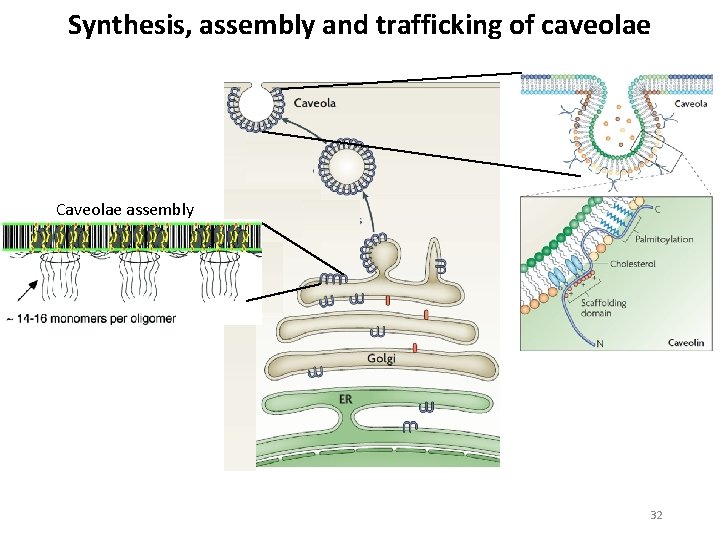
Synthesis, assembly and trafficking of caveolae Caveolae assembly 32

Caveolar endocytosis 1. 2. Caveolae closes, but not internalized Materials enter cytoplasm by special carrier molecule 3. 33
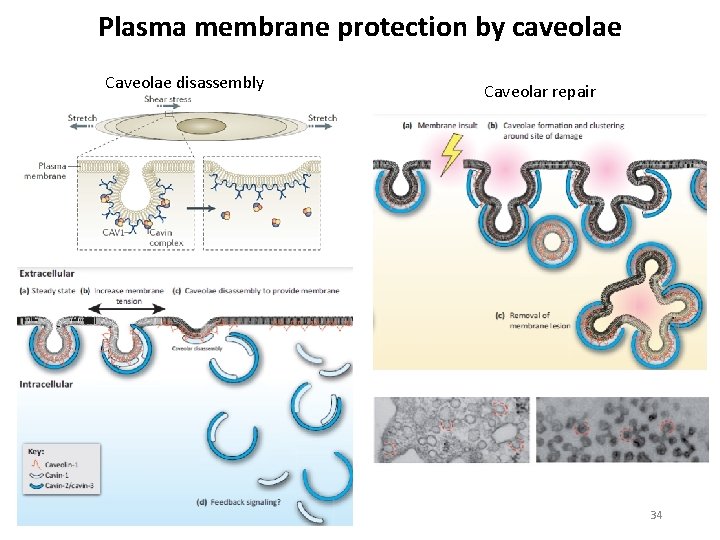
Plasma membrane protection by caveolae Caveolae disassembly Caveolar repair 34
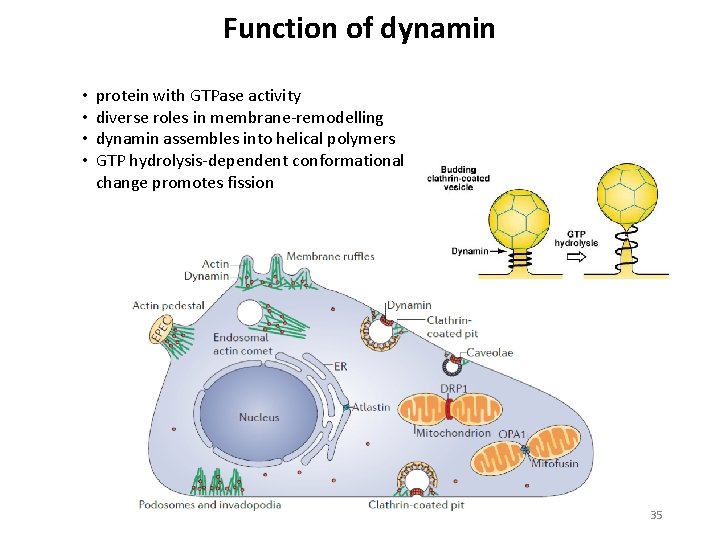
Function of dynamin • • protein with GTPase activity diverse roles in membrane remodelling dynamin assembles into helical polymers GTP hydrolysis dependent conformational change promotes fission 35

Structure of dynamin and dynamin-mediated membrane fission GTPase effector domain Membranbinding domain 36
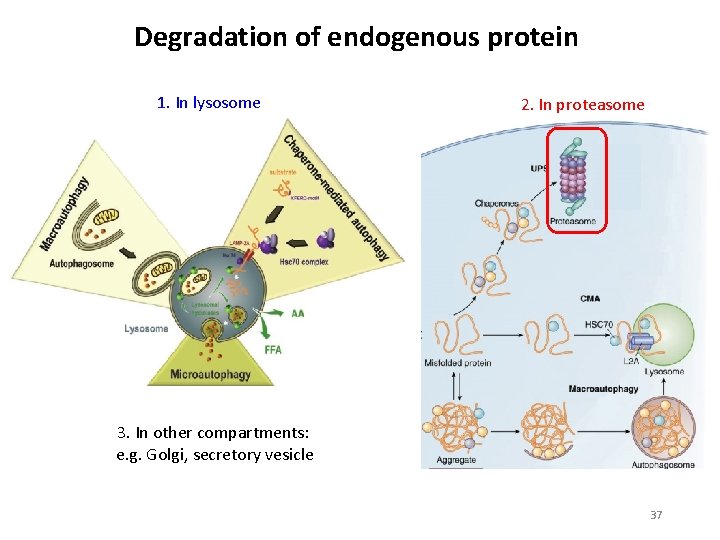
Degradation of endogenous protein 1. In lysosome 2. In proteasome 3. In other compartments: e. g. Golgi, secretory vesicle 37
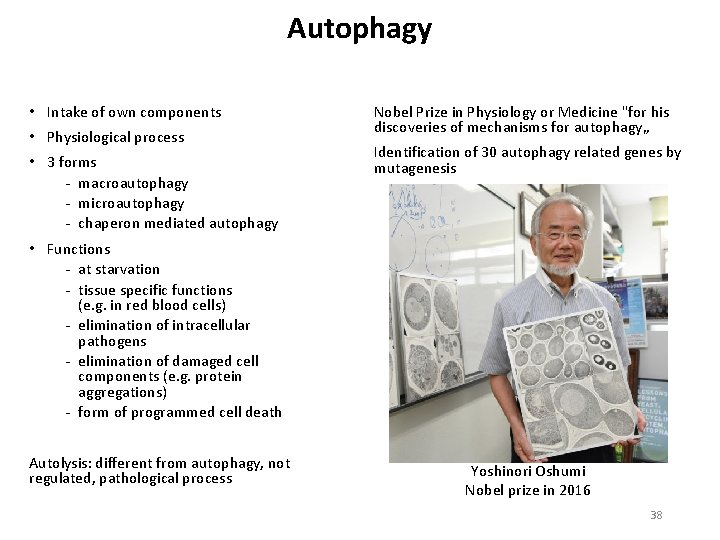
Autophagy • Intake of own components • Physiological process • 3 forms macroautophagy microautophagy chaperon mediated autophagy Nobel Prize in Physiology or Medicine "for his discoveries of mechanisms for autophagy„ Identification of 30 autophagy related genes by mutagenesis • Functions at starvation tissue specific functions (e. g. in red blood cells) elimination of intracellular pathogens elimination of damaged cell components (e. g. protein aggregations) form of programmed cell death Autolysis: different from autophagy, not regulated, pathological process Yoshinori Oshumi Nobel prize in 2016 38
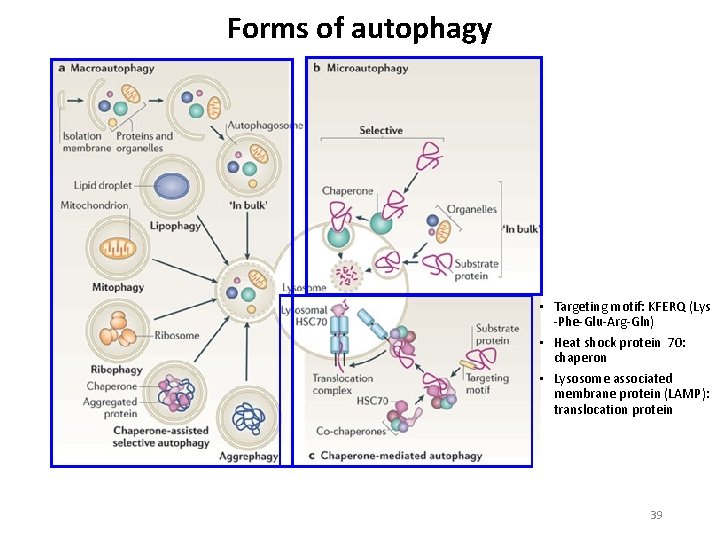
Forms of autophagy • Targeting motif: KFERQ (Lys Phe Glu Arg Gln) • Heat shock protein 70: chaperon • Lysosome associated membrane protein (LAMP): translocation protein 39
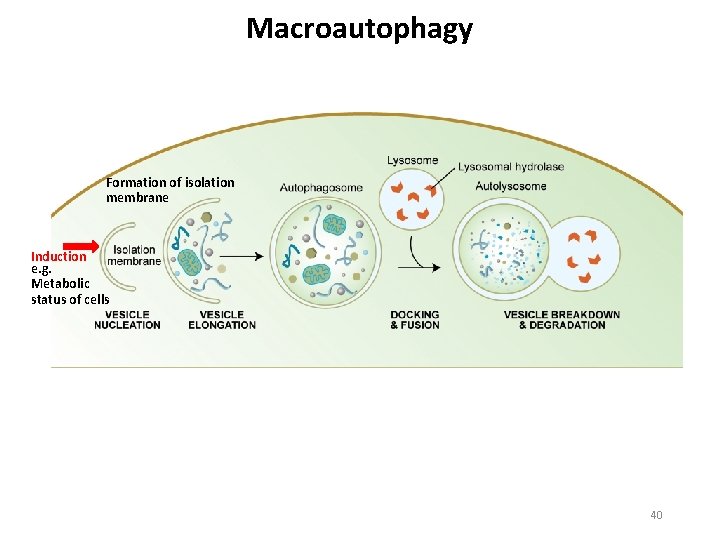
Macroautophagy Formation of isolation membrane Induction e. g. Metabolic status of cells 40
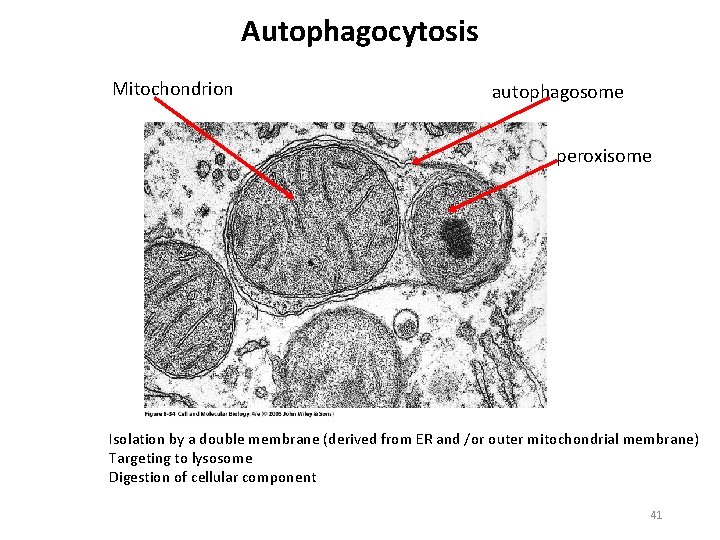
Autophagocytosis Mitochondrion autophagosome peroxisome Isolation by a double membrane (derived from ER and /or outer mitochondrial membrane) Targeting to lysosome Digestion of cellular component 41
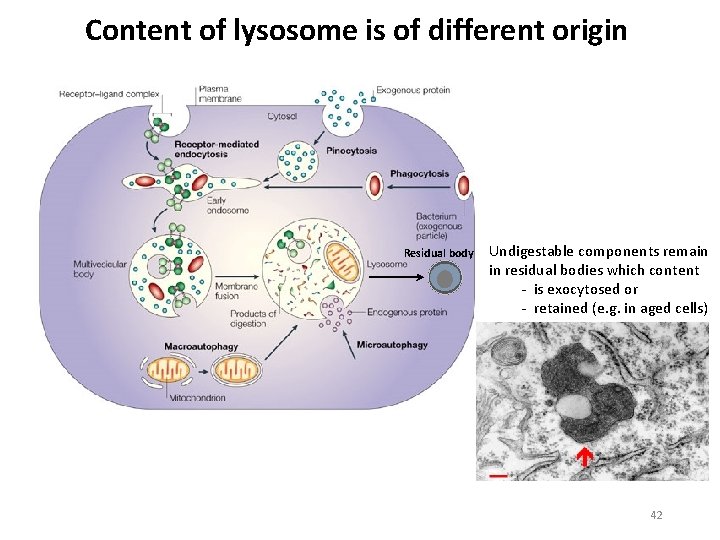
Content of lysosome is of different origin Residual body Undigestable components remain in residual bodies which content is exocytosed or retained (e. g. in aged cells) 42
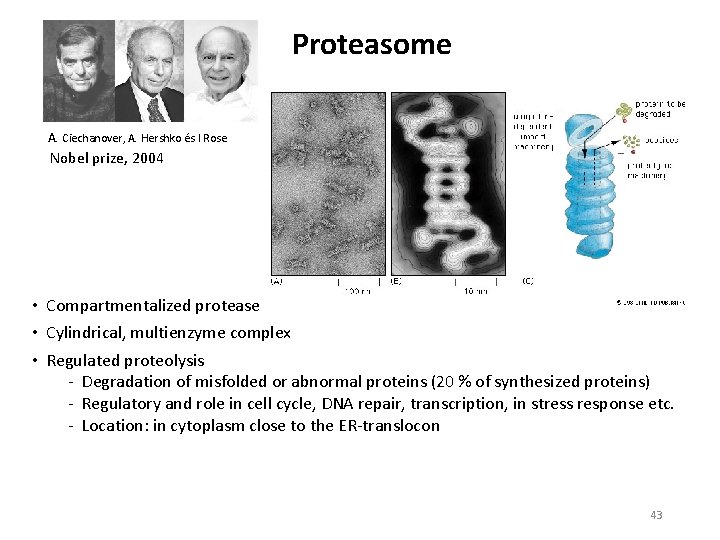
Proteasome A. Ciechanover, A. Hershko és I Rose Nobel prize, 2004 • Compartmentalized protease • Cylindrical, multienzyme complex • Regulated proteolysis Degradation of misfolded or abnormal proteins (20 % of synthesized proteins) Regulatory and role in cell cycle, DNA repair, transcription, in stress response etc. Location: in cytoplasm close to the ER translocon 43
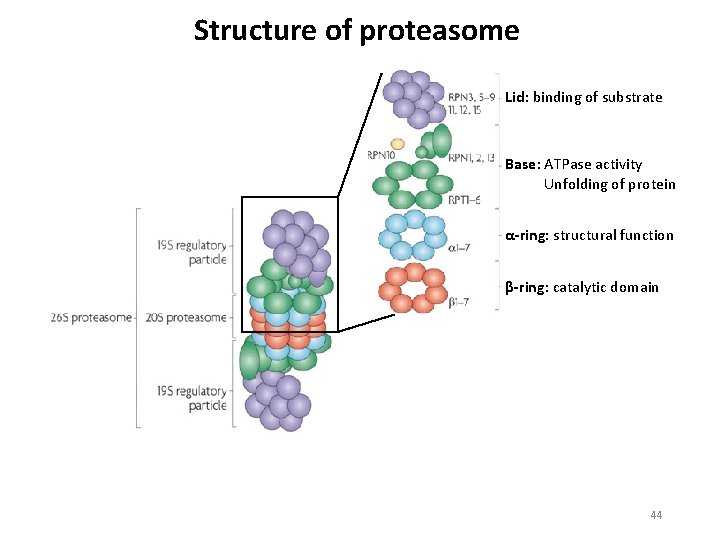
Structure of proteasome Lid: binding of substrate Base: ATPase activity Unfolding of protein α-ring: structural function β-ring: catalytic domain 44
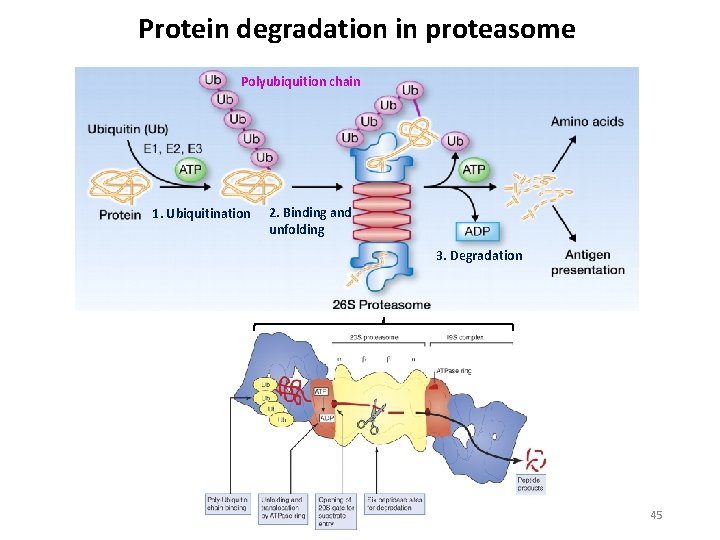
Protein degradation in proteasome Polyubiquition chain 1. Ubiquitination 2. Binding and unfolding 3. Degradation 45
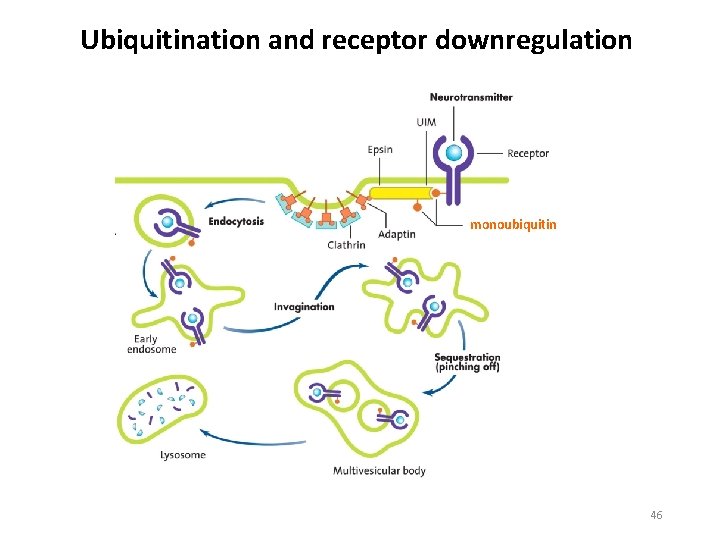
Ubiquitination and receptor downregulation monoubiquitin 46
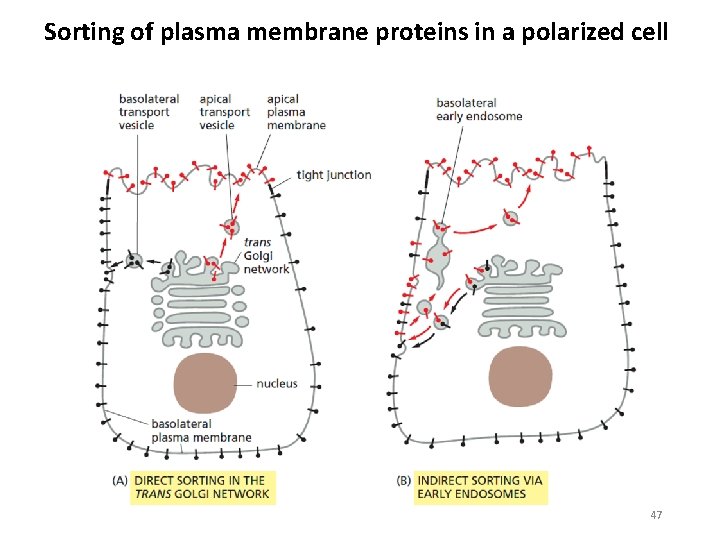
Sorting of plasma membrane proteins in a polarized cell 47
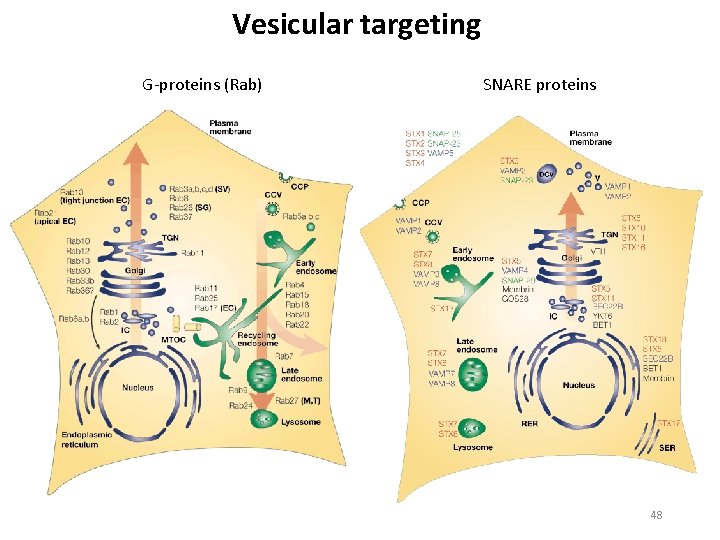
Vesicular targeting G proteins (Rab) SNARE proteins 48
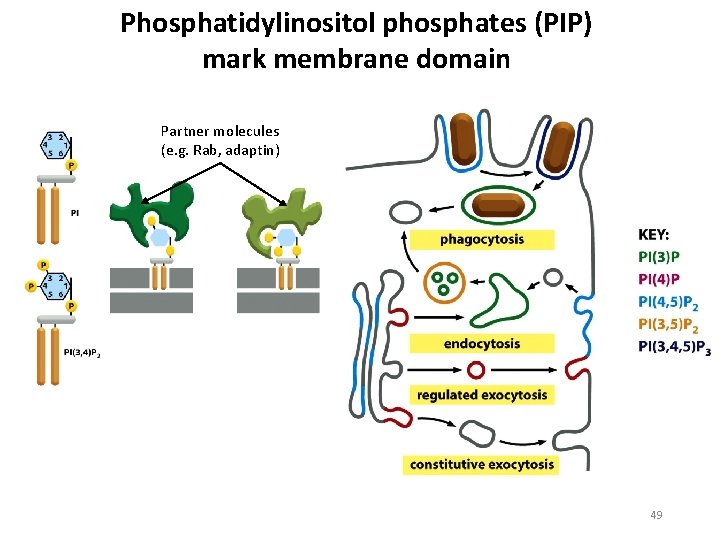
Phosphatidylinositol phosphates (PIP) mark membrane domain Partner molecules (e. g. Rab, adaptin) 49
- Slides: 49