
Lymphoproliferative disorders Objectives To understand the general features

Lymphoproliferative disorders Objectives: • • • To understand the general features of lymphoproliferative disorders (LPD) To understand some benign causes of LPD such as infectious mononucleosis To understand the general classification of malignant LPD To understand the clinicopathological features of chronic lymphoid leukemia To understand the general features of the most common (LPD) (Burkitt lymphoma, Follicular lymphoma, multiple myeloma and Hodgkin lymphoma). Important. Extra. Notes “Success is the result of perfection, hard work, learning from failure, loyalty, and persistence. Colin” Powell References: 436 girls & boys’ slides 435 teamwork slides Editing file Do you have any suggestions? Please contact us! @haematology 436 E-mail: Haematology 436@gmail. com or simply use this form
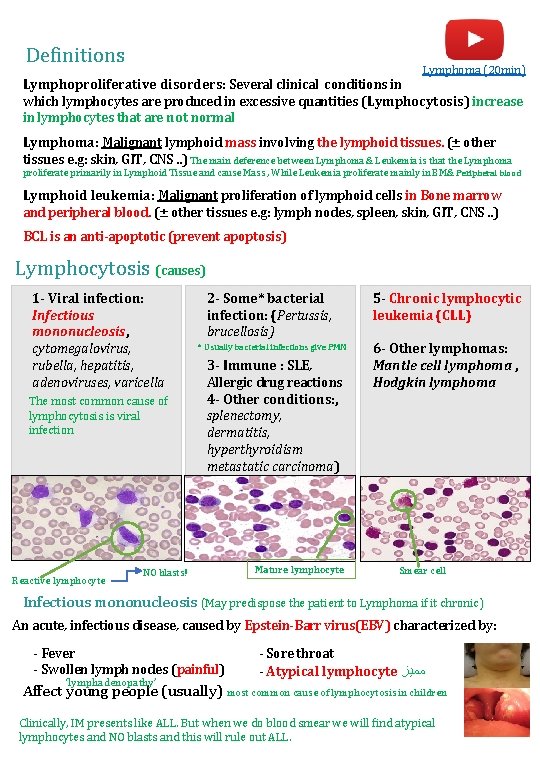
Definitions Lymphoma (20 min) Lymphoproliferative disorders: Several clinical conditions in which lymphocytes are produced in excessive quantities (Lymphocytosis) increase in lymphocytes that are not normal Lymphoma: Malignant lymphoid mass involving the lymphoid tissues. (± other tissues e. g: skin, GIT, CNS. . ) The main deference between Lymphoma & Leukemia is that the Lymphoma proliferate primarily in Lymphoid Tissue and cause Mass , While Leukemia proliferate mainly in BM& Peripheral blood Lymphoid leukemia: Malignant proliferation of lymphoid cells in Bone marrow and peripheral blood. (± other tissues e. g: lymph nodes, spleen, skin, GIT, CNS. . ) BCL is an anti-apoptotic (prevent apoptosis) Lymphocytosis (causes) 1 - Viral infection: Infectious mononucleosis, cytomegalovirus, rubella, hepatitis, adenoviruses, varicella The most common cause of lymphocytosis is viral infection Reactive lymphocyte 2 - Some* bacterial infection: (Pertussis, brucellosis) * Usually bacterial infections give PMN 3 - Immune : SLE, Allergic drug reactions 4 - Other conditions: , splenectomy, dermatitis, hyperthyroidism metastatic carcinoma) NO blasts! Mature lymphocyte 5 - Chronic lymphocytic leukemia (CLL) 6 - Other lymphomas: Mantle cell lymphoma , Hodgkin lymphoma Smear cell Infectious mononucleosis (May predispose the patient to Lymphoma if it chronic) An acute, infectious disease, caused by Epstein-Barr virus(EBV) characterized by: - Fever - Swollen lymph nodes (painful) ‘lymphadenopathy’ - Sore throat - Atypical lymphocyte ﻣﻤﻴﺰ Affect young people (usually) most common cause of lymphocytosis in children Clinically, IM presents like ALL. But when we do blood smear we will find atypical lymphocytes and NO blasts and this will rule out ALL.
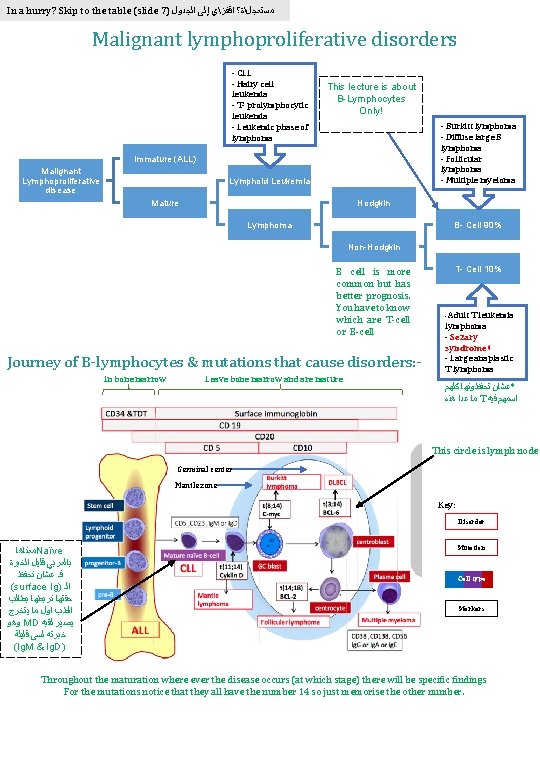
In a hurry? Skip to the table (slide 7) ﻣﺴﺘﻌﺠﻞﺓ؟ ﺍﻗﻔﺰﻱ ﺇﻟﻰ ﺍﻟﺠﺪﻭﻝ Malignant lymphoproliferative disorders - CLL - Hairy cell leukemia - T- prolymphocytic leukemia - Leukemic phase of lymphoma This lecture is about B-Lymphocytes Only! - Burkitt lymphoma - Diffuse large B lymphoma - Follicular lymphoma - Multiple myeloma Immature (ALL) Malignant Lymphoproliferative disease Lymphoid Leukemia Mature Hodgkin Lymphoma B- Cell 90% Non-Hodgkin B cell is more common but has better prognosis. You have to know which are T-cell or B-cell Journey of B-lymphocytes & mutations that cause disorders: In bone marrow Leave bone marrow and are mature T- Cell 10% -Adult T leukemia lymphoma - Sezary syndrome* - Large anaplastic T lymphoma ﻛﻠﻬﻢ ﺗﺤﻔﻈﻮﻧﻬﺎ *ﻋﺸﺎﻥ ﻫﺬﻩ ﻋﺪﺍ ﻣﺎ T ﻓﻴﻪ ﺍﺳﻤﻬﻢ This circle is lymph node Germinal center Mantle zone Key: Disorder ﻣﻌﻨﺎﻫﺎ Naïve ﺑﺎﻟﻌﺮﺑﻲ ﻗﻠﻴﻞ ﺍﻟﺨﺒﺮﺓ ﻓـ ﻋﺸﺎﻥ ﻧﺤﻔﻆ (surface Ig) ﺍﻟـ ﺣﻘﺘﻬﺎ ﻧﺮﺑﻄﻬﺎ ﺑﻄﺎﻟﺐ ﺍﻟﻄﺐ ﺍﻭﻝ ﻣﺎ ﻳﺘﺨﺮﺝ ﻭﻫﻮ MD ﻳﺼﻴﺮ ﻟﻘﺒﻪ ﺧﺒﺮﺗﻪ ﻟﺴﻰ ﻗﻠﻴﻠﺔ (Ig. M & Ig. D) Mutation Cell type Markers Throughout the maturation where ever the disease occurs (at which stage) there will be specific findings For the mutations notice that they all have the number 14 so just memorise the other number.
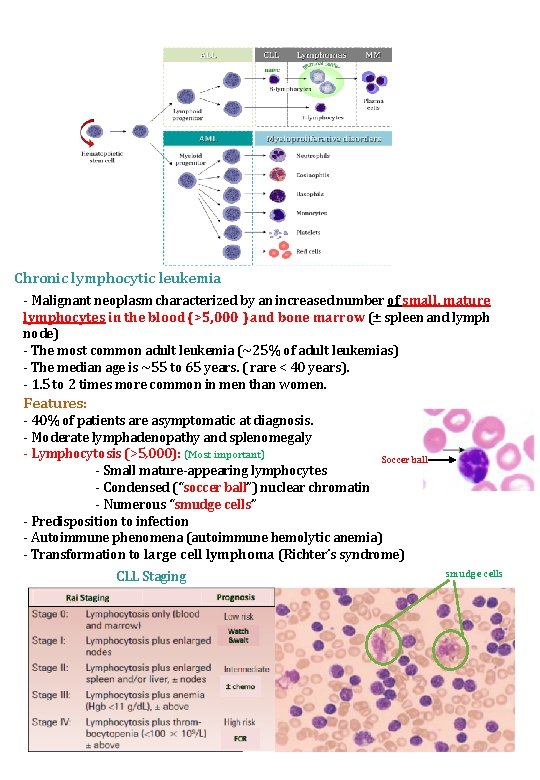
Chronic lymphocytic leukemia - Malignant neoplasm characterized by an increased number of small, mature lymphocytes in the blood (>5, 000 ) and bone marrow (± spleen and lymph node) - The most common adult leukemia (~25% of adult leukemias) - The median age is ~55 to 65 years. ( rare < 40 years). - 1. 5 to 2 times more common in men than women. Features: - 40% of patients are asymptomatic at diagnosis. - Moderate lymphadenopathy and splenomegaly - Lymphocytosis (>5, 000): (Most important) Soccer ball - Small mature-appearing lymphocytes - Condensed (“soccer ball”) nuclear chromatin - Numerous “smudge cells” - Predisposition to infection - Autoimmune phenomena (autoimmune hemolytic anemia) - Transformation to large cell lymphoma (Richter’s syndrome) CLL Staging smudge cells
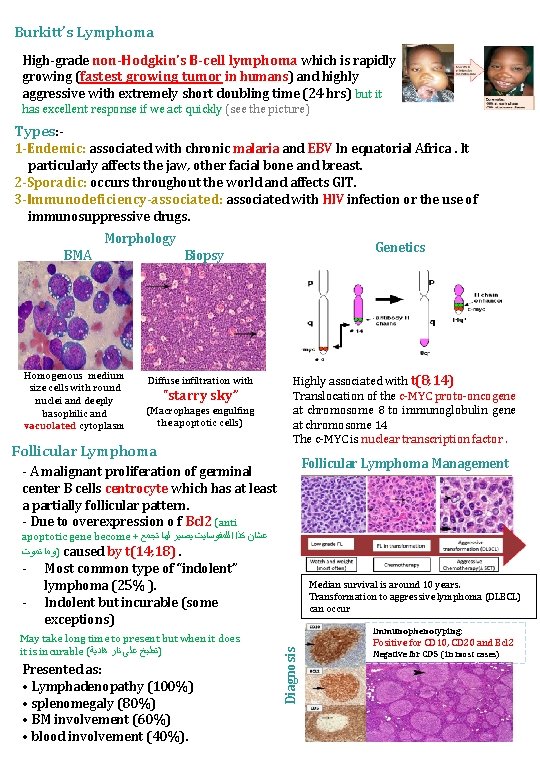
Burkitt’s Lymphoma High-grade non-Hodgkin's B-cell lymphoma which is rapidly growing (fastest growing tumor in humans) and highly aggressive with extremely short doubling time (24 hrs) but it has excellent response if we act quickly (see the picture) Types: 1 -Endemic: associated with chronic malaria and EBV In equatorial Africa. It particularly affects the jaw, other facial bone and breast. 2 -Sporadic: occurs throughout the world and affects GIT. 3 -Immunodeficiency-associated: associated with HIV infection or the use of immunosuppressive drugs. Morphology Homogenous medium size cells with round nuclei and deeply basophilic and vacuolated cytoplasm Genetics Biopsy BMA Diffuse infiltration with "starry sky” (Macrophages engulfing the apoptotic cells) Follicular Lymphoma Highly associated with t(8; 14) Translocation of the c-MYC proto-oncogene at chromosome 8 to immunoglobulin gene at chromosome 14 The c-MYC is nuclear transcription factor. Follicular Lymphoma Management - A malignant proliferation of germinal center B cells centrocyte which has at least a partially follicular pattern. - Due to overexpression o f Bcl 2 (anti apoptotic gene become + ﺗﺠﻤﻊ ﻟﻬﺎ ﻳﺼﻴﺮ ﺍﻟﻠﻤﻔﻮﺳﺎﻳﺖ ﻛﺬﺍ ﻋﺸﺎﻥ ﺗﻤﻮﺕ )ﻭﻣﺎ caused by t(14; 18). - Most common type of “indolent” lymphoma (25% ). Indolent but incurable (some exceptions) May take long time to present but when it does it is incurable ( ﻫﺎﺩﻳﺔ ﻧﺎﺭ ﻋﻠﻰ )ﺗﻄﺒﺦ Presented as: • Lymphadenopathy (100%) • splenomegaly (80%) • BM involvement (60%) • blood involvement (40%). Median survival is around 10 years. Transformation to aggressive lymphoma (DLBCL) can occur Immunophenotyping: Diagnosis - Positive for CD 10, CD 20 and Bcl 2 Negative for CD 5 ( in most cases)
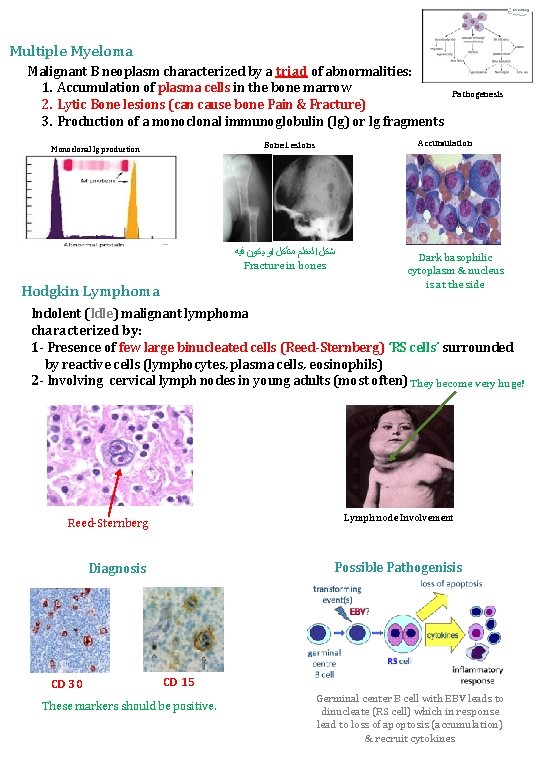
Multiple Myeloma Malignant B neoplasm characterized by a triad of abnormalities: 1. Accumulation of plasma cells in the bone marrow 2. Lytic Bone lesions (can cause bone Pain & Fracture) 3. Production of a monoclonal immunoglobulin (Ig) or Ig fragments Accumulation Bone Lesions Monoclonal Ig production ﻓﻴﻪ ﻳﻜﻮﻥ ﺍﻭ ﻣﺘﺄﻜﻞ ﺍﻟﻌﻈﻢ ﺷﻜﻞ Fracture in bones Hodgkin Lymphoma Pathogenesis Dark basophilic cytoplasm & nucleus is at the side Indolent (Idle) malignant lymphoma characterized by: 1 - Presence of few large binucleated cells (Reed-Sternberg) ‘RS cells’ surrounded by reactive cells (lymphocytes, plasma cells, eosinophils) 2 - Involving cervical lymph nodes in young adults (most often) They become very huge! Lymph node Involvement Reed-Sternberg Possible Pathogenisis Diagnosis CD 30 CD 15 These markers should be positive. Germinal center B cell with EBV leads to dinucleate (RS cell) which in response lead to loss of apoptosis (accumulation) & recruit cytokines

Summary Malignant Lymphoproliferative Disorders Mature Lymphoid leukemia Lymphoma Types Non Hodgkin lymphoma B- cell neoplasm CLL Burrkit’s Markers CD 19, CD 20 CD 23, CD 5 Mutations Mature naïve Bcell Ig. M & Ig. D Features Diagnosis: Lymphocytosis (>5, 000): • Small matureappearing lymphocytes • Condensed (“soccer ball”) nuclear chromatin • Numerous “smudge cells” -Moderate lymphadenopathy and splenomegaly Most common adult leukemia Male > Female Notes Complications: • Predisposition to infection • Autoimmune phenomena (autoimmune hemolytic anemia) • Transformatio n to large cell lymphoma (Richter’s syndrome) Follicular DLBCL CD 19, CD 20 CD 10 t(8; 14) C-myc GC blast rapidly growing and highly aggressive with extremely short doubling time (24 hrs) Morphology: 1 - BMA: Homogenous medium size cells with round nuclei and deeply basophilic and vacuolated cytoplasm 2 - Biopsy: Diffuse infiltration with "starry sky” (Macrophages engulfing the apoptotic cells) Types: 1 -Endemic: associated with chronic malaria and EBV In equatorial Africa. affects the jaw, other facial bone and breast. 2 -Sporadic: affects GIT. 3 Immunodeficiency -associated: associated with HIV infection or immunosuppressive drugs Cure rate: 90% at early phase 70% at advance disease t(14; 18) BCL-2 Centrocytes - a partially follicular pattern Presented as: • Lymphadenopathy (100%) • Splenomegaly (80%) • BM involvement (60%) • Blood involvement (40%) Most common type of “indolent” lymphoma, but incurable (some exceptions). Transformatio n to aggressive lymphoma (DLBCL) can occur t(3; 14) BCL-6 Centroblasts Multiple Myeloma Mantle Cell CD 20, CD 138 CD 56 CD 5 CD 19 CD 20 Plasma cells t(11; 14) Cyklin D Malignant B neoplasm characterized by a triad of abnormalities: • Accumulatio n of plasma cells in the bone marrow • Lytic Bone lesions • Production of a monoclonal immunoglobul in (Ig) or Ig fragments Hodgkin CD 15 CD 30 Indolent (Idle) malignant lymphoma characterized by: 1 - Presence of few large binucleated cells (Reed. Sternberg) surrounded by reactive cells (lymphocytes, plasma cells, eosinophils) 2 - Involving cervical lymph nodes in young adults (most often)

MCQs: 1 - Which of the following can cause Infectious Mononucleosis? a- Autoimmune diseases b- Malaria c- E. Coli d- Epstein-Barr Virus 2 - Ahmad is 35 -Years old went to his family physician suffering from severe pain in his bones, After investigations his physician advised him to see Hematologist, the Hematologist told Ahmad that he has type of B-cells lymphoma, What is the most likely diagnosis in Ahmad’s condition? a- CLL b- Multiple myeloma c- Burkitt Lymphoma d-Hodgkin Lymphoma 3 - Khaled 25 -Years old come to you to make general check-up, in CBC you find that his Lymphocyte number is more than 5000 (normal=1500 -2700), in blood film you found Soccer ball appearance & Smudge cells, what is most likely diagnosis in this case? a- CLL b- Multiple myeloma c- Burkitt Lymphoma d-Hodgkin Lymphoma 4 - Which type of lymphoma is featured by presence of Binucleated cells (Reed. Sternberg) & involves cervical lymph nodes mainly? a- CLL b- Multiple myeloma c- Burkitt Lymphoma d-Hodgkin Lymphoma 1 - d 2 - b 3 - a 4 - d 5 - c 5 - t(8; 14) C-MYC Mutation is associated with which one of the following? a- CLL b- Multiple myeloma c- Burkitt Lymphoma d-Hodgkin Lymphoma GOOD LUCK! Team members: Khalid Al-Eisa Abdulkarim Al-Harbi Jawaher Abanumy Team Leaders: Abdulaziz Al-Hussainy Safa Al-Osaimi
- Slides: 8