
Lymphomas The Basics Brad Kahl MD Assistant Professor
Lymphomas: The Basics Brad Kahl, MD Assistant Professor of Medicine Director, UW Lymphoma Service
Lymphomas: NHL vs Hodgkin’s • • EPIDEMIOLOGY Biology Classification Approach to the Patient
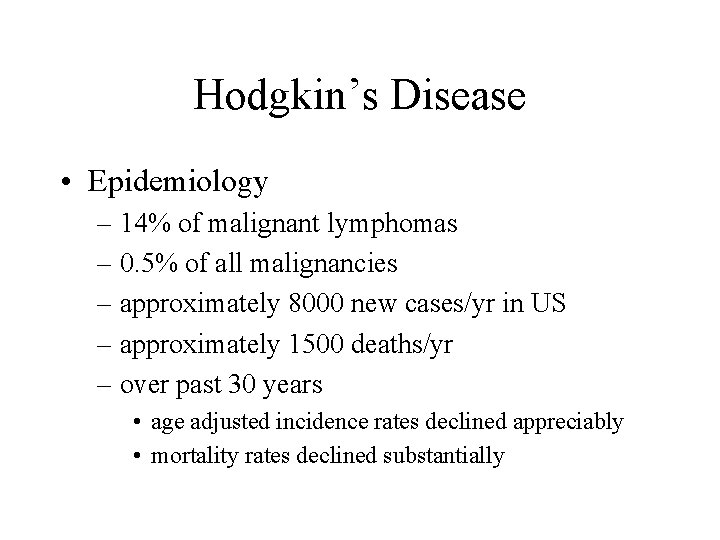
Hodgkin’s Disease • Epidemiology – 14% of malignant lymphomas – 0. 5% of all malignancies – approximately 8000 new cases/yr in US – approximately 1500 deaths/yr – over past 30 years • age adjusted incidence rates declined appreciably • mortality rates declined substantially
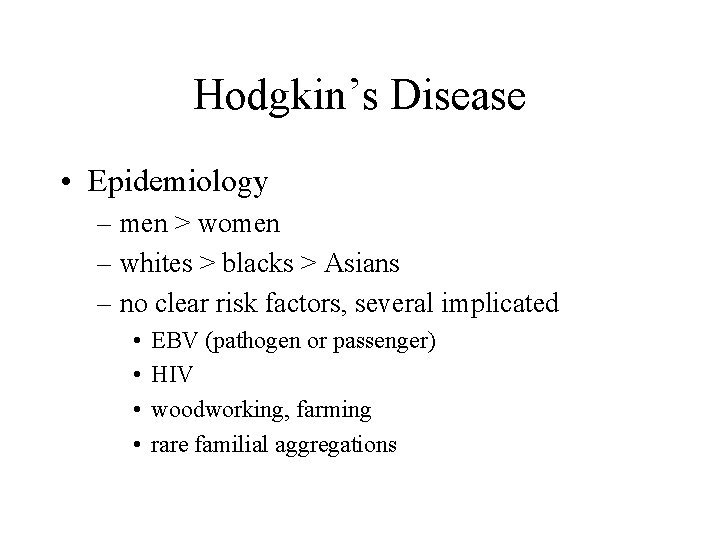
Hodgkin’s Disease • Epidemiology – men > women – whites > blacks > Asians – no clear risk factors, several implicated • • EBV (pathogen or passenger) HIV woodworking, farming rare familial aggregations
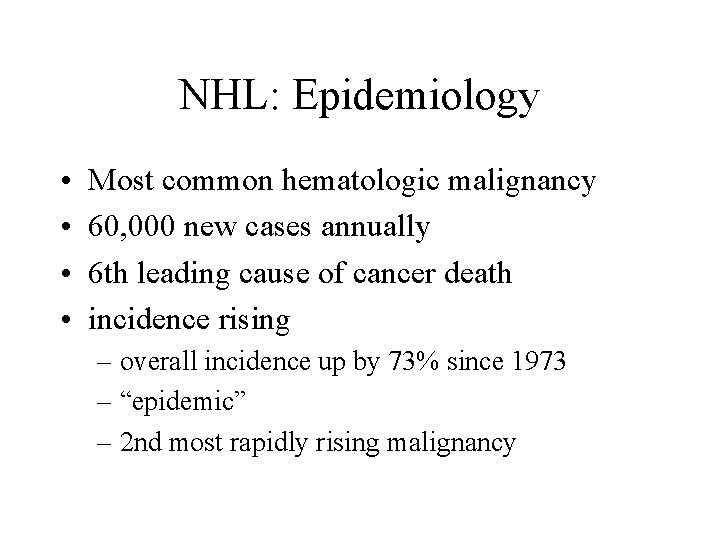
NHL: Epidemiology • • Most common hematologic malignancy 60, 000 new cases annually 6 th leading cause of cancer death incidence rising – overall incidence up by 73% since 1973 – “epidemic” – 2 nd most rapidly rising malignancy

NHL: Epidemiology • Why the increase? – Increase noted mostly in farming states – MN #1, WI #7 NHL incidence – possible role of herbicides, insecticides, etc. • Other environmental factors?
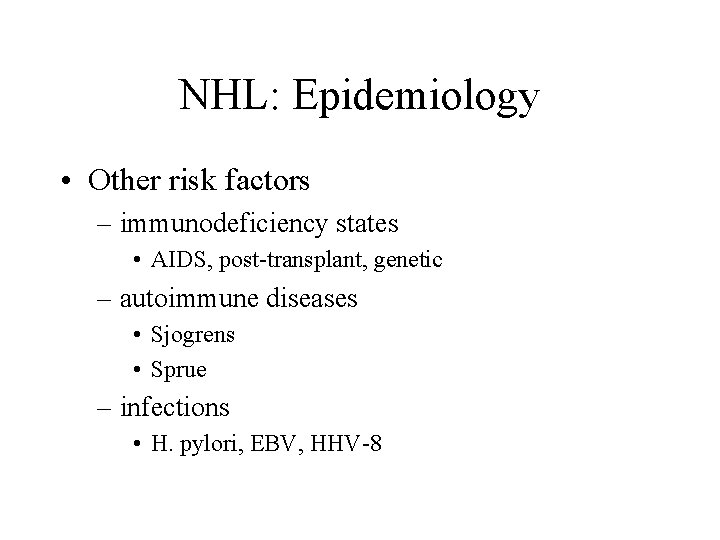
NHL: Epidemiology • Other risk factors – immunodeficiency states • AIDS, post-transplant, genetic – autoimmune diseases • Sjogrens • Sprue – infections • H. pylori, EBV, HHV-8
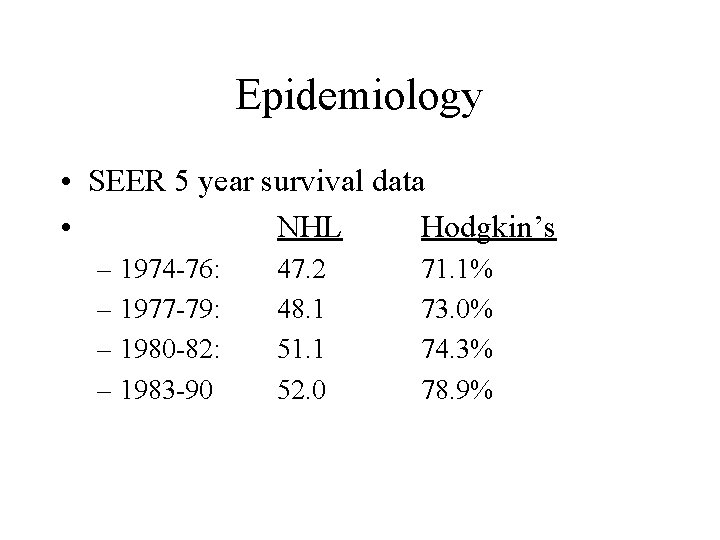
Epidemiology • SEER 5 year survival data • NHL Hodgkin’s – 1974 -76: – 1977 -79: – 1980 -82: – 1983 -90 47. 2 48. 1 51. 1 52. 0 71. 1% 73. 0% 74. 3% 78. 9%
Hodgkin’s Disease • • Epidemiology BIOLOGY Classification Approach to the Patient
Hodgkin’s Disease • Background – first described in 1832 by Dr. Thomas Hodgkin – characterized by the presence of Reed. Sternberg cells • multinucleated giant cells • described by Sternberg in 1898 and Reed in 1902 – classified as an infectious disease until 1950’s

Reed-Sternberg Cell
Hodgkin Biology • RS is a “crippled” germinal center B cell – does not have normal B cell surface antigens – micromanipulation of single RS followed by PCR demonstrates clonally rearranged, but non functional immunoglobulin genes • somatic mutations result in stop codon (no s. Ig) • no apoptotic death malignant transformation – unclear how this occurs; ? EBV – unclear how cells end up with RS phenotype
Hodgkin’s Disease • • Epidemiology Biology CLASSIFICATION APPROACH TO THE PATIENT
Hodgkin Lymphoma Classification • “Classic” Hodgkin’s Disease • • nodular sclerosis mixed cellularity lymphocyte depleted (very rare) classical lymphocyte rich – HRS cells CD 30 and CD 15 positive • nodular lymphocyte predominant – HRS cells (L&H cells) have B cell markers • CD 20 and surface Immunoglobulin
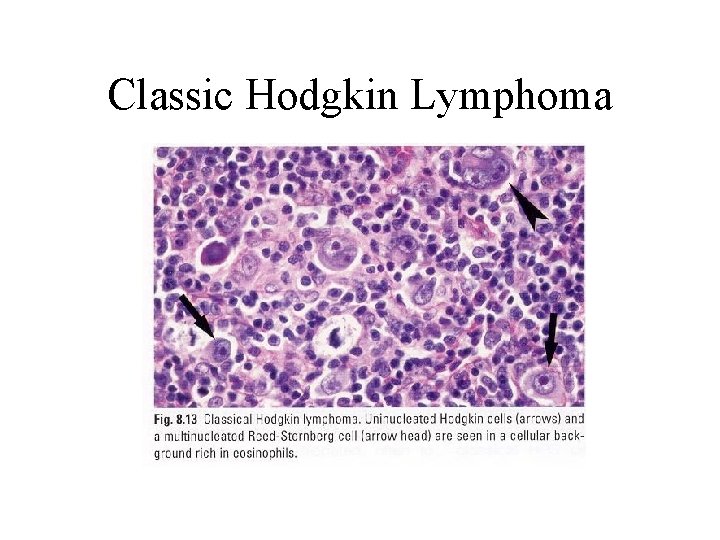
Classic Hodgkin Lymphoma
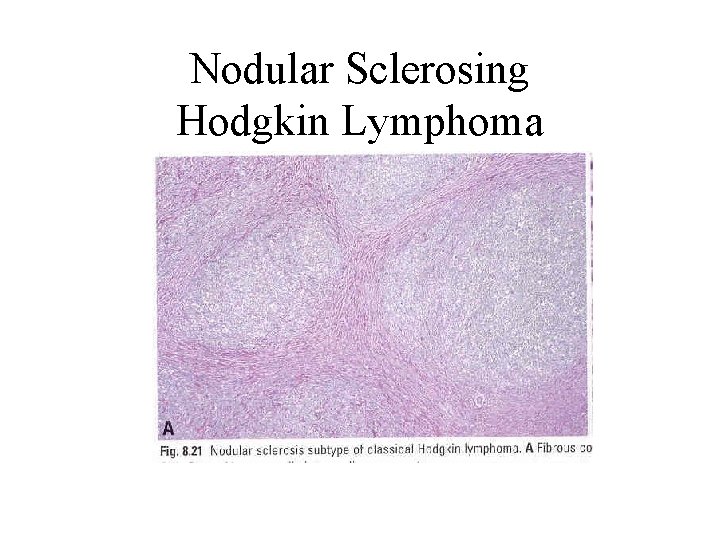
Nodular Sclerosing Hodgkin Lymphoma
Approach to the Patient • Hodgkin’s Disease – approach dictated mainly by where the disease is located rather (results of staging) than the exact histologic subtype • NHL – approach is dictated mainly by the histologic subtype rather than the results of staging
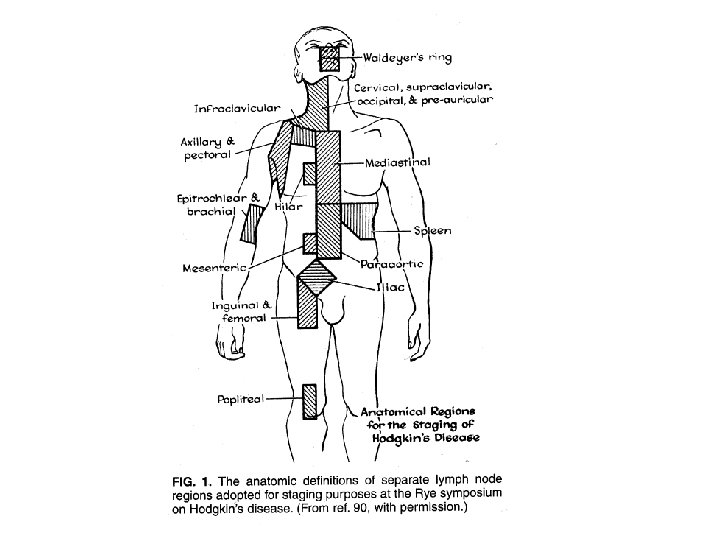
Hodgkin’s Disease • Approach to the Patient – staging evaluation • • H&P CBC, diff, plts ESR, LDH, albumin, LFT’s, Cr CT scans chest/abd/pelvis bone marrow evaluation **PET or gallium scan** **lymphangiogram or laparotomy**
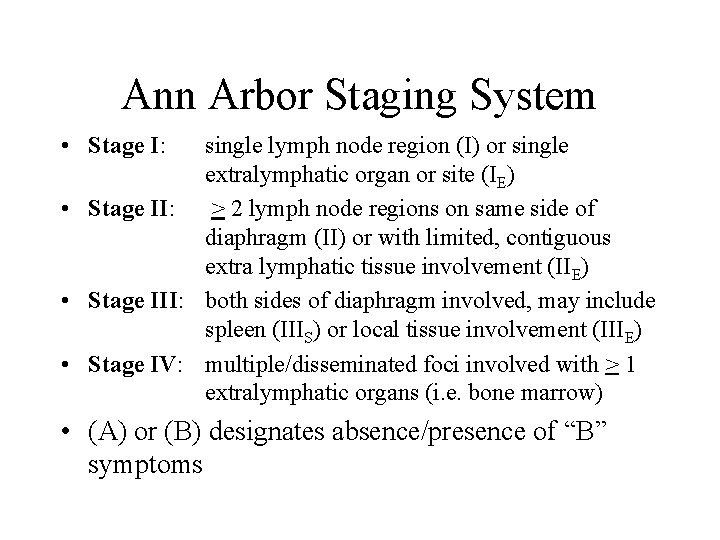
Ann Arbor Staging System • Stage I: single lymph node region (I) or single extralymphatic organ or site (IE) • Stage II: > 2 lymph node regions on same side of diaphragm (II) or with limited, contiguous extra lymphatic tissue involvement (IIE) • Stage III: both sides of diaphragm involved, may include spleen (IIIS) or local tissue involvement (IIIE) • Stage IV: multiple/disseminated foci involved with > 1 extralymphatic organs (i. e. bone marrow) • (A) or (B) designates absence/presence of “B” symptoms
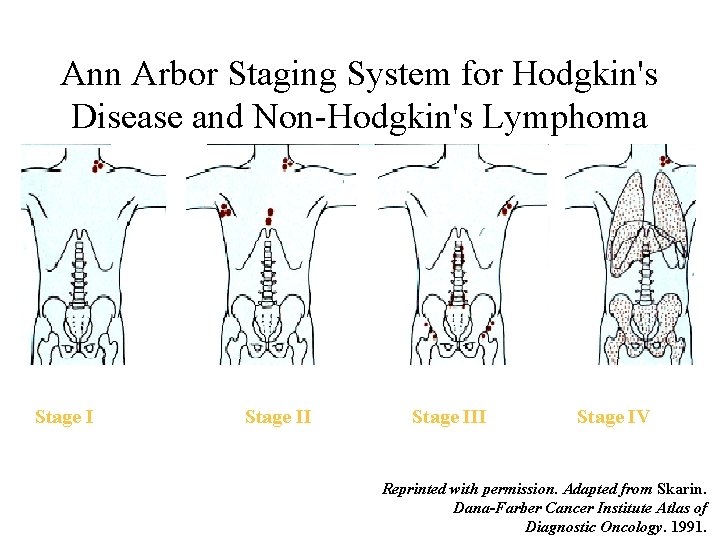
Ann Arbor Staging System for Hodgkin's Disease and Non-Hodgkin's Lymphoma Stage III Stage IV Reprinted with permission. Adapted from Skarin. Dana-Farber Cancer Institute Atlas of Diagnostic Oncology. 1991.
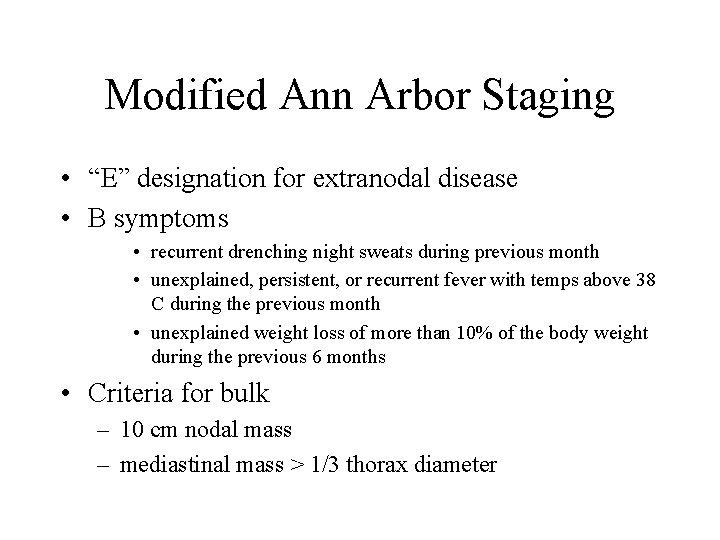
Modified Ann Arbor Staging • “E” designation for extranodal disease • B symptoms • recurrent drenching night sweats during previous month • unexplained, persistent, or recurrent fever with temps above 38 C during the previous month • unexplained weight loss of more than 10% of the body weight during the previous 6 months • Criteria for bulk – 10 cm nodal mass – mediastinal mass > 1/3 thorax diameter
Hodgkin Lymphoma • Treatment – approach depends upon stage, prognostic factors, and co-morbidities – Stage I-II • consider XRT, chemotherapy, or combined therapy – Bulky stage I-II • combined modality therapy – Stage III-IV • ABVD x 6 -8 cycles gold standard
Hodgkin Lymphoma • Adverse prognostic features for stage I & II (EORTC data) • • more than 3 nodal sites bulky adenopathy ESR > 50 B symptoms invasion into critical organs male age > 40 MC or LD subtype – should probably not receive XRT alone if any of the above present (excessive relapse rate)
Hodgkin Lymphoma • Independent adverse prognostic factors – advanced stage (III-IV) • • male sex age > 45 albumin < 4 gm/dl Hg. B < 10. 5 mg/dl stage IV disease WBC count > 15, 000/mm 3 lymphocyte count < 600/mm 3 (Hasenclever et al, NEJM 339, 1506 -1514; 1998)
Hodgkin’s Disease • Role for Stem Cell Transplantation – clinical trials show benefit for patients who receive high dose chemotherapy followed by SCT for patients who have relapsed after initial therapy or for patients are primary refractory
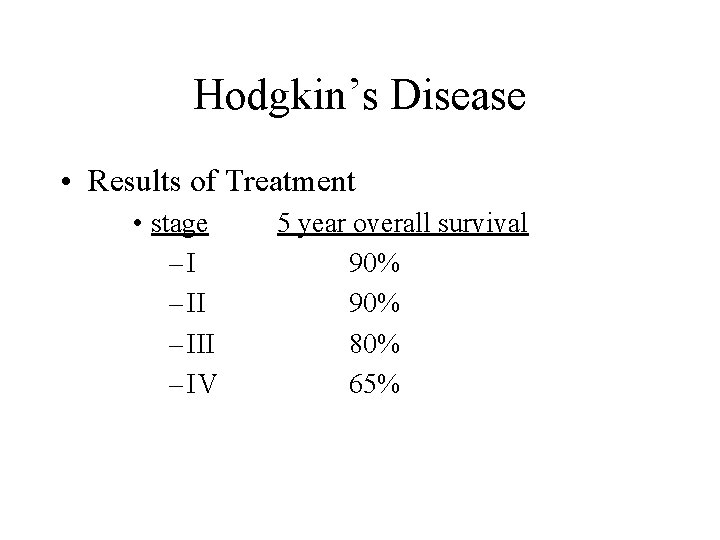
Hodgkin’s Disease • Results of Treatment • stage –I – III – IV 5 year overall survival 90% 80% 65%
Hodgkin Lymphoma • Late Complications – depends upon treatment modality utilized – XRT vs. MOPP vs. ABVD vs. CMT – issues depends upon the age of patient • relative risks higher in younger patients • absolute risks higher in older patients – major focus of current clinical trials to to maintain high cure rate while minimizing late complication • shorter courses of chemotherapy with lower radiation doses in smaller fields • elimination of radiotherapy
Hodgkin’s: future directions • Limited stage and good prognosis advanced stage – cure rate high – current goal is to minimize late complications – trials looking at CMT with less chemotherapy and less radiation • Advanced stage – cure rate around 50 -70% – trial comparing ABVD to Stanford V • Clinical Trials
NHL • • Epidemiology BIOLOGY Classification Approach to the Patient
Lymphoma Biology • Indolent vs. Aggressive NHL – key principle in understanding biology, and approach to the patient – Indolent = incurable – Aggressive = curable – WHY? • Chromosomal Abnormalities in NHL – frequent chromosomal translocations into Ig gene loci • t(8; 14), t(2; 8), t(8; 22) Burkitt’s • t(14; 18) follicular NHL
Lymphoma Biology • Aggressive NHL – short natural history (patients die within months if untreated) – disease of rapid cellular proliferation • Indolent NHL – long natural history (patients can live for many years untreated) – disease of slow cellular accumulation
NHL • • Epidemiology Biology CLASSIFICATION Approach to the Patient
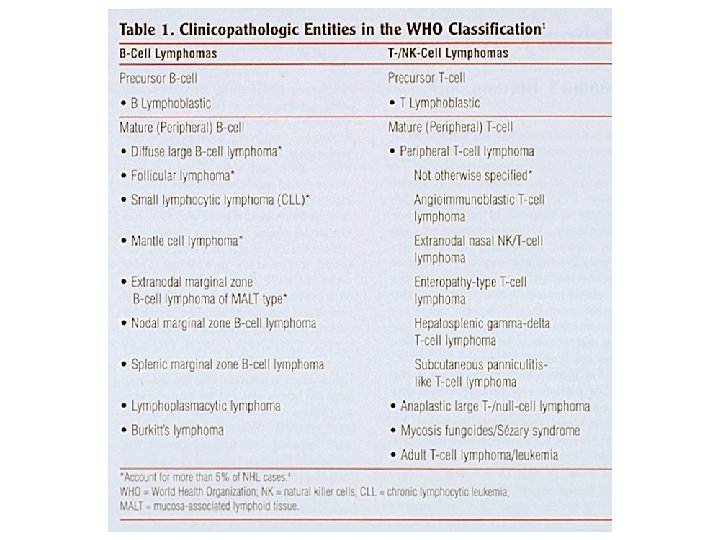
NHL: Classification • Historically- a mess – 1940 s Gail and Mallory – 1950 s Rappaport – 1970 s Lukes-Collins – 1970 s Kiel – 1982 Working – 1994 REAL – 1999 WHO
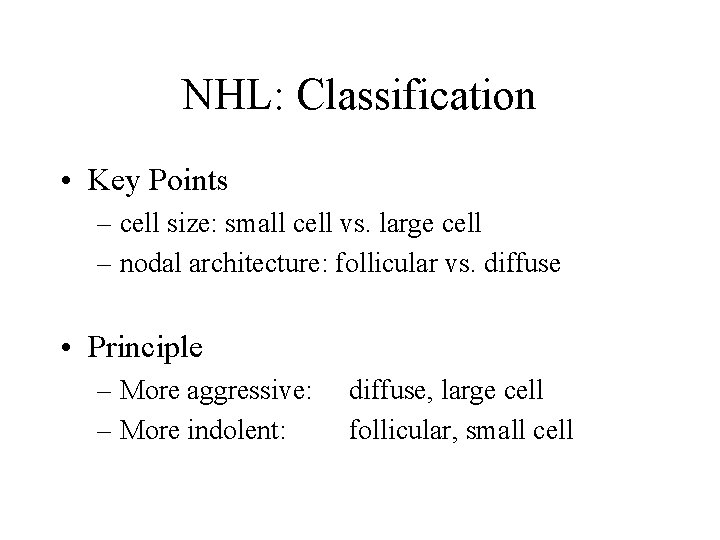
NHL: Classification • Key Points – cell size: small cell vs. large cell – nodal architecture: follicular vs. diffuse • Principle – More aggressive: – More indolent: diffuse, large cell follicular, small cell
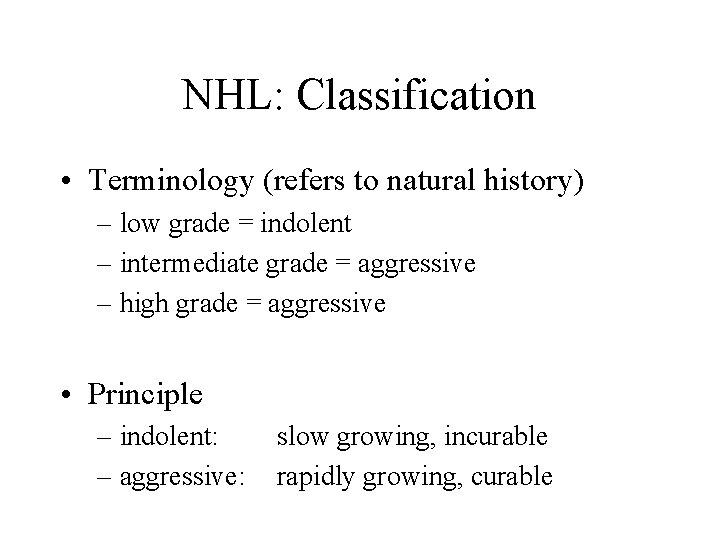
NHL: Classification • Terminology (refers to natural history) – low grade = indolent – intermediate grade = aggressive – high grade = aggressive • Principle – indolent: – aggressive: slow growing, incurable rapidly growing, curable
NHL • • Epidemiology Biology Classification APPROACH TO THE PATIENT
NHL: Approach to the Patient • Approach dictated mainly by histology – reliable hematopathology crucial • Approach also influenced by: – stage – prognostic factors – co-morbidities
NHL: Approach to the Patient • Staging evaluation – History and PE – Routine blood work • CBC, diff, plts, electrolytes, BUN, Cr, LFT’s, uric acid, LDH, B 2 M – CT scans chest/abd/pelvis – Bone marrow evaluation – Other studies as indicated (lumbar puncture, gallium, etc…)
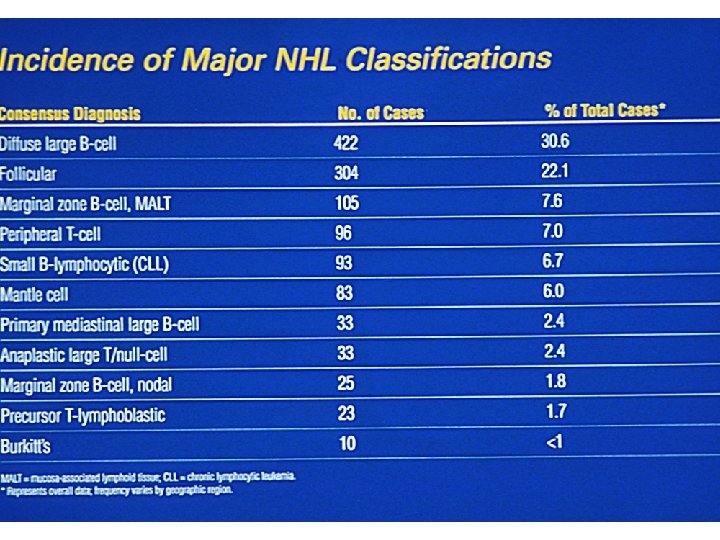
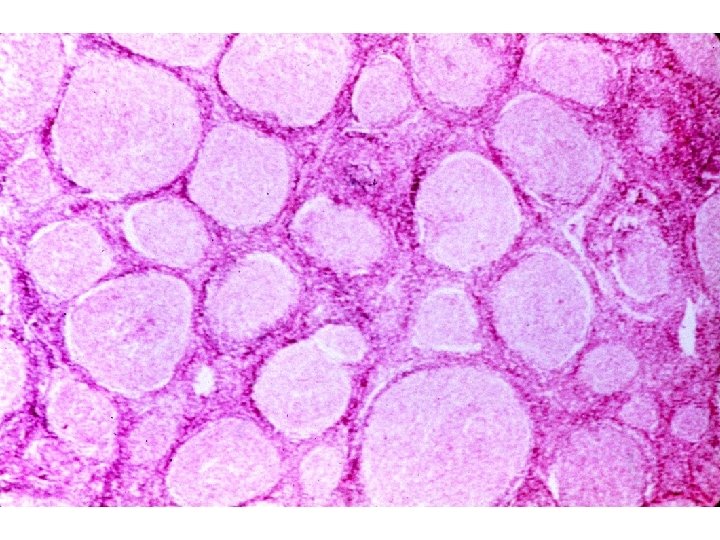
NHL: Approach to the Patient • Indolent NHL: typical scenario – patient presents with painless adenopathy – otherwise asymptomatic – follicular small cell histology – average 59 – usually stage III-IV at diagnosis
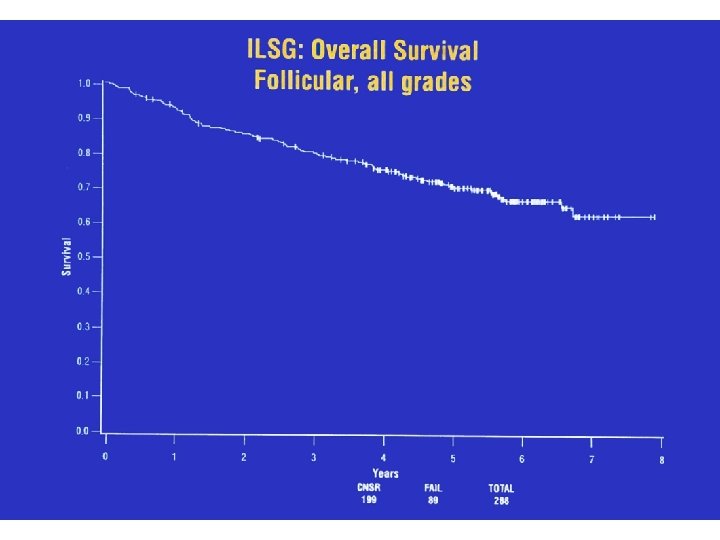
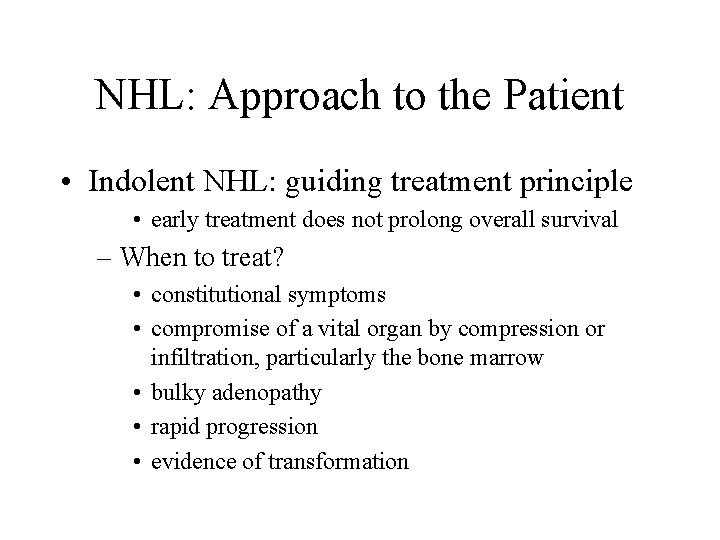
NHL: Approach to the Patient • Indolent NHL: guiding treatment principle • early treatment does not prolong overall survival – When to treat? • constitutional symptoms • compromise of a vital organ by compression or infiltration, particularly the bone marrow • bulky adenopathy • rapid progression • evidence of transformation
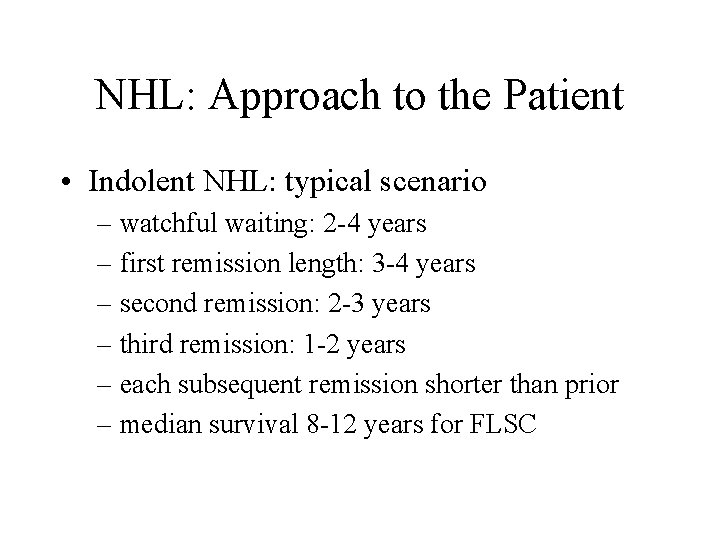
NHL: Approach to the Patient • Indolent NHL: typical scenario – watchful waiting: 2 -4 years – first remission length: 3 -4 years – second remission: 2 -3 years – third remission: 1 -2 years – each subsequent remission shorter than prior – median survival 8 -12 years for FLSC
NHL: Approach to the Patient • Indolent NHL: treatment options – watchful waiting – radiation to involved fields – single agent chemotherapy • chlorambucil + prednisone, fludarabine – combination chemotherapy • CVP, CF, FND, CHOP – – – chemotherapy + interferon chemotherapy + monoclonal antibodies radiolabeled monoclonal antibodies stem cell transplantation
NHL: Approach to the Patient • Aggressive NHL: typical scenario – patients notes B symptoms of several weeks duration – work-up reveals pathologic adenopathy – histology: diffuse large cell lymphoma – about 50% patients stage I-II, 50% stage III-IV – average 64 – IPI score
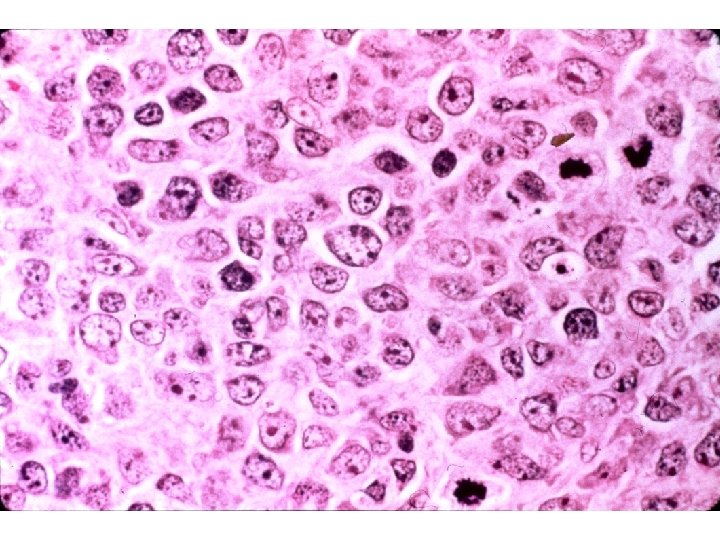
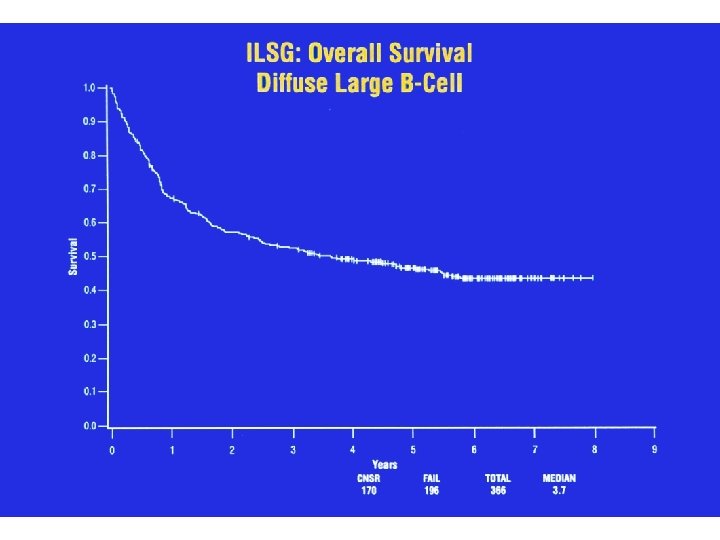
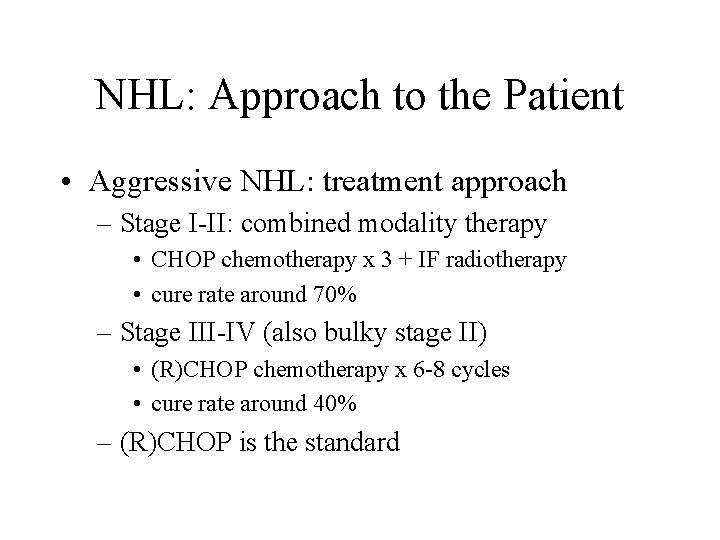
NHL: Approach to the Patient • Aggressive NHL: treatment approach – Stage I-II: combined modality therapy • CHOP chemotherapy x 3 + IF radiotherapy • cure rate around 70% – Stage III-IV (also bulky stage II) • (R)CHOP chemotherapy x 6 -8 cycles • cure rate around 40% – (R)CHOP is the standard
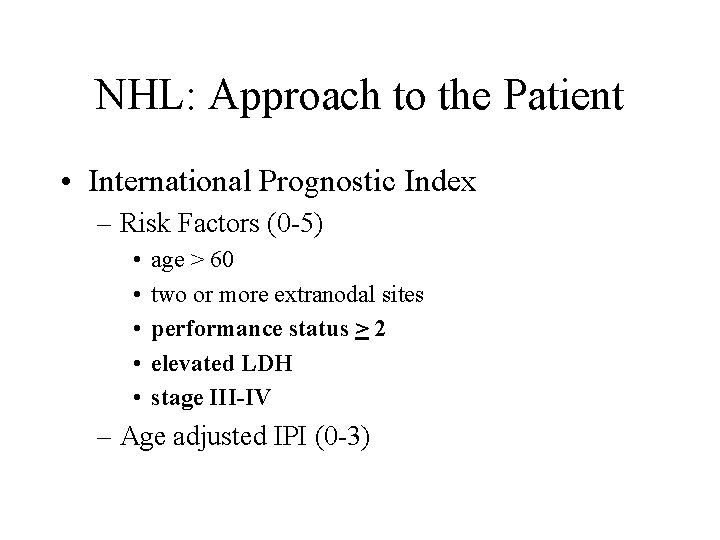
NHL: Approach to the Patient • International Prognostic Index – Risk Factors (0 -5) • • • age > 60 two or more extranodal sites performance status > 2 elevated LDH stage III-IV – Age adjusted IPI (0 -3)
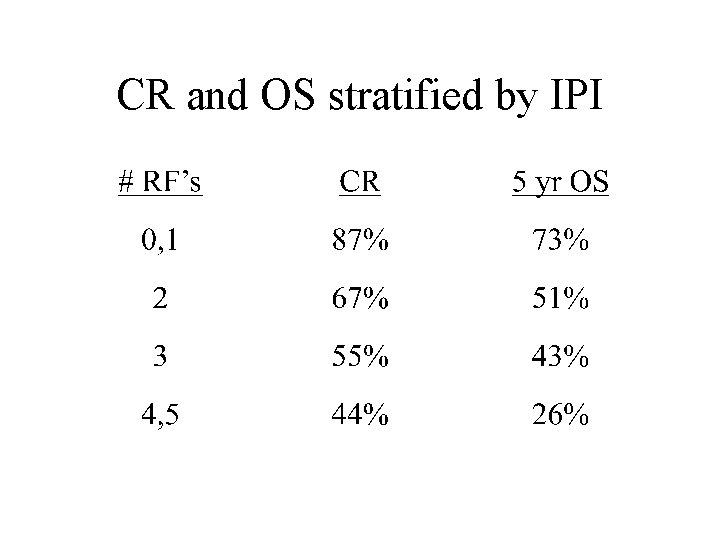
CR and OS stratified by IPI
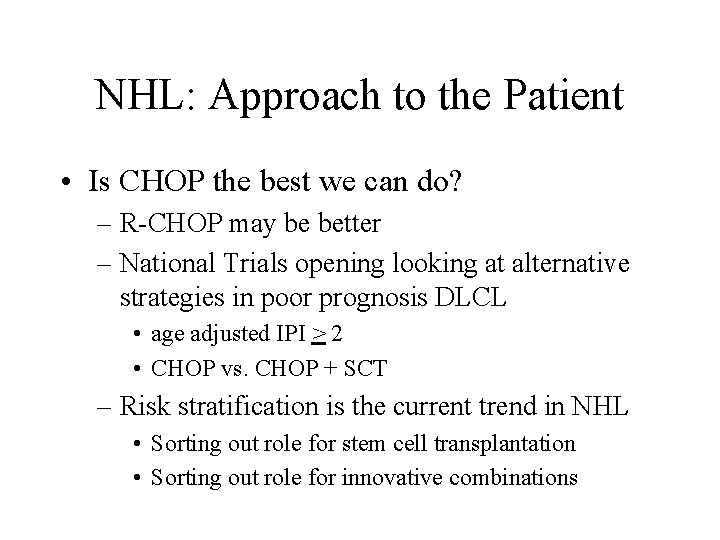
NHL: Approach to the Patient • Is CHOP the best we can do? – R-CHOP may be better – National Trials opening looking at alternative strategies in poor prognosis DLCL • age adjusted IPI > 2 • CHOP vs. CHOP + SCT – Risk stratification is the current trend in NHL • Sorting out role for stem cell transplantation • Sorting out role for innovative combinations
NHL: Approach to the Patient • Role for Autologous Stem Cell Transplantation • Aggressive NHL – clear benefit when used for aggressive NHL in first relapse in appropriately selected patients – 1/3 of these patients can be cured by SCT • Indolent NHL – no indication that patients are cured – no indication that OS is prolonged
NHL: future directions • Indolent – – monoclonal antibodies (Rituximab) radiolabeled monoclonal antibodies chemotherapy combined with antibodies combined with immunomodulators • Aggressive – risk stratification – CHOP vs. CHOP plus SCT – chemotherapy plus antibodies • Clinical Trials
Summary • NHL incidence increasing, Hodgkin’s decreasing • Hodgkin’s cure rate quite high – approach is dictated mainly by disease stage • NHL cure rate mediocre – approach is dictated mainly by histologic subtype – indolent vs. aggressive • indolent: watchful waiting perfectly acceptable for asymptomatic patients • aggressive: require aggressive treatment ASAP to achieve cure
Lymphoma Clinic • Multidisciplinary – radiotherapy-Dr. Scott Tannehill – hematopathology-Dr. Catherine Leith • Emphasis on clinical trials – formal testing of promising new therapies • Every Wednesday • Clinic phone #: 608 -263 -7022
- Slides: 58