
Lymphatic System What is an Infectious Disease www
- Slides: 17
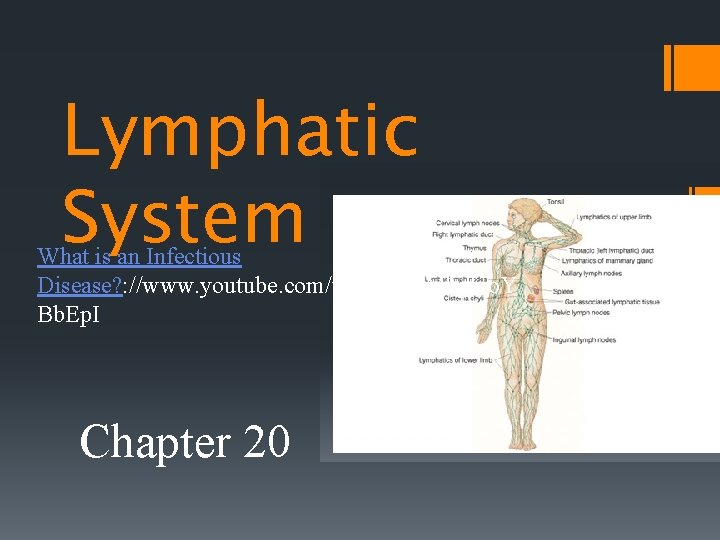
Lymphatic System What is an Infectious Disease? : //www. youtube. com/watch? v=M 1 p. Uo. Y Bb. Ep. I Chapter 20
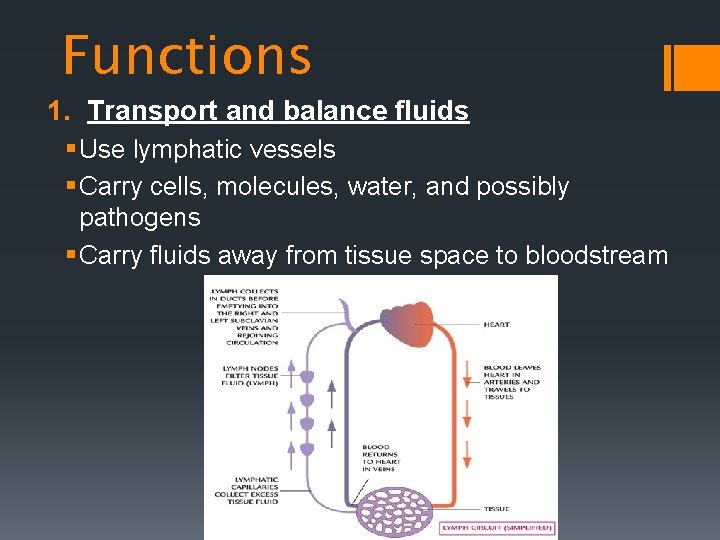
Functions 1. Transport and balance fluids § Use lymphatic vessels § Carry cells, molecules, water, and possibly pathogens § Carry fluids away from tissue space to bloodstream
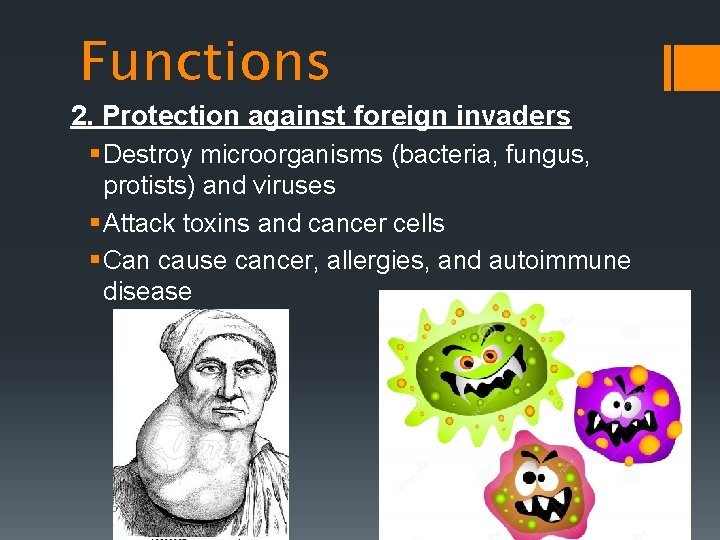
Functions 2. Protection against foreign invaders § Destroy microorganisms (bacteria, fungus, protists) and viruses § Attack toxins and cancer cells § Can cause cancer, allergies, and autoimmune disease
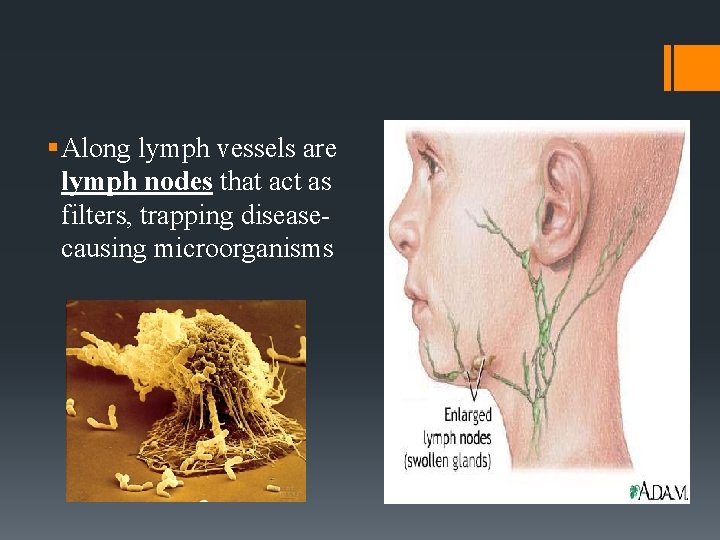
§ Along lymph vessels are lymph nodes that act as filters, trapping diseasecausing microorganisms
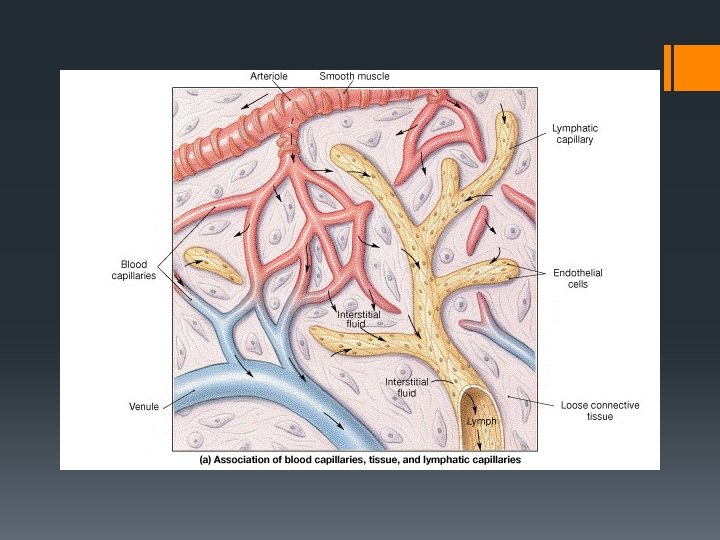
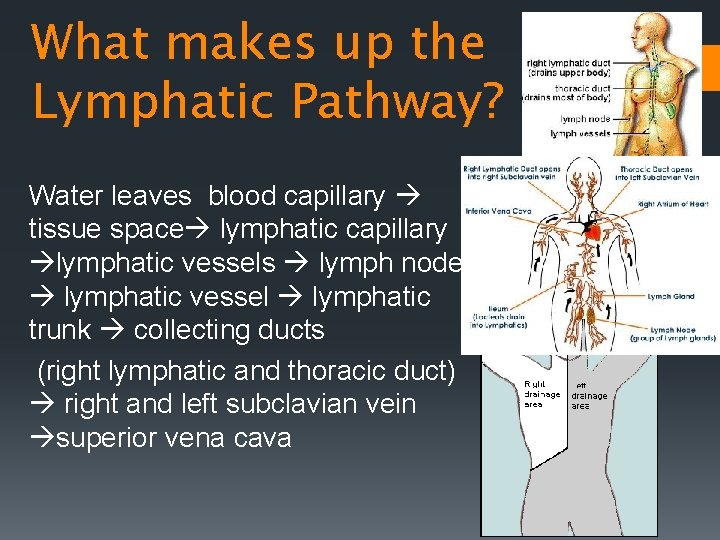
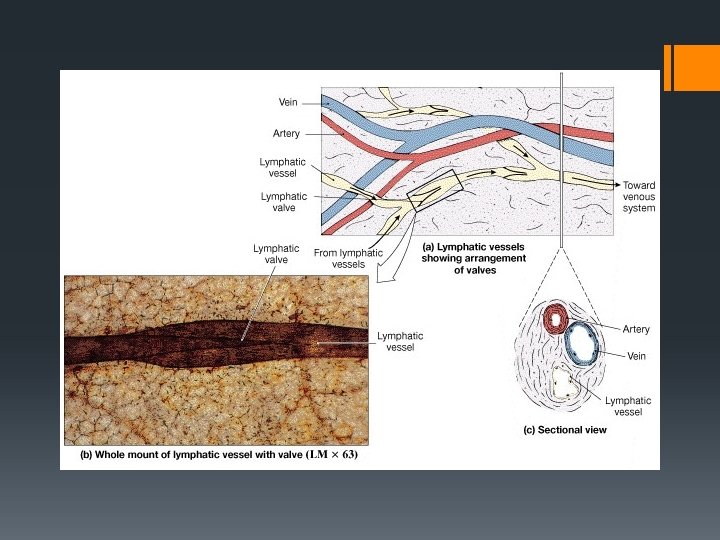
What makes up the Lymphatic Pathway? 1. Lymph is the fluid 2. Lymphatic capillaries- microscopic closed ended tubules found laying within the tissue space near blood capillaries 3. Lymphatic vessels- larger lymph vessels similar to veins • lead toward and away from lymph nodes 4. Lymph node- specialized lymph organs that contain WBC to filter lymph and kill pathogens, back to 5. Lymphatic trunk- larger lymph vessels formed from merging lymphatic vessels and drain lymph into collecting ducts
Lymph Capillaries
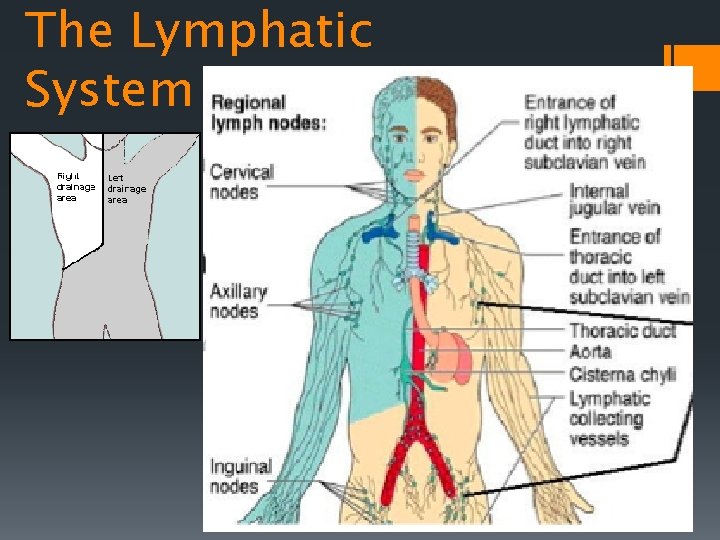
The Lymphatic System
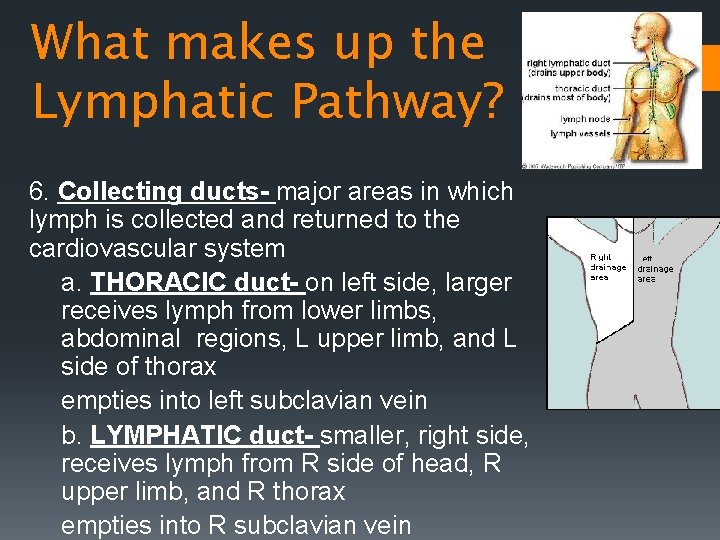
What makes up the Lymphatic Pathway? 6. Collecting ducts- major areas in which lymph is collected and returned to the cardiovascular system a. THORACIC duct- on left side, larger receives lymph from lower limbs, abdominal regions, L upper limb, and L side of thorax empties into left subclavian vein b. LYMPHATIC duct- smaller, right side, receives lymph from R side of head, R upper limb, and R thorax empties into R subclavian vein
What makes up the Lymphatic Pathway? Water leaves blood capillary tissue space lymphatic capillary lymphatic vessels lymph node lymphatic vessel lymphatic trunk collecting ducts (right lymphatic and thoracic duct) right and left subclavian vein superior vena cava
Lymphatic Vessels
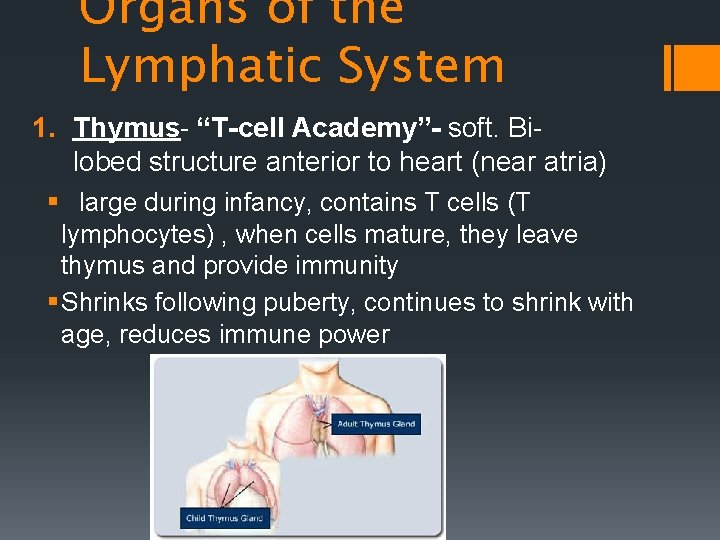
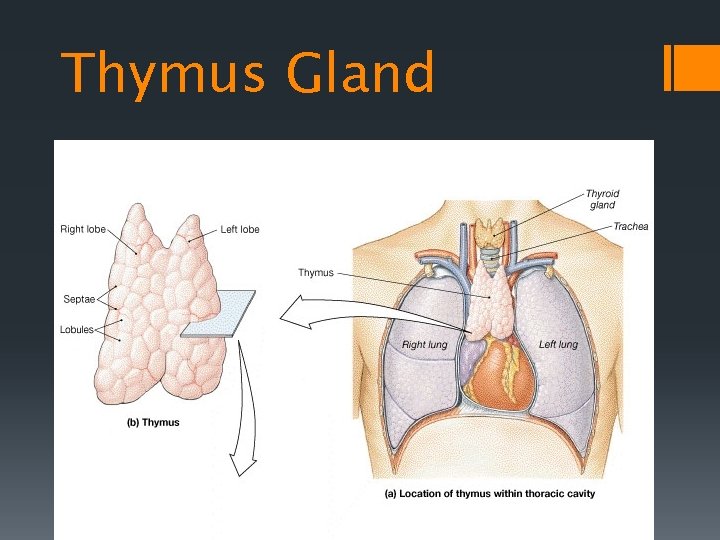
Organs of the Lymphatic System 1. Thymus- “T-cell Academy”- soft. Bilobed structure anterior to heart (near atria) § large during infancy, contains T cells (T lymphocytes) , when cells mature, they leave thymus and provide immunity § Shrinks following puberty, continues to shrink with age, reduces immune power
Thymus Gland
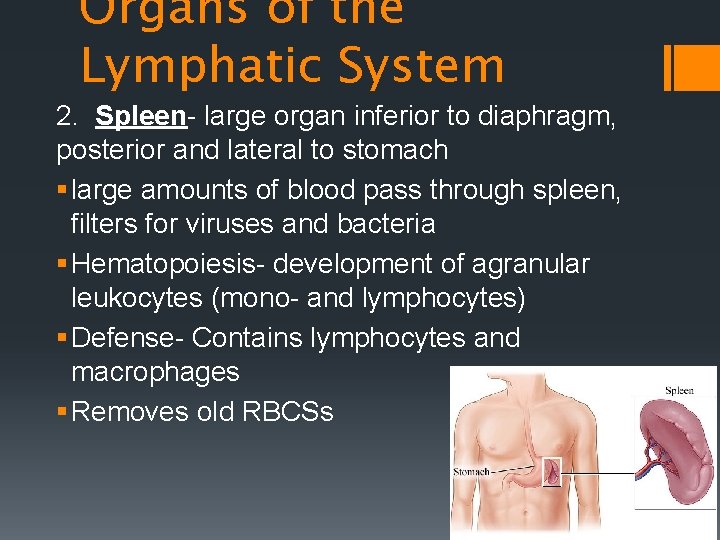
Organs of the Lymphatic System 2. Spleen- large organ inferior to diaphragm, posterior and lateral to stomach § large amounts of blood pass through spleen, filters for viruses and bacteria § Hematopoiesis- development of agranular leukocytes (mono- and lymphocytes) § Defense- Contains lymphocytes and macrophages § Removes old RBCSs
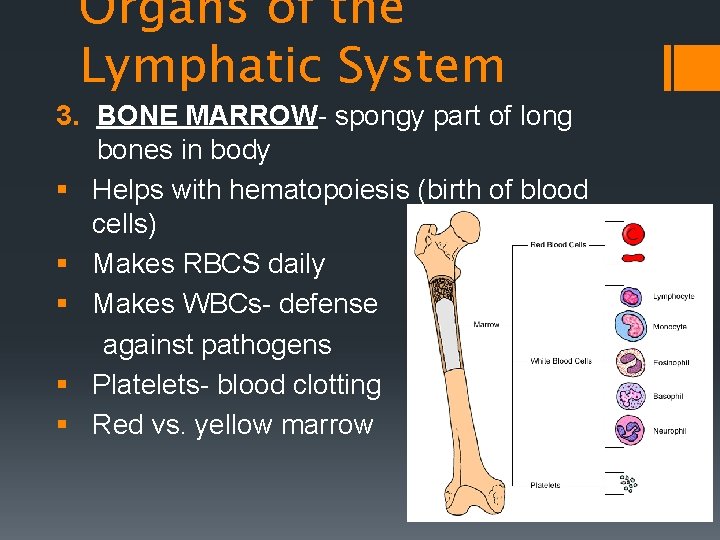
Organs of the Lymphatic System 3. BONE MARROW- spongy part of long bones in body § Helps with hematopoiesis (birth of blood cells) § Makes RBCS daily § Makes WBCs- defense against pathogens § Platelets- blood clotting § Red vs. yellow marrow
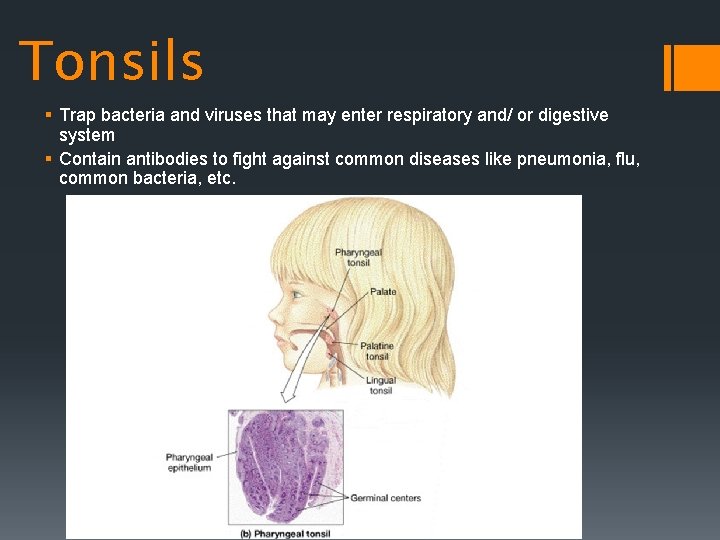
Tonsils § Trap bacteria and viruses that may enter respiratory and/ or digestive system § Contain antibodies to fight against common diseases like pneumonia, flu, common bacteria, etc.
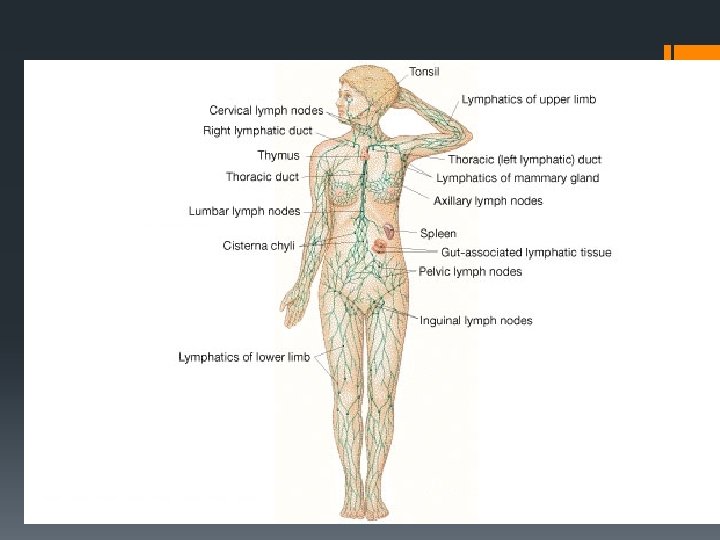
The Lymphatic System