
Lymphatic System Lymphatic System Functions Fluid Protein Balance
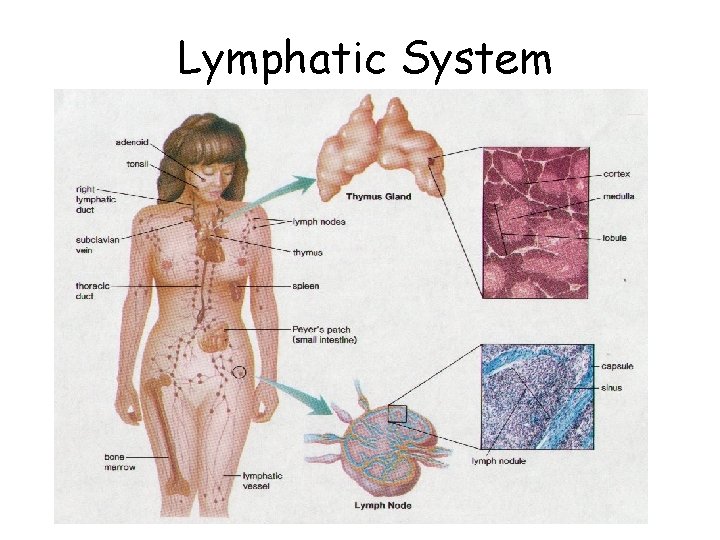
Lymphatic System
Lymphatic System Functions • Fluid & Protein Balance Return excess interstitial fluid and leaked proteins to blood • Digestion Lacteals transport dietary lipids (chyle) – Vitamins A, D, E and K from GI tract • Immune Response – Cell mediated immune responses—T cells destroy intruders with cytotoxic substances. – Antibody-mediated immune responses detect and destroy specific foreign substances.
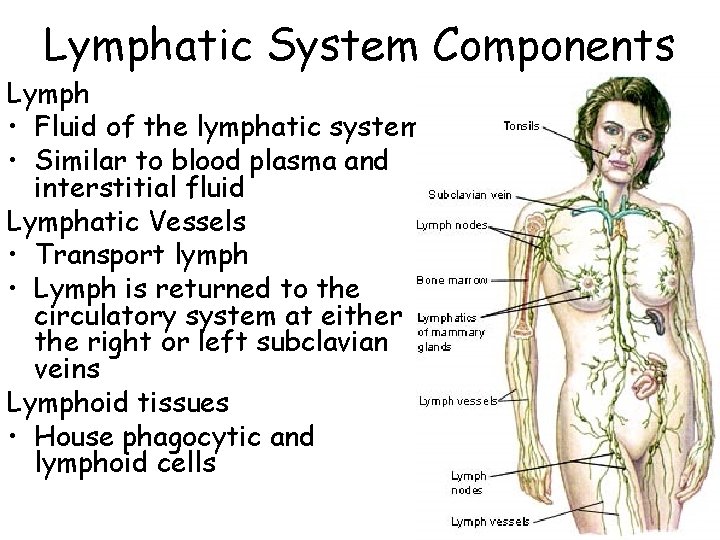
Lymphatic System Components Lymph • Fluid of the lymphatic system • Similar to blood plasma and interstitial fluid Lymphatic Vessels • Transport lymph • Lymph is returned to the circulatory system at either the right or left subclavian veins Lymphoid tissues • House phagocytic and lymphoid cells
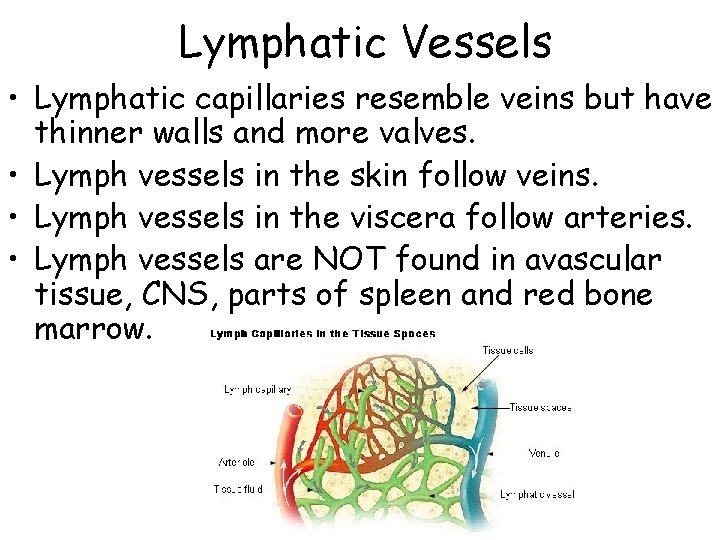
Lymphatic Vessels • Lymphatic capillaries resemble veins but have thinner walls and more valves. • Lymph vessels in the skin follow veins. • Lymph vessels in the viscera follow arteries. • Lymph vessels are NOT found in avascular tissue, CNS, parts of spleen and red bone marrow.
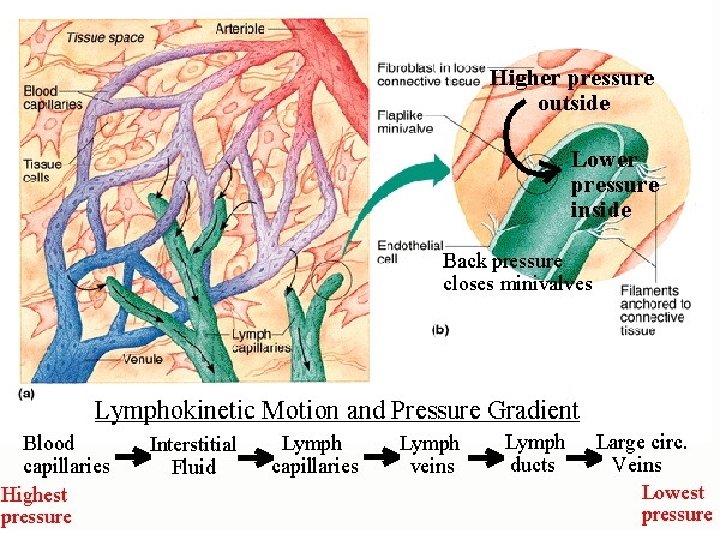
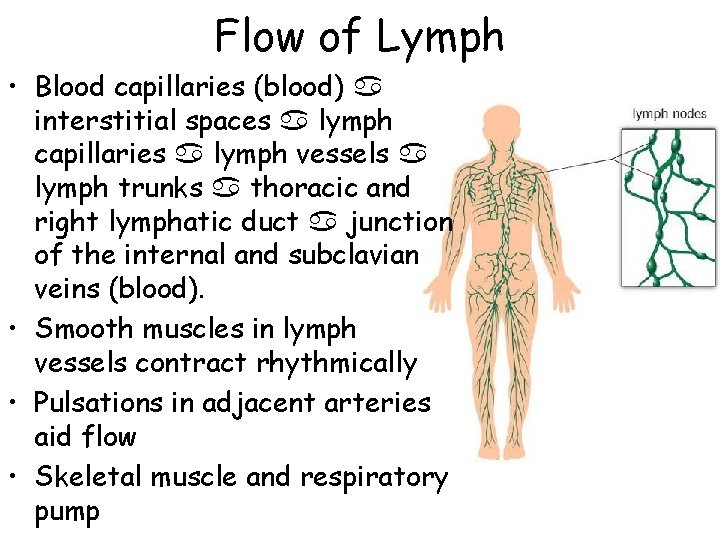
Flow of Lymph • Blood capillaries (blood) interstitial spaces lymph capillaries lymph vessels lymph trunks thoracic and right lymphatic duct junction of the internal and subclavian veins (blood). • Smooth muscles in lymph vessels contract rhythmically • Pulsations in adjacent arteries aid flow • Skeletal muscle and respiratory pump
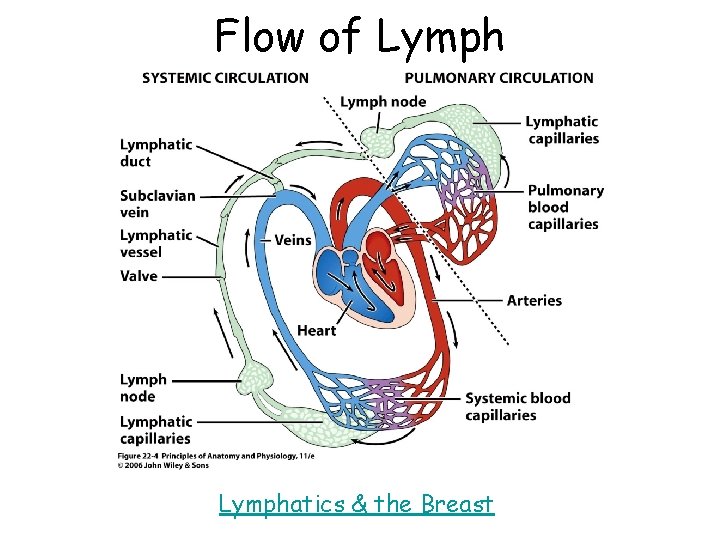
Flow of Lymphatics & the Breast
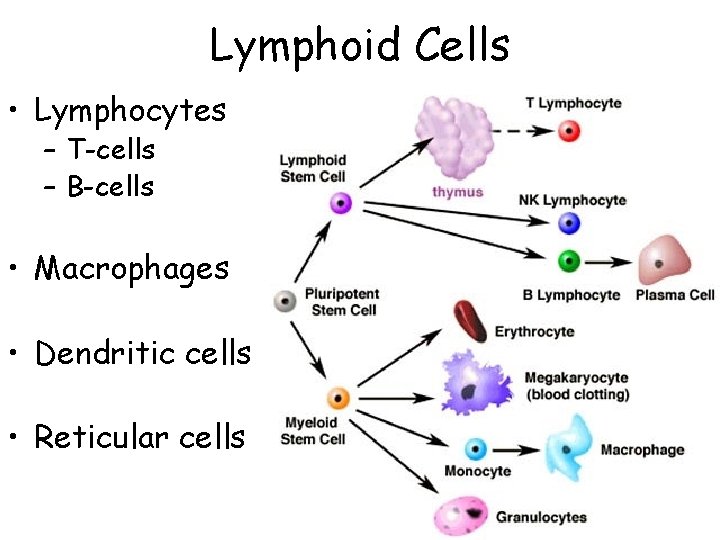
Lymphoid Cells • Lymphocytes – T-cells – B-cells • Macrophages • Dendritic cells • Reticular cells
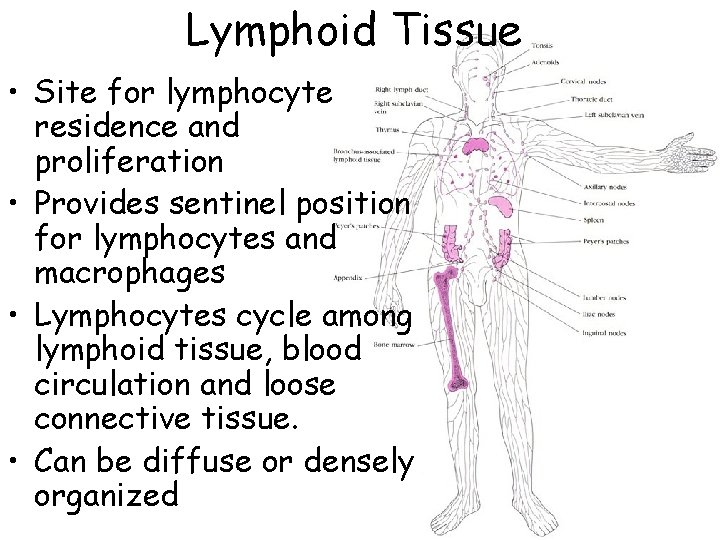
Lymphoid Tissue • Site for lymphocyte residence and proliferation • Provides sentinel position for lymphocytes and macrophages • Lymphocytes cycle among lymphoid tissue, blood circulation and loose connective tissue. • Can be diffuse or densely organized
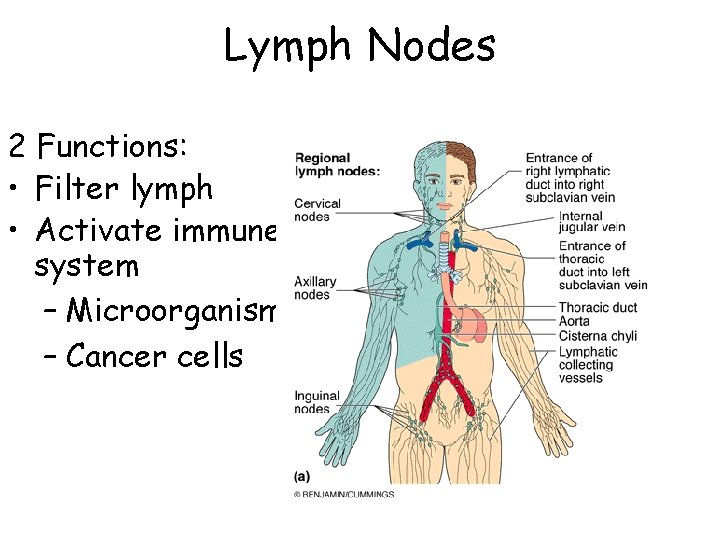
Lymph Nodes 2 Functions: • Filter lymph • Activate immune system – Microorganisms – Cancer cells
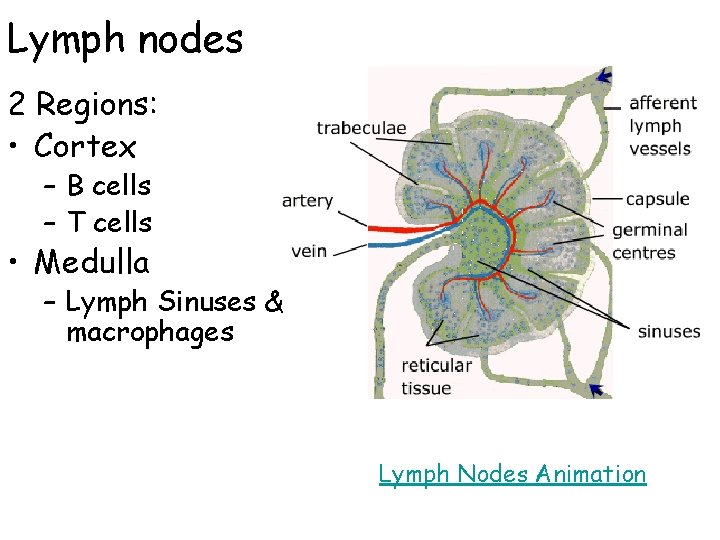
Lymph nodes 2 Regions: • Cortex – B cells – T cells • Medulla – Lymph Sinuses & macrophages Lymph Nodes Animation
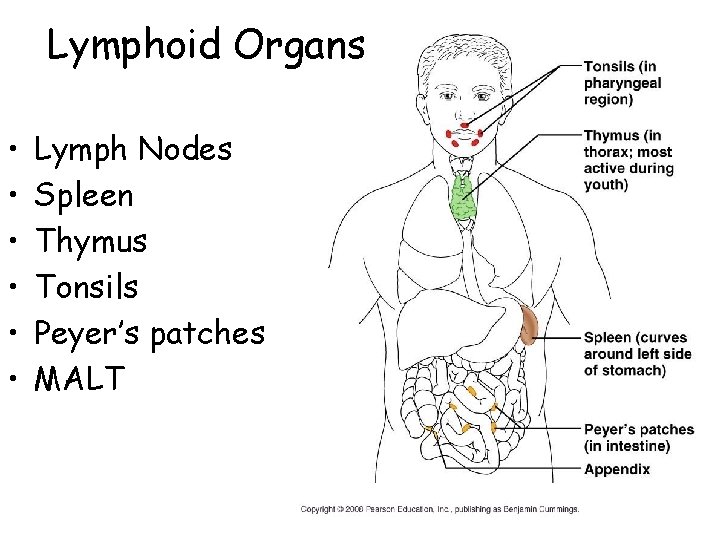
Lymphoid Organs • • • Lymph Nodes Spleen Thymus Tonsils Peyer’s patches MALT
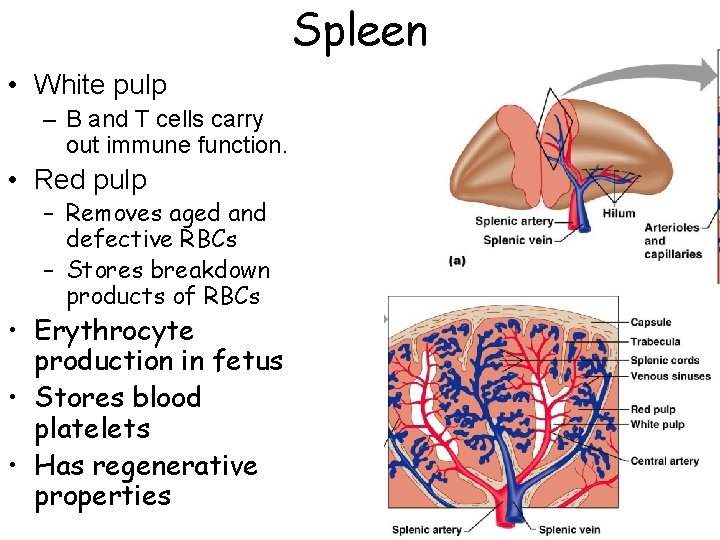
Spleen • White pulp – B and T cells carry out immune function. • Red pulp – Removes aged and defective RBCs – Stores breakdown products of RBCs • Erythrocyte production in fetus • Stores blood platelets • Has regenerative properties
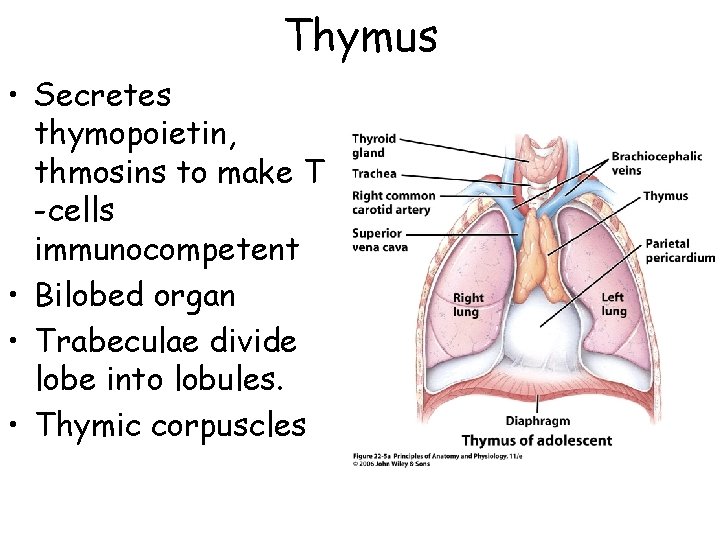
Thymus • Secretes thymopoietin, thmosins to make T -cells immunocompetent • Bilobed organ • Trabeculae divide lobe into lobules. • Thymic corpuscles
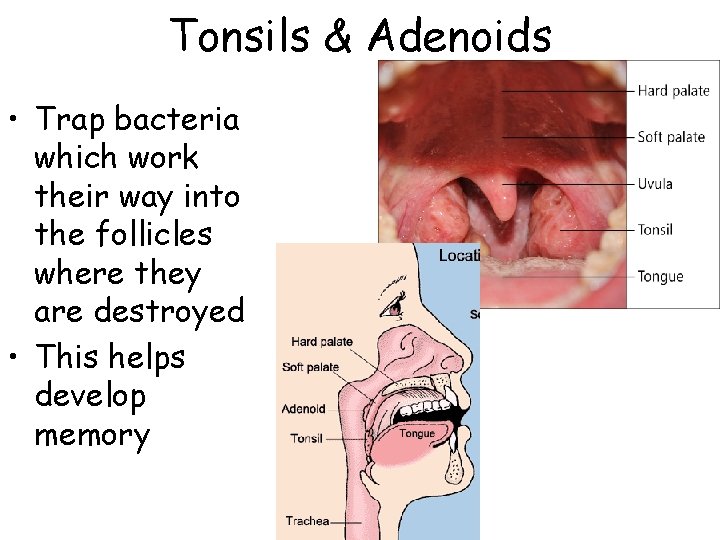
Tonsils & Adenoids • Trap bacteria which work their way into the follicles where they are destroyed • This helps develop memory
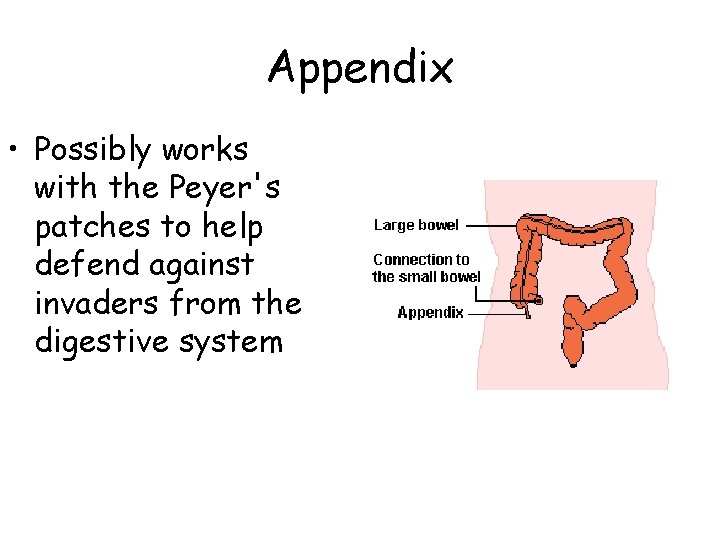
Appendix • Possibly works with the Peyer's patches to help defend against invaders from the digestive system
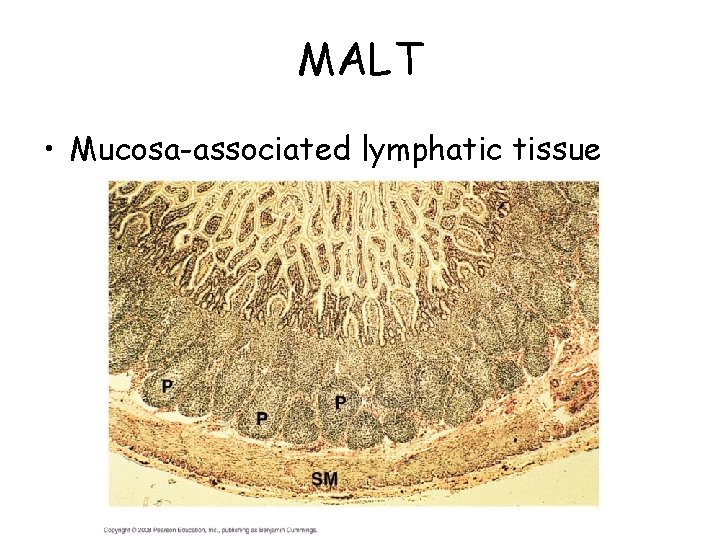
MALT • Mucosa-associated lymphatic tissue
Causes of Edema • Edema Accumulation of interstitial fluid • Blockage of lymphatic system • Increased pressure in veins • Lack of albumin – Decreases fluid returning to blood capillaries by osmosis • Inflammation
Homeoimbalances of the Lymphatic System – Autoimmune Lymphoproliferative Syndrome (ALPS) – Lymphatic Filariasis – Mesenteric Lymphadenitis – Swollen Lymph Nodes – Castleman Disease – Adenoids – Splenomegaly – Hodgkin's disease – Kawasaki disease
Nonspecific Body Defenses • Skin • Acid – Stomach – Vagina • Mucus • Saliva • Tears • Phagocytosis • Complement • Fever • Inflammation
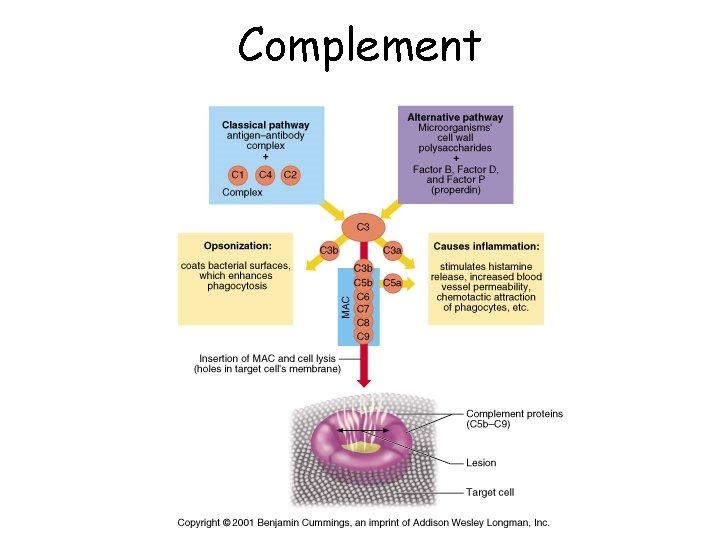
Complement
Inflammation • Bodies response to tissue injury • Classic signs – – Heat Redness Swelling Pain
- Slides: 22