
lymphatic system Formation of tissue fluid and lymph
- Slides: 7
lymphatic system
Formation of tissue fluid and lymph Key terms: • Tissue – are cells that share a similar structure working together to form a structure • Tissue fluid – Fluid from the capillaries that surrounds the tissue • Lymph – maintains fluid balance in cells and removes bacteria
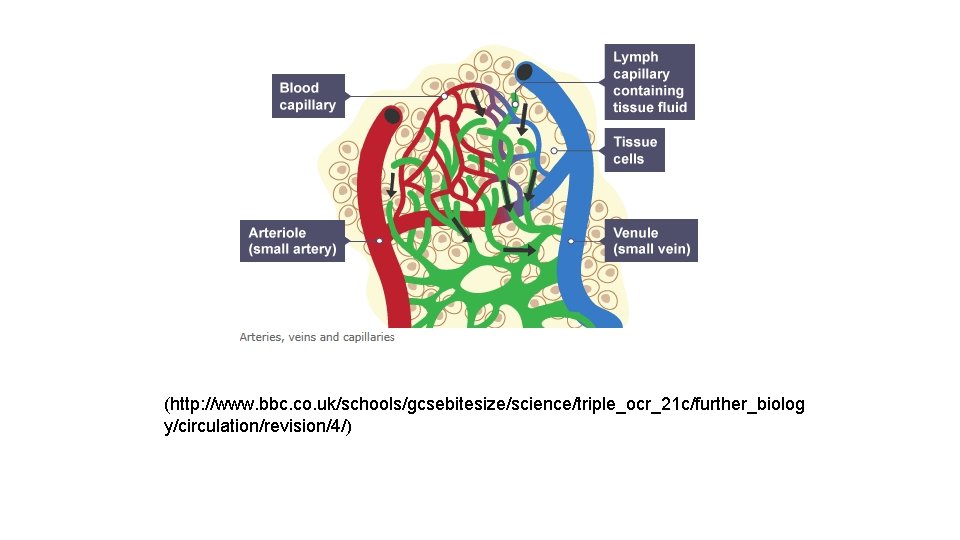
Formation of tissue fluid and lymph By the time blood reaches the capillary beds from an artery, it is at high pressure and this forces blood plasma out. The plasma leaves the capillary and becomes tissue fluid. As the blood plasma moves through the capillary bed towards the vein, pressure drops and stops plasma being squeezed out This allow for diffusion and the exchange of oxygen and waste products from cells (http: //www. bbc. co. uk/schools/gcsebitesize/science/triple_ocr_21 c/further_biology/ circulation/revision/4/)
(http: //www. bbc. co. uk/schools/gcsebitesize/science/triple_ocr_21 c/further_biolog y/circulation/revision/4/)
Role of hydrostatic pressure • This is the force between the capillaries and tissues, driving the blood out of the capillaries as it is greater than the external pressure, in order for the exchange of oxygen and glucose for waste products from the cells – known as osmosis
Blood Proteins There are 3 proteins within blood that all have different roles: • Albumin made by the liver and is responsible for keeping the fluid pressure level constant and carrying nutrients and vitamins to where they are needed in the body • Globulin provide antibodies so that the body can fight off infection • Fibrinogen made by the liver to work with platelets and create blood clots
Structure and role of lymphatic system • https: //www. livescience. com/26983 -lymphaticsystem. html - video 2 mins • The lymphatic system is consists of tissues and organs that help rid the body of unwanted materials such as toxins. The main function of the system is to transport lymph, containing white blood cells, throughout the body in order to fight infection. • The system consists of vessels which are similar to blood vessels, these are connected to your lymph nodes (which become swollen when fighting infection) and the lymph is filtered • Your tonsils, adenoids and spleen thymus are all part of the system