
Lymphatic System and Immunity Fluid Leaves Capillary Cells
- Slides: 61
Lymphatic System and Immunity
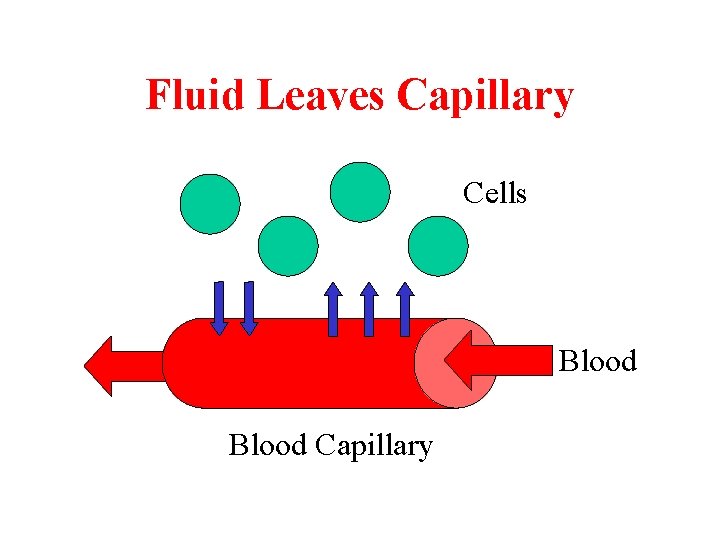
Fluid Leaves Capillary Cells Blood Capillary
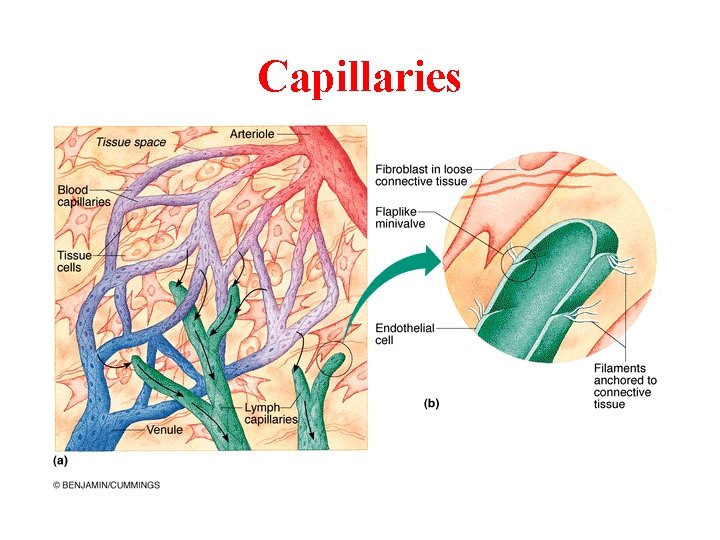
Capillaries
Functions of Lymphatic System • • • Drain fluid from around cells Absorb fat from intestines Circulate lymph Filter lymph Immunity
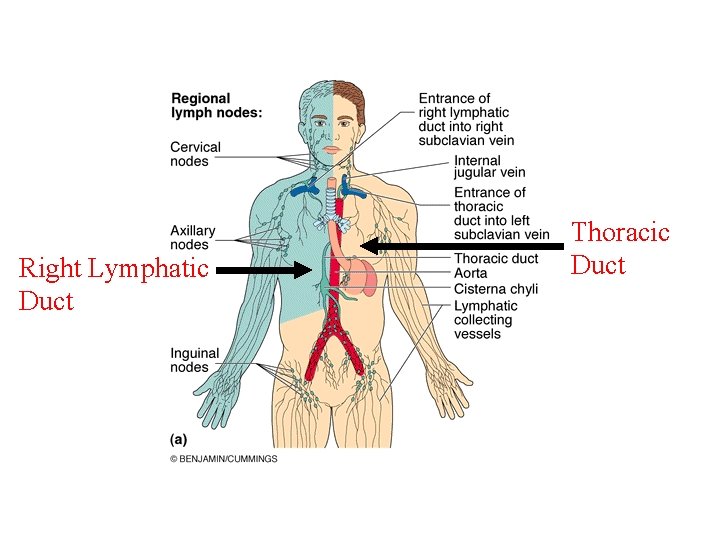
Right Lymphatic Duct Thoracic Duct
Lymph • Fluid of the lymphatic system • Similar to blood plasma and interstitial fluid
Lymphatic Vessels • Transport lymph • Lymph is returned to the circulatory system at either the right or left subclavian veins
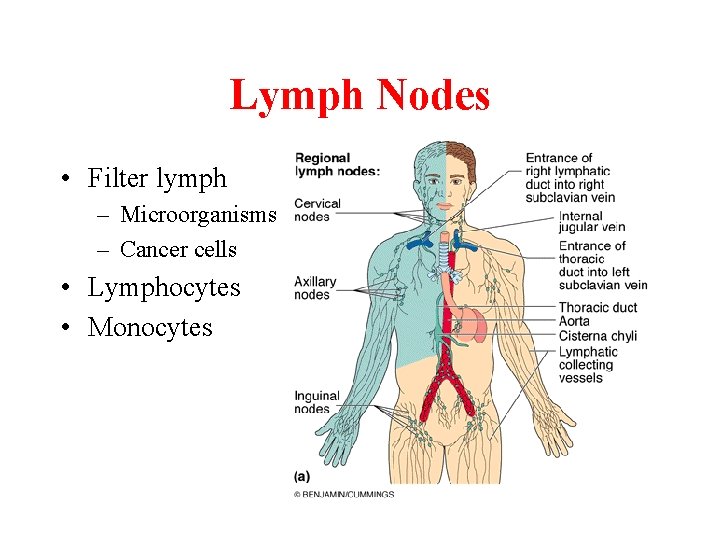
Lymph Nodes • Filter lymph – Microorganisms – Cancer cells • Lymphocytes • Monocytes
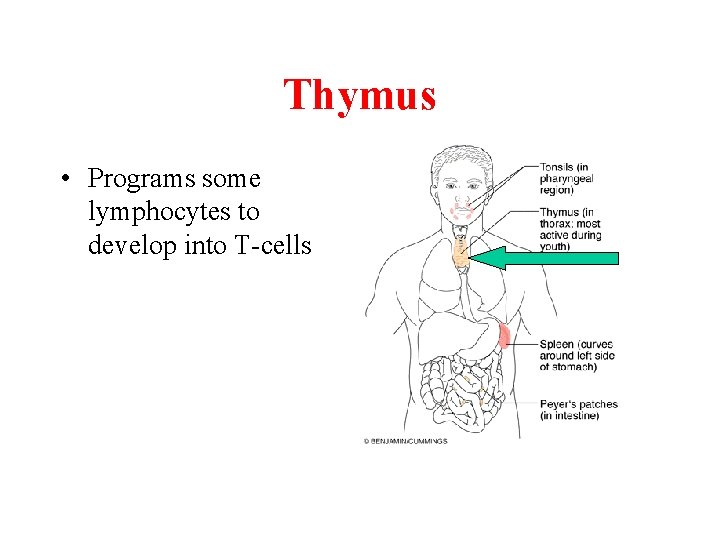
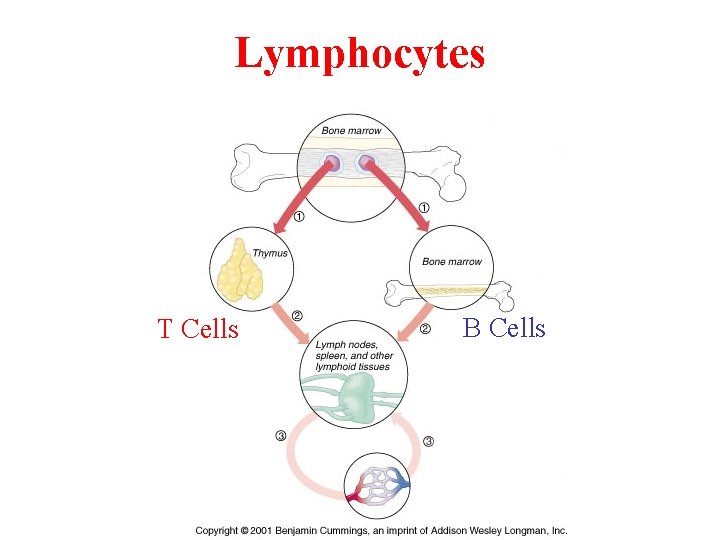
Thymus • Programs some lymphocytes to develop into T-cells
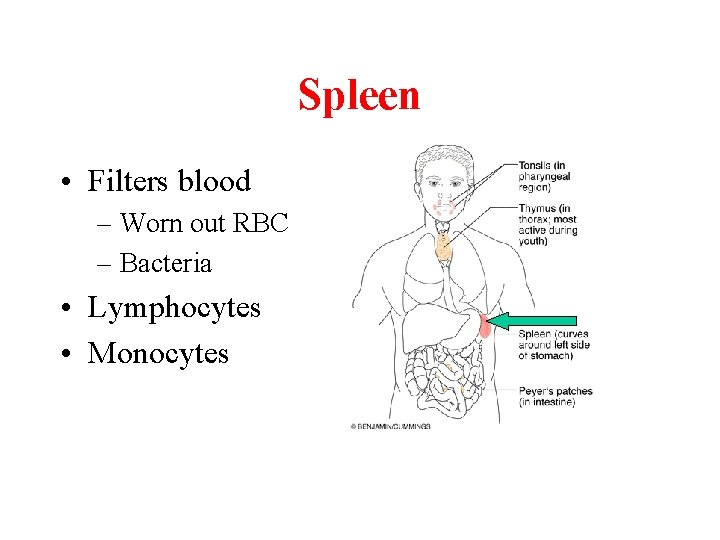
Spleen • Filters blood – Worn out RBC – Bacteria • Lymphocytes • Monocytes
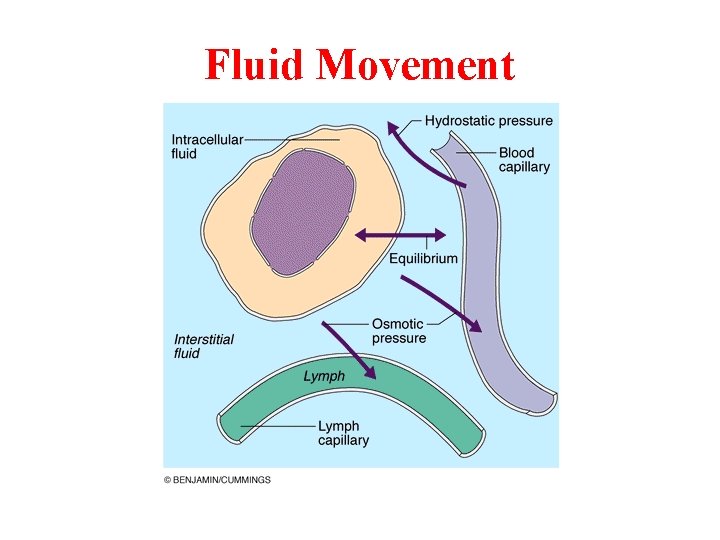
Fluid Movement
Edema • Accumulation of interstitial fluid
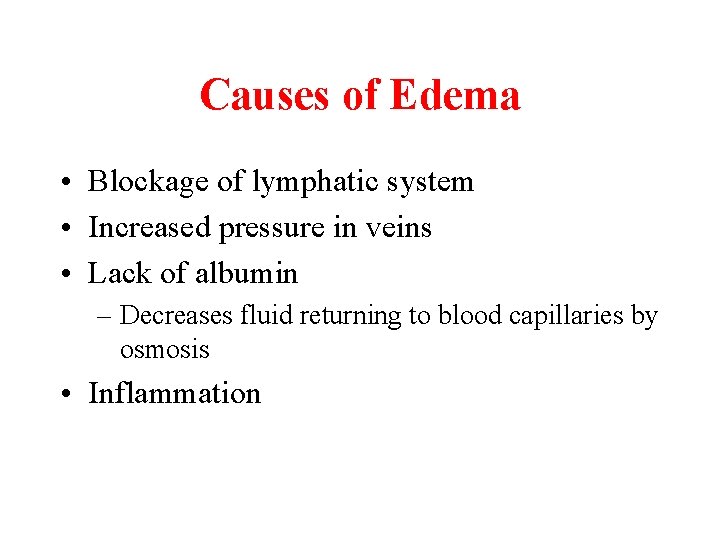
Causes of Edema • Blockage of lymphatic system • Increased pressure in veins • Lack of albumin – Decreases fluid returning to blood capillaries by osmosis • Inflammation
Nonspecific Body Defenses • Skin • Acid – Stomach – Vagina • Mucus • Saliva • Tears
More Nonspecific Defenses • • Phagocytosis Complement Fever Inflammation
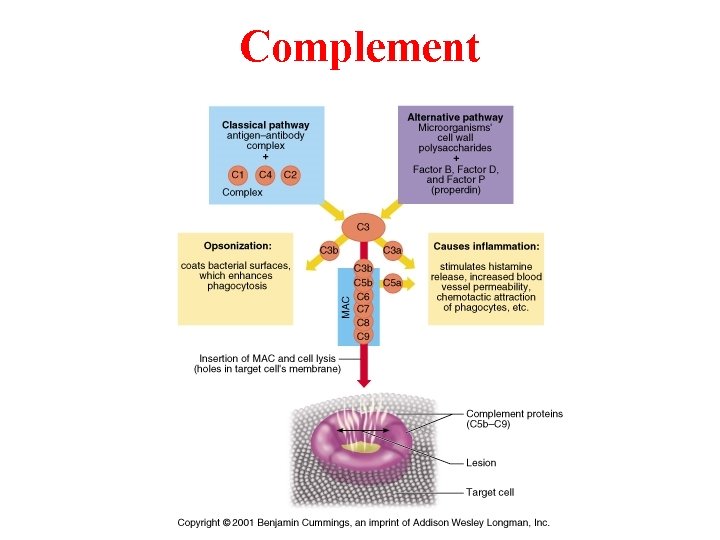
Complement
Inflammation • Bodies response to tissue injury • Classic signs – Heat – Redness – Swelling – Pain
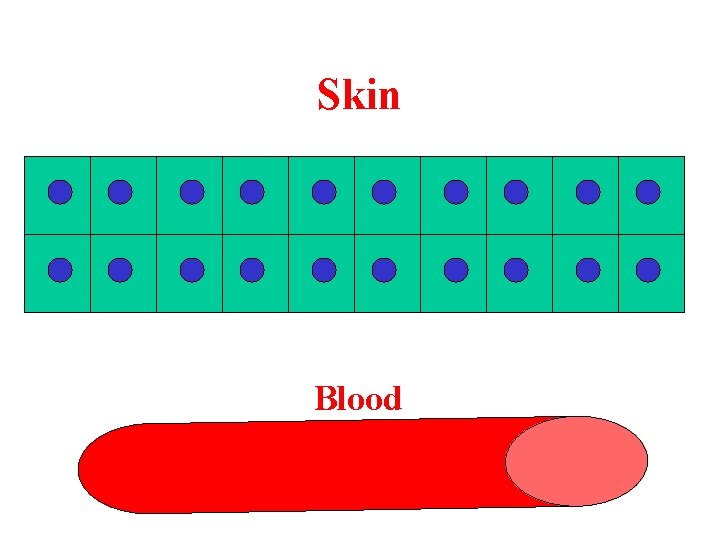
Skin Blood
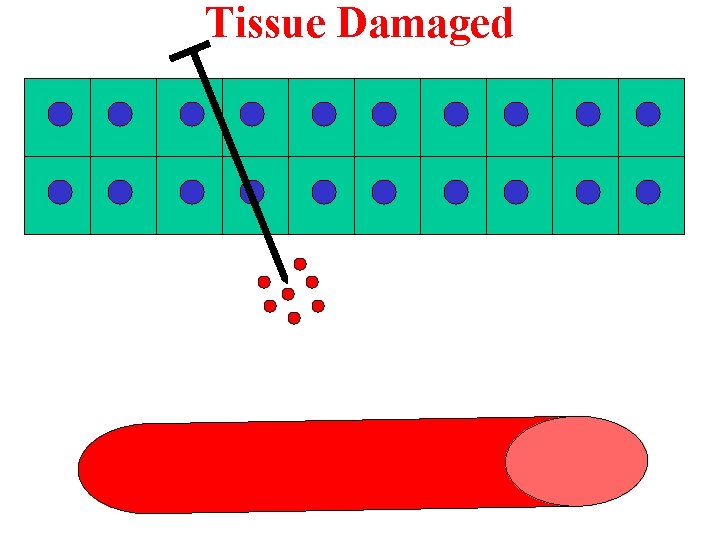
Tissue Damaged
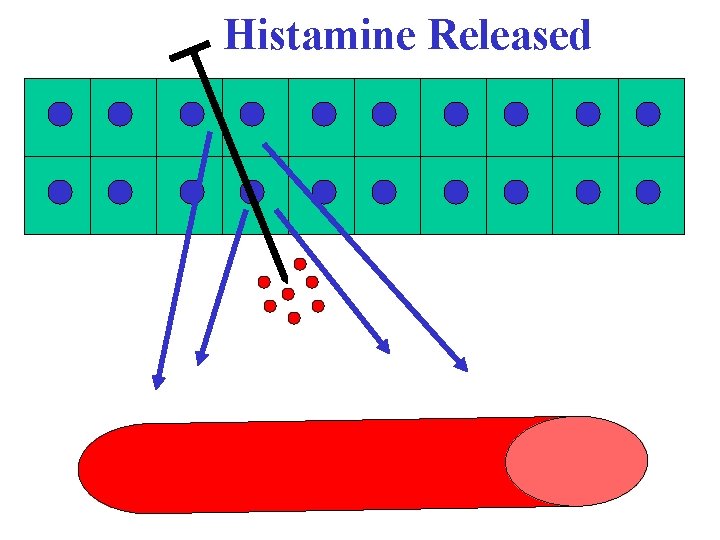
Histamine Released
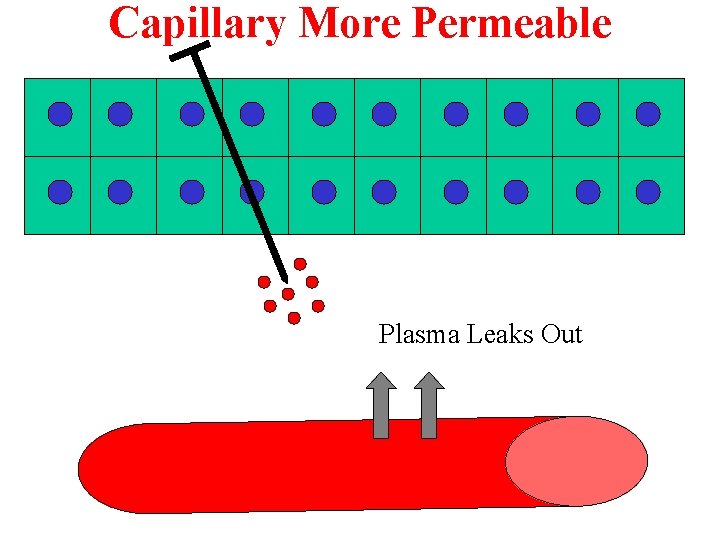
Capillary More Permeable Plasma Leaks Out
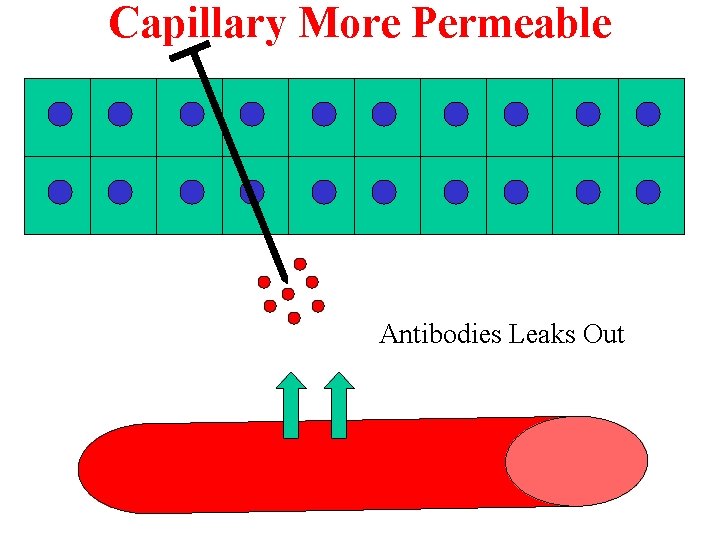
Capillary More Permeable Antibodies Leaks Out
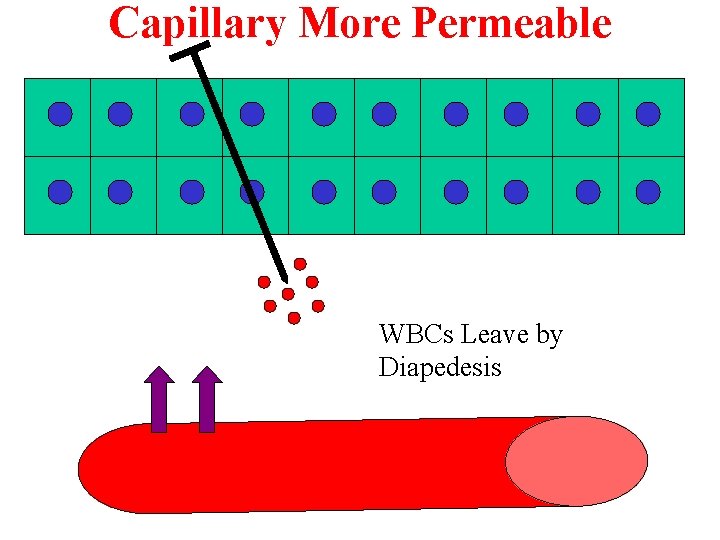
Capillary More Permeable WBCs Leave by Diapedesis
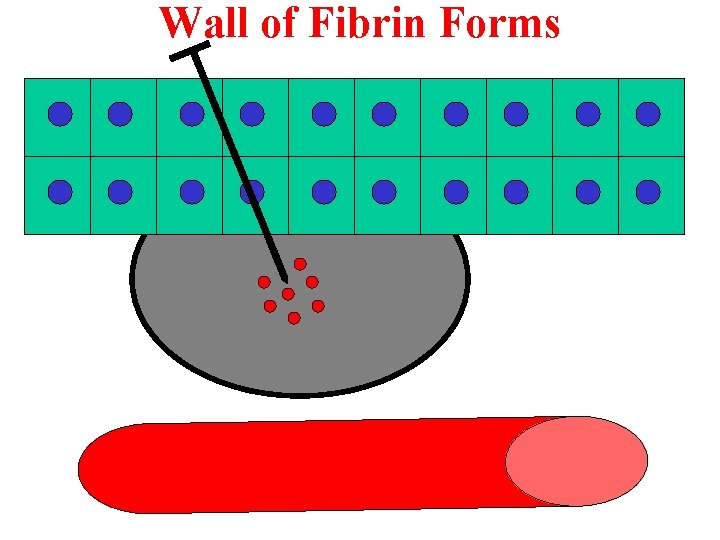
Wall of Fibrin Forms
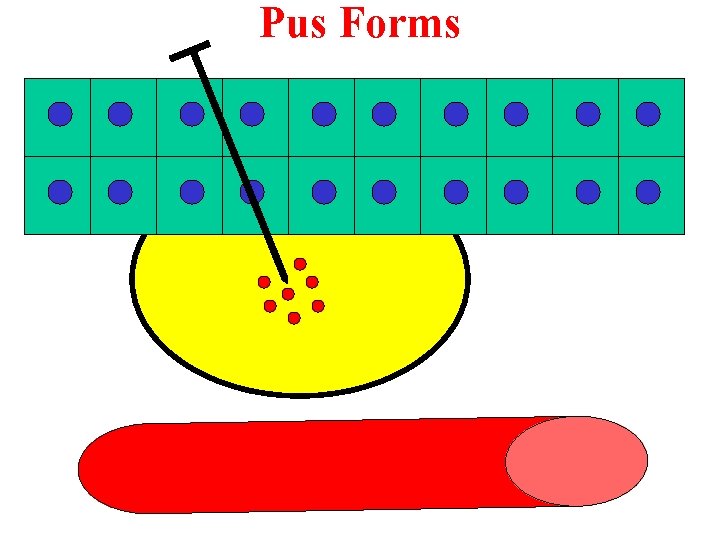
Pus Forms
Steroid Hormones • Hydrocortisone, cortisone and others • Depress inflammation • Used to treat inflammatory diseases – Rheumatoid arthritis
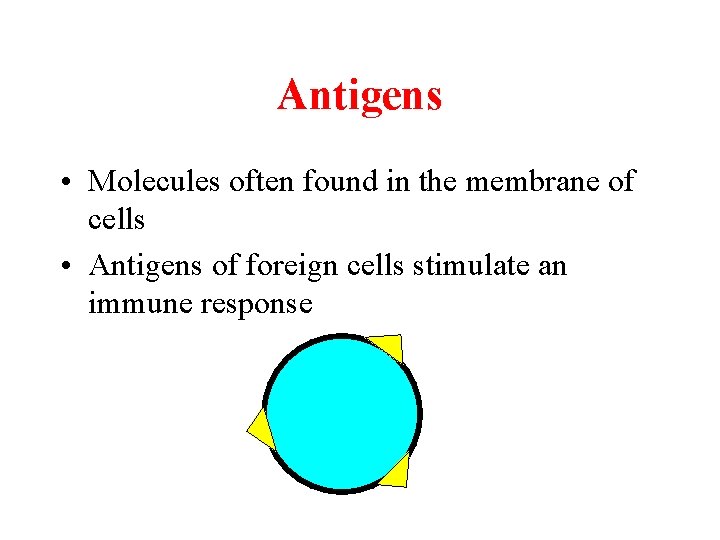
Antigens • Molecules often found in the membrane of cells • Antigens of foreign cells stimulate an immune response
Self Antigens • Antigens of our own cells • Do not cause an immune response in our body – Usually cause an immune response in another person • MHC proteins – Major Histocompatibility Complex
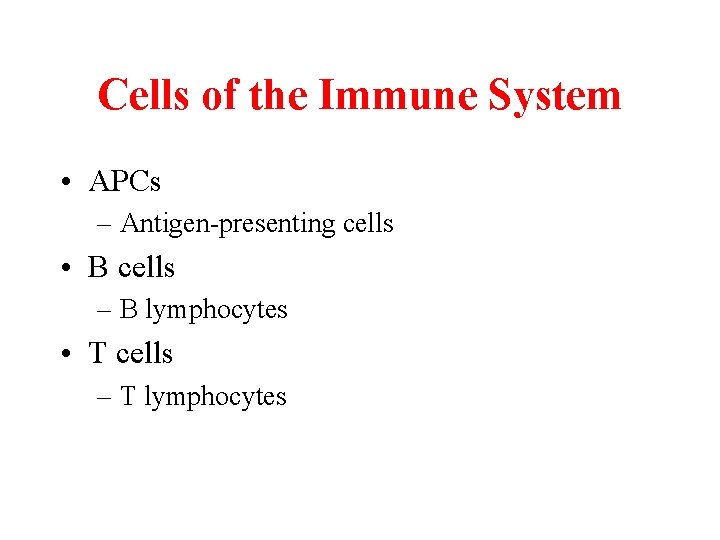
Cells of the Immune System • APCs – Antigen-presenting cells • B cells – B lymphocytes • T cells – T lymphocytes
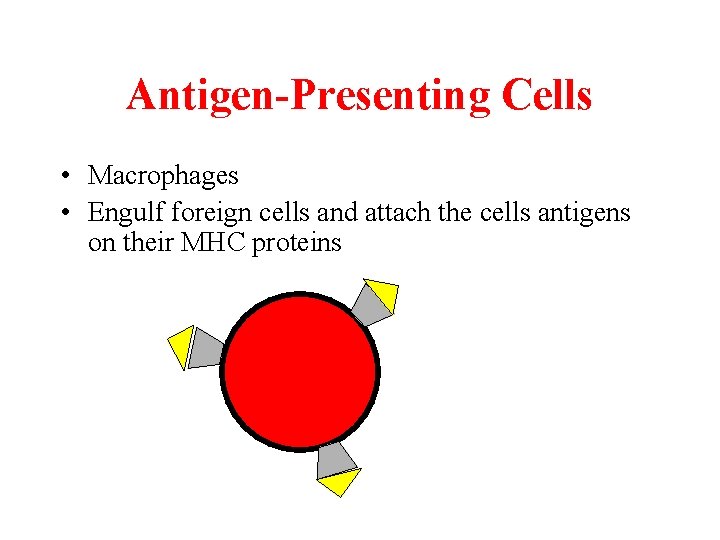
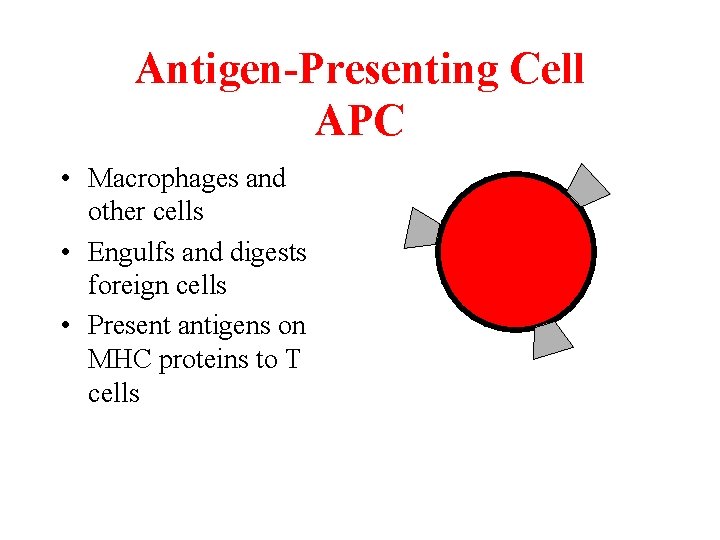
Antigen-Presenting Cells • Macrophages • Engulf foreign cells and attach the cells antigens on their MHC proteins
Lymphocytes T Cells B Cells
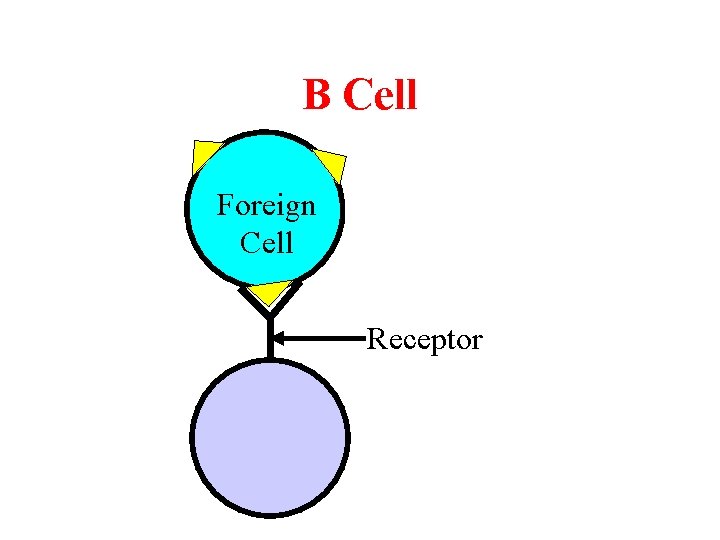
B Cell Foreign Cell Receptor
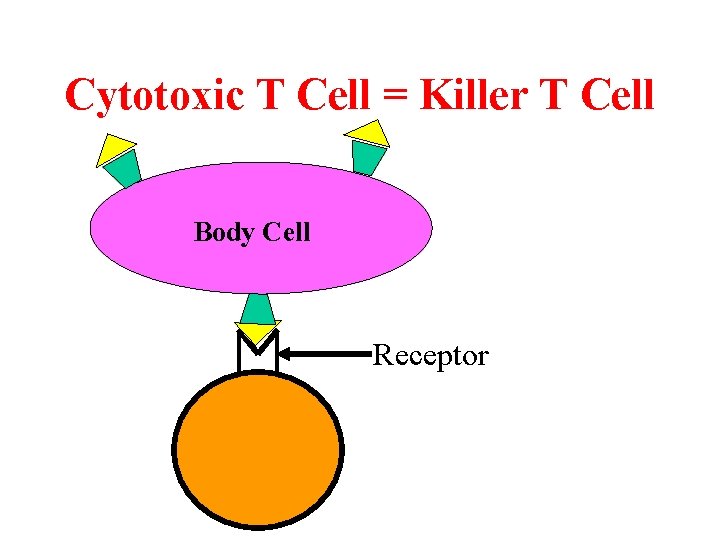
Cytotoxic T Cell = Killer T Cell Body Cell Receptor
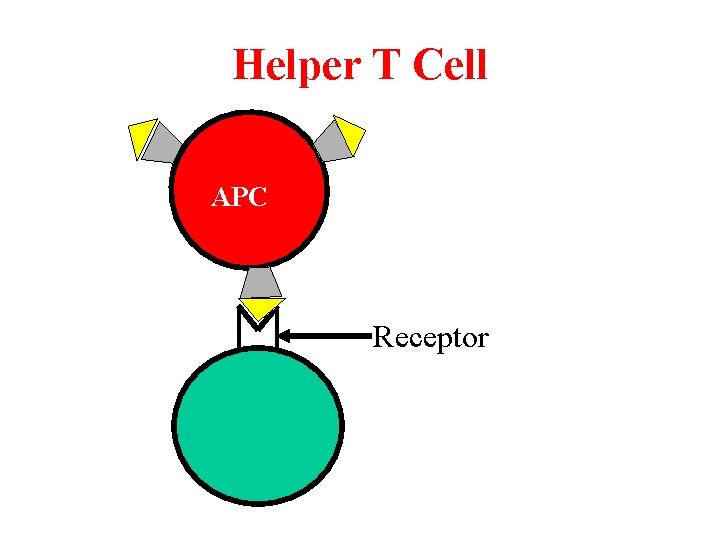
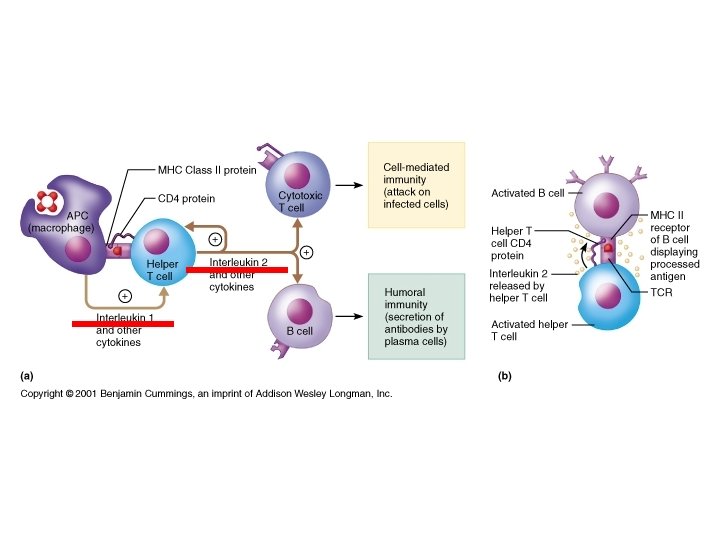
Helper T Cell APC Receptor
Antigen-Presenting Cell APC • Macrophages and other cells • Engulfs and digests foreign cells • Present antigens on MHC proteins to T cells
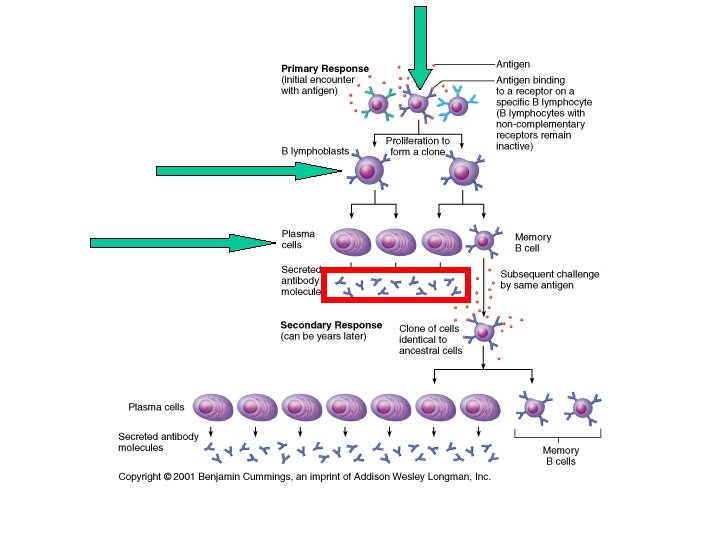
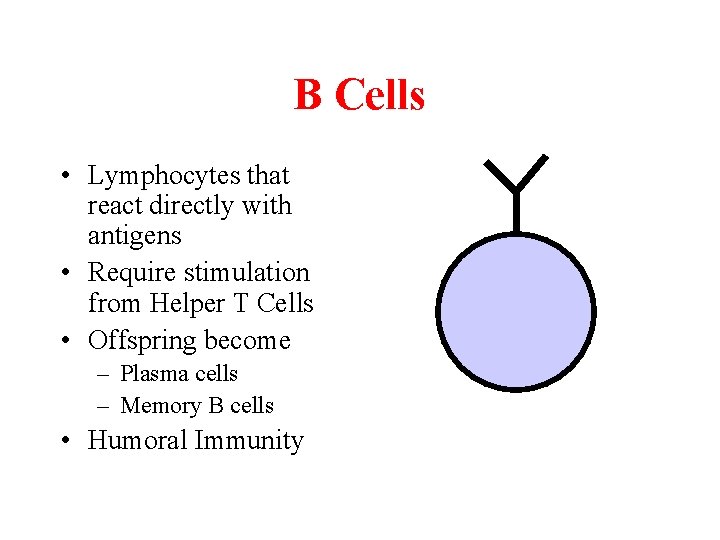
B Cells • Lymphocytes that react directly with antigens • Require stimulation from Helper T Cells • Offspring become – Plasma cells – Memory B cells • Humoral Immunity
Plasma Cells • Produce huge numbers of antibodies – 2000/second
Helper T Cell • Reacts with antigen from APC • Stimulates Cytotoxic T Cells and B Cells – Secretes Interleukin II
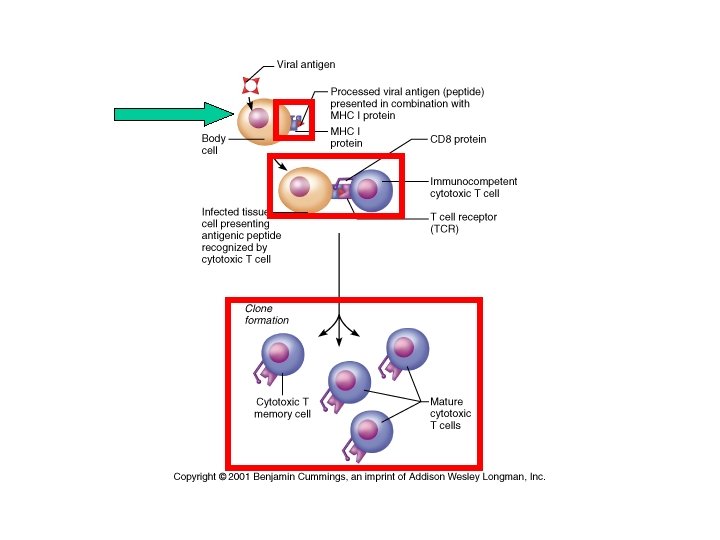
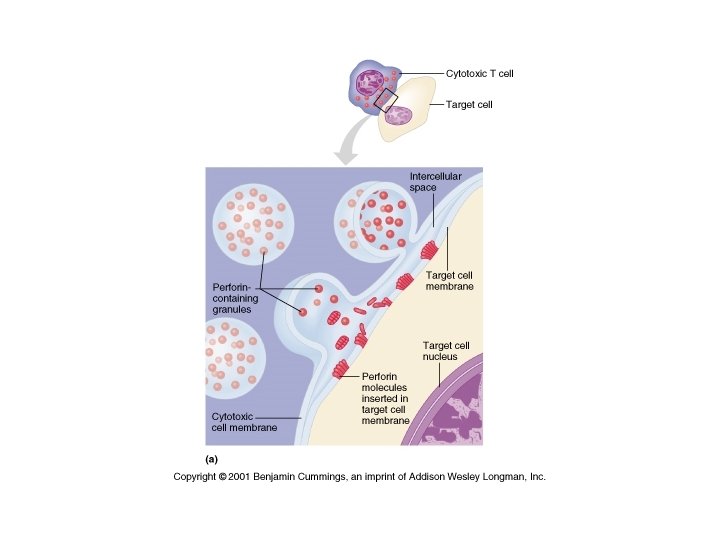
Cytotoxic T Cells • Activated by antigens on any body cell • Require stimulation from Helper T Cells • Destroys body cells infected with viruses • Destroys cancer cells • Cellular Immunity
Memory Cells • T Cells and B Cells • Remember antigen • React to a second invasion of an antigen more rapidly
Suppressor T Cells • Stops T cells and B cells after an infection has been conquered
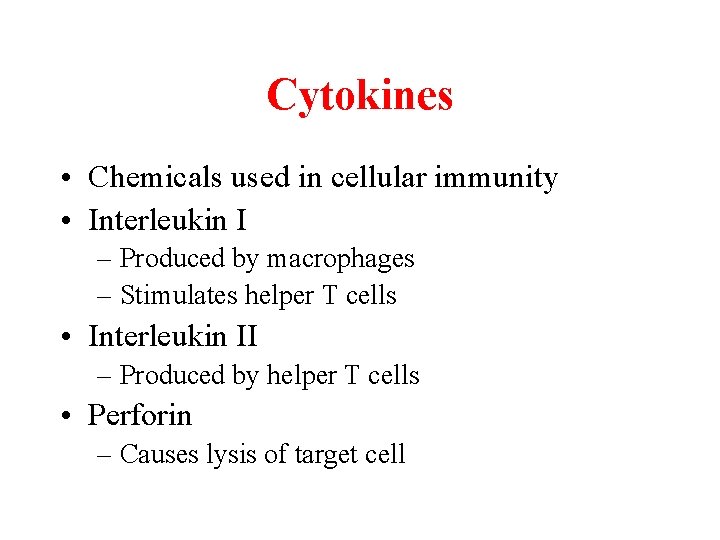
Cytokines • Chemicals used in cellular immunity • Interleukin I – Produced by macrophages – Stimulates helper T cells • Interleukin II – Produced by helper T cells • Perforin – Causes lysis of target cell
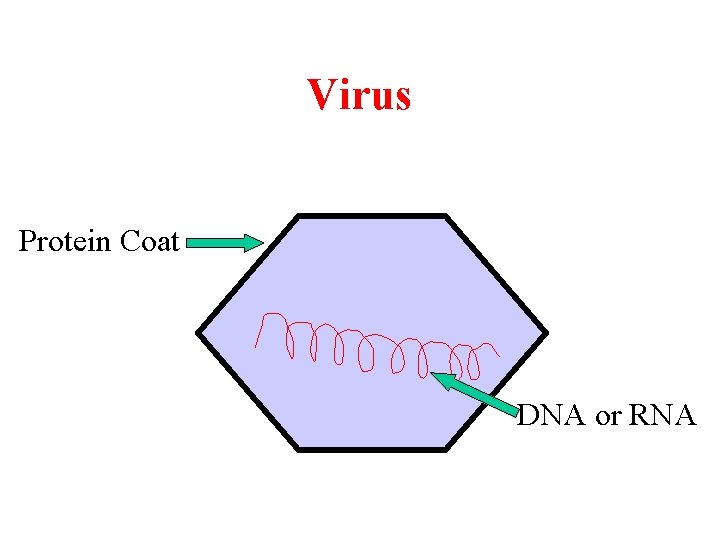
Virus Protein Coat DNA or RNA
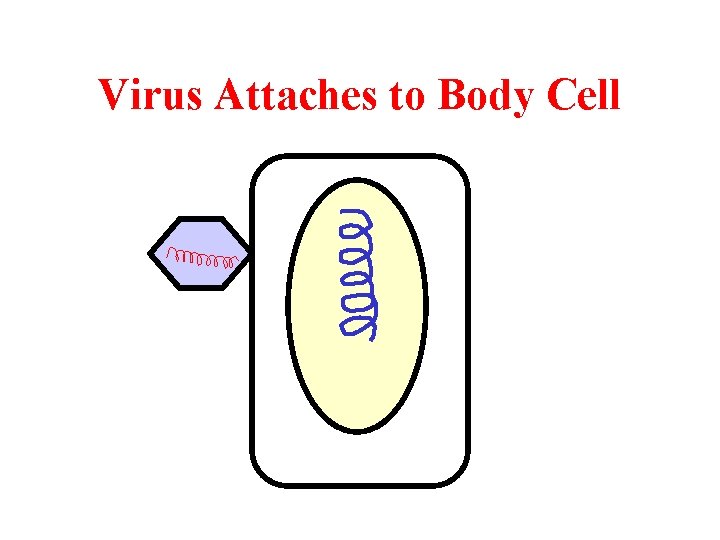
Virus Attaches to Body Cell
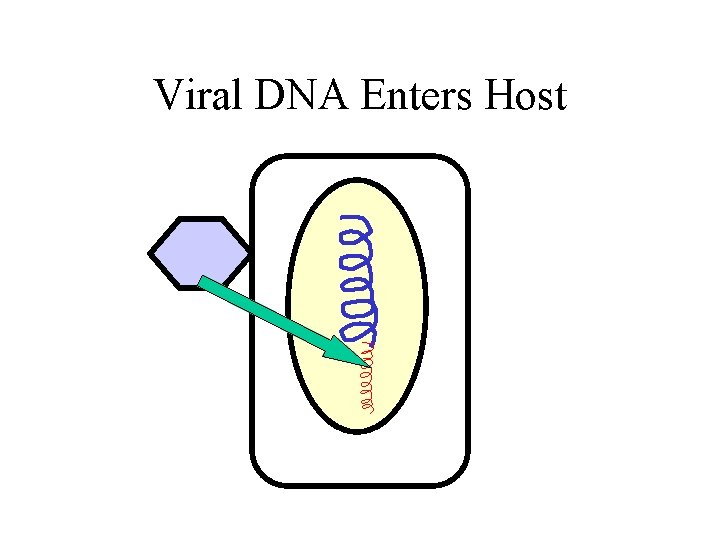
Viral DNA Enters Host
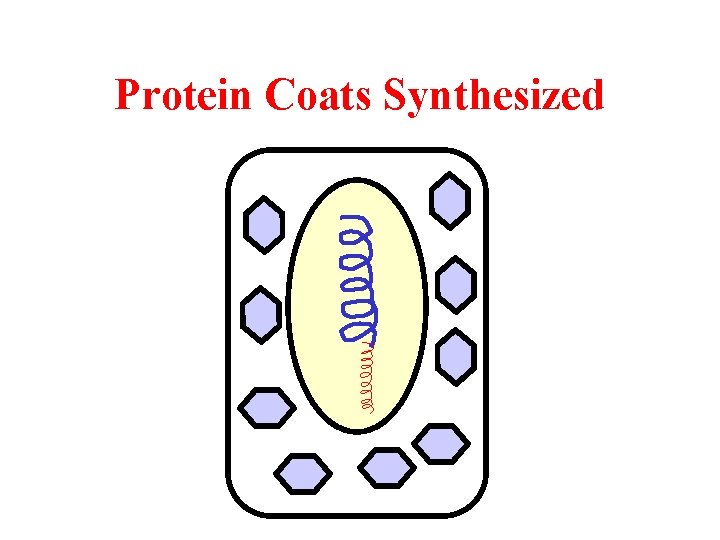
Protein Coats Synthesized
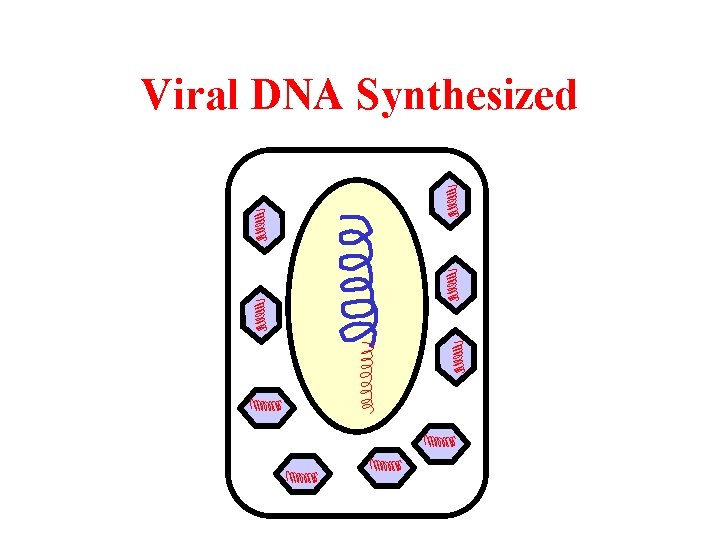
Viral DNA Synthesized
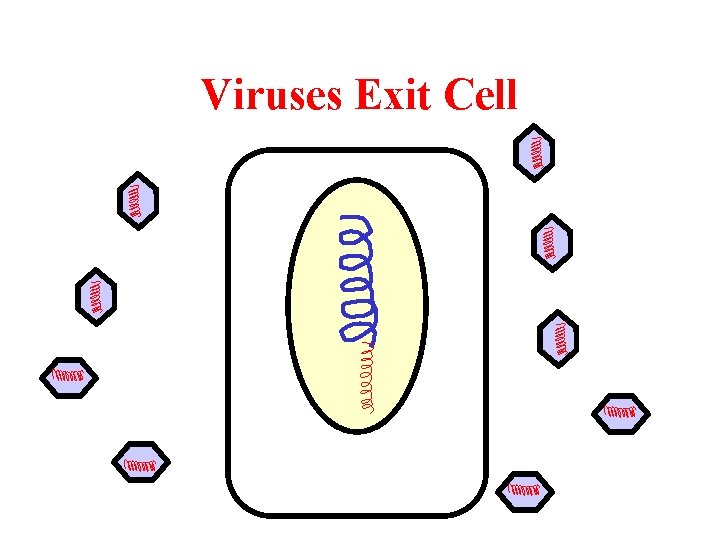
Viruses Exit Cell
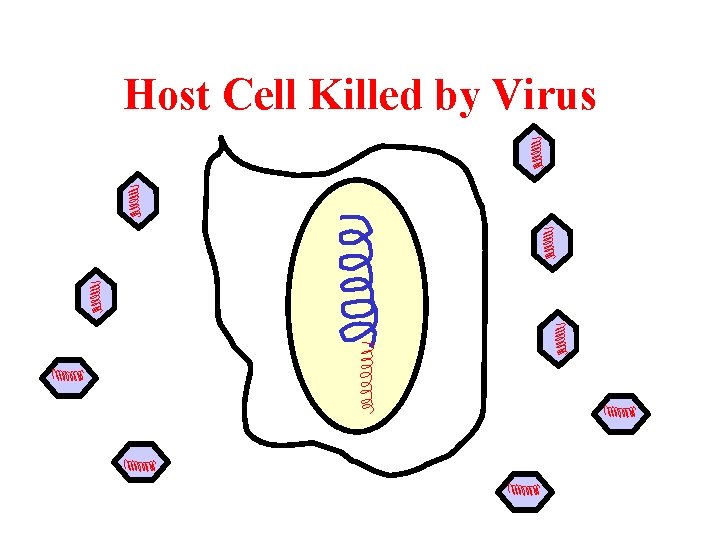
Host Cell Killed by Virus
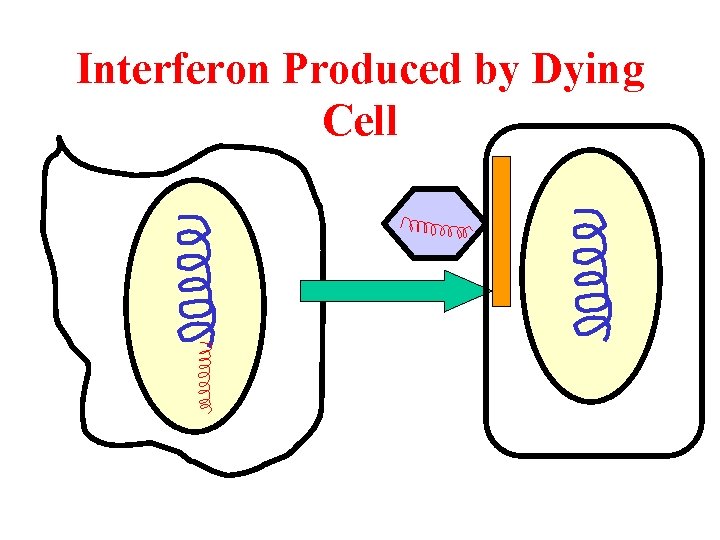
Interferon Produced by Dying Cell
Acquired Immune Deficiency Syndrome • HIV Virus • Attacks and destroys Helper T Cells – Depresses humoral and cellular immunity
The End