
LYMPHATIC SYSTEM Aja Udumah LYMPHATIC SYSTEM The lymph









- Slides: 39
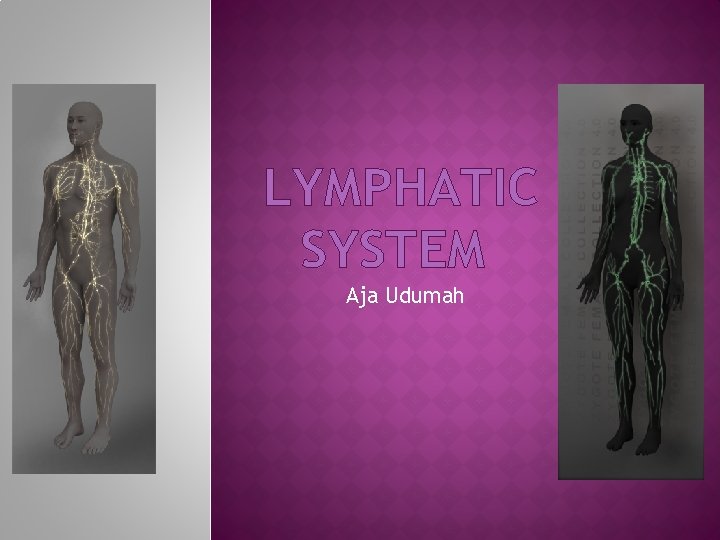
LYMPHATIC SYSTEM Aja Udumah
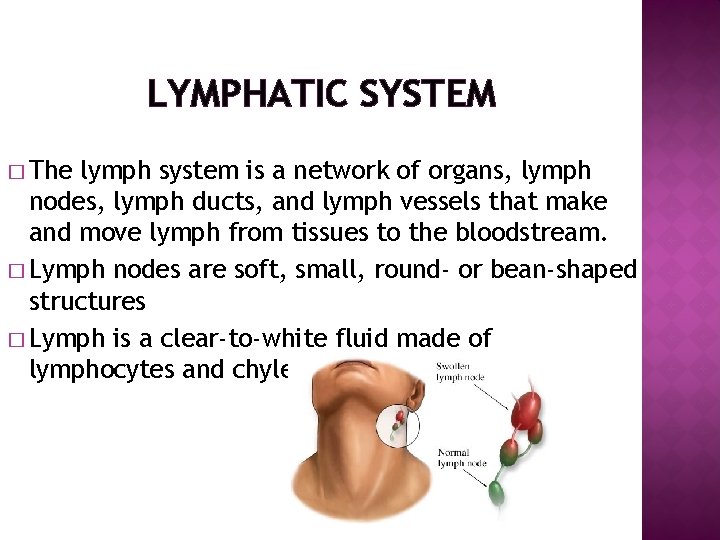
LYMPHATIC SYSTEM � The lymph system is a network of organs, lymph nodes, lymph ducts, and lymph vessels that make and move lymph from tissues to the bloodstream. � Lymph nodes are soft, small, round- or bean-shaped structures � Lymph is a clear-to-white fluid made of lymphocytes and chyle.
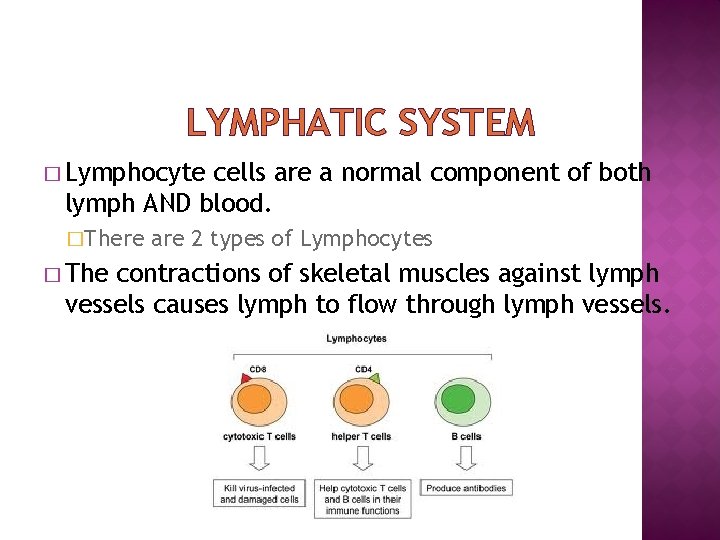
LYMPHATIC SYSTEM � Lymphocyte cells are a normal component of both lymph AND blood. �There � The are 2 types of Lymphocytes contractions of skeletal muscles against lymph vessels causes lymph to flow through lymph vessels.
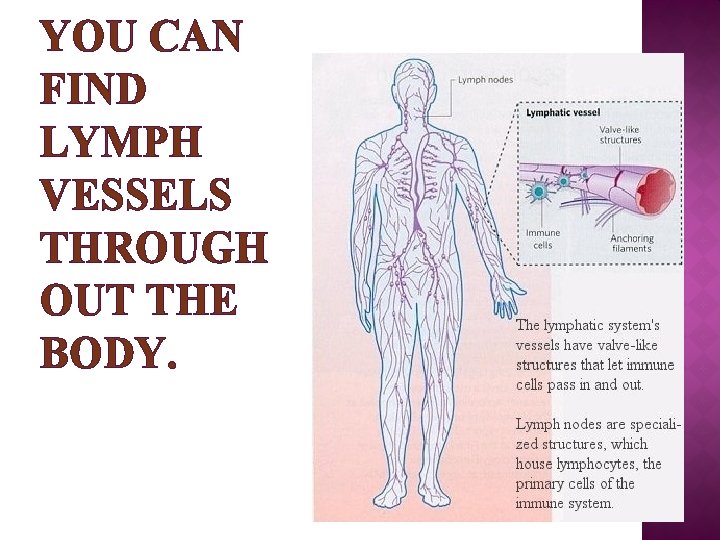
YOU CAN FIND LYMPH VESSELS THROUGH OUT THE BODY.
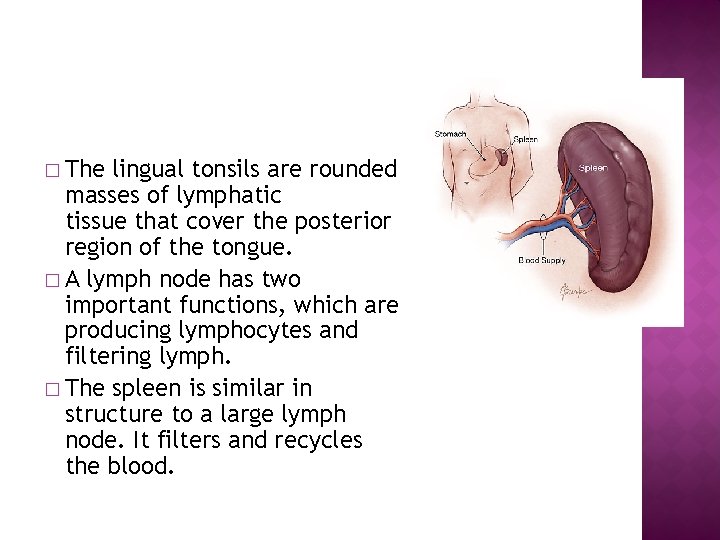
� The lingual tonsils are rounded masses of lymphatic tissue that cover the posterior region of the tongue. � A lymph node has two important functions, which are producing lymphocytes and filtering lymph. � The spleen is similar in structure to a large lymph node. It filters and recycles the blood.
1. What cells are a normal component of both lymph and blood? A. Erythrocytes B. Lymphocytes C. Platelets D. Thrombocytes
2. Where would you find lymph vessels? A. In tissues that do not have blood vessels B. In the four chambers of the heart C. Throughout the body D. Only in organs of the digestive system
3. What causes lymph to flow through lymph vessels? A. Peristalsis B. The heart C. Contractions of skeletal muscles against lymph vessels D. Wavelike contractions of the muscular lining of lymph vessels
4. Where are the lingual tonsils located? A. Tongue B. Nose C. Lips D. On the voice box
5. A lymph node has two important functions. Lmphocyte production and pumping lymph fluid. B. Transportation of fats and lymph fluid C. Lymphocyte production and filtration. D. Pumping lymph fluid and transporting fats. A.
6. What organ recycles red blood cells? A. Lymph node B. Spleen C. Thymus D. Lingual tonsil
By: Pamela Diokpara
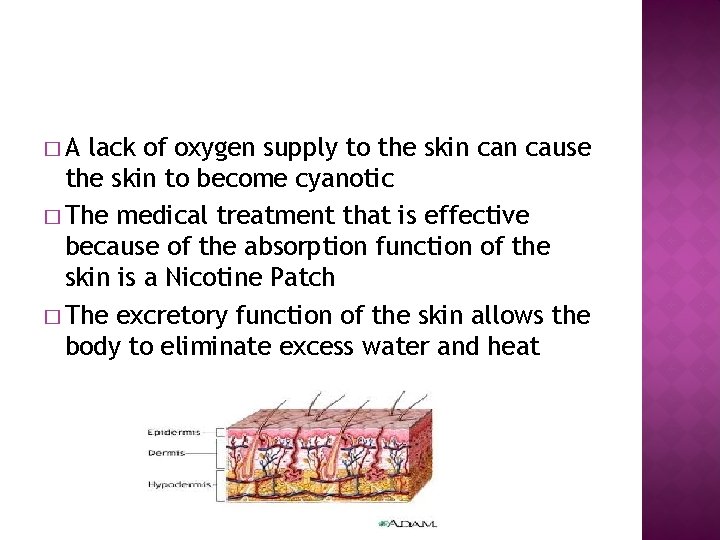
�A lack of oxygen supply to the skin cause the skin to become cyanotic � The medical treatment that is effective because of the absorption function of the skin is a Nicotine Patch � The excretory function of the skin allows the body to eliminate excess water and heat
� A: Cyanotic � B: Jaundiced � C: White � D: Red
� A: Defibrillation � B: Massage � C: Heating Pad � D: Nicotine Patch
� A: Fat and sugar � B: Water and Heat � C: Vitamin C � D: Minerals
� Spending short periods of time in the morning sun can be beneficial because it helps in the production of Vitamin D. � The presence of cellulite can be attributed to the Subcutaneous layer of the skin. � When compared to someone with very light skin, a person with dark skin has more Melanin.
� A: Toughens the skin to improve its protective function � B: Improves circulation to the skin, improving skin health � C: improves the skin’s elasticity, preventing wrinkles � D: Helps in the production of Vitamin D.
� A: Epidermis � B: Dermis � C: Corium � D: Subcutaneou. S
� A: Melanin � B: Melanocytes � C: Vitamin D � D: Vitamin C
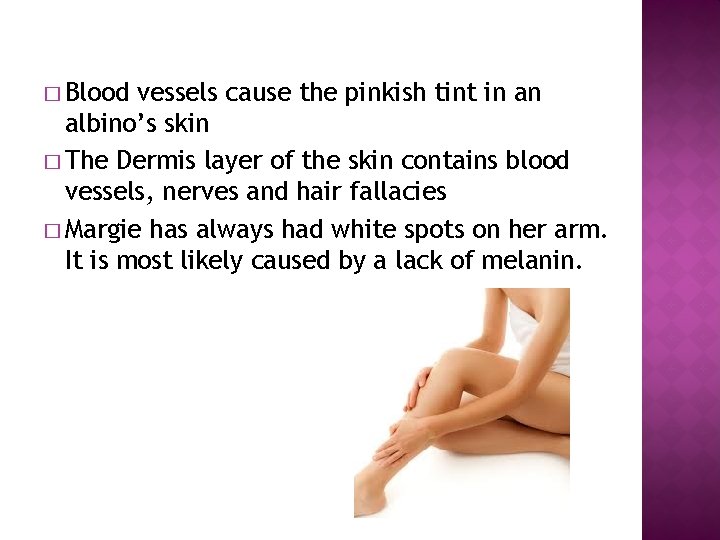
� Blood vessels cause the pinkish tint in an albino’s skin � The Dermis layer of the skin contains blood vessels, nerves and hair fallacies � Margie has always had white spots on her arm. It is most likely caused by a lack of melanin.
� A: Melanin � B: Carotene � C: Blood Vessels � D: Jaundice
� A: Dermis � B: Epidermis � C: Hypodermis � D: Subcutaneous
� A: Albino disorder � B: Hives � C: Calcium Deficiency � D: A lack of melanin
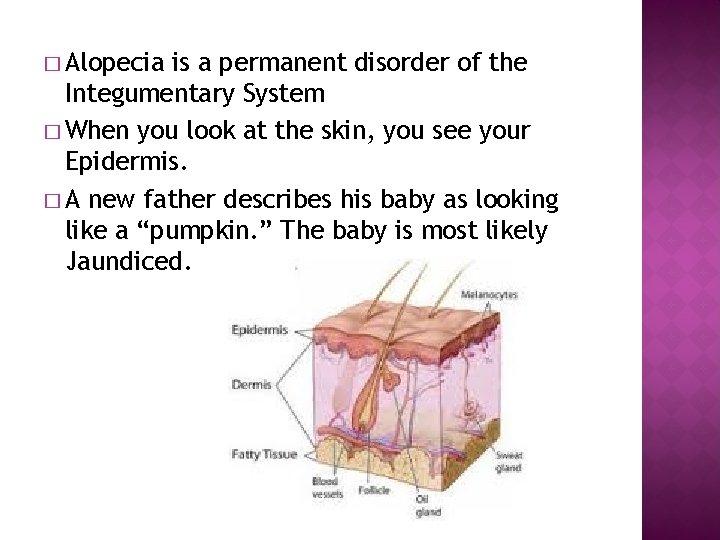
� Alopecia is a permanent disorder of the Integumentary System � When you look at the skin, you see your Epidermis. � A new father describes his baby as looking like a “pumpkin. ” The baby is most likely Jaundiced.
� A: Urticaria � B: Alopecia � C: Vesicle � D: Athlete; s Foot
� A: Epidermis � B: Dermis � C: Corium � D: Subcutaneous tissue
� A: Cyanotic � B: Jaundiced � C: Flushed � D: An Albino
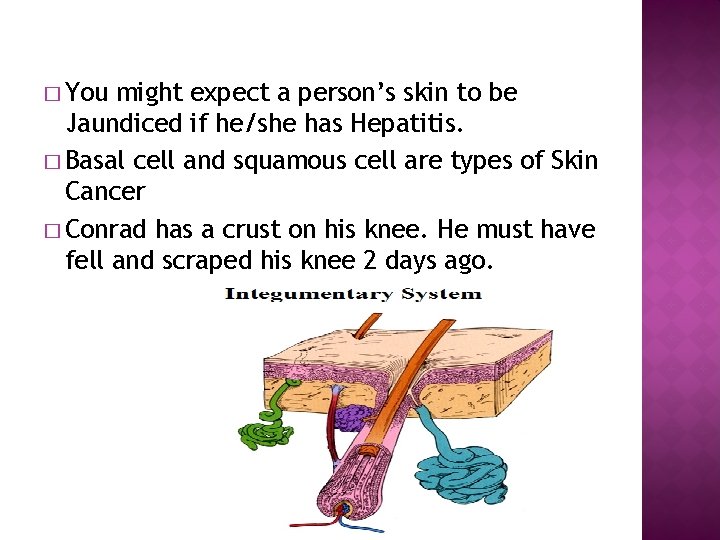
� You might expect a person’s skin to be Jaundiced if he/she has Hepatitis. � Basal cell and squamous cell are types of Skin Cancer � Conrad has a crust on his knee. He must have fell and scraped his knee 2 days ago.
� A: Melanoma � B: Hepatitis � C: Ringworm � D: Scabies
� A: Pustules � B: Allergic sin disorders � C: Skin Cancer � D: Nodules
� A: Was it in the knee by a snowball � B: Fell and skinned his knee � C: Stayed out in the sun too long � D: Wore a friend’s gym shorts
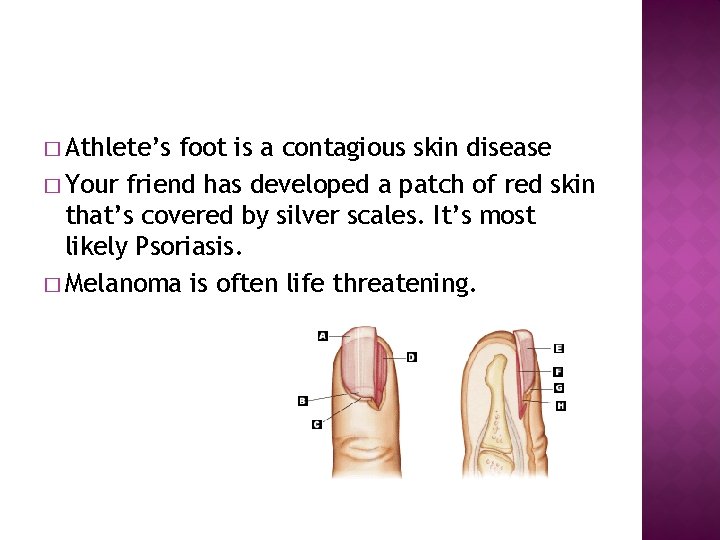
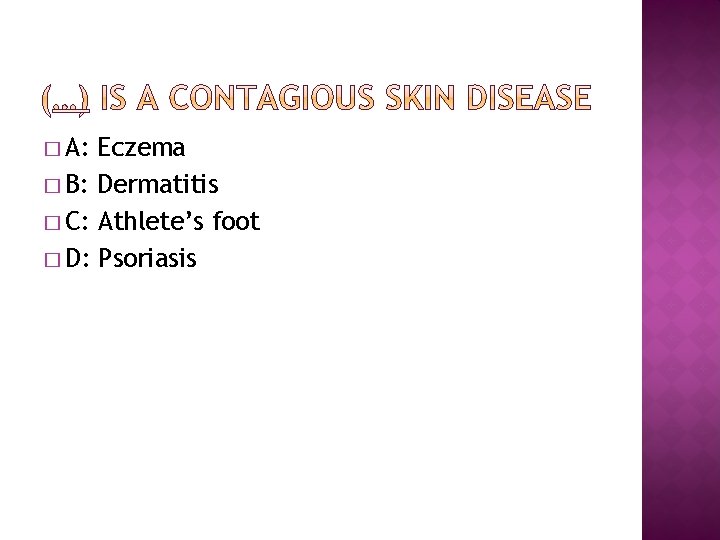
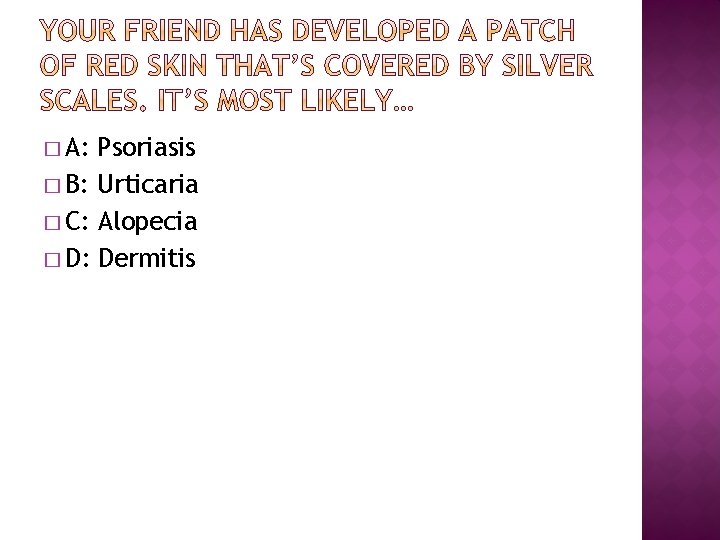
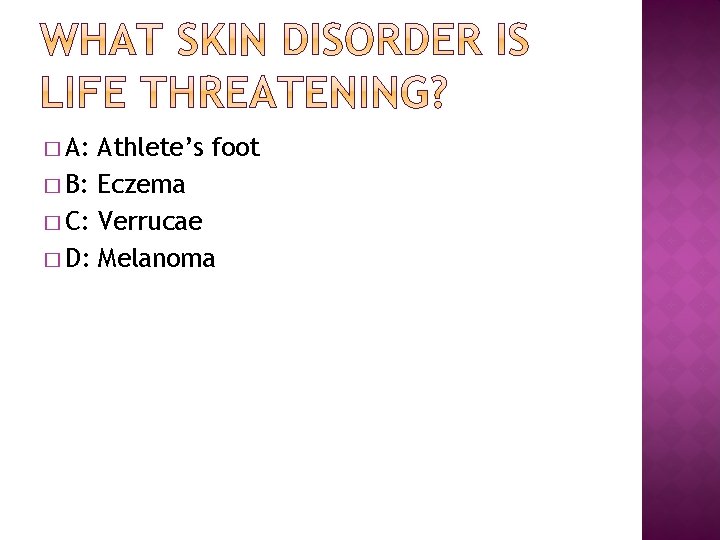
� Athlete’s foot is a contagious skin disease � Your friend has developed a patch of red skin that’s covered by silver scales. It’s most likely Psoriasis. � Melanoma is often life threatening.
� A: Eczema � B: Dermatitis � C: Athlete’s foot � D: Psoriasis
� A: Psoriasis � B: Urticaria � C: Alopecia � D: Dermitis
� A: Athlete’s foot � B: Eczema � C: Verrucae � D: Melanoma
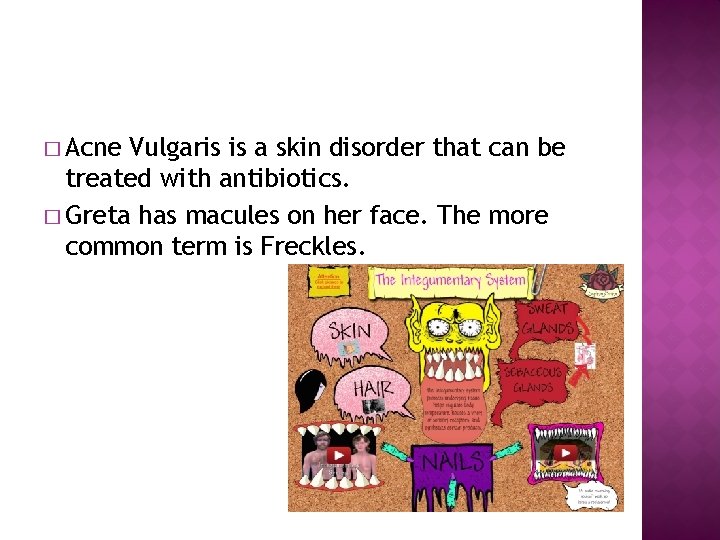
� Acne Vulgaris is a skin disorder that can be treated with antibiotics. � Greta has macules on her face. The more common term is Freckles.
� A: Acne Vulagaris � B: Athlete’s foot � C: Basal cell carcinoma � D: Scabies
� A: Chicken Pox � B: Freckles � C: Hives � D: Scabs