
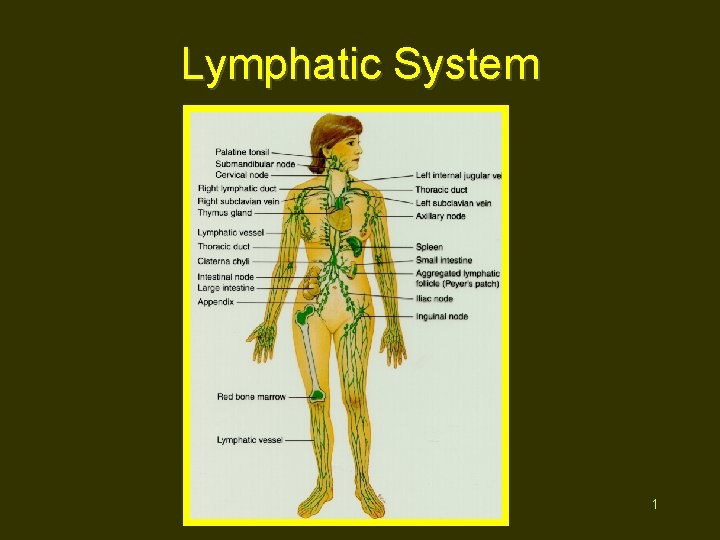
Lymphatic System 1 Lymphatic System Functions Return fluid
- Slides: 19
Lymphatic System 1
Lymphatic System • • Functions Return fluid to general circulation Production of WBCs Immunity 2
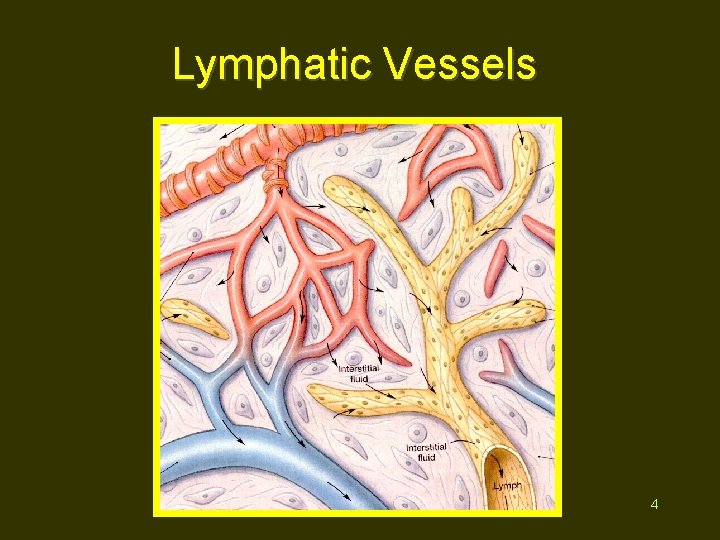
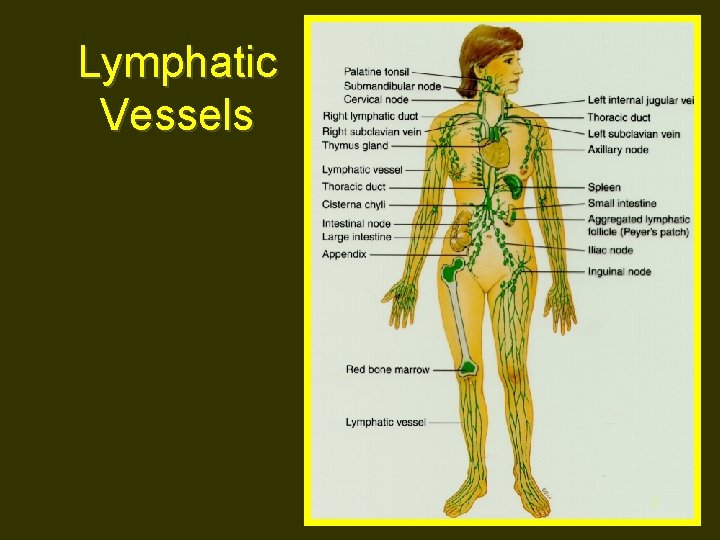
Lymphatic Vessels • Open circulatory system • Originate blindly in tissue interstices throughout the body except CNS and those without blood supply • Thin walled - endothelium only • Permeable 3
Lymphatic Vessels 4
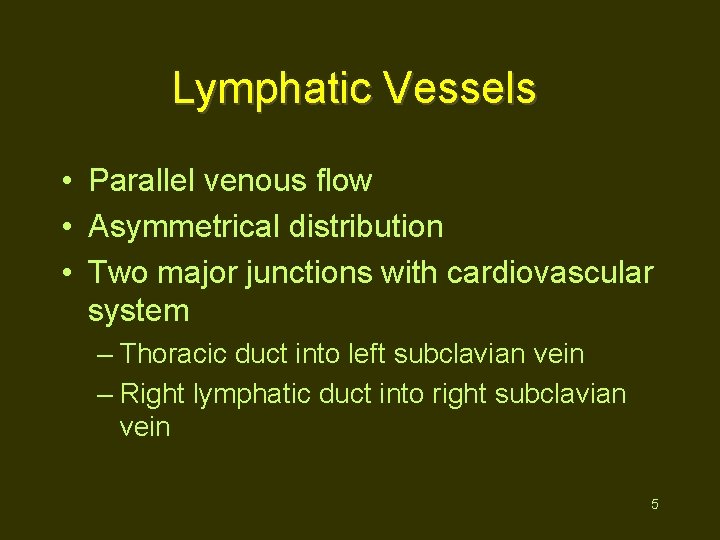
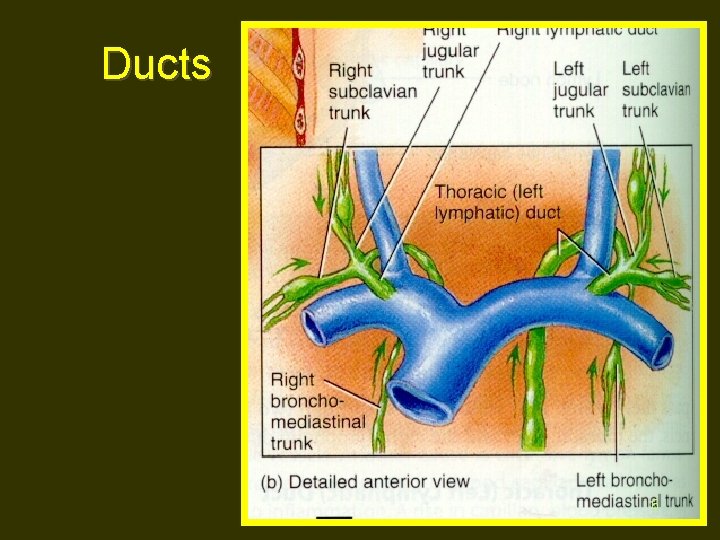
Lymphatic Vessels • Parallel venous flow • Asymmetrical distribution • Two major junctions with cardiovascular system – Thoracic duct into left subclavian vein – Right lymphatic duct into right subclavian vein 5
Ducts 6
Lymphatic Vessels 7
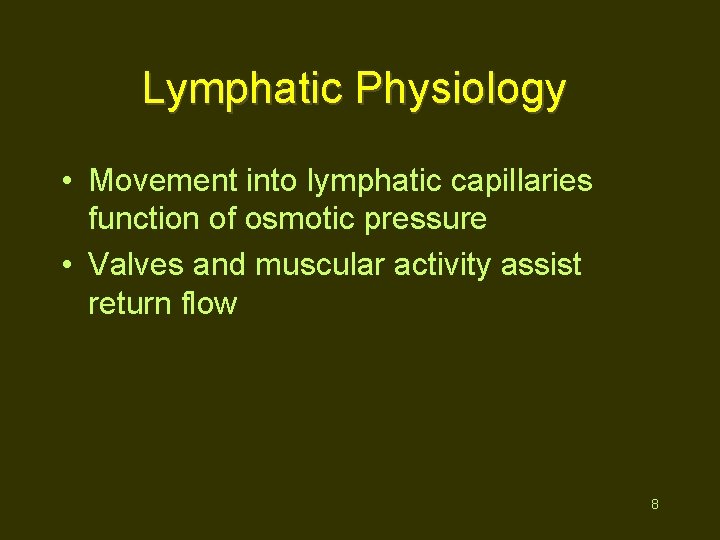
Lymphatic Physiology • Movement into lymphatic capillaries function of osmotic pressure • Valves and muscular activity assist return flow 8
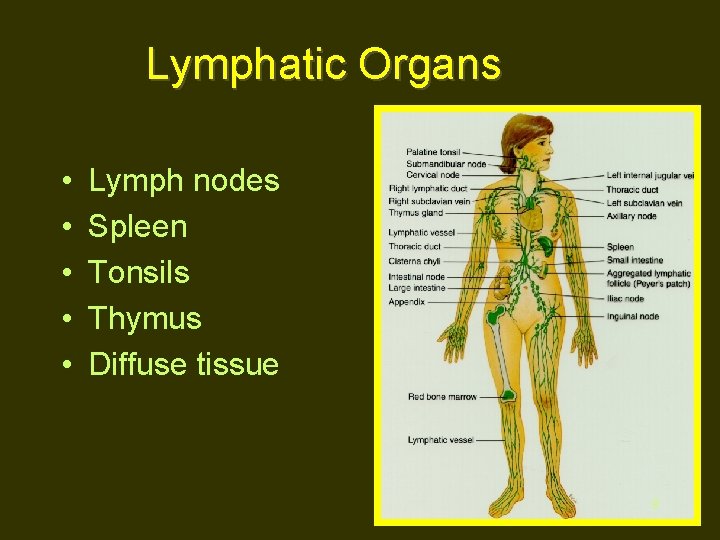
Lymphatic Organs • • • Lymph nodes Spleen Tonsils Thymus Diffuse tissue 9
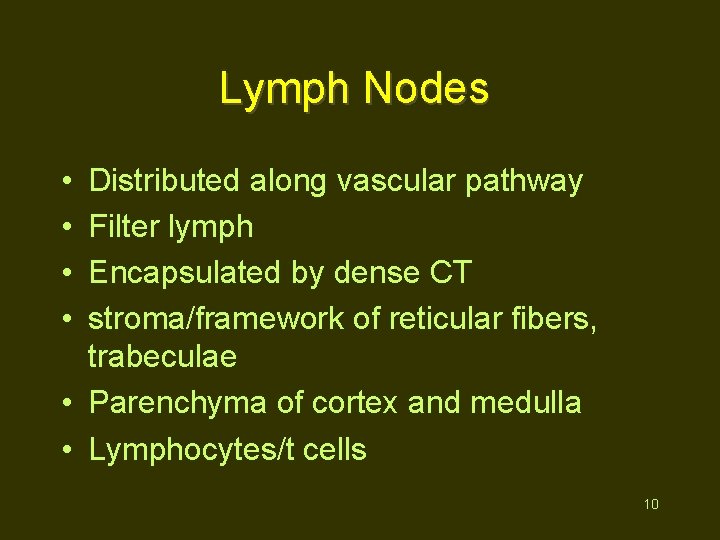
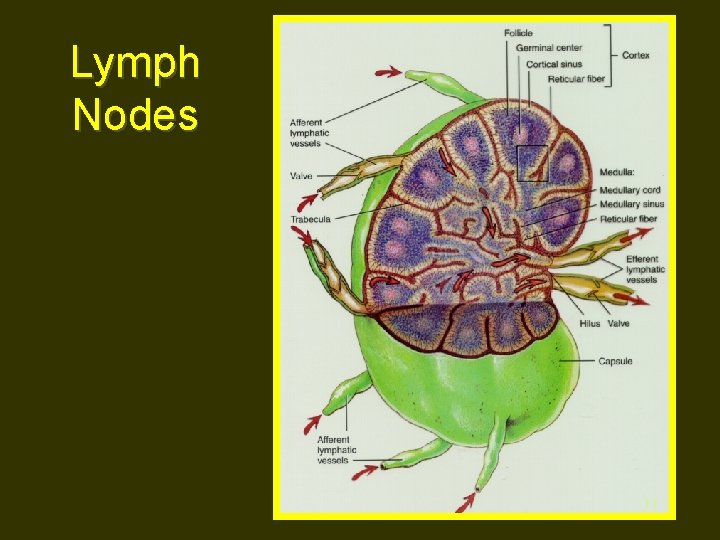
Lymph Nodes • • Distributed along vascular pathway Filter lymph Encapsulated by dense CT stroma/framework of reticular fibers, trabeculae • Parenchyma of cortex and medulla • Lymphocytes/t cells 10
Lymph Nodes 11
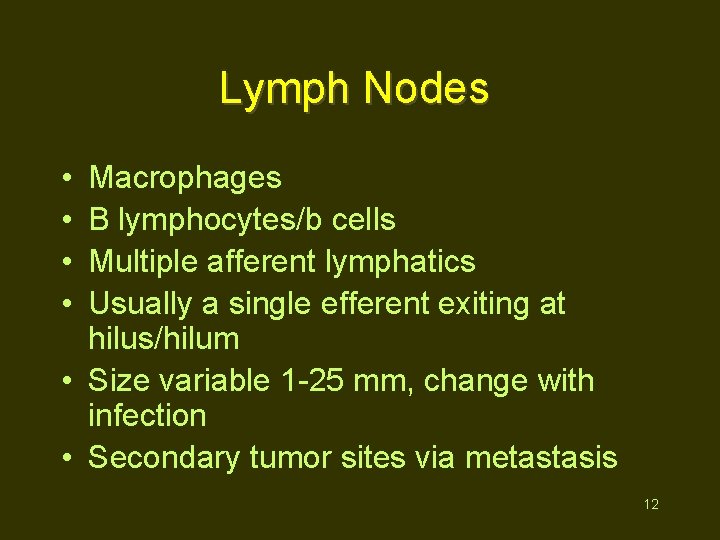
Lymph Nodes • • Macrophages B lymphocytes/b cells Multiple afferent lymphatics Usually a single efferent exiting at hilus/hilum • Size variable 1 -25 mm, change with infection • Secondary tumor sites via metastasis 12
Spleen • • • Functions Fetal blood development Store and release blood during stress Recycle old blood cells B cell maturation into plasma cells 13
Spleen Structure • 12 cm oval body in left hypochondriac region • Splenic artery and vein enter at hilus • Covered with peritoneum • Structure similar to lymph node • Parenchyma of two types 14
Spleen Structure • • • Red pulp Blood filled venous sinuses Splenic cords/Billroth’s cords White pulp Lymphocyte production 15
Tonsils • Aggregated lymph nodes • Concentrated in Waldeyer’s tonsilar ring – Lingual – Palatine – Pharyngeal/adenoid 16
Thymus • • • In superior mediastinum Two lobes Surrounded by CT capsule Cortex = reticular fibers + lymphocytes Medulla - epithelial cells produce thymosin stimulating maturation of T cells, form Hassall’s corpuscles • Maximum size 10 -12 yrs old ~ 40 grams, degenerates with age 17
Diffuse Lymphatic Tissue • Not encapsulated • Widely distributed throughout body • Found in lamina propria of digestive tract, respiratory, urinary and reproductive systems 18
Pathology • Lymphangitis • Lymphadenopathy • Edema 19