
Lymphatic Organs Primary lymph organs are the bone
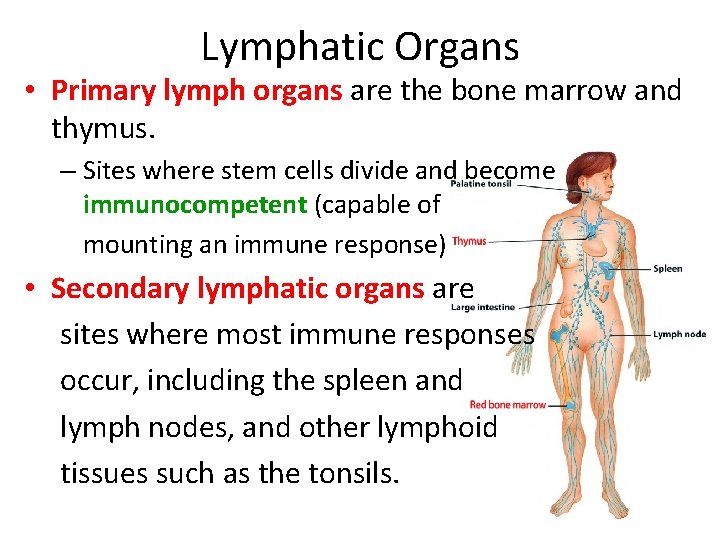
Lymphatic Organs • Primary lymph organs are the bone marrow and thymus. – Sites where stem cells divide and become immunocompetent (capable of mounting an immune response) • Secondary lymphatic organs are sites where most immune responses occur, including the spleen and lymph nodes, and other lymphoid tissues such as the tonsils.
Lymphatic Organs • Thymus • The outer cortex is composed of a large number of immature T cells which migrate from their birthplace in red bone marrow. • They proliferate and begin to mature with the help of Dendritic cells (derived from monocytes) and specialized epithelial cells (help educate T cells through positive selection) – only about 25% survive. • The inner medulla is composed of more mature T cells.

Lymphatic Organs • The thymus slightly protrudes from the mediastinum into the lower neck. • It is a palpable 70 g in infants, atrophies by puberty, and is scarcely distinguishable from surrounding fatty tissue by old age.

Lymphatic Organs • There about 600 lymph nodes scattered along lymphatic vessels (in superficial and deep groups) that serve as filters to trap and destroy foreign objects in lymph fluid. • Important group of regional lymph nodes include: – Submandibular – Cervical – Axillary • Mediastinal • Inguinal
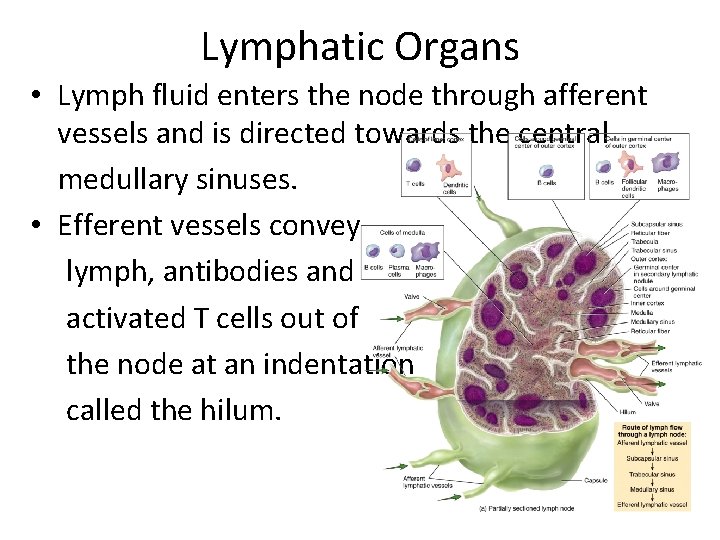
Lymphatic Organs • Lymph fluid enters the node through afferent vessels and is directed towards the central medullary sinuses. • Efferent vessels convey lymph, antibodies and activated T cells out of the node at an indentation called the hilum.
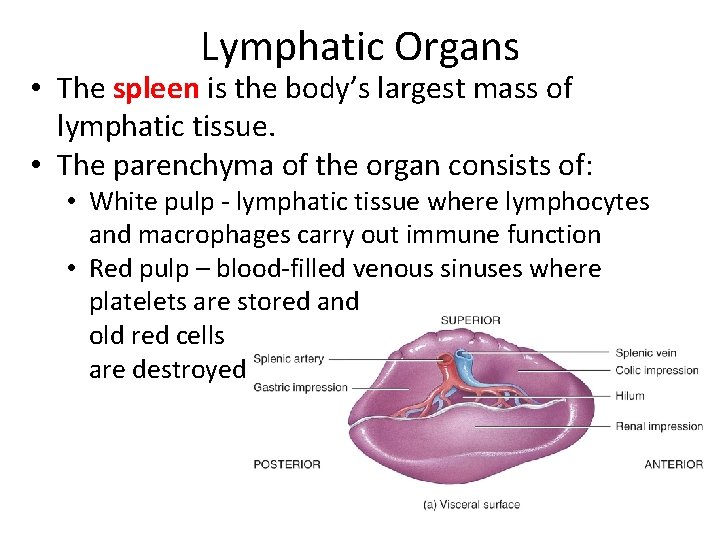
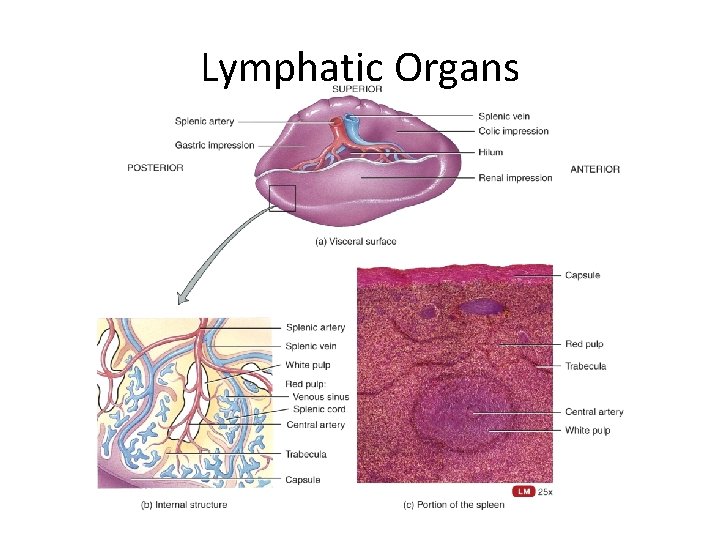
Lymphatic Organs • The spleen is the body’s largest mass of lymphatic tissue. • The parenchyma of the organ consists of: • White pulp - lymphatic tissue where lymphocytes and macrophages carry out immune function • Red pulp – blood-filled venous sinuses where platelets are stored and old red cells are destroyed
Lymphatic Organs
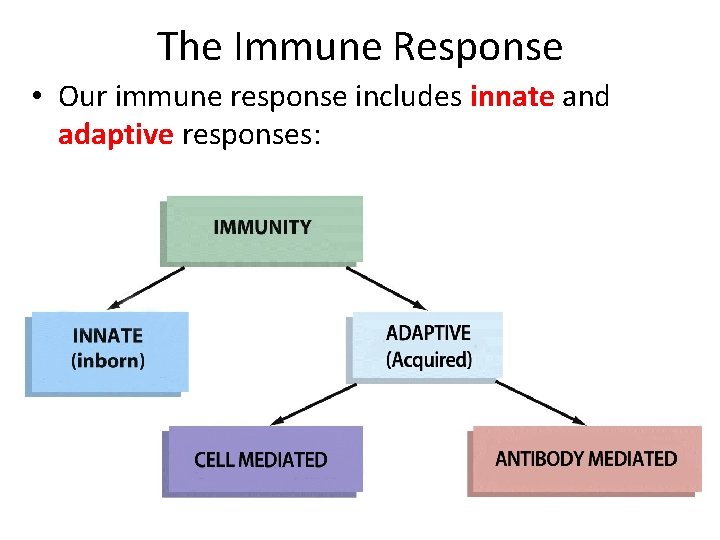
The Immune Response • Our immune response includes innate and adaptive responses:
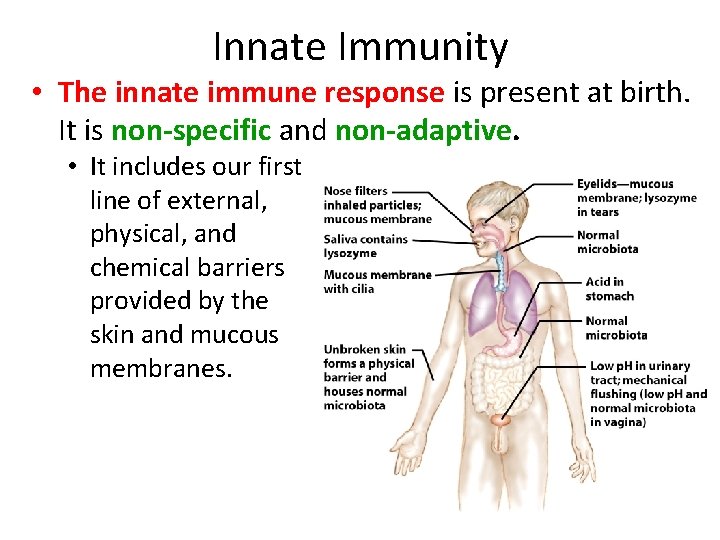
Innate Immunity • The innate immune response is present at birth. It is non-specific and non-adaptive. • It includes our first line of external, physical, and chemical barriers provided by the skin and mucous membranes.

Innate Immunity • Our nonspecific innate immune response also includes various internal defenses such as antimicrobial substances, natural killer cells, phagocytes, inflammation, and fever.
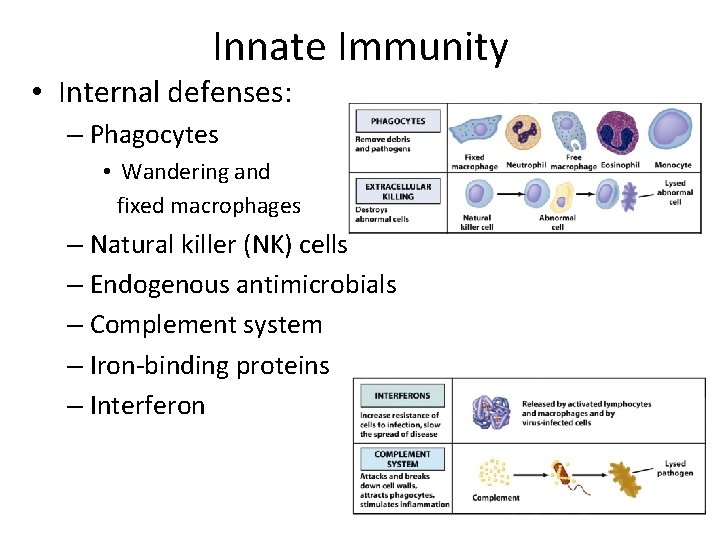
Innate Immunity • Internal defenses: – Phagocytes • Wandering and fixed macrophages – Natural killer (NK) cells – Endogenous antimicrobials – Complement system – Iron-binding proteins – Interferon
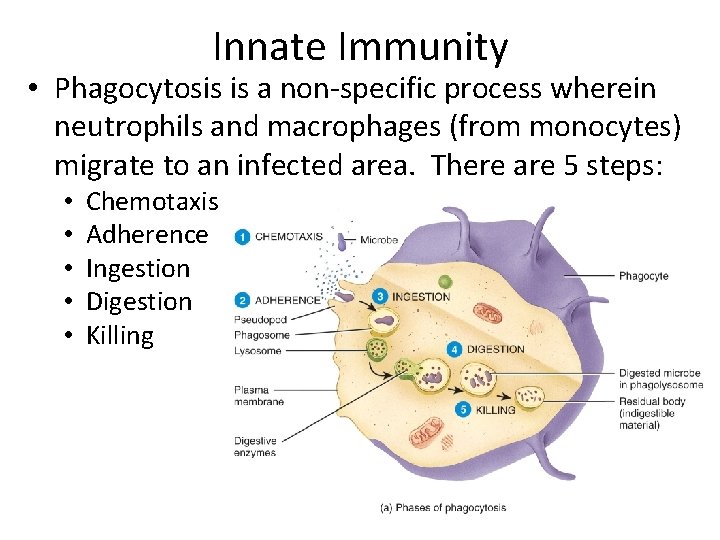
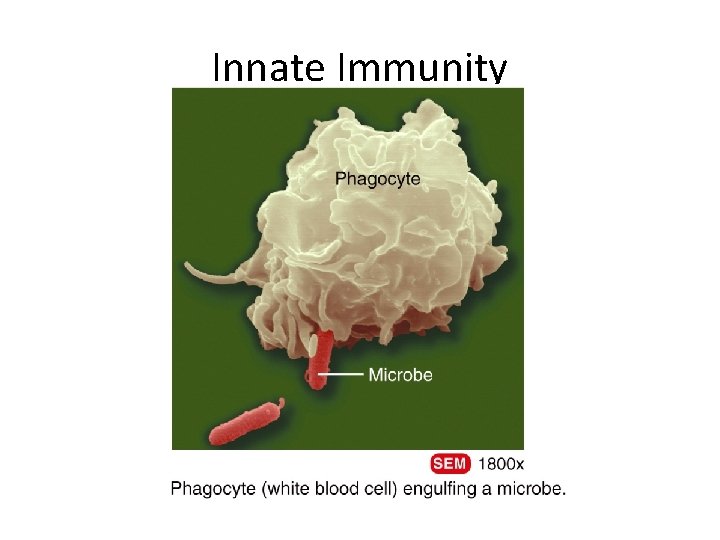
Innate Immunity • Phagocytosis is a non-specific process wherein neutrophils and macrophages (from monocytes) migrate to an infected area. There are 5 steps: • • • Chemotaxis Adherence Ingestion Digestion Killing
Innate Immunity
- Slides: 13