
LVQSVM based CAD tool applied to structural MRI

LVQ-SVM based CAD tool applied to structural MRI for the diagnosis of the Alzheimer’s disease Presenter : CHANG, SHIH-JIE Authors : Andrés Ortiz , Juan M. Górriz , Javier Ramírez , F. J. Martínez-Murcia 2013. PRL Intelligent Database Systems Lab
Outlines n Motivation n Objectives n Methodology n Experiments n Conclusions n Comments Intelligent Database Systems Lab
Motivation The Alzheimer’s disease is at an advanced stage and there is no a known cure for the AD disease since currently. Intelligent Database Systems Lab

Objectives • In order to deal with objective diagnosis of the AD, this paper use many techniques to diagnosis more effective better than before. Intelligent Database Systems Lab
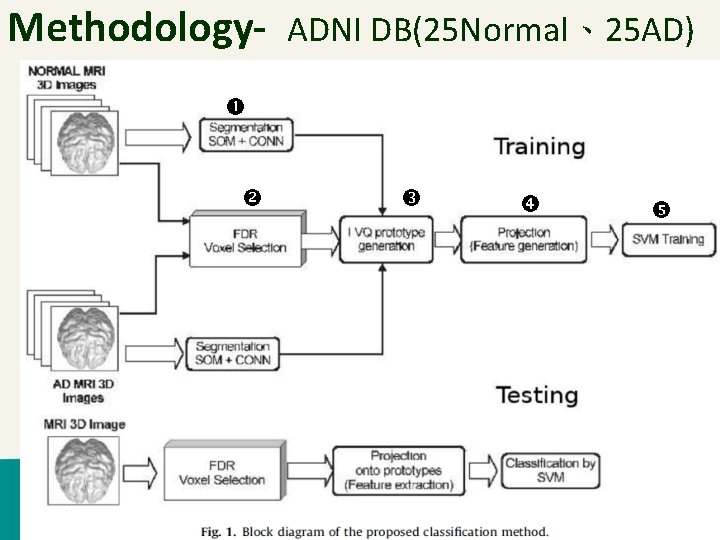
Methodology- ADNI DB(25 Normal、25 AD) Intelligent Database Systems Lab
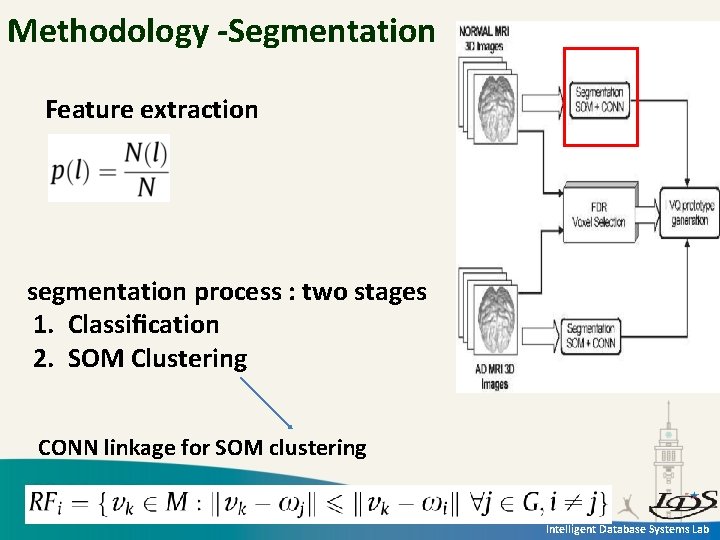
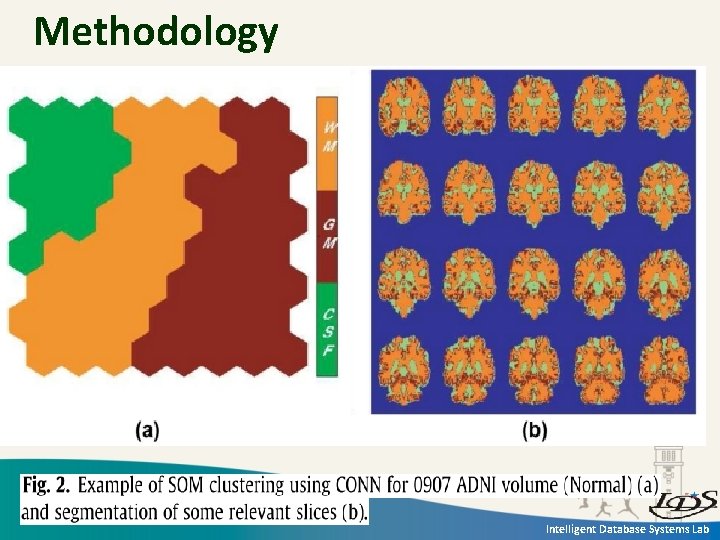
Methodology -Segmentation Feature extraction segmentation process : two stages 1. Classification 2. SOM Clustering CONN linkage for SOM clustering Intelligent Database Systems Lab
Methodology Intelligent Database Systems Lab
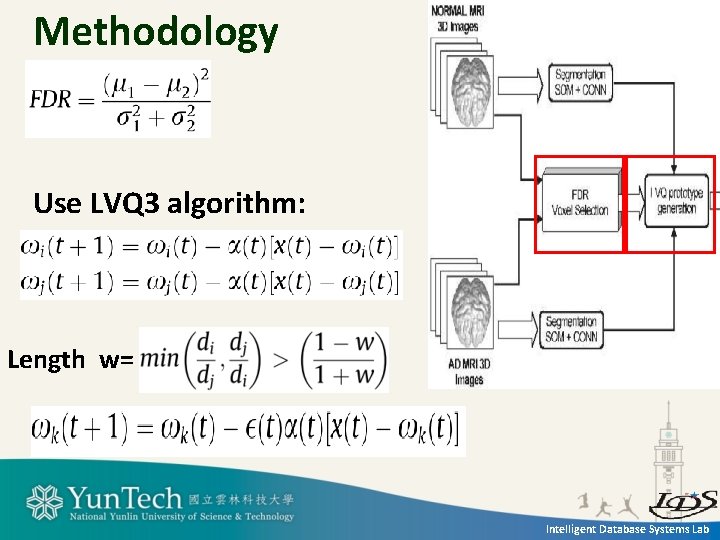
Methodology Use LVQ 3 algorithm: Length w= Intelligent Database Systems Lab
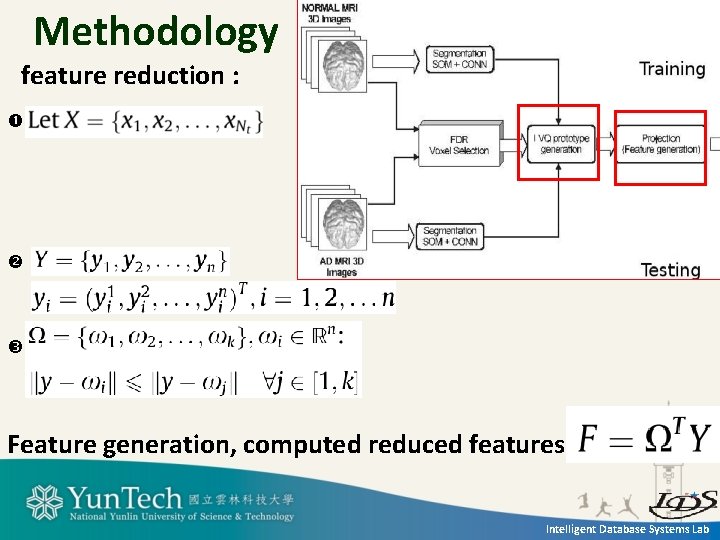
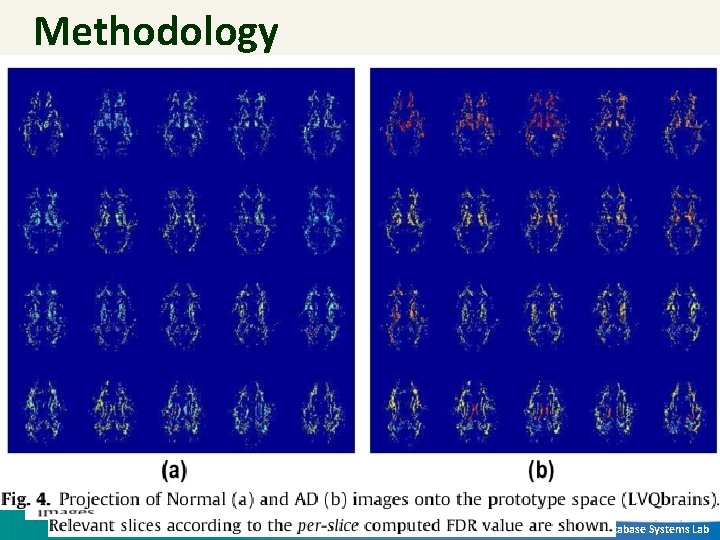
Methodology feature reduction : Feature generation, computed reduced features Intelligent Database Systems Lab
Methodology Intelligent Database Systems Lab
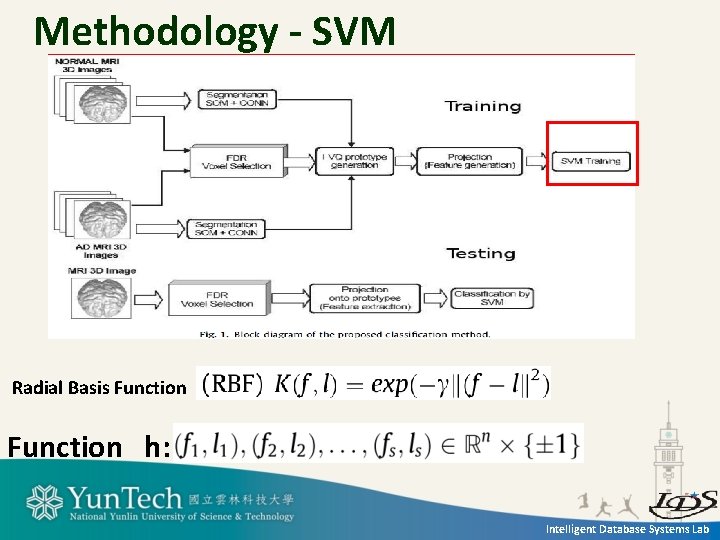
Methodology - SVM Radial Basis Function h: Intelligent Database Systems Lab
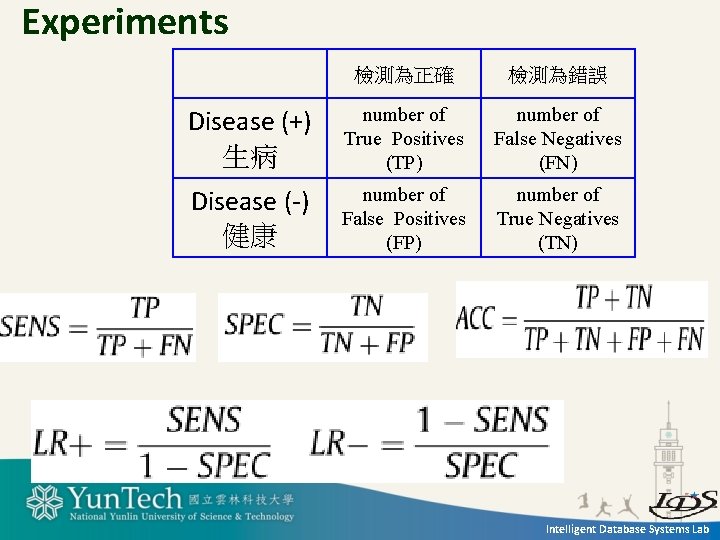
Experiments 檢測為正確 檢測為錯誤 Disease (+) 生病 number of True Positives (TP) number of False Negatives (FN) Disease (-) 健康 number of False Positives (FP) number of True Negatives (TN) Intelligent Database Systems Lab
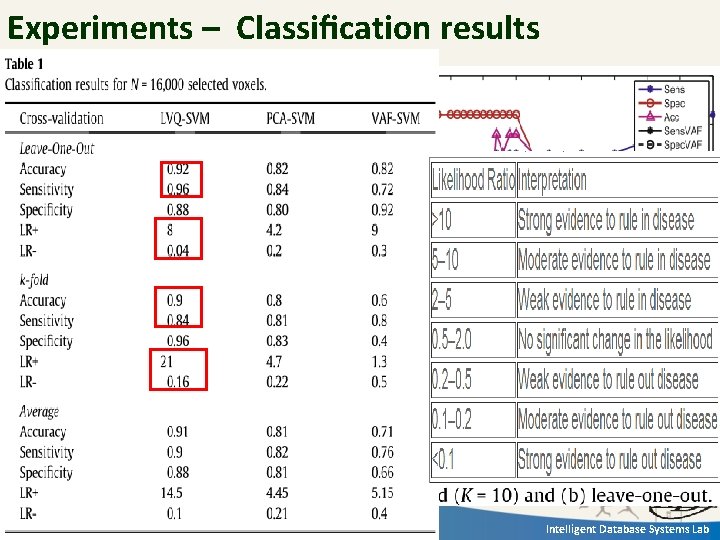
Experiments – Classification results Intelligent Database Systems Lab
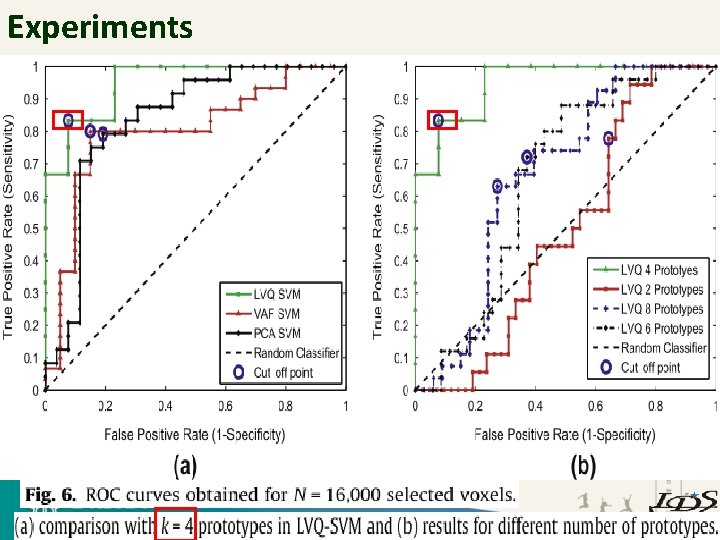
Experiments Intelligent Database Systems Lab
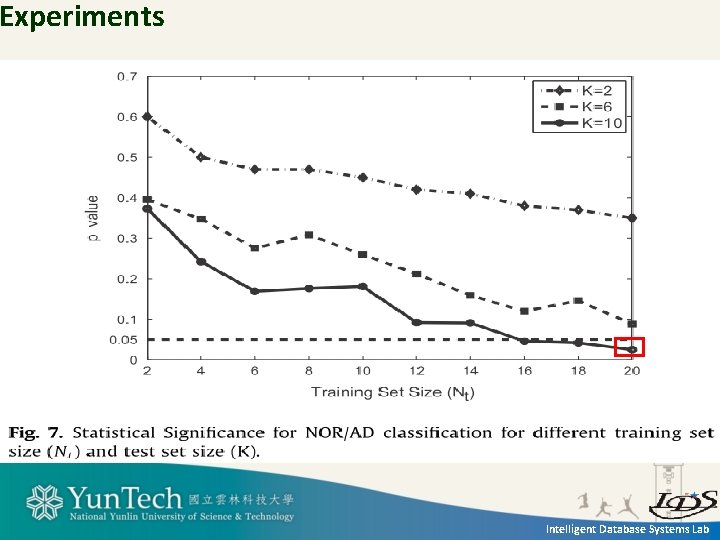
Experiments Intelligent Database Systems Lab
Conclusions – The results provided by the presented method outperform other previous approaches based on MRI images. . Intelligent Database Systems Lab
Comments • Advantages – Good classification • Applications – Diagnosis Alzheimer’s disease Intelligent Database Systems Lab
- Slides: 17