
LUTONIX 035 DCB Drug Coated Balloon PTA Catheter
LUTONIX® 035 DCB Drug Coated Balloon PTA Catheter LEVANT: 5 -Year Outcomes From Three Randomized Trials of Percutaneous Angioplasty With vs. Without a Drug-Coated Balloon in Patients With Femoropopliteal Arterial Disease

Disclosure Statement of Financial Interest I, Kenneth Ouriel, have a financial interest, arrangement, or affiliation with one or more organizations that could be perceived as a real or apparent conflict of interest in the context of the subject of this presentation.

LUTONIX® 035 DCB Clinical Program Study LEVANT 1 LEVANT 2 LEVANT Japan Study Design Subjects (DCB : PTA) Geography Follow-Up RCT 101 (49: 52) Europe 24 months RCT with Roll-Ins 532 (316: 160) randomized 56 DCB roll-in US, Europe 60 months Continued Access 657 US, Europe 60 months RCT 109 (71: 38) Japan 24 months • First in class – over 1, 000 subjects total as part of FDA approval • Pivotal clinical study was LEVANT 2 RCT with roll-ins (RI) • LEVANT 2 Continued Access (CA) • Single-arm (DCB) continuation of the RCT • Same inclusion/exclusion criteria, same follow-up timeframes and assessments • Two other RCTs for de novo/restenotic lesions (LEVANT 1 and LEVANT Japan)

Analysis of Risk Across Studies
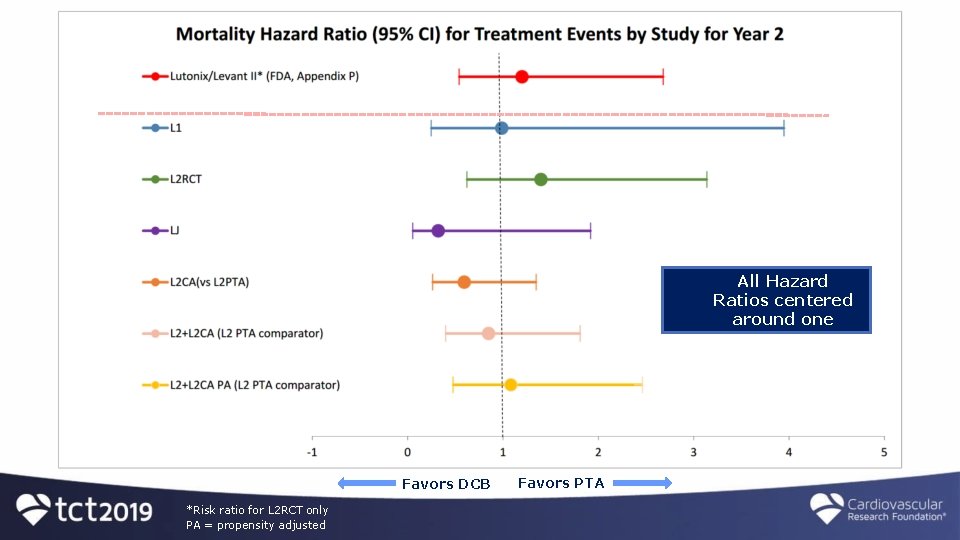
All Hazard Ratios centered around one Favors DCB *Risk ratio for L 2 RCT only PA = propensity adjusted Favors PTA

All Confidence Intervals include one Favors DCB *Risk ratio for L 2 RCT only PA = propensity adjusted Favors PTA
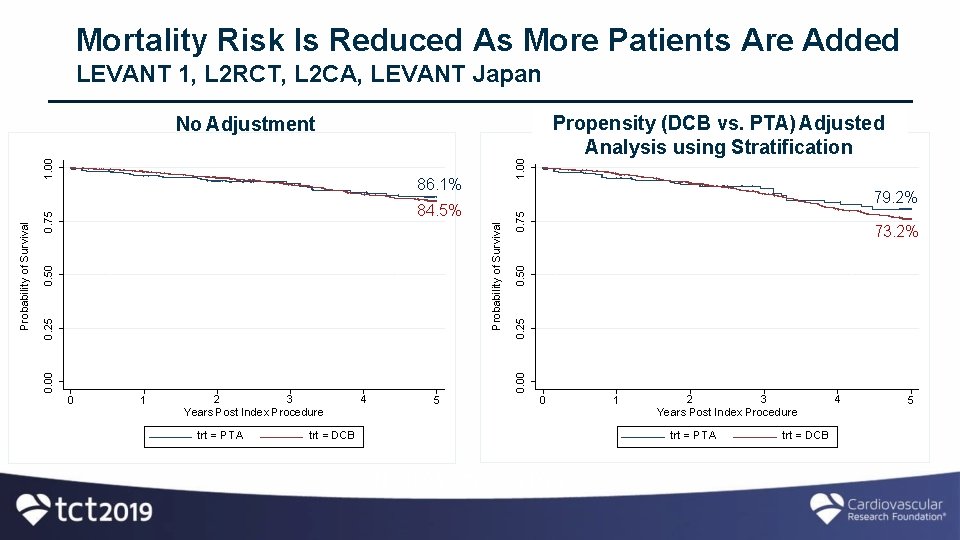
Mortality Risk Is Reduced As More Patients Are Added LEVANT 1, L 2 RCT, L 2 CA, LEVANT Japan Propensity (DCB vs. PTA) Adjusted Analysis using(DCB Stratification Adjusted Propensity Adjusted vs. PTA) using Stratification No Adjustment 1. 00 86. 1% 1 trt = PTA 4 0. 50 0. 00 2 3 Years Post Index Procedure 73. 2% 0. 25 Probability of Survival 0. 75 0. 50 0. 25 0 0. 75 79. 2% 84. 5% 0. 00 Probability of Survival 1. 00 Unadjusted 5 0 1 2 3 Years Post Index Procedure trt = PTA trt = DCB N =1093 DCB, 250 PTA trt = DCB 4 5

1. Is there a plausible mechanism for paclitaxel-associated mortality? [If so, is there clustering of causes of death which suggest a common mechanism? ]
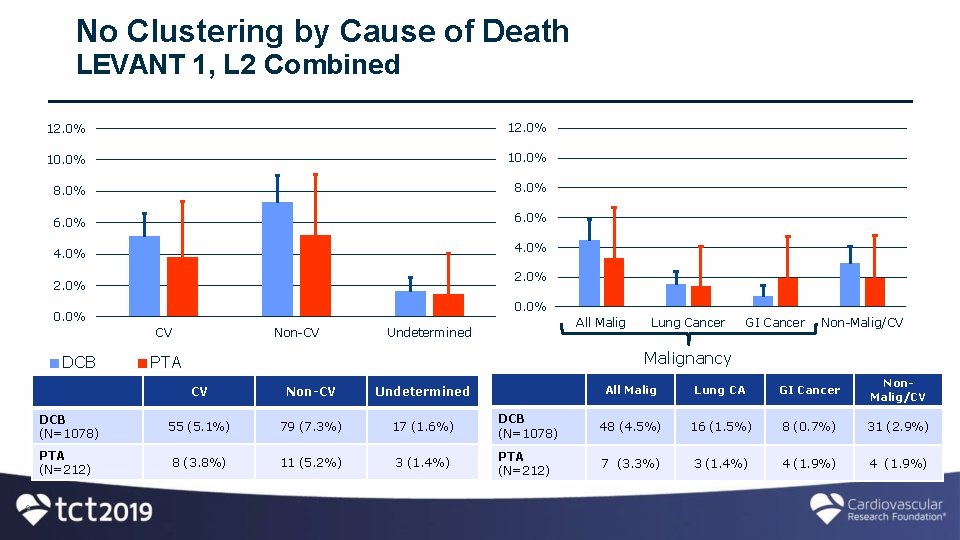
No Clustering by Cause of Death LEVANT 1, L 2 Combined 12. 0% 10. 0% 8. 0% 6. 0% 4. 0% 2. 0% 0. 0% CV DCB (N=1078) PTA (N=212) 9 Non-CV All Malig Undetermined Lung Cancer GI Cancer Non-Malig/CV Malignancy PTA CV Non-CV Undetermined 55 (5. 1%) 79 (7. 3%) 17 (1. 6%) 8 (3. 8%) 11 (5. 2%) 3 (1. 4%) All Malig Lung CA GI Cancer Non. Malig/CV DCB (N=1078) 48 (4. 5%) 16 (1. 5%) 8 (0. 7%) 31 (2. 9%) PTA (N=212) 7 (3. 3%) 3 (1. 4%) 4 (1. 9%)
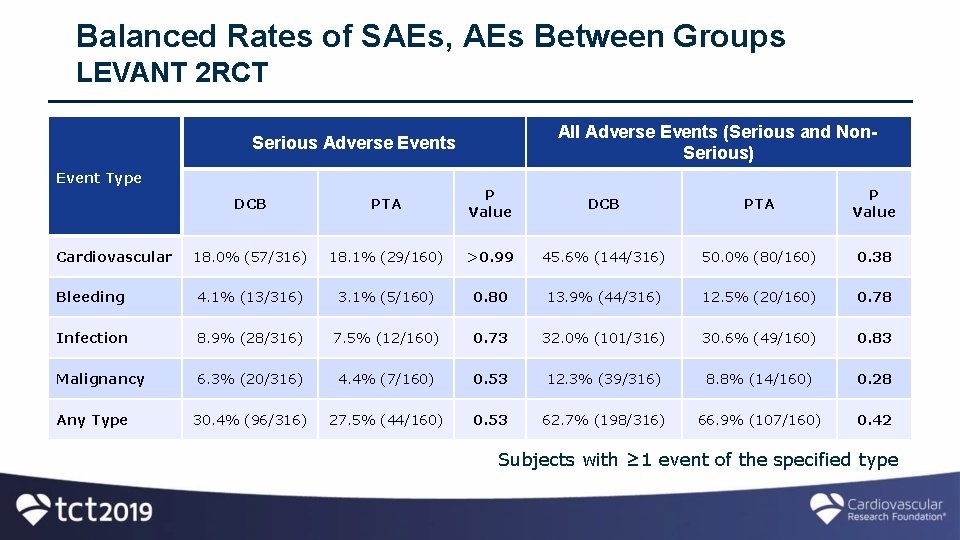
Balanced Rates of SAEs, AEs Between Groups LEVANT 2 RCT All Adverse Events (Serious and Non. Serious) Serious Adverse Events Event Type DCB PTA P Value 18. 0% (57/316) 18. 1% (29/160) >0. 99 45. 6% (144/316) 50. 0% (80/160) 0. 38 Bleeding 4. 1% (13/316) 3. 1% (5/160) 0. 80 13. 9% (44/316) 12. 5% (20/160) 0. 78 Infection 8. 9% (28/316) 7. 5% (12/160) 0. 73 32. 0% (101/316) 30. 6% (49/160) 0. 83 Malignancy 6. 3% (20/316) 4. 4% (7/160) 0. 53 12. 3% (39/316) 8. 8% (14/160) 0. 28 30. 4% (96/316) 27. 5% (44/160) 0. 53 62. 7% (198/316) 66. 9% (107/160) 0. 42 Cardiovascular Any Type Subjects with ≥ 1 event of the specified type
2. Are there patient or treatment-related variables associated with increased risk? [If so, what are the variables and do they relate to paclitaxel? ]
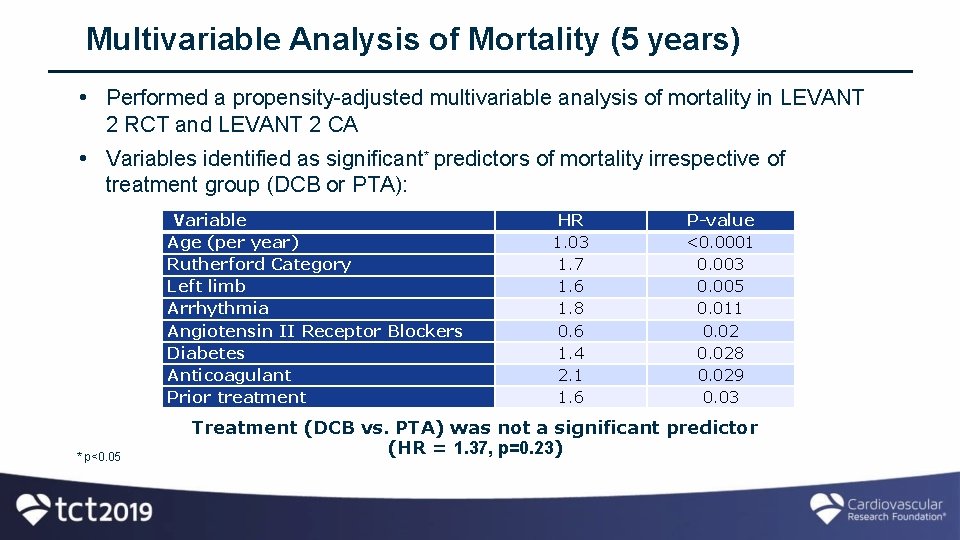
Multivariable Analysis of Mortality (5 years) • Performed a propensity-adjusted multivariable analysis of mortality in LEVANT 2 RCT and LEVANT 2 CA • Variables identified as significant* predictors of mortality irrespective of treatment group (DCB or PTA): Variable Age (per year) Rutherford Category Left limb Arrhythmia Angiotensin II Receptor Blockers Diabetes Anticoagulant Prior treatment * p<0. 05 HR 1. 03 1. 7 1. 6 1. 8 0. 6 1. 4 2. 1 1. 6 P-value <0. 0001 0. 003 0. 005 0. 011 0. 028 0. 029 0. 03 Treatment (DCB vs. PTA) was not a significant predictor (HR = 1. 37, p=0. 23)
3. Is there a relationship between additional exposure to paclitaxel and risk of mortality? [If drug is implicated, there should be a dose-response relationship and additional exposure should increase mortality. ]
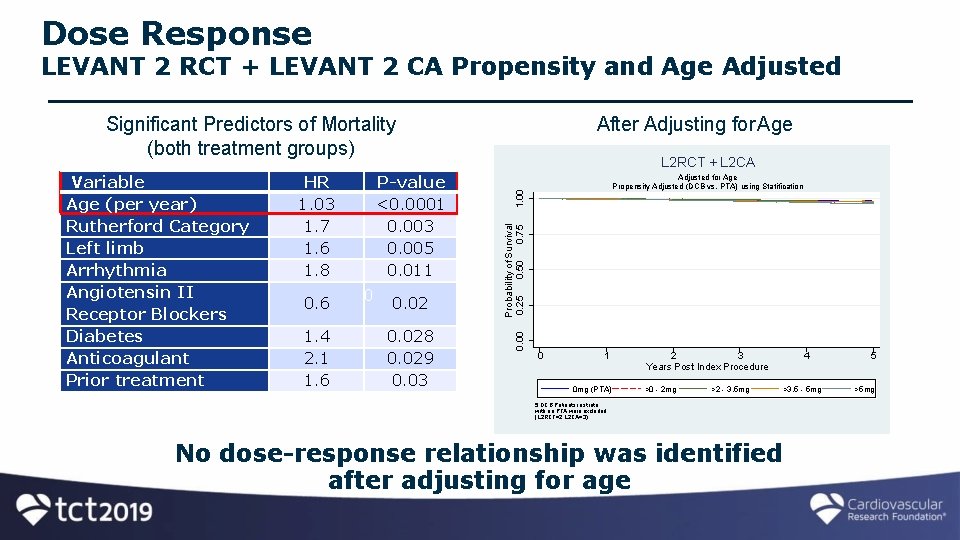
Dose Response LEVANT 2 RCT + LEVANT 2 CA Propensity and Age Adjusted Significant Predictors of Mortality (both treatment groups) 1. 4 2. 1 1. 6 0. 028 0. 029 0. 03 1. 00 Adjusted for Age Propensity Adjusted (DCB vs. PTA) using Statification Probability of Survival 0. 25 0. 50 0. 75 HR P-value 1. 03 <0. 0001 1. 7 0. 003 1. 6 0. 005 1. 8 0. 011 p=0. 068 0. 02 0. 6 L 2 RCT + L 2 CA 0. 00 Variable Age (per year) Rutherford Category Left limb Arrhythmia Angiotensin II Receptor Blockers Diabetes Anticoagulant Prior treatment After Adjusting for Age 0 1 0 mg (PTA) 2 3 Years Post Index Procedure >0 - 2 mg >2 - 3. 5 mg 4 >3. 5 - 5 mg 5 DCB Patients in strata with no PTA were excluded (L 2 RCT=2; L 2 CA=3) No dose-response relationship was identified after adjusting for age 5 >5 mg
Association vs. Causation The Bradford Hill Criteria
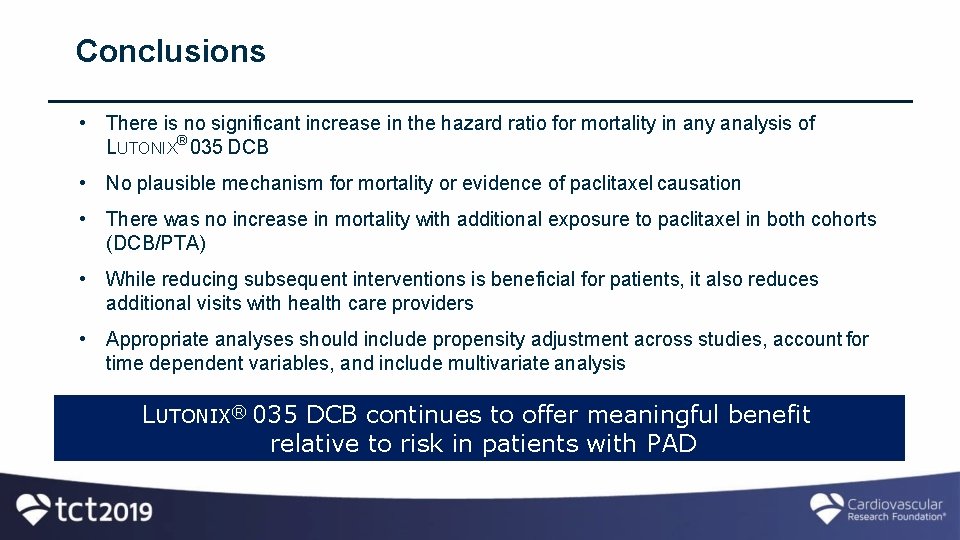
Conclusions • There is no significant increase in the hazard ratio for mortality in any analysis of LUTONIX® 035 DCB • No plausible mechanism for mortality or evidence of paclitaxel causation • There was no increase in mortality with additional exposure to paclitaxel in both cohorts (DCB/PTA) • While reducing subsequent interventions is beneficial for patients, it also reduces additional visits with health care providers • Appropriate analyses should include propensity adjustment across studies, account for time dependent variables, and include multivariate analysis LUTONIX® 035 DCB continues to offer meaningful benefit relative to risk in patients with PAD

Thank You
- Slides: 17