
Lung volume Air flow thru trachea Hillenbrand Respiration
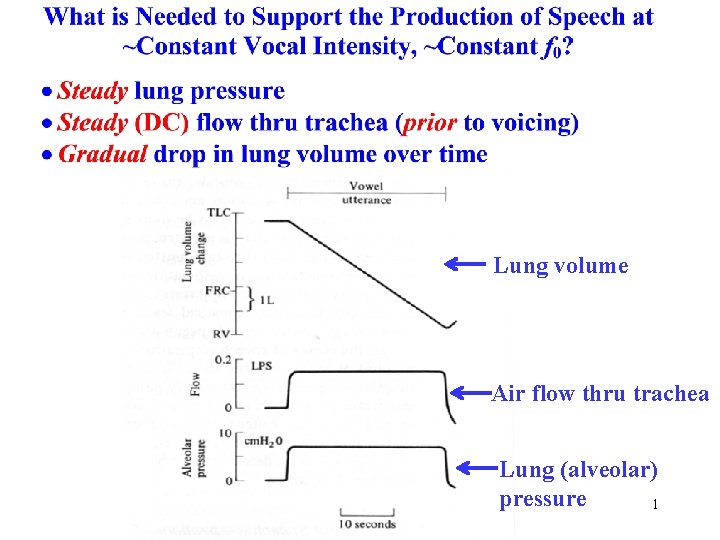
Lung volume Air flow thru trachea Hillenbrand: Respiration Lung (alveolar) pressure 1

Hillenbrand: Respiration 2
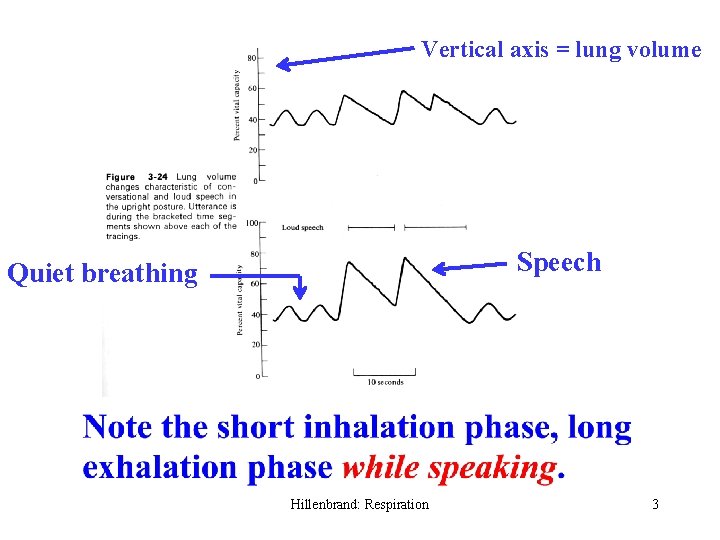
Vertical axis = lung volume Speech Quiet breathing Hillenbrand: Respiration 3
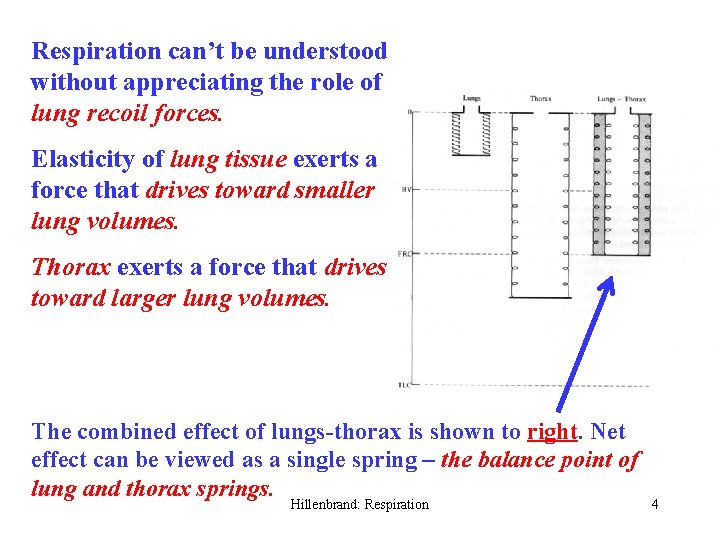
Respiration can’t be understood without appreciating the role of lung recoil forces. Elasticity of lung tissue exerts a force that drives toward smaller lung volumes. Thorax exerts a force that drives toward larger lung volumes. The combined effect of lungs-thorax is shown to right. Net effect can be viewed as a single spring – the balance point of lung and thorax springs. Hillenbrand: Respiration 4
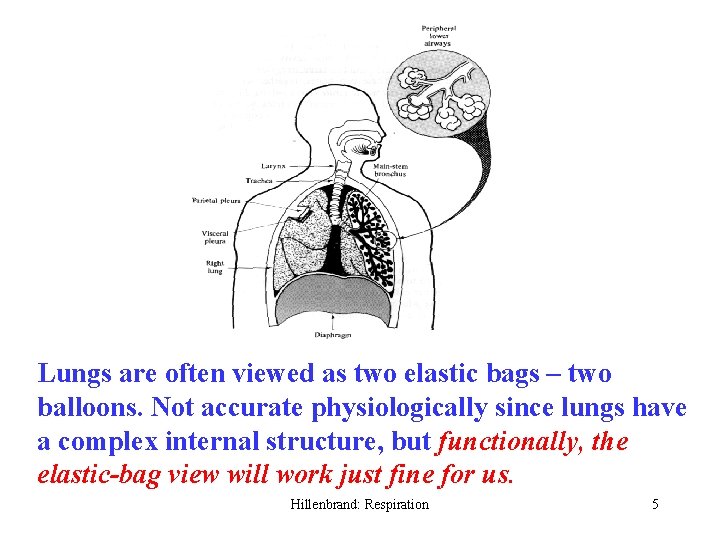
Lungs are often viewed as two elastic bags – two balloons. Not accurate physiologically since lungs have a complex internal structure, but functionally, the elastic-bag view will work just fine for us. Hillenbrand: Respiration 5
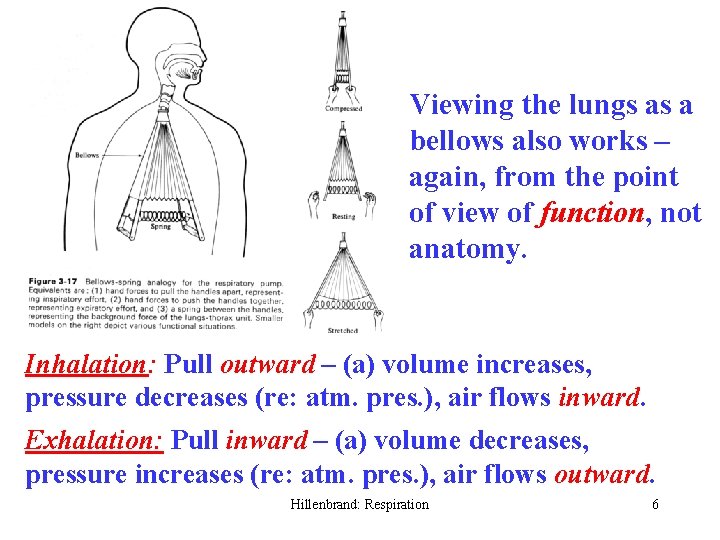
Viewing the lungs as a bellows also works – again, from the point of view of function, not anatomy. Inhalation: Pull outward – (a) volume increases, pressure decreases (re: atm. pres. ), air flows inward. Exhalation: Pull inward – (a) volume decreases, pressure increases (re: atm. pres. ), air flows outward. Hillenbrand: Respiration 6
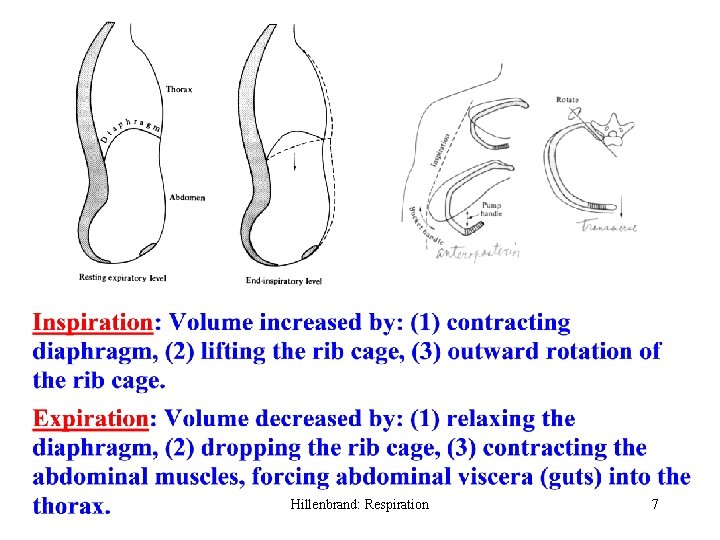
Hillenbrand: Respiration 7
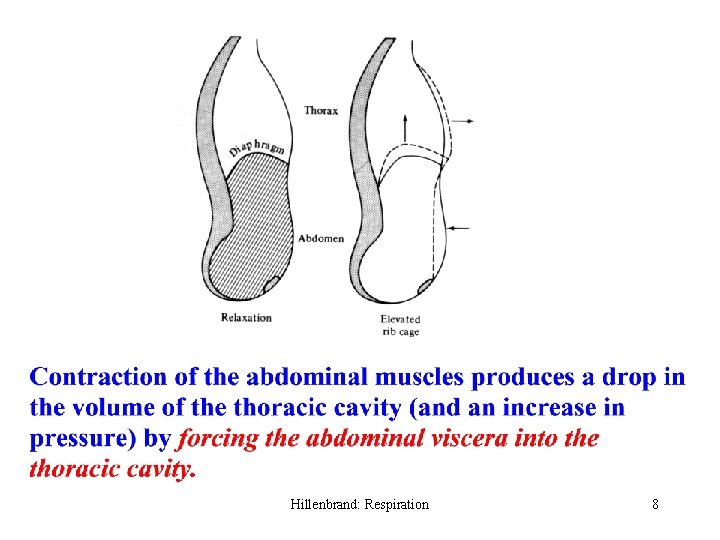
Hillenbrand: Respiration 8
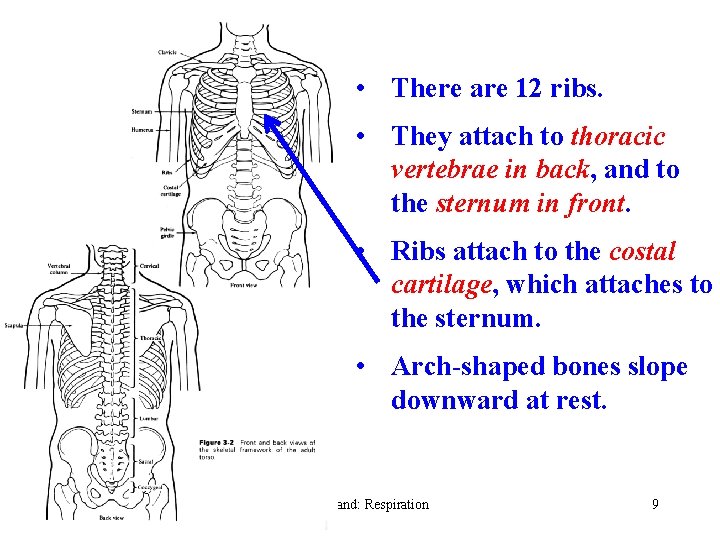
• There are 12 ribs. • They attach to thoracic vertebrae in back, and to the sternum in front. • Ribs attach to the costal cartilage, which attaches to the sternum. • Arch-shaped bones slope downward at rest. Hillenbrand: Respiration 9
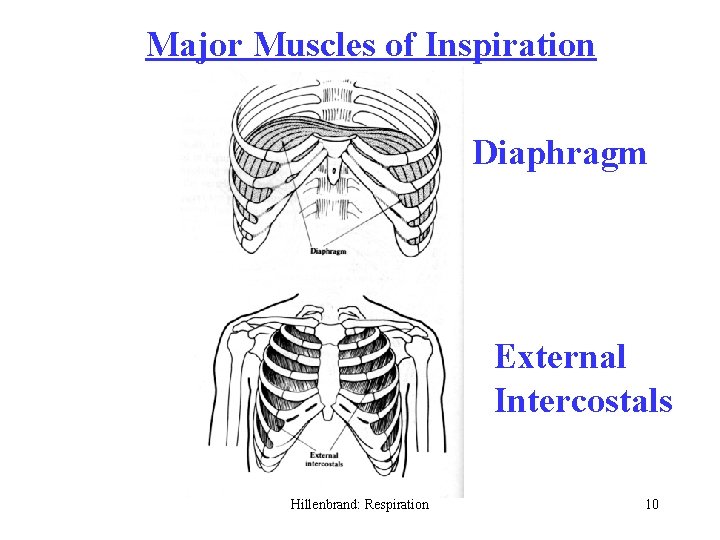
Major Muscles of Inspiration Diaphragm External Intercostals Hillenbrand: Respiration 10
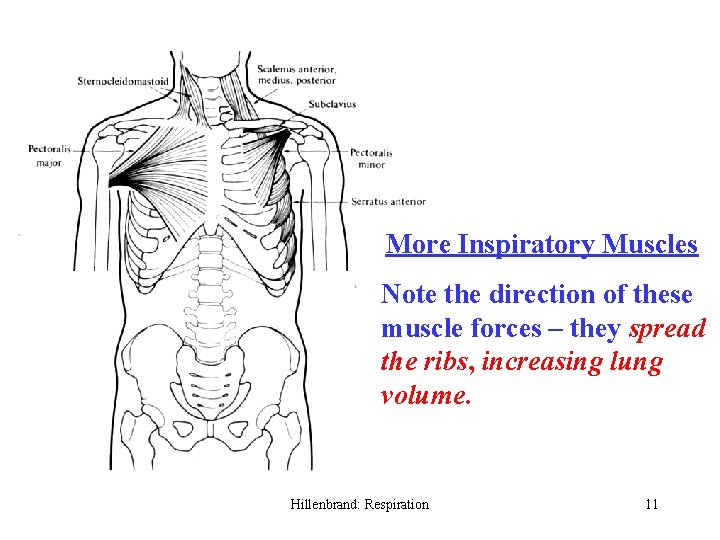
More Inspiratory Muscles Note the direction of these muscle forces – they spread the ribs, increasing lung volume. Hillenbrand: Respiration 11
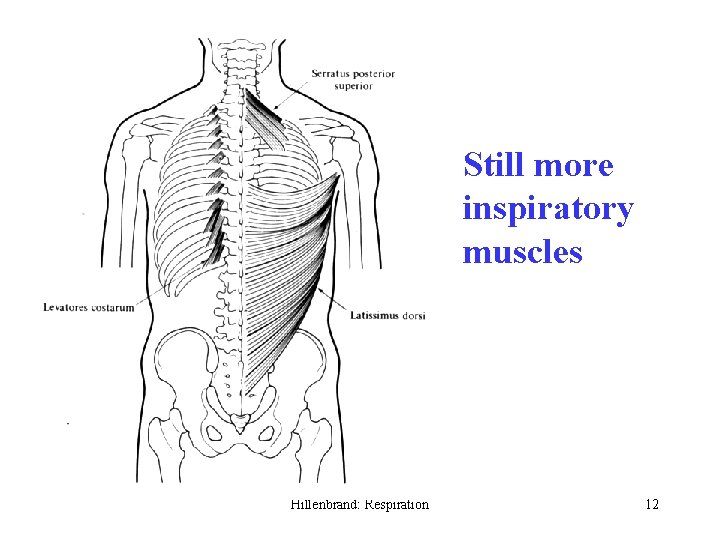
Still more inspiratory muscles Hillenbrand: Respiration 12
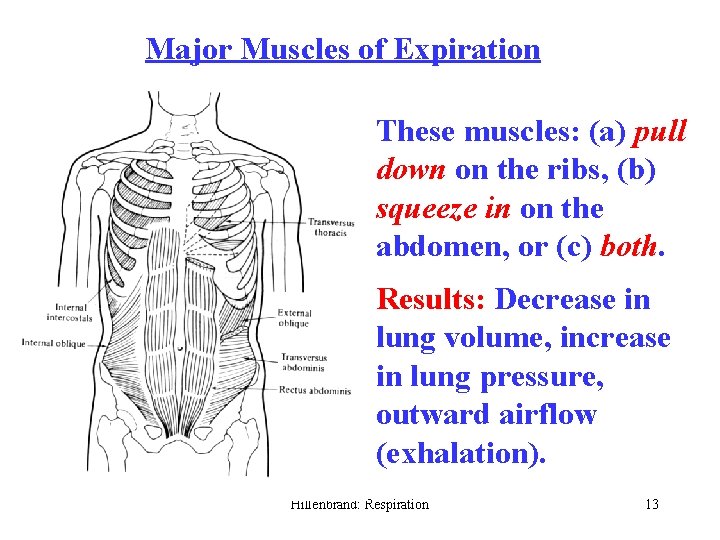
Major Muscles of Expiration These muscles: (a) pull down on the ribs, (b) squeeze in on the abdomen, or (c) both. Results: Decrease in lung volume, increase in lung pressure, outward airflow (exhalation). Hillenbrand: Respiration 13
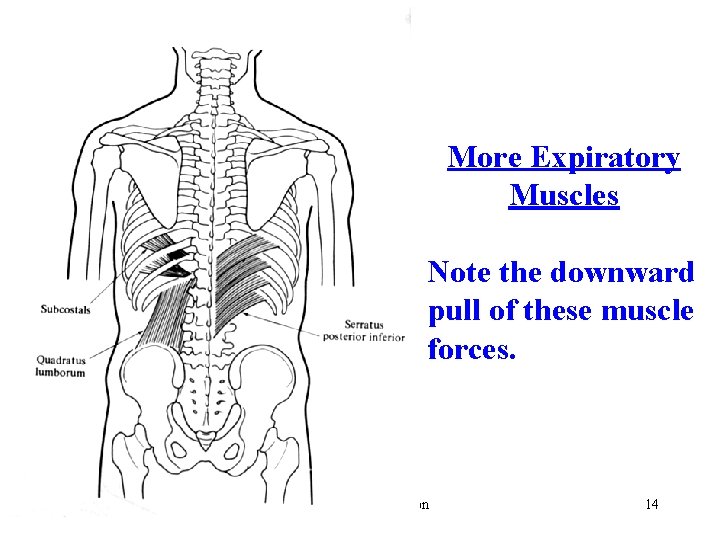
More Expiratory Muscles Note the downward pull of these muscle forces. Hillenbrand: Respiration 14
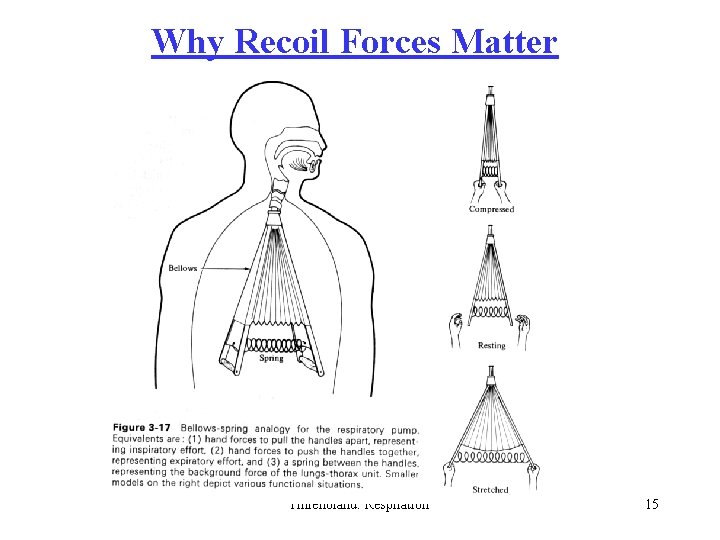
Why Recoil Forces Matter Hillenbrand: Respiration 15
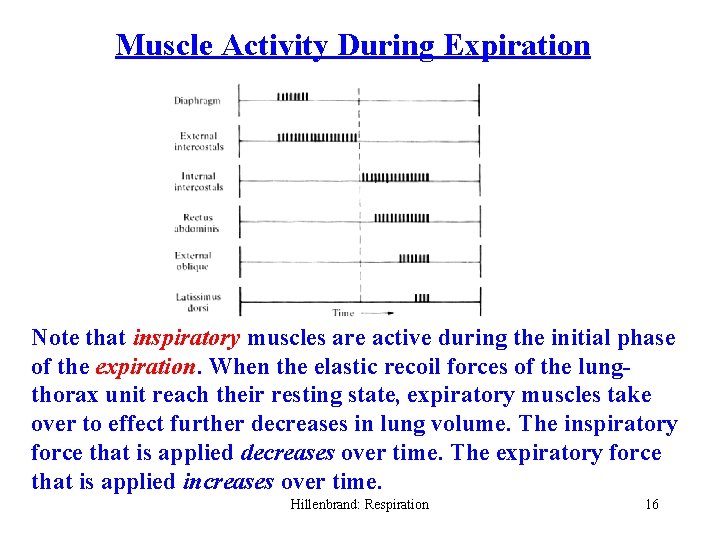
Muscle Activity During Expiration Note that inspiratory muscles are active during the initial phase of the expiration. When the elastic recoil forces of the lungthorax unit reach their resting state, expiratory muscles take over to effect further decreases in lung volume. The inspiratory force that is applied decreases over time. The expiratory force that is applied increases over time. Hillenbrand: Respiration 16
Hillenbrand: Respiration 17
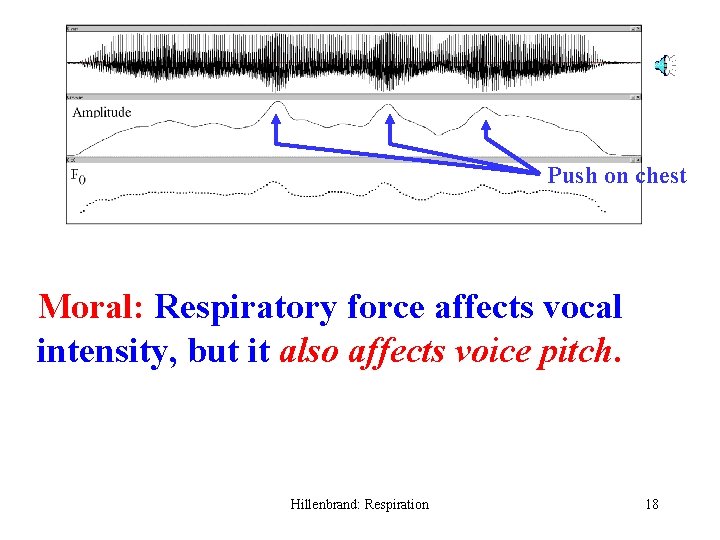
Push on chest Moral: Respiratory force affects vocal intensity, but it also affects voice pitch. Hillenbrand: Respiration 18
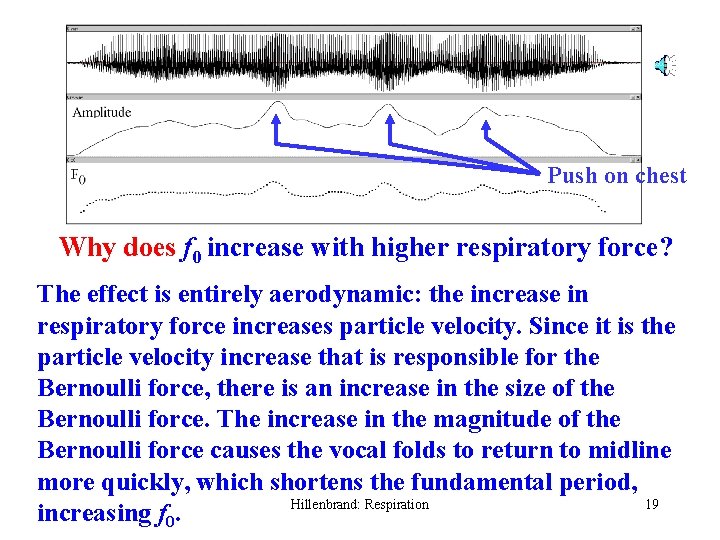
Push on chest Why does f 0 increase with higher respiratory force? The effect is entirely aerodynamic: the increase in respiratory force increases particle velocity. Since it is the particle velocity increase that is responsible for the Bernoulli force, there is an increase in the size of the Bernoulli force. The increase in the magnitude of the Bernoulli force causes the vocal folds to return to midline more quickly, which shortens the fundamental period, Hillenbrand: Respiration 19 increasing f 0.
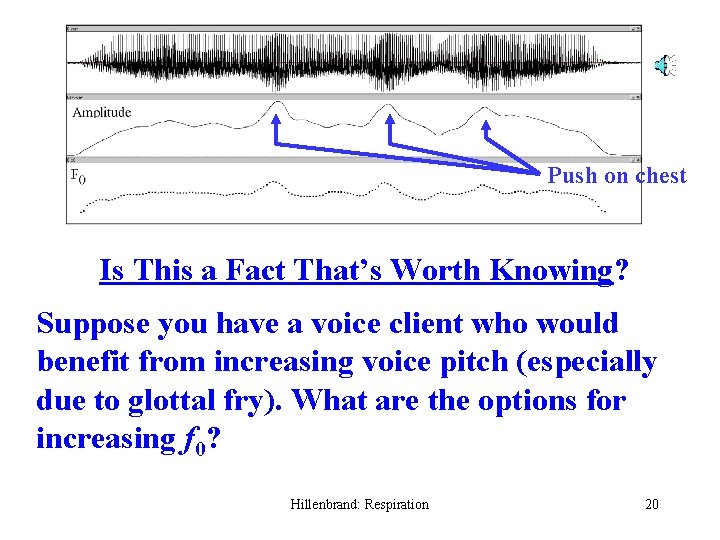
Push on chest Is This a Fact That’s Worth Knowing? Suppose you have a voice client who would benefit from increasing voice pitch (especially due to glottal fry). What are the options for increasing f 0? Hillenbrand: Respiration 20
- Slides: 20