
Lung Cancer Diagnosis and Management 2019 NICE Guidance

- Slides: 35
Lung Cancer Diagnosis and Management 2019 NICE Guidance Doug West Thoracic Surgeon, University Hospitals Bristol Vice Chair, NICE Lung Cancer Guideline Update Committee 2019
Who are NICE? • Founded 1999 • Public body within Department of Health • Guidance covers England Wales • “Improving health and social care through evidencebased guidance” • Considers safety, clinical and cost effectiveness (as QALYs/ICERs*). QALY threshold c£ 20, 00030, 000/QALY *Incremental cost effectiveness ratio
Types of NICE guidance • • Clinical Guidelines Technology Appraisals (TAs) Interventional Procedures Guidance Quality standards • Language: “consider” vs. “offer”
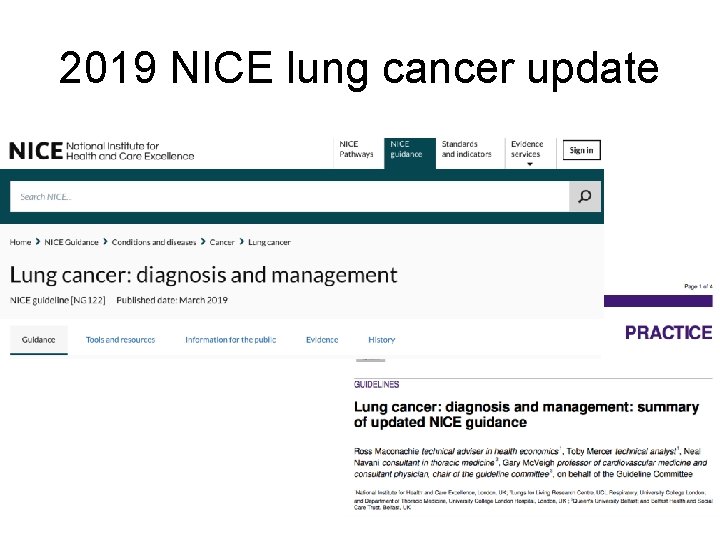
2019 NICE lung cancer update
BTS/SCTS guidance now superceded
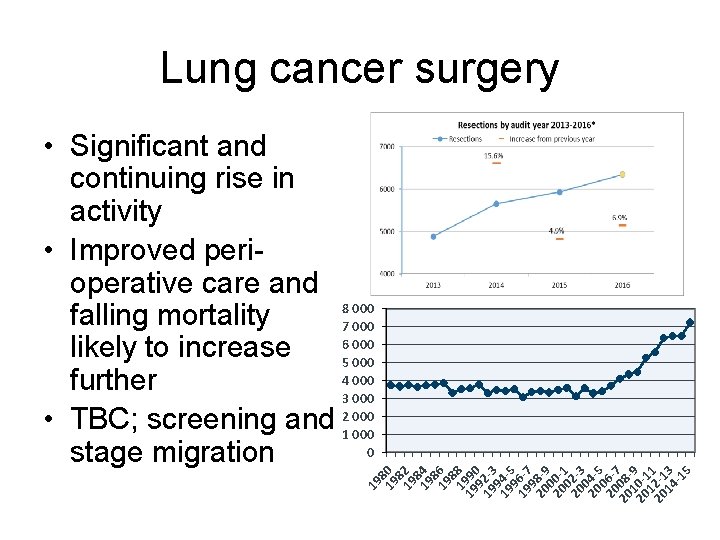
Lung cancer surgery 19 8 19 0 8 19 2 8 19 4 8 19 6 8 19 90 9 19 2 -3 9 19 4 -5 9 19 6 -7 9 20 8 -9 0 20 0 -1 0 20 2 -3 0 20 4 -5 0 20 6 -7 20 08 1 -9 20 0 -1 1 1 20 2 -1 14 3 -1 5 • Significant and continuing rise in activity • Improved perioperative care and 8 000 falling mortality 7 000 6 000 likely to increase 5 000 4 000 further 3 000 • TBC; screening and 21 000 0 stage migration
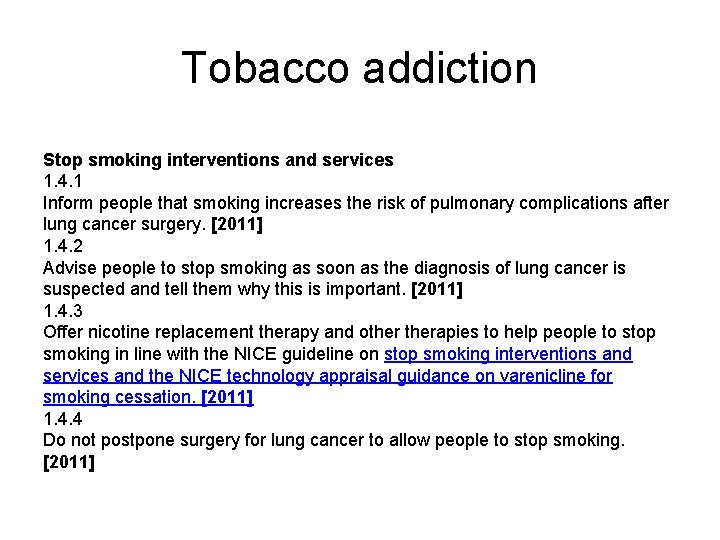
Tobacco addiction Stop smoking interventions and services 1. 4. 1 Inform people that smoking increases the risk of pulmonary complications after lung cancer surgery. [2011] 1. 4. 2 Advise people to stop smoking as soon as the diagnosis of lung cancer is suspected and tell them why this is important. [2011] 1. 4. 3 Offer nicotine replacement therapy and otherapies to help people to stop smoking in line with the NICE guideline on stop smoking interventions and services and the NICE technology appraisal guidance on varenicline for smoking cessation. [2011] 1. 4. 4 Do not postpone surgery for lung cancer to allow people to stop smoking. [2011]
Diagnosis • CT chest and upper abdo for all • FDG CT-PET if radical therapy contemplated • May be role for MRI in superior sulcus (Pancoast) tumours
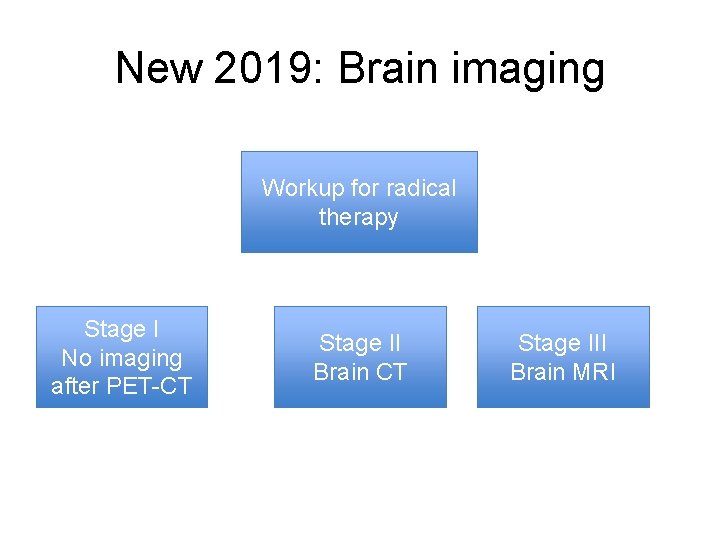
New 2019: Brain imaging Workup for radical therapy Stage I No imaging after PET-CT Stage II Brain CT Stage III Brain MRI
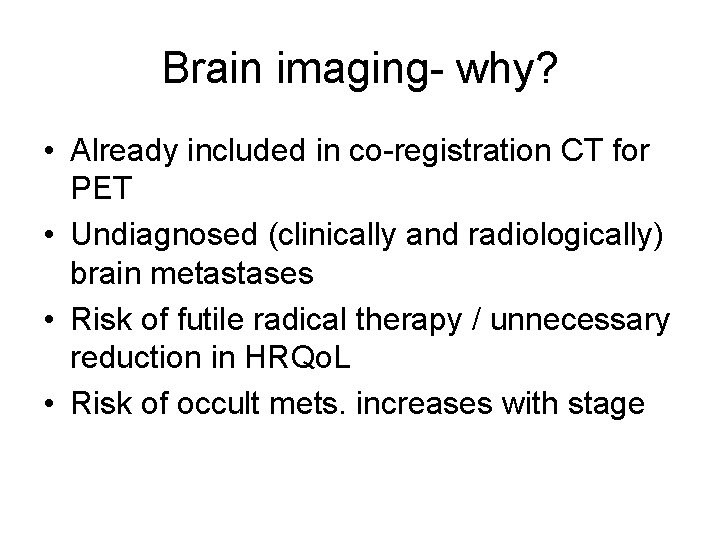
Brain imaging- why? • Already included in co-registration CT for PET • Undiagnosed (clinically and radiologically) brain metastases • Risk of futile radical therapy / unnecessary reduction in HRQo. L • Risk of occult mets. increases with stage
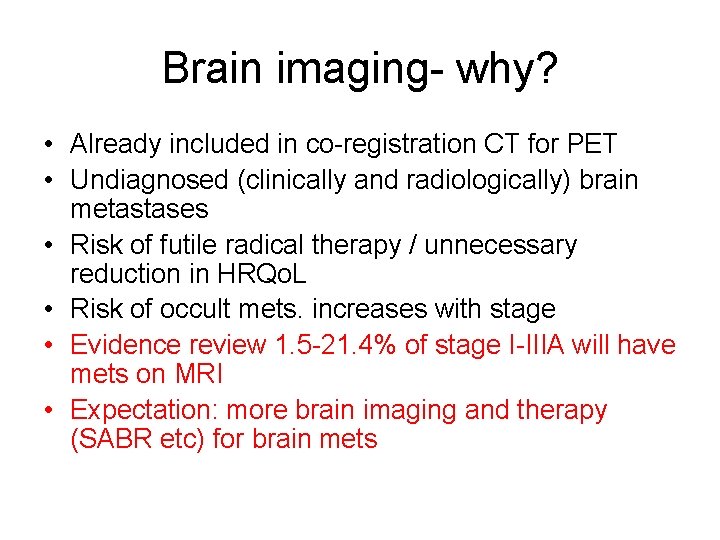
Brain imaging- why? • Already included in co-registration CT for PET • Undiagnosed (clinically and radiologically) brain metastases • Risk of futile radical therapy / unnecessary reduction in HRQo. L • Risk of occult mets. increases with stage • Evidence review 1. 5 -21. 4% of stage I-IIIA will have mets on MRI • Expectation: more brain imaging and therapy (SABR etc) for brain mets
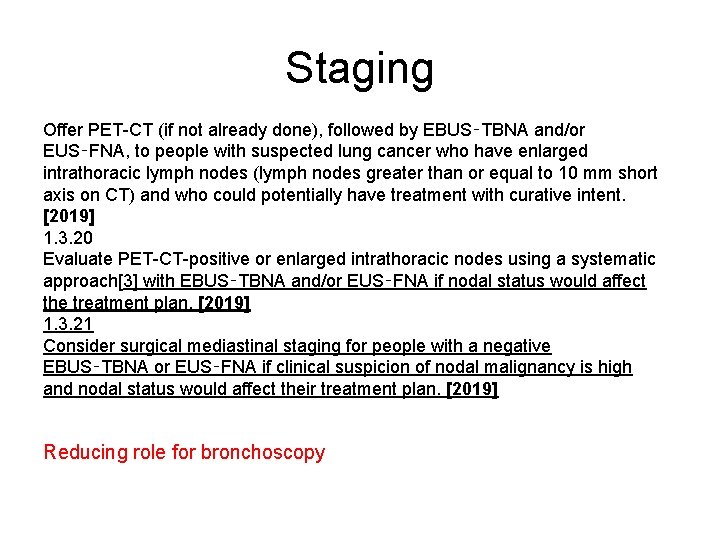
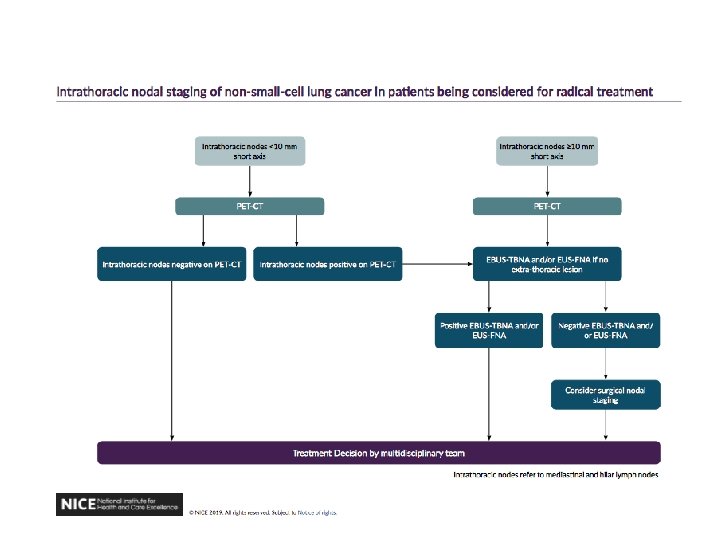
Staging Offer PET-CT (if not already done), followed by EBUS‑TBNA and/or EUS‑FNA, to people with suspected lung cancer who have enlarged intrathoracic lymph nodes (lymph nodes greater than or equal to 10 mm short axis on CT) and who could potentially have treatment with curative intent. [2019] 1. 3. 20 Evaluate PET-CT-positive or enlarged intrathoracic nodes using a systematic approach[3] with EBUS‑TBNA and/or EUS‑FNA if nodal status would affect the treatment plan. [2019] 1. 3. 21 Consider surgical mediastinal staging for people with a negative EBUS‑TBNA or EUS‑FNA if clinical suspicion of nodal malignancy is high and nodal status would affect their treatment plan. [2019] Reducing role for bronchoscopy
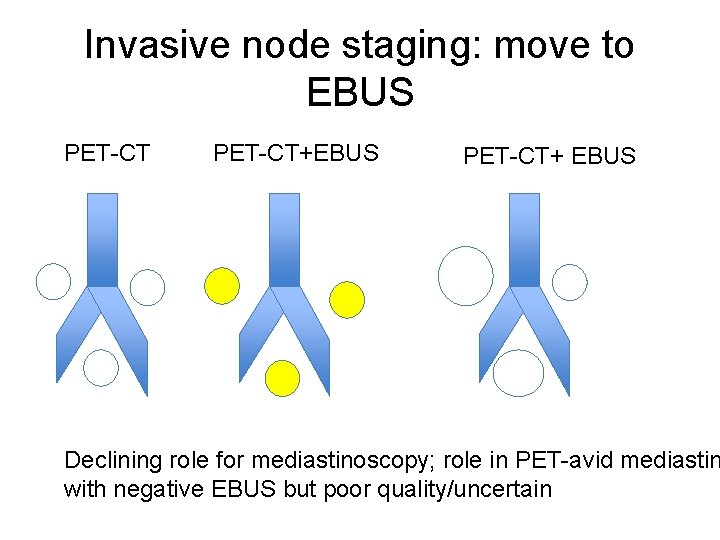
Invasive node staging: move to EBUS PET-CT+EBUS PET-CT+ EBUS Declining role for mediastinoscopy; role in PET-avid mediastin with negative EBUS but poor quality/uncertain
Declining role of mediastinoscopy • EBUS-TBNA / EUS first line for invasive mediastinal staging • Role in confirming EBUS results IF – “clinical staging of nodal malignancy is high” – AND – “nodal status would affect their treatment plan”
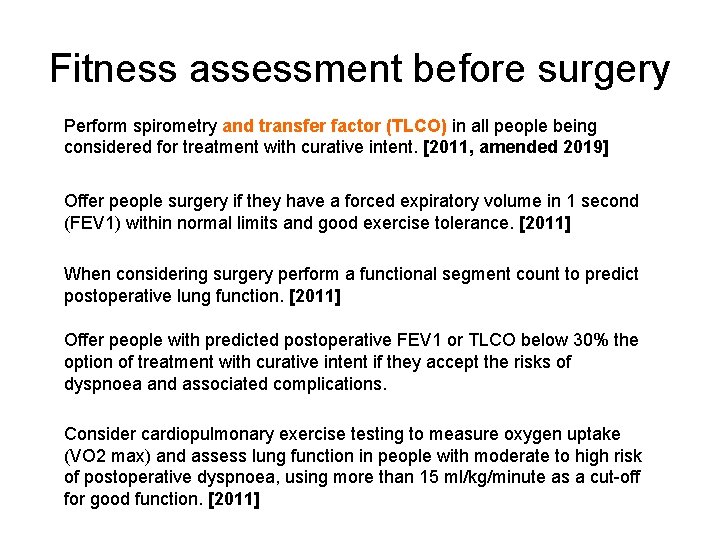
Fitness assessment before surgery Perform spirometry and transfer factor (TLCO) in all people being considered for treatment with curative intent. [2011, amended 2019] Offer people surgery if they have a forced expiratory volume in 1 second (FEV 1) within normal limits and good exercise tolerance. [2011] When considering surgery perform a functional segment count to predict postoperative lung function. [2011] Offer people with predicted postoperative FEV 1 or TLCO below 30% the option of treatment with curative intent if they accept the risks of dyspnoea and associated complications. Consider cardiopulmonary exercise testing to measure oxygen uptake (VO 2 max) and assess lung function in people with moderate to high risk of postoperative dyspnoea, using more than 15 ml/kg/minute as a cut-off for good function. [2011]
Which operation? • Lobectomy VATS or open • More extensive resection only if needed for R 0 margins • “Hilar and mediastinal sampling or resection”
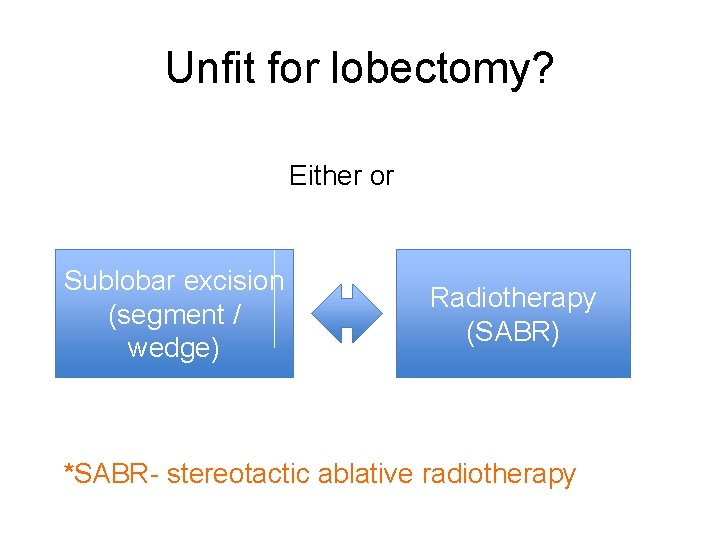
Unfit for lobectomy? Either or Sublobar excision (segment / wedge) Radiotherapy (SABR) *SABR- stereotactic ablative radiotherapy
Non surgical outcomes for radical treatment of early stage disease 1. 4. 27 For people with stage I–IIA (T 1 a–T 2 b, N 0, M 0) NSCLC who decline surgery or in whom any surgery is contraindicated, offer SABR. If SABR is contraindicated, offer either conventional or hyperfractionated radiotherapy. [2019] 1. 4. 28 For eligible people with stage IIIA NSCLC who cannot tolerate or who decline chemoradiotherapy (with or without surgery), consider radical radiotherapy (either conventional or hyperfractionated). [2019] 1. 4. 29 For eligible people with stage IIIB NSCLC who cannot tolerate or who decline chemoradiotherapy, consider radical radiotherapy (either conventional or hyperfractionated). [2019]
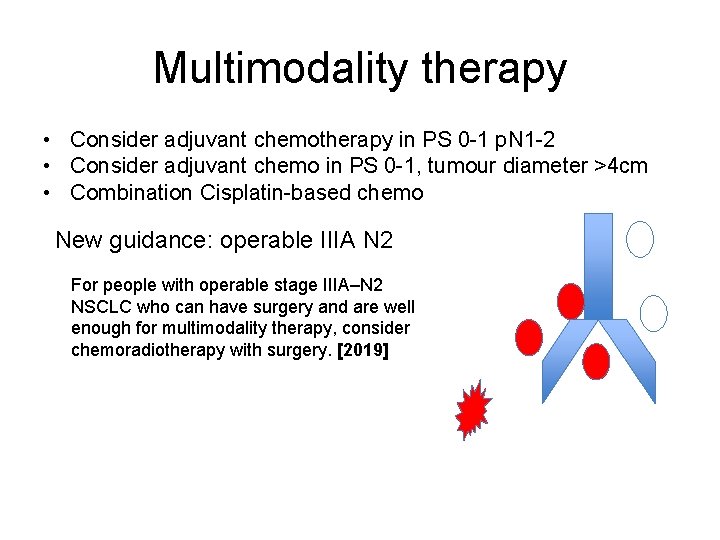
Multimodality therapy • Consider adjuvant chemotherapy in PS 0 -1 p. N 1 -2 • Consider adjuvant chemo in PS 0 -1, tumour diameter >4 cm • Combination Cisplatin-based chemo New guidance: operable IIIA N 2 For people with operable stage IIIA–N 2 NSCLC who can have surgery and are well enough for multimodality therapy, consider chemoradiotherapy with surgery. [2019]
Operable IIIA N 2 continued 1. 4. 41 Discuss the benefits and risks with the person before starting chemoradiotherapy with surgery, including that: chemoradiotherapy with surgery improves progression-free survival chemoradiotherapy with surgery may improve overall survival. [2019] 1. 4. 42 For people with stage IIIA–N 2 NSCLC who are having chemoradiotherapy and surgery, ensure that their surgery is scheduled for 3 to 5 weeks after the chemoradiotherapy. [2019] 1. 4. 43 Multidisciplinary teams that provide chemoradiotherapy with surgery should have expertise in the combined therapy and in all of the individual components. [2019]
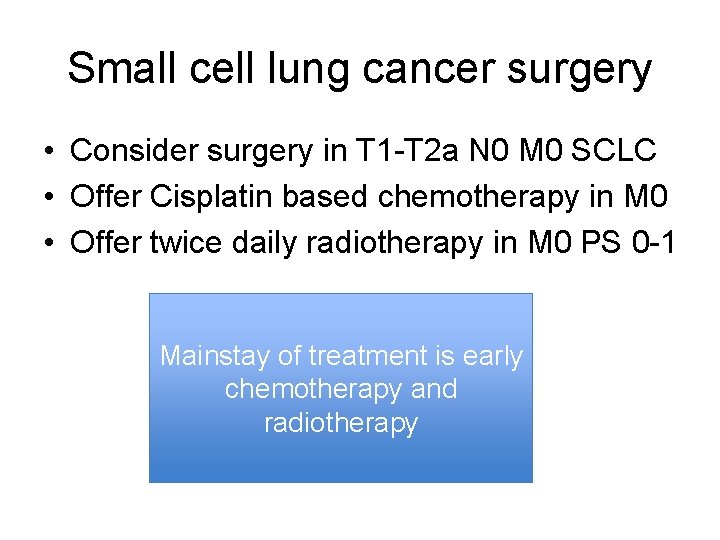
Small cell lung cancer surgery • Consider surgery in T 1 -T 2 a N 0 M 0 SCLC • Offer Cisplatin based chemotherapy in M 0 • Offer twice daily radiotherapy in M 0 PS 0 -1 Mainstay of treatment is early chemotherapy and radiotherapy
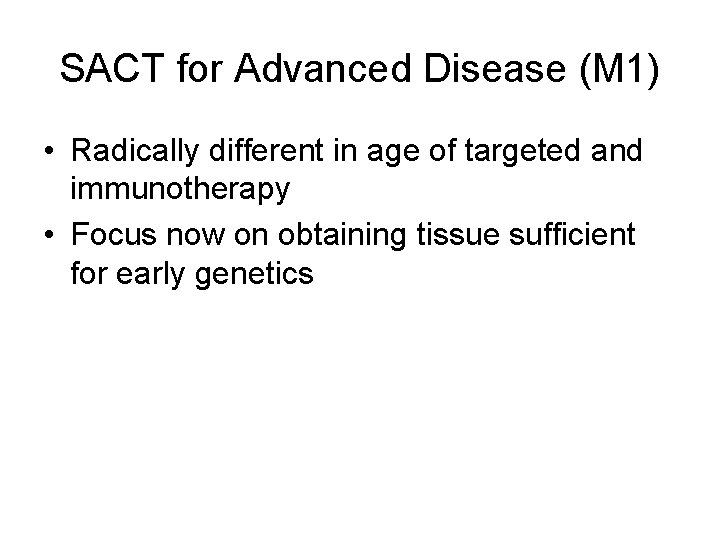
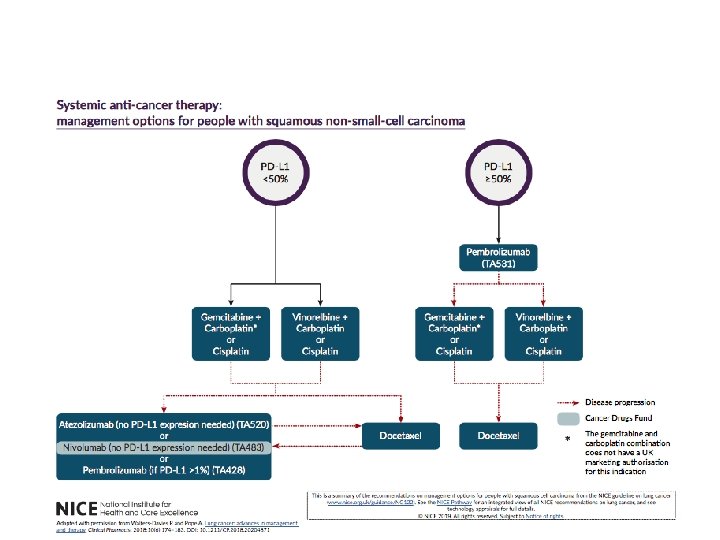
SACT for Advanced Disease (M 1) • Radically different in age of targeted and immunotherapy • Focus now on obtaining tissue sufficient for early genetics
Follow up after radical treatment 1. 6. 1 Offer all people with lung cancer an initial specialist follow-up appointment within 6 weeks of completing treatment to discuss ongoing care. Offer regular appointments after this, rather than relying on the person requesting appointments when they experience symptoms. [2011] 1. 6. 2 Offer protocol-driven follow-up led by a lung cancer clinical nurse specialist as an option for people with a life expectancy of more than 3 months. [2011] 1. 6. 3 Ensure that people know how to contact the lung cancer clinical nurse specialist involved in their care
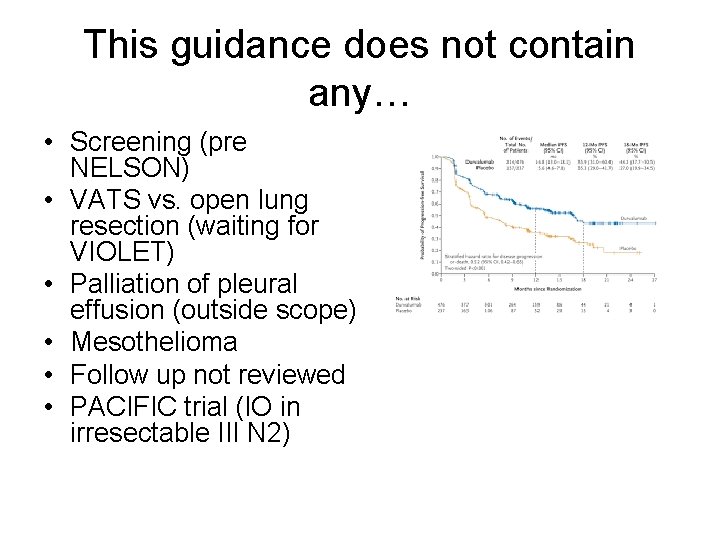
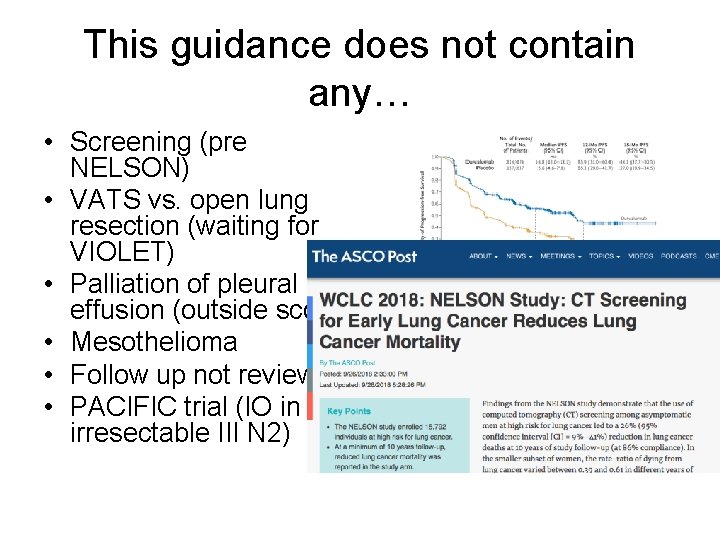
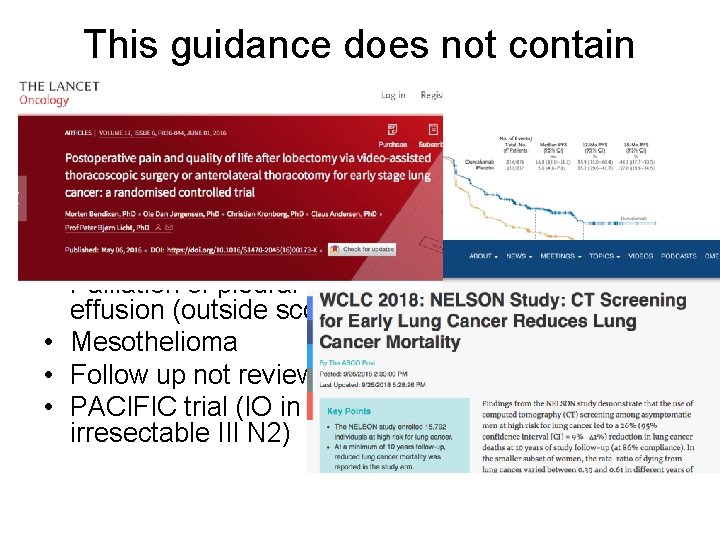
This guidance does not contain any… • Screening (pre NELSON) • VATS vs. open lung resection (waiting for VIOLET) • Palliation of pleural effusion (outside scope) • Mesothelioma • Follow up not reviewed • PACIFIC trial (IO in irresectable III N 2)
This guidance does not contain any… • Screening (pre NELSON) • VATS vs. open lung resection (waiting for VIOLET) • Palliation of pleural effusion (outside scope) • Mesothelioma • Follow up not reviewed • PACIFIC trial (IO in irresectable III N 2)
This guidance does not contain any… • Screening (pre NELSON) • VATS vs. open lung resection (waiting for VIOLET) • Palliation of pleural effusion (outside scope) • Mesothelioma • Follow up not reviewed • PACIFIC trial (IO in irresectable III N 2)
Palliation of pleural effusion • Out of scope for 2019 guideline update Other palliative treatments 1. 5. 7 Perform pleural aspiration or drainage in an attempt to relieve the symptoms of a pleural effusion. [2005] 1. 5. 8 Patients who benefit symptomatically from aspiration or drainage of fluid should be offered talc pleurodesis for longer-term benefit. [2005] 1. 5. 9 Consider non-drug interventions based on psychosocial support, breathing control and coping strategies for people with breathlessness. [2005]
Indwelling pleural catheters for malignant effusion; 2019 exceptional review • Why? Concerns from NHSE Clinical Expert Group and NICE guideline committee • 10 new RCTs/systematic reviews • “no significant differences in outcomes including success rate and improvement of dyspnoea…One identified pleurodesis failure rate was higher in IPC compared with talc slurry pleurodesis…. mixed evidence concerning adverse event rate with IPC… several studies noted that IPC may be associated with a shorter length of hospital stay and fewer repeat pleural interventions. ”
Recommendations for research: the known unknowns (1) Role of immunotherapy after multimodality therapy including surgery Why?
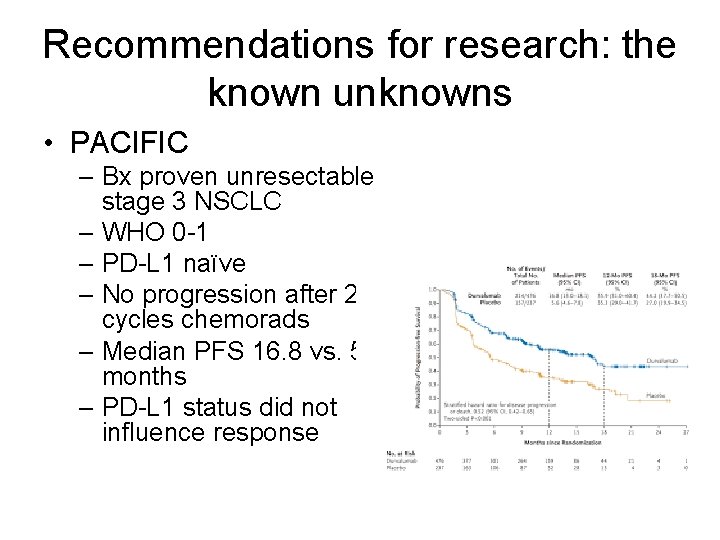
Recommendations for research: the known unknowns • PACIFIC – Bx proven unresectable stage 3 NSCLC – WHO 0 -1 – PD-L 1 naïve – No progression after 2 cycles chemorads – Median PFS 16. 8 vs. 5. 6 months – PD-L 1 status did not influence response
Recommendations for research: the known unknowns • (1) Role of immunotherapy after multimodality therapy including surgery – Why? • Significant PFS superiority for Durvalumab + chemo. RT vs chemo. RT alone in PACIFIC • Similar PFS (? OS) benefits may be possible in resectable stage IIIA p. N 2
Recommendations for research: the known unknowns (2) SABR vs. surgery for early NSCLC
THANK YOU