
Lunch Learns Spring 2018 Developing Programs for Students


- Slides: 17
Lunch & Learns – Spring 2018 Developing Programs for Students in Recovery Eric Teske, MA, MS, CHWC Assistant Director of Substance Abuse Prevention IUPUI
Setting the Stage Increases in the number of adolescents admitted to treatment for SUD have outpaced admissions in the general population.
Setting the Stage Relapse rates are compounded by recovery-hostile college environments, and periods of transition.
Setting the Stage Post-treatment continuing support is effective at sustaining recovery.
Setting the Stage The broader recovery movement is advocating for comprehensive access to services and support.
Defining Recovery • “A voluntarily maintained lifestyle characterized by sobriety, personal health, and citizenship. ” Betty Ford Institute Consensus Panel (2007) • “A process of change through which individuals improve their health and wellness, live self-directed lives, and strive to reach their full potential. ” SAMHSA’s Working Definition of Recovery (2012)
Defining Recovery “You’re in recovery if you say you’re in recovery. ” Unknown
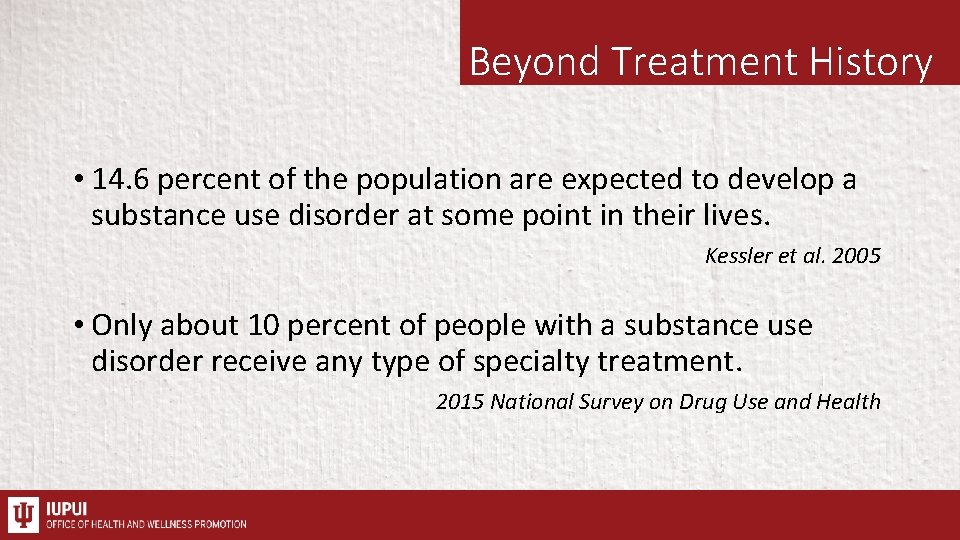
Beyond Treatment History • 14. 6 percent of the population are expected to develop a substance use disorder at some point in their lives. Kessler et al. 2005 • Only about 10 percent of people with a substance use disorder receive any type of specialty treatment. 2015 National Survey on Drug Use and Health
Identity & Behavior • It depends if you are asking about behavior or identity when you want to get prevalence numbers. • In HIV research you’d ask about MSM rather than “gay” or “bisexual” identities, because behavior is more important in this case. • With multiple pathways to recovery, surveying the identity eliminates the need to guess or anticipate how each individual arrived there.
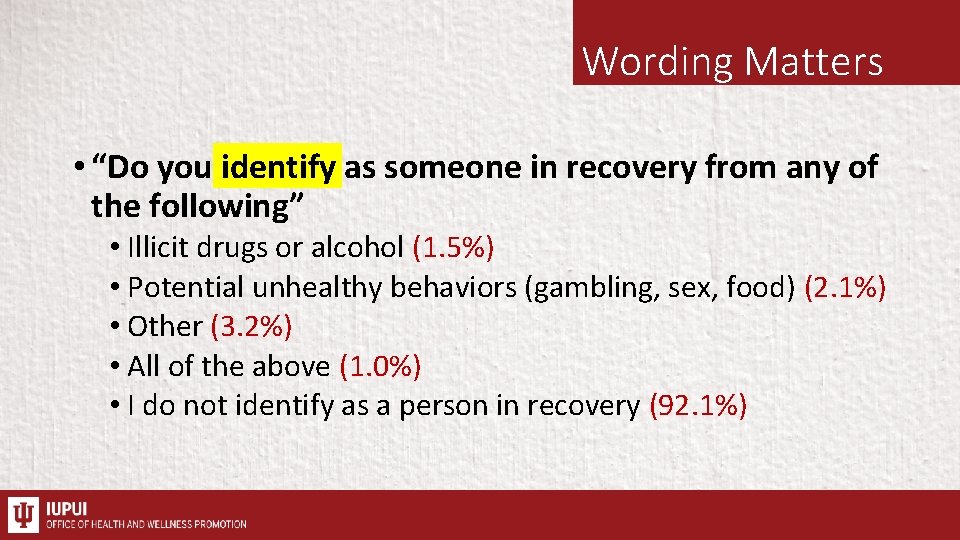
Wording Matters • “Do you identify as someone in recovery from any of the following” • Illicit drugs or alcohol (1. 5%) • Potential unhealthy behaviors (gambling, sex, food) (2. 1%) • Other (3. 2%) • All of the above (1. 0%) • I do not identify as a person in recovery (92. 1%)
What is a CRP? • “A collegiate recovery program (CRP) is a College or University-provided, supportive environment within the campus culture that reinforces the decision to engage in a lifestyle of recovery from substance use. • It is designed to provide an educational opportunity alongside recovery support to ensure that students do not have to sacrifice one for the other. ” Associate of Recovery in Higher Education
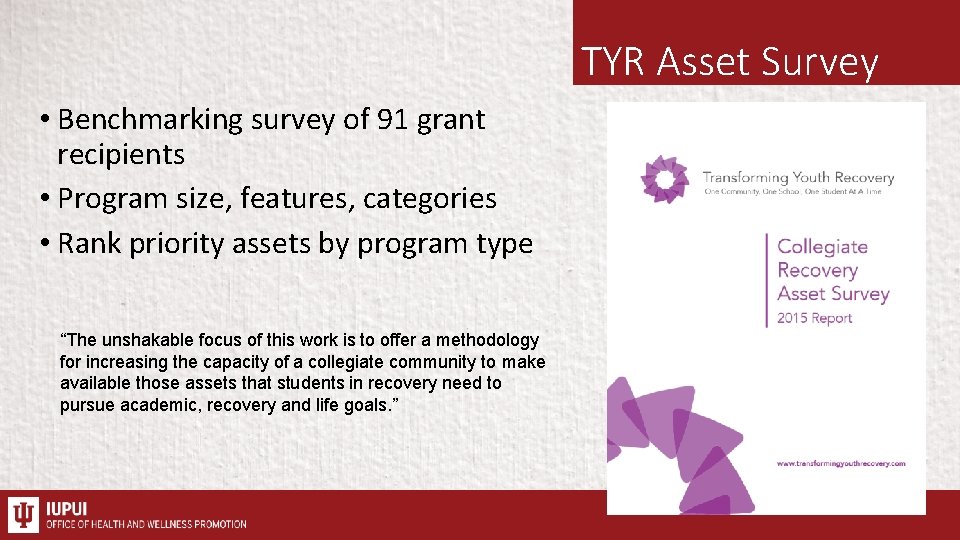
TYR Asset Survey • Benchmarking survey of 91 grant recipients • Program size, features, categories • Rank priority assets by program type “The unshakable focus of this work is to offer a methodology for increasing the capacity of a collegiate community to make available those assets that students in recovery need to pursue academic, recovery and life goals. ”
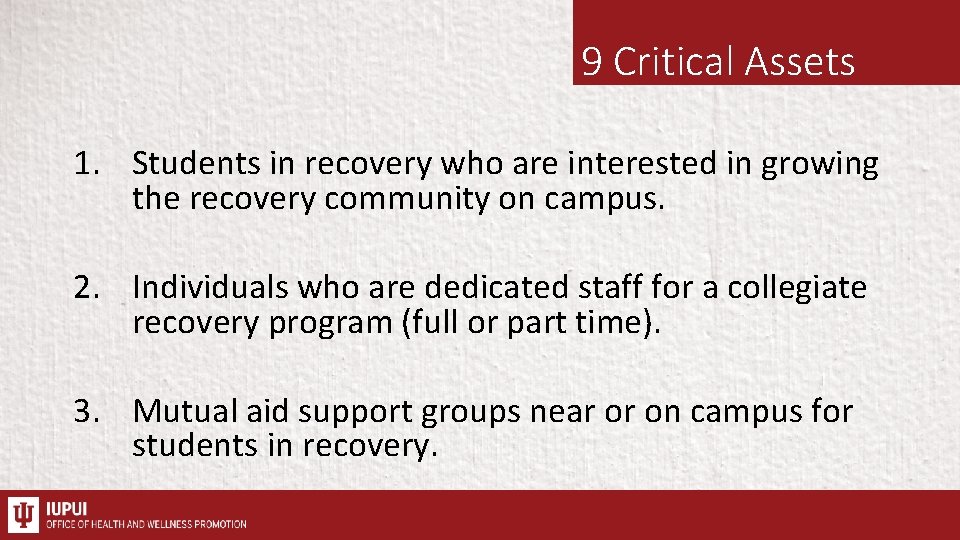
9 Critical Assets 1. Students in recovery who are interested in growing the recovery community on campus. 2. Individuals who are dedicated staff for a collegiate recovery program (full or part time). 3. Mutual aid support groups near or on campus for students in recovery.
9 Critical Assets 4. Individuals who are influential within the University and/or in the broader community and are interested in advocating for students in recovery. 5. Physical space for students to get together socially, soberly and safely (meals, social outings, venues). “Someplace to go” 6. Physical space that is dedicated for students in recovery to gather and meet. “Someplace to be”
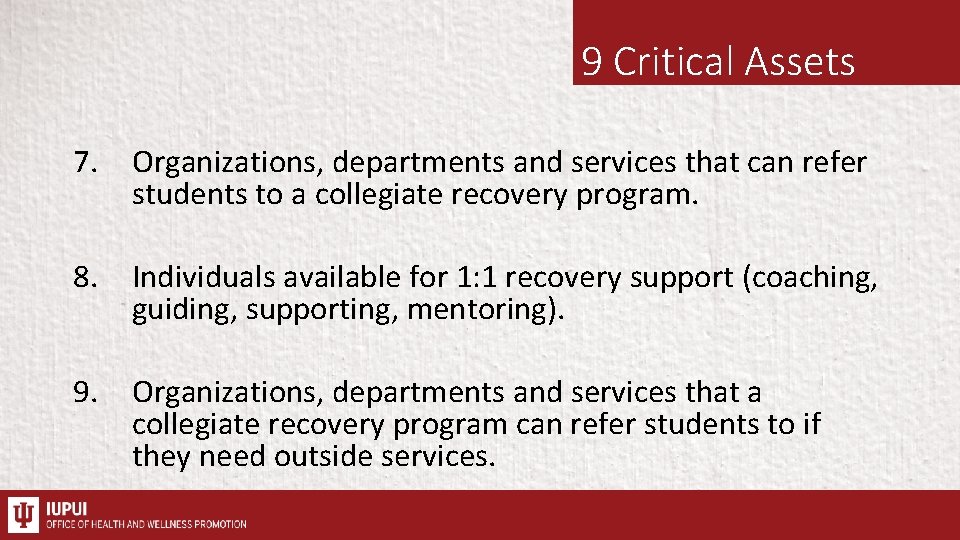
9 Critical Assets 7. Organizations, departments and services that can refer students to a collegiate recovery program. 8. Individuals available for 1: 1 recovery support (coaching, guiding, supporting, mentoring). 9. Organizations, departments and services that a collegiate recovery program can refer students to if they need outside services.
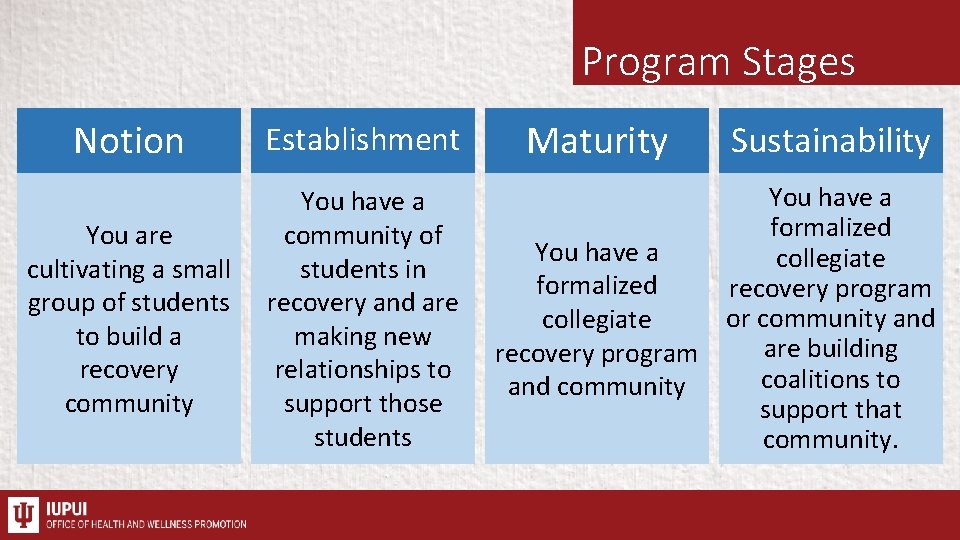
Program Stages Notion Establishment You are cultivating a small group of students to build a recovery community You have a community of students in recovery and are making new relationships to support those students Maturity Sustainability You have a formalized You have a collegiate formalized recovery program or community and collegiate are building recovery program coalitions to and community support that community.