
Lunar Evolution A Life Story View of the
- Slides: 19
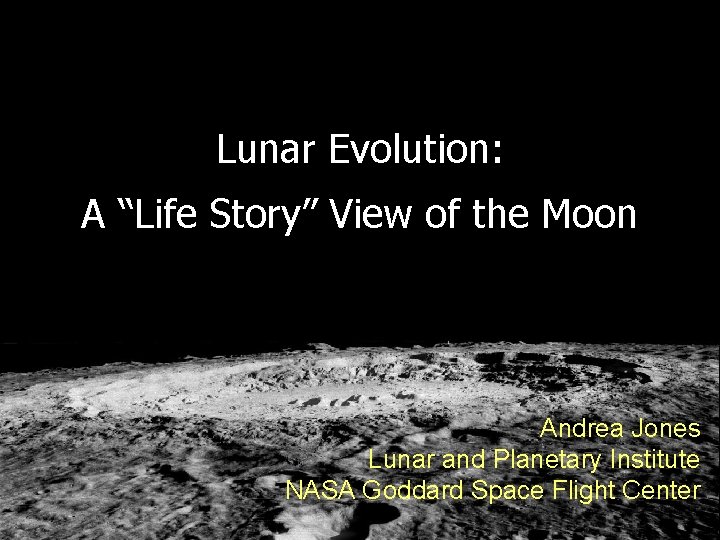
Lunar Evolution: A “Life Story” View of the Moon Andrea Jones Lunar and Planetary Institute NASA Goddard Space Flight Center
Happy Birthday, Moon! 4. 5 billion years ago, our Moon forms (lunar rocks and meteorites) Copyrighted, LPI, Leanne Woolley
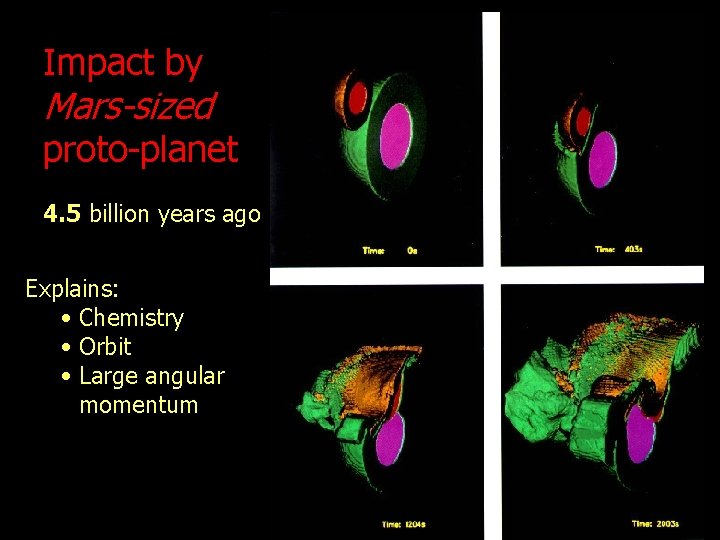
Impact by Mars-sized proto-planet 4. 5 billion years ago Explains: • Chemistry • Orbit • Large angular momentum
Moon Formation Video • Note – Not from NASA • But, it gets the main points across • Moon Formation Video
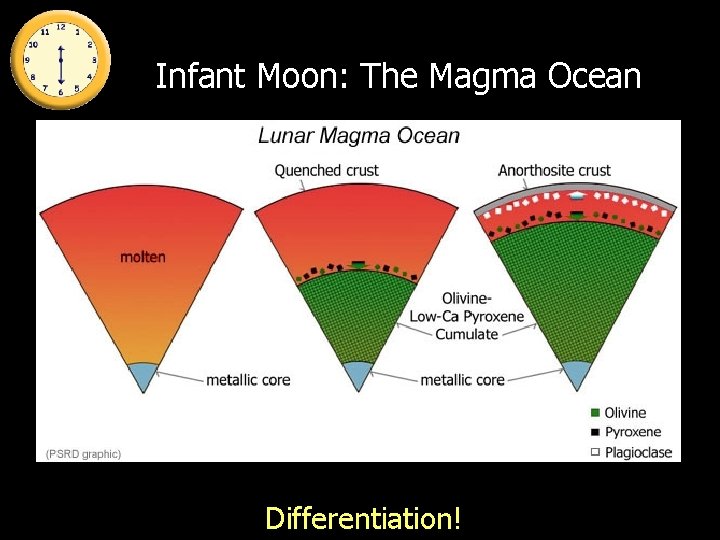
Infant Moon: The Magma Ocean Differentiation!
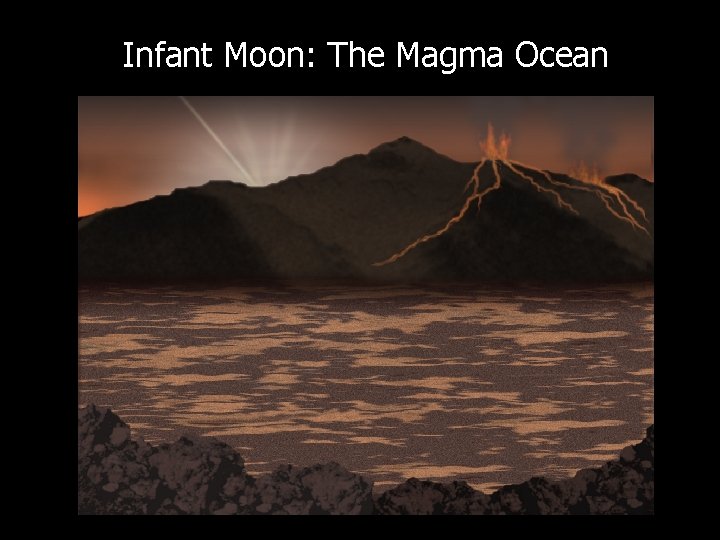
Infant Moon: The Magma Ocean
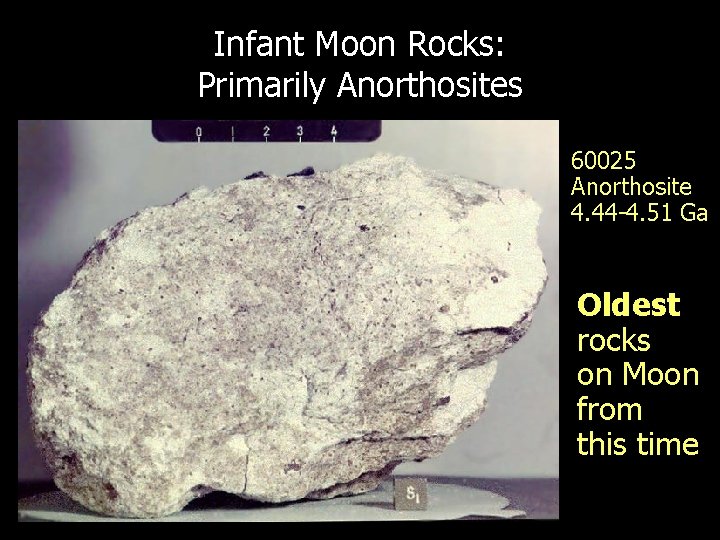
Infant Moon Rocks: Primarily Anorthosites 60025 Anorthosite 4. 44 -4. 51 Ga Oldest rocks on Moon from this time
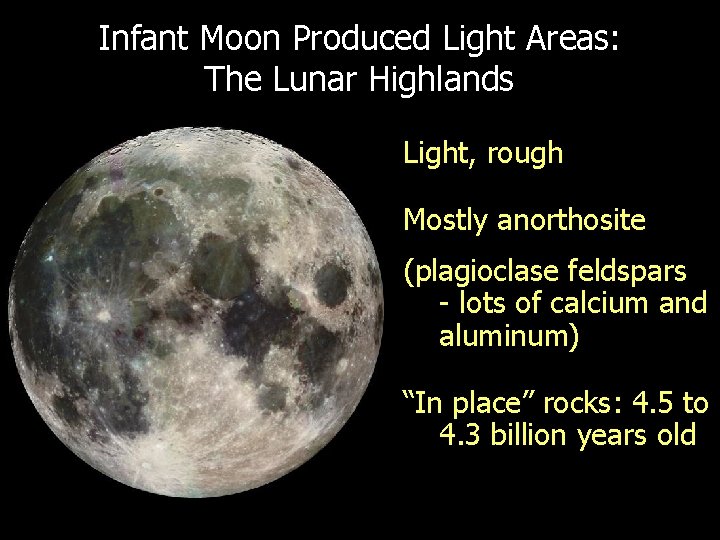
Infant Moon Produced Light Areas: The Lunar Highlands Light, rough Mostly anorthosite (plagioclase feldspars - lots of calcium and aluminum) “In place” rocks: 4. 5 to 4. 3 billion years old
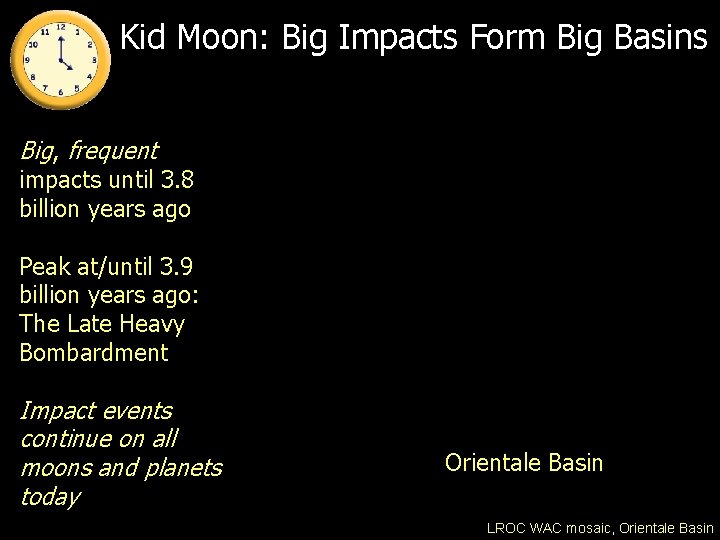
Kid Moon: Big Impacts Form Big Basins Big, frequent impacts until 3. 8 billion years ago Peak at/until 3. 9 billion years ago: The Late Heavy Bombardment Impact events continue on all moons and planets today Orientale Basin LROC WAC mosaic, Orientale Basin
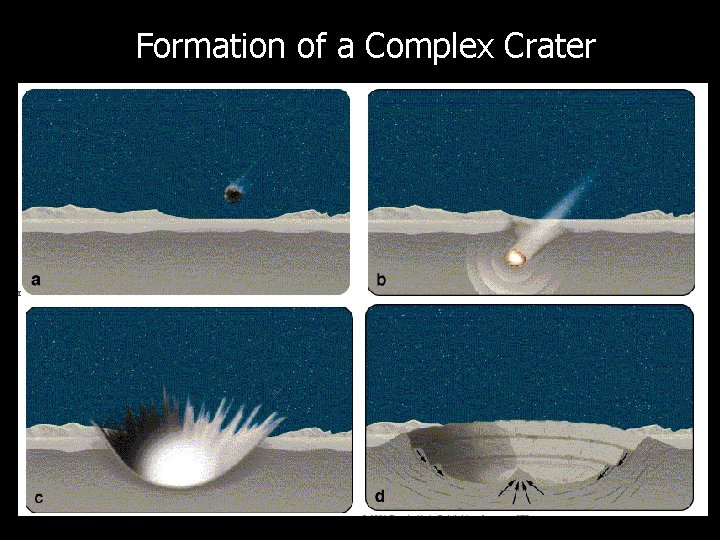
Formation of a Complex Crater
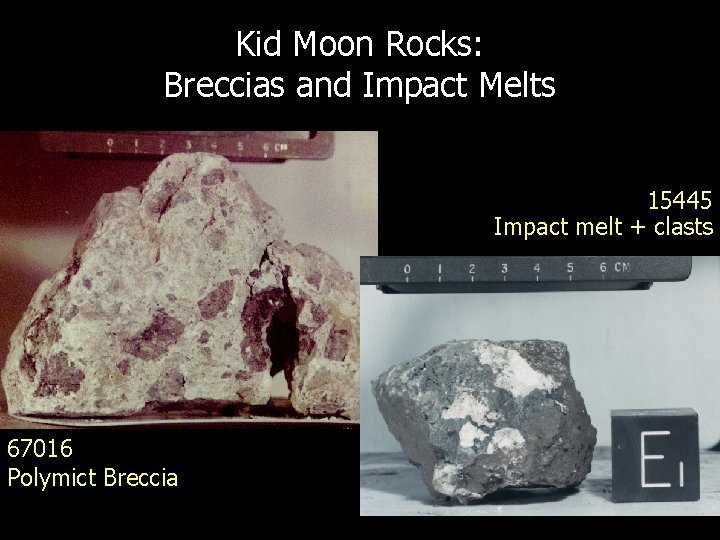
Kid Moon Rocks: Breccias and Impact Melts 15445 Impact melt + clasts 67016 Polymict Breccia
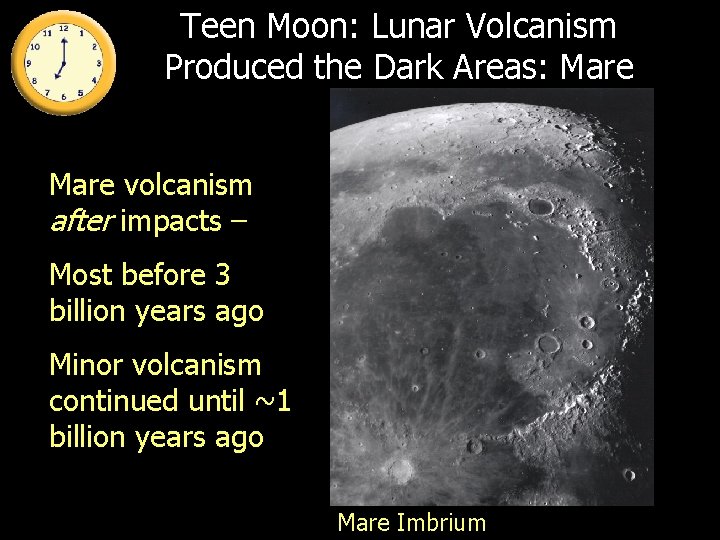
Teen Moon: Lunar Volcanism Produced the Dark Areas: Mare volcanism after impacts – Most before 3 billion years ago Minor volcanism continued until ~1 billion years ago Mare Imbrium
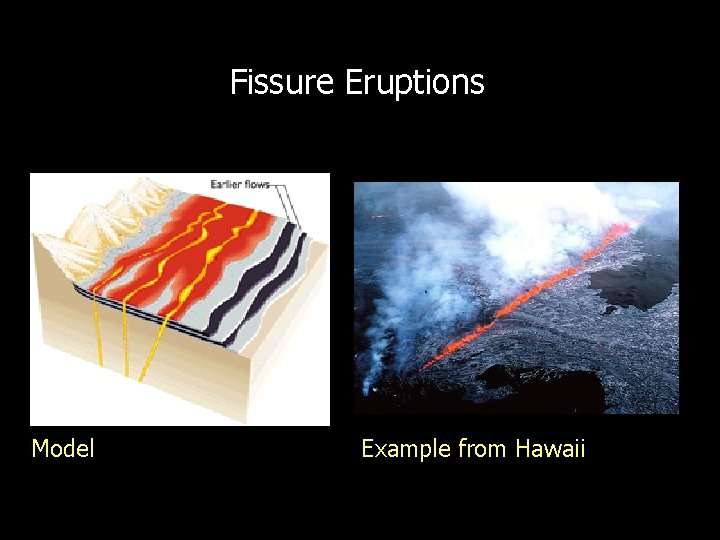
Fissure Eruptions Model Example from Hawaii
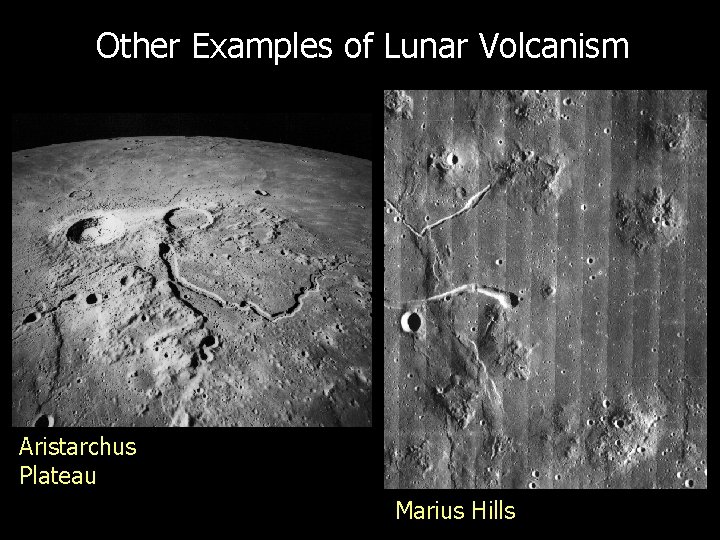
Other Examples of Lunar Volcanism Aristarchus Plateau Marius Hills
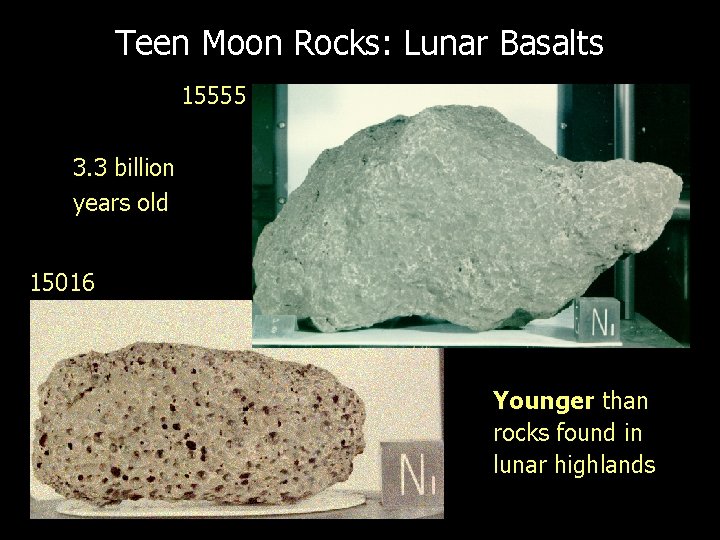
Teen Moon Rocks: Lunar Basalts 15555 3. 3 billion years old 15016 Younger than rocks found in lunar highlands
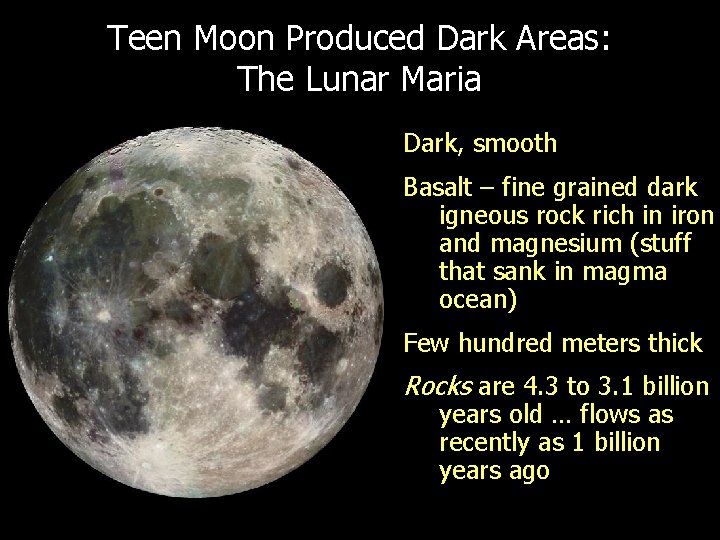
Teen Moon Produced Dark Areas: The Lunar Maria Dark, smooth Basalt – fine grained dark igneous rock rich in iron and magnesium (stuff that sank in magma ocean) Few hundred meters thick Rocks are 4. 3 to 3. 1 billion years old … flows as recently as 1 billion years ago
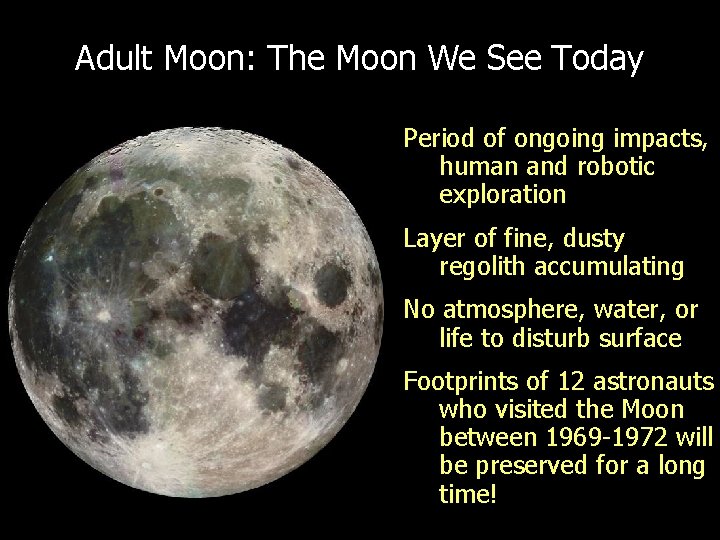
Adult Moon: The Moon We See Today Period of ongoing impacts, human and robotic exploration Layer of fine, dusty regolith accumulating No atmosphere, water, or life to disturb surface Footprints of 12 astronauts who visited the Moon between 1969 -1972 will be preserved for a long time!
Evolution of the Moon Video • From NASA • Moon Evolution Video
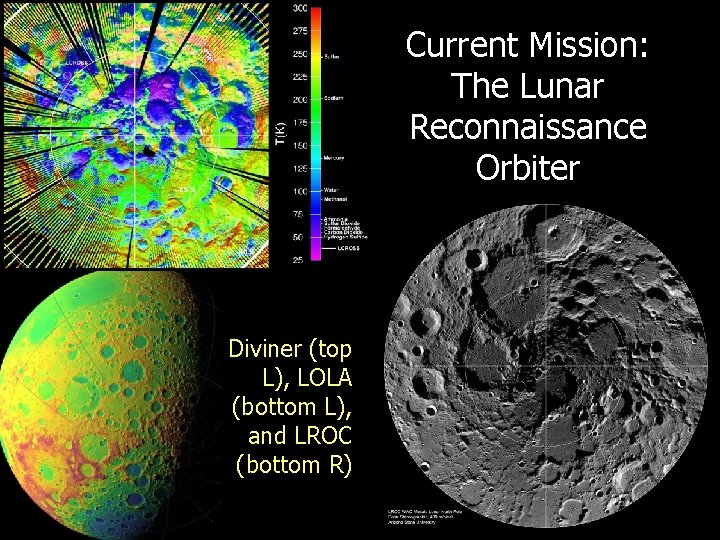
Current Mission: The Lunar Reconnaissance Orbiter Diviner (top L), LOLA (bottom L), and LROC (bottom R)