
LUNAGLOB ORBITER A A Petrukovich IKI RAN LUNAGLOBORBITER
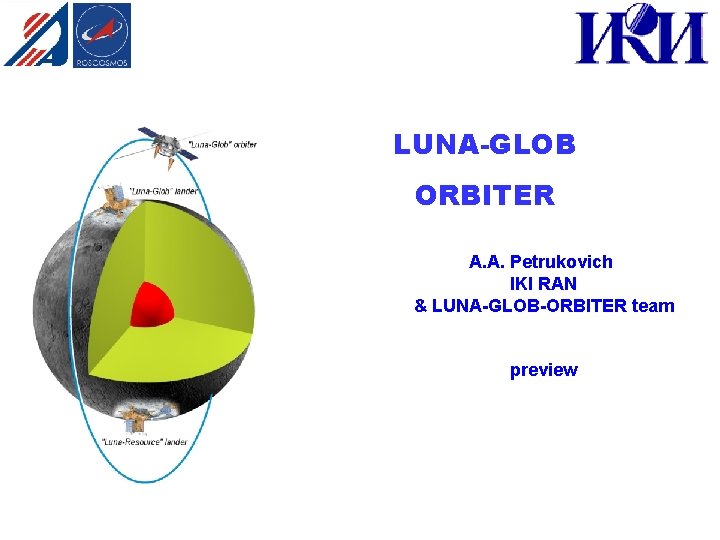
LUNA-GLOB ORBITER A. A. Petrukovich IKI RAN & LUNA-GLOB-ORBITER team preview
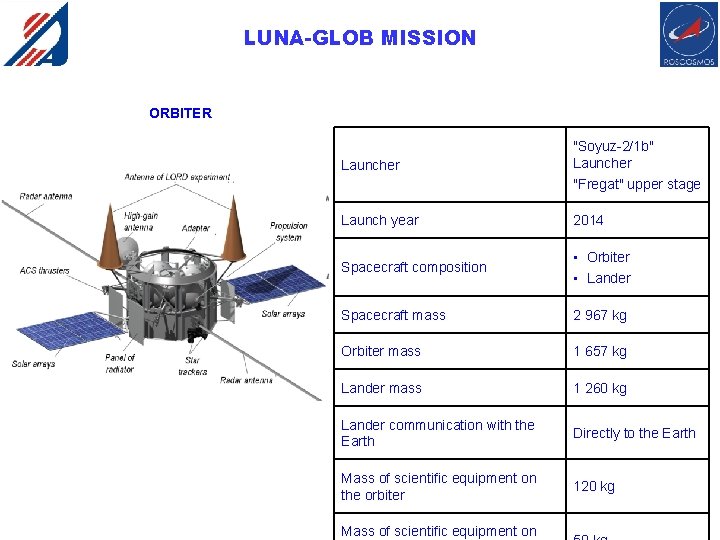
LUNA-GLOB MISSION ORBITER Launcher "Soyuz-2/1 b" Launcher "Fregat" upper stage Launch year 2014 Spacecraft composition • Orbiter • Lander Spacecraft mass 2 967 kg Orbiter mass 1 657 kg Lander mass 1 260 kg Lander communication with the Earth Directly to the Earth Mass of scientific equipment on the orbiter 120 kg Mass of scientific equipment on
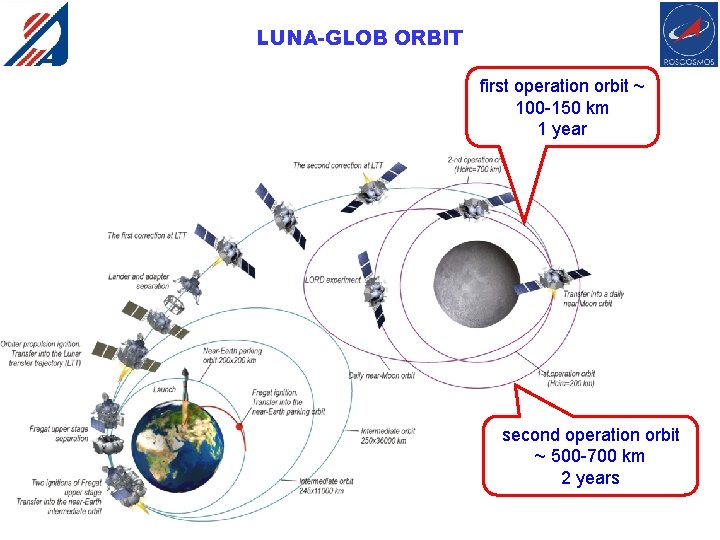
LUNA-GLOB ORBIT first operation orbit ~ 100 -150 km 1 year second operation orbit ~ 500 -700 km 2 years
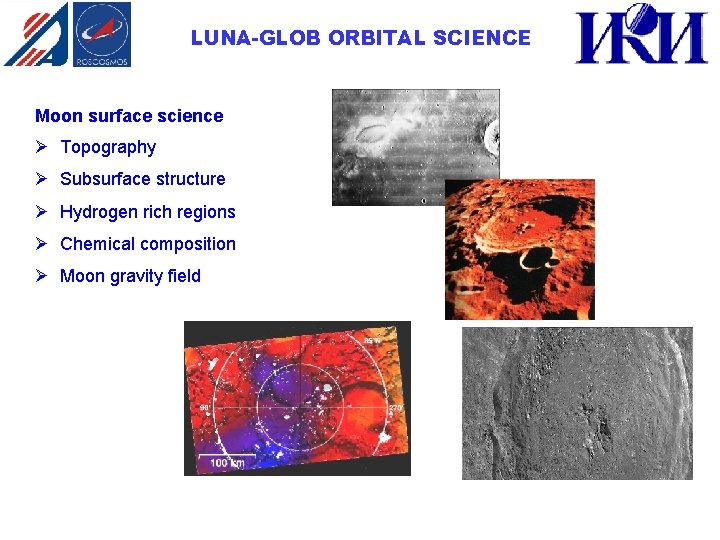
LUNA-GLOB ORBITAL SCIENCE Moon surface science Ø Topography Ø Subsurface structure Ø Hydrogen rich regions Ø Chemical composition Ø Moon gravity field
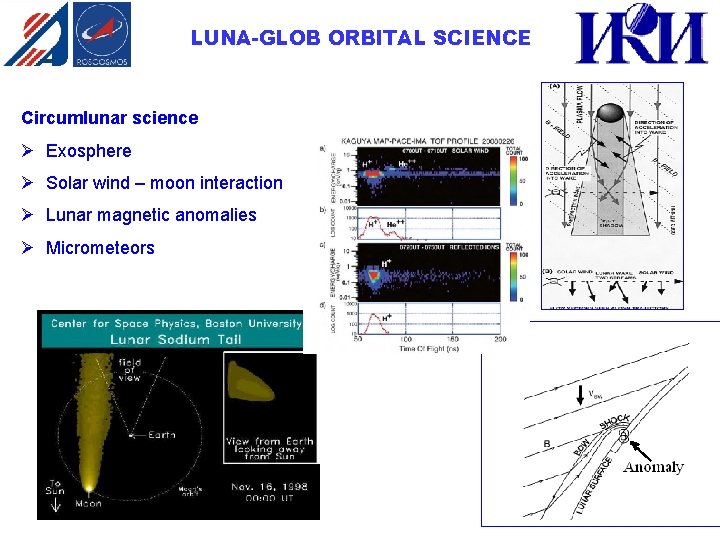
LUNA-GLOB ORBITAL SCIENCE Circumlunar science Ø Exosphere Ø Solar wind – moon interaction Ø Lunar magnetic anomalies Ø Micrometeors
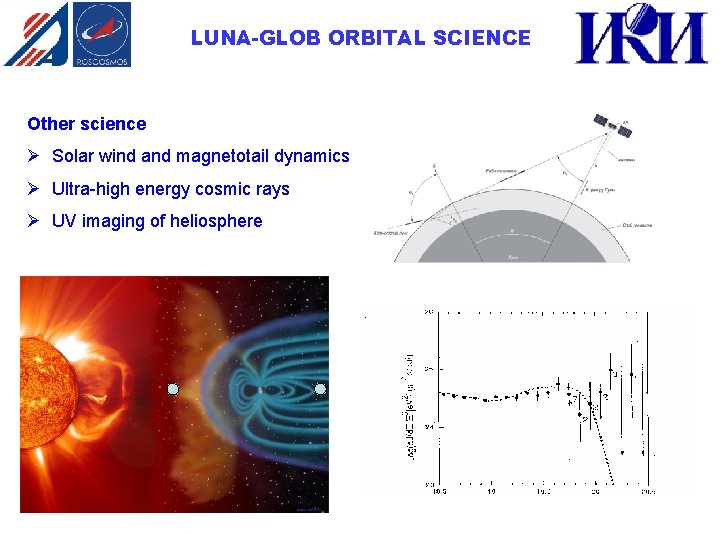
LUNA-GLOB ORBITAL SCIENCE Other science Ø Solar wind and magnetotail dynamics Ø Ultra-high energy cosmic rays Ø UV imaging of heliosphere
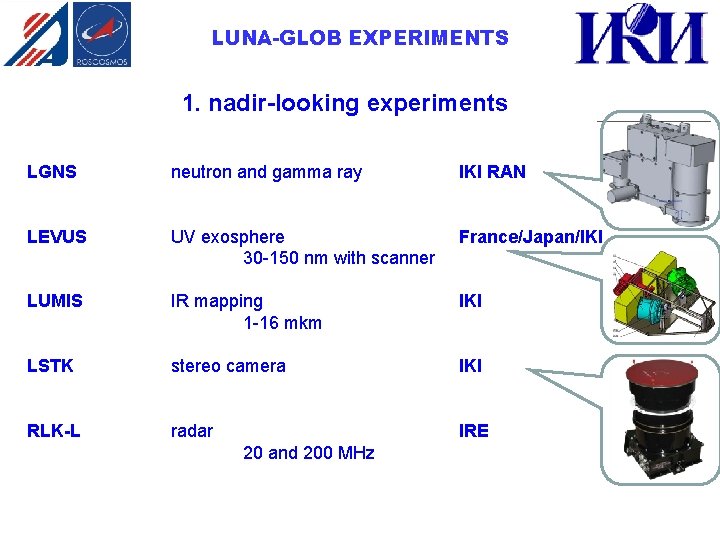
LUNA-GLOB EXPERIMENTS 1. nadir-looking experiments LGNS neutron and gamma ray IKI RAN LEVUS UV exosphere 30 -150 nm with scanner France/Japan/IKI LUMIS IR mapping 1 -16 mkm IKI LSTK stereo camera IKI RLK-L radar IRE 20 and 200 MHz
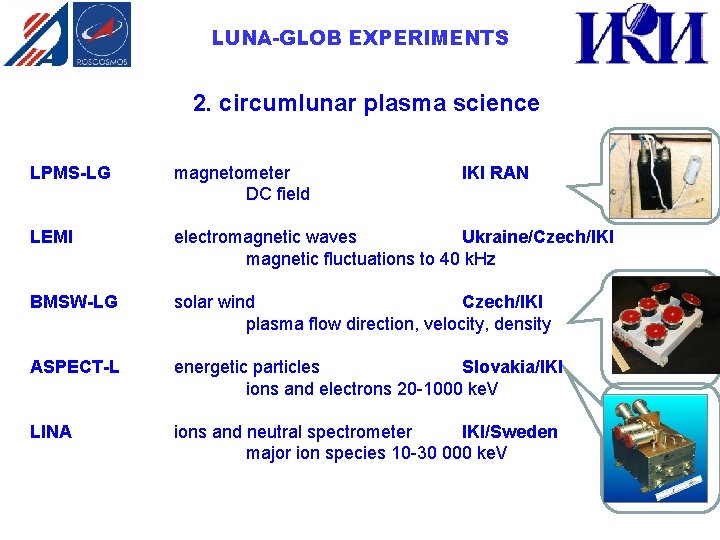
LUNA-GLOB EXPERIMENTS 2. circumlunar plasma science LPMS-LG magnetometer DC field IKI RAN LEMI electromagnetic waves Ukraine/Czech/IKI magnetic fluctuations to 40 k. Hz BMSW-LG solar wind Czech/IKI plasma flow direction, velocity, density ASPECT-L energetic particles Slovakia/IKI ions and electrons 20 -1000 ke. V LINA ions and neutral spectrometer IKI/Sweden major ion species 10 -30 000 ke. V
LUNA-GLOB EXPERIMENTS 3. other PKD radio receiver IKI high-precision orbit measurements LORD ultra-high energy cosmic rays FIAN moon as natural telescope METEOR-L circumlunar dust Geo. Khi SSRNI 2 data management system IKI
- Slides: 9