
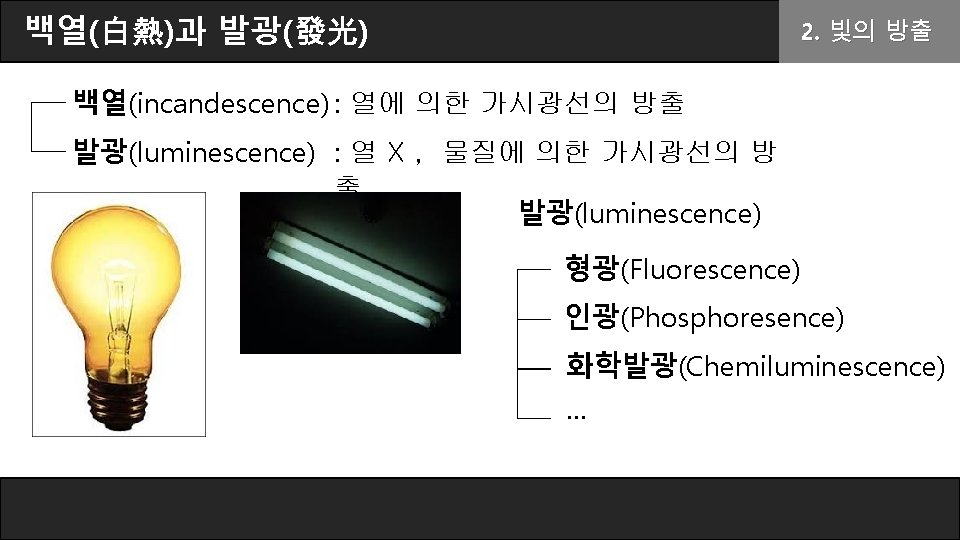
Luminol Reaction Fluorescence 2 Phosphoresence Photoluminescence Chemiluminescence A


- Slides: 23
Luminol Reaction
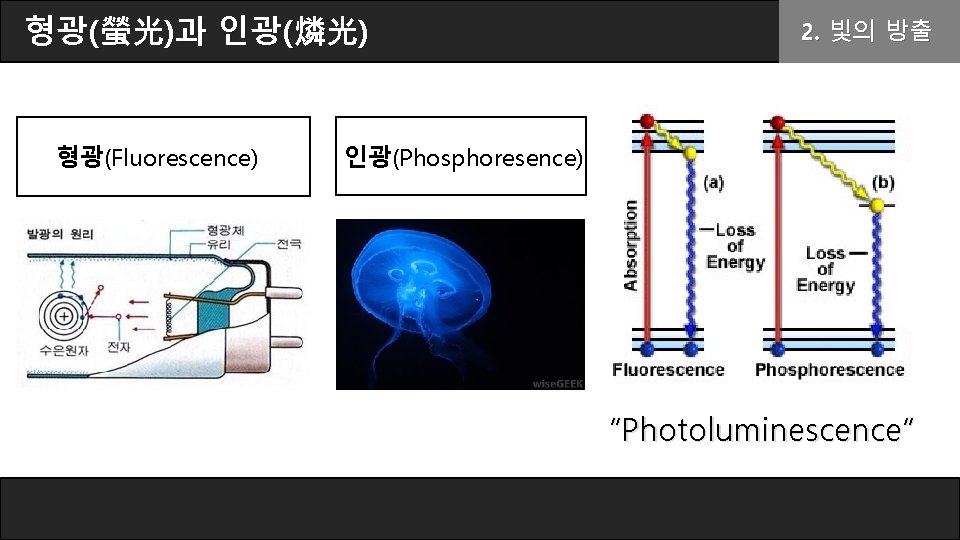
형광(螢光)과 인광(燐光) 형광(Fluorescence) 2. 빛의 방출 인광(Phosphoresence) “Photoluminescence“
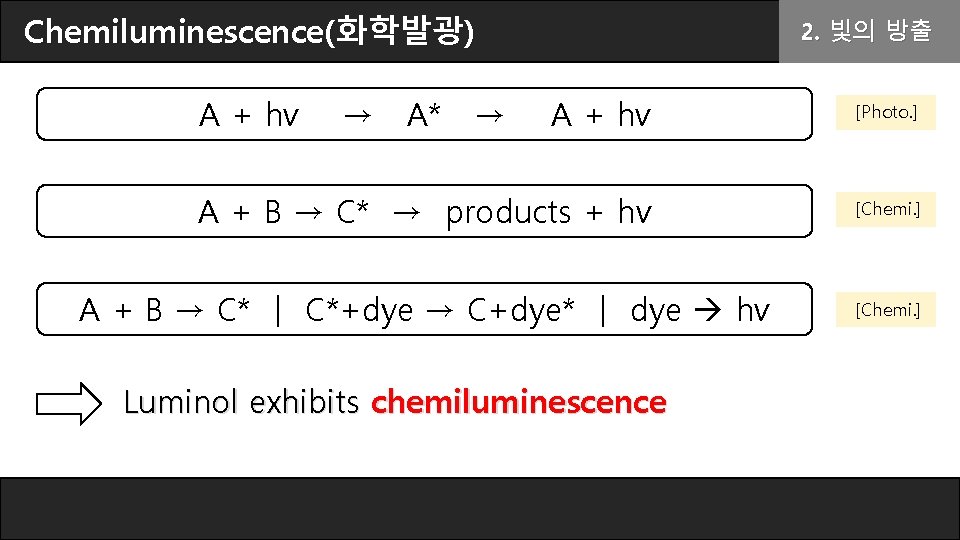
Chemiluminescence(화학발광) A + hv → A* → 2. 빛의 방출 A + hv [Photo. ] A + B → C* → products + hv [Chemi. ] A + B → C* │ C*+dye → C+dye* │ dye hv [Chemi. ] Luminol exhibits chemiluminescence
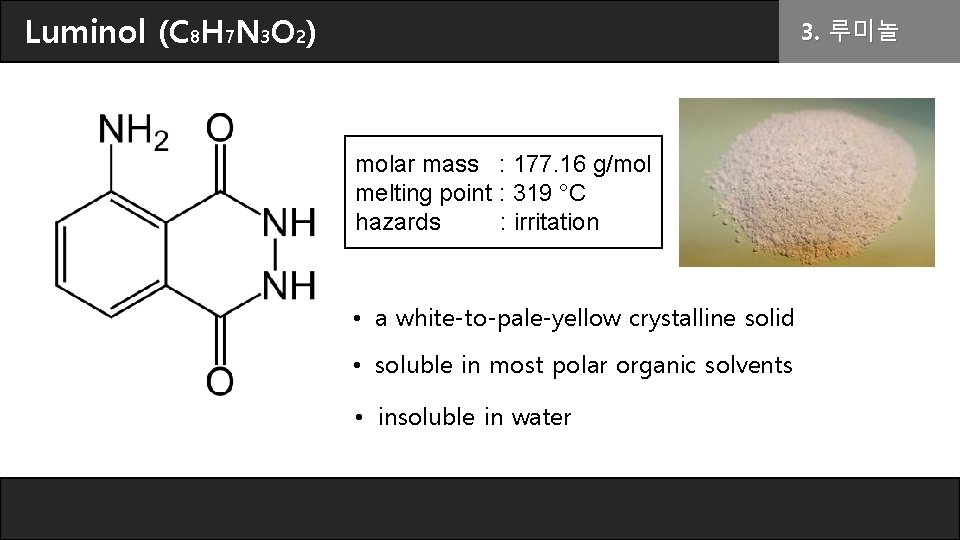
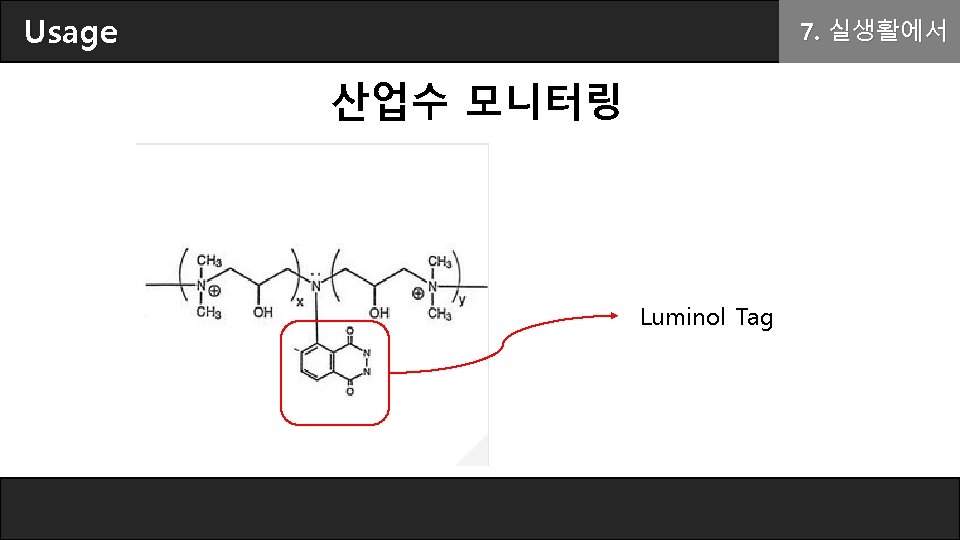
Luminol (C 8 H 7 N 3 O 2) 3. 루미놀 molar mass : 177. 16 g/mol melting point : 319 °C hazards : irritation • a white-to-pale-yellow crystalline solid • soluble in most polar organic solvents • insoluble in water
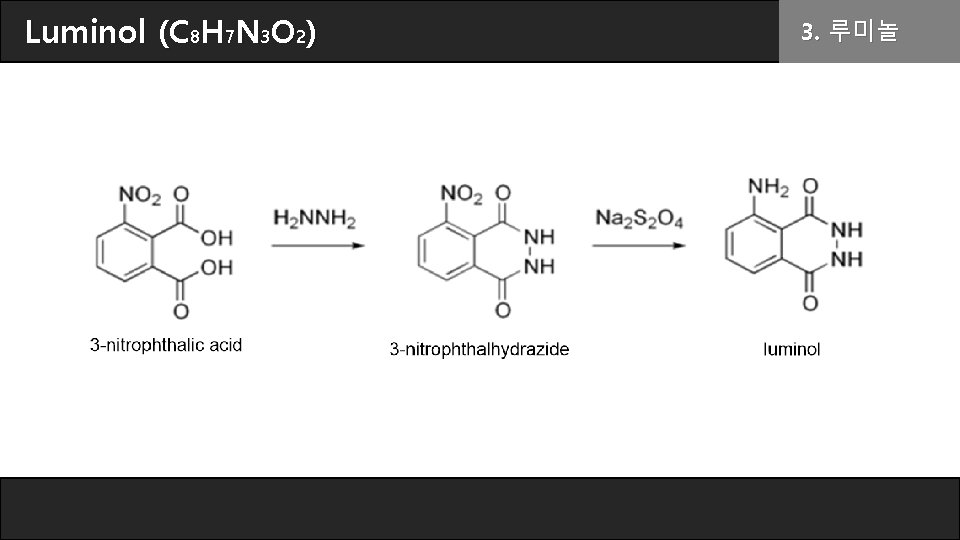
Luminol (C 8 H 7 N 3 O 2) 3. 루미놀
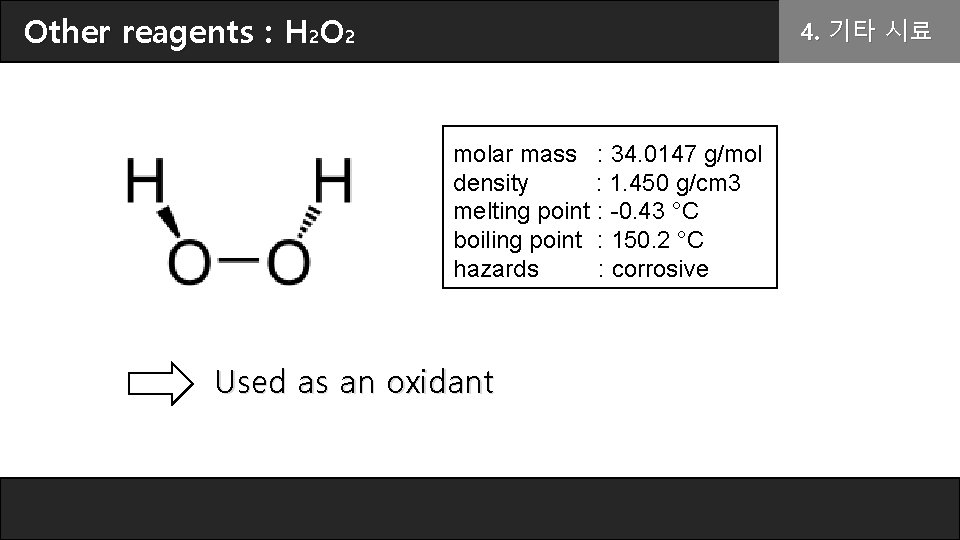
Other reagents : H 2 O 2 4. 기타 시료 molar mass : 34. 0147 g/mol density : 1. 450 g/cm 3 melting point : -0. 43 °C boiling point : 150. 2 °C hazards : corrosive Used as an oxidant
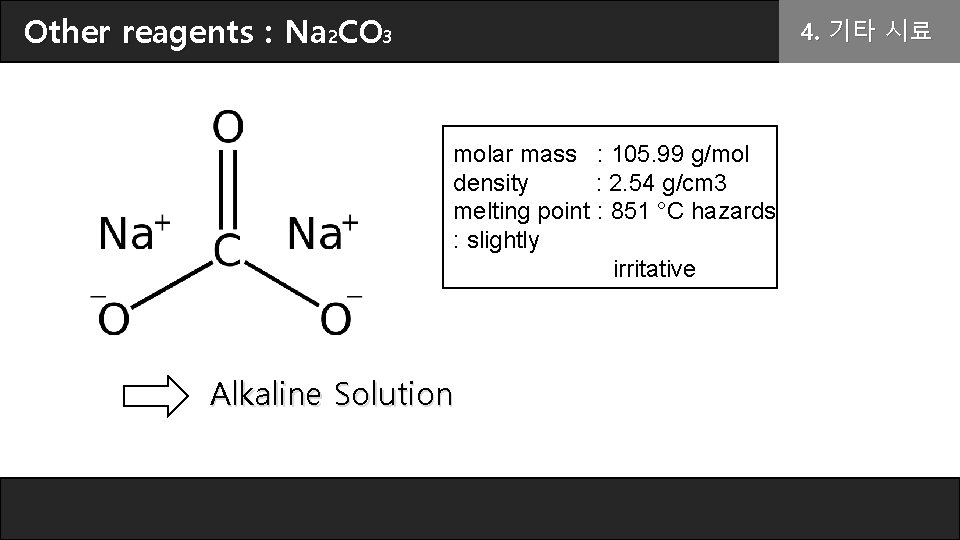
Other reagents : Na 2 CO 3 4. 기타 시료 molar mass : 105. 99 g/mol density : 2. 54 g/cm 3 melting point : 851 °C hazards : slightly irritative Alkaline Solution
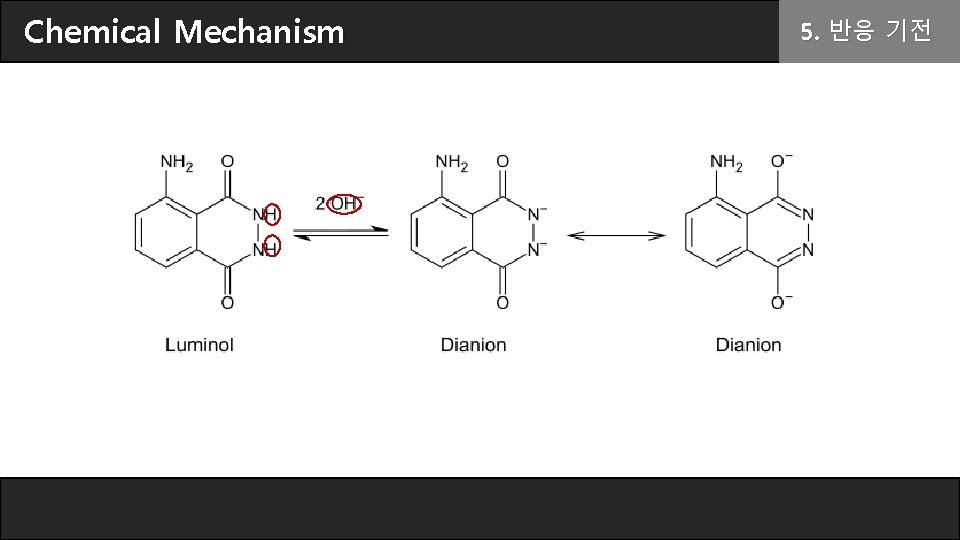
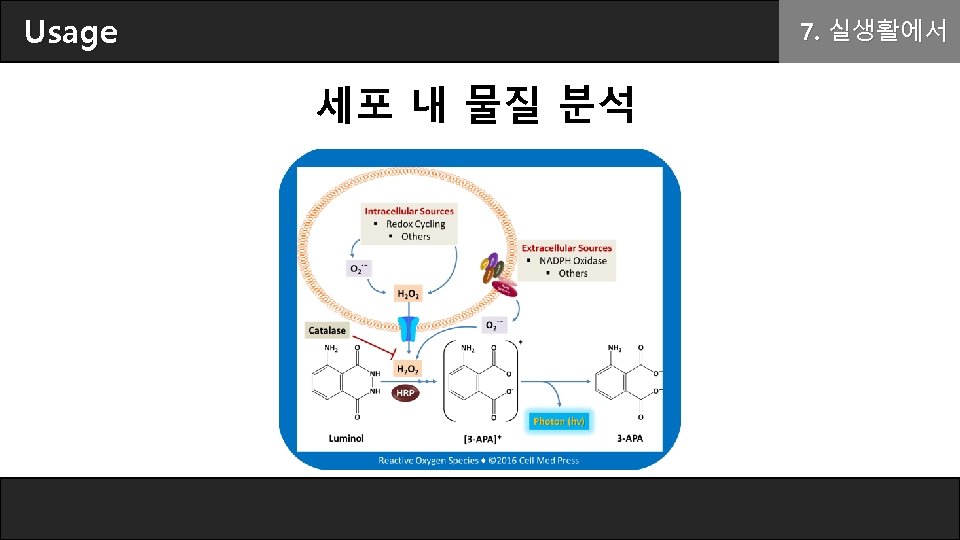
Chemical Mechanism 5. 반응 기전
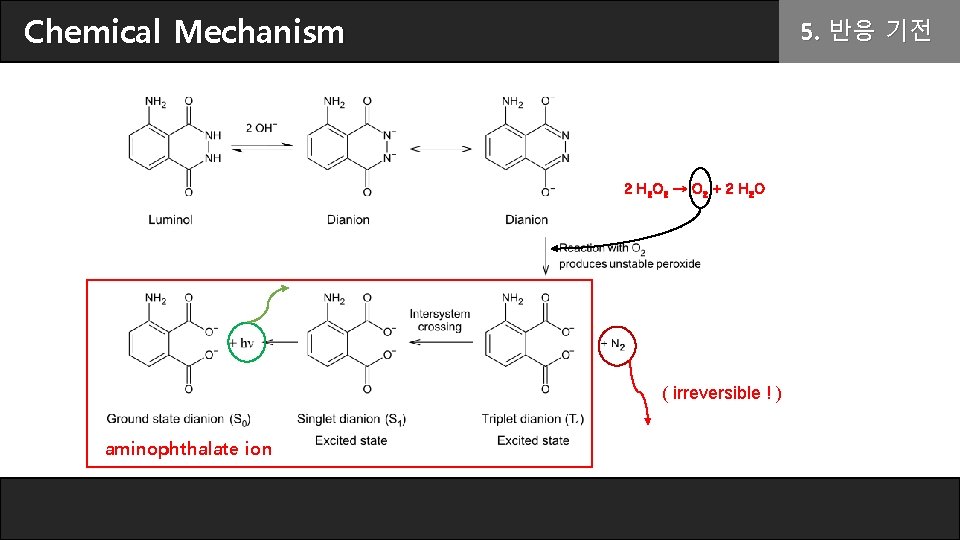
Chemical Mechanism 5. 반응 기전 2 H 2 O 2 → O 2 + 2 H 2 O ( irreversible ! ) aminophthalate ion
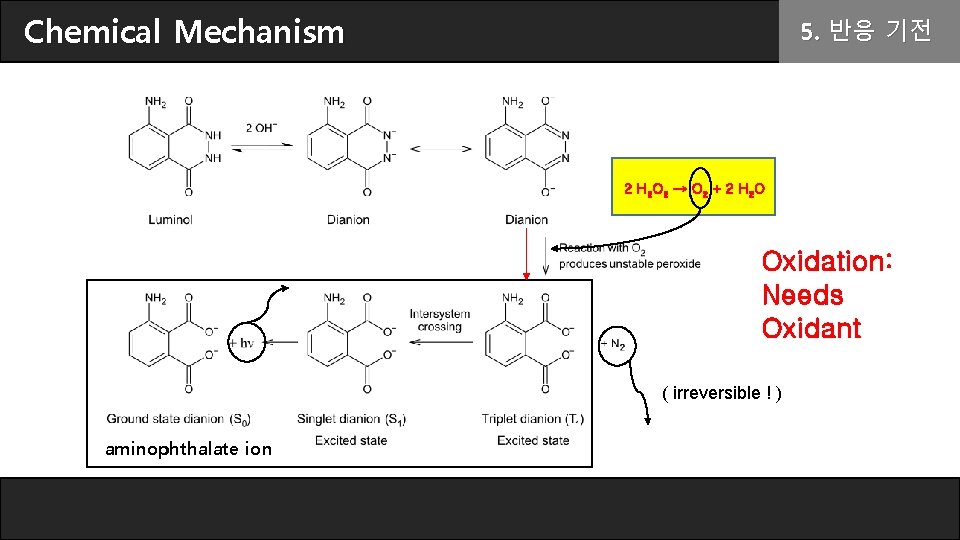
Chemical Mechanism 5. 반응 기전 2 H 2 O 2 → O 2 + 2 H 2 O Oxidation: Needs Oxidant ( irreversible ! ) aminophthalate ion
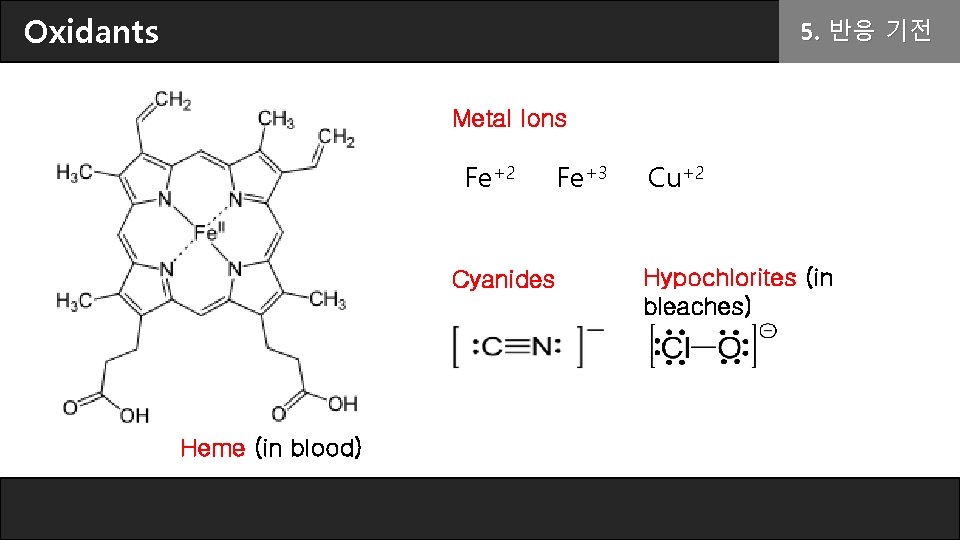
Oxidants 5. 반응 기전 Metal Ions Fe+2 Cyanides Heme (in blood) Fe+3 Cu+2 Hypochlorites (in bleaches)
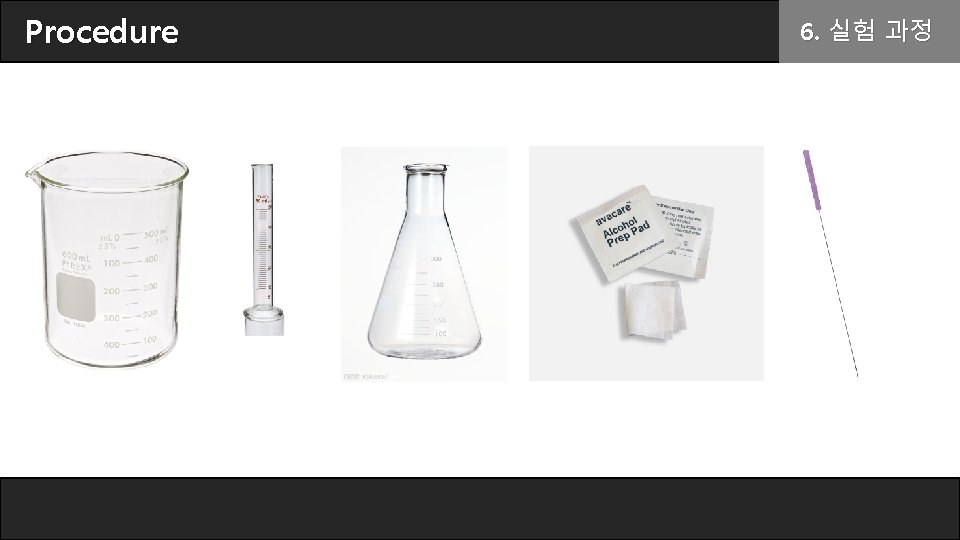
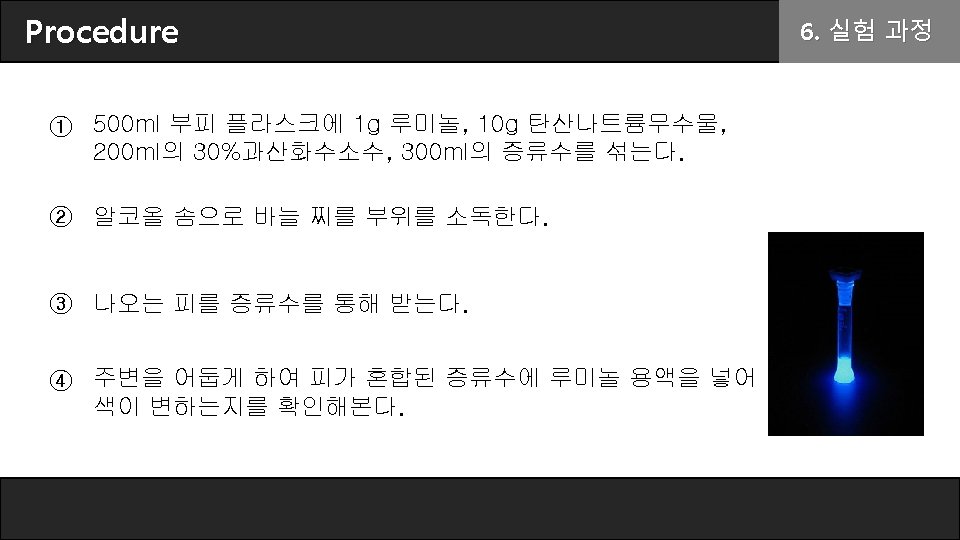
Procedure 6. 실험 과정
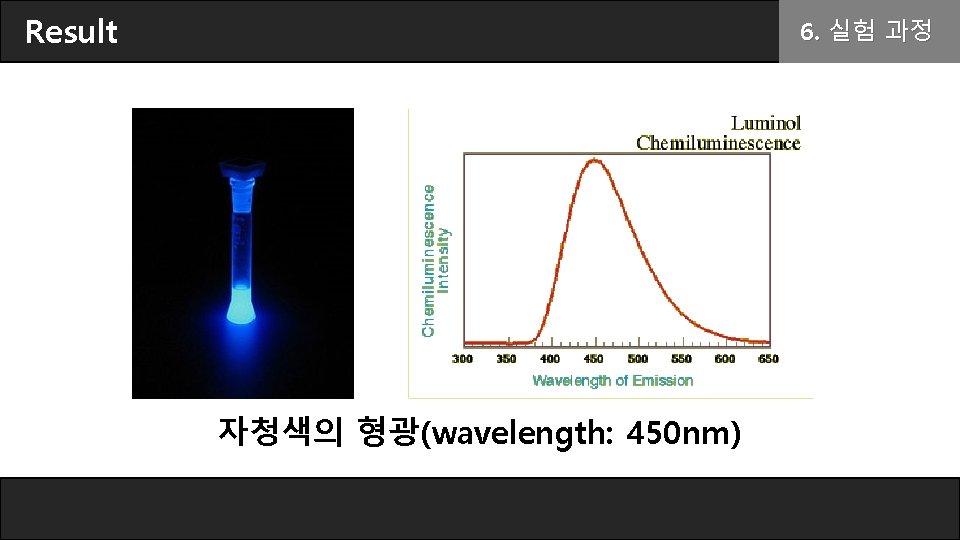
Result 6. 실험 과정 자청색의 형광(wavelength: 450 nm)
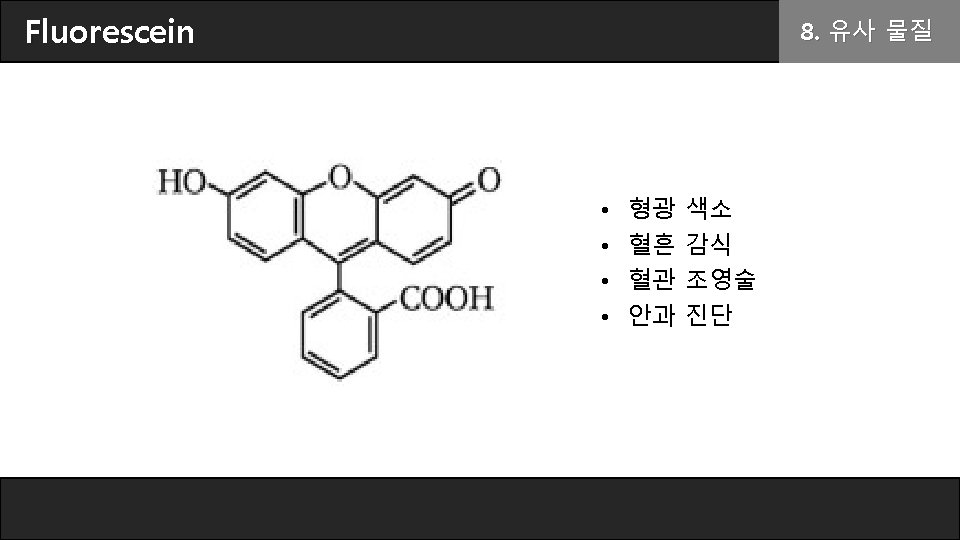
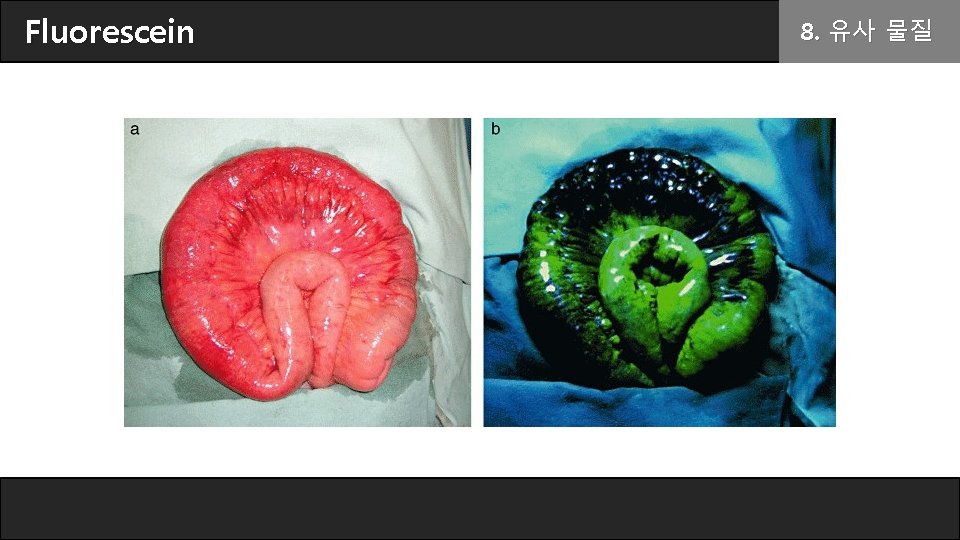
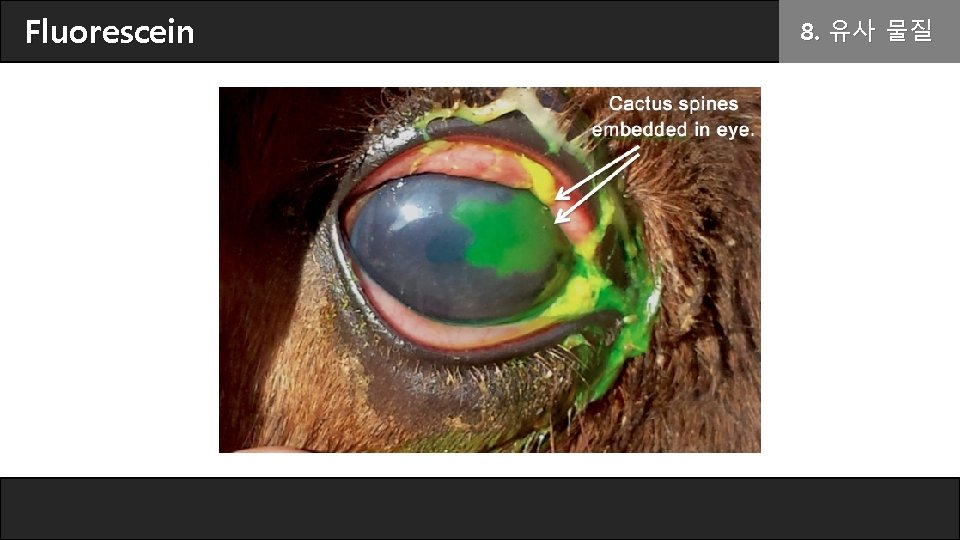
Fluorescein 8. 유사 물질