
Lumber Grading Objectives n To understand the different
Lumber Grading
Objectives n To understand the different ways of grading lumber
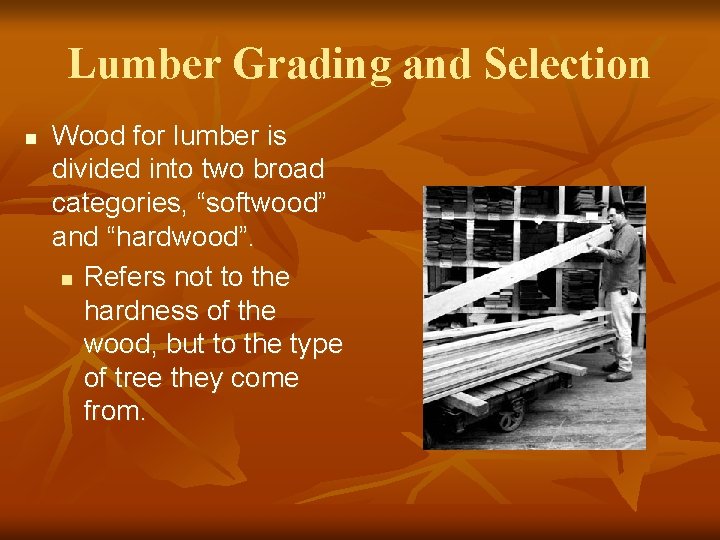
Lumber Grading and Selection n Wood for lumber is divided into two broad categories, “softwood” and “hardwood”. n Refers not to the hardness of the wood, but to the type of tree they come from.

Lumber Grading and Selection n Softwood: Evergreens (mainly) n n Used mostly in construction Hardwood Deciduous trees n Furniture n

Softwood Grading n Softwood grading is based on: n n Appearance, Strength, or Combination of the two. Defects which can affect both appearance and strength include: n n n knots, checks, splits, decay, stains, insect holes
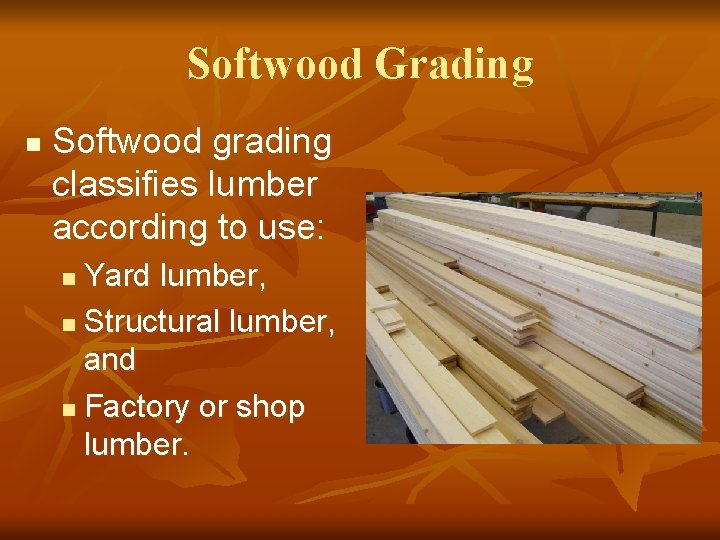
Softwood Grading n Softwood grading classifies lumber according to use: Yard lumber, n Structural lumber, and n Factory or shop lumber. n

Structural lumber Two inches or more in rough lumber thickness and width n Stress tested and used as: n n Joists, Posts, Beams
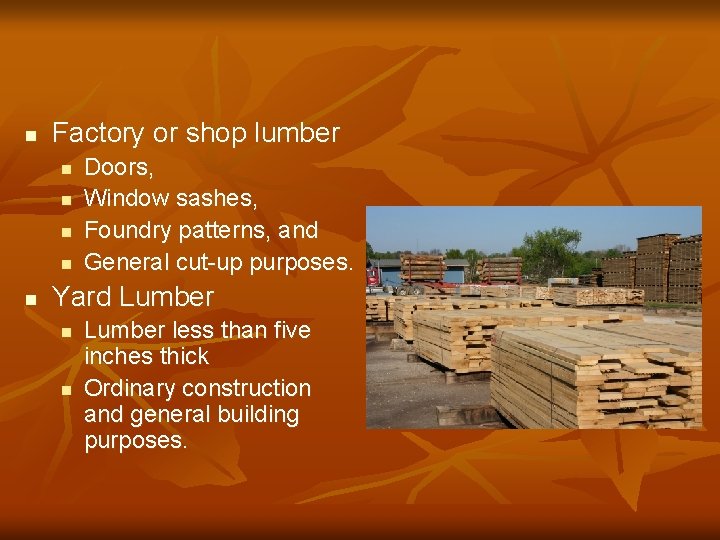
n Factory or shop lumber n n n Doors, Window sashes, Foundry patterns, and General cut-up purposes. Yard Lumber n n Lumber less than five inches thick Ordinary construction and general building purposes.
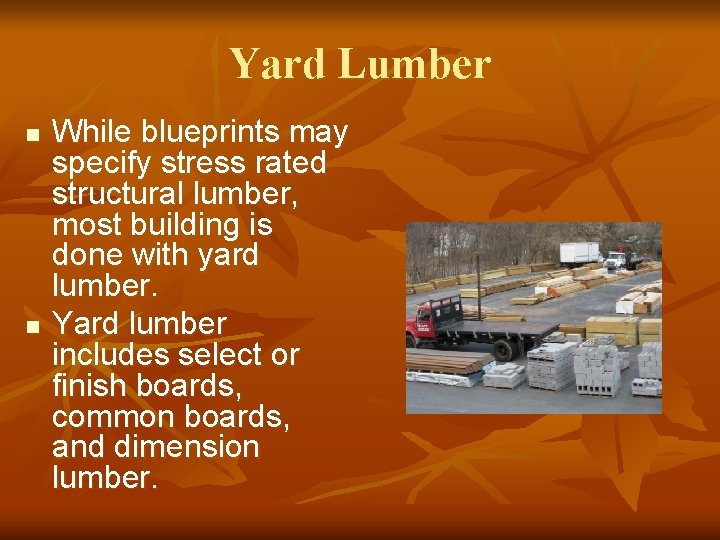
Yard Lumber n n While blueprints may specify stress rated structural lumber, most building is done with yard lumber. Yard lumber includes select or finish boards, common boards, and dimension lumber.
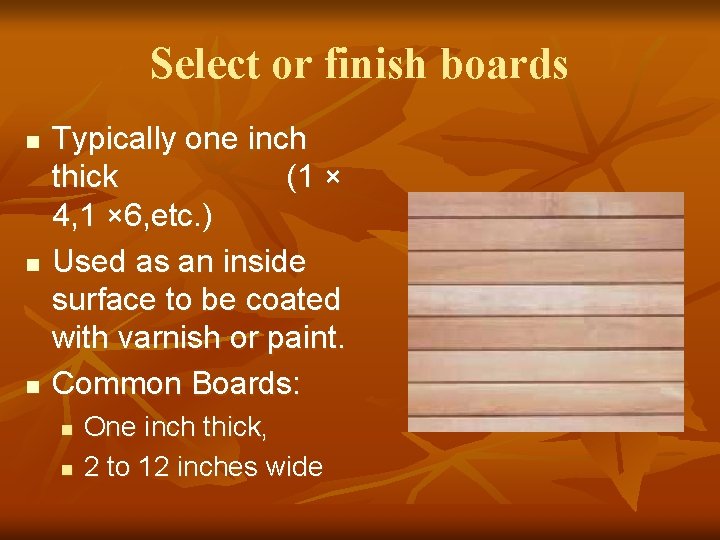
Select or finish boards n n n Typically one inch thick (1 × 4, 1 × 6, etc. ) Used as an inside surface to be coated with varnish or paint. Common Boards: n n One inch thick, 2 to 12 inches wide
Dimension Lumber: Two to five inches thick n Two inches or more wide n Graded on strength and stiffness. n Dimension lumber grades are: n Construction, n Standard, n Utility, n Economy, and n Economy stud. n

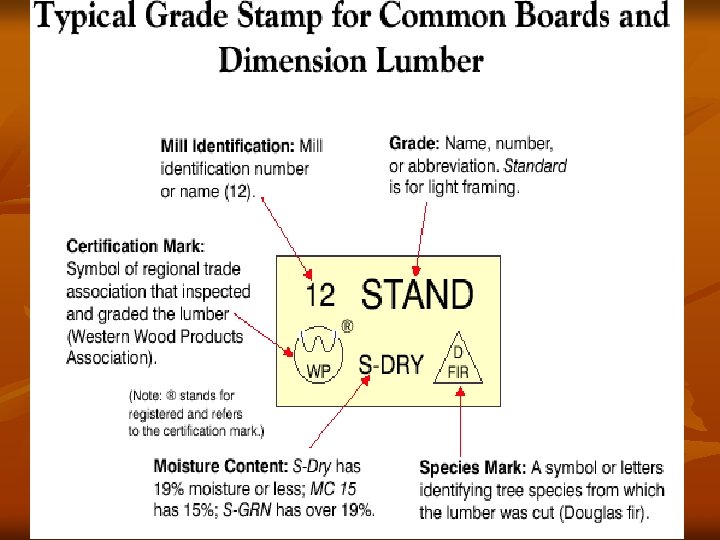
Graded Lumber n Graded lumber will have a grade mark that includes: Grade, n Moisture content, n Species of the tree, n Mill where processing was done, and n Certification mark indicating the association that graded the lumber. n
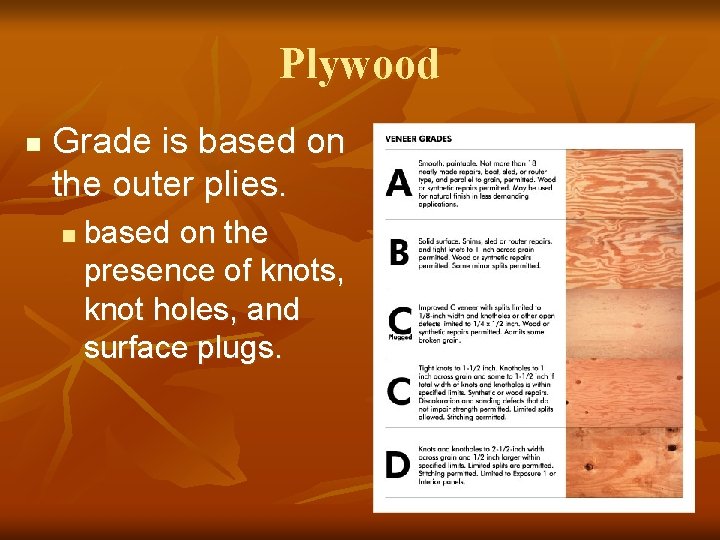
Plywood n Grade is based on the outer plies. n based on the presence of knots, knot holes, and surface plugs.
Selecting Grade to Buy Use the lowest quality of lumber suitable for the purpose. n Inexperienced buyers should depend on the advice of an experienced, reliable lumber yard employee to make grade purchase decisions. n
Matching Lumber to job Requires a knowledge of the characteristics of each species of wood. n What to look for when: n n Siding for a house: n n Good nailing and weather resistant qualities. House framing members: n Strength and stiffness.
Matching Lumber to job n Furniture construction: n Attractive appearance, freedom from blemishes and flaws, desirable wood grain, hardness, and resistance to warping are important.
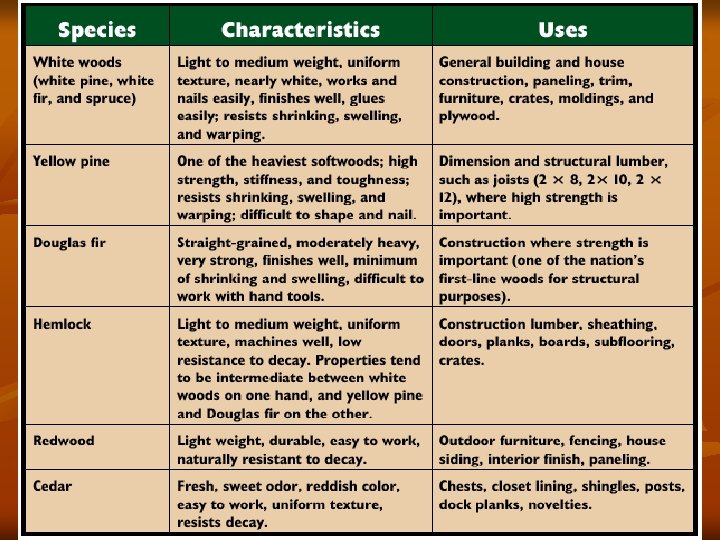
Matching Lumber to job n White woods (white pine, fur, and spruce) and yellow pine: Most popular species used in construction.
Sizing and Storing Lumber
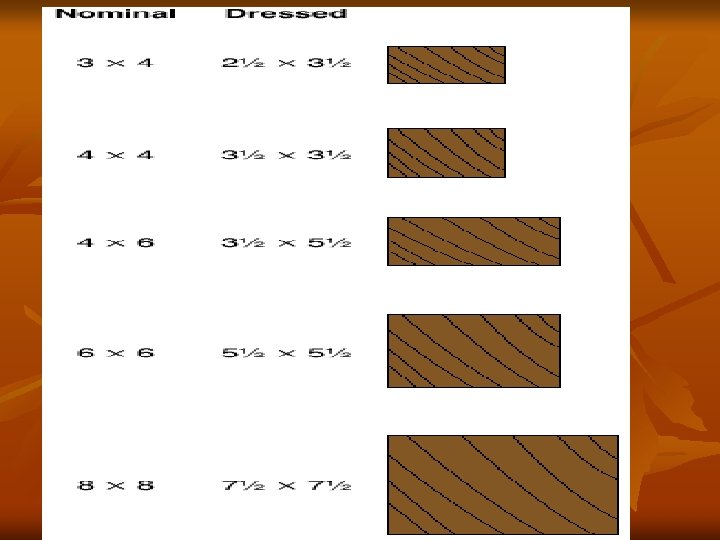
Sizing, Purchasing, and Storing Lumber May be purchased green air dried, or kiln dried. n They may be rough, dressed, or worked lumber. n n Rough lumber: Lumber as it comes from the saw. Most lumber is planed before it is sold. n Planed lumber is also called: Surfaced, Dressed, and Milled. n
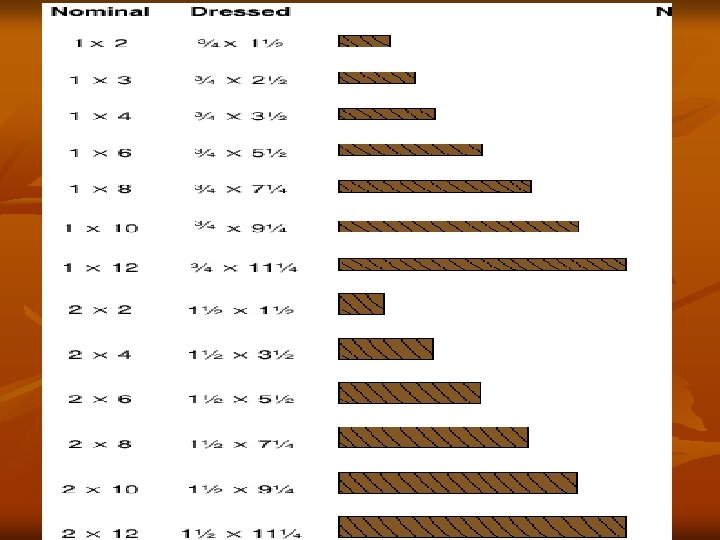
Board Sizes Common boards and dimension lumber is bought and sold by the board foot or per thousand feet. n Board feet = thickness × width × length divided by 12. n Molding and trim boards are sold by the linear feet or running feet, rather than board feet. n
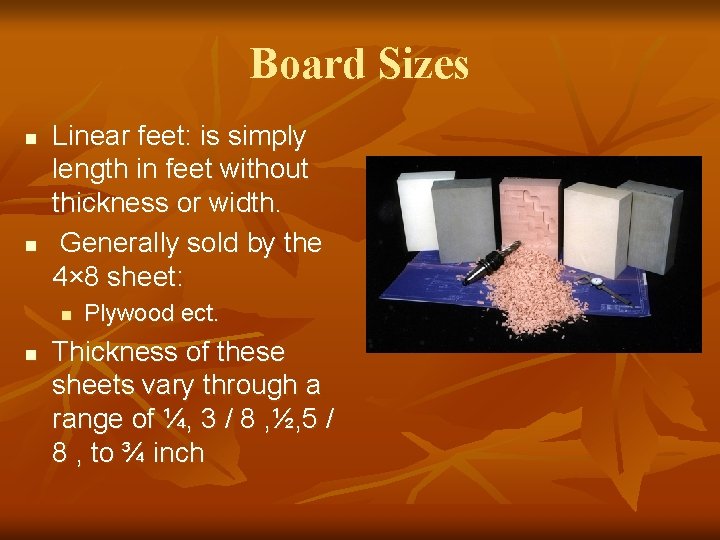
Board Sizes n n Linear feet: is simply length in feet without thickness or width. Generally sold by the 4× 8 sheet: n n Plywood ect. Thickness of these sheets vary through a range of ¼, 3 / 8 , ½, 5 / 8 , to ¾ inch
Ordering Lumber n n Don’t order long in advance of project. If delivered lumber must be stored for a period of time, care should be taken to avoid: n Warping, n Staining, and n Moisture absorption problems.
Ordering Lumber should be neatly stacked using stickers or spacers every few rows to allow air circulation. n If stored outside: n Keep the stack relatively level, n off the ground, and n covered with moisture-resistant covering like plastic. n
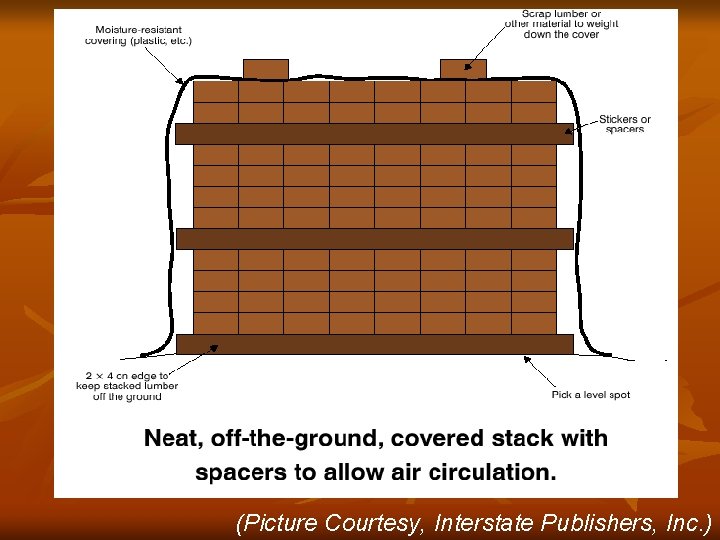
(Picture Courtesy, Interstate Publishers, Inc. )
- Slides: 28