
Luke 15 1 7 The Parable of the
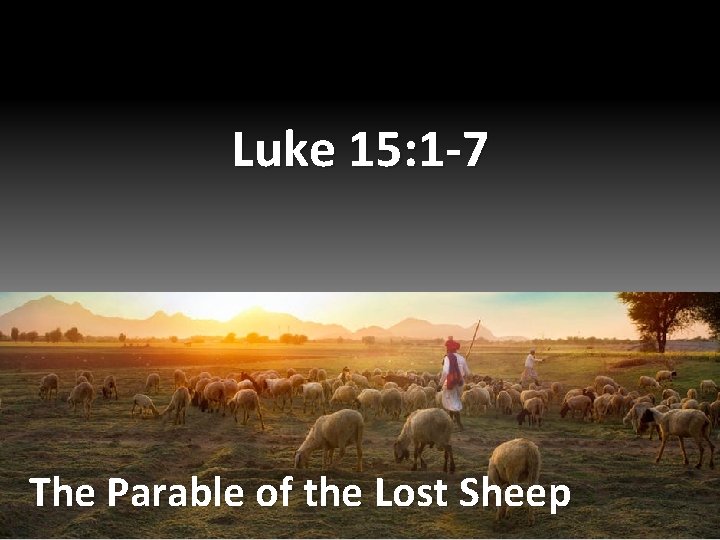
Luke 15: 1 -7 The Parable of the Lost Sheep
I. The Context. (Luke 15: 1 -2). A. Jesus was criticized for His contact with: 1. Tax collectors (Luke 6: 15; Matt. 10: 4; Luke 3: 13; 19: 8). 2. Sinners (John 8: 34; Rom. 3: 23). B. By the Pharisees and Scribes (Matt. 9: 1213). The Parable of the Lost Sheep
II. He spoke a parable to them (Luke 15: 3; Matt. 13: 10 -17). III. “What man of you…” (Luke 15: 4 a; Gen. 1: 26; Heb. 12: 9). The Parable of the Lost Sheep
IV. “…Having a hundred sheep” (Luke 15: 4 b). A. B. C. All people belong to God (prior to sin). Inherited sin is impossible (Matt. 19: 14). The abundance of what survives does not compensate for the absences of what is lost. (Eph. 4: 30). The Parable of the Lost Sheep
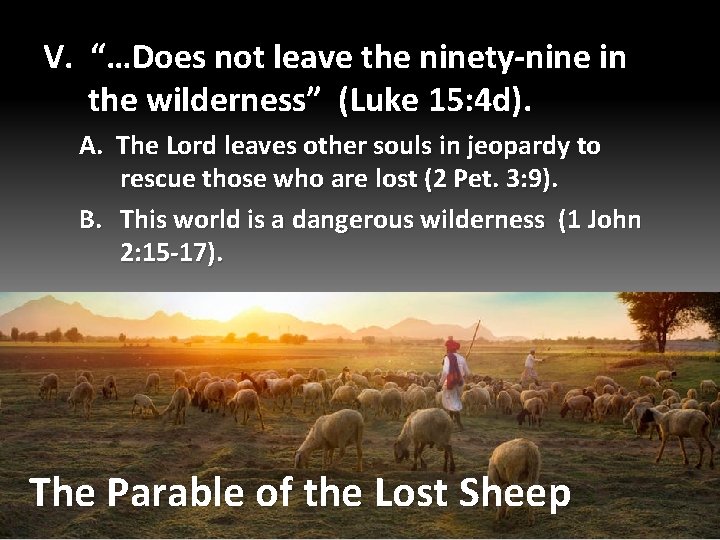
V. “…Does not leave the ninety-nine in the wilderness” (Luke 15: 4 d). A. The Lord leaves other souls in jeopardy to rescue those who are lost (2 Pet. 3: 9). B. This world is a dangerous wilderness (1 John 2: 15 -17). The Parable of the Lost Sheep
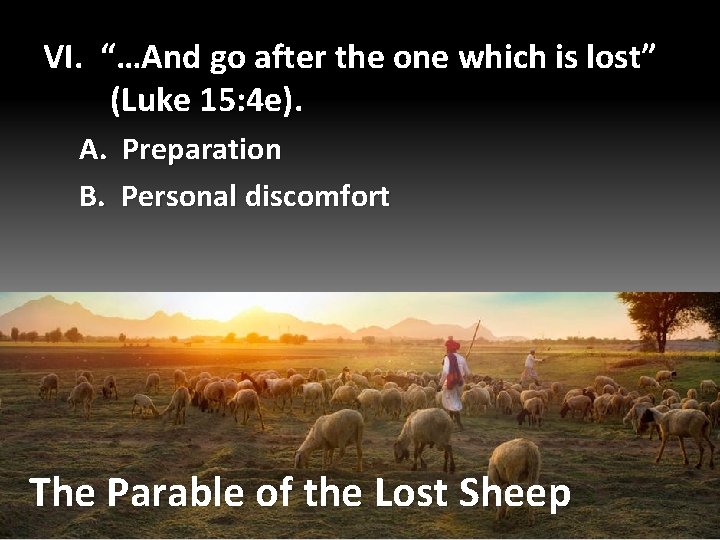
VI. “…And go after the one which is lost” (Luke 15: 4 e). A. Preparation B. Personal discomfort The Parable of the Lost Sheep
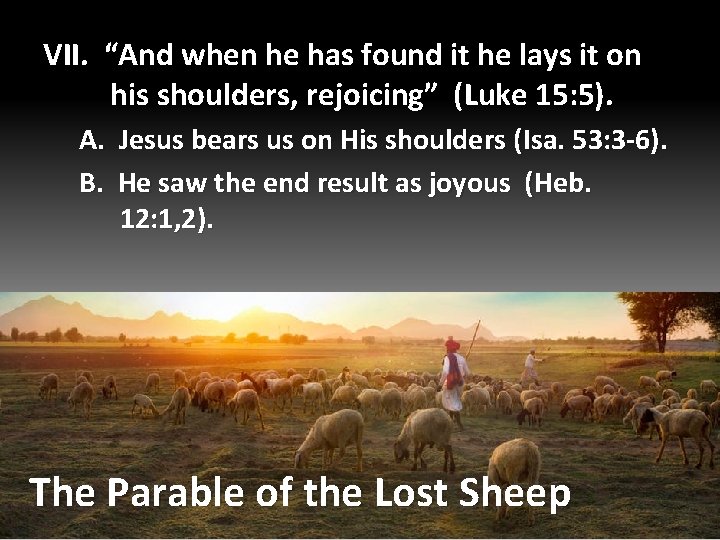
VII. “And when he has found it he lays it on his shoulders, rejoicing” (Luke 15: 5). A. Jesus bears us on His shoulders (Isa. 53: 3 -6). B. He saw the end result as joyous (Heb. 12: 1, 2). The Parable of the Lost Sheep
- Slides: 7