
LTC Advances Infection Prevention and Control Objectives Review
LTC Advances Infection Prevention and Control
Objectives • Review the components of regulation 483. 65 • Discuss the CMS proposed rule changes for 483. 65 and the CMS Infection Control Pilot Project • Describe IC surveillance expectations in LTC • Explain components of an effective antibiotic stewardship program • Identify proven clinical practice tools for recognizing changes in condition • Discuss approaches to improve infection prevention and control practices for the continuum of care in the elderly
1 Regulations
The Regulation § 483. 65 (F 441) “The facility must establish and maintain an infection control program designed to provide a safe, sanitary, and comfortable environment and to help prevent the development and transmission of diseases and infection. ”
And …… The facility must establish an infection control program under which it: • Investigates, controls, and prevents infections in the facility; • Decides what procedures, such as isolation should be applied to an individual resident; • Maintains a record of incidents and corrective actions related to infections. 5
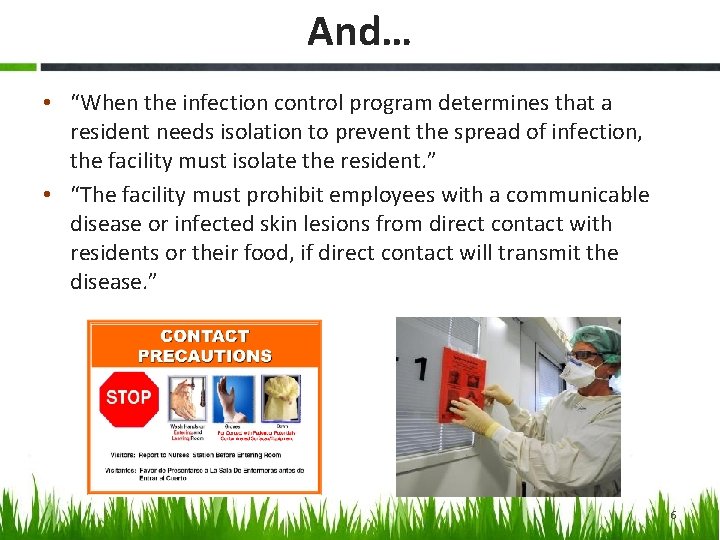
And… • “When the infection control program determines that a resident needs isolation to prevent the spread of infection, the facility must isolate the resident. ” • “The facility must prohibit employees with a communicable disease or infected skin lesions from direct contact with residents or their food, if direct contact will transmit the disease. ” 6
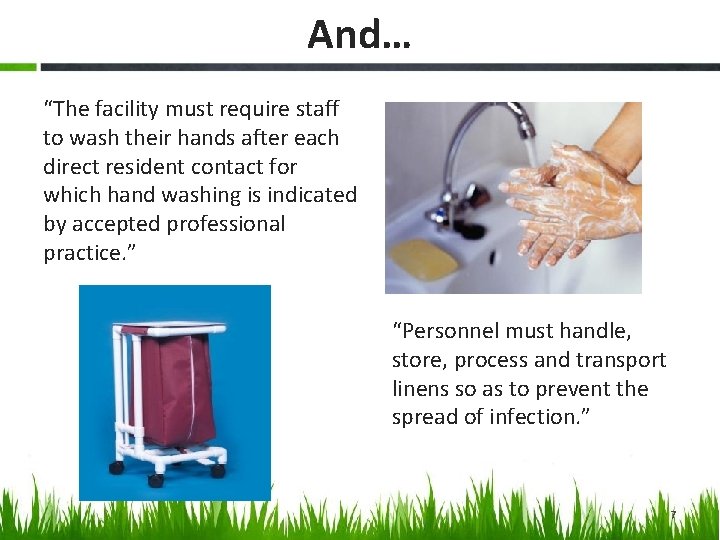
And… “The facility must require staff to wash their hands after each direct resident contact for which hand washing is indicated by accepted professional practice. ” “Personnel must handle, store, process and transport linens so as to prevent the spread of infection. ” 7
2 CMS Proposed Rule and IC Pilot Surveys
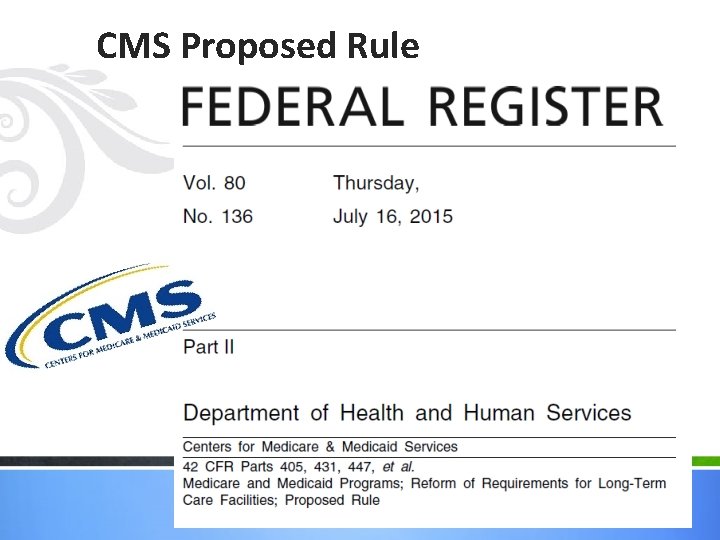
CMS Proposed Rule
Purpose “These proposed changes are necessary to reflect the substantial advances that have been made over the past several years in theory and practice of service delivery and safety. These proposals are also an integral part of our efforts to achieve broad-based improvements both in the quality of health care furnished through federal programs, and in patient safety, while at the same time reducing procedural burdens on providers. ”

U. Infection Control 1 – 3 million HAIs in LTC each year 150, 000 hospitalizations 388, 000 deaths $673 million to $2 billion in costs LTC residents have increased susceptibility to infection • Most common HAIs – UTI, Lower Resp. tract, Skin/soft tissue and Gastrointestinal • • •

Recommendations • Importance of IPC surveillance • Systems to prevent, identify, report, investigate and control infections • Antibiotic stewardship program • IP with specialized training • Periodic (annual) program review • Integration with QAPI
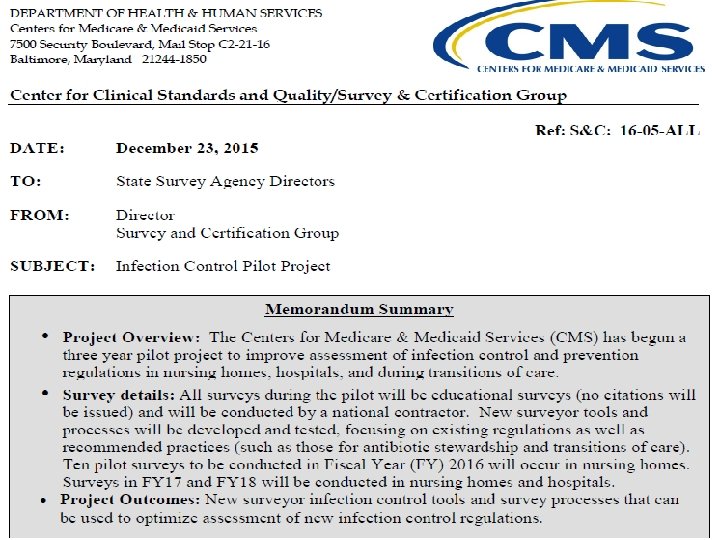
IC Pilot Details • Joint priorities of Center for Disease Control and Centers for Medicare & Medicaid Services • Statistics similar to proposed rule • Importance of core infection control practices • Transitions in care between LTC and acute • Improve surveyor infection control tools and survey processes to optimize infection control

Pilot Project Snapshot 10 in ‘ 16 Educational ‘ 17 & ‘ 18 • National contractor • Existing regulations • Recommended practices • New survey tools • NHSN • LTC & acute care • HAI control • Education
Sharing… • Center selfassessment • IP self-assessment • IP advanced training • Annual center IPC risk assessment • Process surveillance • QAPI • Observations – multidepartmental • Staff knowledge • Adherence to standard precautions • PPE use and hygiene • Injections – “one needle/one syringe/one time” • Antibiotic stewardship program • Communication with other healthcare providers
3 Surveillance
Surveillance Review • Ongoing systematic collection, analysis, and interpretation of outcome specific data for use in planning, implementation, and evaluation of infection prevention and control practices. Ø Process Surveillance – Direct observation of skills, practices and techniques related to infection prevention and control practice Ø Outcome Surveillance – Collection, documentation and review of data for individual infection cases including comparison of the data to standard written definitions of infections 18
Outcome Surveillance Practices • For Surveillance only; highly specific • Applied retrospectively; standardized • Focus on transmissible & preventable infections • Data collection, documentation, rates, trends, analysis, communication, action plans, training, follow-up, revision 19
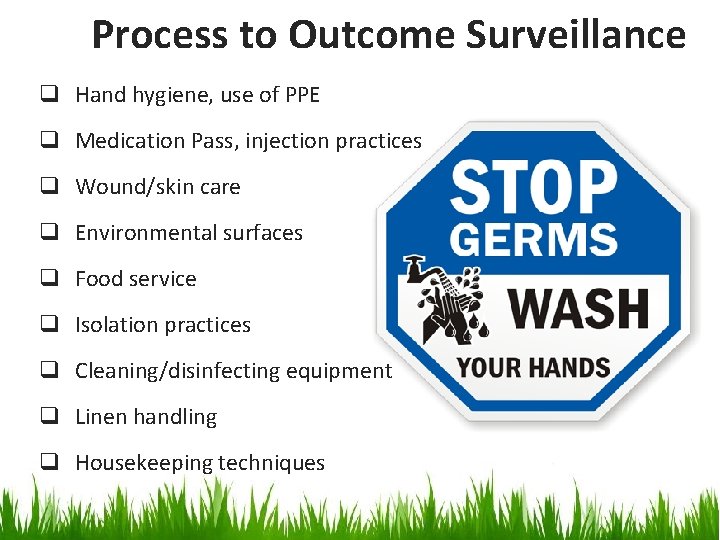
Process to Outcome Surveillance q Hand hygiene, use of PPE q Medication Pass, injection practices q Wound/skin care q Environmental surfaces q Food service q Isolation practices q Cleaning/disinfecting equipment q Linen handling q Housekeeping techniques

Direct Observations 21
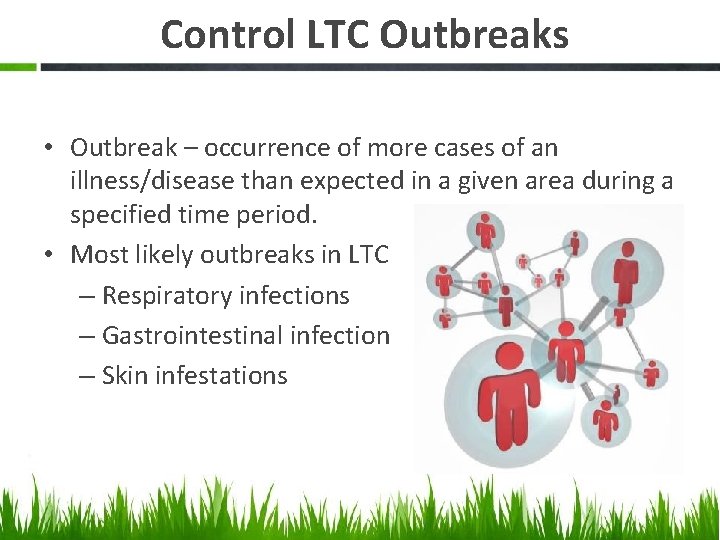
Control LTC Outbreaks • Outbreak – occurrence of more cases of an illness/disease than expected in a given area during a specified time period. • Most likely outbreaks in LTC – Respiratory infections – Gastrointestinal infection – Skin infestations
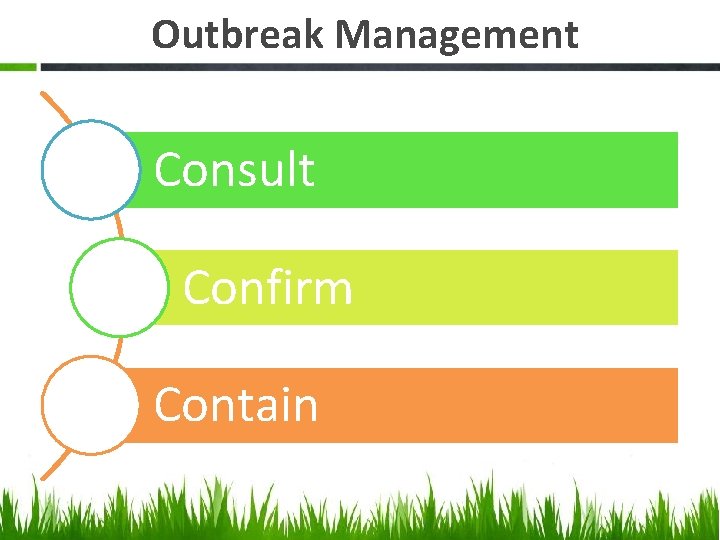
Outbreak Management Consult Confirm Contain
Communicable Diseases • Surveillance system for communicable diseases • Reporting requirements • Employee communicable illnesses • Standard and transmission based precautions • Staff education
4 Antibiotic Stewardship Program
Why? • • National priority Frequently prescribed Prescribed incorrectly Adverse events Quality of care CMS proposed rule Multiple Drug Resistant Organisms
Antibiotic Stewardship • Antibiotic stewardship refers to a set of commitments and activities designed to “optimize the treatment of infections while reducing the adverse events associated with antibiotic use. ” CDC core elements of antibiotic stewardship for nursing homes
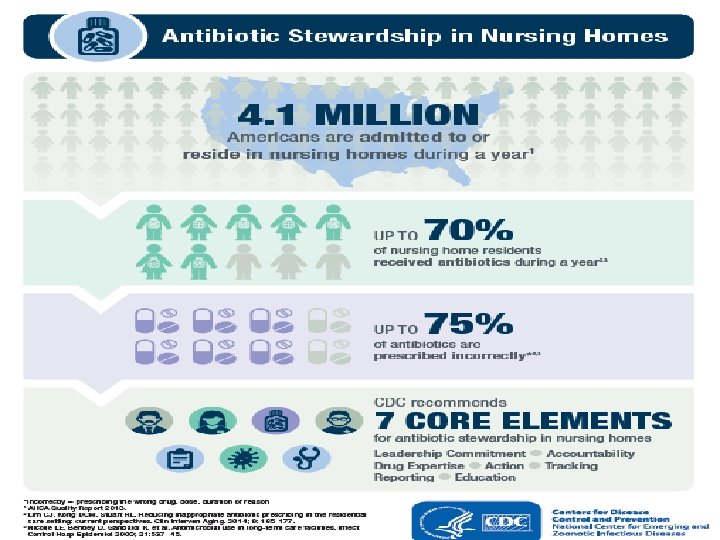
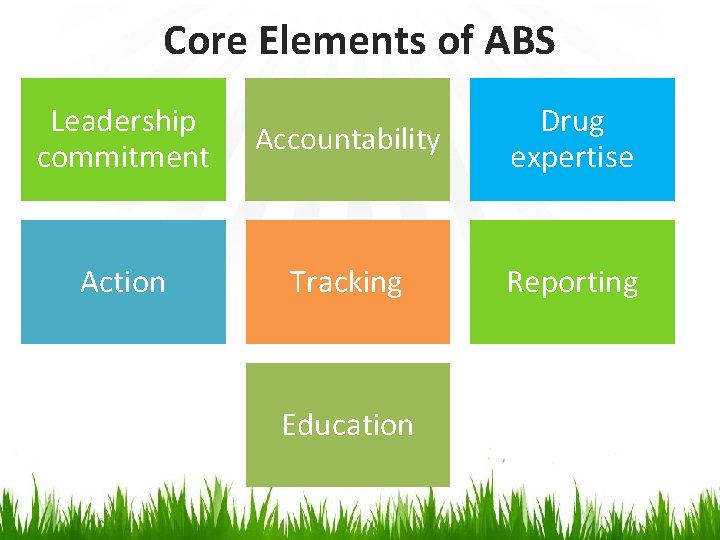
Core Elements of ABS Leadership commitment Accountability Drug expertise Action Tracking Reporting Education
Leadership Commitment • • Write statements Include stewardship – related duties Communicate Create a culture
Accountability • Empower – Medical director – Director of nursing – Infection preventionist • Engage – Consultant pharmacist – Professional partners
Drug Expertise • Establish access to individuals with antibiotic expertise to implement antibiotic stewardship activities. – Consultant pharmacist – Acute care antibiotic stewardship coordinator/leader – Acute care IP
Actions • ABT orders require dose, duration, indication, & treatment site • Follow change of condition algorithms & communication tools • Follow algorithms for appropriate diagnostic testing • “Antibiotic Time Outs” • Follow treatment recommendations for infections • Review antibiotic agents available in the center
Actions • Consultant Pharmacist involvement – Review antibiotic courses for appropriateness of administration and indication – Establish standards for laboratory monitoring for adverse drug events – Review microbiology culture data to assess and guide antibiotic selection
Tracking • Track how and why antibiotics are prescribed • Track how often and how many antibiotics are prescribed • Track adverse outcomes and costs from antibiotics – Rate of C. Difficile infections – Rates of MDROs
Reporting • Facility specific reports on antibiotic use and outcomes – Review with medical director, consultant pharmacist, clinicians, nursing staff • Review antibiogram patterns • Personalized feedback on antibiotic prescribing practices to clinicians
Education • Education regarding antibiotic stewardship addressing the goals, interventions and responsibility of each of these groups – – Clinicians Nursing staff Residents Families
Where to Begin • Checklist for Core Elements – http: //www. cdc. gov/longtermcare/pdfs/coreelements-antibiotic-stewardship-checklist. pdf • Education – Nursing staff – Not all “infections” need antibiotics – Care path algorithms

5 Clinical Practice Tools

Care Paths and File Cards
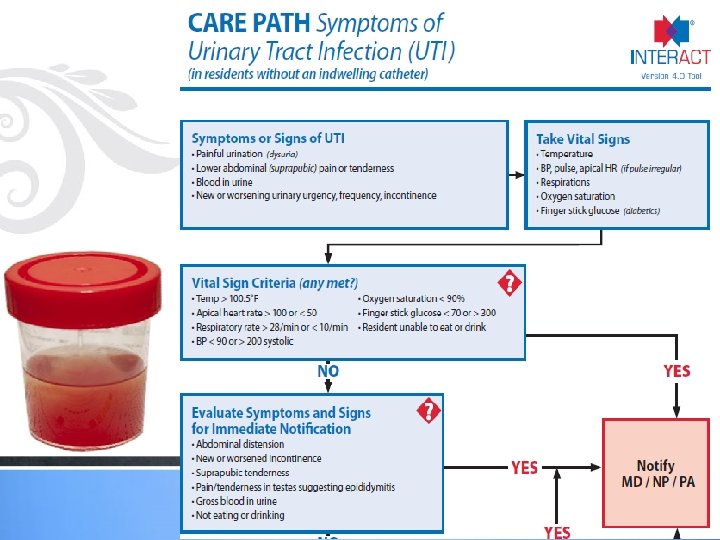
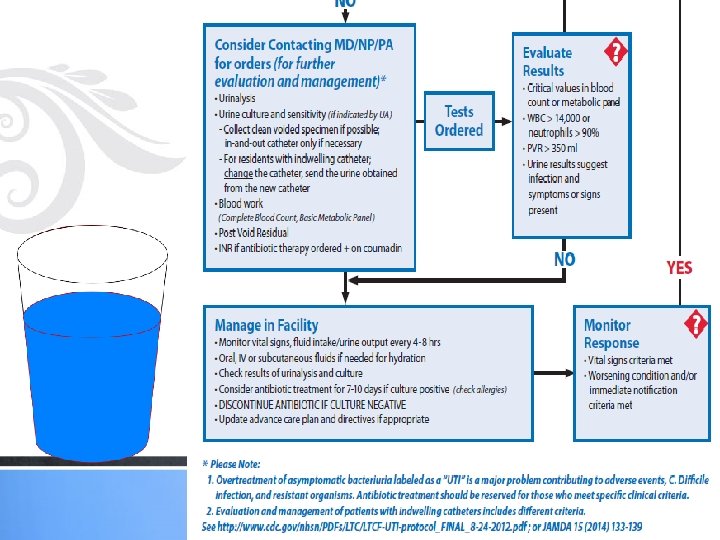
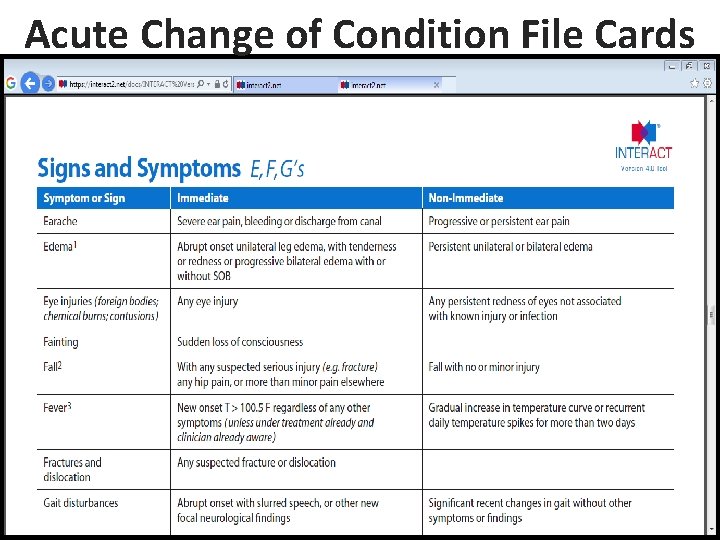
Acute Change of Condition File Cards

Additional Resources
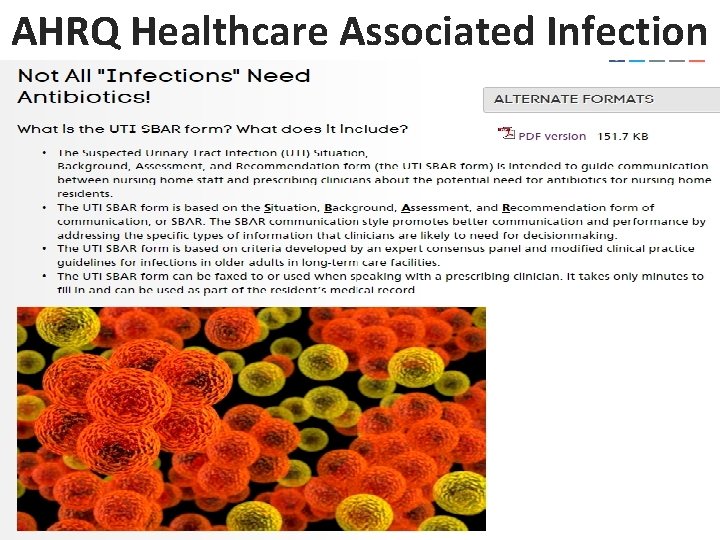
AHRQ Healthcare Associated Infection
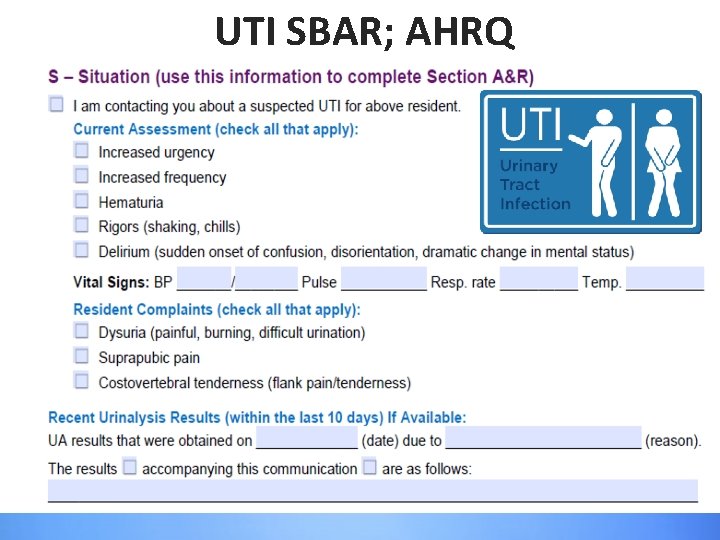
UTI SBAR; AHRQ
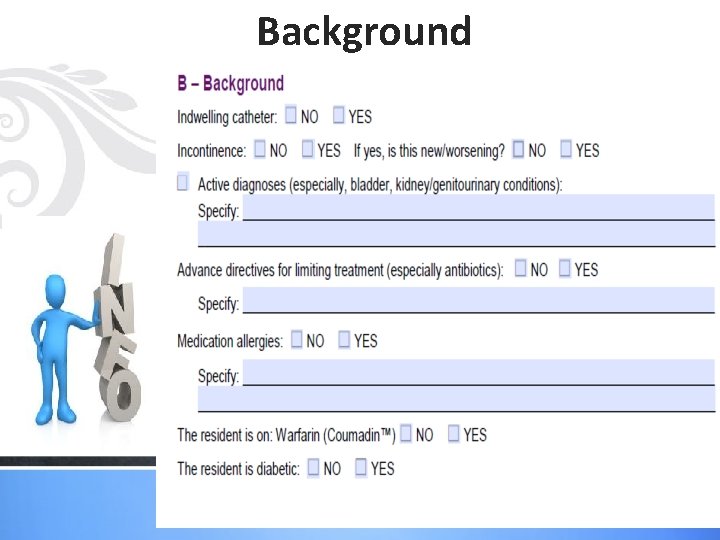
Background
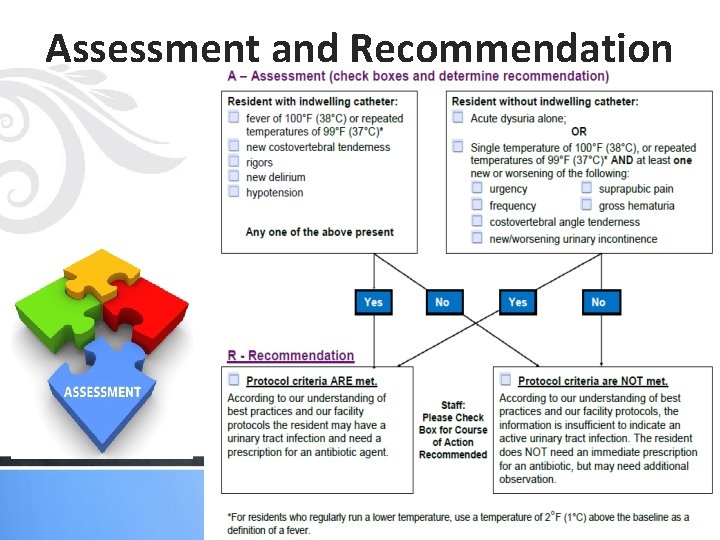
Assessment and Recommendation
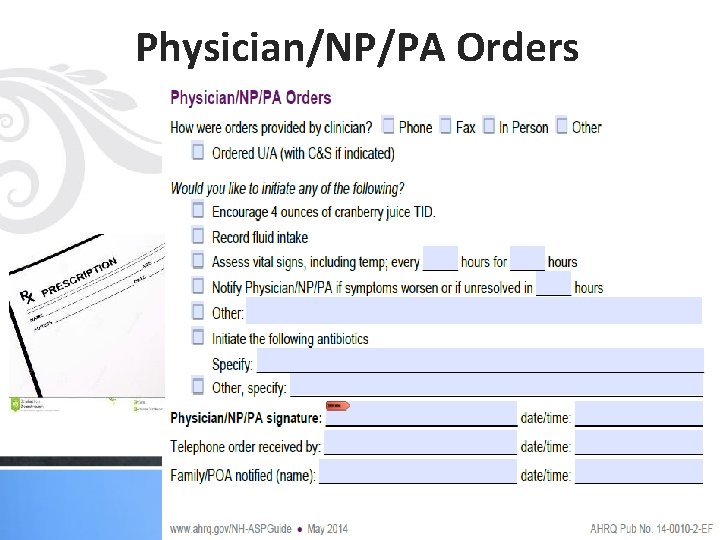
Physician/NP/PA Orders

6 Transitions to Practice
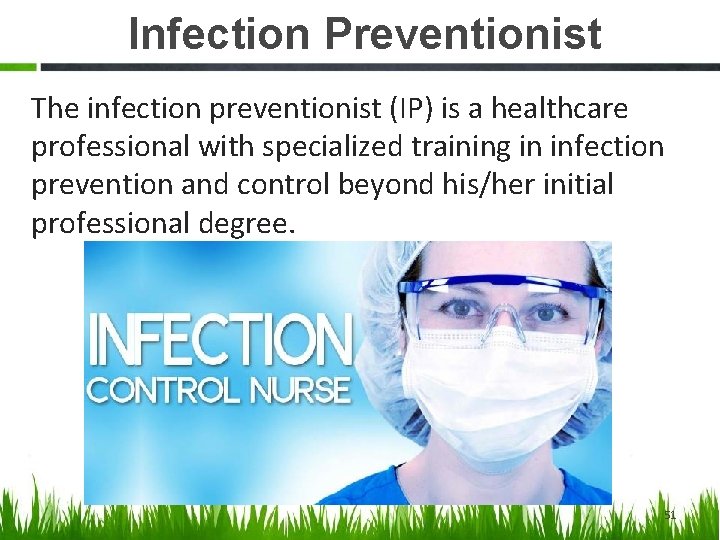
Infection Preventionist The infection preventionist (IP) is a healthcare professional with specialized training in infection prevention and control beyond his/her initial professional degree. 51
Role of the IP • Conducts outcome and process surveillance • Identifies trends • Consults on infection risks • Analyzes data • Implements IPC strategies using QAPI membership and processes • Identifies and manages outbreaks • Reports communicable diseases • Follows the guidelines/guidance from CDC, CMS, OSHA & State 52
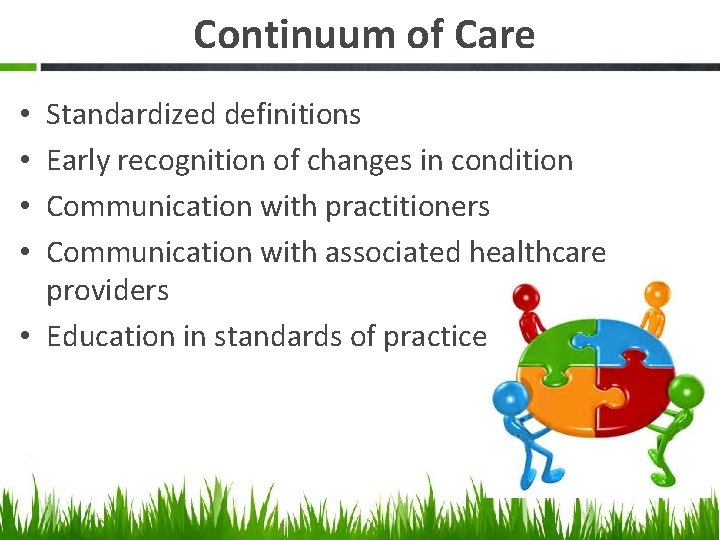
Continuum of Care Standardized definitions Early recognition of changes in condition Communication with practitioners Communication with associated healthcare providers • Education in standards of practice • •
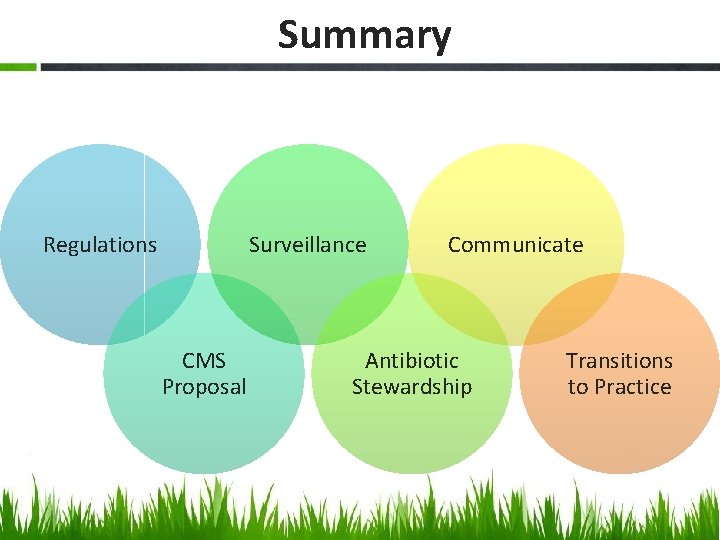
Summary Regulations Surveillance CMS Proposal Communicate Antibiotic Stewardship Transitions to Practice

? Questions? Thank you!
References • • • http: //www. ahrq. gov/professionals/quality-patient-safety/patient-safetyresources/nh-aspguide/module 1/toolkit 1/notallinfections. html http: //www. ahrq. gov/professionals/quality-patient-safety/patient-safetyresources/nh-aspguide/module 1/toolkit 1/utisbar-form. html https: //interact 2. net/ https: //www. cms. gov/Medicare/Provider-Enrollment-and. Certification/Survey. Certification. Gen. Info/Downloads/Survey-and-Cert-Letter-16 -05. pdf https: //www. cms. gov/Medicare/Provider-Enrollment-and. Certification/Survey. Certification. Gen. Info/Downloads/Survey-and-Cert-Letter-15 -46. pdf https: //www. cms. gov/Regulations-and. Guidance/Transmittals/downloads/r 55 soma. pdf http: //www. cdc. gov/hicpac/pdf/isolation/Isolation 2007. pdf https: //wwwn. cdc. gov/nndss/conditions/notifiable/2016/ http: //www. cdc. gov/longtermcare/prevention/antibiotic-stewardship. html Nimalie D. Stone, Muhammad S. Ashraf, Jennifer Calder, Christopher J. Crnich, Kent Crossley, Paul J. Drinka, Carolyn V. Gould, Manisha Juthani-Mehta, Ebbing Lautenbach, Mark Loeb, Taranisia Mac. Cannell, Preeti N. Malani, Lona Mody, Joseph M. Mylotte, Lindsay E. Nicolle, Mary-Claire Roghmann, Steven J. Schweon, Andrew E. Simor, Philip W. Smith, Kurt B. Stevenson and Suzanne F. Bradley (2012). Surveillance Definitions of Infections in Long-Term Care Facilities: Revisiting the Mc. Geer Criteria. Infection Control & Hospital Epidemiology, 33, pp 965 -977. doi: 10. 1086/667743.
- Slides: 56