
LSO 190 Exam and Essay Review Option A



- Slides: 53
LSO 190 Exam and Essay Review
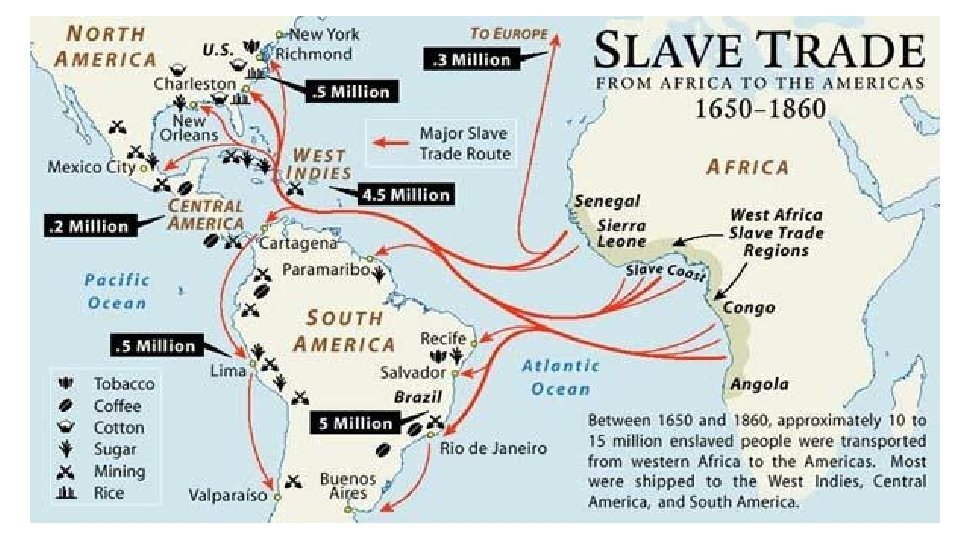
Option A Transatlantic Migrations: • What social and economic forces drove the mass movement of peoples between Europe, Africa and the Americas between the 16 th and the 20 th centuries? • How did this movement of people create new societies in the Americas? Describe, in brief, an aspect of this new society that mingled European, African and American traditions and ideas.
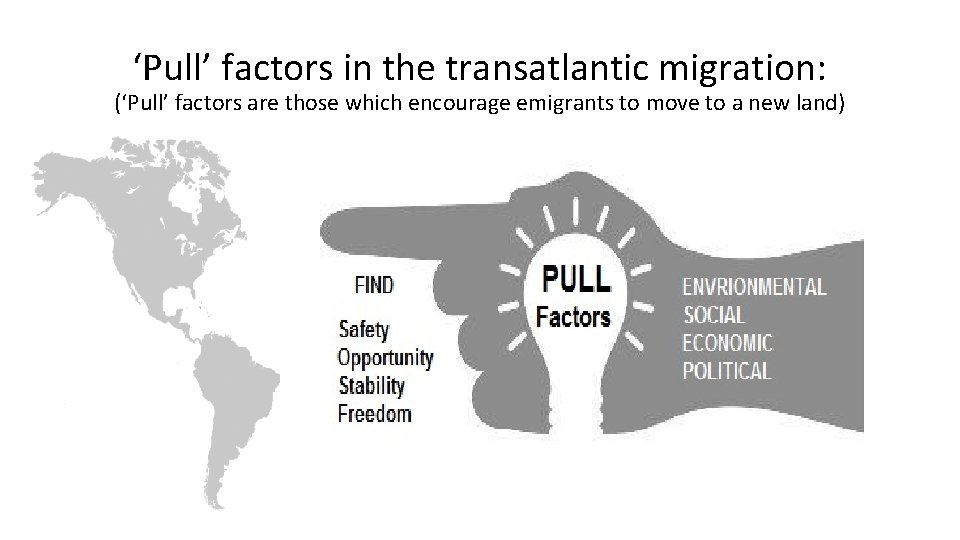
‘Pull’ factors in the transatlantic migration: (‘Pull’ factors are those which encourage emigrants to move to a new land)
Some of the specific ‘pull’ factors drawing Europeans to the Americas: • Land: Only the wealthy owned land in Europe, so this was an opportunity for migrants to become landowners) • Freedom: Moving to a new land gave the potential of freedom to Europeans who might have suffered from political, religious or social persecution • Conquest: For many European mercenary soldiers, the Americas provided an opportunity to conquer territory, and get paid in the process • Missionary Work: For thousands of European Christian missionaries, moving to the Americas provided an opportunity to convert new Christians to the faith • Trade and Commerce: For merchants, craftsmen and traders, moving to the new world provided an opportunity to gain wealth and social prestige and to establish new commercial contacts
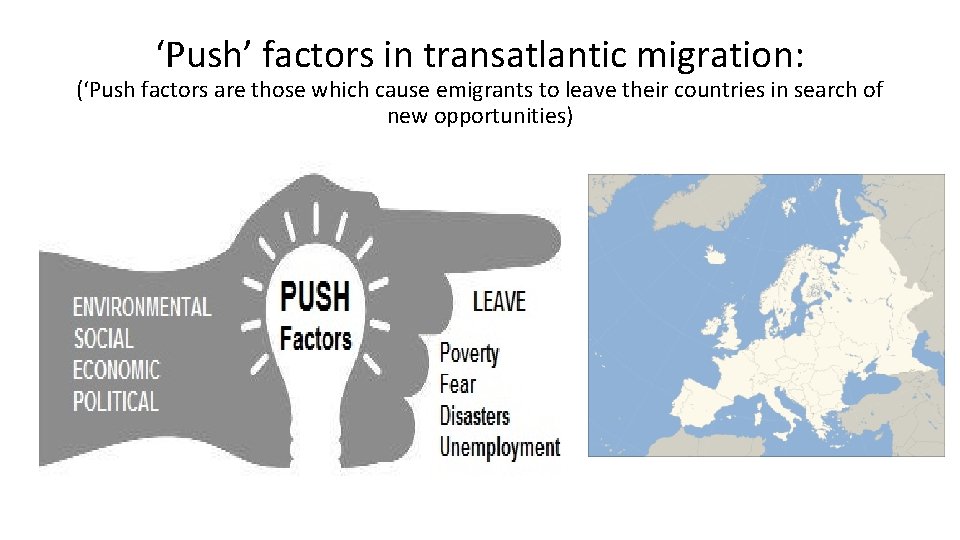
‘Push’ factors in transatlantic migration: (‘Push factors are those which cause emigrants to leave their countries in search of new opportunities)
Some of the specific ‘push’ factors forcing Europeans out of Europe: • Overcrowding in Europe • Persecution of various kinds (religious, political, social) • State encouragement of colonial projects • Unemployment • War • Poverty • Disease
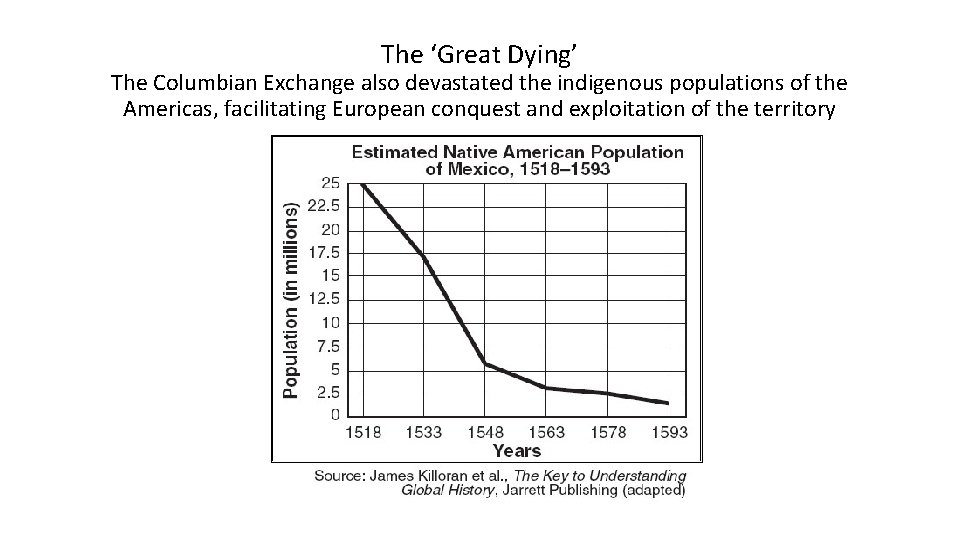
What factors brought Africans to the Americas between the 16 th and the 19 th centuries? • Complete coercion: African slaves were bought as commodities and treated in the most inhumane ways both in their passage to the Americas and in their lives there. There were no ‘push’ or ‘pull’ factors in their movement to the Americas- they were taken by force. • They were needed in increasing numbers to provide labour for the emerging ‘super commodities’ of the age- cotton, sugar, coffee, rice, tobacco and rum. • European colonialists did not use indigenous labour for this primarily because a large portion of the indigenous population died from Eurasian diseases within decades of the arrival of the Spanish
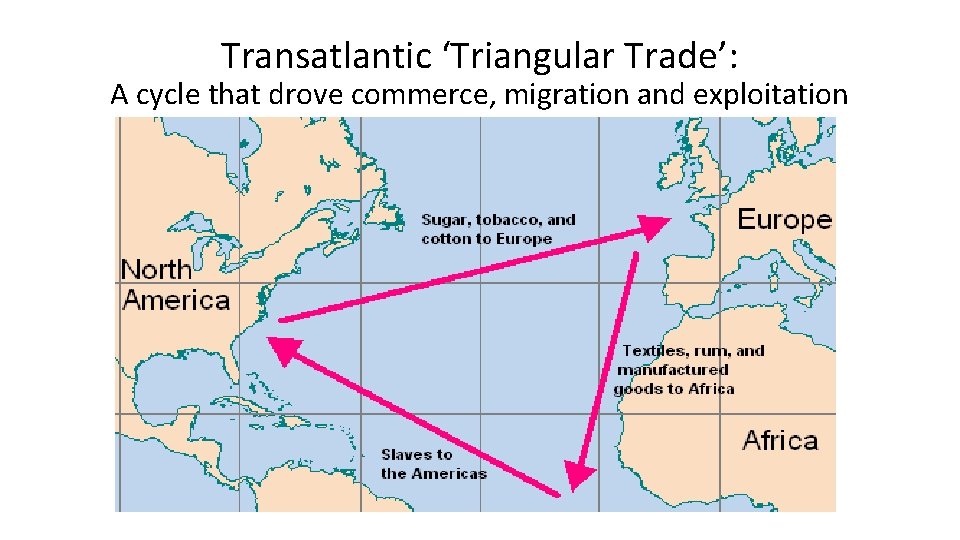
Why was the slave trade so prevalent? • Slaves represented the cheapest form of labour in a system that required increasing numbers of labourers • Slave trading itself became a lucrative business from the 16 th to the 19 th centuries • Falling trans-Atlantic shipping costs made procuring slaves even more possible (Improved technology in crossing the Atlantic made shipping slaves cheaper) • Clearly, morality and human compassion were completely absent
Transatlantic ‘Triangular Trade’: A cycle that drove commerce, migration and exploitation
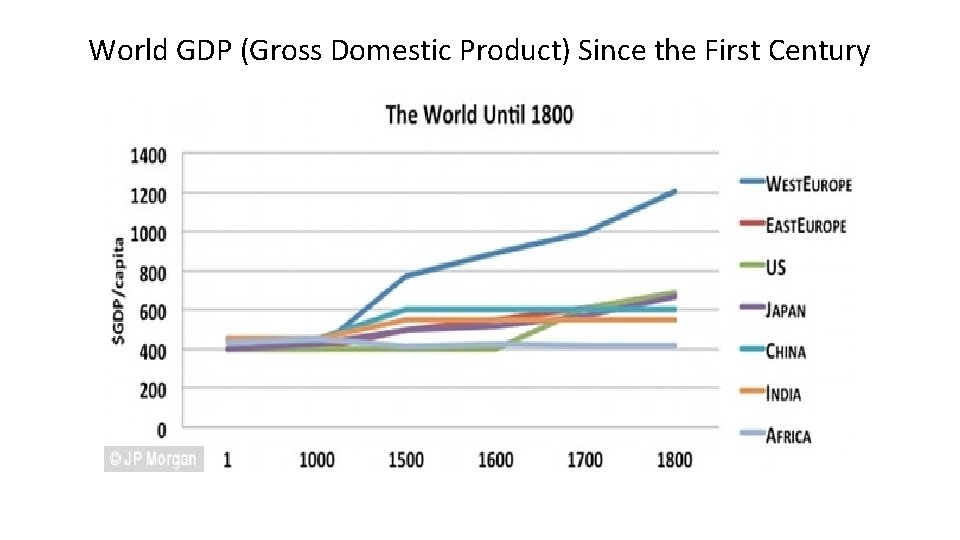
World GDP (Gross Domestic Product) Since the First Century
How did this movement of people create new societies in the Americas? Describe, in brief, an aspect of this new society that mingled European, African and American traditions and ideas. • This mixture of three distinct civilizations (European, African and indigenous American) created a complex and new civilization that included the ideas, customs, traditions and cultures of all of these groups. Europeans acted as the imperial masters in this context, suppressing both African and indigenous cultural forms where they emerged, but over time this proved to be impossible. • The Americas had a European population of about 1. 4 million in the year 1700, with an African population of about 12 million. • This created a situation where Europeans tightly controlled the lives of slaves, and instituted severe punishments for even the slightest transgression.
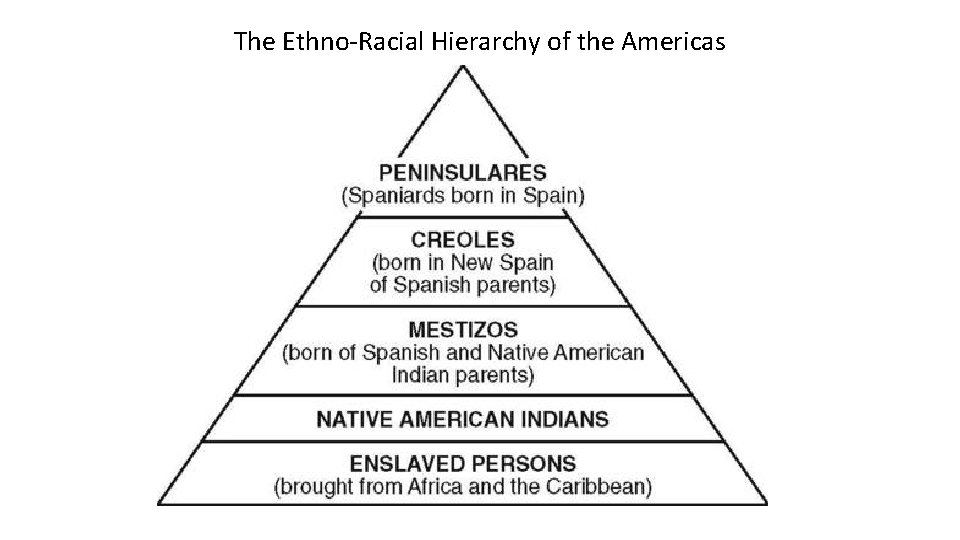
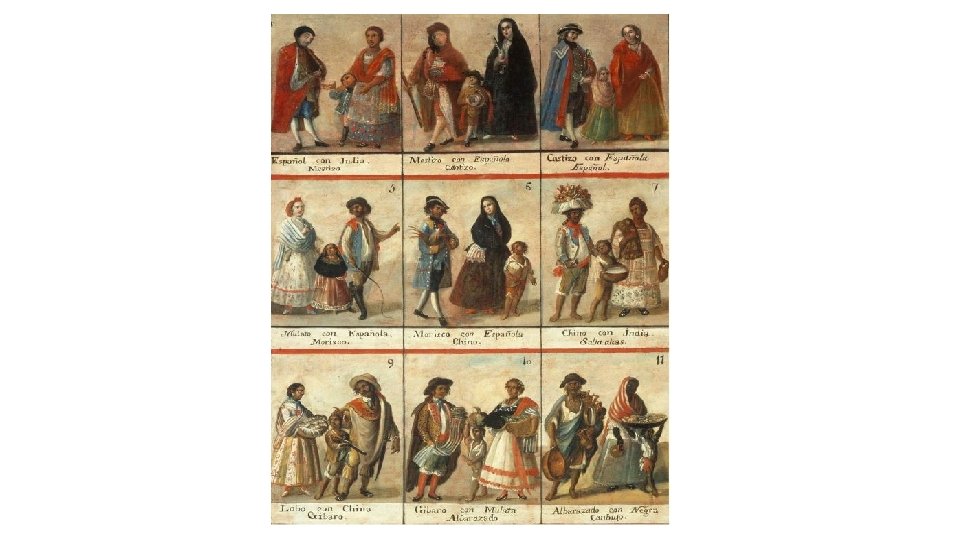
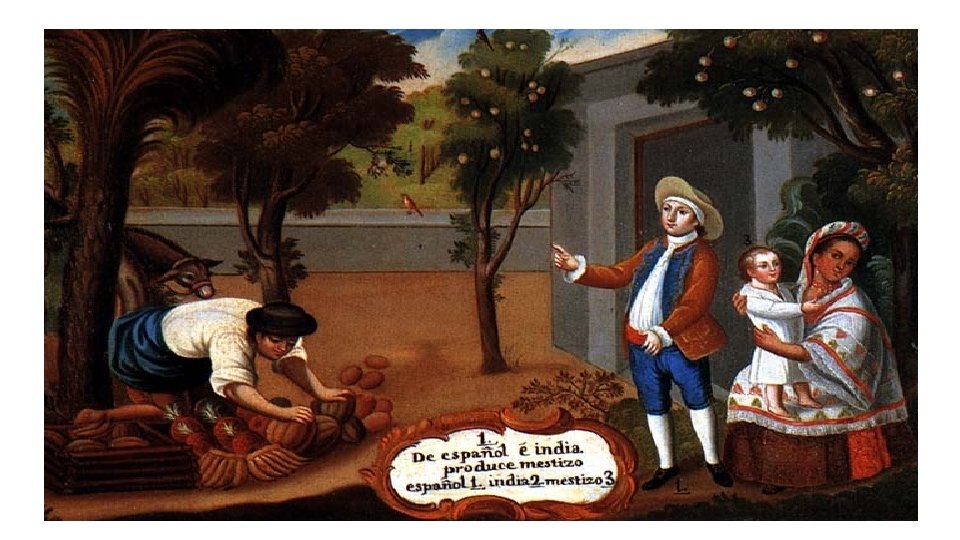
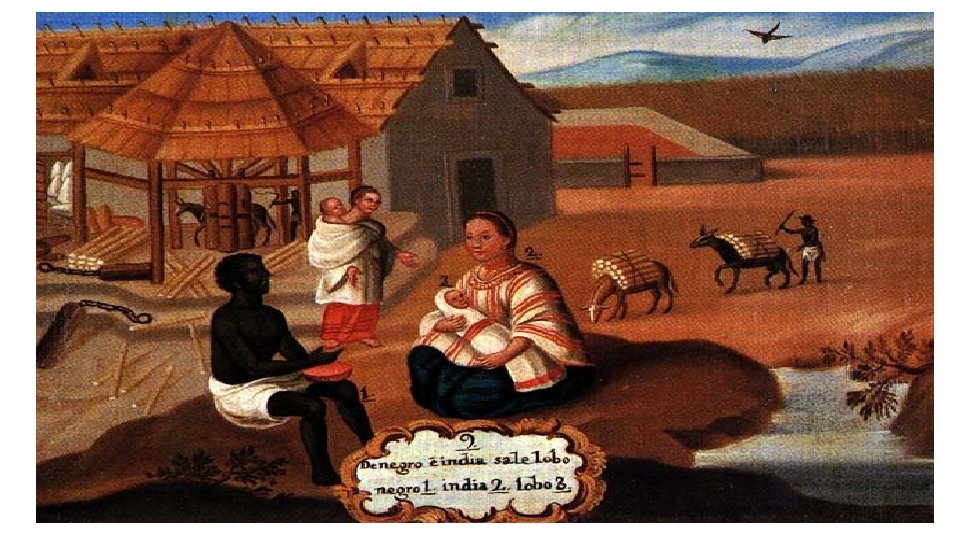
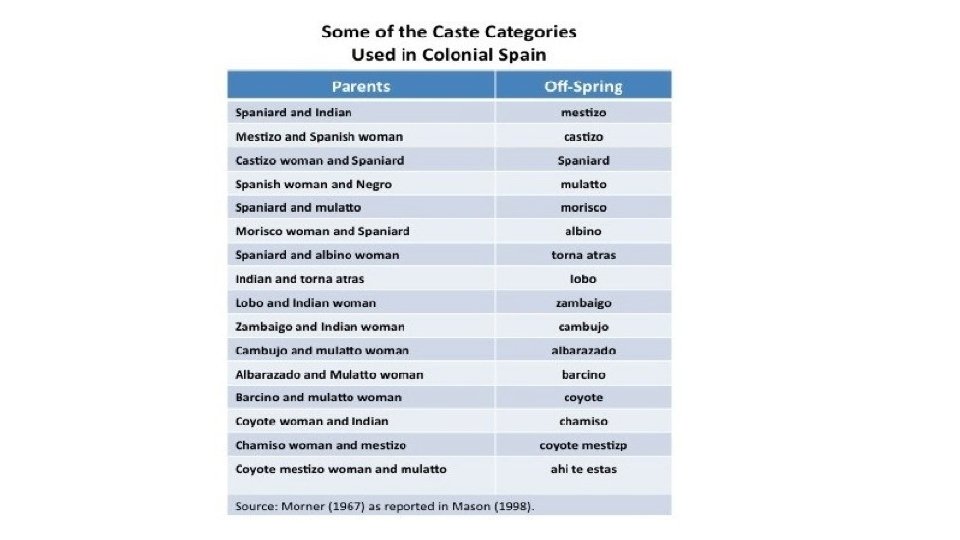
The Ethno-Racial Hierarchy of the Americas
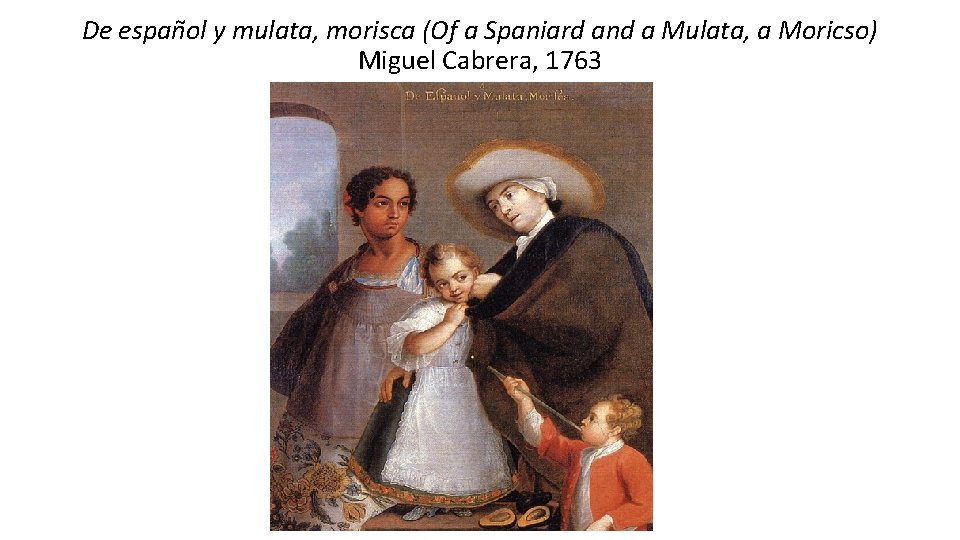
De español y mulata, morisca (Of a Spaniard and a Mulata, a Moricso) Miguel Cabrera, 1763
What types of institutions ruled these new colonies? • European institutions and ideas, mainly. • European laws, customs, systems of government and forms of faith dominated. • Land was controlled by Spanish and Portuguese colonials through the encomienda system, where the Spanish king granted a plot of land to the colonial ruler, and that ruler essentially ‘owned’ the indigenous and African slaves on his territory. The encomienda system replicated the feudal system that had existed in medieval Europe, except the slaves now could never earn their freedom.
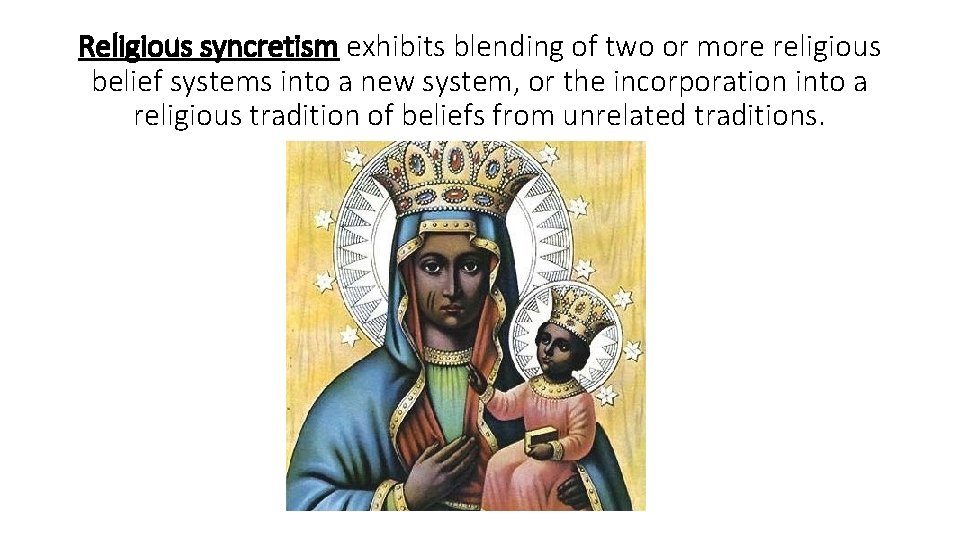
How was religion transplanted to the Americas? • Spanish and Portuguese colonizers imposed Catholic Christianity on the populations they had conquered or enslaved, and often claimed that God approved of their conquest of the Americas as it would make new Christians for the faith. • Thousands of priests, nuns, and members of religious orders moved to the Americas to conduct the difficult work of bringing Christianity to indigenous and African populations. • What emerged was a ‘syncretized’ religion which melded traditional Christianity with the pre-existing beliefs of the indigenous and African populations
Religious syncretism exhibits blending of two or more religious belief systems into a new system, or the incorporation into a religious tradition of beliefs from unrelated traditions.
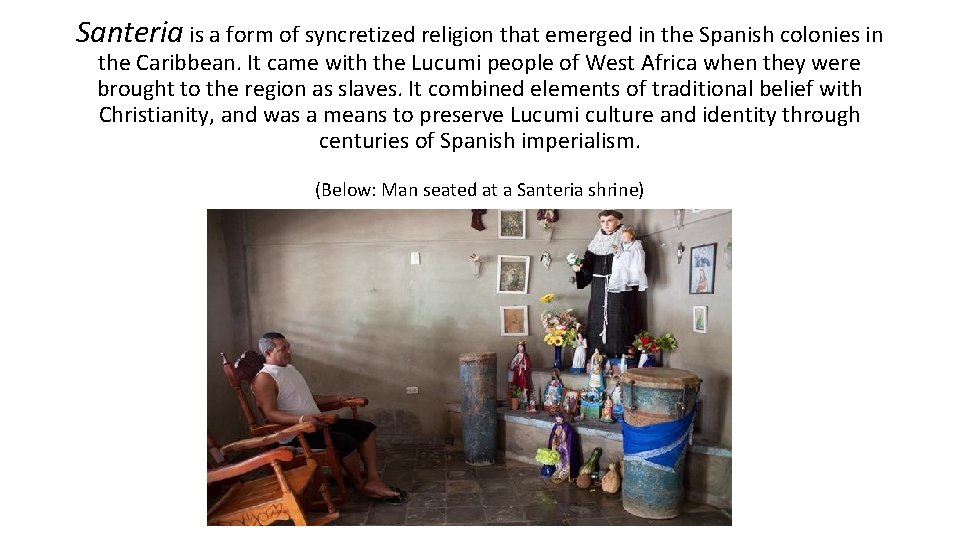
Santeria is a form of syncretized religion that emerged in the Spanish colonies in the Caribbean. It came with the Lucumi people of West Africa when they were brought to the region as slaves. It combined elements of traditional belief with Christianity, and was a means to preserve Lucumi culture and identity through centuries of Spanish imperialism. (Below: Man seated at a Santeria shrine)
Option B: Eurasian Migrations: • What social and economic forces drove the mass movement of peoples throughout Siberia and Asia between the 16 th and the 20 th centuries? • How did this movement of people create new societies in Russia and Asia? Describe, in brief, an aspect of this new society that mingled Russian, Siberian, and Chinese traditions and ideas.
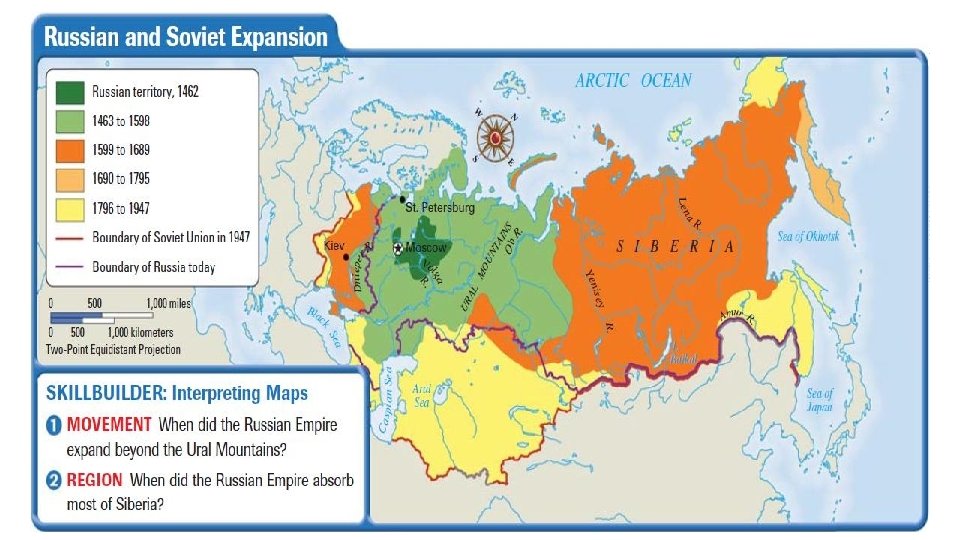
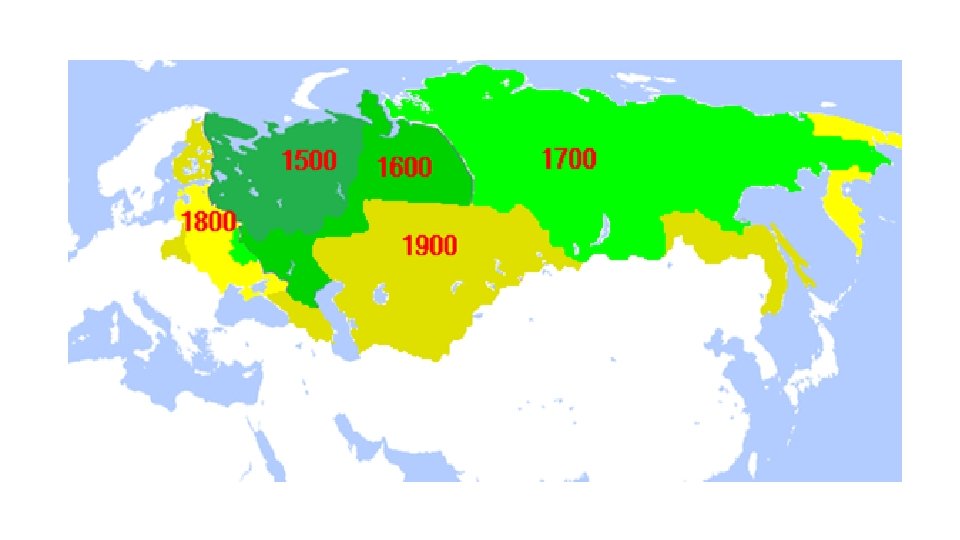
What ‘push’ and ‘pull’ factors were bringing Russians into Siberia between the 17 th and 19 th centuries? • The pursuit of economic gain (salt, gold, fur, copper). Animal furs had a huge global market. • The chance to own land • Poverty and unemployment • War • Religious and social persecution • State encouragement for migration
Was this Russian migration similar to Spanish patterns in the Americas? Yes • Like in the Americas, there was a displacement of indigenous peoples • The natural environment was exploited • Coerced labour was used (Peasants were also brought from the West to do hard labour in Siberia- they remained ‘serfs’, or indentured slaves, for centuries. • Indigenous peoples died from exposure to new strains of disease from the West • Russian migrants imposed their own cultural forms and ideas onto conquered territories (language, laws, customs, religion)
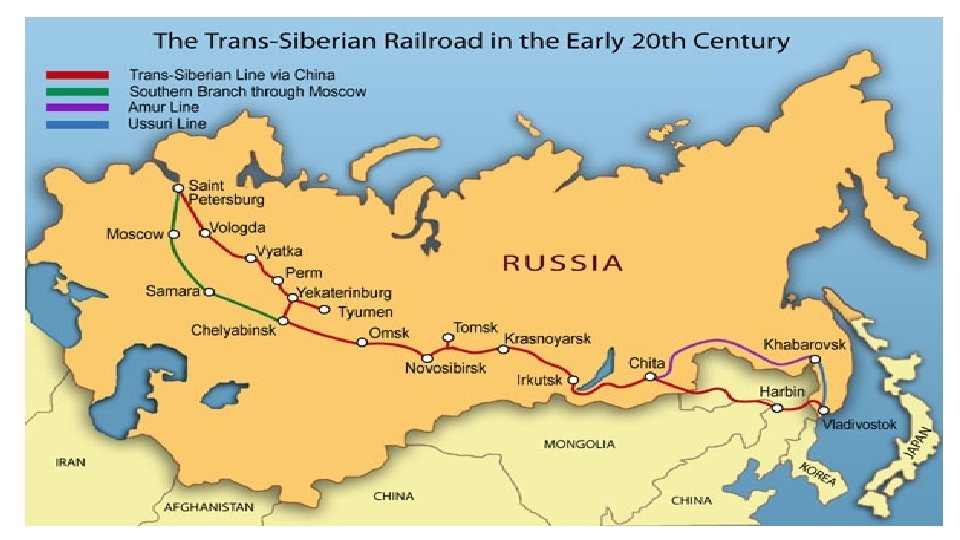
How did Russian imperialism transform these societies? • Russian forms of governance and social organization were introduced • The ‘Yasak’ system was introduced, whereby conquered groups had to pay tribute to the Russian Tsar (or ‘emperor’) • Tribal leaders who participated in the Yasak system became the new nobility of these regions, and remained powerful for centuries • The Russian feudal system, where landowners owned their peasant labourers, was introduced throughout Siberia. • Russian religion (Orthodox Christianity) was imposed on the populations of the East, as well as the Russian language. • With the completion of the Trans-Siberian Railway in 1891, Russian penetration into Siberia was complete.
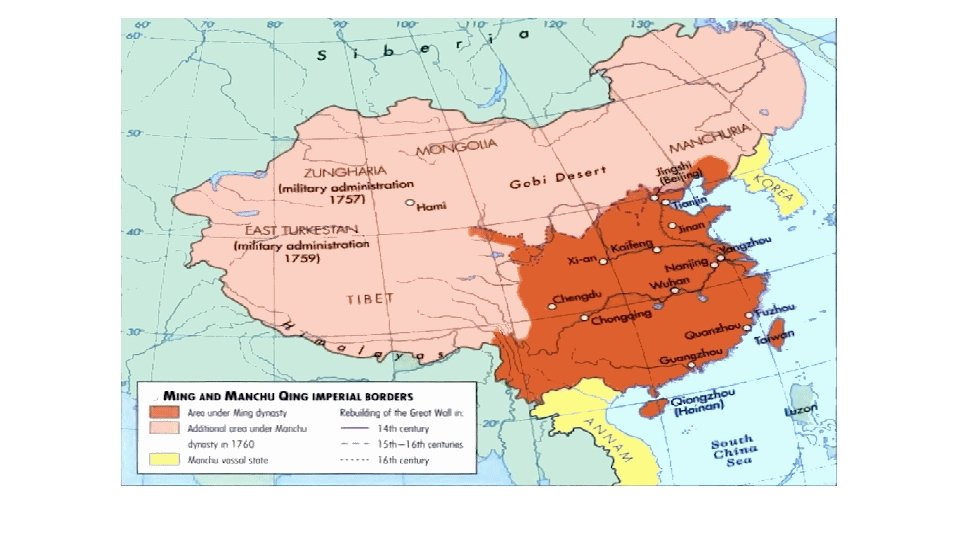
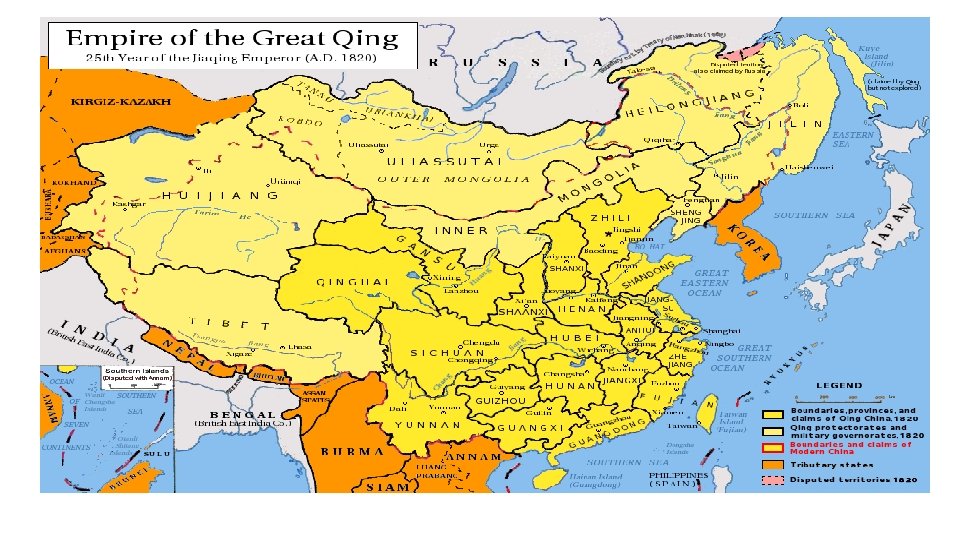
What did Chinese migration patterns look like in the early modern period? • Emigrants flowed out of China in two distinct directions: towards southeast Asia, to pursue commercial activities, and towards Mongolia, Turkmenistan and Tibet, where the Chinese emperors had plans for imperial expansion • In this sense, Chinese out-migration was both organic and state sponsored
Why was this emigration occurring? • After the 1620 s, the Chinese emperor began to lift restrictions on foreign trade (Middle Kingdom idea waning) • Chinese emigrants began to move to Indonesia, Vietnam, the Philippines, and Thailand, seeking economic opportunity • In the 1640 s, northern Manchu forces overthrew the Ming emperor, forcing thousands of Chinese loyal to the Ming ruler to leave for Taiwan, Korea, Thailand Malaya • By 1800, almost a million Chinese had spread throughout Asia, bringing with them their customs, traditions and ideas
What other factors were driving this emigration out of China? • Poverty and overcrowding in Chinese cities • War and instability • ‘Chain migration’, where Chinese emigrants would follow those who had already gone to Thailand, Vietnam, Korea, etc. • Economic opportunity • Chinese imperial expansion, where the Qing emperors needed Chinese to populate new regions that were being conquered (Tibet, Mongolia) • The Chinese state also forced criminals into exile
Option C: Ecological Exchanges: • Why was the biological exchange (known as the ‘Columbian Exchange’) so beneficial to European colonizers? Discuss with reference to TWO distinctive factors. • Why were the raw resources of the New World so valuable to the European colonial empires? (Discuss with reference to TWO of the following resources: timber, maize, cassava, potatoes). • How else did the exploitation of ecological and natural resources hasten Europe’s rise to global power?
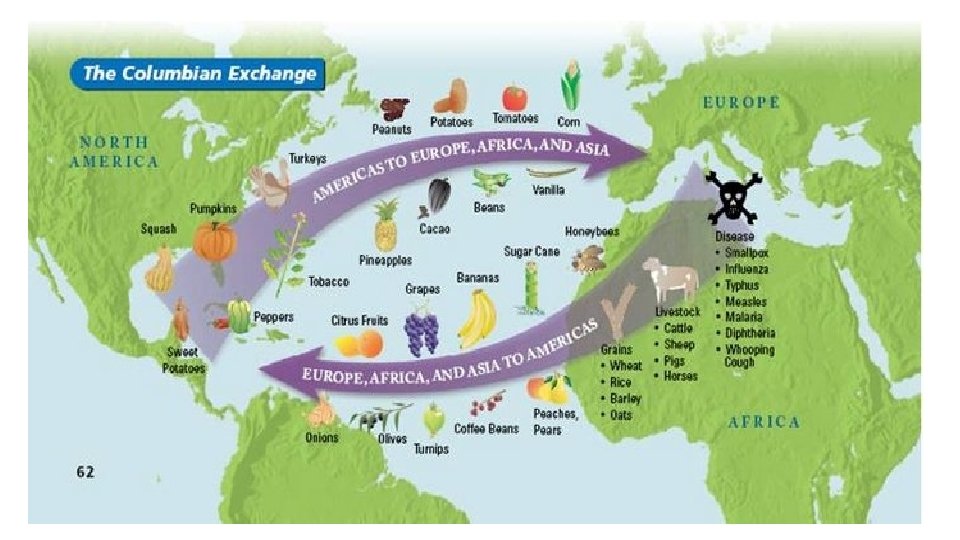
What was the ‘Columbian Exchange’? • It was basically the widespread transfer of plants, animals, culture, human populations, technology, and ideas between the Americas and the Old World in the 15 th and 16 th centuries, related to European colonization and trade after Christopher Columbus's 1492 voyage. • It resulted in a worldwide exchange of plants, animals, diseases and technologies as European empires developed global trading networks.
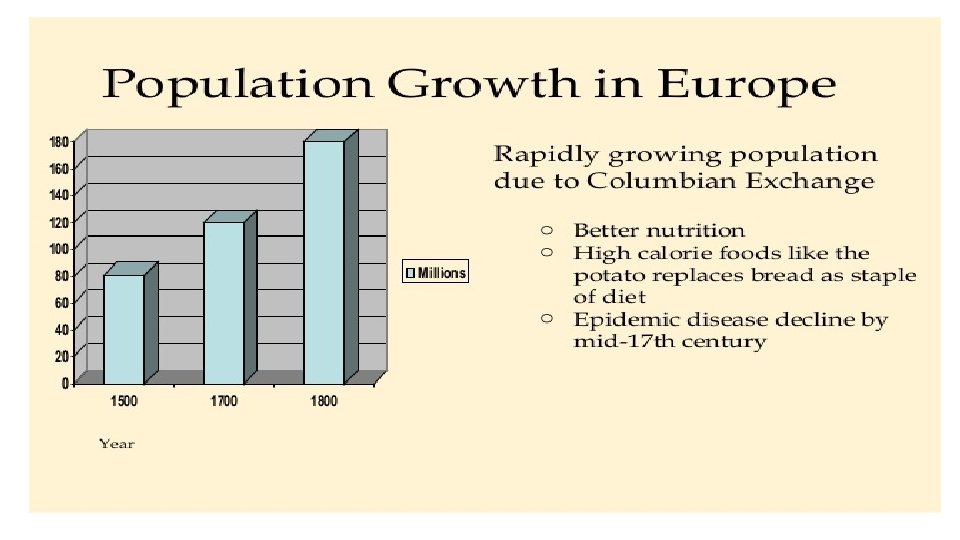
Why was the Columbian Exchange so beneficial to European colonizers? • It gave them land on which to produce valuable commodities (sugar, cotton, tobacco, rice, coffee) • The diseases Europeans brought to the Americas devastated native populations, making conquest easier • It brought new crops to Europe (potatoes, cassava, etc) that were able to grow in poor conditions, providing Europeans an additional food source in times of drought • Europeans brought livestock (pigs, cattle, oxen, horses) to the Americas which made the job of clearing and maintaining the land even easier
• Europeans were able to exploit the natural resources of the Americas for further gain (furs, timber) • Europeans exploited the slave trade (another aspect of the Columbian Exchange) to produce commodities for the global market more quickly
Why was the exchange of diseases between Eurasia and the Americas more advantageous for European colonizers? • Eurasian diseases (smallpox, measles, typhus) devastated indigenous populations in the Americas • This accelerated Spanish and Portuguese colonization of the Caribbean and South America- less manpower and military force was required as a result of the decline in the indigenous population • This ‘Great Dying’ also created a psychological advantage for European colonizers, and justified empire in their eyes (God must have ‘willed’ this)
The ‘Great Dying’ The Columbian Exchange also devastated the indigenous populations of the Americas, facilitating European conquest and exploitation of the territory
Why was timber such an important resource for European empires? • Used for many purposes- the construction of ships, housing, fences and other urban structures (Note that steel was non-existent) • Other than stone, wood was the primary material for almost everything (furniture, farm implements, weapons, wagons, etc) • Timber was also used as fuel for cooking and heating • The forests of South America provided an abundant supply of timber, which was important because the forests of Europe were becoming depleted
What other resources proved an advantage to European colonizers? • Potatoes, squash and peppers (Provided a stable food source in much of Europe) • Tobacco, coffee, sugar and cotton (became major trade commodities for European empires) • Maize and cassava also became important crops and food sources • Horses and oxen, brought from Europe, provided sources of food and were able to power ploughs • Cocoa was used to make chocolate, which became a major European export • Grains, wheat, barley and oats were grown on large farms in the Americas, providing food stability for colonists in the New World
Option D The Transmission of Religion and Culture (Parker Chapter 6): • How and why did Islam and Christianity begin to spread far beyond their original heartlands? What is syncretism? Why was the early adoption of Islam and Christianity often ‘syncretistic’? • With reference to either Islam or Christianity, describe how the faith blended with local traditions to form a ‘hybrid’ faith. (Provide some examples). How, and why, did a more orthodox (or traditional) form of the faith eventually reassert itself?
Why was religion such an effective vector or carrier of culture? What ideas does religion carry along with it? • Language • Architecture and art • Values, rituals and morals • Hierarchy and structure (often patriarchal) • Laws • Notions of civilization • History
What is syncretism? • The melding, or blending, of two or more cultures, religions, or traditions to produce a new ‘hybrid’ form of that culture. Religious syncretism occurred quite frequently in the period that we studied as empires expanded and absorbed new groups and cultures. Christianity and Islam, in particular, took on different characteristics in different global regions, evidence of a blending or melding with pre -existing beliefs and traditions. • This sometimes led to clashes with more orthodox interpretations on faith, where the ‘blended’ faith was suppressed in favour of a more ‘original’ interpretation.
What examples does Parker give of religious syncretism in the Americas? • Parker indicates that Christianity in the Americas often blended traditional indigenous beliefs with Christianity, producing a hybrid or syncretized faith. • This included a belief in polytheism, the use of idols, and traditional languages and places of worship • Certain concepts were difficult to transfer, such as heaven and hell, the idea of saints, and the idea of transubstantiation (the host in Christian mass becoming the body and blood of Christ)
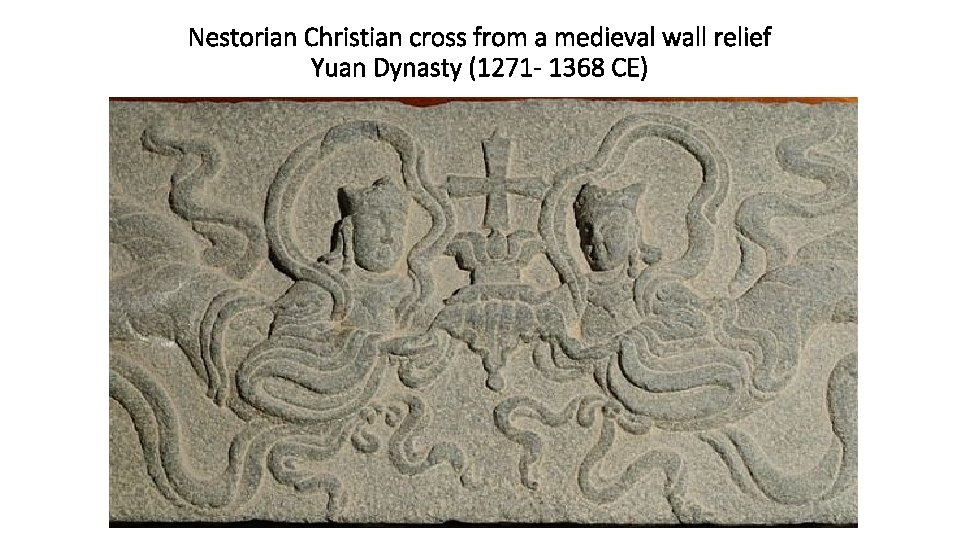
What caused Christianity to spread far beyond its original base? • Expansion of trade routes through Eurasia brought forms of Christianity (primarily Nestorianism) to central and eastern Asia • The Pax Mongolica allowed for the deeper penetration of Christianity into Asia (think of the mission of John of Montecorvino here) • European discovery of the New World similarly brought Christianity to the Americas (the European kingdoms that colonized the Americas were all Christian) • The split in Christianity in Europe (into Catholic and Protestant blocs) also provided an incentive for each sect to find new converts
Nestorian Christian cross from a medieval wall relief Yuan Dynasty (1271 - 1368 CE)
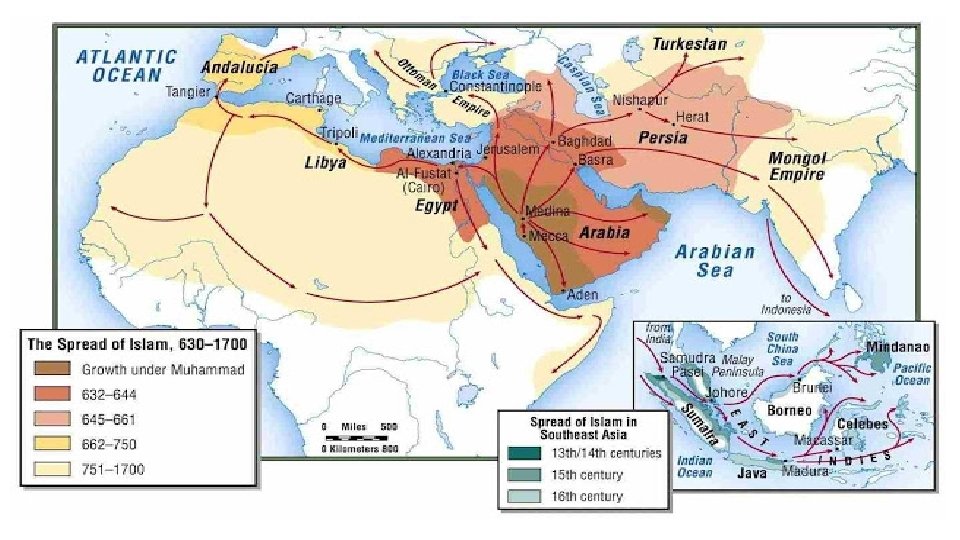
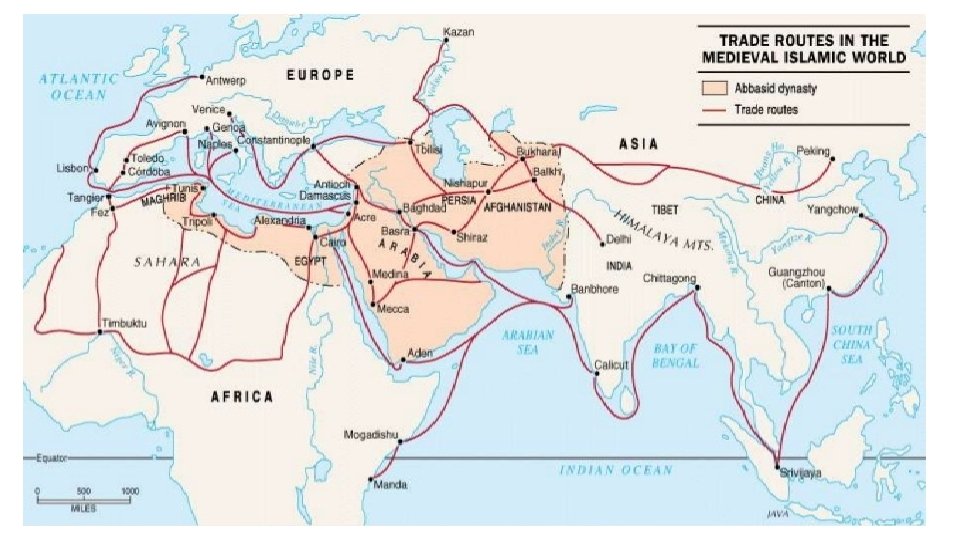
Why did Islam spread so far beyond its original base in this period? • Islam also spread through trading Eurasian trading networks, beginning particularly during the Pax Mongolica • Muslim empires encouraged trade, which encouraged non-Muslim rulers, merchants and traders to convert to the faith for commercial advantages (and for protection and community) • The message of Islam was also appealing, providing clear rules on living faithfully • The spread of commerce into the Indian Ocean basin also brought Islam to south and southeast Asia • Empires such as Mughal India, the Ottoman Empire and the Safavid Empire adopted Islam