
LSBL 2 Straw and Lignocellulosic Materials Emil Brohus
LSBL 2 – Straw and Lignocellulosic Materials Emil Brohus Jakobsen M. Sc. Environmental and Resources Management Aalborg University Esbjerg Department of Energy Technology ebj@et. aau. dk This project is financed by funds from the European Regional Development Fund
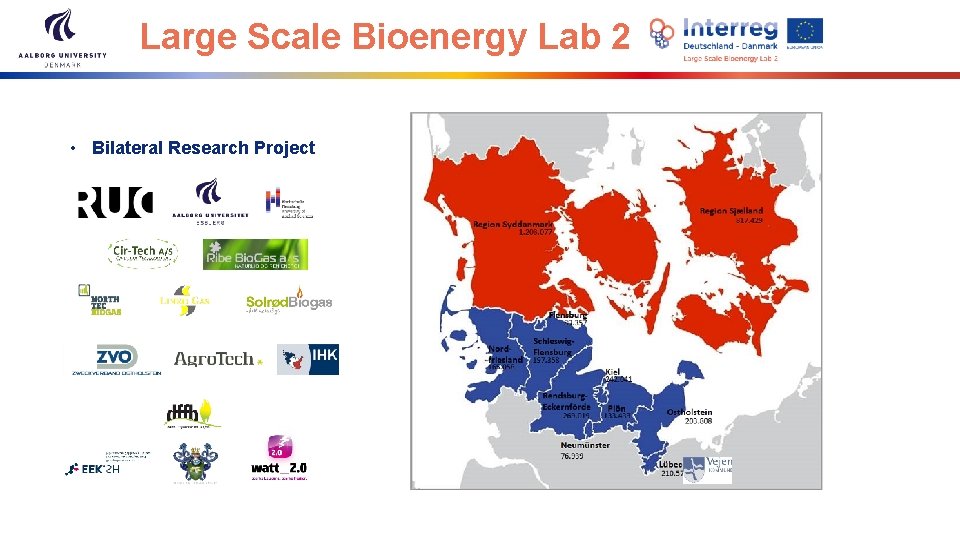
Large Scale Bioenergy Lab 2 • Bilateral Research Project
Biogas (DK) • Situation in Denmark • New Biogas plants are being build. And they are growing bigger • 500. 000+ tons/year • Established biogas plants are expanding • Plants in operation before end of 2020 continues on current subsidy schemes for 20 years, minimum until year 2032. INCREASED CAPACITY
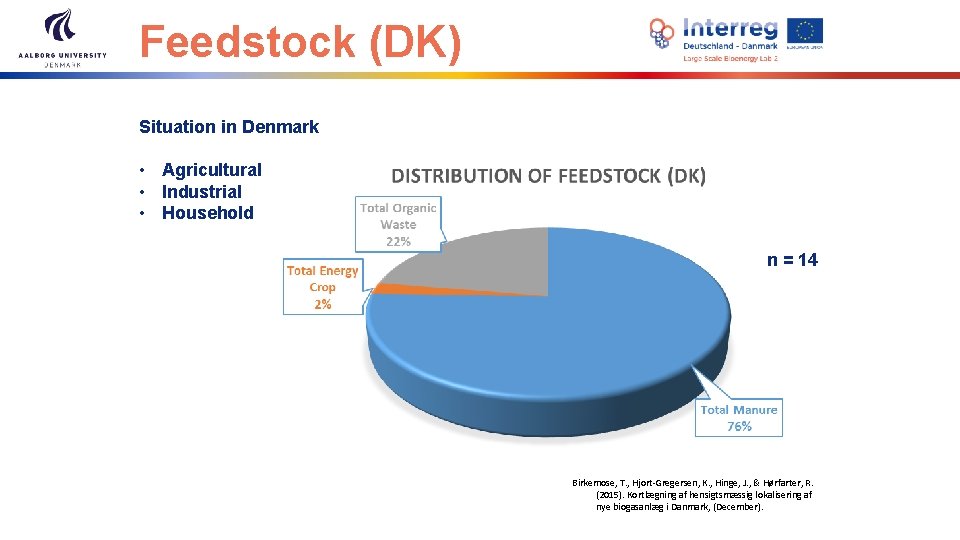
Feedstock (DK) Situation in Denmark • Agricultural • Industrial • Household n = 14 Birkemose, T. , Hjort-Gregersen, K. , Hinge, J. , & Hørfarter, R. (2015). Kortlægning af hensigtsmæssig lokalisering af nye biogasanlæg i Danmark, (December).
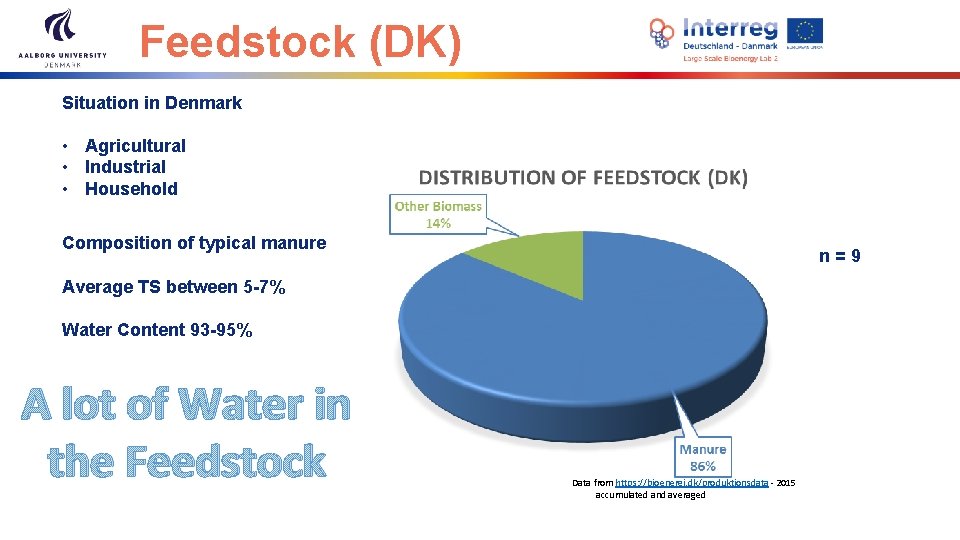
Feedstock (DK) Situation in Denmark • Agricultural • Industrial • Household Composition of typical manure n=9 Average TS between 5 -7% Water Content 93 -95% A lot of Water in the Feedstock Data from https: //bioenergi. dk/produktionsdata - 2015 accumulated and averaged
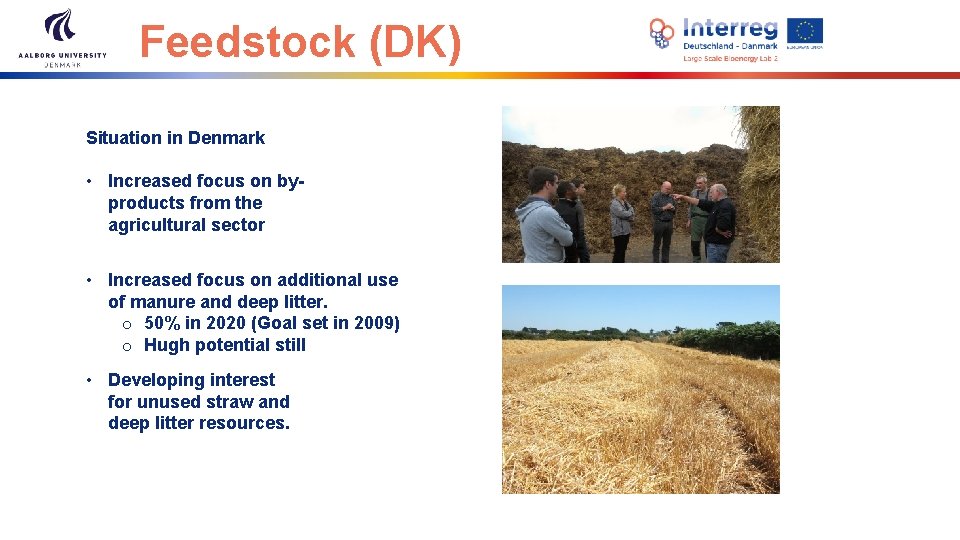
Feedstock (DK) Situation in Denmark • Increased focus on byproducts from the agricultural sector • Increased focus on additional use of manure and deep litter. o 50% in 2020 (Goal set in 2009) o Hugh potential still • Developing interest for unused straw and deep litter resources.
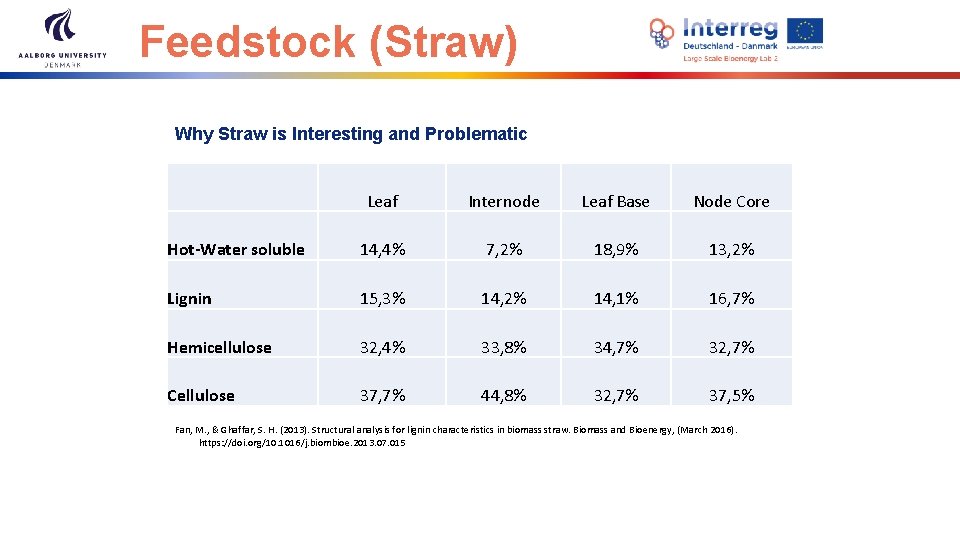
Feedstock (Straw) Why Straw is Interesting and Problematic Leaf Internode Leaf Base Node Core Hot-Water soluble 14, 4% 7, 2% 18, 9% 13, 2% Lignin 15, 3% 14, 2% 14, 1% 16, 7% Hemicellulose 32, 4% 33, 8% 34, 7% 32, 7% Cellulose 37, 7% 44, 8% 32, 7% 37, 5% Fan, M. , & Ghaffar, S. H. (2013). Structural analysis for lignin characteristics in biomass straw. Biomass and Bioenergy, (March 2016). https: //doi. org/10. 1016/j. biombioe. 2013. 07. 015
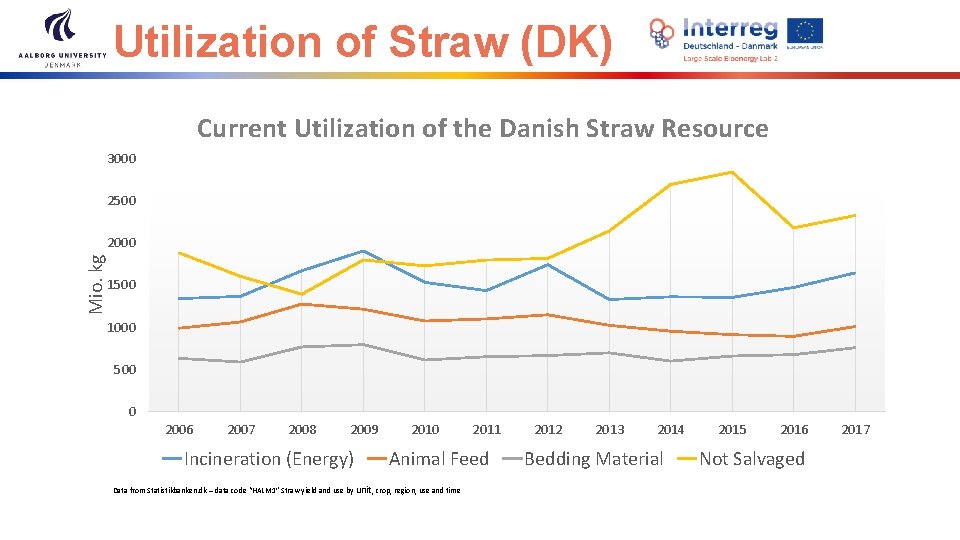
Utilization of Straw (DK) Current Utilization of the Danish Straw Resource 3000 2500 Mio. kg 2000 1500 1000 500 0 2006 2007 2008 2009 Incineration (Energy) 2010 2011 Animal Feed Data from Statistikbanken. dk – data code “HALM 1” Straw yield and use by unit, crop, region, use and time 2012 2013 2014 Bedding Material 2015 2016 Not Salvaged 2017
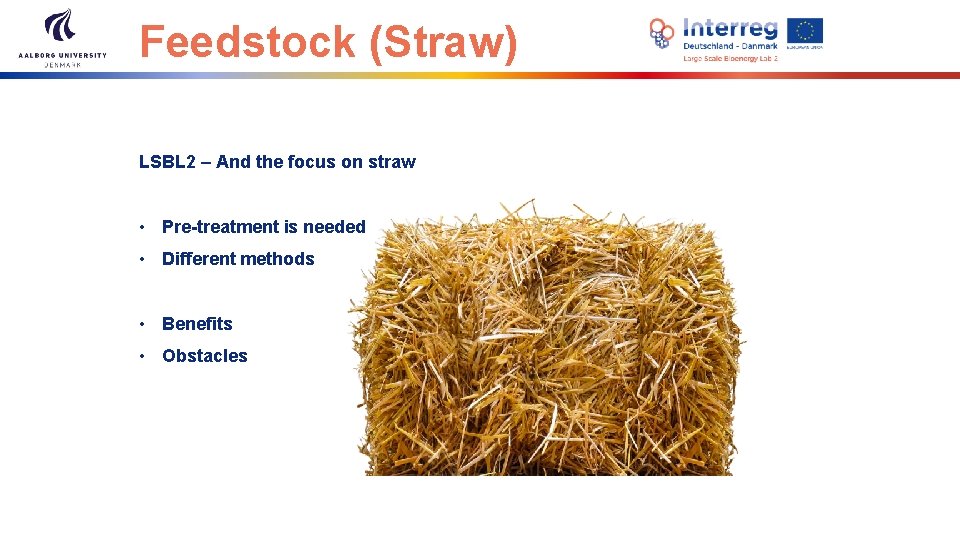
Feedstock (Straw) LSBL 2 – And the focus on straw • Pre-treatment is needed • Different methods • Benefits • Obstacles
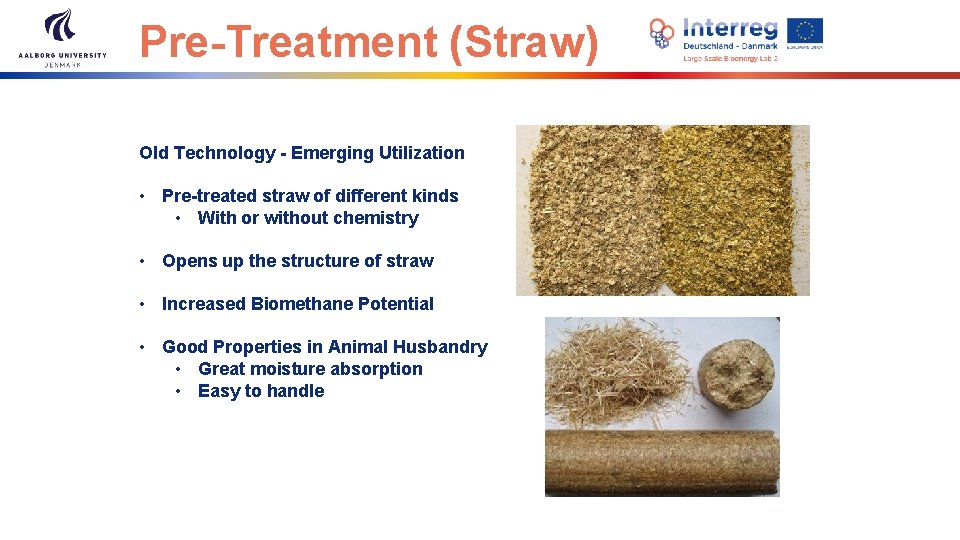
Pre-Treatment (Straw) Old Technology - Emerging Utilization • Pre-treated straw of different kinds • With or without chemistry • Opens up the structure of straw • Increased Biomethane Potential • Good Properties in Animal Husbandry • Great moisture absorption • Easy to handle
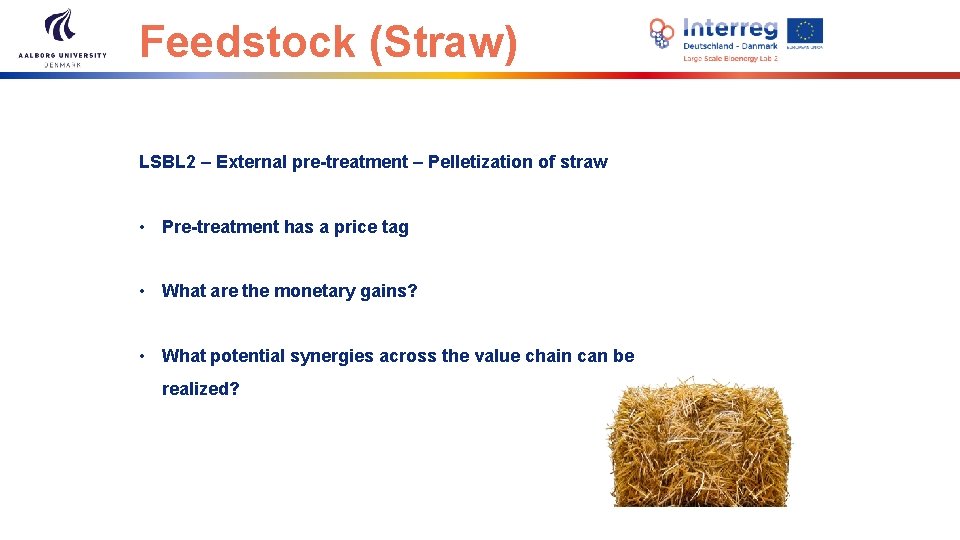
Feedstock (Straw) LSBL 2 – External pre-treatment – Pelletization of straw • Pre-treatment has a price tag • What are the monetary gains? • What potential synergies across the value chain can be realized?
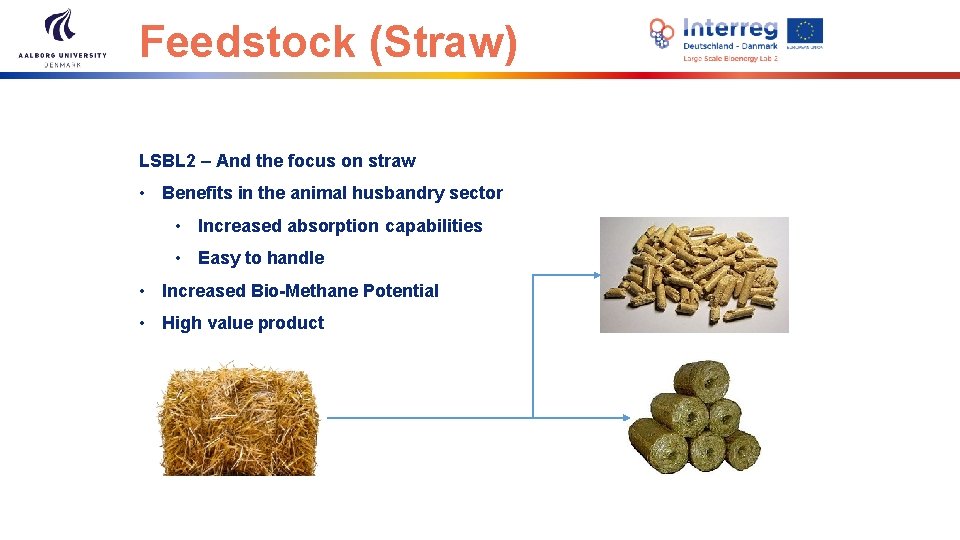
Feedstock (Straw) LSBL 2 – And the focus on straw • Benefits in the animal husbandry sector • Increased absorption capabilities • Easy to handle • Increased Bio-Methane Potential • High value product
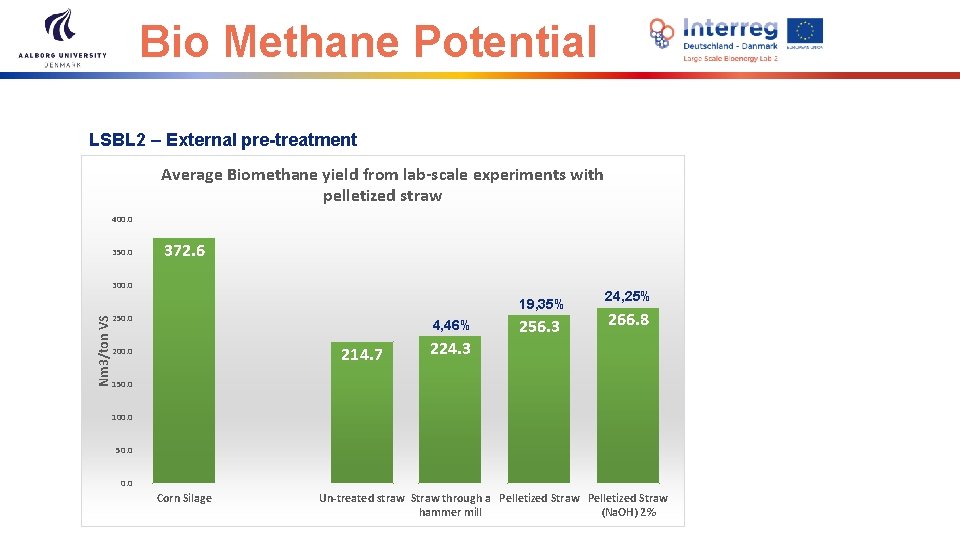
Bio Methane Potential LSBL 2 – External pre-treatment Average Biomethane yield from lab-scale experiments with pelletized straw 400. 0 350. 0 372. 6 300. 0 Nm 3/ton VS 19, 35% 250. 0 4, 46% 214. 7 200. 0 224. 3 256. 3 24, 25% 266. 8 150. 0 100. 0 50. 0 Corn Silage Un-treated straw Straw through a Pelletized Straw hammer mill (Na. OH) 2%
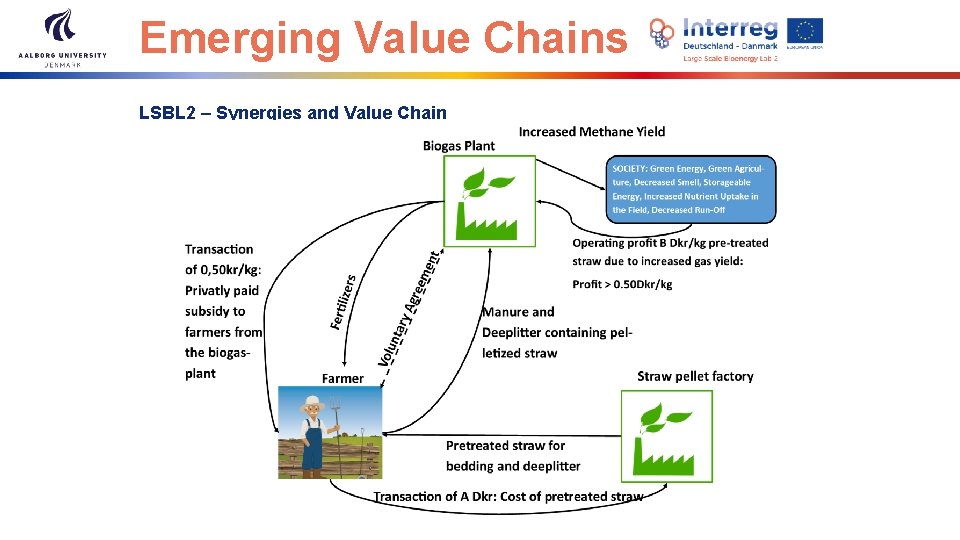
Emerging Value Chains LSBL 2 – Synergies and Value Chain
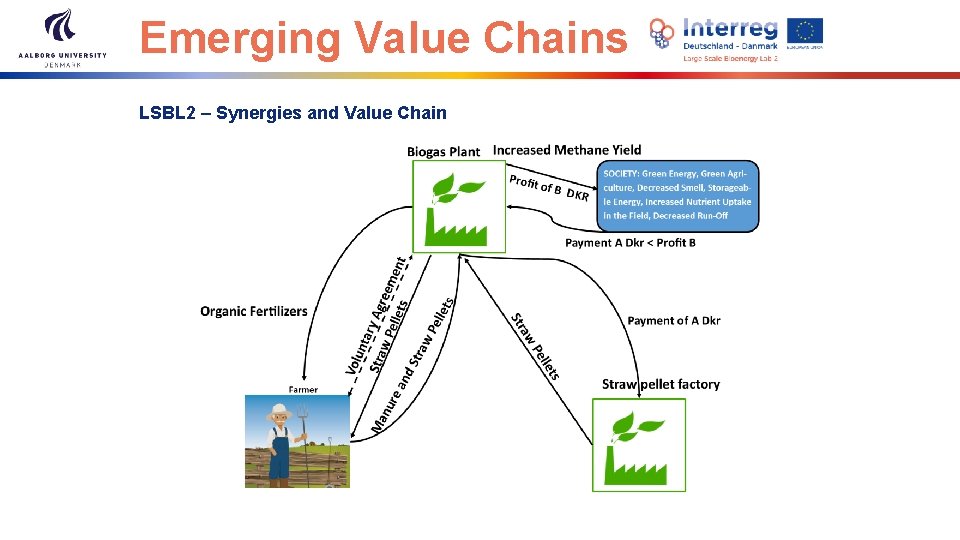
Emerging Value Chains LSBL 2 – Synergies and Value Chain
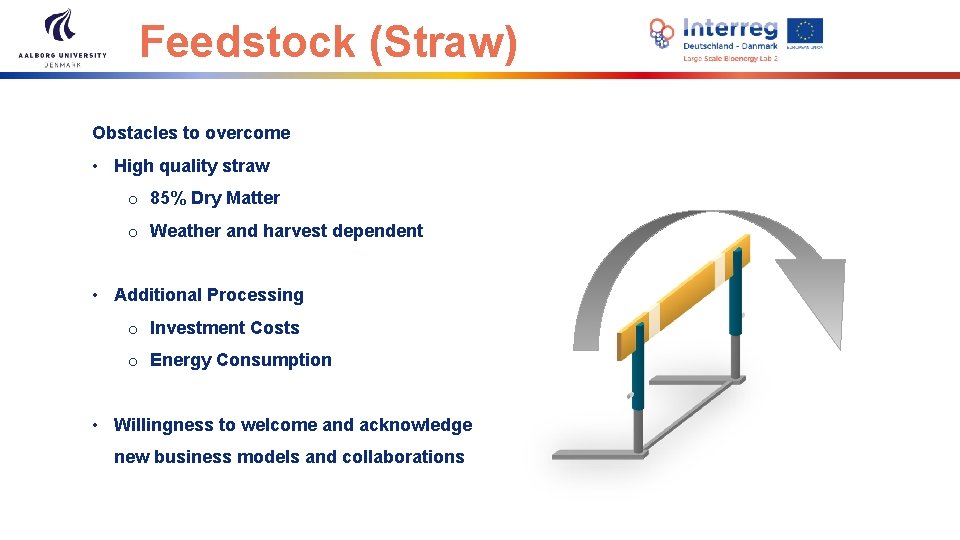
Feedstock (Straw) Obstacles to overcome • High quality straw o 85% Dry Matter o Weather and harvest dependent • Additional Processing o Investment Costs o Energy Consumption • Willingness to welcome and acknowledge new business models and collaborations
Investigation of these opportunities have been amongst the goals and scopes of the Large Scale Bioenergy Lab 2 Thank you for your attention Any Questions? ? ?
Large Scale Bioenergy Lab 2 is funded by Interreg Deutschland-Denmark with funds from the European Regional Development Fund. Read more about Interreg Deutschland Denmark on www. interreg 5 a. eu
References • Wang, X. , Lu, X. , Li, F. , & Yang, G. (2014). Effects of temperature and Carbon-Nitrogen (C/N) ratio on the performance of anaerobic co-digestion of dairy manure, chicken manure and rice straw: Focusing on ammonia inhibition. PLo. S ONE, 9(5), 1– 7. https: //doi. org/10. 1371/journal. pone. 0097265 • Birkemose, T. , Hjort-Gregersen, K. , Hinge, J. , & Hørfarter, R. (2015). Kortlægning af hensigtsmæssig lokalisering af nye biogasanlæg i Danmark, (December). • Moset, V. , Xavier, C. de A. N. , & Møller, H. B. (2015). Optimization of methane yield by using straw briquettes- influence of additives and mold size. Industrial Crops and Products, 74, 925– 932. https: //doi. org/10. 1016/j. indcrop. 2015. 075 • Christoffersen, O. (2013). Test Rapport - Ludet Pelleteret Halm. Desinfektionsrådgiveren Aps. Retrieved from http: //halmstroelse. dk/sites/default/files/Bilag 2 Absorberingsevne_3. pdf • Christoffersen, O. (2010). Test Rapport - Pelleteret Halm. Desinfektionsrådgiveren Aps. Retrieved from http: //halmstroelse. dk/sites/default/files/Test absorb sønderjysk tørreindustri nov 2010. pdf • Lemvig Biogas A. m. b. a. (2015). Udrådningsanalyse af div. behandlet halm fra Sønderjysk Tørreindustri. Retrieved from http: //halmstroelse. dk/sites/default/files/Bilag 3 Udrådningsanalyse af halm_0. pdf • All pictures used that are not referenced are licensed under Creative Commons BY 2. 0 and are free to use
- Slides: 19