
LRPC Workshop Meredith Community Center Meredith New Hampshire

- Slides: 25
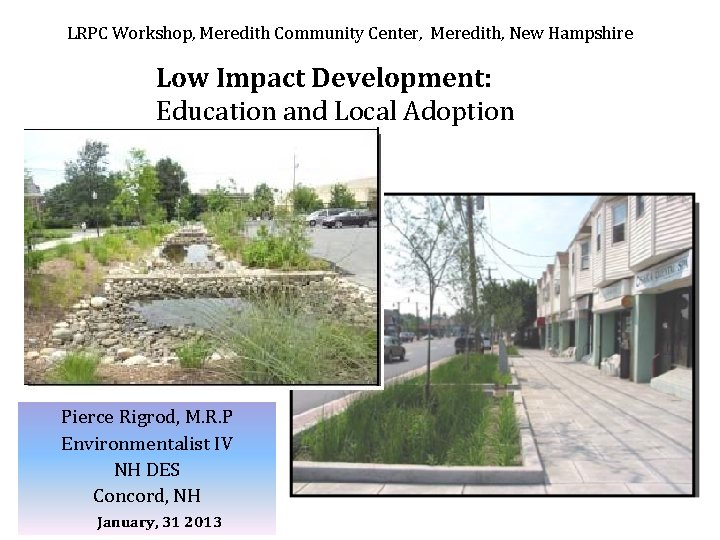
LRPC Workshop, Meredith Community Center, Meredith, New Hampshire Low Impact Development: Education and Local Adoption Pierce Rigrod, M. R. P Environmentalist IV NH DES Concord, NH January, 31 2013
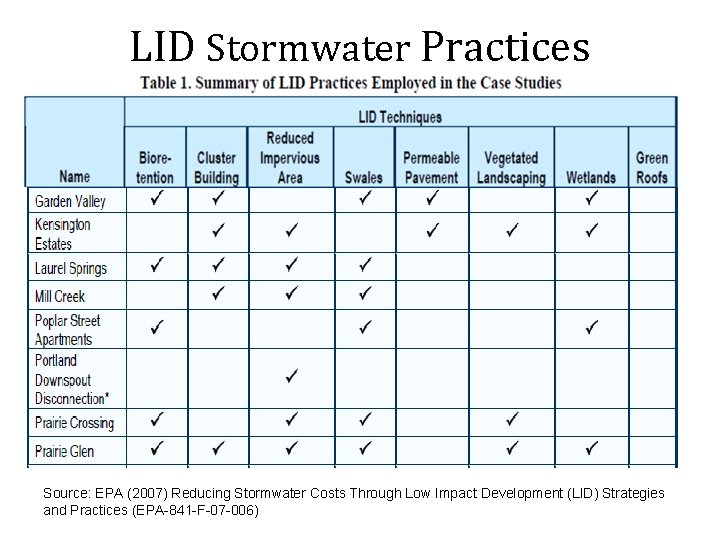
LID Stormwater Practices Source: EPA (2007) Reducing Stormwater Costs Through Low Impact Development (LID) Strategies and Practices (EPA-841 -F-07 -006)
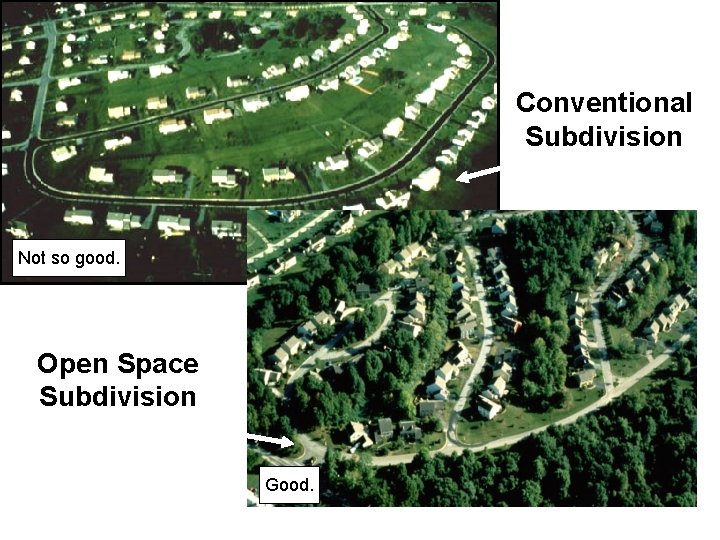
Conventional Subdivision Not so good. Open Space Subdivision Good.
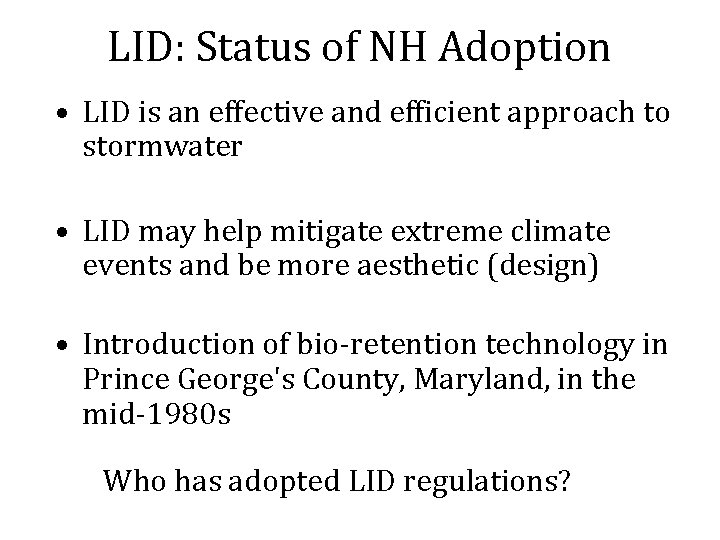
LID: Status of NH Adoption • LID is an effective and efficient approach to stormwater • LID may help mitigate extreme climate events and be more aesthetic (design) • Introduction of bio-retention technology in Prince George's County, Maryland, in the mid-1980 s Who has adopted LID regulations?
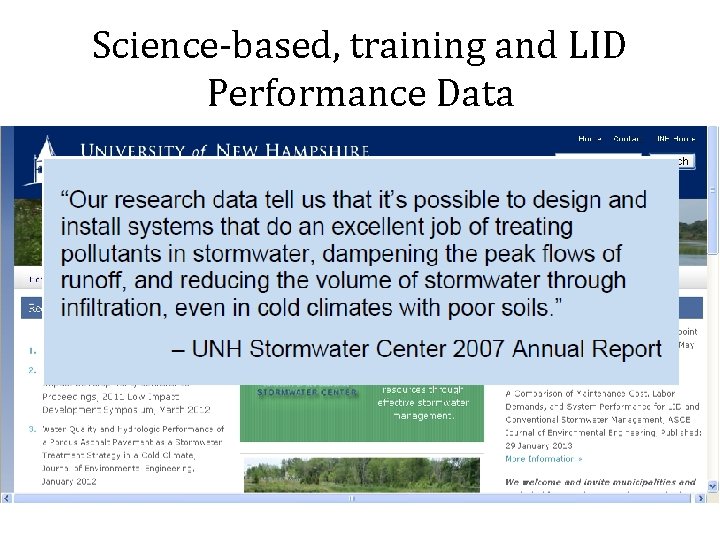
Science-based, training and LID Performance Data
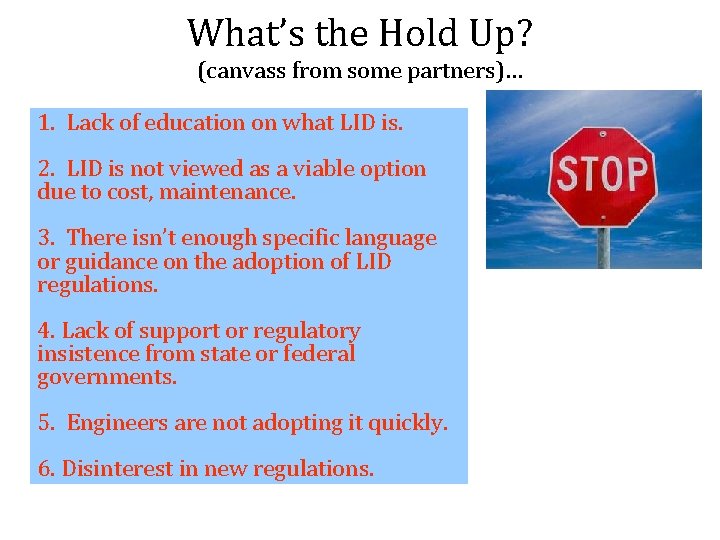
What’s the Hold Up? (canvass from some partners)… 1. Lack of education on what LID is. 2. LID is not viewed as a viable option due to cost, maintenance. 3. There isn’t enough specific language or guidance on the adoption of LID regulations. 4. Lack of support or regulatory insistence from state or federal governments. 5. Engineers are not adopting it quickly. 6. Disinterest in new regulations.
Education • NH Citizen Planner training modules on “Forging the Link” • Discusses economic issues and potential of LID to mitigate climate impacts ROLL THE FILM http: //nhcitizenplanner. org/content/land-use-planning
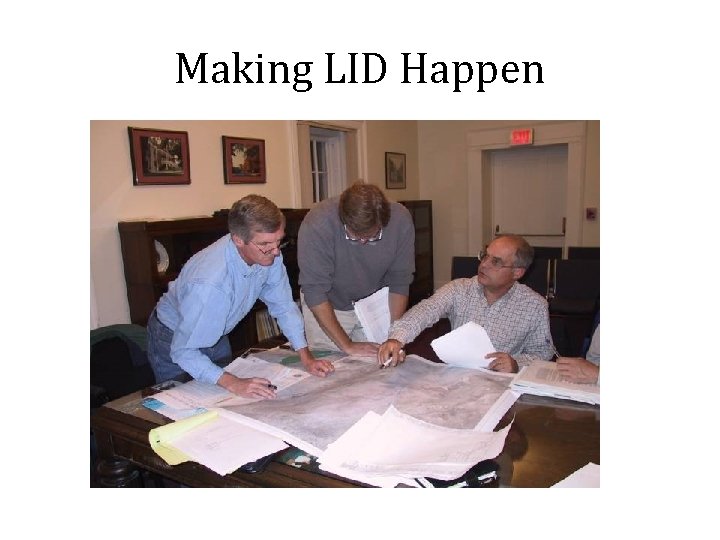
Making LID Happen
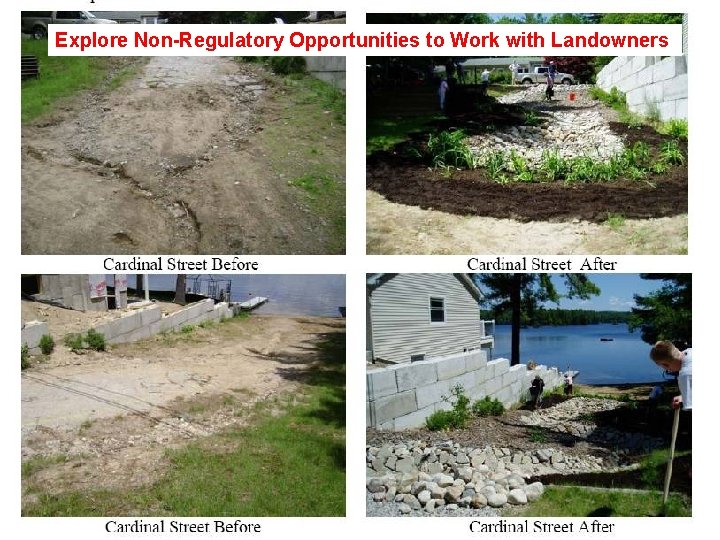
Explore Non-Regulatory Opportunities to Work with Landowners
York LID Ordinance: Simple • Low Impact Design. “Each applicant is required to submit a statement to the Planning Board documenting proposed Low Impact Design (LID) for the site, which will help to reduce stormwater volumes and help to enhance stormwater quality. ” • “LID includes, but is not limited to green roofs, rain gardens, tree wells, infiltration basins, and permeable pavement. The applicant shall submit technical documentation about the suitability of such designs with the request for LID features. ” Simple…but doesn’t by itself control design
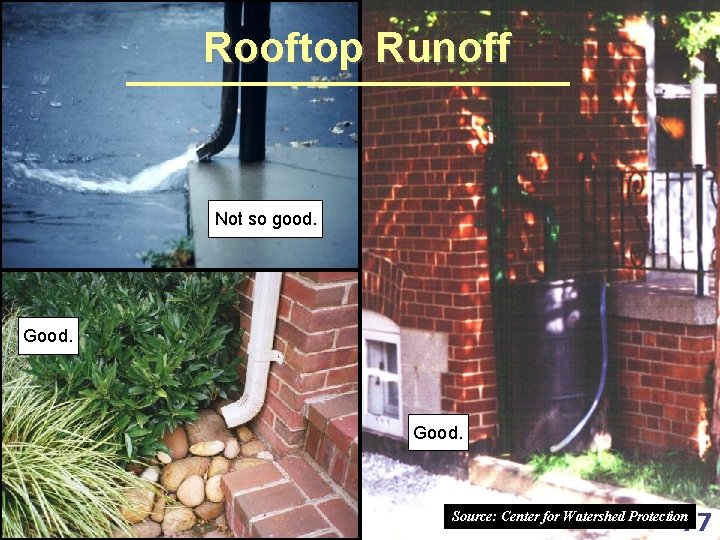
Rooftop Runoff Not so good. Good. 77 Source: Center for Watershed Protection
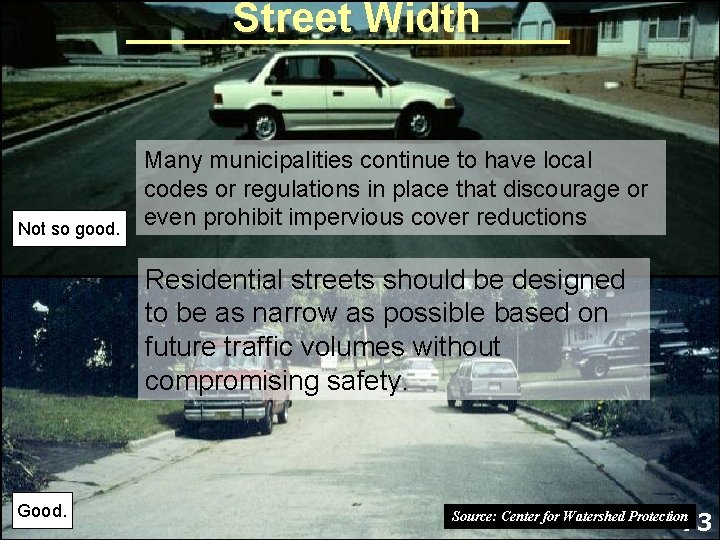
Street Width Not so good. Many municipalities continue to have local codes or regulations in place that discourage or even prohibit impervious cover reductions Residential streets should be designed to be as narrow as possible based on future traffic volumes without compromising safety. Good. 73 Source: Center for Watershed Protection
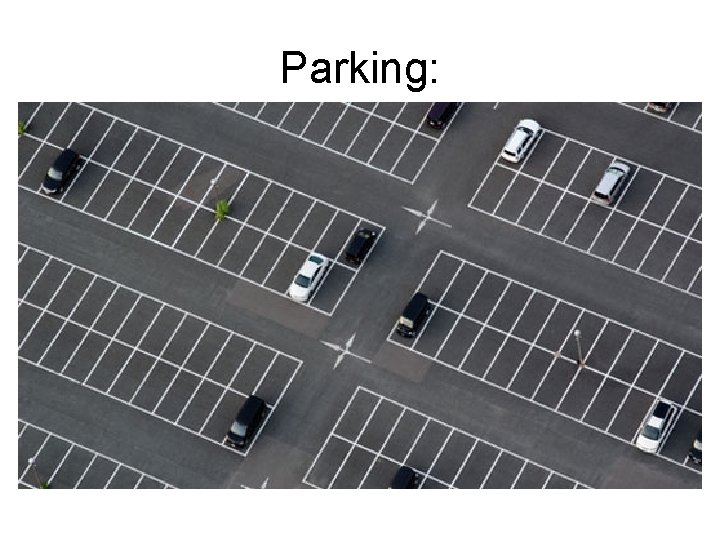
Parking:
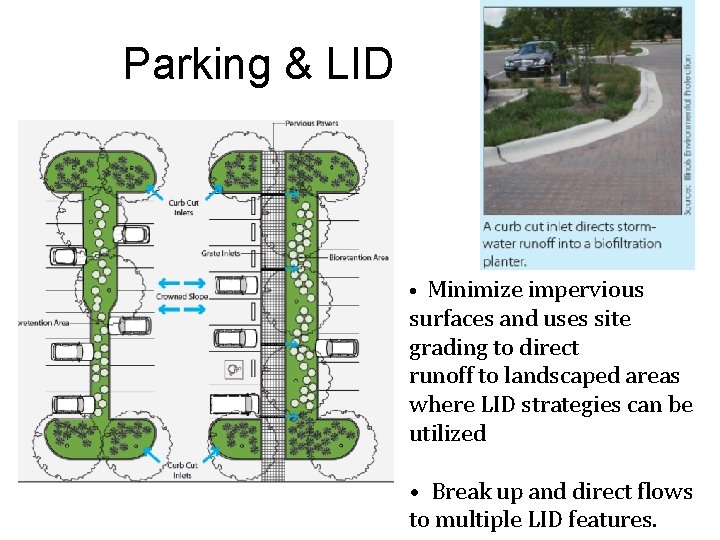
Parking & LID • Minimize impervious surfaces and uses site grading to direct runoff to landscaped areas where LID strategies can be utilized • Break up and direct flows to multiple LID features.
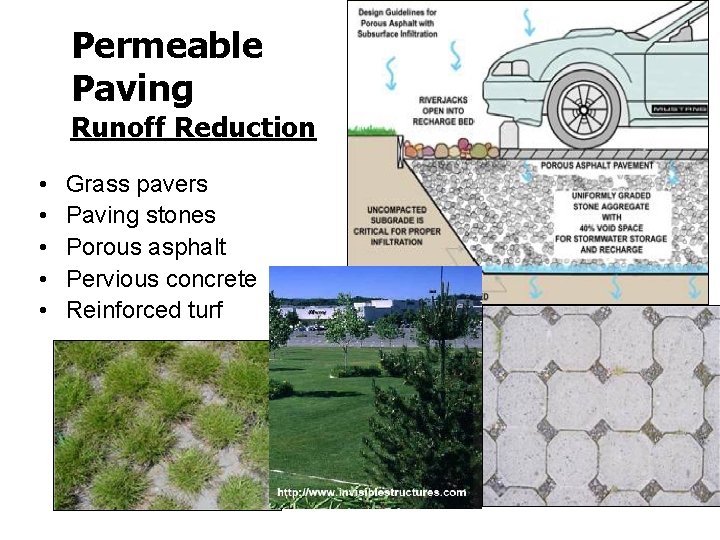
Permeable Paving Runoff Reduction • • • Grass pavers Paving stones Porous asphalt Pervious concrete Reinforced turf
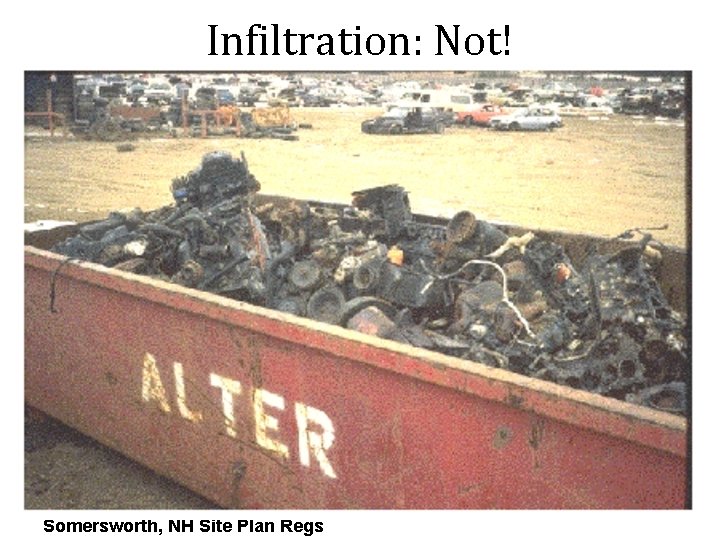
Infiltration: Not! Somersworth, NH Site Plan Regs
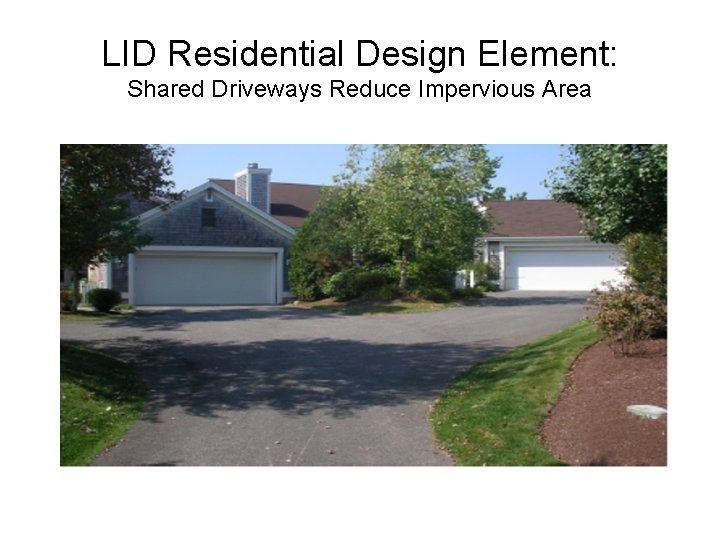
LID Residential Design Element: Shared Driveways Reduce Impervious Area
Somersworth Site Plan Regulation: Getting Support Over Time • The City of Somersworth encouraged LID for many years with several successful projects. • Before even drafting regulations, the City staff visited UNH/SC • Discussed voluntary adoption of LID with developers • LID regulations proposed in 2011 passed City Council unanimously
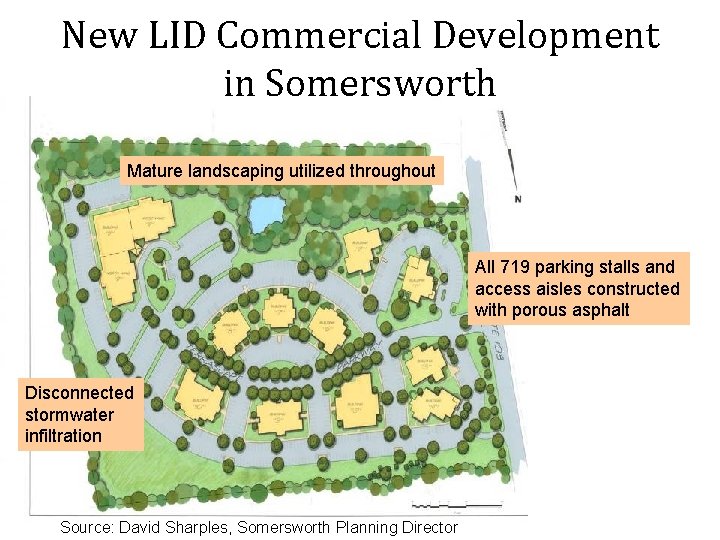
New LID Commercial Development in Somersworth Mature landscaping utilized throughout All 719 parking stalls and access aisles constructed with porous asphalt Disconnected stormwater infiltration Source: David Sharples, Somersworth Planning Director
Somersworth, NH LID Site Plan Regulations • Requires groundwater recharge • Requires the best available treatment with the least impact • Requires careful analysis of the onsite conditions • Requires practices that maintain/improve water quality • Requires an Operation and Maintenance Plan with an annual reporting requirement Source: David Sharples, Somersworth Planning Director
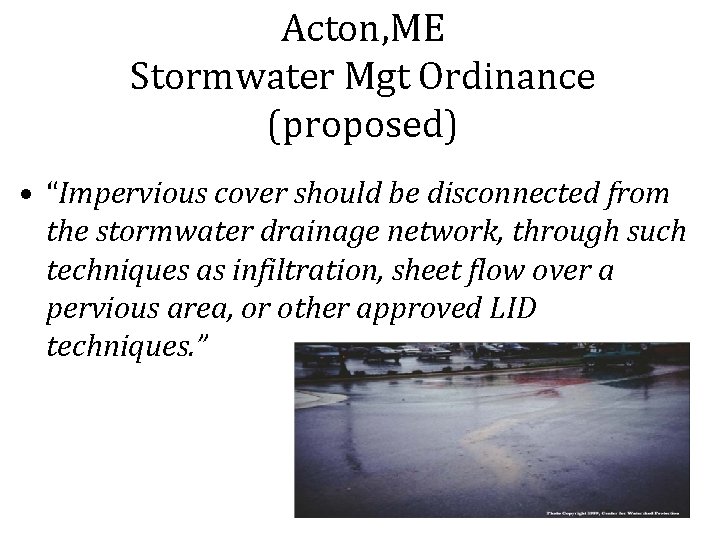
Acton, ME Stormwater Mgt Ordinance (proposed) • “Impervious cover should be disconnected from the stormwater drainage network, through such techniques as infiltration, sheet flow over a pervious area, or other approved LID techniques. ”
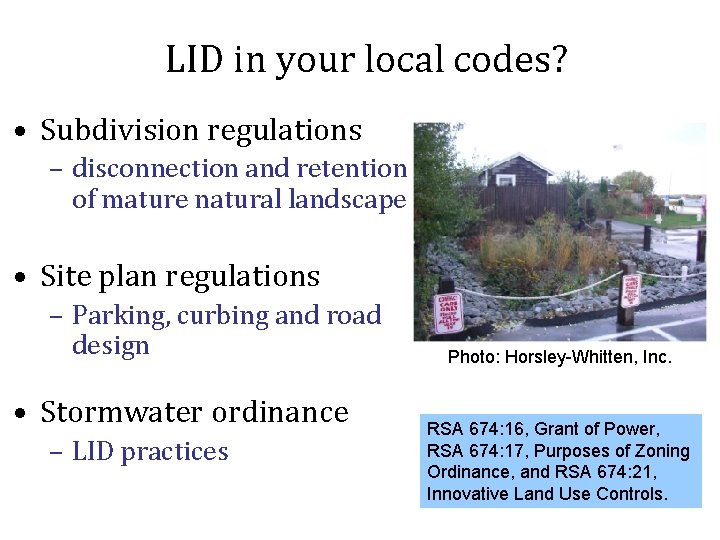
LID in your local codes? • Subdivision regulations – disconnection and retention of mature natural landscape • Site plan regulations – Parking, curbing and road design • Stormwater ordinance – LID practices Photo: Horsley-Whitten, Inc. RSA 674: 16, Grant of Power, RSA 674: 17, Purposes of Zoning Ordinance, and RSA 674: 21, Innovative Land Use Controls.
LID Resources for Ordinances • NH DES Innovative Land Use Guide – Post Construction Stormwater Ord Template – http: //des. nh. gov • MA Smarthgrowth Toolkit – http: //mass. gov • Model Stormwater Standards for Coastal Watershed Communities http: //southeastwatershedalliance. org • City of Somersworth – Site Plan Regulations • Town of York, ME – LID Ordinance • Town of Acton, ME – Stormwater Ordinance