
LPATE Paper V Classroom Language Assessment CLA 1
- Slides: 32
LPATE Paper V Classroom Language Assessment (CLA) 1
Briefing for Candidates LPATE 2009 I. The Arrangement II. The Assessment 2
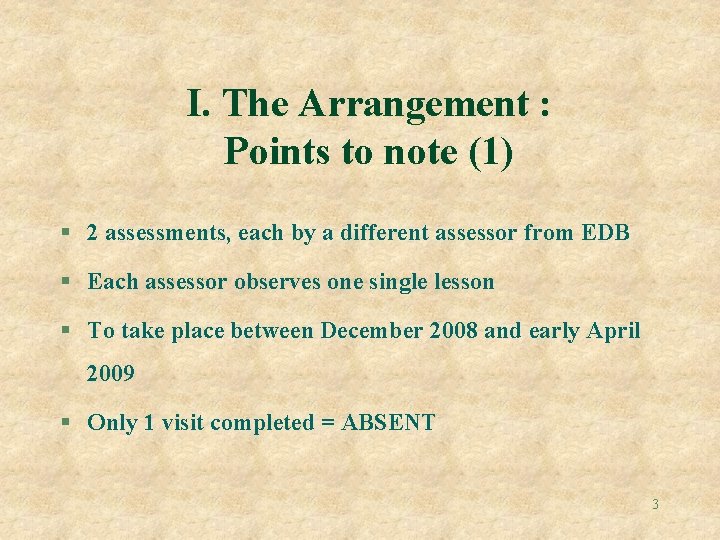
I. The Arrangement : Points to note (1) § 2 assessments, each by a different assessor from EDB § Each assessor observes one single lesson § To take place between December 2008 and early April 2009 § Only 1 visit completed = ABSENT 3
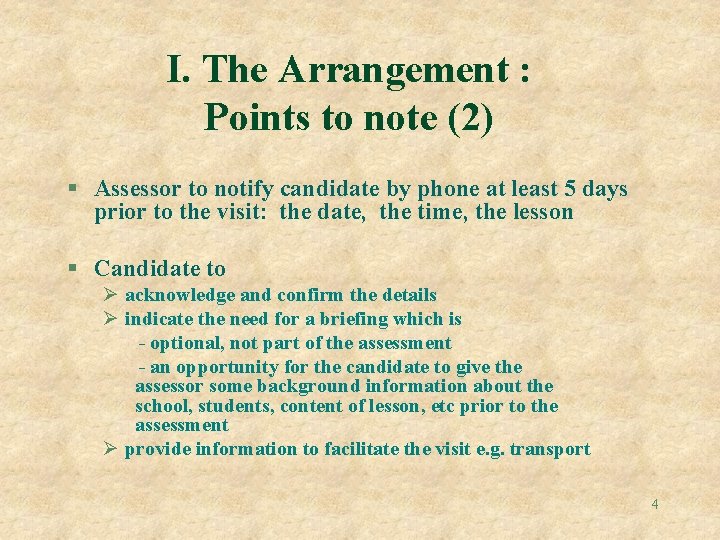
I. The Arrangement : Points to note (2) § Assessor to notify candidate by phone at least 5 days prior to the visit: the date, the time, the lesson § Candidate to Ø acknowledge and confirm the details Ø indicate the need for a briefing which is - optional, not part of the assessment - an opportunity for the candidate to give the assessor some background information about the school, students, content of lesson, etc prior to the assessment Ø provide information to facilitate the visit e. g. transport 4
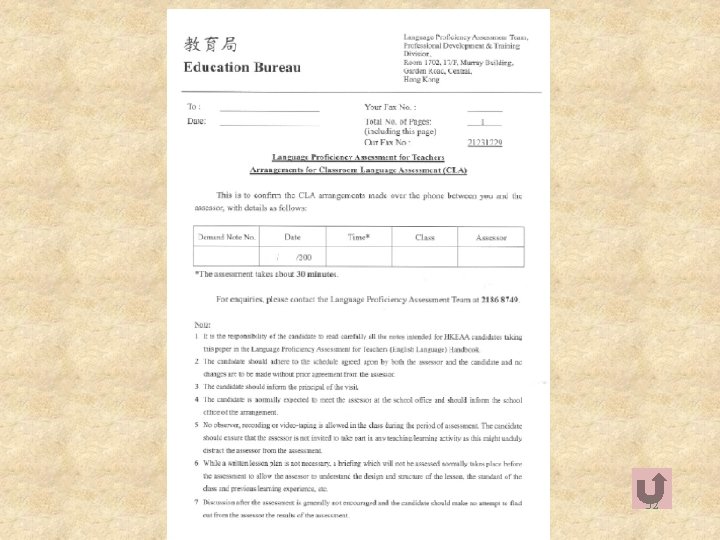
I. The Arrangement : Points to note (3) § Assessor to fax Confirmation Sheet to candidate through the school § Candidate to Ø study the confirmation sheet carefully to check the details of the visit and to read the notes contained Ø inform the school head and other relevant parties of the visit Ø keep the confirmation sheet as a reminder/ for future contact 5
I. The Arrangement : Points to note (4) n No change to the confirmed schedule unless fully justified n Prompt notification in case of unforeseen circumstances (including sickness) n Absence to be supported in writing (e. g. medical certificate) n Early notification and written confirmation in case of withdrawal from the assessment 6
I. The Arrangement : Points to note (5) A reminder § Complete personal teaching timetable and school calendar, both as officially issued by the school, must be provided; copies should be clear and ‘legible’ § If not already submitted, fax copies to the LPA Team (to include name, Demand Note Number, subject entered, contact phone number on every page) § Notify the LPA Team immediately of any subsequent changes (e. g. the timetable, the school calendar, contact numbers ) 7
II. The Assessment : The Lesson (1) § Duration – one lesson, about 30 minutes § At least 20 minutes of continuous teaching § Unduly interrupted lesson might call for a second visit (at the discretion of the assessor) 8
II. The Assessment : The Lesson (2) n Assessor normally arrives earlier than scheduled to allow time for a briefing n Reception at the general office generally expected 9
II. The Assessment : The Lesson (3) § Assessor to be seated at the back of the classroom, preferably at a distance from the students § Assessor not to be invited to take part in class activities 10
II. The Assessment : The Lesson (4) § No observer/co-teaching/ (audio/video) recording during the assessment § Use of microphone allowed § Cantonese not encouraged 11
II. The Assessment : The Lesson (5) § The lesson should provide enough evidence on all the 4 scales ØGrammatical and Lexical Accuracy and Range ØPronunciation, Stress and Intonation ØLanguage of Interaction ØLanguage of Instruction § A written lesson plan not required 12
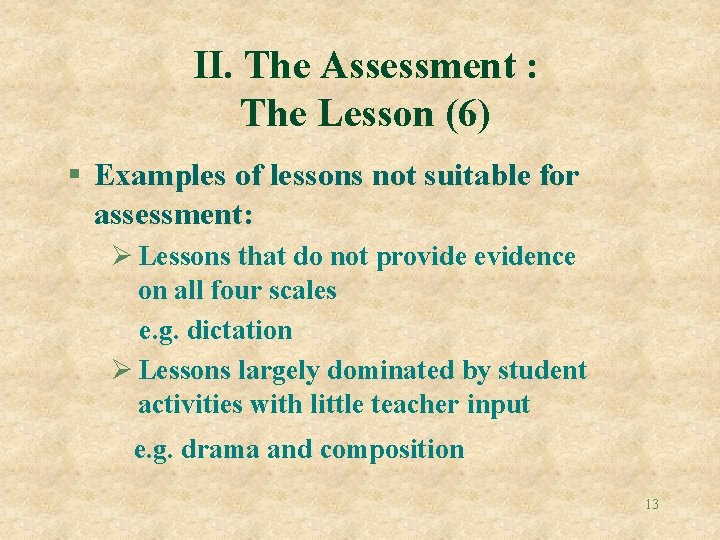
II. The Assessment : The Lesson (6) § Examples of lessons not suitable for assessment: Ø Lessons that do not provide evidence on all four scales e. g. dictation Ø Lessons largely dominated by student activities with little teacher input e. g. drama and composition 13
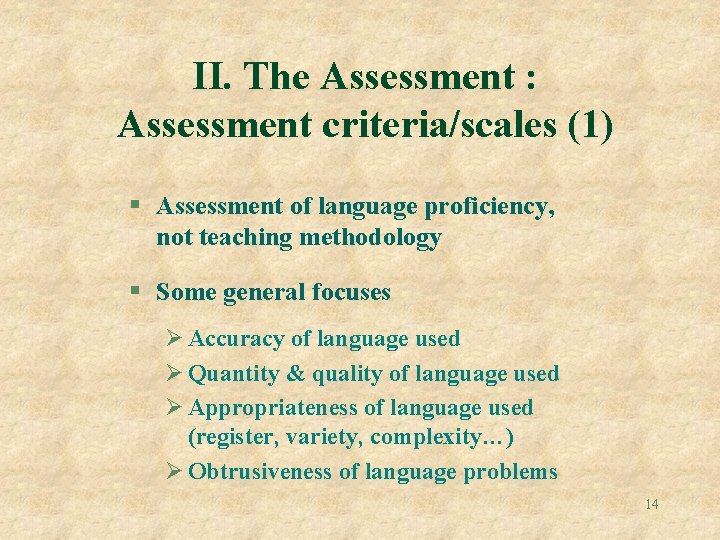
II. The Assessment : Assessment criteria/scales (1) § Assessment of language proficiency, not teaching methodology § Some general focuses Ø Accuracy of language used Ø Quantity & quality of language used Ø Appropriateness of language used (register, variety, complexity…) Ø Obtrusiveness of language problems 14
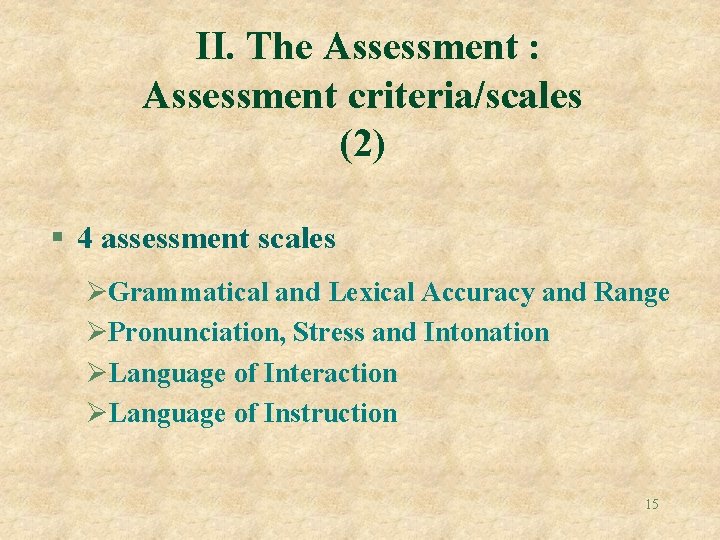
II. The Assessment : Assessment criteria/scales (2) § 4 assessment scales ØGrammatical and Lexical Accuracy and Range ØPronunciation, Stress and Intonation ØLanguage of Interaction ØLanguage of Instruction 15
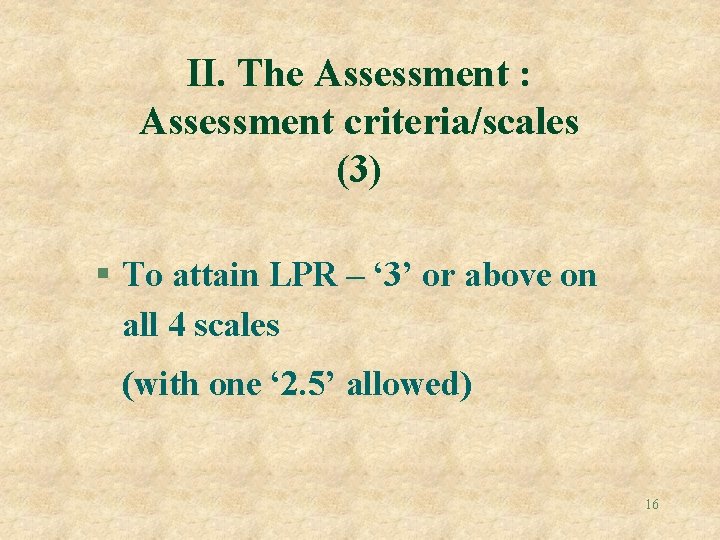
II. The Assessment : Assessment criteria/scales (3) § To attain LPR – ‘ 3’ or above on all 4 scales (with one ‘ 2. 5’ allowed) 16
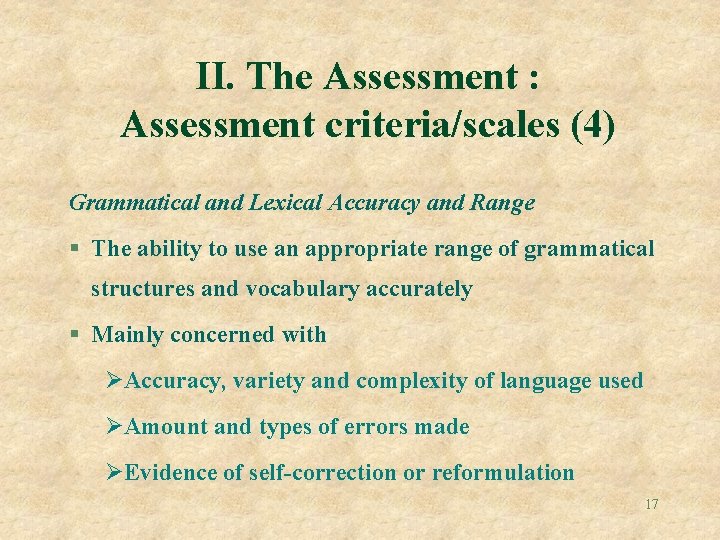
II. The Assessment : Assessment criteria/scales (4) Grammatical and Lexical Accuracy and Range § The ability to use an appropriate range of grammatical structures and vocabulary accurately § Mainly concerned with ØAccuracy, variety and complexity of language used ØAmount and types of errors made ØEvidence of self-correction or reformulation 17
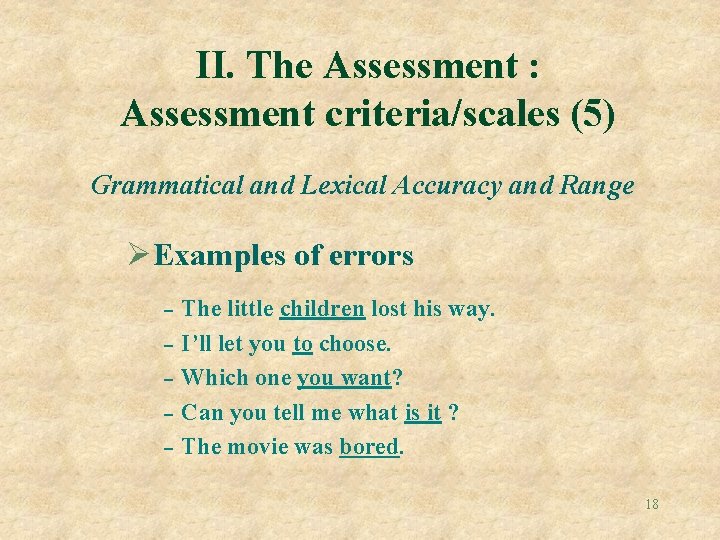
II. The Assessment : Assessment criteria/scales (5) Grammatical and Lexical Accuracy and Range ØExamples of errors The little children lost his way. – I’ll let you to choose. – Which one you want? – Can you tell me what is it ? – The movie was bored. – 18
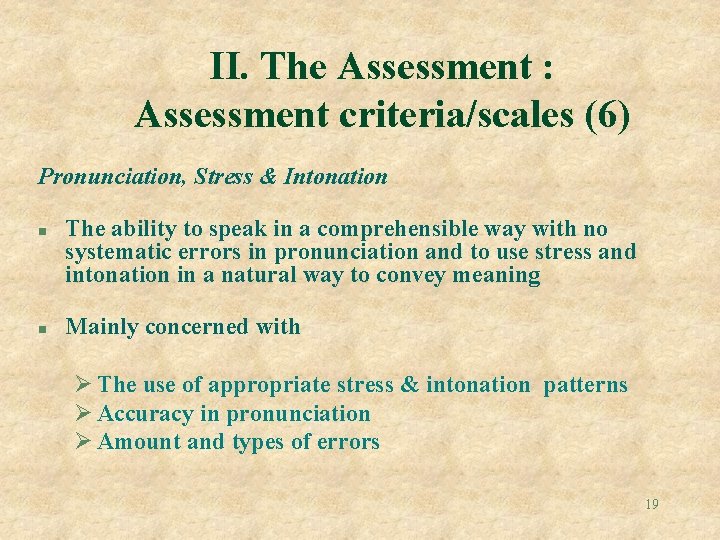
II. The Assessment : Assessment criteria/scales (6) Pronunciation, Stress & Intonation n n The ability to speak in a comprehensible way with no systematic errors in pronunciation and to use stress and intonation in a natural way to convey meaning Mainly concerned with Ø The use of appropriate stress & intonation patterns Ø Accuracy in pronunciation Ø Amount and types of errors 19
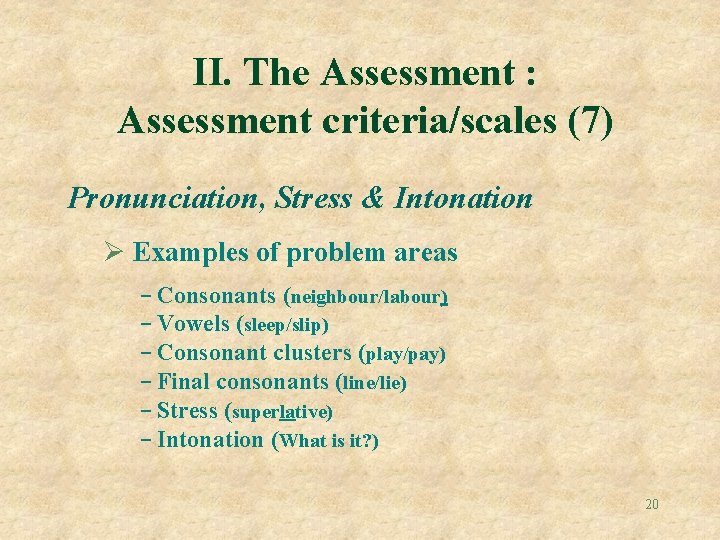
II. The Assessment : Assessment criteria/scales (7) Pronunciation, Stress & Intonation Ø Examples of problem areas – Consonants (neighbour/labour) – Vowels (sleep/slip) – Consonant clusters (play/pay) – Final consonants (line/lie) – Stress (superlative) – Intonation (What is it? ) 20
II. The Assessment : Assessment criteria/scales (8) Language of Interaction § Smooth interaction with students using a range of effective and appropriate language § Mainly concerned with Ø Eliciting, Questioning, Reformulating Ø Prompting & Probing, Seeking clarification or repetition Ø Giving feedback/comments, Acknowledging answers, Offering confirmation 21
II. The Assessment : Assessment criteria/scales (9) Language of Interaction § Some common classroom situations ØA student saying ‘I don’t know’ ØA student giving the wrong answer ØClass doing group work with teacher monitoring 22
II. The Assessment : Assessment criteria/scales (10) Language of Instruction n n The ability to present and explain lesson content clearly and naturally and to give clear instructions Mainly concerned with Ø Presenting & explaining a teaching point Ø Giving instructions for activities/ homework/ classroom management Ø Organization of discourse 23
II. The Assessment : Assessment criteria/scales (11) Language of Instruction n Some common classroom situations ØTeacher explaining a grammar point ØTeacher grouping students for an activity 24
II. The Assessment : After the assessment § No discussion with the assessor on the results or the lesson itself § Results to be issued by HKEAA 25
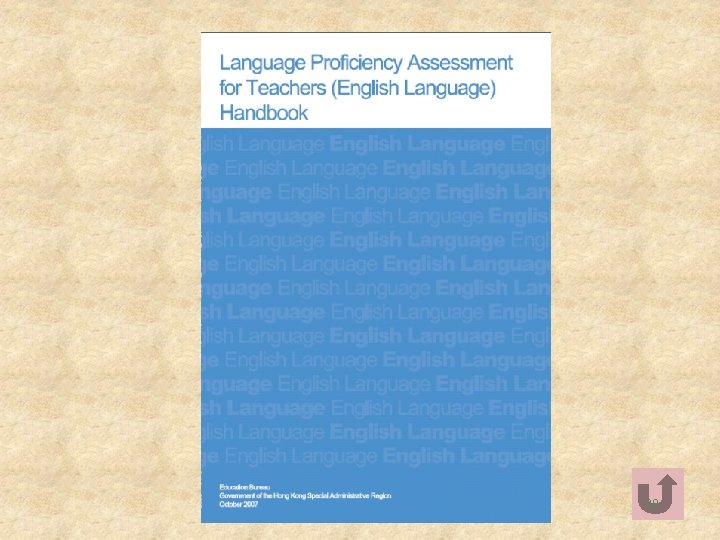
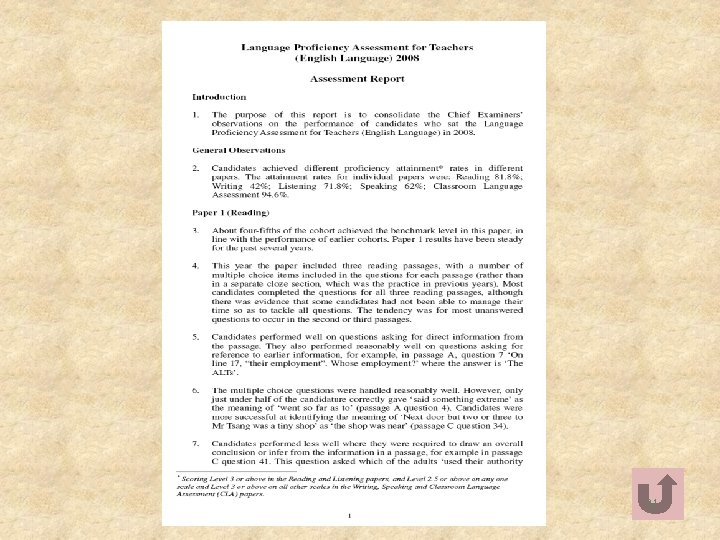
References § § § Language Proficiency Assessment for Teachers (English Language) Handbook (October 2007) Language Proficiency Assessment for Teachers (English Language) Assessment Report 2008 (on EDB / HKEAA websites) Confirmation Sheet 26
Information & Enquiries (1) n LPA Team, EDB Tel : 2186 8182 Fax : 2123 1229 Email : lpa@edb. gov. hk Website : http: //www. edb. gov. hk >Teachers’ Development >Training & Qualifications >Language Proficiency Requirement 27
Information & Enquiries (2) n HKEAA Tel : Fax : 3268 8860 3268 8990 Email : lpat@hkeaa. edu. hk Website : http: //www. hkeaa. edu. hk > LPAT 28
End of presentation 29
30
31
32