
LP To use the simple past tense correctly
- Slides: 57
LP: To use the simple past tense correctly.
LP: To use the simple past tense correctly.
LP: To use the simple past tense correctly. What is a verb? A verb is a doing word. It tells us what someone is doing.
LP: To use the simple past tense correctly. Which of these words are verbs? skipping jumping walking beautiful
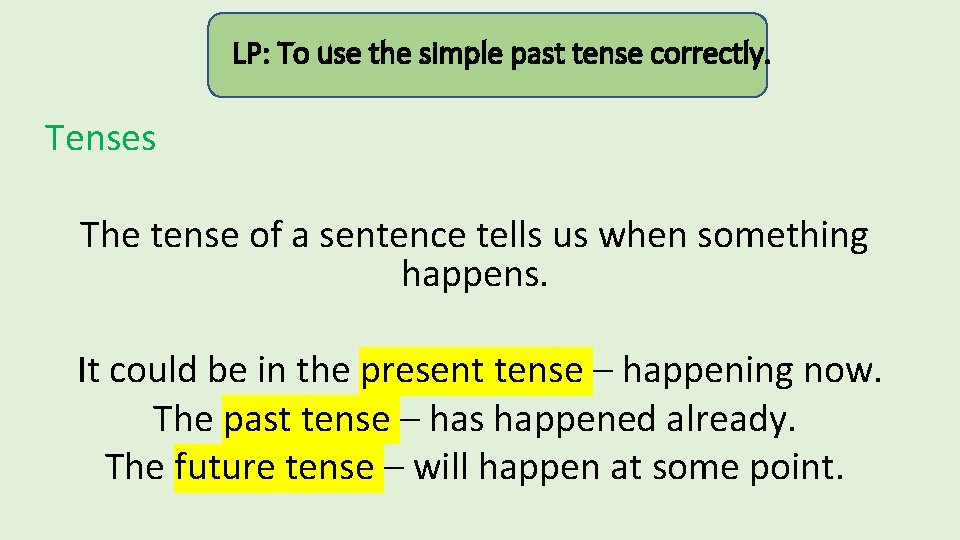
LP: To use the simple past tense correctly. Tenses The tense of a sentence tells us when something happens. It could be in the present tense – happening now. The past tense – has happened already. The future tense – will happen at some point.
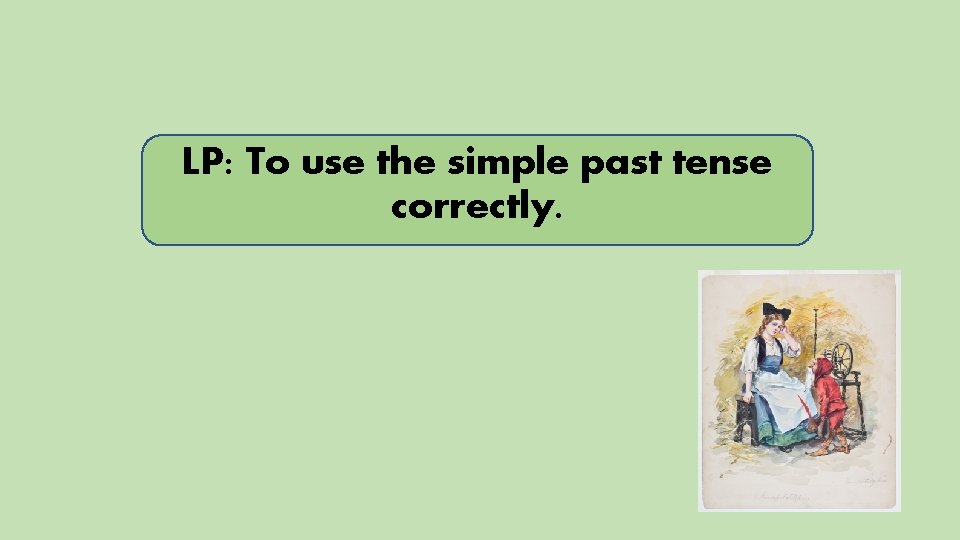
LP: To use the simple past tense correctly. Past Tense We are going to think about the past tense. Most stories are written in the past tense because they have already happened. You will be writing the story of Rumpelstiltskin in the past tense because it has already happened.
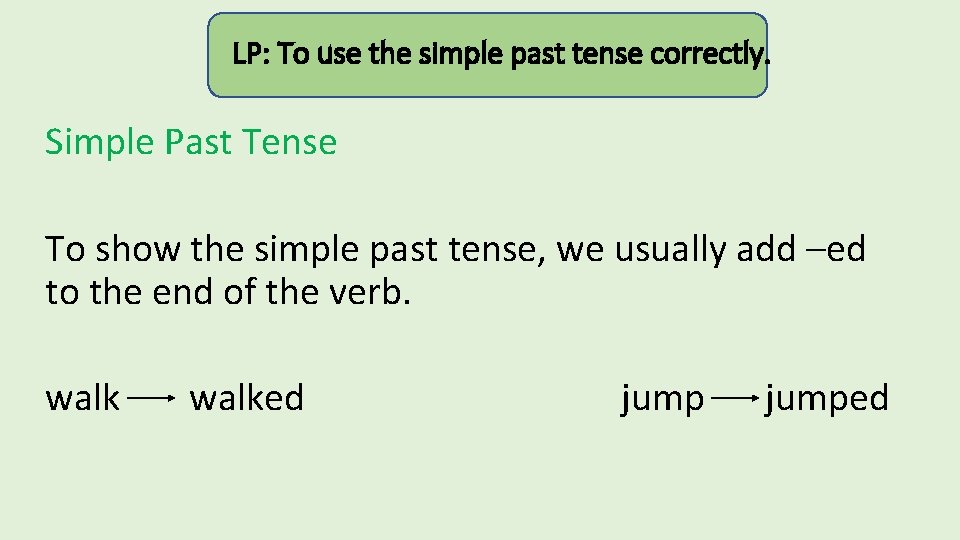
LP: To use the simple past tense correctly. Simple Past Tense To show the simple past tense, we usually add –ed to the end of the verb. walked jumped
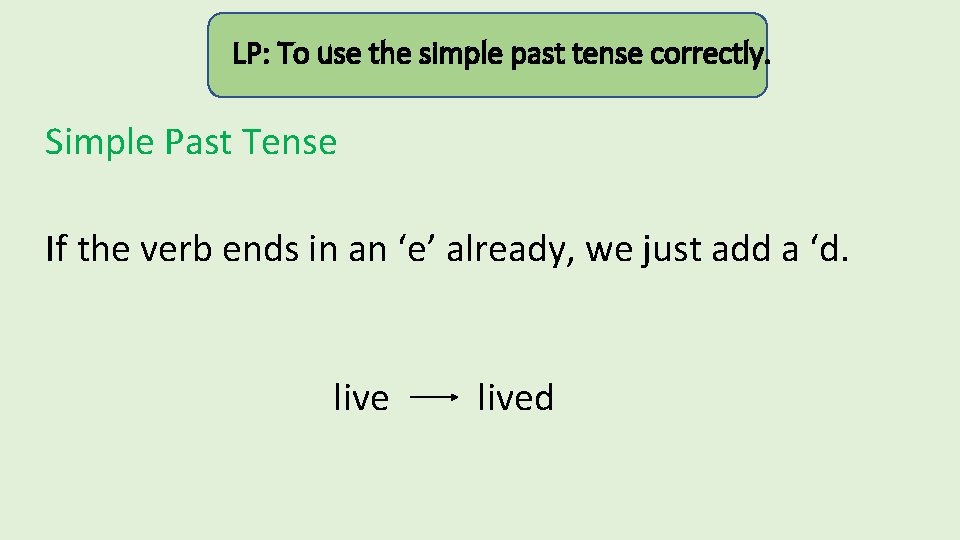
LP: To use the simple past tense correctly. Simple Past Tense If the verb ends in an ‘e’ already, we just add a ‘d. lived
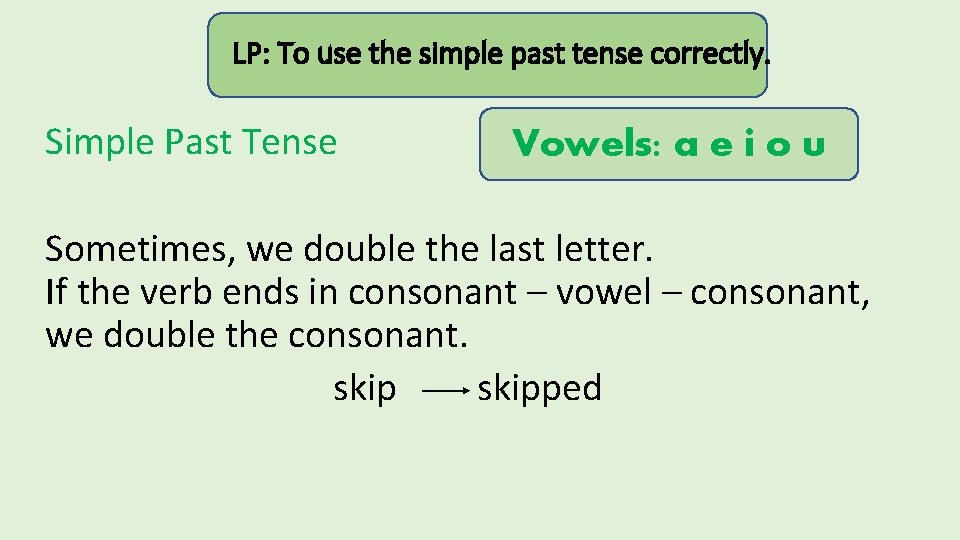
LP: To use the simple past tense correctly. Simple Past Tense Vowels: a e i o u Sometimes, we double the last letter. If the verb ends in consonant – vowel – consonant, we double the consonant. skipped
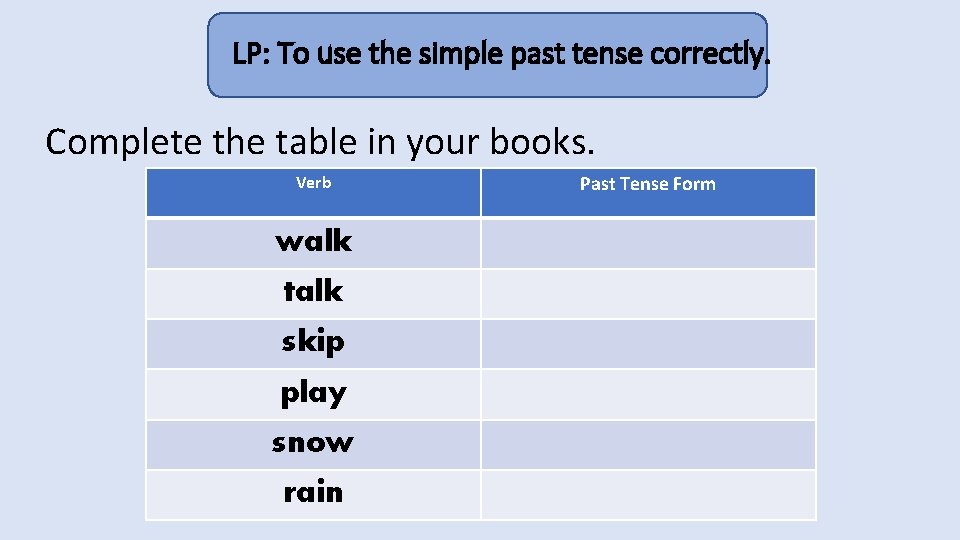
LP: To use the simple past tense correctly. Complete the table in your books. Verb walk talk skip play snow rain Past Tense Form
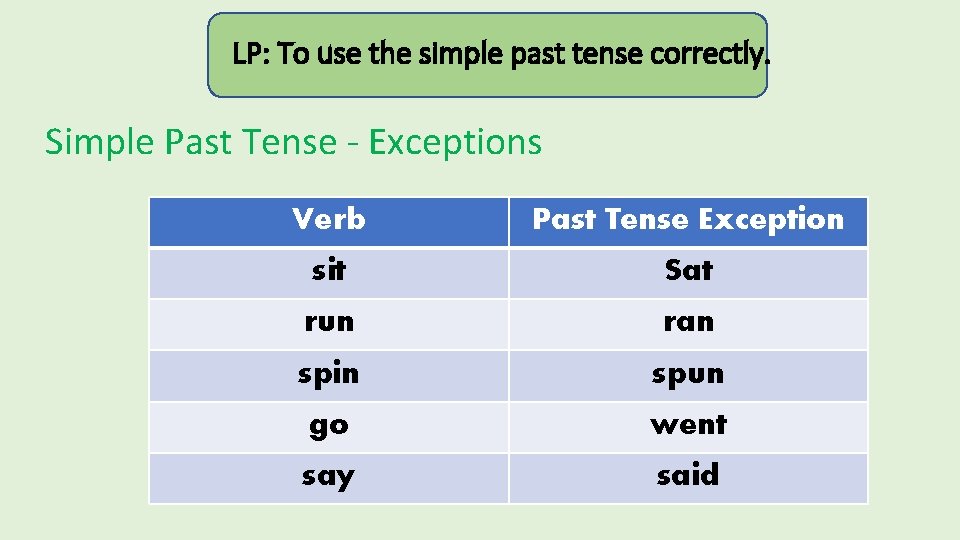
LP: To use the simple past tense correctly. Simple Past Tense - Exceptions Verb Past Tense Exception sit Sat run ran spin spun go went say said
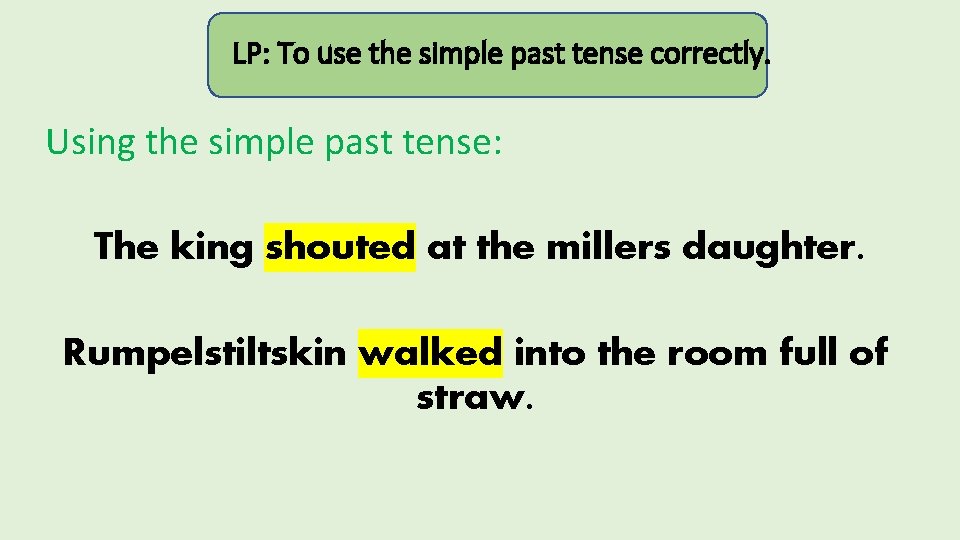
LP: To use the simple past tense correctly. Using the simple past tense: The king shouted at the millers daughter. Rumpelstiltskin walked into the room full of straw.
LP: To use the simple past tense correctly. Write a sentence on your whiteboard using one of the verbs from your book.
LP: To use the simple past tense correctly. Task: Write three sentences in your books about the story of Rumpelstiltskin using the past tense form of the verb.
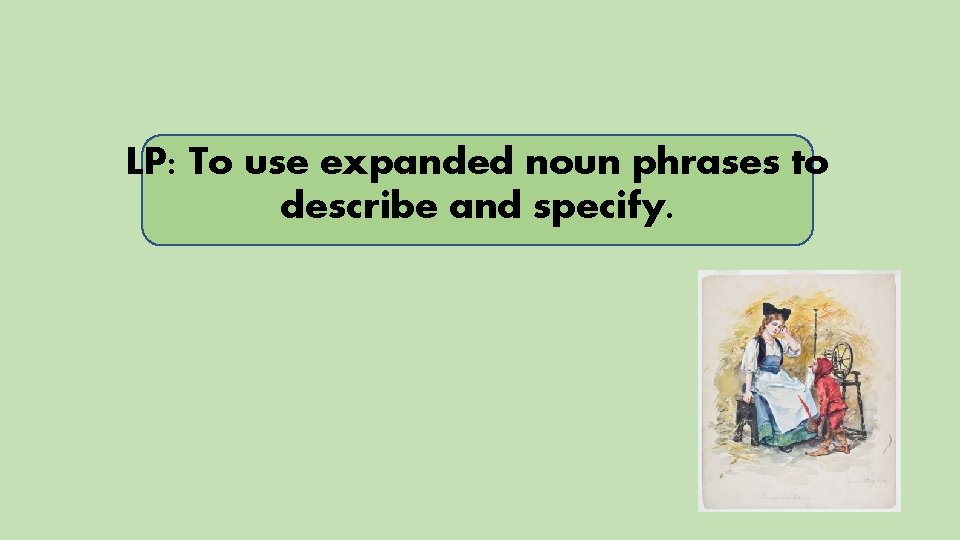
LP: To use expanded noun phrases to describe and specify.
LP: To use expanded noun phrases to describe and specify.
LP: To use expanded noun phrases to describe and specify. What is an expanded noun phrase? An expanded noun phrase is…
LP: To use expanded noun phrases to describe and specify. An expanded noun phrase is a group of words containing the noun and adjectives to describe the noun. A noun is… An adjective is…
LP: To use expanded noun phrases to describe and specify. A noun is a person, a place or a thing. An adjective is a word used to describe a noun.
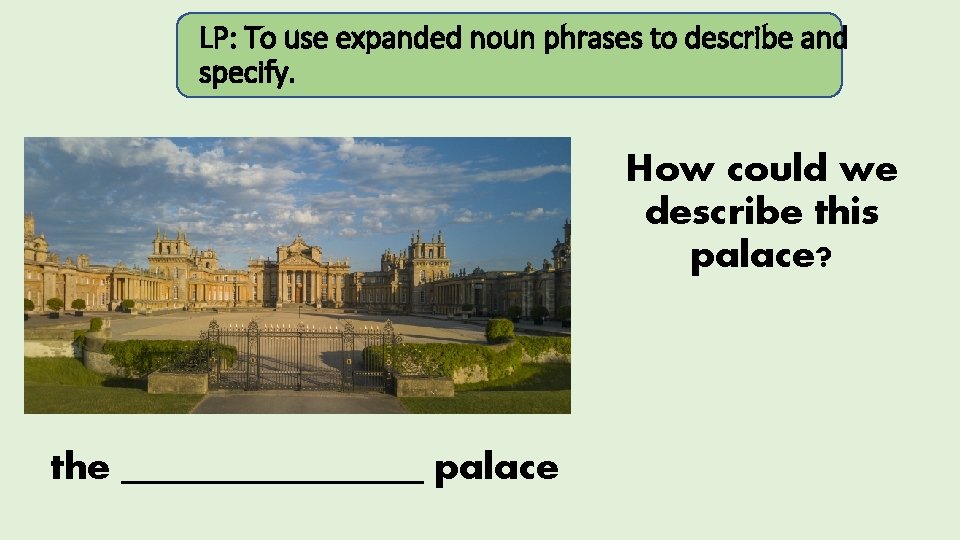
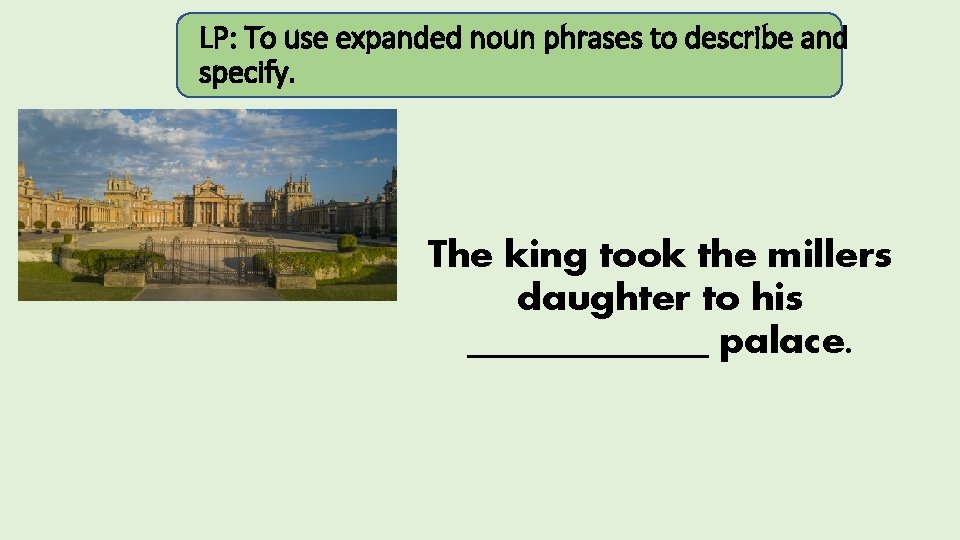
LP: To use expanded noun phrases to describe and specify. How could we describe this palace? the ________ palace
LP: To use expanded noun phrases to describe and specify. The king took the millers daughter to his ______ palace.
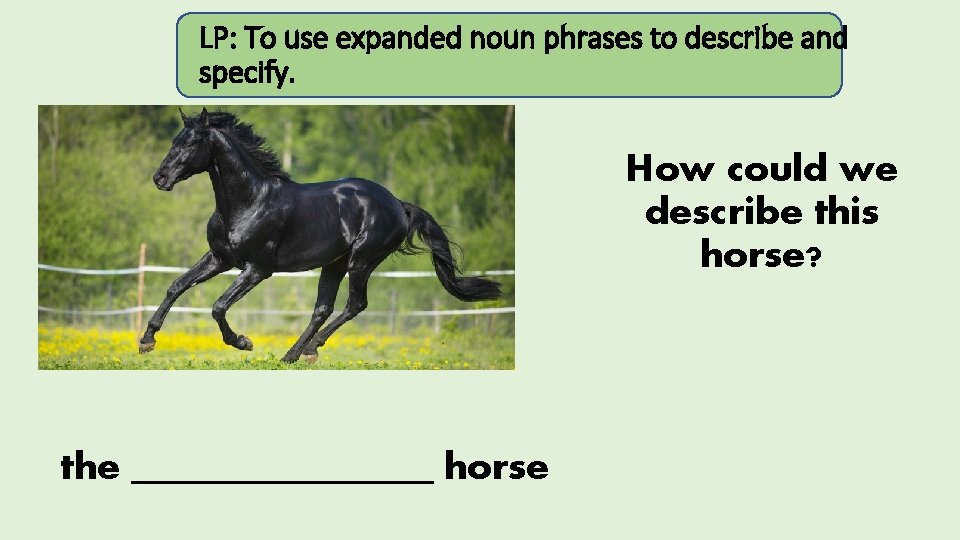
LP: To use expanded noun phrases to describe and specify. How could we describe this horse? the ________ horse
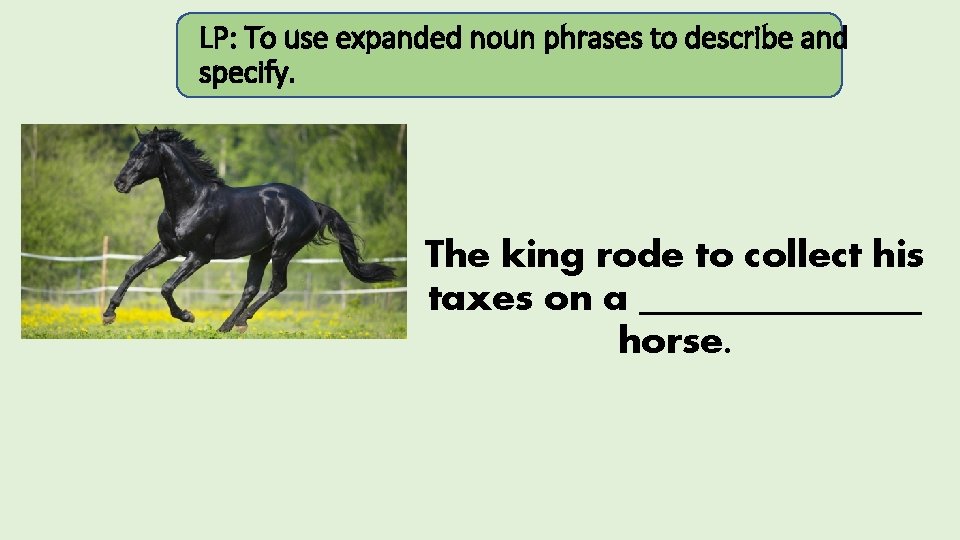
LP: To use expanded noun phrases to describe and specify. The king rode to collect his taxes on a _______ horse.
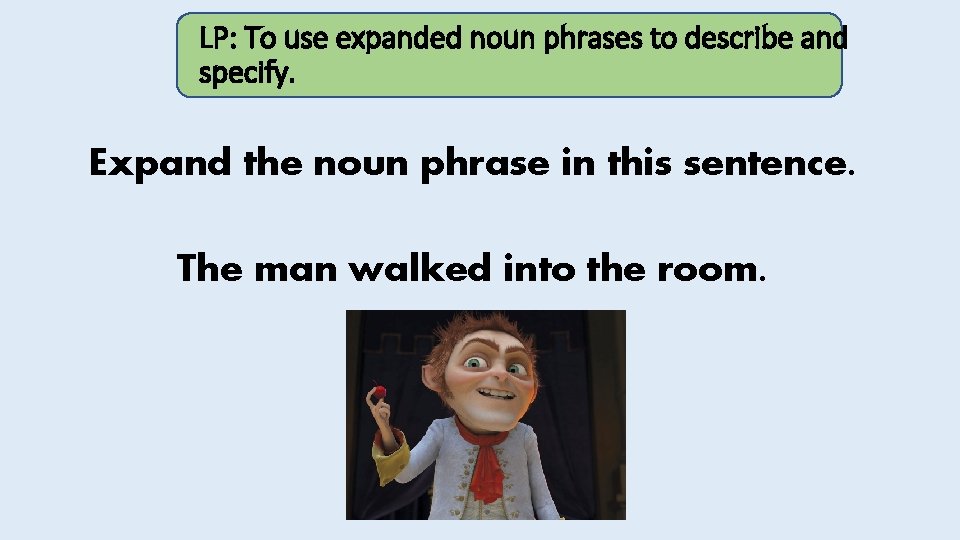
LP: To use expanded noun phrases to describe and specify. Expand the noun phrase in this sentence. The man walked into the room.
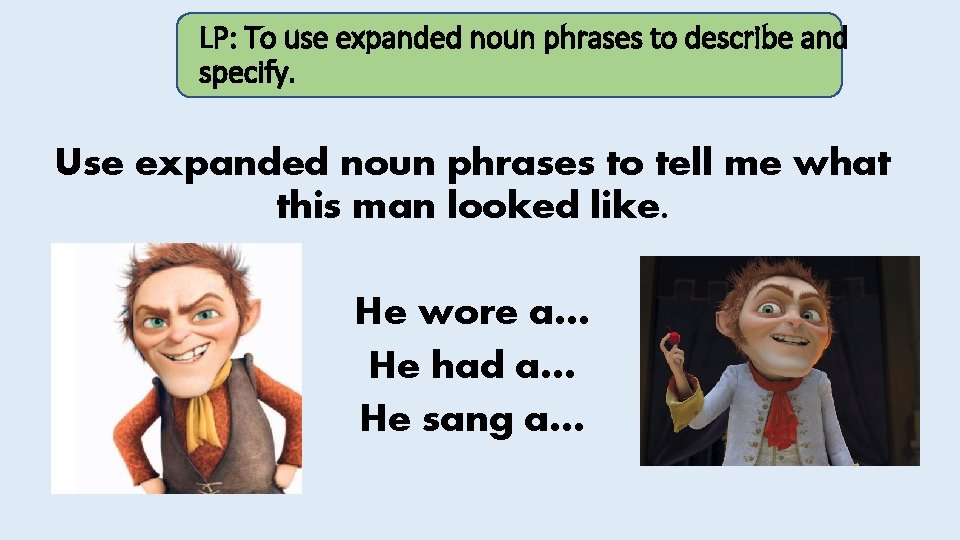
LP: To use expanded noun phrases to describe and specify. Use expanded noun phrases to tell me what this man looked like. He wore a… He had a… He sang a…
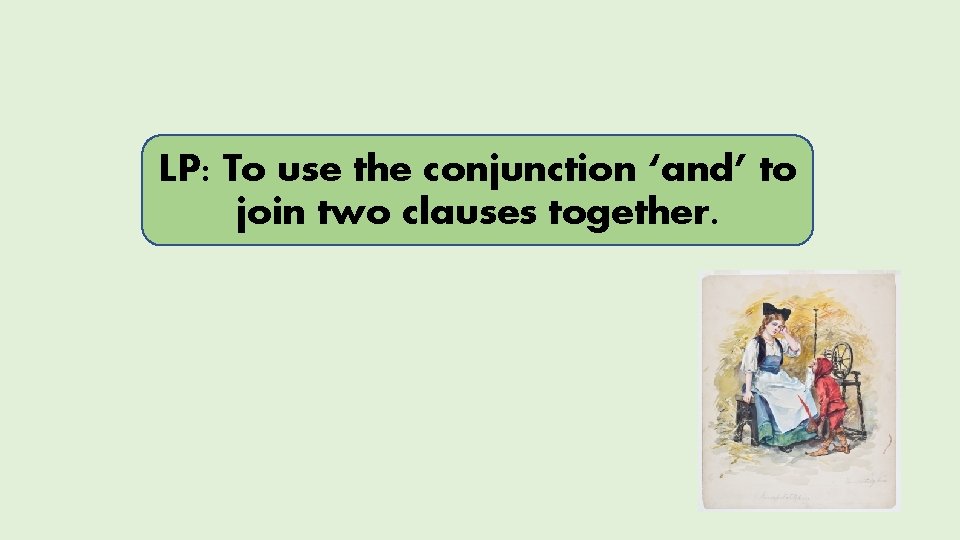
LP: To use the conjunction ‘and’ to join two clauses together.
LP: To use expanded noun phrases to describe and specify.
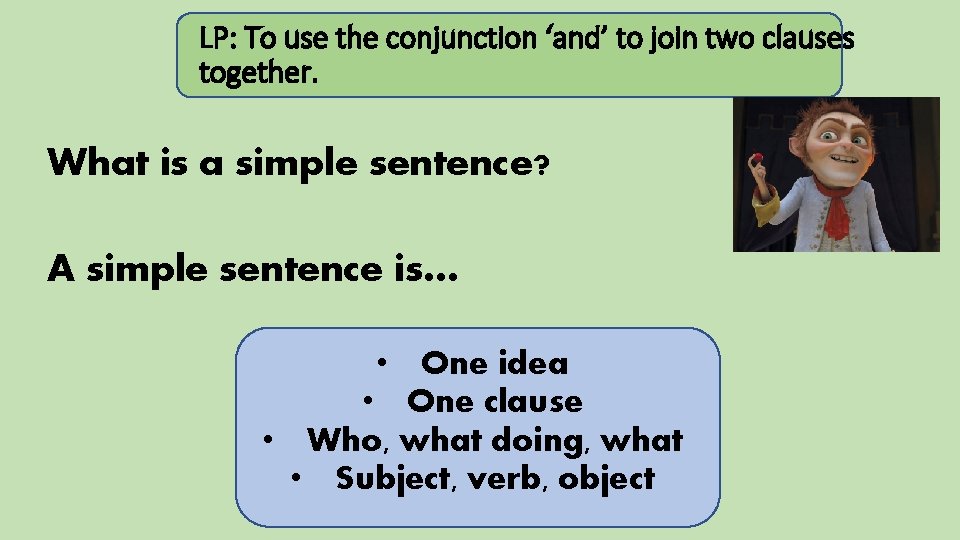
LP: To use the conjunction ‘and’ to join two clauses together. What is a simple sentence? A simple sentence is… • One idea • One clause • Who, what doing, what • Subject, verb, object
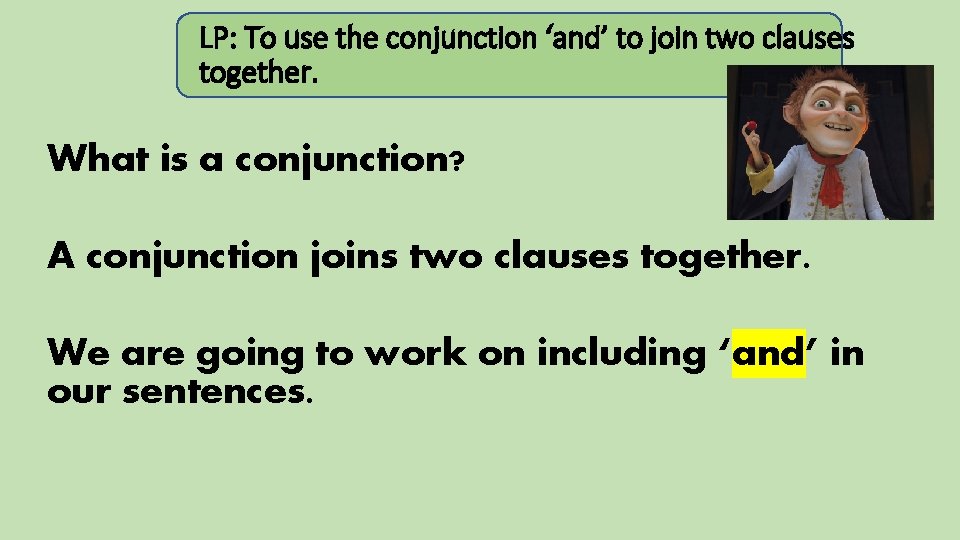
LP: To use the conjunction ‘and’ to join two clauses together. What is a conjunction? A conjunction joins two clauses together. We are going to work on including ‘and’ in our sentences.
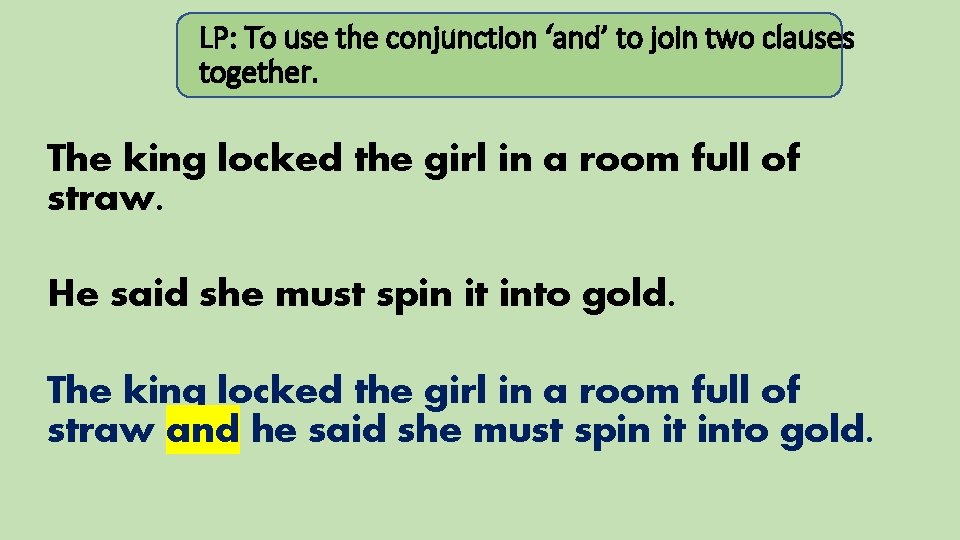
LP: To use the conjunction ‘and’ to join two clauses together. The king locked the girl in a room full of straw. He said she must spin it into gold. The king locked the girl in a room full of straw and he said she must spin it into gold.
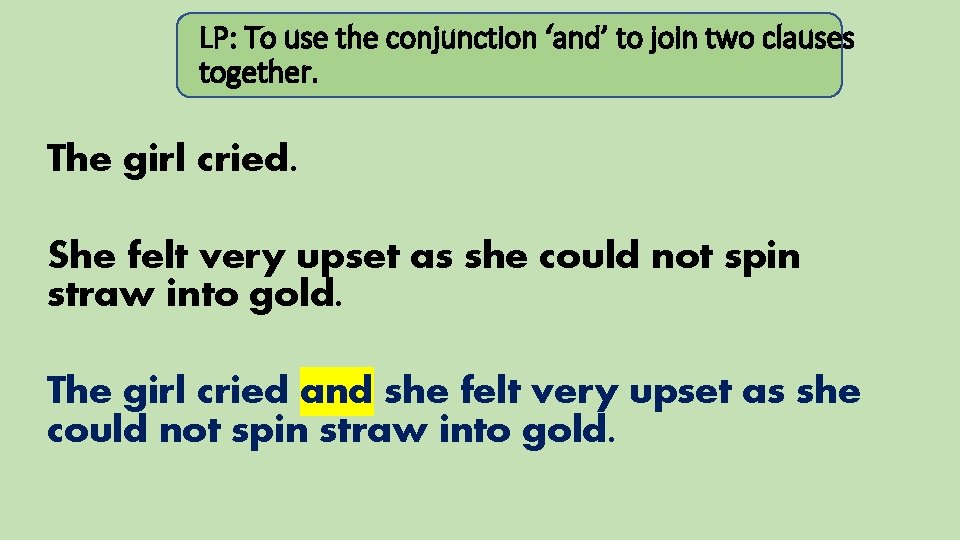
LP: To use the conjunction ‘and’ to join two clauses together. The girl cried. She felt very upset as she could not spin straw into gold. The girl cried and she felt very upset as she could not spin straw into gold.
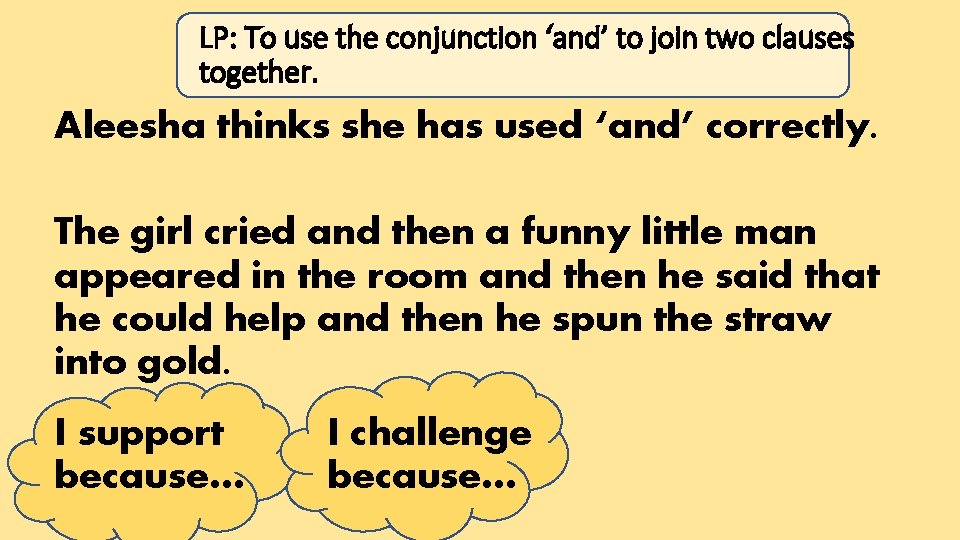
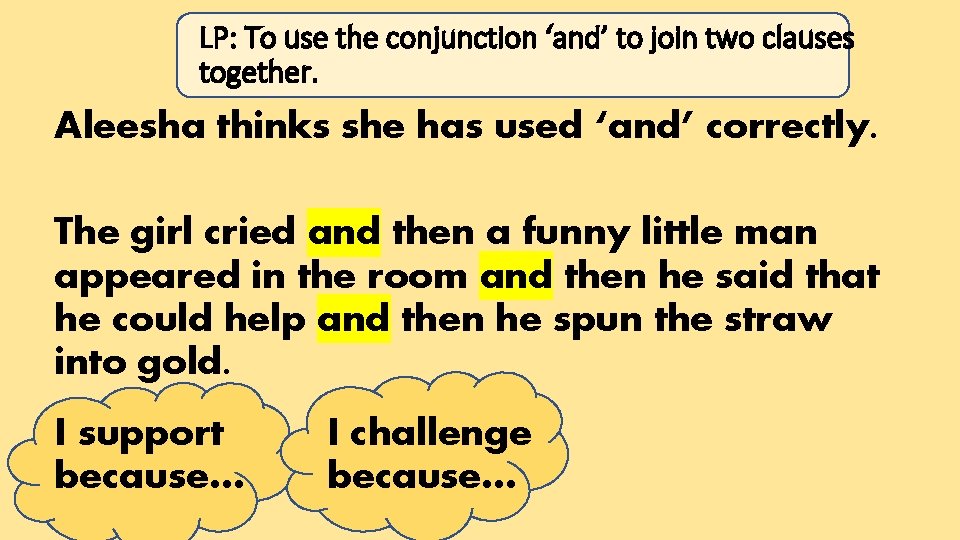
LP: To use the conjunction ‘and’ to join two clauses together. Aleesha thinks she has used ‘and’ correctly. The girl cried and then a funny little man appeared in the room and then he said that he could help and then he spun the straw into gold. I support because… I challenge because…
LP: To use the conjunction ‘and’ to join two clauses together. Aleesha thinks she has used ‘and’ correctly. The girl cried and then a funny little man appeared in the room and then he said that he could help and then he spun the straw into gold. I support because… I challenge because…
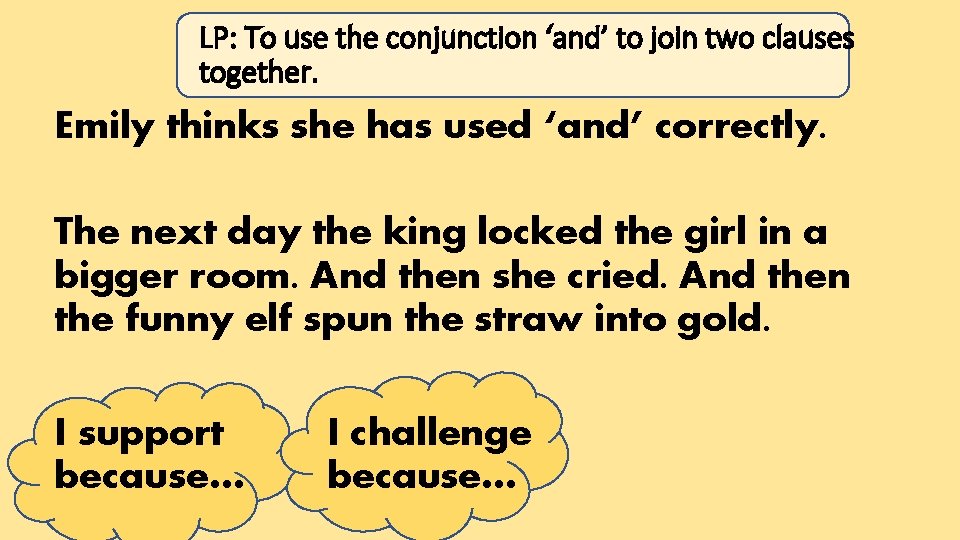
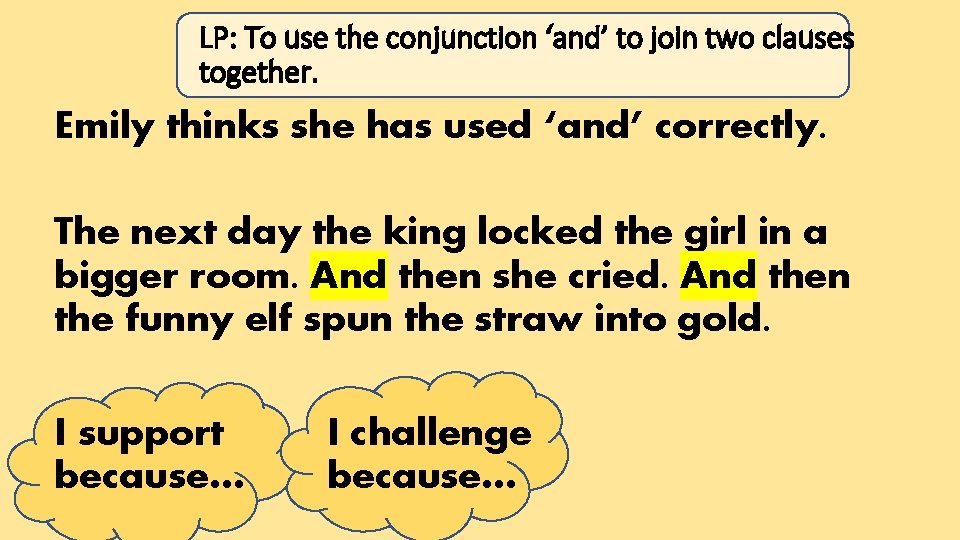
LP: To use the conjunction ‘and’ to join two clauses together. Emily thinks she has used ‘and’ correctly. The next day the king locked the girl in a bigger room. And then she cried. And then the funny elf spun the straw into gold. I support because… I challenge because…
LP: To use the conjunction ‘and’ to join two clauses together. Emily thinks she has used ‘and’ correctly. The next day the king locked the girl in a bigger room. And then she cried. And then the funny elf spun the straw into gold. I support because… I challenge because…
LP: To use the conjunction ‘and’ to join two clauses together. The conjunction ‘and’ is used to join two clauses together.
LP: To use the conjunction ‘and’ to join two clauses together. Write a sentence on your whiteboard that uses the conjunction ‘and’ correctly. Check your sentence with your partner. Do they agree?
LP: To use the conjunction ‘and’ to join two clauses together.
LP: To use the conjunction ‘and’ to join two clauses together. Write sentences in your workbooks about the story of Rumpelstiltskin using the conjunction ‘and’ correctly.
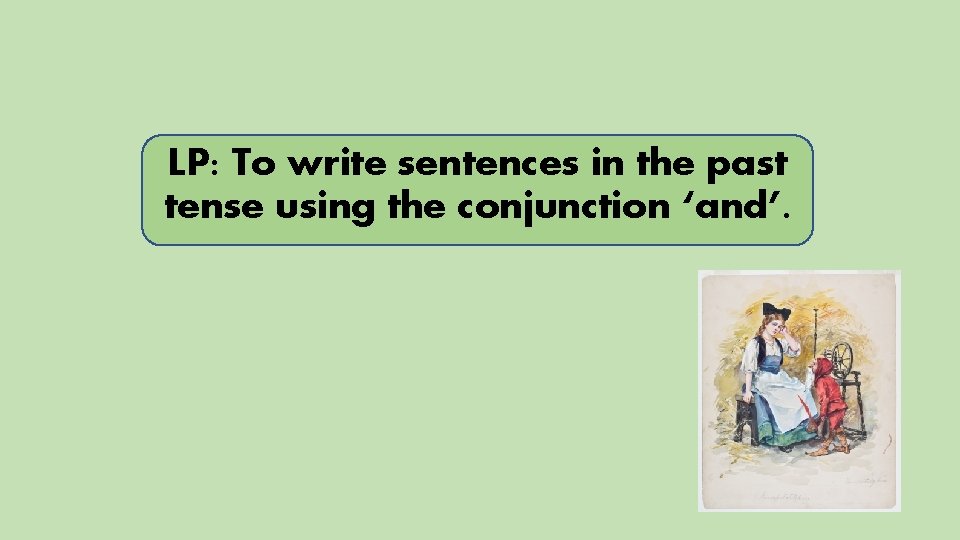
LP: To write sentences in the past tense using the conjunction ‘and’.
LP: To write sentences in the past tense using the conjunction ‘and’.
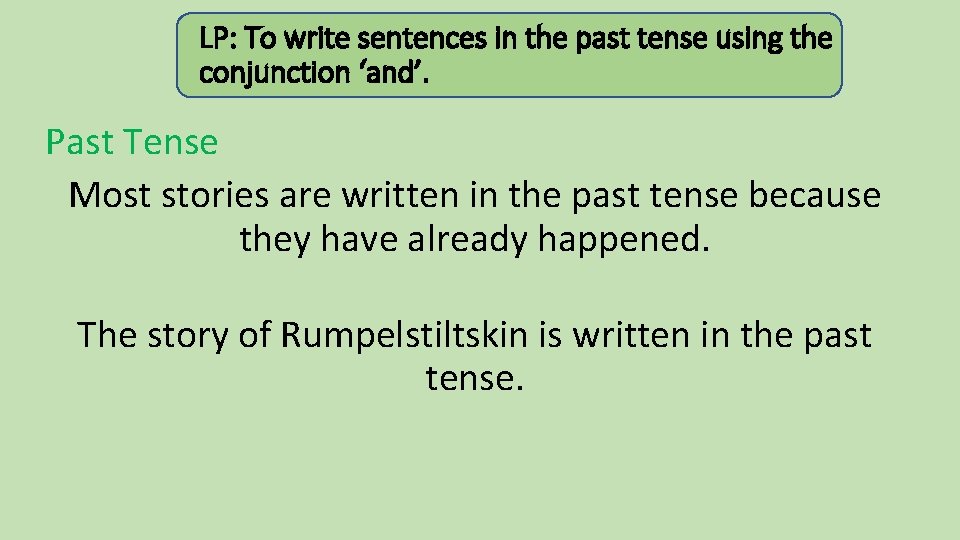
LP: To write sentences in the past tense using the conjunction ‘and’. Past Tense Most stories are written in the past tense because they have already happened. The story of Rumpelstiltskin is written in the past tense.
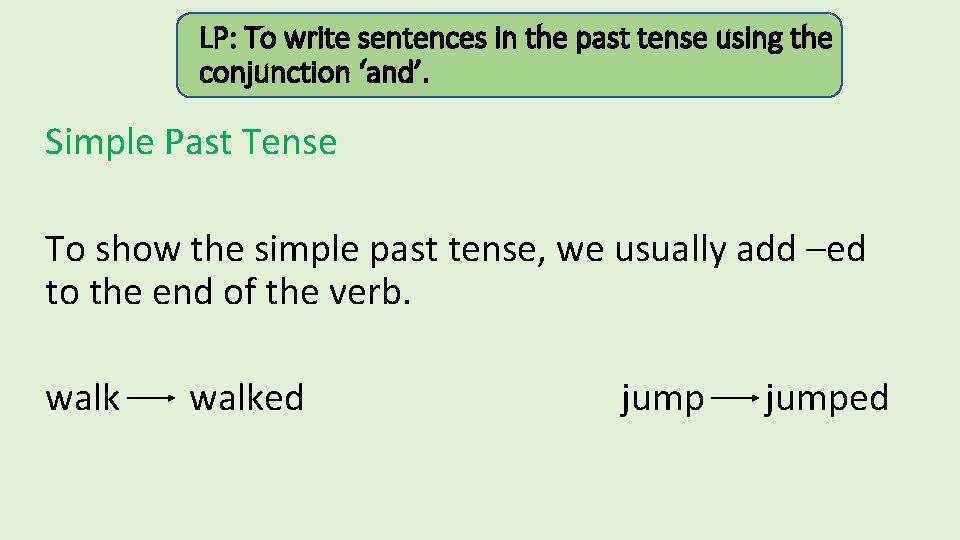
LP: To write sentences in the past tense using the conjunction ‘and’. Simple Past Tense To show the simple past tense, we usually add –ed to the end of the verb. walked jumped
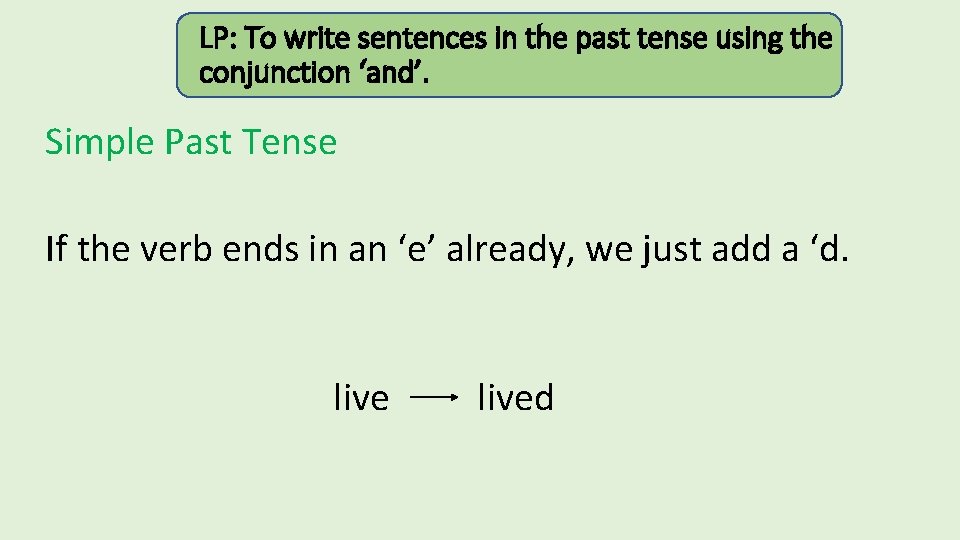
LP: To write sentences in the past tense using the conjunction ‘and’. Simple Past Tense If the verb ends in an ‘e’ already, we just add a ‘d. lived
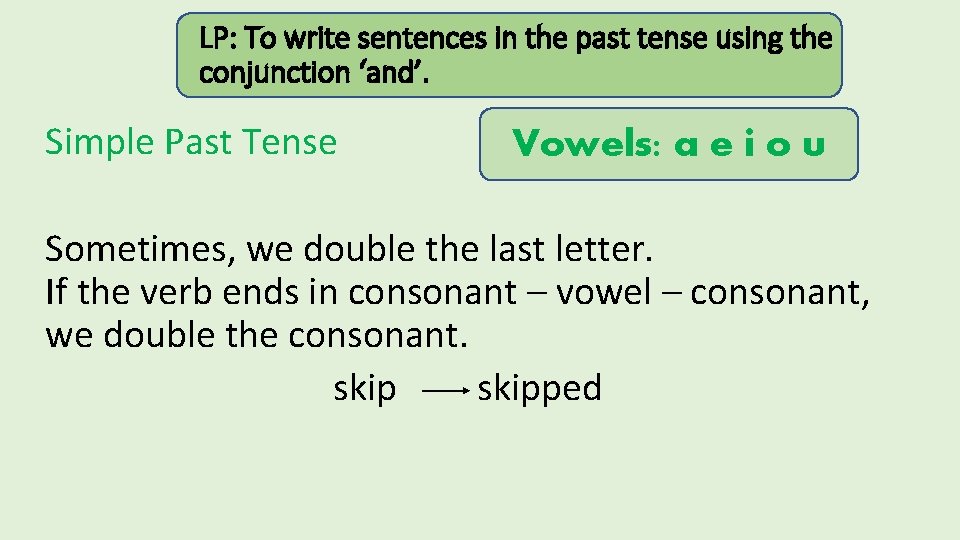
LP: To write sentences in the past tense using the conjunction ‘and’. Simple Past Tense Vowels: a e i o u Sometimes, we double the last letter. If the verb ends in consonant – vowel – consonant, we double the consonant. skipped
LP: To write sentences in the past tense using the conjunction ‘and’. What is a conjunction? A conjunction joins two clauses together. We are going to work on including ‘and’ in our sentences.
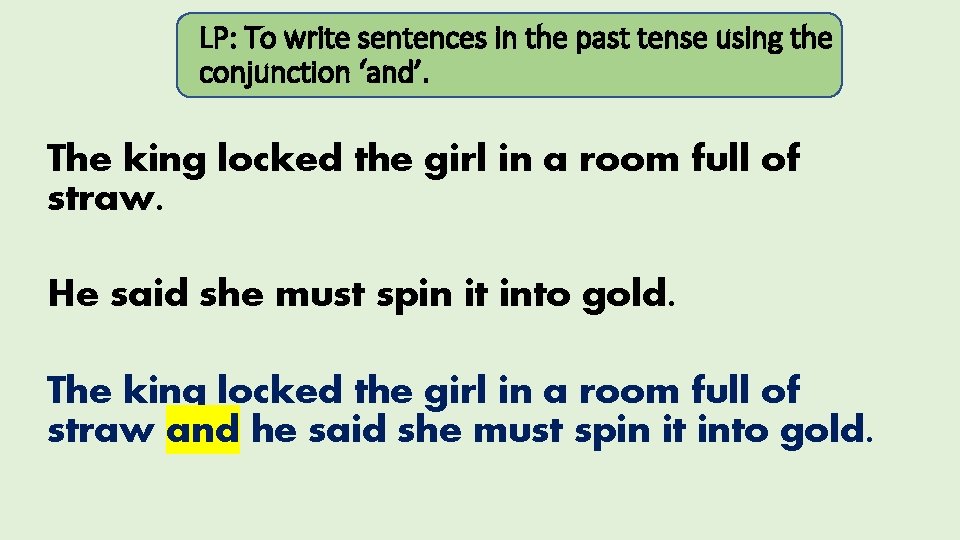
LP: To write sentences in the past tense using the conjunction ‘and’. The king locked the girl in a room full of straw. He said she must spin it into gold. The king locked the girl in a room full of straw and he said she must spin it into gold.
LP: To write sentences in the past tense using the conjunction ‘and’. The conjunction ‘and’ joins two clauses together. Each clause is a simple sentence.
LP: To write sentences in the past tense using the conjunction ‘and’. Write a sentence on your whiteboard in the past tense, that also includes ‘and’.
LP: To write sentences in the past tense using the conjunction ‘and’.
LP: To write sentences in the past tense using the conjunction ‘and’.
LP: To write sentences in the past tense using the conjunction ‘and’. Task: write sentences about the story of Rumpelstiltskin in the past tense. Include the conjunction ‘and’ in your sentences.
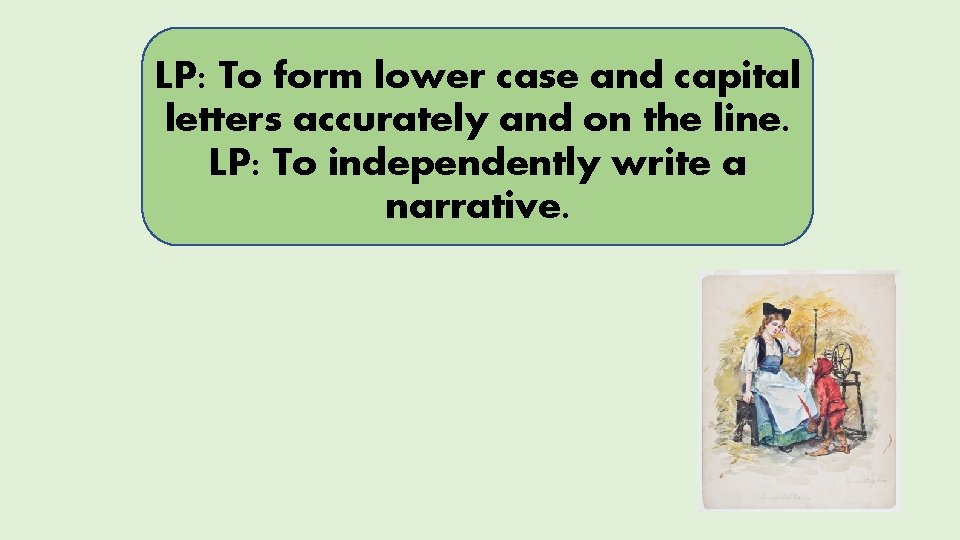
LP: To form lower case and capital letters accurately and on the line. LP: To independently write a narrative.
LP: To form lower case and capital letters accurately and on the line. LP: To independently write a narrative.
LP: To form lower case and capital letters accurately and on the line. LP: To independently write a narrative.
LP: To form lower case and capital letters accurately and on the line. LP: To independently write a narrative. Look back through your work from the past two weeks. Read your comments – know what you need to work on.
LP: To form lower case and capital letters accurately and on the line. LP: To independently write a narrative. Task: Independent write of the narrative: Rumpelstiltskin.