
LowIntensity Strategies Using High Probability Request Sequence to
Low-Intensity Strategies: Using High Probability Request Sequence to Support Instruction
Agenda – What is a high probability (high-p) request sequence? – Why is high-p request sequence effective? – What does the supporting research for high-p request sequence say? – What are the benefits and challenges? – How do I use high-p request sequence in my classroom? – Implementation Checklist – How well is it working? Examining the Effects
What is high-p request sequence? High probability (high-p) request sequence is a strategy to increase the likelihood a student will respond as expected to behaviors currently at a low-level of compliance. (Lane, Menzies, Ennis, & Oakes, 2015)
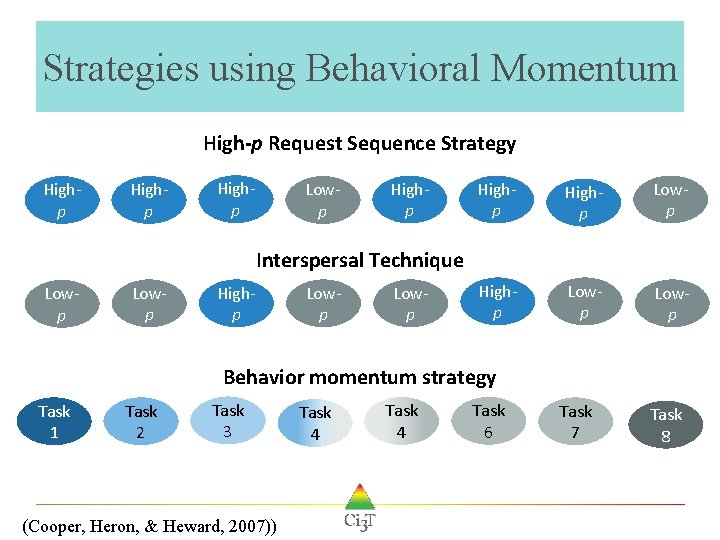
Strategies using Behavioral Momentum High-p Request Sequence Strategy Highp Highp Lowp Interspersal Technique Lowp Highp Lowp Behavior momentum strategy Task 1 Task 2 Task 3 (Cooper, Heron, & Heward, 2007)) Task 4 Task 6 Task 7 Task 8
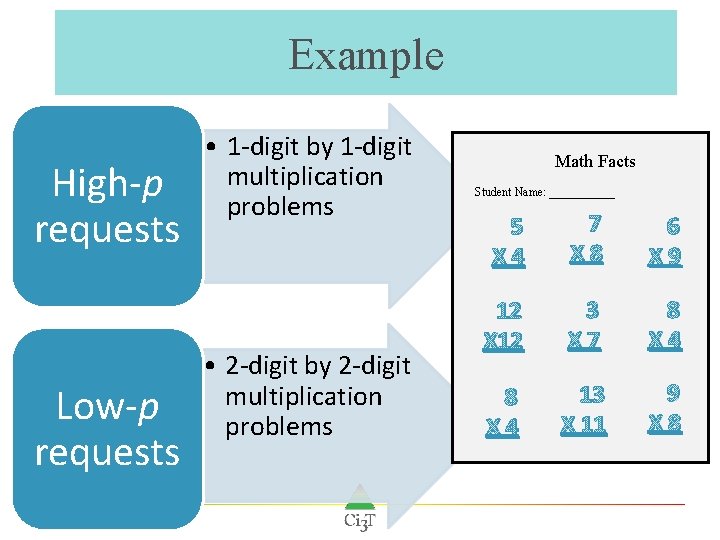
Example High-p requests Low-p requests • 1 -digit by 1 -digit multiplication problems • 2 -digit by 2 -digit multiplication problems Math Facts Student Name: ______ 5 X 4 7 X 8 6 X 9 12 X 12 3 X 7 8 X 4 13 X 11 9 X 8
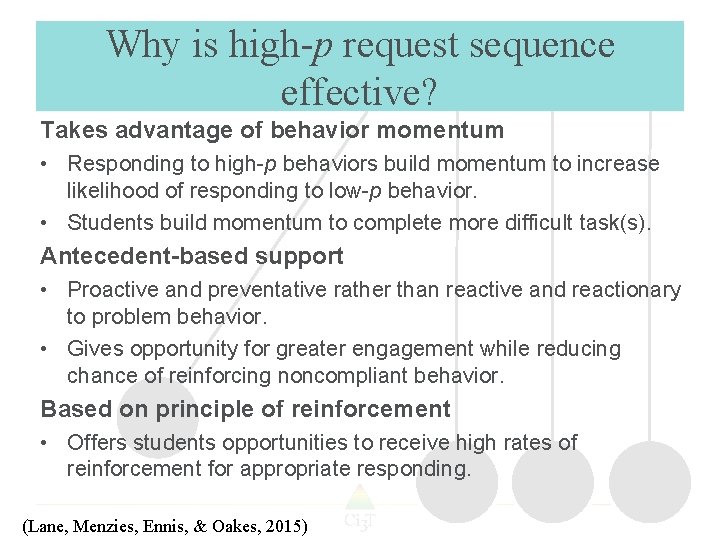
Why is high-p request sequence effective? Takes advantage of behavior momentum • Responding to high-p behaviors build momentum to increase likelihood of responding to low-p behavior. • Students build momentum to complete more difficult task(s). Antecedent-based support • Proactive and preventative rather than reactive and reactionary to problem behavior. • Gives opportunity for greater engagement while reducing chance of reinforcing noncompliant behavior. Based on principle of reinforcement • Offers students opportunities to receive high rates of reinforcement for appropriate responding. (Lane, Menzies, Ennis, & Oakes, 2015)
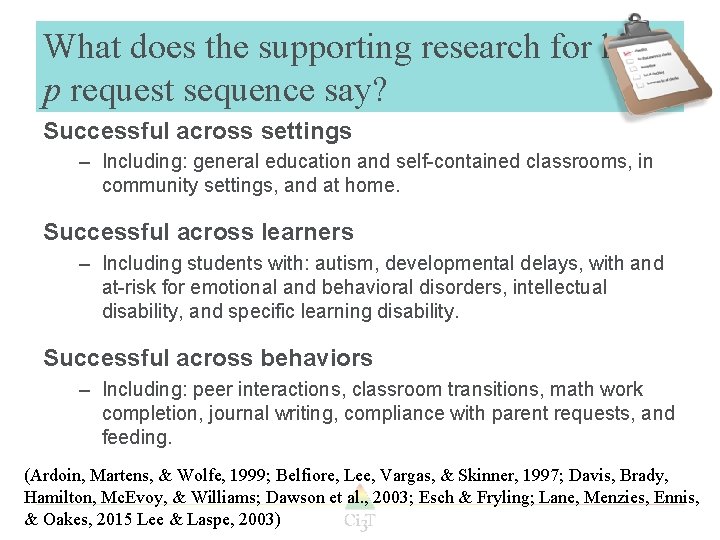
What does the supporting research for highp request sequence say? Successful across settings – Including: general education and self-contained classrooms, in community settings, and at home. Successful across learners – Including students with: autism, developmental delays, with and at-risk for emotional and behavioral disorders, intellectual disability, and specific learning disability. Successful across behaviors – Including: peer interactions, classroom transitions, math work completion, journal writing, compliance with parent requests, and feeding. (Ardoin, Martens, & Wolfe, 1999; Belfiore, Lee, Vargas, & Skinner, 1997; Davis, Brady, Hamilton, Mc. Evoy, & Williams; Dawson et al. , 2003; Esch & Fryling; Lane, Menzies, Ennis, & Oakes, 2015 Lee & Laspe, 2003)
Supporting Research See “HPRS Resource Guide” for additional supporting research and information.
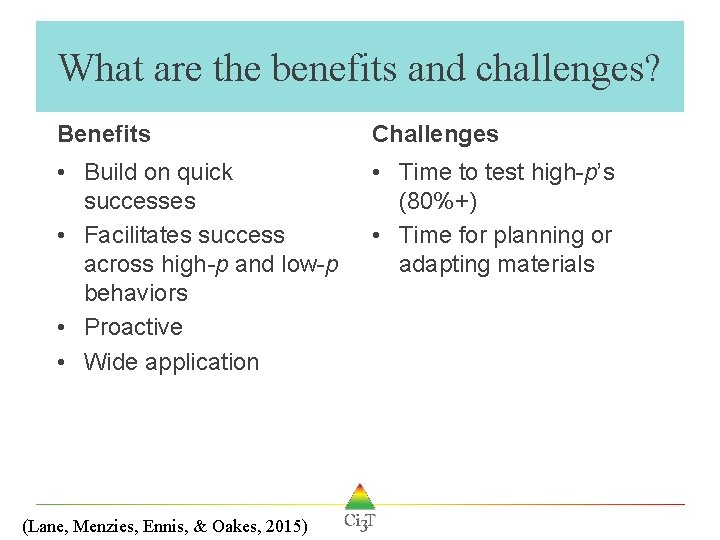
What are the benefits and challenges? Benefits Challenges • Build on quick successes • Facilitates success across high-p and low-p behaviors • Proactive • Wide application • Time to test high-p’s (80%+) • Time for planning or adapting materials (Lane, Menzies, Ennis, & Oakes, 2015)
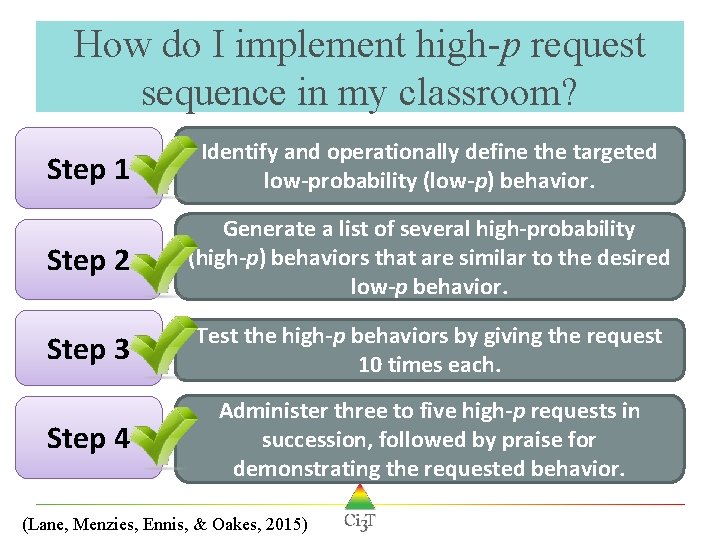
How do I implement high-p request sequence in my classroom? Step 1 Identify and operationally define the targeted low-probability (low-p) behavior. Step 2 Generate a list of several high-probability (high-p) behaviors that are similar to the desired low-p behavior. Step 3 Test the high-p behaviors by giving the request 10 times each. Step 4 Administer three to five high-p requests in succession, followed by praise for demonstrating the requested behavior. (Lane, Menzies, Ennis, & Oakes, 2015)
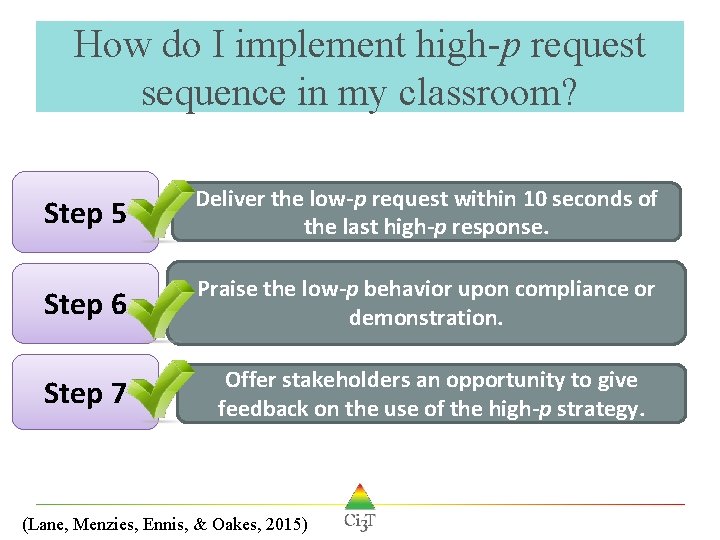
How do I implement high-p request sequence in my classroom? Step 5 Deliver the low-p request within 10 seconds of the last high-p response. Step 6 Praise the low-p behavior upon compliance or demonstration. Step 7 Offer stakeholders an opportunity to give feedback on the use of the high-p strategy. (Lane, Menzies, Ennis, & Oakes, 2015)
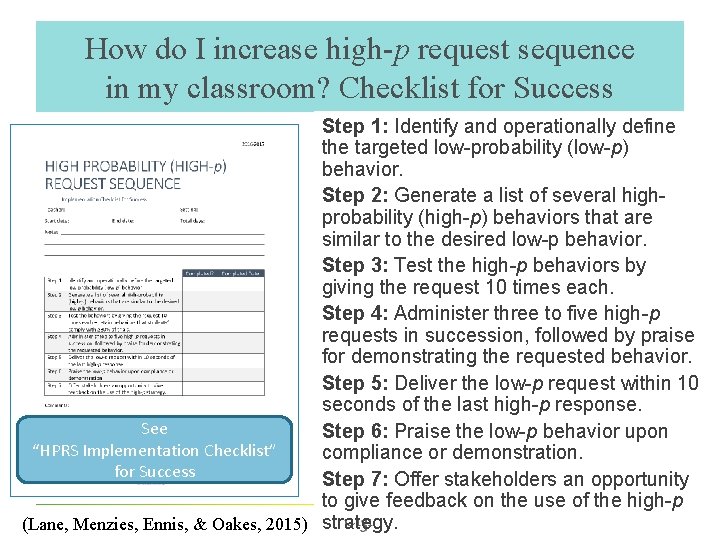
How do I increase high-p request sequence in my classroom? Checklist for Success Step 1: Identify and operationally define the targeted low-probability (low-p) behavior. Step 2: Generate a list of several highprobability (high-p) behaviors that are similar to the desired low-p behavior. Step 3: Test the high-p behaviors by giving the request 10 times each. Step 4: Administer three to five high-p requests in succession, followed by praise for demonstrating the requested behavior. Step 5: Deliver the low-p request within 10 seconds of the last high-p response. See Step 6: Praise the low-p behavior upon “HPRS Implementation Checklist” compliance or demonstration. for Success Step 7: Offer stakeholders an opportunity to give feedback on the use of the high-p (Lane, Menzies, Ennis, & Oakes, 2015) strategy.
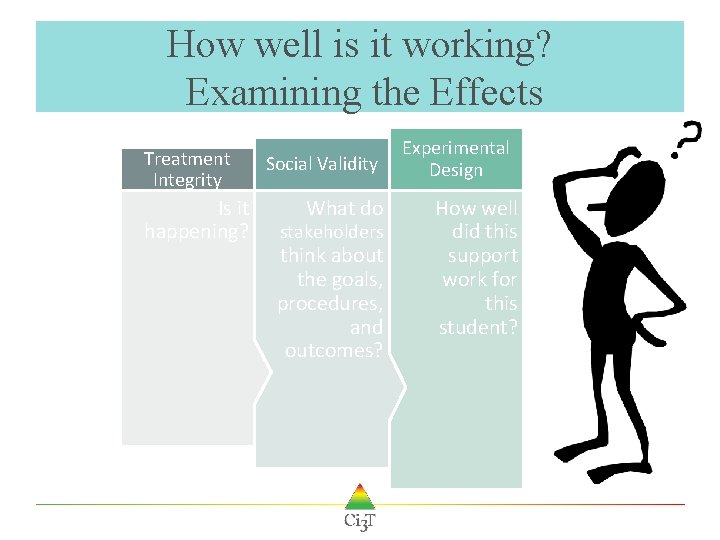
How well is it working? Examining the Effects Treatment Integrity Is it happening? Social Validity What do stakeholders think about the goals, procedures, and outcomes? Experimental Design How well did this support work for this student?
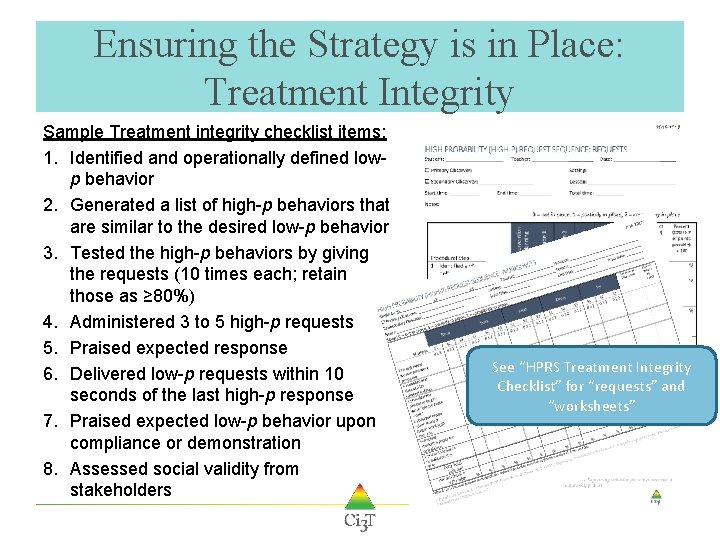
Ensuring the Strategy is in Place: Treatment Integrity Sample Treatment integrity checklist items: 1. Identified and operationally defined lowp behavior 2. Generated a list of high-p behaviors that are similar to the desired low-p behavior 3. Tested the high-p behaviors by giving the requests (10 times each; retain those as ≥ 80%) 4. Administered 3 to 5 high-p requests 5. Praised expected response 6. Delivered low-p requests within 10 seconds of the last high-p response 7. Praised expected low-p behavior upon compliance or demonstration 8. Assessed social validity from stakeholders See “HPRS Treatment Integrity Checklist” for “requests” and “worksheets”
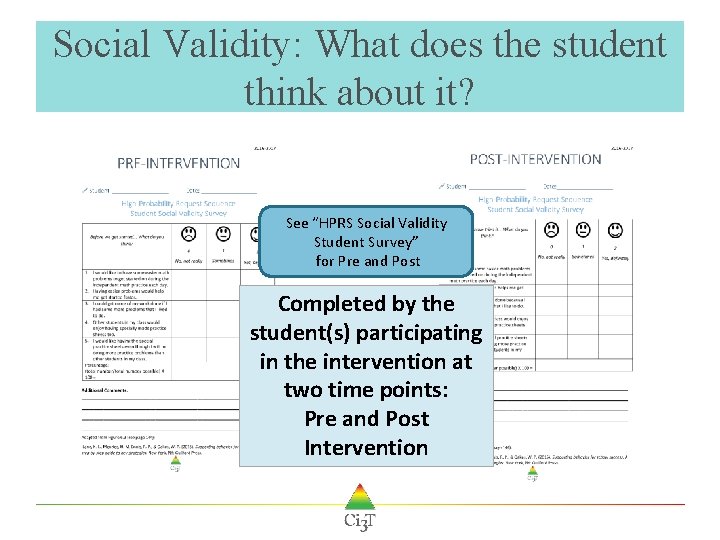
Social Validity: What does the student think about it? See “HPRS Social Validity Student Survey” for Pre and Post Completed by the student(s) participating in the intervention at two time points: Pre and Post Intervention
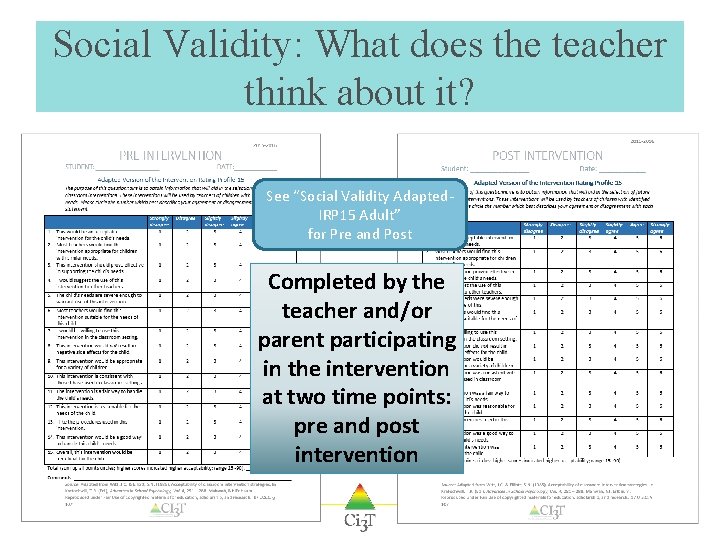
Social Validity: What does the teacher think about it? See “Social Validity Adapted. IRP 15 Adult” for Pre and Post Completed by the teacher and/or parent participating in the intervention at two time points: pre and post intervention
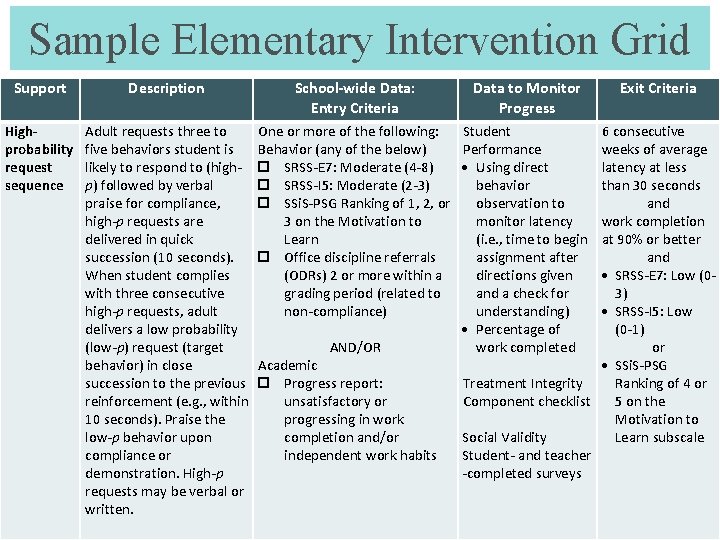
Sample Elementary Intervention Grid Support Description Highprobability request sequence Adult requests three to five behaviors student is likely to respond to (highp) followed by verbal praise for compliance, high-p requests are delivered in quick succession (10 seconds). When student complies with three consecutive high-p requests, adult delivers a low probability (low-p) request (target behavior) in close succession to the previous reinforcement (e. g. , within 10 seconds). Praise the low-p behavior upon compliance or demonstration. High-p requests may be verbal or written. School-wide Data: Entry Criteria Data to Monitor Progress One or more of the following: Student Behavior (any of the below) Performance SRSS-E 7: Moderate (4 -8) Using direct SRSS-I 5: Moderate (2 -3) behavior SSi. S-PSG Ranking of 1, 2, or observation to 3 on the Motivation to monitor latency Learn (i. e. , time to begin Office discipline referrals assignment after (ODRs) 2 or more within a directions given grading period (related to and a check for non-compliance) understanding) Percentage of AND/OR work completed Academic Progress report: Treatment Integrity unsatisfactory or Component checklist progressing in work completion and/or Social Validity independent work habits Student- and teacher -completed surveys Exit Criteria 6 consecutive weeks of average latency at less than 30 seconds and work completion at 90% or better and SRSS-E 7: Low (03) SRSS-I 5: Low (0 -1) or SSi. S-PSG Ranking of 4 or 5 on the Motivation to Learn subscale
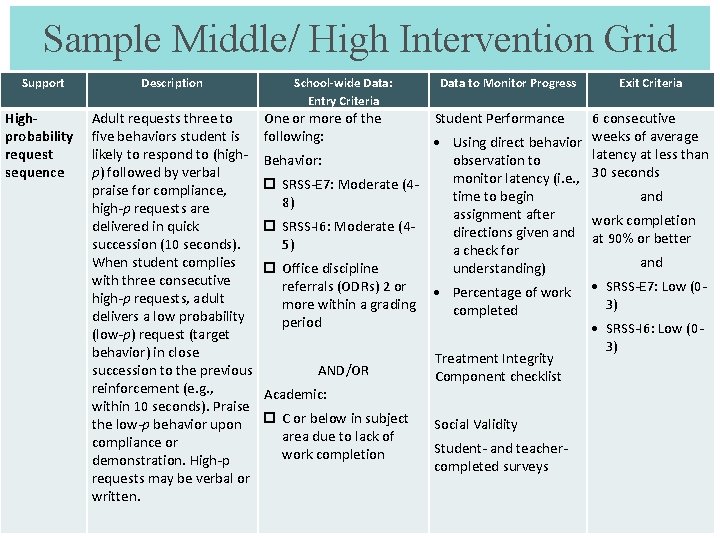
Sample Middle/ High Intervention Grid Support Highprobability request sequence Description Adult requests three to five behaviors student is likely to respond to (highp) followed by verbal praise for compliance, high-p requests are delivered in quick succession (10 seconds). When student complies with three consecutive high-p requests, adult delivers a low probability (low-p) request (target behavior) in close succession to the previous reinforcement (e. g. , within 10 seconds). Praise the low-p behavior upon compliance or demonstration. High-p requests may be verbal or written. School-wide Data: Entry Criteria One or more of the following: Behavior: SRSS-E 7: Moderate (48) SRSS-I 6: Moderate (45) Office discipline referrals (ODRs) 2 or more within a grading period AND/OR Academic: C or below in subject area due to lack of work completion Data to Monitor Progress Exit Criteria Student Performance 6 consecutive Using direct behavior weeks of average latency at less than observation to monitor latency (i. e. , 30 seconds time to begin and assignment after work completion directions given and at 90% or better a check for and understanding) Percentage of work SRSS-E 7: Low (03) completed Treatment Integrity Component checklist Social Validity Student- and teachercompleted surveys SRSS-I 6: Low (03)
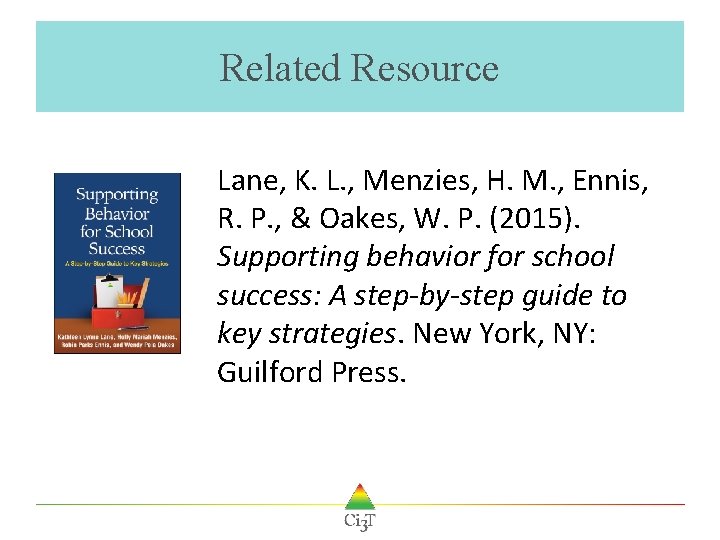
Related Resource Lane, K. L. , Menzies, H. M. , Ennis, R. P. , & Oakes, W. P. (2015). Supporting behavior for school success: A step-by-step guide to key strategies. New York, NY: Guilford Press.
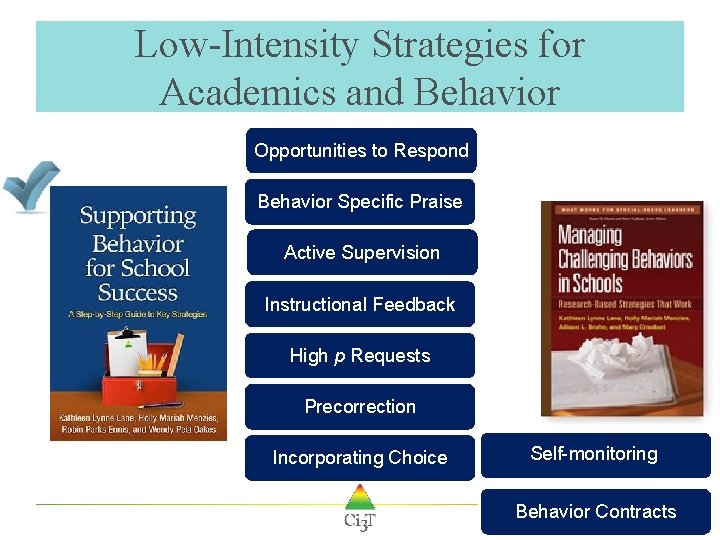
Low-Intensity Strategies for Academics and Behavior Opportunities to Respond Behavior Specific Praise Active Supervision Instructional Feedback High p Requests Precorrection Incorporating Choice Self-monitoring Behavior Contracts
- Slides: 20