
LowIntensity Strategies Using Active Supervision to Support Instruction
- Slides: 20
Low-Intensity Strategies: Using Active Supervision to Support Instruction
Agenda • Comprehensive, Integrated, Three-Tiered (Ci 3 T) Models of Prevention • A Look at Active Supervision – What is active supervision? – Why is active supervision effective? – What does the supporting research for active supervision say? – What are the benefits and challenges? – How do I use active supervision in my classroom? Checklist for Success – How well is it working? Examining the Effects
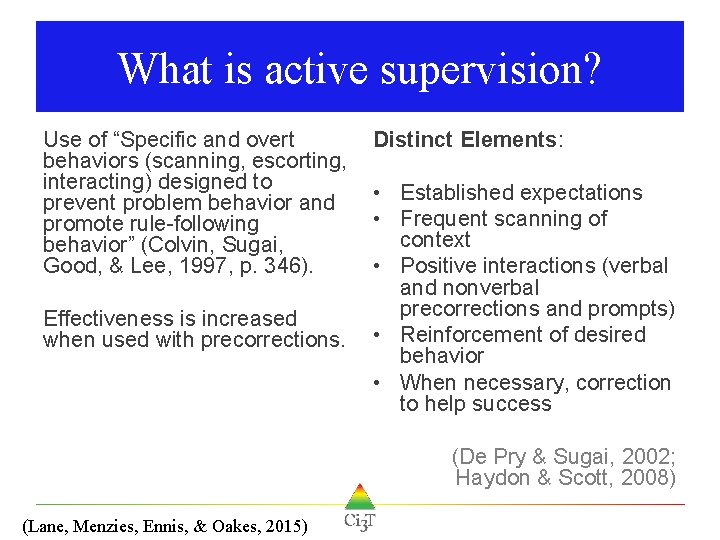
What is active supervision? Use of “Specific and overt behaviors (scanning, escorting, interacting) designed to prevent problem behavior and promote rule-following behavior” (Colvin, Sugai, Good, & Lee, 1997, p. 346). Effectiveness is increased when used with precorrections. Distinct Elements: • Established expectations • Frequent scanning of context • Positive interactions (verbal and nonverbal precorrections and prompts) • Reinforcement of desired behavior • When necessary, correction to help success (De Pry & Sugai, 2002; Haydon & Scott, 2008) (Lane, Menzies, Ennis, & Oakes, 2015)
What is active supervision? See “AS Introduction”
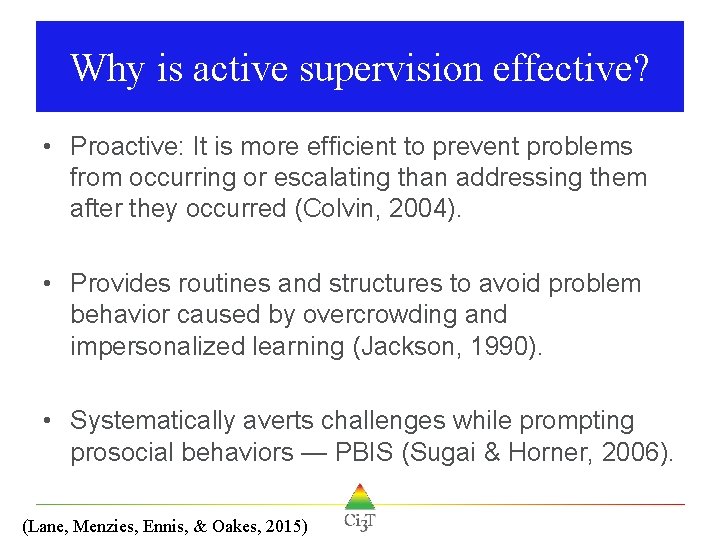
Why is active supervision effective? • Proactive: It is more efficient to prevent problems from occurring or escalating than addressing them after they occurred (Colvin, 2004). • Provides routines and structures to avoid problem behavior caused by overcrowding and impersonalized learning (Jackson, 1990). • Systematically averts challenges while prompting prosocial behaviors — PBIS (Sugai & Horner, 2006). (Lane, Menzies, Ennis, & Oakes, 2015)
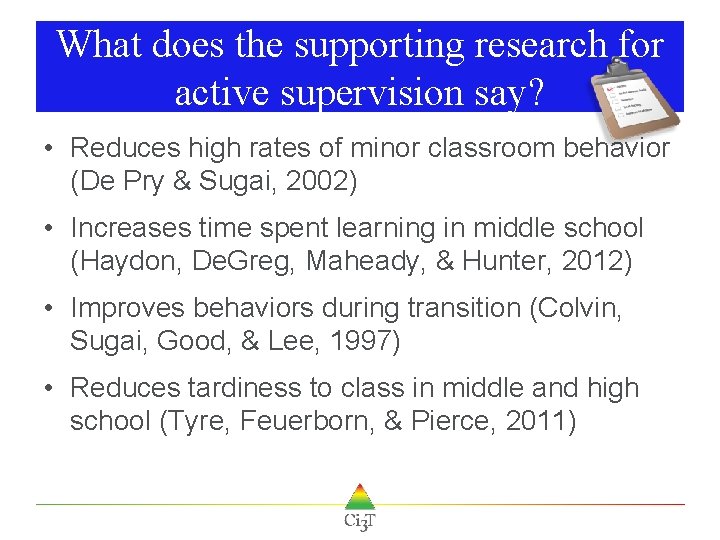
What does the supporting research for active supervision say? • Reduces high rates of minor classroom behavior (De Pry & Sugai, 2002) • Increases time spent learning in middle school (Haydon, De. Greg, Maheady, & Hunter, 2012) • Improves behaviors during transition (Colvin, Sugai, Good, & Lee, 1997) • Reduces tardiness to class in middle and high school (Tyre, Feuerborn, & Pierce, 2011)
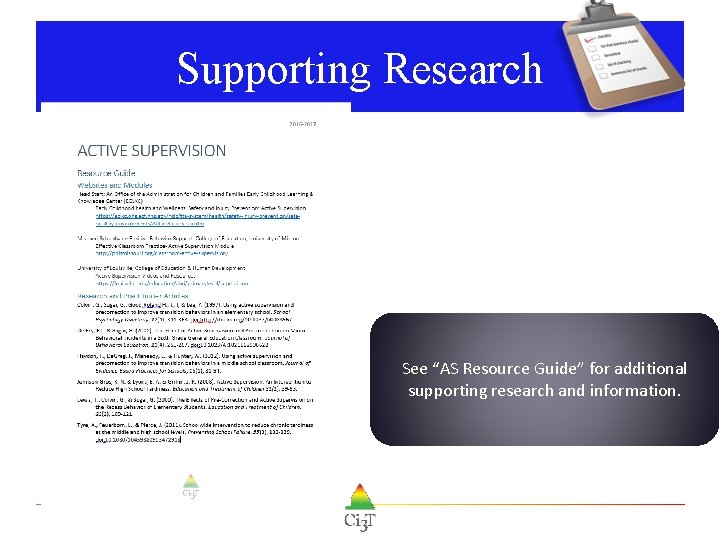
Supporting Research See “AS Resource Guide” for additional supporting research and information.
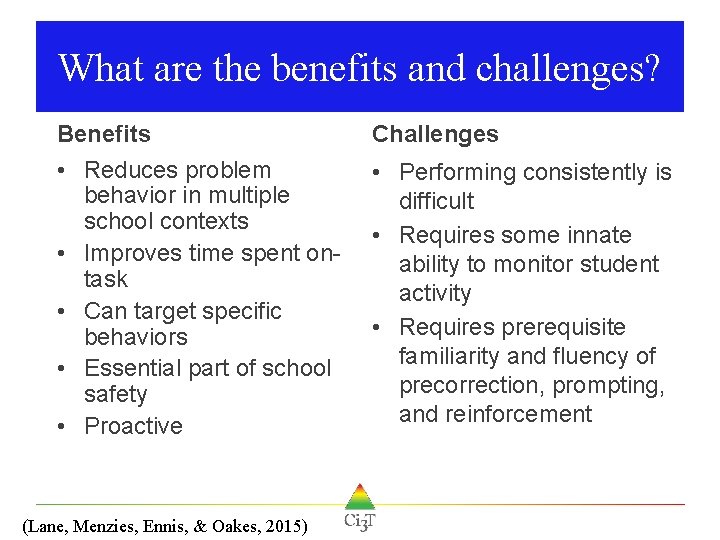
What are the benefits and challenges? Benefits • Reduces problem behavior in multiple school contexts • Improves time spent ontask • Can target specific behaviors • Essential part of school safety • Proactive (Lane, Menzies, Ennis, & Oakes, 2015) Challenges • Performing consistently is difficult • Requires some innate ability to monitor student activity • Requires prerequisite familiarity and fluency of precorrection, prompting, and reinforcement
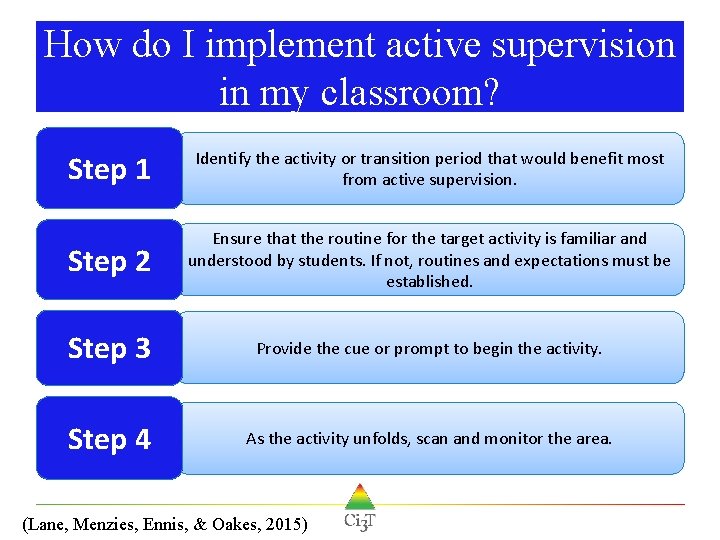
How do I implement active supervision in my classroom? Step 1 Identify the activity or transition period that would benefit most from active supervision. Step 2 Ensure that the routine for the target activity is familiar and understood by students. If not, routines and expectations must be established. Step 3 Provide the cue or prompt to begin the activity. Step 4 As the activity unfolds, scan and monitor the area. (Lane, Menzies, Ennis, & Oakes, 2015)
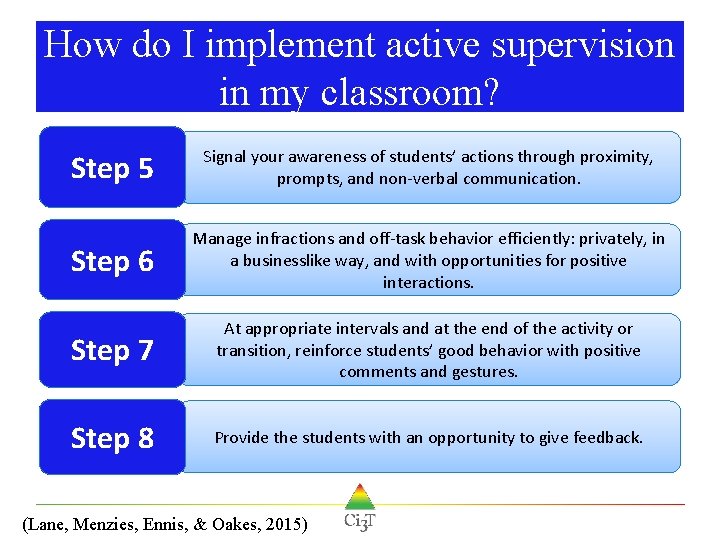
How do I implement active supervision in my classroom? Step 5 Signal your awareness of students’ actions through proximity, prompts, and non-verbal communication. Step 6 Manage infractions and off-task behavior efficiently: privately, in a businesslike way, and with opportunities for positive interactions. Step 7 At appropriate intervals and at the end of the activity or transition, reinforce students’ good behavior with positive comments and gestures. Step 8 Provide the students with an opportunity to give feedback. (Lane, Menzies, Ennis, & Oakes, 2015)
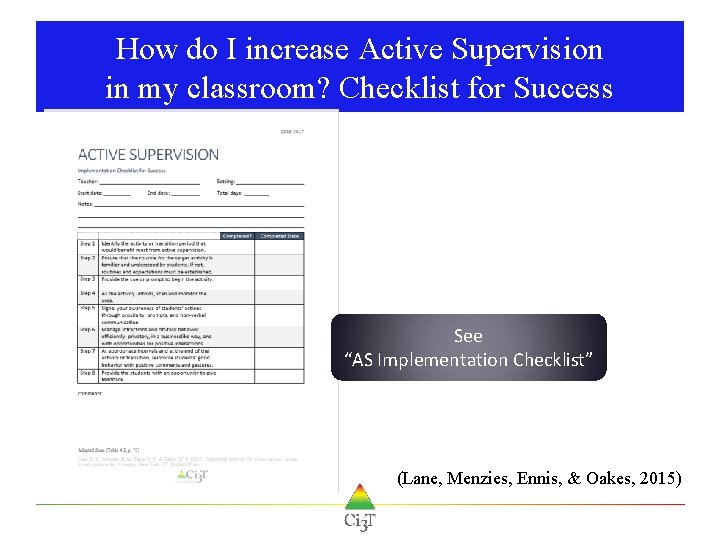
How do I increase Active Supervision in my classroom? Checklist for Success See “AS Implementation Checklist” (Lane, Menzies, Ennis, & Oakes, 2015)
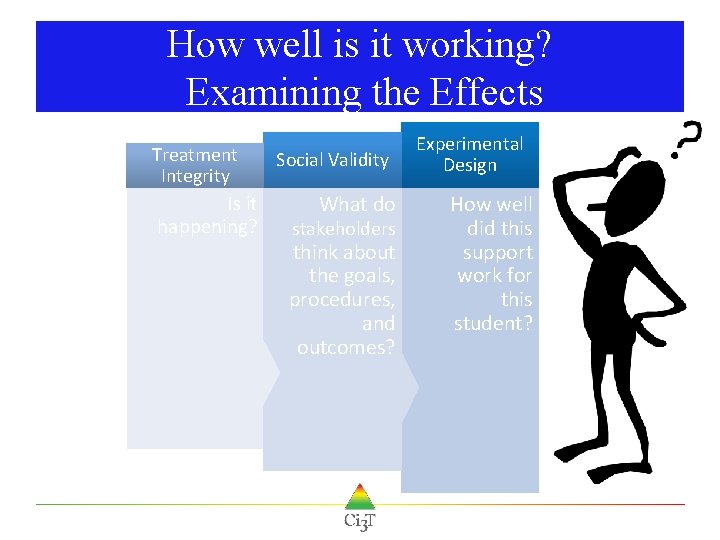
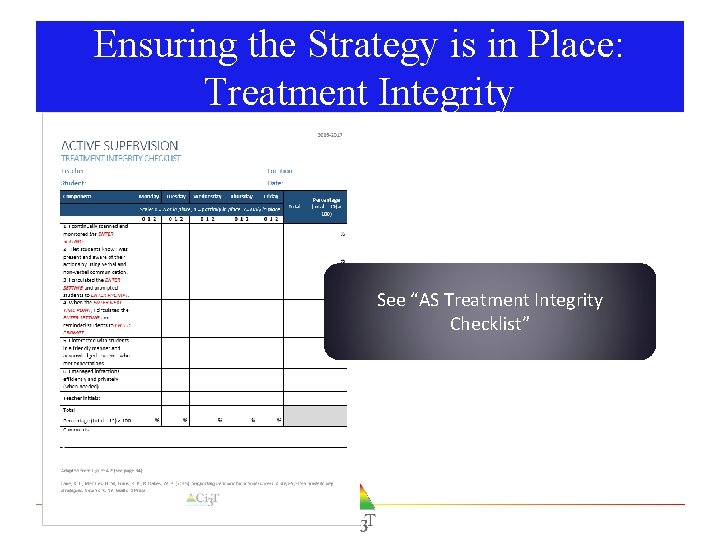
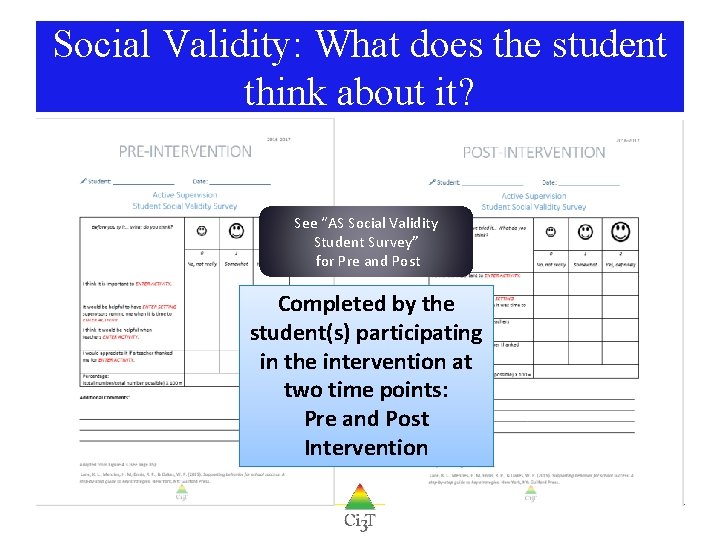
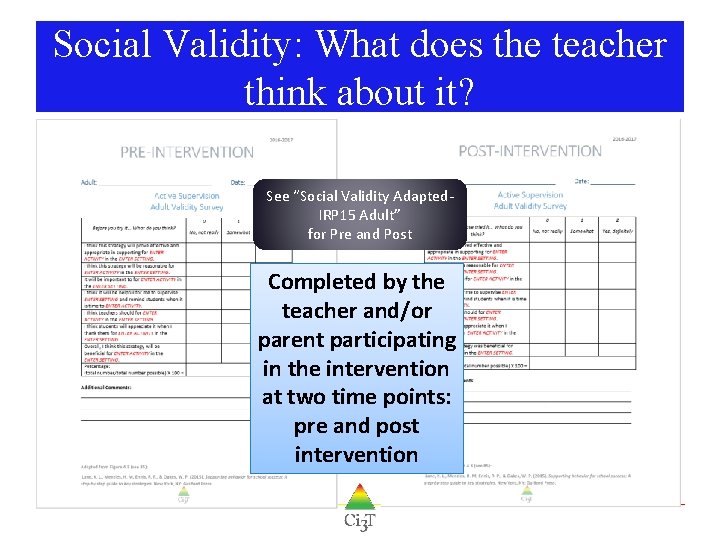
How well is it working? Examining the Effects Treatment Integrity Is it happening? Social Validity What do stakeholders think about the goals, procedures, and outcomes? Experimental Design How well did this support work for this student?
Ensuring the Strategy is in Place: Treatment Integrity See “AS Treatment Integrity Checklist”
Social Validity: What does the student think about it? See “AS Social Validity Student Survey” for Pre and Post Completed by the student(s) participating in the intervention at two time points: Pre and Post Intervention
Social Validity: What does the teacher think about it? See “Social Validity Adapted. IRP 15 Adult” for Pre and Post Completed by the teacher and/or parent participating in the intervention at two time points: pre and post intervention
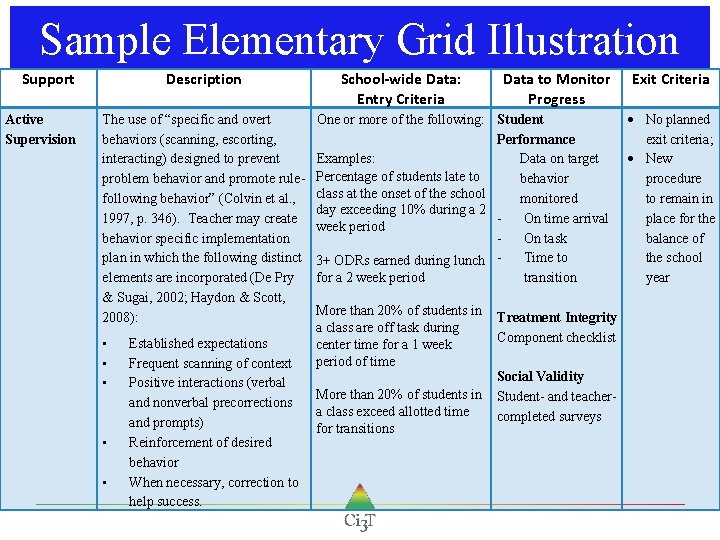
Sample Elementary Grid Illustration Support Active Supervision Description School-wide Data: Entry Criteria Data to Monitor Progress Exit Criteria The use of “specific and overt behaviors (scanning, escorting, interacting) designed to prevent problem behavior and promote rulefollowing behavior” (Colvin et al. , 1997, p. 346). Teacher may create behavior specific implementation plan in which the following distinct elements are incorporated (De Pry & Sugai, 2002; Haydon & Scott, 2008): One or more of the following: Examples: Percentage of students late to class at the onset of the school day exceeding 10% during a 2 week period 3+ ODRs earned during lunch for a 2 week period More than 20% of students in a class are off task during center time for a 1 week period of time More than 20% of students in a class exceed allotted time for transitions Student Performance Data on target behavior monitored On time arrival On task Time to transition Treatment Integrity Component checklist Social Validity Student- and teachercompleted surveys No planned exit criteria; New procedure to remain in place for the balance of the school year • • • Established expectations Frequent scanning of context Positive interactions (verbal and nonverbal precorrections and prompts) Reinforcement of desired behavior When necessary, correction to help success.
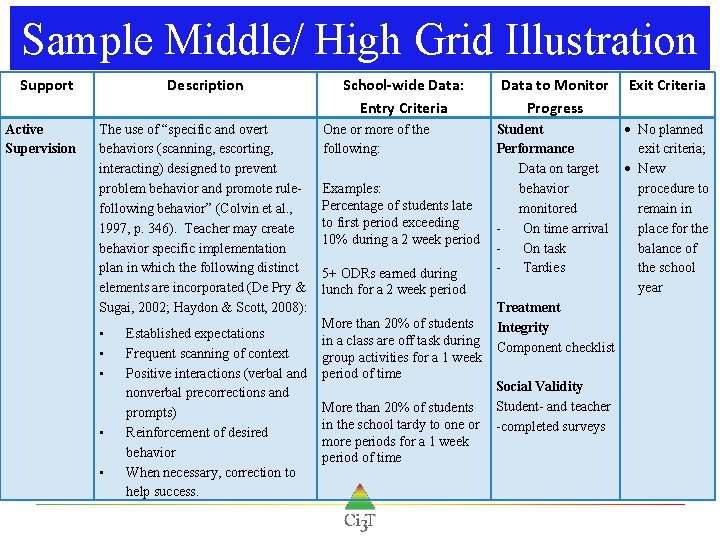
Sample Middle/ High Grid Illustration Support Active Supervision Description The use of “specific and overt behaviors (scanning, escorting, interacting) designed to prevent problem behavior and promote rulefollowing behavior” (Colvin et al. , 1997, p. 346). Teacher may create behavior specific implementation plan in which the following distinct elements are incorporated (De Pry & Sugai, 2002; Haydon & Scott, 2008): • • • School-wide Data: Entry Criteria One or more of the following: Examples: Percentage of students late to first period exceeding 10% during a 2 week period 5+ ODRs earned during lunch for a 2 week period More than 20% of students Established expectations in a class are off task during Frequent scanning of context group activities for a 1 week Positive interactions (verbal and period of time nonverbal precorrections and More than 20% of students prompts) in the school tardy to one or Reinforcement of desired more periods for a 1 week behavior period of time When necessary, correction to help success. Data to Monitor Progress Exit Criteria Student Performance Data on target behavior monitored On time arrival On task Tardies Treatment Integrity Component checklist Social Validity Student- and teacher -completed surveys No planned exit criteria; New procedure to remain in place for the balance of the school year
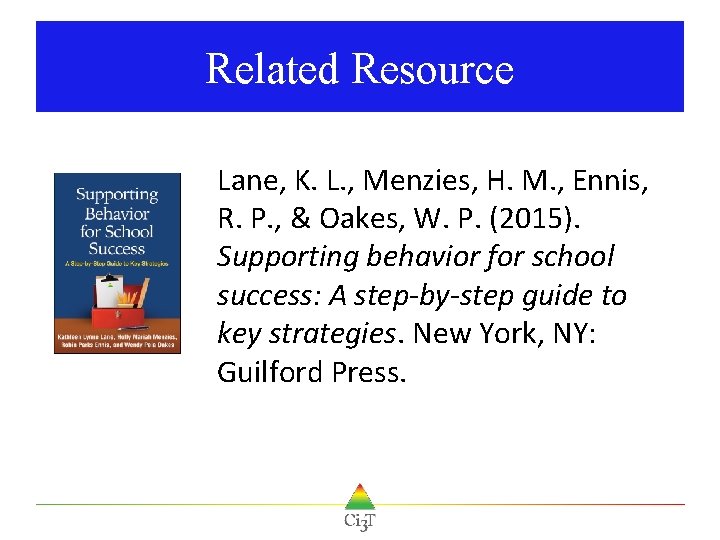
Related Resource Lane, K. L. , Menzies, H. M. , Ennis, R. P. , & Oakes, W. P. (2015). Supporting behavior for school success: A step-by-step guide to key strategies. New York, NY: Guilford Press.
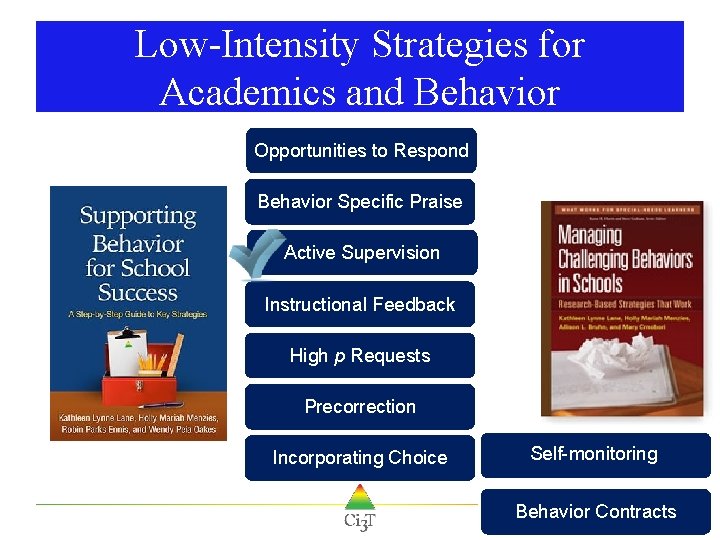
Low-Intensity Strategies for Academics and Behavior Opportunities to Respond Behavior Specific Praise Active Supervision Instructional Feedback High p Requests Precorrection Incorporating Choice Self-monitoring Behavior Contracts
Will you please …. Plan … Implementation Checklist for Success: Active Supervision