
Lower Motor Neuron Conditions Paediatric Orthopaedics Presentation 2
- Slides: 59
Lower Motor Neuron Conditions Paediatric Orthopaedics Presentation 2 nd July 2014
Introduction �Motor neuron disorders are neurologic disorders that selectively affect motor neurons �Generally progressive causing increasing disability �Of orthopaedic interest due to contractures, subluxations and spine deformities that may occur as a consequence �Can be: �Acquired �Hereditary �Upper motor �Lower motor
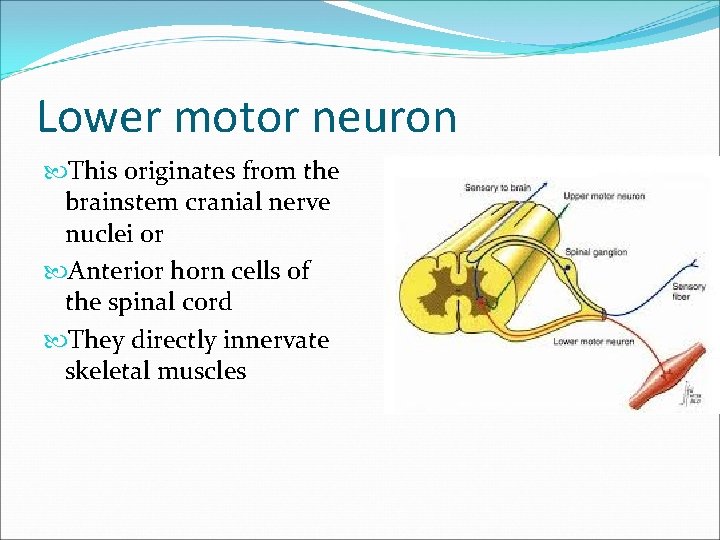
Lower motor neuron This originates from the brainstem cranial nerve nuclei or Anterior horn cells of the spinal cord They directly innervate skeletal muscles
Clinical presentation �Muscle paresis/paralysis �Hypotonia/atonia �Fibrillation/Fasciculation �Hyporeflexia/areflexia �Muscle atrophy
Classification �Acquired: �Poliomyelitis �Trauma �Iatrogenic �Hereditary: �Spinal Muscular Atrophy �HMSNs
Poliomyelitis �Acute infectious disease caused by a neurotrophic virus; type I, II and II poliovirus �Spread via faecal – oral route �Virus causes necrosis of anterior horn cells �Results in loss of innervation of motor units �Virtually eradicated by extensive vaccination campaigns
Pathology �Most commonly affect lumbar and cervical enlargement �Involvement from minimal injury with recovery to complete irreversible injury �Percentage of damaged motor units varies corresponding with resulting muscle weakness
Clinical course �Acute: 5 – 10 days. Pre paralytic and paralytic phases. Complete when fever absent for 48 hrs. Asymmetric paralysis �Convalescent: 16 – 18 months. Varying degree of recovery. Sensitive and insensitive phase �Chronic: after recovery of muscle power has occurred
Prognosis �Recovery most marked in the first 3 – 6 months, potential for recovery upto 18 months �Total paralysis beyond 2 months, chance of recovery poor �Muscle spasm, antagonist muscle contracture, deformity and inadequate care influence recovery
Treatment: acute phase �Supportive by paediatric team �Patient positioning in correct anatomic alignment �Frequent turning �Passive range of motion exercises �Moist heat application for muscle pain
Convalescent phase �Attainment of maximal recovery in individual muscles �Restoration and maintenance of normal joint ROM �Prevention and correction of deformities �Serial muscle testing: monthly 1 st four months, bimonthly next 8 months then quarterly upto 2 years
Attaining maximal recovery �Replacement of action of weaker muscle by stronger synergistic muscles avoided by physical therapy centred on strengthening this muscle �Avoiding fatigue of weak muscle which may retard it’s recovery
Restoration of normal joint ROM �Vigorous passive stretching exercises �Night splints to keep joint in anatomical position
Prevention and correction of deformities �Active exercises preventing fatigue to address muscle imbalance �Passive stretch and nigh splints to prevent contractures �Pain relief to reduce muscle pain and sensitivity �Readjustment to cater for growth
Chronic phase: physical therapy �Active hypertrophy exercises. To increase strength of synergistic muscles to obtain function �Passive stretch exercises: to prevent deformity. Augmented by night splints to maintain joint in anatomical position �Functional training: teaching to use all available muscles to perform tasks
Chronic phase: orthoses �Support: �Enable walking and functional capabilities �Prevent deformity and malposition �Protect weak muscle form overstretching �Substitution: �Augment weak muscle �Replace paralysed muscles �Correction: �Stretch muscle that have contracted
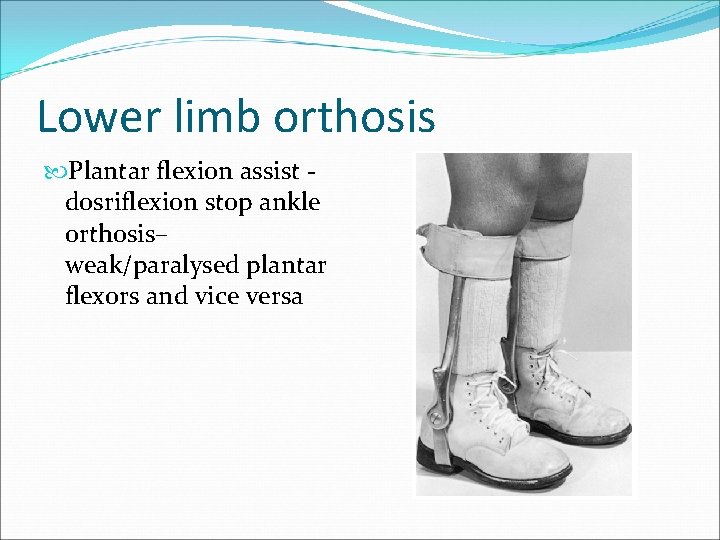
Lower limb orthosis Plantar flexion assist dosriflexion stop ankle orthosis– weak/paralysed plantar flexors and vice versa
Surgical management �Performed for correction of paralytic deformities �Examples: �Tendon transfers �Fasciotomy �Capsulotomy �Osteotomy �Arthrodesis
Tendon transfer �Moving insertion of muscle to new site with aim of replacing paralysed muscle or to restore dynamic muscle balance
Principles (Green – 1957) �Muscle to be transferred must have adequate motor strength to carry out new function �Range of motion of muscle transferred must equal that of muscle being replaced �Gain from transferred muscle > loss from donor site �Joints on which transferred muscle is to act must have functional ROM
�Smooth gliding channel must be created – use native tendon sheath, sub muscular, wide opening in septa �Preserve neurovascular supply of muscle �Ensure straight line of contraction without angles or pulleys �Reattachment with sufficient tension to allow maximal range of contraction
Post operative rehabilitation �Support joint in overcorrected position until full function achieved �Preoperative training to localise contraction of muscle to be transferred �Training of patient to use previously localised muscle to perform new movement �Incorporation of transfer into new functional pattern
Examples �Ilipsoas or external oblique transfer to GT in hip abductor paralysis �Erector spinae or iliotibial band transfer to GT for G max paralysis �Anterior transfer of peroneus longus in dorsiflexor paralysis �Semitendinosus and biceps femoris transfer to patella in quadriceps paralysis
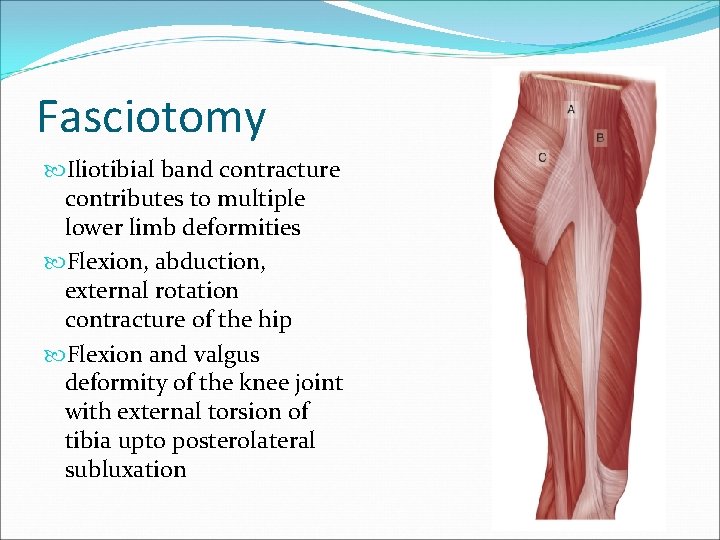
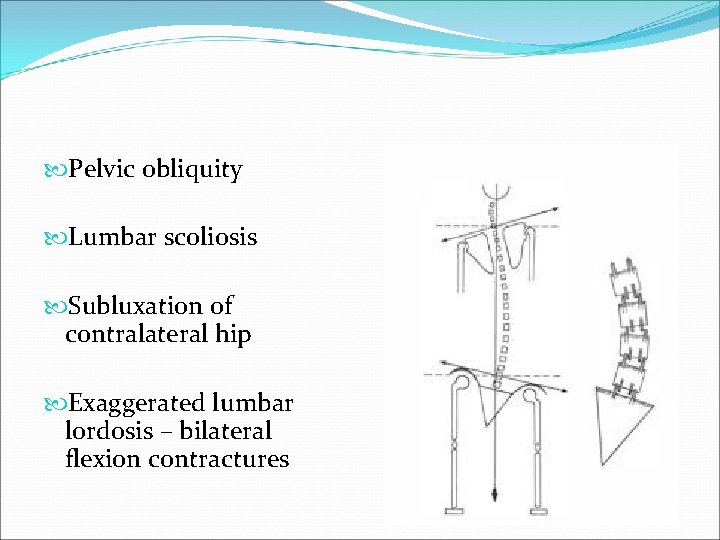
Fasciotomy Iliotibial band contracture contributes to multiple lower limb deformities Flexion, abduction, external rotation contracture of the hip Flexion and valgus deformity of the knee joint with external torsion of tibia upto posterolateral subluxation
Pelvic obliquity Lumbar scoliosis Subluxation of contralateral hip Exaggerated lumbar lordosis – bilateral flexion contractures
Fasciotomy �Initial conservative management �Ober’s fasciotomy – proximal lateral incision with release of fascia over the sartorius, rectus femoris, tensor fasciae lata, and gluteus medius and minimus � Section of lateral intermuscular septum and iliotibial band upto greater trochanter �Yount procedure – excision of segment of iliotibial band lateral intermuscular septum in distal thigh �May be combined with fractional hamstring lengthening to correct the tibial version
Post operative care �Bilateral long leg cast �Suspension traction �Passive extension, adduction and internal rotation exercises �For 3 weeks
Paralytic hip dislocation �Muscle imbalance – weak abductors, normal flexors and adductors �Progressive coxa valgus deformity upto neck shaft angle of 180 degrees �Excessive anteversion �Capsular laxity �Subluxation then dislocation �Acetabular dysplasia late
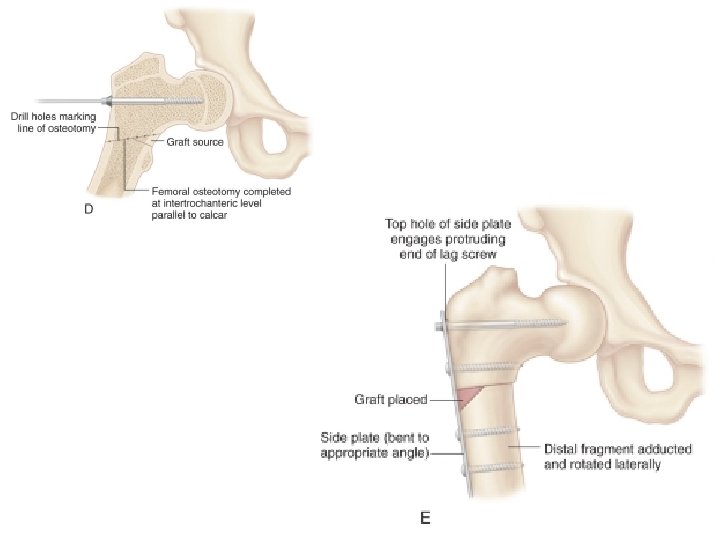
Surgical management �Tendon transfers to address muscle imbalance �Indicated at 4 – 5 years of age with coxa valga < 150 o �Coxa valga > 1500, then a varization osteotomy performed with tendon transfer later �Varization osteotomy – intertrochanteric oblique osteotomy to correct coxa valga and excessive anteversion
Osteotomy and arthrodesis �Supracondylar osteotomy for fixed flexion deformity of knee �Dome osteotomies of proximal tibia for genu recarvatum �Knee arthrodesis for flail knee �Hip athrodesis
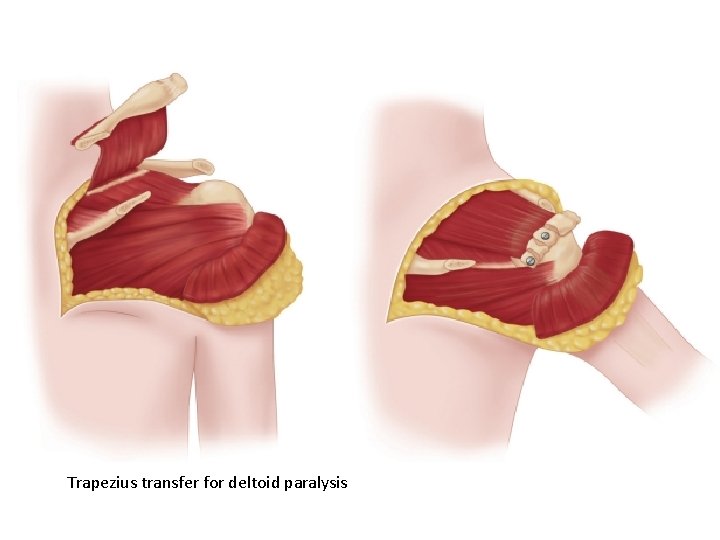
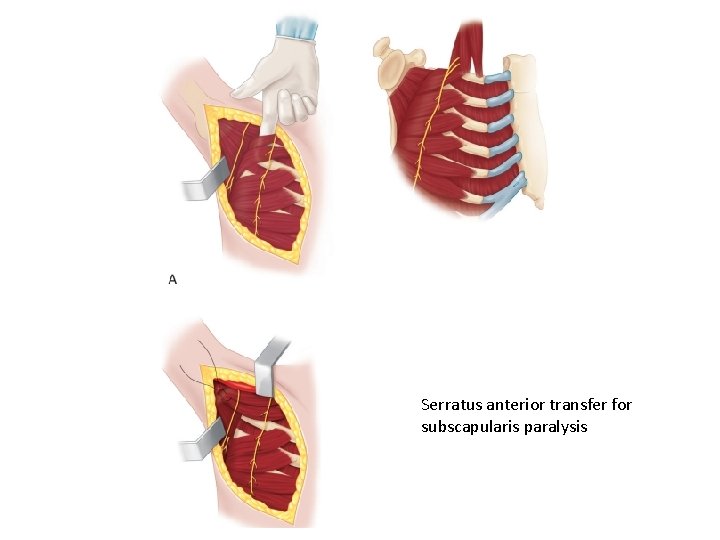
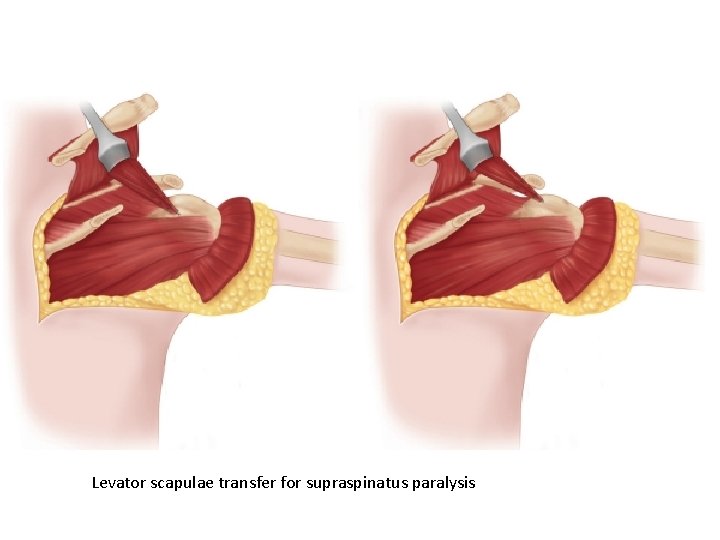
Shoulder �Deltoid paralysis managed with transfer of trapezius to proximal humerus �Supraspinatus – levator scapulae transfer �Infraspinatus – latissmus dorsi �Subscapularis – upper 2 digitations of serratus anterior
Trapezius transfer for deltoid paralysis
Serratus anterior transfer for subscapularis paralysis
Levator scapulae transfer for supraspinatus paralysis
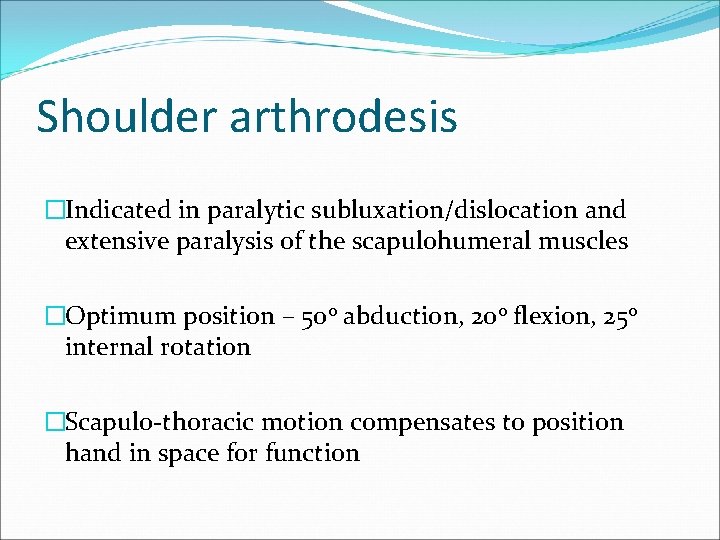
Shoulder arthrodesis �Indicated in paralytic subluxation/dislocation and extensive paralysis of the scapulohumeral muscles �Optimum position – 50 o abduction, 20 o flexion, 25 o internal rotation �Scapulo-thoracic motion compensates to position hand in space for function
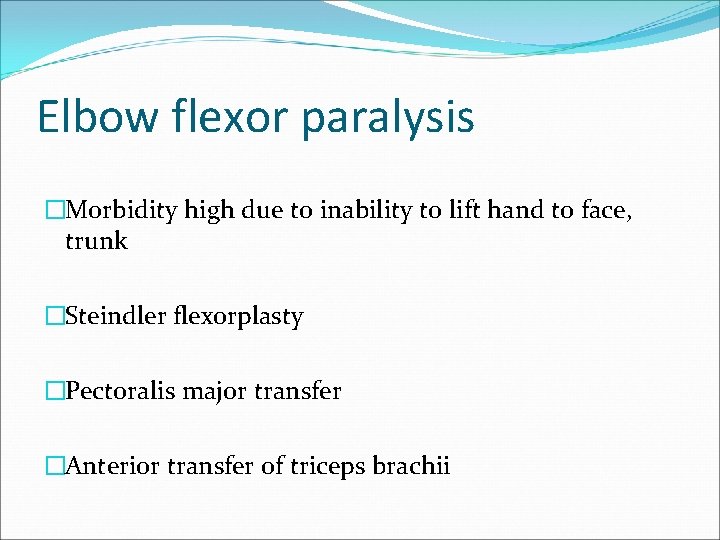
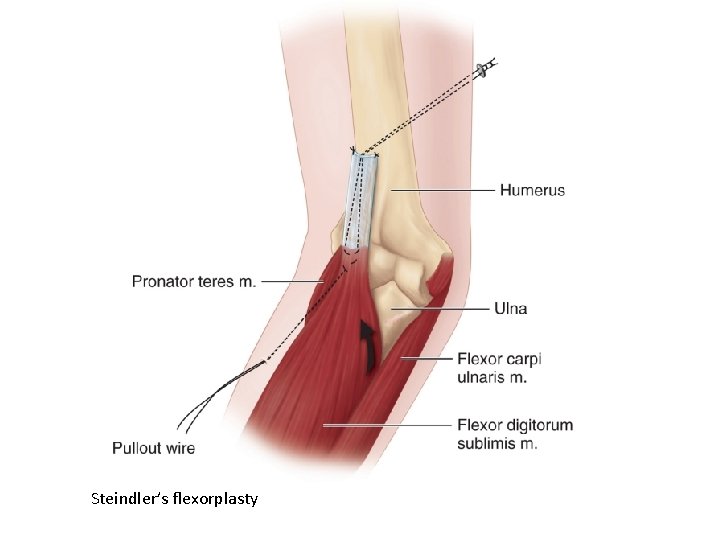
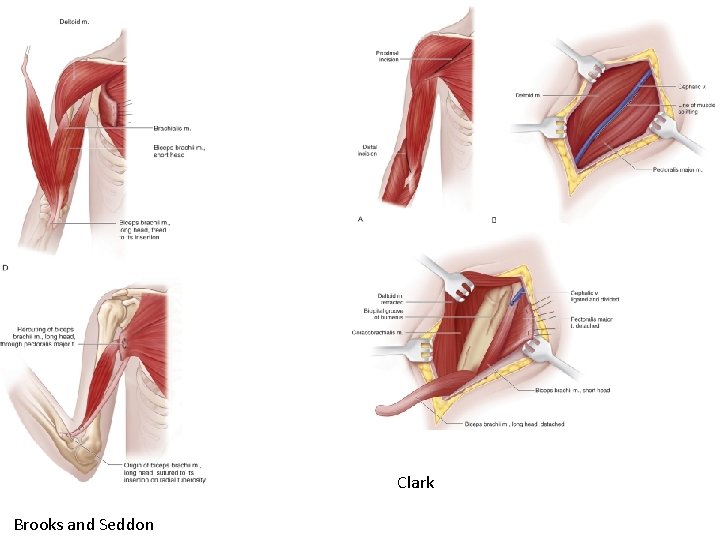
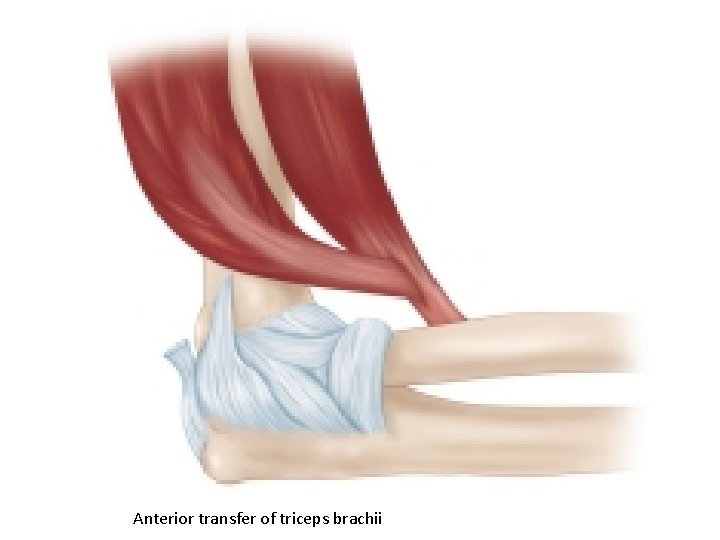
Elbow flexor paralysis �Morbidity high due to inability to lift hand to face, trunk �Steindler flexorplasty �Pectoralis major transfer �Anterior transfer of triceps brachii
Steindler’s flexorplasty
Clark Brooks and Seddon
Anterior transfer of triceps brachii
Supination contracture of forearm �Paralysed forearm flexors with normal biceps �Progressive supination contracture due to interosseous membrane contraction and radial bowing �Radial corrective osteotomy performed to correct �Transfer of insertion of biceps to radial aspect of radius (pronator)
Spinal muscular atrophy �Hereditary disease characterised by degeneration of anterior horn cells of the spinal cord �Progressive hypotonia �Lower limb > upper limbs �Proximal > distal muscles � 1: 15, 000 – 20, 000 live births
Pathogenesis �Autosomal recessive in chromosome 5 q �Neuronal Apoptosis Inhibitory protein (NAIP) abnormal in 67% of patients �Survival Motor Neuron (SMA) abnormal in 98% of patients �Leads to unregulated apoptosis of α motor neurons � 1 st trimester molecular genetic technology diagnosis possible
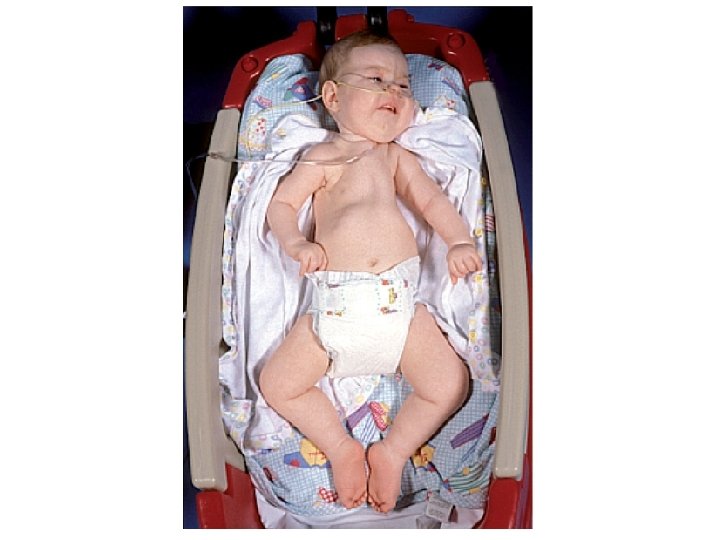
*Type I – acute infantile/Werdnig. Hoffmann SMA �Onset between 0 – 6 months �Floppy and inactive, frog leg posture, unable to lift head, fingers and toes active �Tongue fasciculation characteristic �Progressive course, usually death by 2 years due to respiratory failure *Byers and Banker classification
Type II – chronic infantile �Onset 6 – 12 months �Achieve head control, 75% sitting. Wheelchair ambulators �Tongue fasciculation and upper limb tremors �Patella areflexia, biceps and triceps reflex may be present �Survival upto 5 th decade
Type II - Kugelberg-Welander �Onset 2 – 15 years �Proximal muscle weakness – difficulty climbing stairs, trendelenburg gait, lumbar hyperlordosis �Ambulant upto adolescence, wheelchair bound as adults �Normal lifespan
Orthopaedic complications �Contractures �Hip subluxation/dislocation �Scoliosis
Contractures �Hip and knee flexion contractures in non ambulant patients �Gentle passive stretch exercises to prevent and treat �Surgical releases of dubious value in non ambulant child and frequently recur �Orthoses to prevent equinus and cavovarus foot deformities
Hip subluxation/dislocation �Proximal muscle weakness – coxa valga – subluxation – dislocation �Bilateral dislocation – lumbar hyperlordosis �Unilateral dislocation – pelvic obliquity – pressure sores – aggravate scoliosis �Passive stretch exercises to prevent, derotation osteotomies to reduce the hip �Poor results of surgical procedures reported
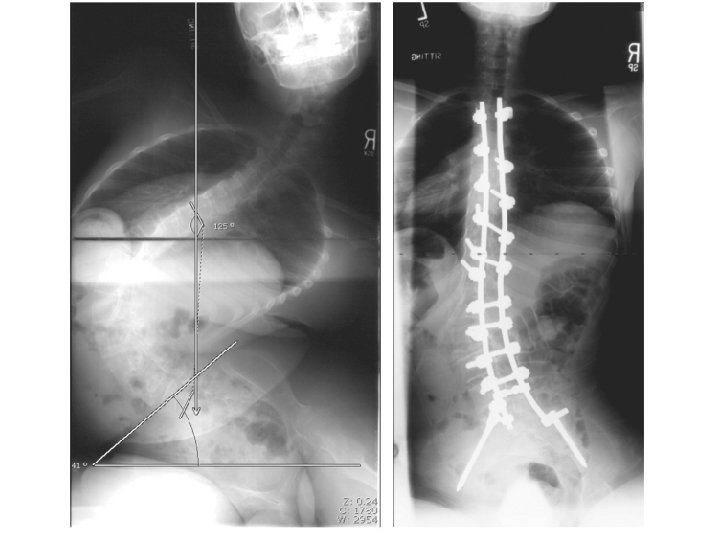
Scoliosis �Universal in non ambulatory patients, prevalent in type III �Predominance of thoracolumbar curves �Typically more flexible but progress rapidly �Orthoses assist sitting posture but do not retard progression �Surgical management – posterior fusion and segmental instrumentation
Herditary Motor and Sensory Neuropathies �Group of hereditary neuropathies �Characteristics: �Predominant motor involvement �Autosomal dominant �Slowly progressive �Symmetric �Charcot –Marie – Tooth (CMT) disease most common �Has six other types
CMT �Most common heritable neuropathy. 1: 2500 – 5000 �Multiple subtypes �Defects in genes that regulate myelin sheath formation �Lead to demyelination and axonal degeneration �Onset variable but most common in 2 nd decade
Clinical features �Symmetric distal muscle atrophy �Areflexia proceeding proximally �Palpable enlargement of peripheral nerves �More involvement of peroneal muscles as opposed to tibial muscles �Leads to toe, midfoot and ankle deformities �Sensory loss variable
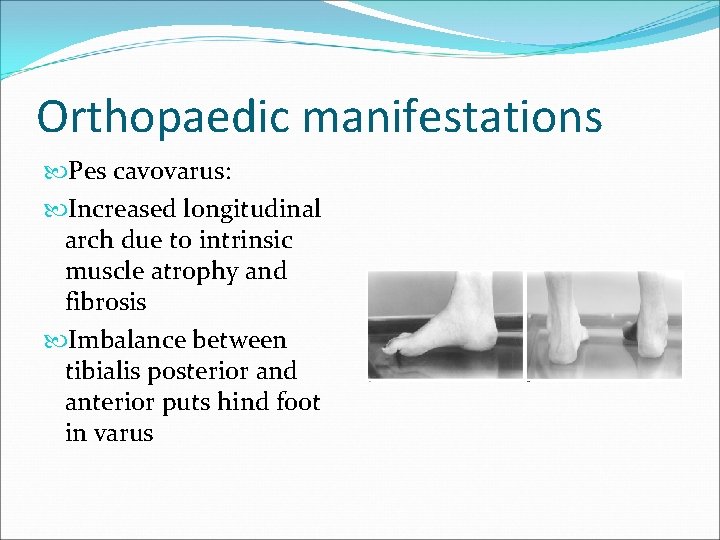
Orthopaedic manifestations Pes cavovarus: Increased longitudinal arch due to intrinsic muscle atrophy and fibrosis Imbalance between tibialis posterior and anterior puts hind foot in varus
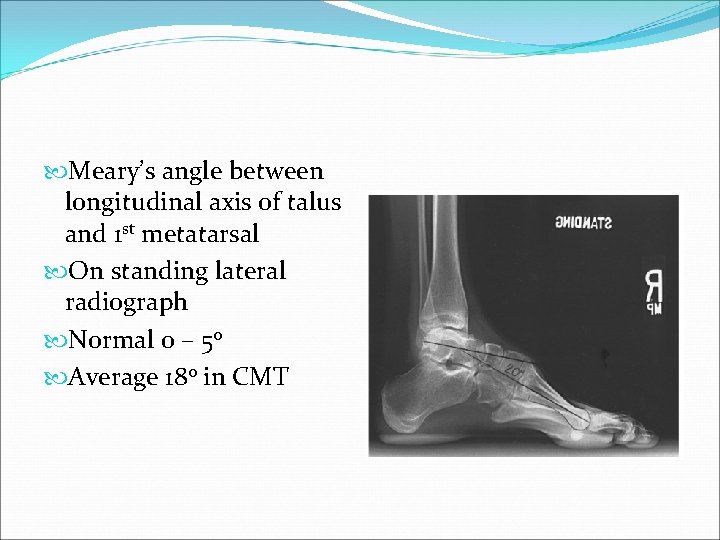
Meary’s angle between longitudinal axis of talus and 1 st metatarsal On standing lateral radiograph Normal 0 – 5 o Average 18 o in CMT
Management �Soft tissue releases – capsulotomies and plantar fascia release �Muscle transfers – posterior tibial to dorsum �Proximal metatarsal osteotomies to correct forefoot plantar flexion �Triple arthrodesis when deformity fixed
Orthopaedic manifestations �Hip subluxation/dislocation �Scoliosis �Managed as for the previous muscle paralysis