
Lower Limb Vessels Lecture Objectives Describe the major
Lower Limb Vessels
Lecture Objectives • Describe the major arteries of the lower limb. • Describe the deep and superficial veins of the lower limb. • Describe the topographical relationships of the arteries and veins of the lower limb. • Describe the lymphatic vessels of the lower limb.
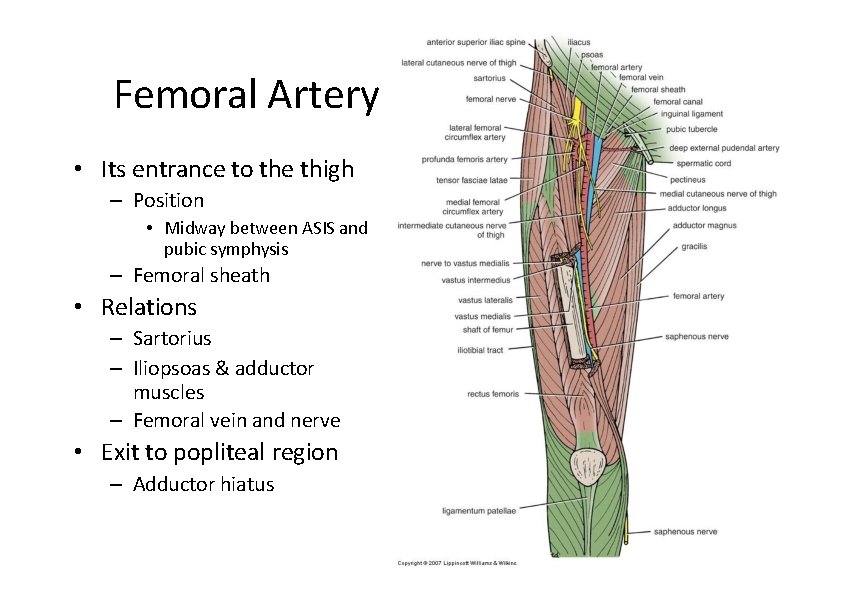
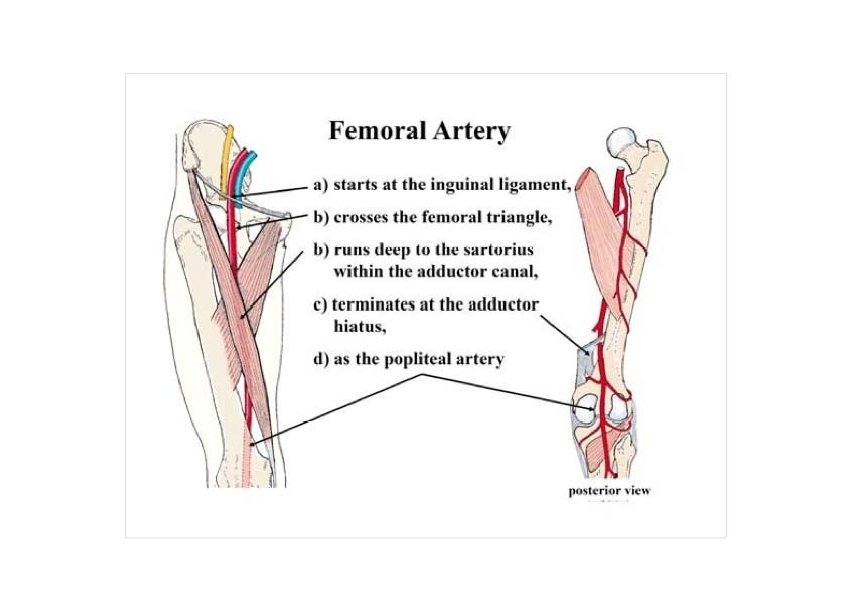
Femoral Artery • Its entrance to the thigh – Position • Midway between ASIS and pubic symphysis – Femoral sheath • Relations – Sartorius – Iliopsoas & adductor muscles – Femoral vein and nerve • Exit to popliteal region – Adductor hiatus
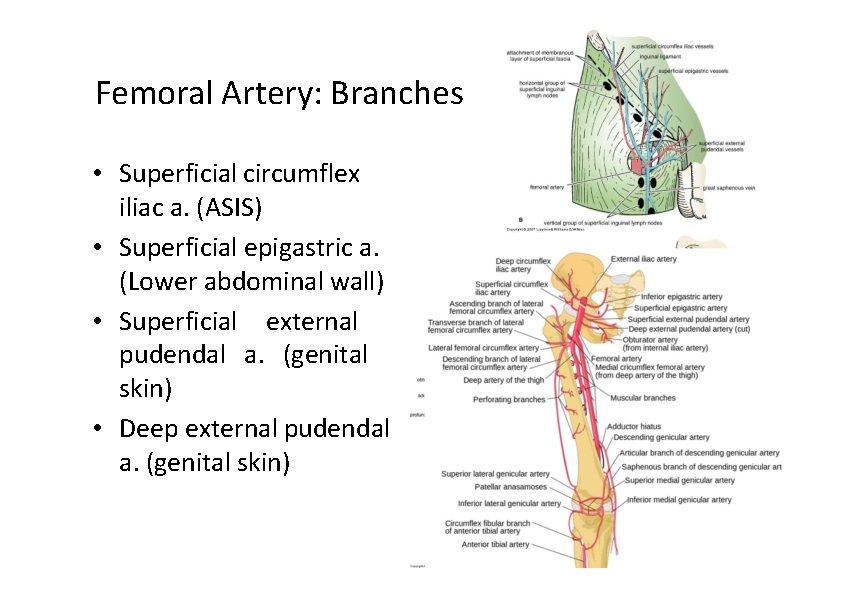
Femoral Artery: Branches • Superficial circumflex iliac a. (ASIS) • Superficial epigastric a. (Lower abdominal wall) • Superficial external pudendal a. (genital skin) • Deep external pudendal a. (genital skin)

Femoral Artery: Branches • Profunda femoris a. (deep a. of thigh) (thigh region) • Descending genicular a. (knee joint)

Profunda Femoris Artery • • • Deep to the adductor longus Medial femoral circumflex a. Lateral femoral circumflex a. 1‐ 4 perforating aa.

• Trochanteric anastomosis – – Superior gluteal a. Inferior gluteal a. Medial femoral circumflex a. Lateral femoral circumflex a. • Cruciate anastomosis – – Inferior gluteal a. Medial femoral circumflex a. Lateral femoral circumflex a. 1 st perforating a. from profunda
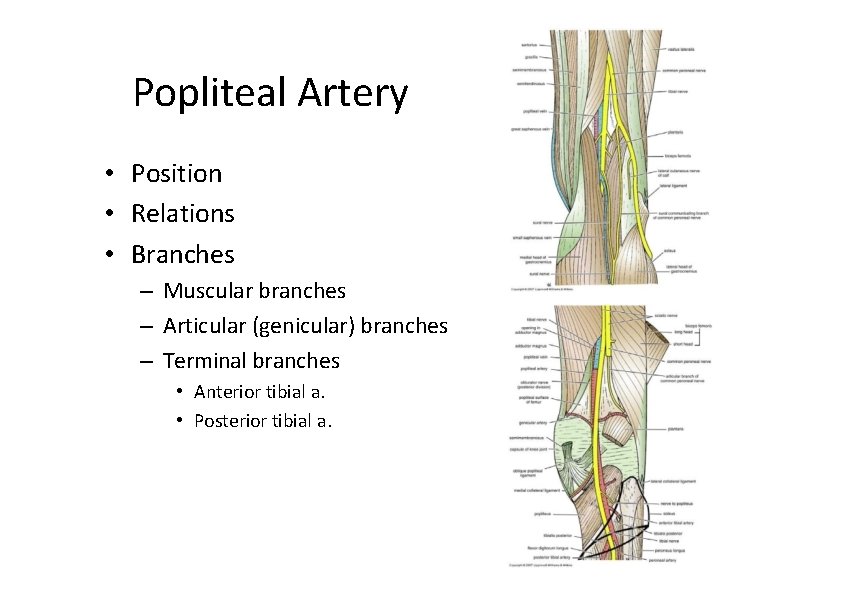
Popliteal Artery • Position • Relations • Branches – Muscular branches – Articular (genicular) branches – Terminal branches • Anterior tibial a. • Posterior tibial a.
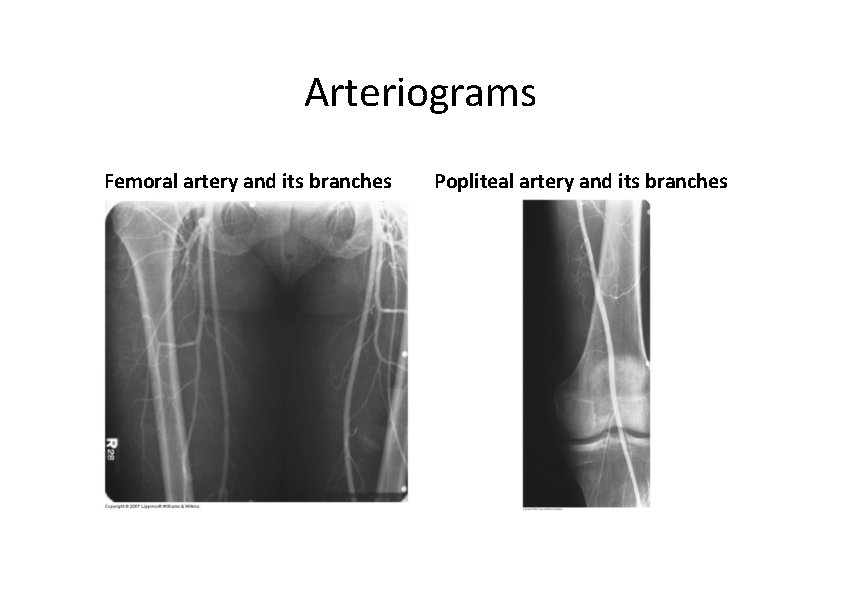
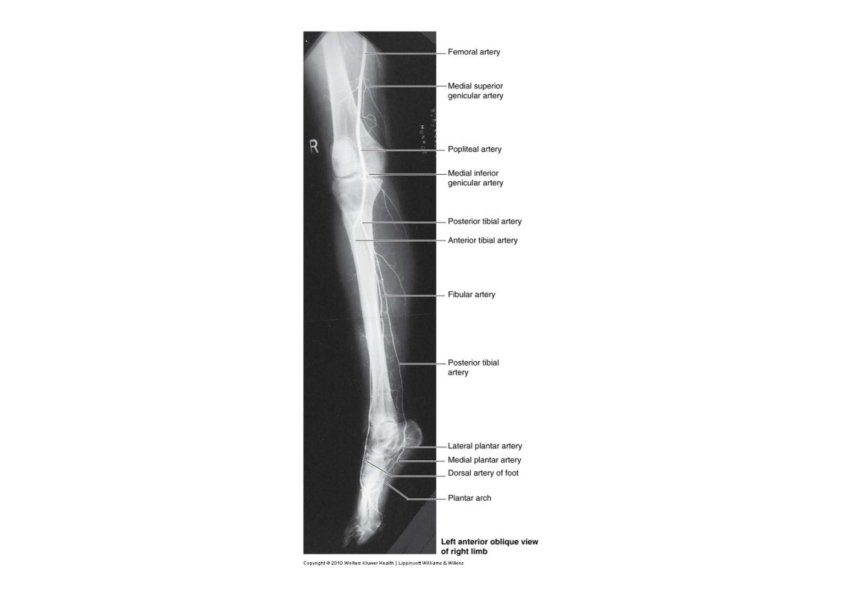
Arteriograms Femoral artery and its branches Popliteal artery and its branches

Genicular Anastomosis Around Knee Joint • Femoral a. – Descending genicular a. • Descending branch of lateral femoral circumflex a. • Popliteal a. (genicular aa. ) – Superior medial & lateral – Middle – Inferior medial & lateral • Anterior tibial a. – Anterior tibial recurrent a.
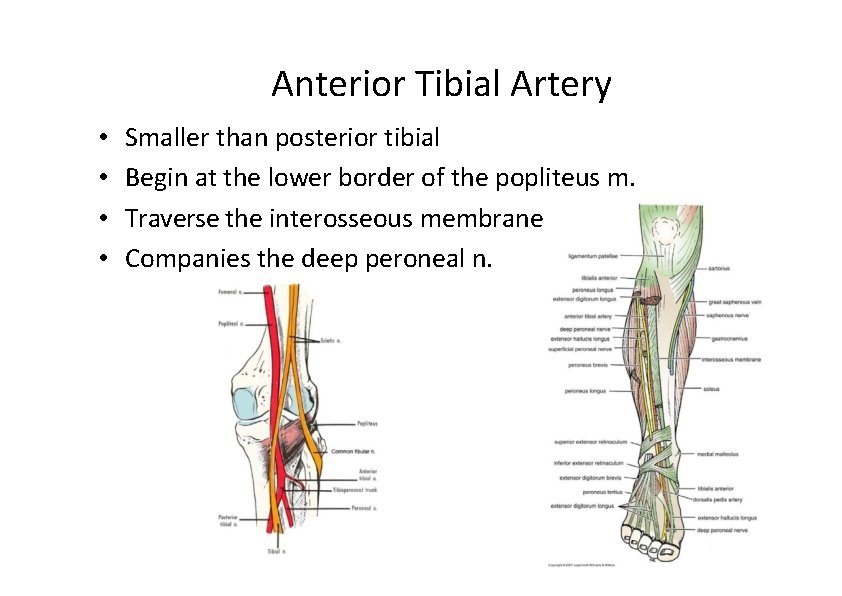
Anterior Tibial Artery • • Smaller than posterior tibial Begin at the lower border of the popliteus m. Traverse the interosseous membrane Companies the deep peroneal n.
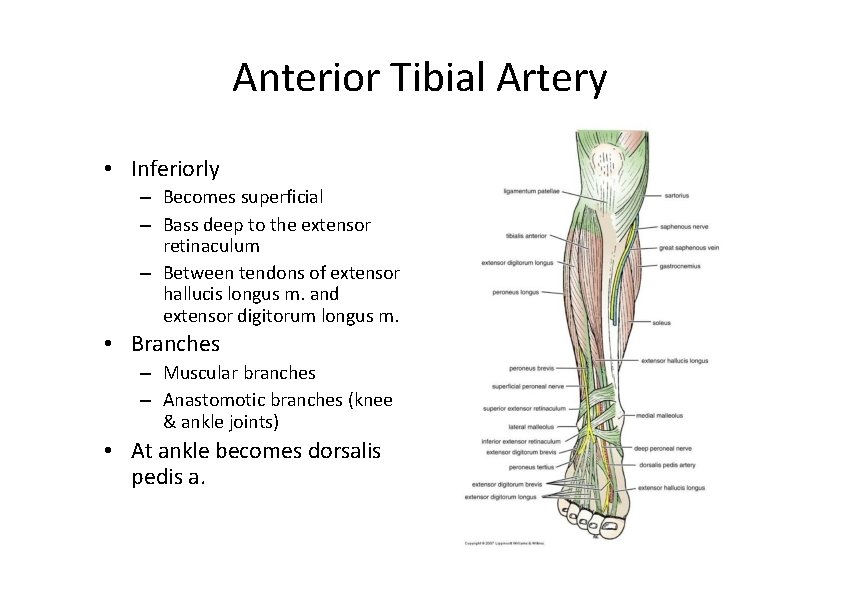
Anterior Tibial Artery • Inferiorly – Becomes superficial – Bass deep to the extensor retinaculum – Between tendons of extensor hallucis longus m. and extensor digitorum longus m. • Branches – Muscular branches – Anastomotic branches (knee & ankle joints) • At ankle becomes dorsalis pedis a.

Dorsalis Pedis Artery • Superficial • Relations – Inferior extensor retinaculum – 1 st tendon of extensor digitorum (hallucis) previs m. – 1 st dorsal interosseous m.
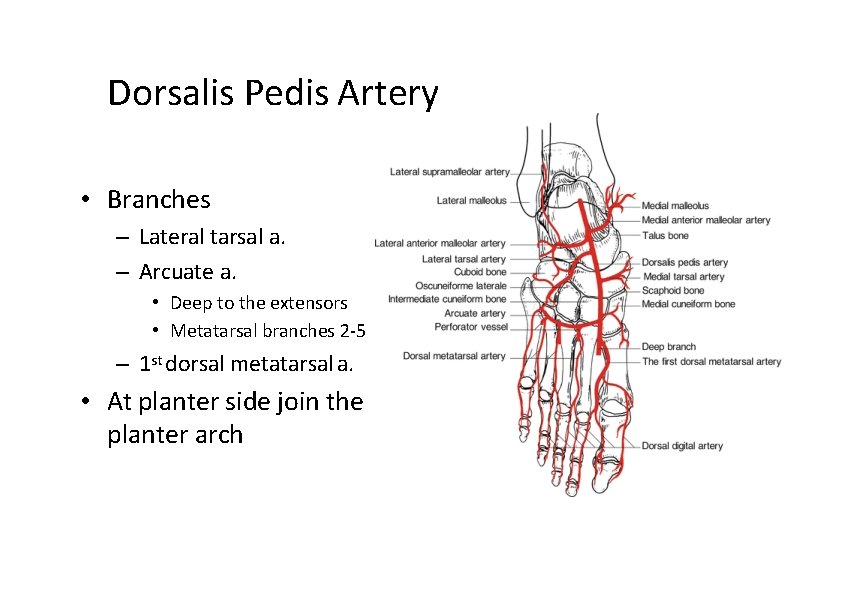
Dorsalis Pedis Artery • Branches – Lateral tarsal a. – Arcuate a. • Deep to the extensors • Metatarsal branches 2‐ 5 – 1 st dorsal metatarsal a. • At planter side join the planter arch
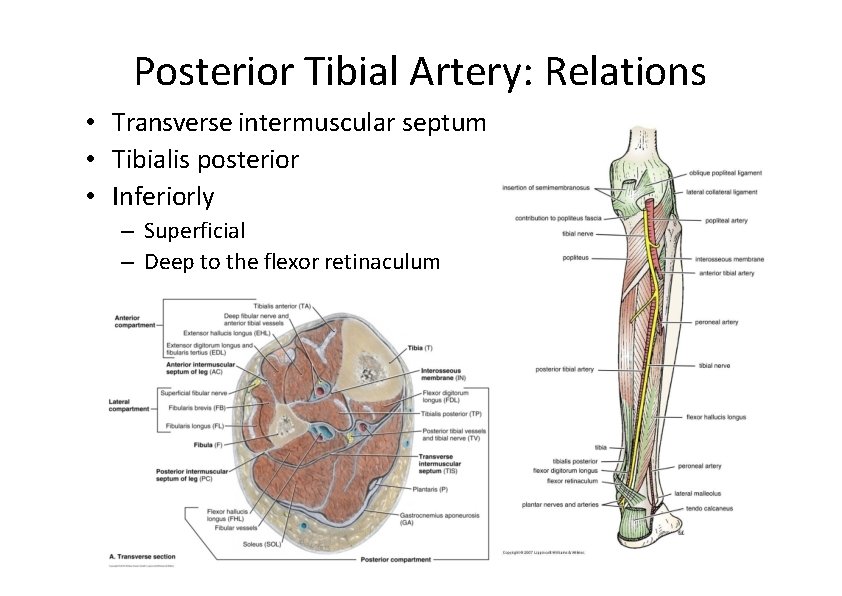
Posterior Tibial Artery: Relations • Transverse intermuscular septum • Tibialis posterior • Inferiorly – Superficial – Deep to the flexor retinaculum
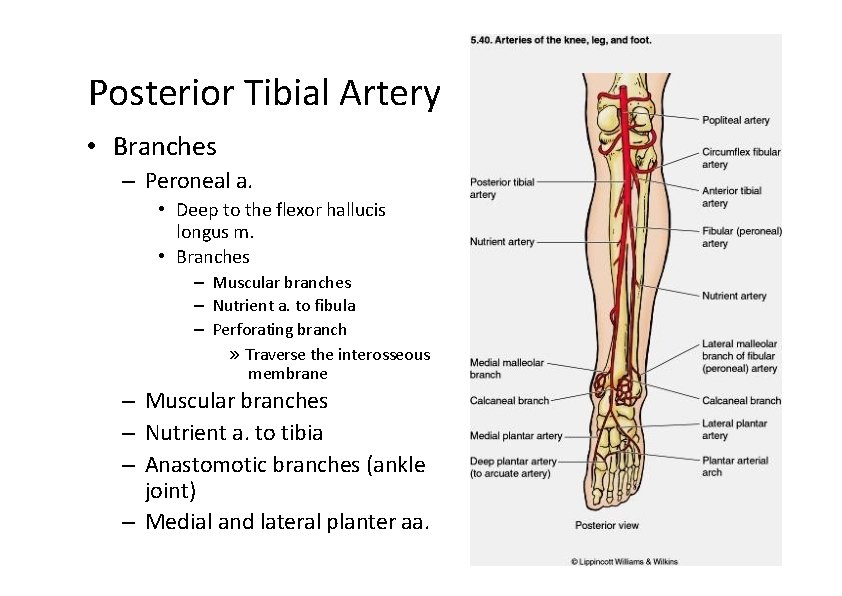
Posterior Tibial Artery • Branches – Peroneal a. • Deep to the flexor hallucis longus m. • Branches – Muscular branches – Nutrient a. to fibula – Perforating branch » Traverse the interosseous membrane – Muscular branches – Nutrient a. to tibia – Anastomotic branches (ankle joint) – Medial and lateral planter aa.
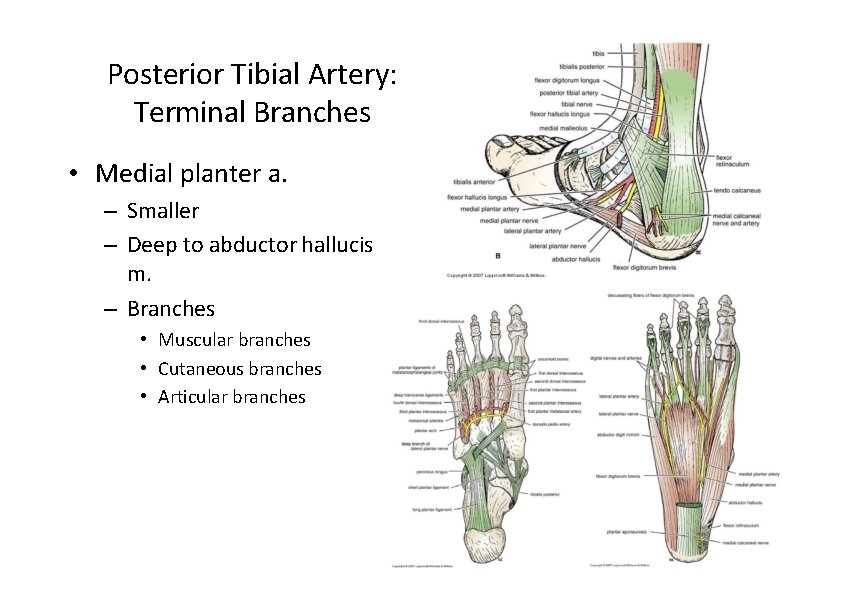
Posterior Tibial Artery: Terminal Branches • Medial planter a. – Smaller – Deep to abductor hallucis m. – Branches • Muscular branches • Cutaneous branches • Articular branches
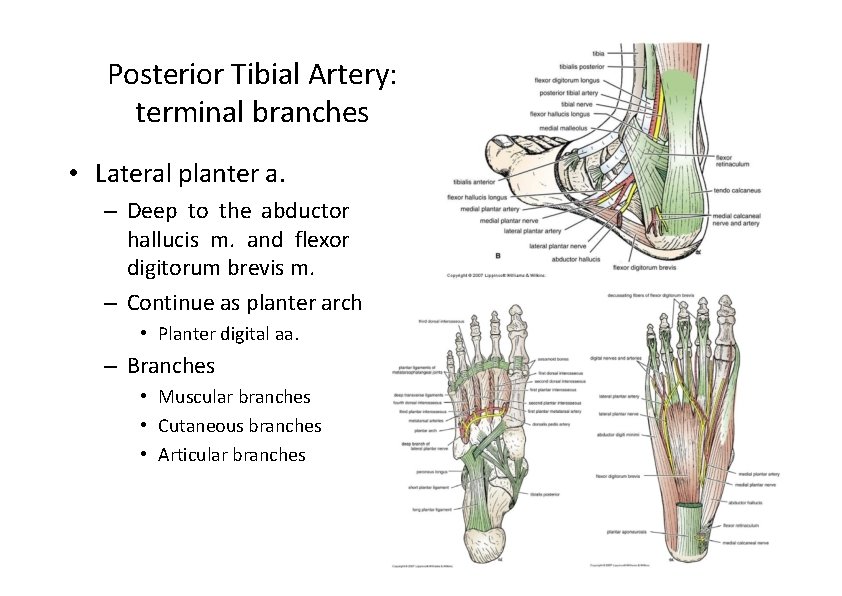
Posterior Tibial Artery: terminal branches • Lateral planter a. – Deep to the abductor hallucis m. and flexor digitorum brevis m. – Continue as planter arch • Planter digital aa. – Branches • Muscular branches • Cutaneous branches • Articular branches

Veins of the Lower Limb Digital and communicating veins Deep veins Superficial veins Dorsal venous network (arch) Lateral Medial Small saphenous vein Great saphenous vein Popliteal vein Femoral vein Venae comitantes of the anterior and posterior tibial arteries Venae comitantes of deep branches of the femoral artery
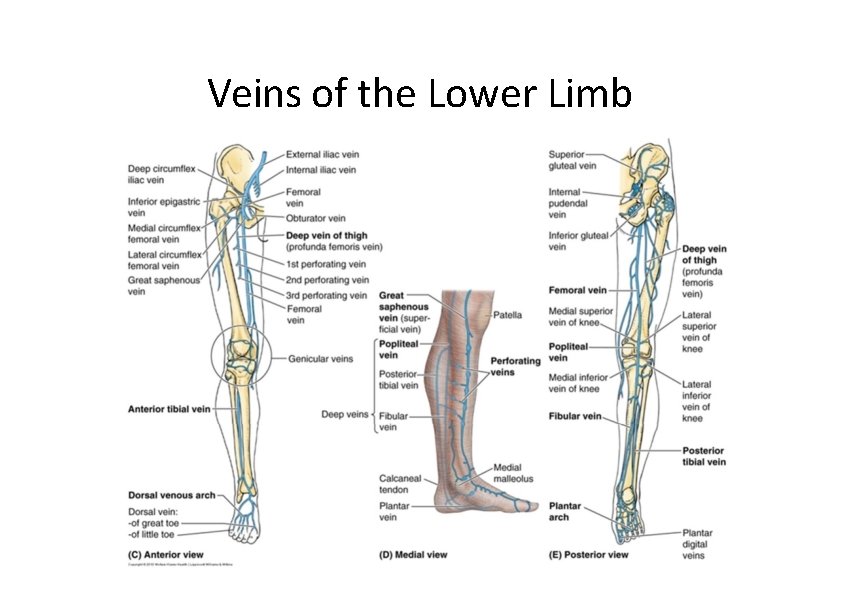
Veins of the Lower Limb
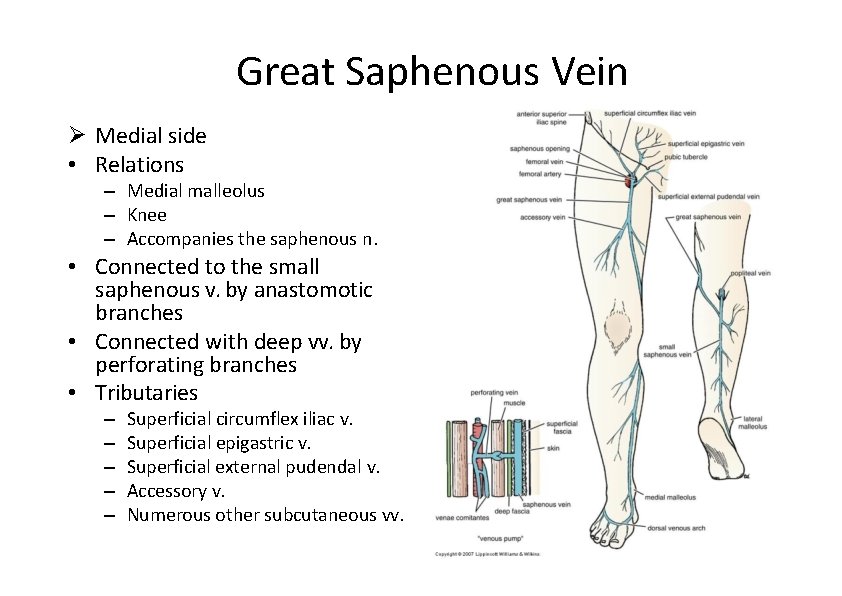
Great Saphenous Vein Medial side • Relations – Medial malleolus – Knee – Accompanies the saphenous n. • Connected to the small saphenous v. by anastomotic branches • Connected with deep vv. by perforating branches • Tributaries – – – Superficial circumflex iliac v. Superficial epigastric v. Superficial external pudendal v. Accessory v. Numerous other subcutaneous vv.
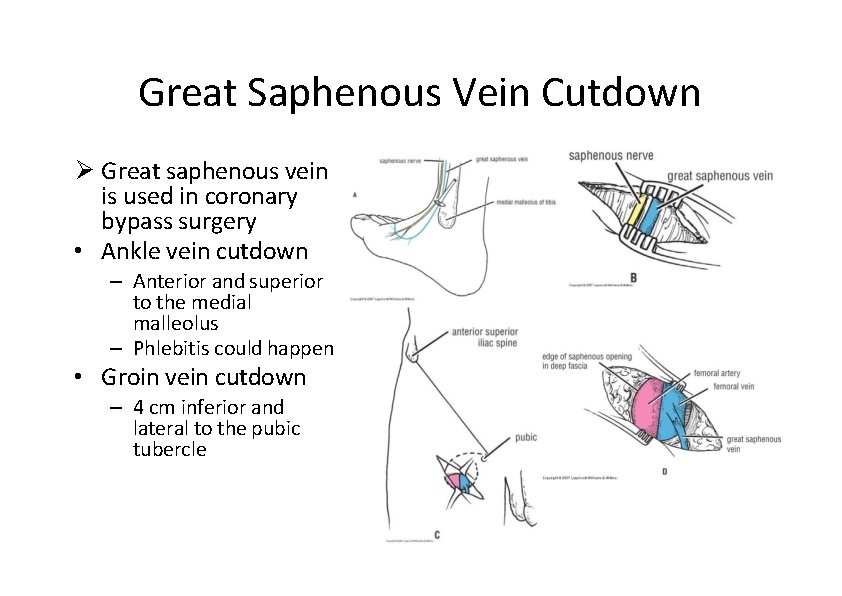
Great Saphenous Vein Cutdown Great saphenous vein is used in coronary bypass surgery • Ankle vein cutdown – Anterior and superior to the medial malleolus – Phlebitis could happen • Groin vein cutdown – 4 cm inferior and lateral to the pubic tubercle
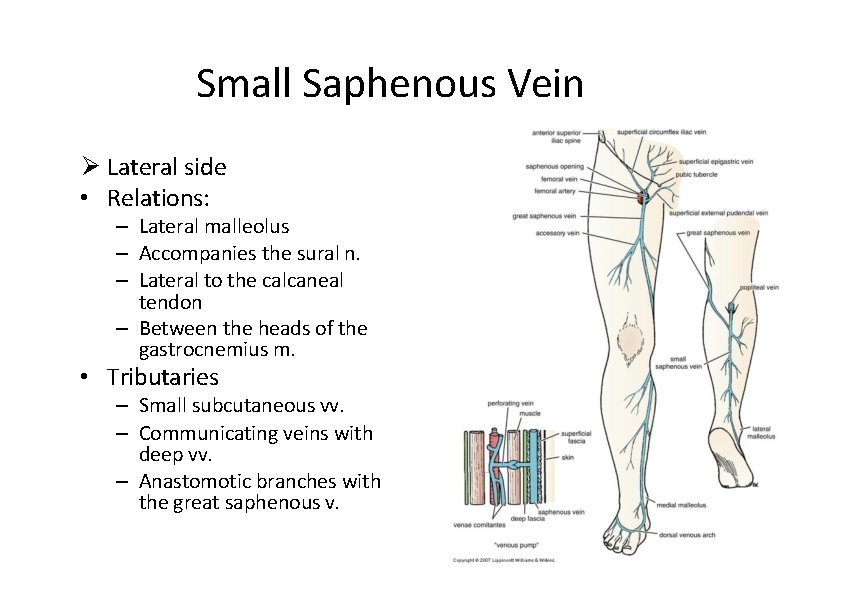
Small Saphenous Vein Lateral side • Relations: – Lateral malleolus – Accompanies the sural n. – Lateral to the calcaneal tendon – Between the heads of the gastrocnemius m. • Tributaries – Small subcutaneous vv. – Communicating veins with deep vv. – Anastomotic branches with the great saphenous v.
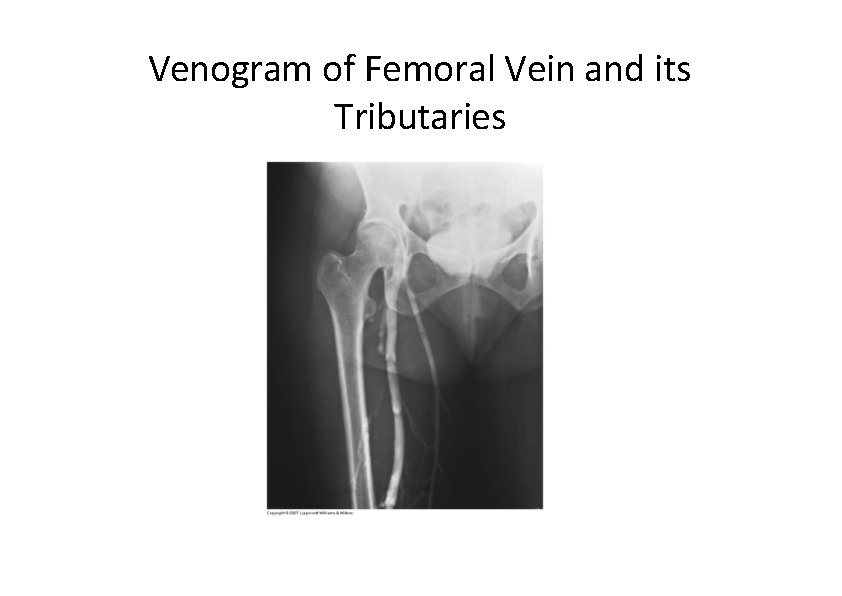
Venogram of Femoral Vein and its Tributaries
Sympathetic Innervation for Lower Limb Vessels • Preganglionic sympathetic fibers rise from T 10‐L 2 spinal segments • Postganglionic fibers rise from the lumbar and sacral ganglia of sympathetic trunk • Postganglionic fibers reach BV through the peripheral nerves of the lumbar and sacral plexuses. Examples: Femoral a. ‐‐‐‐‐ femoral & obturator nn. Distal aa. (anterior & posterior tibial) ‐‐‐‐‐ sciatic n. branches (common peroneal & tibial) Great saphenous v. ‐‐‐‐‐ saphenous n. Small saphenous v. ‐‐‐‐‐ sural n.
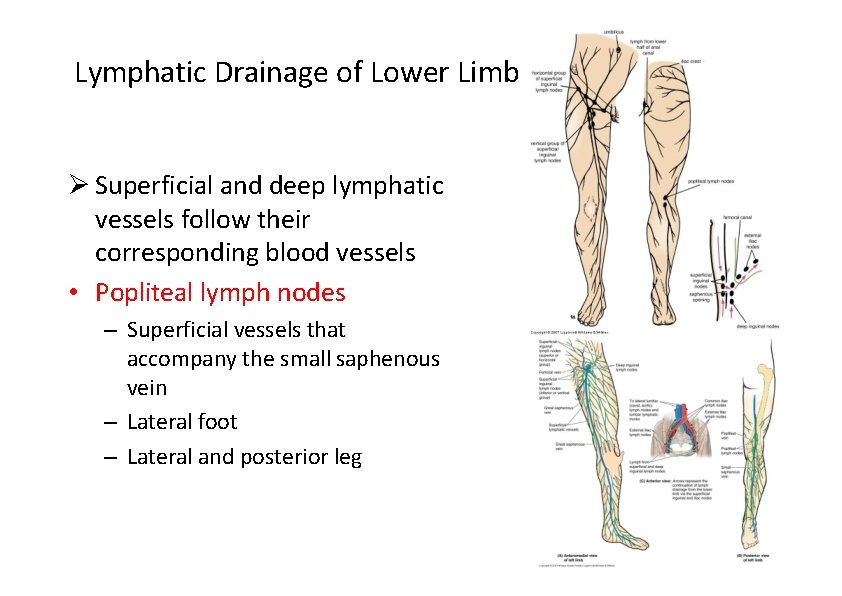
Lymphatic Drainage of Lower Limb Superficial and deep lymphatic vessels follow their corresponding blood vessels • Popliteal lymph nodes – Superficial vessels that accompany the small saphenous vein – Lateral foot – Lateral and posterior leg
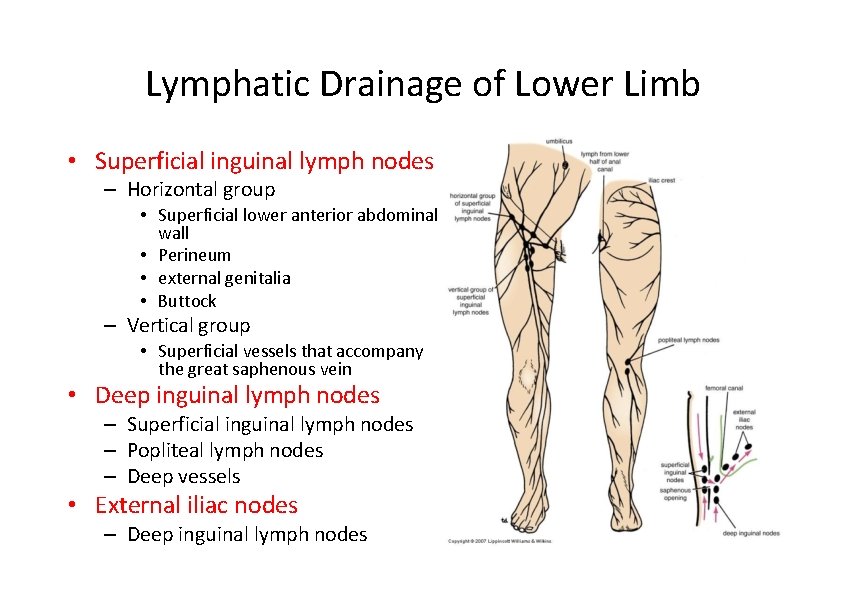
Lymphatic Drainage of Lower Limb • Superficial inguinal lymph nodes – Horizontal group • Superficial lower anterior abdominal wall • Perineum • external genitalia • Buttock – Vertical group • Superficial vessels that accompany the great saphenous vein • Deep inguinal lymph nodes – Superficial inguinal lymph nodes – Popliteal lymph nodes – Deep vessels • External iliac nodes – Deep inguinal lymph nodes
- Slides: 29